Tail anomalies
Also known as: Knickrute · Knickruten · Tail deformities · Kinked tail · Screw tail · …
Overview
What it is
Tail anomalies are congenital (present from birth) malformations of the caudal vertebrae, which are the small bones that make up the tail. This skeletal condition occurs when these vertebral bodies do not develop or fuse properly during fetal growth, resulting in a kinked, curved, or shortened tail.
How it presents
These abnormalities are visible or can be felt as firm kinks in the tail immediately from birth. For the vast majority of dogs, this is a purely cosmetic feature that does not cause any pain or mobility issues.
Treatment
No treatment is necessary for most dogs, making the cost 0 EUR. If a severe kink causes chronic injury or pain, a one-time surgical partial amputation may be performed, with costs ranging up to 1000 EUR.
How it's tested
Affected breeds


Treatment cost
Estimated range of typical treatment cost. Actual cost depends on severity, clinic and region.
Frequently asked
What is Tail anomalies?
Tail anomalies are congenital (present from birth) malformations of the caudal vertebrae, which are the small bones that make up the tail. This skeletal condition occurs when these vertebral bodies do not develop or fuse properly during fetal growth, resulting in a kinked, curved, or shortened tail.
How is Tail anomalies tested?
Various clinical and genetic tests are used depending on the breed and presentation.
Which breeds are most affected?
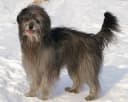
Most commonly affected: Pyrenean Shepherd, German Shepherd, Rhodesian Ridgeback.