Cauda equina syndrome(DLSS)
Also known as: Degenerative lumbosacral stenosis · Lumbosakralstenose · Cauda-equina-Kompressionssyndrom · Cauda equina compression syndrome
Overview
What it is
Cauda equina syndrome is a neurological condition affecting the lower back, where the bundle of nerve roots at the end of the spinal cord becomes compressed and damaged. This compression typically occurs at the junction between the lower lumbar spine and the sacrum. It is often triggered by degenerative changes, such as a herniated disc or narrowing of the spinal canal, which put pressure on these vital nerves.
How it presents
Owners typically notice symptoms in middle-aged to older dogs, starting with lower back pain, reluctance to jump or climb stairs, and difficulty rising. As the nerve damage progresses, dogs may develop a weak or unstable hind leg gait, and in severe cases, fecal or urinary incontinence.
Treatment
The condition is treatable, ranging from conservative management with pain medication and rest to surgical decompression of the nerves. Depending on whether surgery or lifelong medical management is required, treatment costs typically range from 1,500 to 6,000 EUR.
How it's tested
Hüftgelenksdysplasie-Auswertung (HD-Röntgen) nach FCI(HD-FCI)
Primary testRadiographRöntgenaufnahme der Hüftgelenke unter Sedation, ausgewertet nach FCI-Standard (A-E). Standardpflicht bei den meisten VDH-Zuchtvereinen.
Issuing body: FCI
Result scheme: HD-FCI
Spondylose-Beurteilung (Wirbelsäule)(Spondylose)
Primary testRadiographRöntgenaufnahme der Wirbelsäule zur Beurteilung von Spondylose (Grad 0-4). Pflicht z.B. bei Boxern.
Issuing body: FCI
Result scheme: Spondylose-LUMBOSACRAL
Neurologische und bildgebende Untersuchung auf lumbosakrale Stenose(DLSS-Diagnostik)
Primary testClinical examDie Diagnose erfolgt durch eine eingehende neurologische Untersuchung kombiniert mit bildgebenden Verfahren wie MRT, CT oder Röntgen zur Darstellung der lumbosakralen Stenose.
Issuing body: vet
Result scheme: Clear/Carrier/Affected
Magnetresonanztomographie (MRT) des Gehirns(MRT)
Primary testClinical examDie Diagnose wird durch eine Magnetresonanztomographie (MRT) des Schädels gestellt, welche die Fehlbildung oder das Fehlen des Balkens (Corpus callosum) bildlich darstellt.
Issuing body: vet
Result scheme: Clear/Carrier/Affected
Affected breeds

Treatment cost
Estimated range of typical treatment cost. Actual cost depends on severity, clinic and region.
Frequently asked
What is Cauda equina syndrome?
Cauda equina syndrome is a neurological condition affecting the lower back, where the bundle of nerve roots at the end of the spinal cord becomes compressed and damaged. This compression typically occurs at the junction between the lower lumbar spine and the sacrum. It is often triggered by degenerative changes, such as a herniated disc or narrowing of the spinal canal, which put pressure on these vital nerves.
How is Cauda equina syndrome tested?
Tests currently in our database: Hüftgelenksdysplasie-Auswertung (HD-Röntgen) nach FCI, Spondylose-Beurteilung (Wirbelsäule), Neurologische und bildgebende Untersuchung auf lumbosakrale Stenose, Magnetresonanztomographie (MRT) des Gehirns.
Which breeds are most affected?
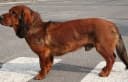
Most commonly affected: Alpine Dachsbracke, German Shepherd.