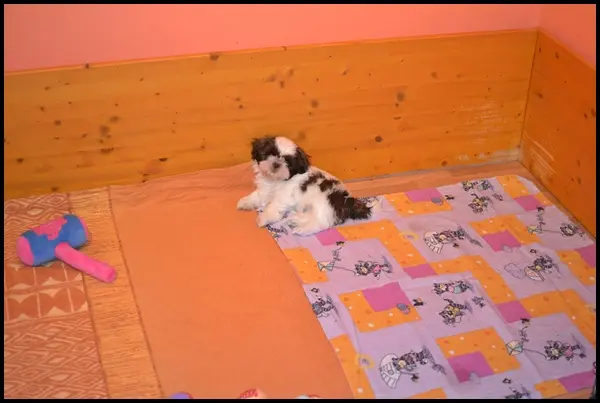
Introduction: An affectionate companion with an honest disclaimer
The Shih Tzu, whose name translates to "lion dog," boasts a history spanning centuries within the imperial palaces of China. Anyone who assumes this dog is aloof or arrogant is mistaken: The Shih Tzu personality is defined by a warm heart, deep affection, and infectious cheerfulness. They were never bred for hunting, herding, or guarding; they were created solely to be human companions.
That’s the beautiful side. However, honesty requires us to address the other side: The Shih Tzu is a brachycephalic—or short-nosed—breed and is classified in Germany as a breed affected by torture-breeding (Qualzucht). Their flat face carries health burdens you should be aware of before falling in love with their appearance. In this article, we take a close, honest look at the Shih Tzu temperament and the physical toll selective breeding has placed on these dogs.
The Shih Tzu Personality: A little lion with a huge heart
To understand the Shih Tzu, it helps to look at their purpose. Their classification as a companion dog reveals the most important trait: they are fundamentally human-oriented.
A shadow on four paws
When you choose a Shih Tzu, you’re choosing a constant companion. These dogs love being near their family. It’s not rare for your Shih Tzu to follow you every step of the way—from the sofa to the kitchen and often into the bathroom. Owners affectionately call them "shadows." This strong need for closeness makes them suitable companions for people who spend a lot of time at home.
Cheerful, playful, and a bit stubborn
The Shih Tzu temperament is a mix of tender calm and clownish playfulness. They aren’t hyperactive athletes, but they have their "zoomies," where they dash around the house with their favorite toy. Just as much, they enjoy long naps on a soft cushion—preferably on your lap.
Beneath the friendly facade often lies a confident little thinker. They know exactly what they want (and what they don’t). This charming stubbornness is typical of East Asian companion dogs and requires the owner to provide loving, consistent guidance rather than force.
The Health Reality: What brachycephaly means for the Shih Tzu
Many breed profiles skip this part—we won’t. The Shih Tzu is bred to be brachycephalic: a short, flat muzzle, round head, and large, prominent eyes. These very features, which many find cute, are the cause of typical, sometimes lifelong ailments. In Germany, such breeding practices fall under the "torture-breeding" paragraph (§ 11b of the Animal Welfare Act), and the Shih Tzu is explicitly listed in veterinary guidance on the topic. This is no reason for panic, but it is a reason to make an informed decision with your eyes wide open.
Breathing, exertion, and heat
In short-nosed dogs, the skull is shortened, but the soft tissue in the nose and throat remains the same size, becoming crowded in a tight space. Common consequences include narrowed nostrils, an elongated soft palate, and increased airway resistance. This can manifest as snoring, wheezing, rapid fatigue, and in severe cases, Brachycephalic Obstructive Airway Syndrome (BOAS). Because these dogs primarily release heat through panting, their temperature regulation is also impaired: a Shih Tzu will overheat faster than a long-nosed dog and is at higher risk of heatstroke in summer. Strenuous exercise, sports in hot weather, or jogging alongside a bicycle are not suitable for them.
The eyes
The large, forward-facing eyes sit in shallow sockets, leaving them relatively unprotected. This makes them prone to dry eye, irritation, and corneal injuries or ulcers. In rare cases, the eyeball can prolapse even from minor trauma. Daily inspection of the eyes and facial skin folds is a basic grooming requirement, and you should have any signs of blinking, tearing, or cloudiness checked by a veterinarian promptly.
The teeth
Even a small dog has a full set of teeth—around 42. In the Shih Tzu’s shortened jaw, they are often crowded and misaligned, promoting tartar, plaque, and gingivitis. Regular dental care and veterinary check-ups prevent painful problems.
What this means for acquisition
If this breed appeals to you, the most honest first step is to look at rescue organizations: Animal shelters and breed-specific rescues often have Shih Tzus and mixes waiting for a home. If your path leads you to a breeder, please choose one who selectively breeds against these burdens: evidence of free breathing, open nostrils, a visible muzzle rather than a completely flat face, healthy eyes, and documented veterinary examinations of the parent animals. A breeder who puts looks above breathing is the wrong choice—no matter how cute the puppy photos are.
Who is the Shih Tzu suitable for? An honest assessment
The Shih Tzu is temperamentally adaptable. Their daily life fits well into various lifestyles—provided you account for the health issues described above and the grooming requirements.
Families and children
The Shih Tzu is very child-friendly. Compared to many other very small breeds (typically weighing about 4 to 7.5 kg with a height of 25 to 27 cm), they are quite sturdy. They enjoy being part of a busy household and usually endure the hustle and bustle calmly. The golden rule applies: children must respect the dog's boundaries and not treat them as toys. A retreat area where the dog won't be disturbed is mandatory—especially because of the sensitive eyes, rough handling is a no-go.
Seniors and singles
The Shih Tzu personality fits well with older or single people. They don't have an extreme urge to exercise and are physically easy to handle, meaning they don't have high athletic demands. Their affection helps combat loneliness. It remains important that someone can reliably manage daily grooming and regular veterinary care.
First-time owners
Temperamentally, the Shih Tzu is a good beginner dog: their friendly nature forgives small training mistakes. Their trainability is considered moderate—not due to a lack of intelligence, but because they like to question the purpose of commands. If they don't see a reason for "sit," they might just stand there. As a first-time owner, you should also be aware that this breed is medically demanding and can involve regular, sometimes higher, veterinary costs.
Daily life: What do Shih Tzu owners say?
Before bringing a dog home, it's worth looking at the experiences of long-time owners. Typical Shih Tzu experiences paint a clear picture of life with this breed.
Apartment living and city suitability
Do you live in a city apartment without a garden? That’s not an obstacle. As long as the Shih Tzu gets their regular, leisurely walks, they are content in an apartment. They aren't prone to constant yapping. They might briefly alert you to unusual noises in the hallway with a watchful bark, but they usually calm down immediately. When using a leash, choose a well-fitting chest harness instead of a collar—this protects their already compromised airways.
Interaction with other dogs and pets
In terms of sociability, the breed is pleasant. Towards other dogs, the Shih Tzu is usually open-minded, though sometimes a bit indifferent to very boisterous peers. Living with cats generally goes smoothly if they are introduced as puppies, as the Shih Tzu has practically no hunting instinct.
Detailed breed standards and information on responsible breeding in Germany can be found at the VDH (German Kennel Club).
Exercise needs: More than just a lap dog
People often assume small companion dogs don't need activity. That is a misconception that quickly leads to behavioral problems in Shih Tzus.
Walks: Quality over quantity
A Shih Tzu doesn't need to walk for miles—that would overtax their short nose and legs. Three to four leisurely walks a day, lasting about 20 to 30 minutes each, are good for both body and mind. It’s less about long distances and more about plenty of time for sniffing. On warm days, pay special attention to their breathing and move your walks to the cooler morning and evening hours.
Mental stimulation at home
Because the Shih Tzu is very people-oriented, they love playing together. A few field-tested ideas:
- Snuffle mats: Hide small treats in the mat. This mentally exhausts the dog very effectively.
- Intelligence toys: Slider puzzles or treat balls keep the little thinker busy.
- Trick training: Simple tricks like "give paw" strengthen the bond and are fun for them, provided the reward is right.
Challenges: The other side of the coin
No dog breed is perfect. Besides health issues, there are a few personality and daily life points you should address proactively.
Separation anxiety: When being alone becomes torture
A dog that has been bred for centuries to be with their humans suffers when suddenly isolated. Many Shih Tzus develop separation anxiety if being left alone isn't trained incrementally and positively from the start. A Shih Tzu is not a dog you can leave alone for eight hours a day. If you work full-time, you definitely need a plan—working from home, dog daycare, or a pet sitter.
The legendary stubbornness in training
The Shih Tzu can certainly tune you out. If it’s raining, they sometimes refuse to put a paw outside. Patience is required here. Don't get angry, because this sensitive breed reacts to harshness with complete shutdown. With humor, positive reinforcement, and especially tasty snacks, you will achieve much more than with strictness.
Grooming: A test of character for dog and owner
Grooming shapes life together significantly. The dense, long coat without an undercoat tends to mat easily. While the Shih Tzu barely sheds, they must be brushed almost daily. This requires the dog to develop a high tolerance for being handled. Standing still on the grooming table should be a firm part of their training. Recommendations for maintaining the health of small dogs through proper care and nutrition are also provided by the German Federal Chamber of Veterinarians.
Training tips for the Shih Tzu temperament
How do you train a dog that is stubborn, sensitive, and playful all at once? The secret lies in bonding and motivation.
- Find their "price": Figure out what your Shih Tzu would do anything for—a piece of cheese, a specific toy, enthusiastic praise? Use this resource specifically for training.
- Short, exciting sessions: It’s better to train three times a day for five minutes than once for twenty. The Shih Tzu quickly loses interest if forced into repetitive tasks.
- Early socialization: Shih Tzu puppies should be introduced to sounds, people, dogs, and situations early on so that the confident little lion doesn't become an insecure yapper. A responsible breeder who does this preliminary work can often be found through breed clubs like the Verband Deutscher Kleinhundezüchter e.V..
- Consistency in daily life: If the dog isn't allowed on the sofa, they are never allowed on it. The intelligent Shih Tzu will immediately use inconsistency to their advantage.
Frequently asked questions
Is the Shih Tzu a product of torture-breeding?
The Shih Tzu is bred to be brachycephalic, or short-nosed, and is listed in Germany among breeds affected by torture-breeding. The legal basis is the torture-breeding paragraph § 11b of the Animal Welfare Act. Not every individual dog is equally affected, but the typical burdens—labored breathing, heat sensitivity, sensitive eyes, and dental crowding—are breed-related. If you love the breed, you should prioritize adoption and, when purchasing, look exclusively for health-oriented breeders with demonstrably free breathing.
Do Shih Tzus bark a lot?
No, the Shih Tzu is considered a rather quiet breed and is not a typical yapper. They will alert you briefly if someone is at the door, but with good guidance, they calm down quickly. Constant barking usually only stems from boredom or a lack of training.
Can a Shih Tzu stay alone?
Being alone is one of this breed's biggest weaknesses because they are extremely attached to their humans. With patience and incremental training as a puppy, many Shih Tzus can learn to stay alone for a few hours. A full eight-hour workday is not suitable for these sensitive companion dogs.
How old does a Shih Tzu get?
With good care, species-appropriate nutrition, and regular veterinary check-ups, Shih Tzus typically reach an age of about 10 to 16 years. How healthy these years are depends heavily on the quality of breeding—above all, on how freely the dog can breathe.
Conclusion: Is the Shih Tzu right for you?
The Shih Tzu personality is special: a tender, cheerful, affectionate companion for people who enjoy the quieter side of life. They don't need marathons; they need closeness, mental stimulation, and a permanent place by your side.
In all honesty, there is another side: this breed carries the burden of its breeding. Those who take in a Shih Tzu take responsibility for a dog that breathes harder, has more sensitive eyes, and requires more grooming and medical care than many other breeds. If you accept this with open eyes, seriously consider adoption, and—if you buy—only support breeding that places health above appearance, you will find a loyal friend in this little lion.
Do you want to dive deeper into the health and care aspects? You can find a transparent overview in our Shih Tzu breed profile. And if you want general information about responsible dog placement and adoption, HonestDog is your starting point for honest, health-oriented dog placement.