Loading breed
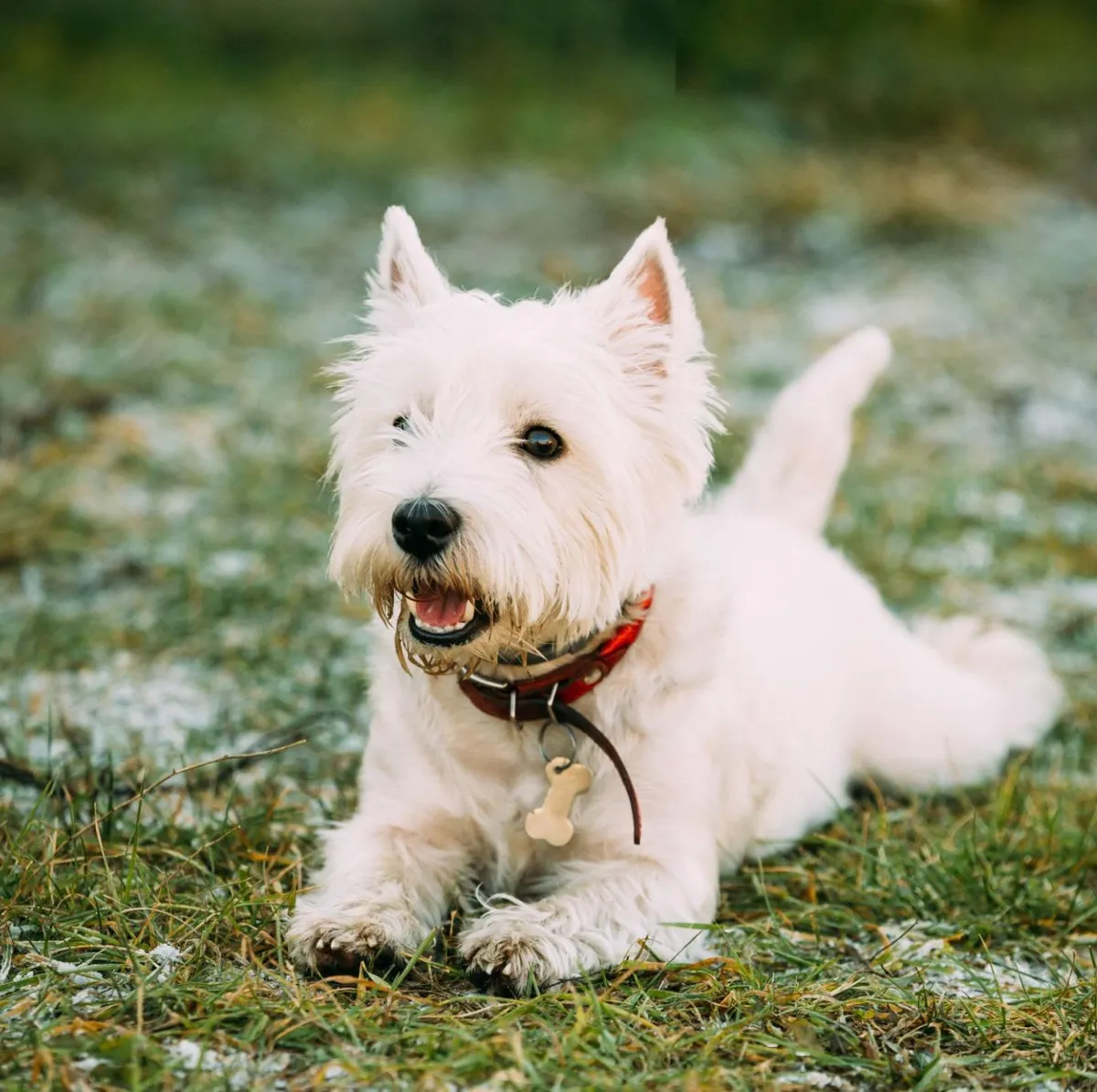
West Highland White Terrier
Health grade CThe West Highland White Terrier is a confident, spirited companion—an uncompromising Erdhund (earth dog), bred to independently track foxes and badgers into narrow burrows in the Scottish Highlands. His striking white coat was simply intended to ensure he wasn't mistaken for his prey.
- Height26–30 cm
- Weight7–10 kg
- Life expectancy12–16 yrs
- Puppy price1,800–3,000 €
- Energy3/5
The Essentials at a Glance
The West Highland White Terrier is a confident, spirited companion—an uncompromising Erdhund (earth dog), bred to independently track foxes and badgers into narrow burrows in the Scottish Highlands. His striking white coat was simply intended to ensure he wasn't mistaken for his prey.
- Health grade C: The West Highland White Terrier is rated with a grade C due to an above-average predisposition to eight known hereditary diseases.
- You appreciate a dog with a mind of its own and can lead with love and absolute consistency, without wanting to break his terrier personality.
- You enjoy keeping him mentally and physically stimulated—even though he is small, this hunter needs scent work or long walks in nature.
- You expect blind obedience and 100% recall in the woods—as an Erdhund, he was bred to make his own decisions the moment he spots a trail or a mouse hole.
Is the West Highland White Terrier right for you?
At a glance
West Highland White Terrier overview
The essentials — key facts, traits, and health priorities — before you dive deeper.
Health grade
Relative to other breeds
S
A
B
C
D
E
Very healthyHigher risk
Average — several important tests are expected.
See full health info & tests →
Note: This health overview is AI-assisted and editorially reviewed. It is for orientation only and does not replace veterinary advice.
Lifespan
12–16 yrs
Height
26–30 cm
Weight
7–10 kg
Practical
- Puppy price: 1,800 – 3,000 €
- Coat: hard, dense, about 5 cm long, with an undercoat
- Origin: Scotland
Temperament
Energy
Trainability
Family fit
With kids
Daily life
Care effort
Shedding
Barking
City-friendly
Guard instinct
What matters most
Especially with a West Highland White Terrier, choosing the right breeder is the single most important decision you'll make. Serious breeders consistently test the parents for inherited conditions, prioritize healthy early socialization, and stay accountable long after handover. A cheap puppy without health screening tends to become the most expensive dog later on.
See HonestDog breeder standards →Colors & coat
What colors does the West Highland White Terrier come in?
The coat colors you will see in West Highland White Terrier litters — including which ones fall outside the breed standard and which carry genetic risk.
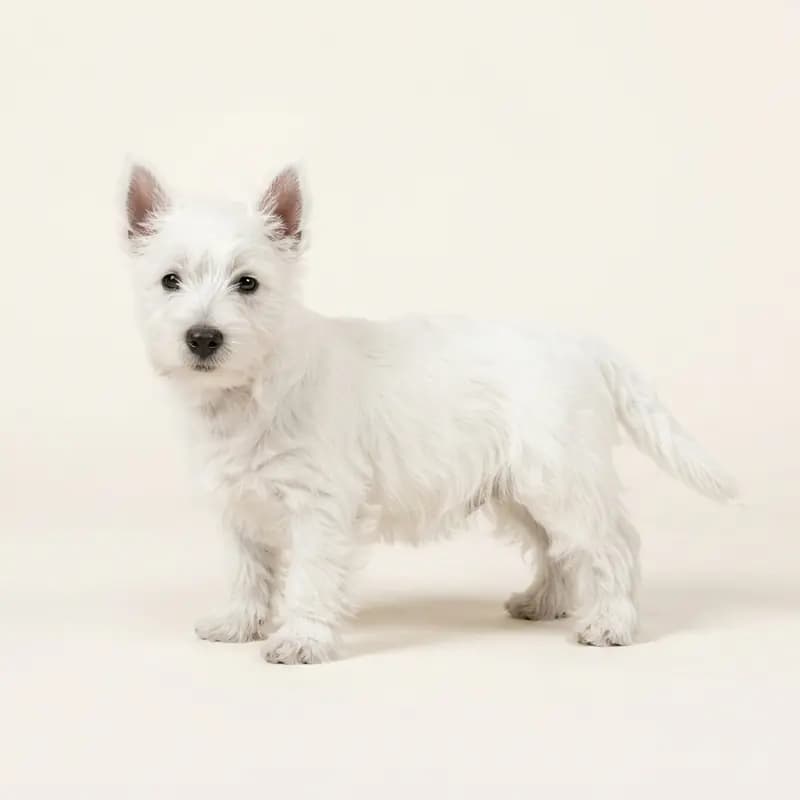
Eye colors
 Brown
Brown
Coat type
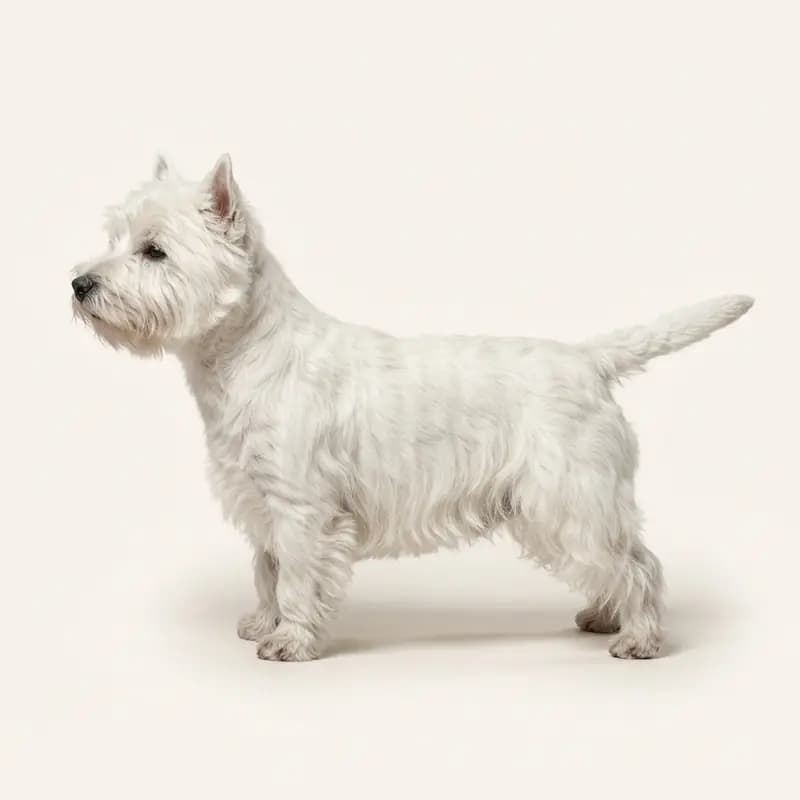 Illustrative image
Wire
 Double coat
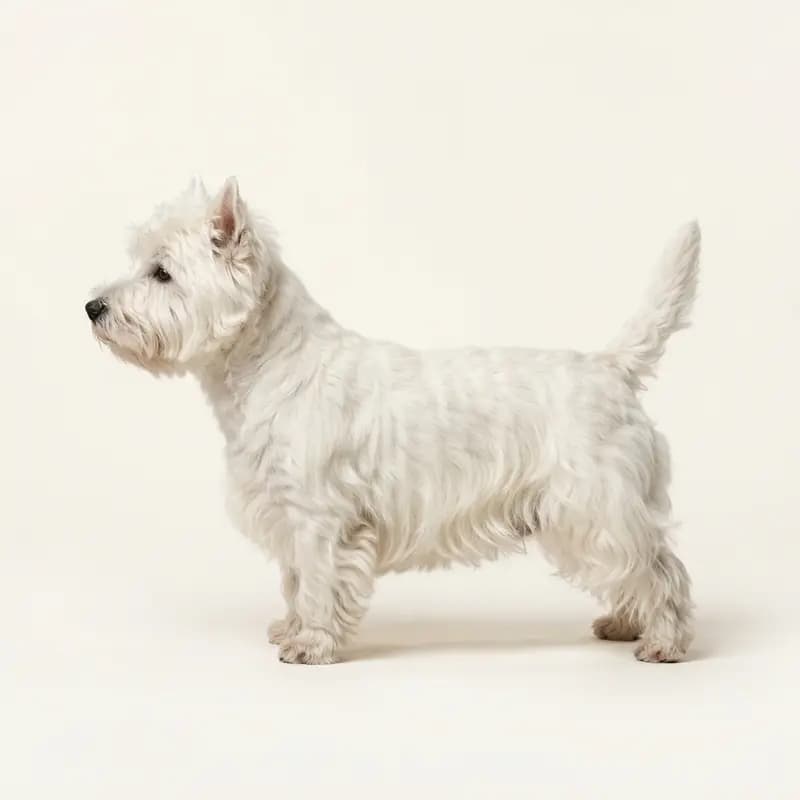 Illustrative image
Medium
Is the West Highland White Terrier right for you?
The West Highland White Terrier is a confident, spirited companion—an uncompromising Erdhund (earth dog), bred to independently track foxes and badgers into narrow burrows in the Scottish Highlands. His striking white coat was simply intended to ensure he wasn't mistaken for his prey.
Perfect for you if:
- You appreciate a dog with a mind of its own and can lead with love and absolute consistency, without wanting to break his terrier personality.
- You enjoy keeping him mentally and physically stimulated—even though he is small, this hunter needs scent work or long walks in nature.
- You are looking for a vigilant, fearless companion who doesn't see himself as a lapdog, but walks through life confidently on his own four paws.
- You enjoy being out in any weather, as his coarse, weather-resistant double coat makes him a robust outdoor enthusiast.
Less ideal if:
- You expect blind obedience and 100% recall in the woods—as an Erdhund, he was bred to make his own decisions the moment he spots a trail or a mouse hole.
- You live in an apartment with thin walls and are bothered by alertness—he will reliably, and often loudly, announce when something moves outside.
- You are looking for a patient plush toy for small children that will put up with anything—terriers have a clear sense of personal space and will defend themselves if pushed.
- You think his compact size automatically means less effort in daily training.
The real vibes check
At first glance, a Westie looks like a soft stuffed animal from a commercial—but beneath that white fur beats the heart of a Scottish street fighter. He doesn't waste time debating; he takes matters into his own hands, whether he's facing a much larger dog or a rustle in the bushes. You aren't getting a lapdog, but an extremely brave big dog in a very practical, small package.
Self-check
Would the West Highland White Terrier really fit your life?
Answer 6 quick questions about your everyday life and see how well the West Highland White Terrier fits you — including an honest cost estimate per month, per year, and across the dog's lifetime.
Fit checkCost estimateRisk dice
Takes about 1 minute · free & anonymous
Breed Profile
First, let's look at the adorable appearance of the West Highland White Terrier, often affectionately called "Westie." The breed belongs to FCI Group 3, the Terriers, and within this group to Section 2, the Low-Ranged Terriers. The Westie is a compact, sturdy small dog with a distinctive white coat that gives it a distinctive appearance. Its fur is hard and dense, which helps it withstand various weather conditions. Its dark, slightly almond-shaped eyes and erect ears give it an intelligent and curious expression. He has a strong jaw and a black nose that contrasts beautifully with his white fur. Westies do not differentiate between performance and show lines; they are usually kept as pets and companion dogs.
All measurements in detail
- Height
- 26 - 30 cm (Female), 26 - 30 cm (Male)
- Weight
- 7 - 9 kg (Female), 7 - 10 kg (Male)
- Life Expectancy
- 12 - 16 yrs
- Character
- lively, confident, loving
- Coat
- hard, dense, about 5 cm long, with an undercoat
- Coat Color
- white
- Price
- 1800 - 3000 €
Character & Temperament
This little dog has a huge heart and a personality much bigger than his stature! Westies are known for their liveliness and drive. They are energetic, bright and love being the center of attention. Her confident demeanor can sometimes seem a little stubborn, but that only adds to her charm. As original hunting dogs, Westies have a strong hunting instinct. This means they tend to chase small animals and enjoy sniffing around outdoors. It's important to keep this in mind, especially if you have a garden or live near forests. One of the most charming characteristics of Westies is their love for people. They are loving and affectionate towards their family members and can be very good companions. Their playful nature ensures that there is never a dull moment with a Westie. They love toys and games and often bring their favorite toys to their humans to play together. Despite their affectionate nature, Westies are relatively independent dogs. They are often content to keep themselves busy and can learn to stay alone when necessary. However, it is important to note that too much alone time can lead to boredom and possibly unwanted behavior. When it comes to alertness, Westies are alert and curious. They will often bark when they notice something new or unfamiliar. Their barking is not aggressive, but rather a way of alerting their humans to something. Therefore, they can also serve as guard dogs, although their small size does not make them effective guard dogs. Although Westies are friendly and loving, it is important to note that they can sometimes be stubborn. This attachment can be challenging to parent, which is why it's important to work with patience and positive reinforcement.
| Trainability Willing to learn with clear rules and regular training. | Balanced |
| Watchfulness Occasionally alerts but is fundamentally open. | Low |
| Openness to Strangers Neither pushily friendly nor suspicious. | Neutral |
| Hunting or Herding Drive Noticeable drive — needs attention around small animals. | Moderate |
Fun Fact!
Did you know that the West Highland White Terrier was originally bred in Scotland to hunt rodents and foxes, and that its white coat color was developed to distinguish it from its prey and prevent hunting accidents?
What Awaits You
The West Highland Terrier is an active, hunting-motivated and barking dog. He needs consistent training.
Housing & Care
The West Highland White Terrier makes a good city dog as long as it gets enough exercise and mental stimulation. He is adapting sable and can live in an apartment if he gets regular walks. Westies are often good with children, but it is always important to monitor interactions between children and dogs. They are also usually friendly with cats and other pets if properly socialized.
- Family Friendly
Loves family life and thrives in a group.
Family-oriented - Child Friendly
Gets on well with children — with adult supervision.
With supervision - Dog Friendly
Usually gets on fine with other dogs.
Generally tolerant - City Friendly
Adapts well to city living and urban environments.
Well-suited to city life
Owning a dog is a privilege, but it's also a real responsibility. Before you bring one into your life, be honest with yourself about the commitment it takes.
Training & Education
Westies are intelligent and capable of learning, but can also be stubborn. It is important to start training early and show consistency and patience. Positive reinforcement is the key to success when training a Westie. Because Westies were originally bred as hunting dogs, they have a lot of energy and require both physical and mental stimulation. Agility, obedience training, or nose work could be great activities for a Westie. However, you should be careful not to overuse the dog. It is also important to teach the Westie how to tolerate frustration and learn impulse control, as they can sometimes become overconfident and excitable. Ball games should be used carefully, as Westies tend to become ball junkies if they play with balls too often and too intensely.
Nutrition & Care
A balanced diet is crucial for the West Highland White Terrier. Westies tend to gain weight, so it's important to pay attention to the quantity and quality of food. A diet of high quality food containing all necessary nutrients is recommended. Grooming Westies is a little more difficult because they have a dense, hard coat with an undercoat. The coat should be brushed regularly to prevent matting and remove dead hair. The climate in Germany is generally not a problem for Westies as their fur protects them from both cold and wet conditions. They shed moderately, but regular brushing can minimize shedding.
| Care Level Needs regular professional grooming — time-consuming and costly. | High-maintenance |
| Exercise Needs Needs 1–2 hours of real exercise daily. | Active |
| Shedding Regular shedding — dog hair on clothes is now normal. | Moderate |
| Trainability Willing to learn with clear rules and regular training. | Balanced |
Our experts are still reviewing this information. Spotted something wrong? Email us at info@honestdog.de.
Health & hereditary diseases
Health
C
Solid, watch carefully
Health grade
The West Highland White Terrier is rated with a grade C due to an above-average predisposition to eight known hereditary diseases. The eyes are particularly at risk from conditions such as Progressive Retinal Atrophy (PRA) and glaucoma, which necessitate regular screenings. Additionally, patellar luxation is a known musculoskeletal issue that should be ruled out by ensuring both parents are healthy before purchasing a puppy.
Grade is relative to other breeds — AI-assisted and editorially reviewed.
In daily life this can mean
You should keep an eye on his weight and have any changes in his skin or breathing checked by a veterinarian early on.
The breeder's role
Reputable breeders have the parents' knees, eyes, and jawbones tested and strictly avoid lines with familial clusters of skin or lung issues.
Note: This health overview is AI-assisted and editorially reviewed. It is for orientation only and does not replace veterinary advice.
No Health Tests Available
No specific health tests are currently available for this breed.
Costs & where to find one
How much does a West Highland White Terrier cost?
A West Highland White Terrier costs around ~€180 per month (€90 – €330, depending on your setup). The first year adds up to roughly ~€5,360 including purchase, equipment and puppy school; across the dog's life (14 years) it comes to about ~€33,000.
With surgery cover, running costs come to about ~€170 per month — in return, your share of a major operation drops from several thousand euros to around 20 percent.
Per month
~€180
In the first year
~€5,360
Across the dog's life
~€33,000
Purchase from a breeder: €1,800 – €3,000
Estimate at a mid-range setup (suburban, dry food, 1–2 hours of daily exercise), average German prices, as of July 2026.
Calculate your personal costs1-minute self-check with your own answers
Looking for a West Highland White Terrier?
Appearance, variants & origin
History
The full history
The West Highland White Terrier comes from Scotland and was originally bred to hunt smaller prey such as foxes and rodents. The Westie is closely related to other Scottish terriers such as the Cairn Terrier and the Scottish Terrier. In the 19th century they were called Poltalloch Terriers, named after the estate of Colonel Edward Donald Malcolm, who is considered one of the breed's main developers. It is believed that Colonel Malcolm began breeding white terriers after he accidentally mistook one of his beloved Cairn Terriers for a wild animal while hunting and shot him. The white coat color made the dogs more visible during hunting. The name West Highland White Terrier was officially adopted when the breed was recognized by the Kennel Club in Great Britain in 1907. The Westie quickly gained popularity and is now valued worldwide as a loving companion dog.
Original Use
The West Highland White Terrier was originally bred to hunt small game such as foxes and badgers. Its white fur color made it easier to see in the field.
Origin
Scotland
Date
1900
Owner experiences
What owners say about the West Highland White Terrier
Daniel B., Halter aus Hessen (Rüden Sparky & Oskar, seit 2011)
Ich habe gleich zwei von den weißen Wirbelwinden bei mir zu Hause herumrennen. Sparky und Oskar sind für uns die perfekten Begleiter. Entgegen dem typischen Klischee des kläffenden 'Oma-Hundes' an der Flexileine sind unsere beiden extrem gut erzogen. Sie laufen fast ausschließlich ohne Leine, jagen überhaupt nicht und hören aufs Wort. Sie sind sehr verträglich mit anderen Hunden und unglaublich lernwillig – besonders, wenn man ein Leckerli parat hat.
Man muss sich aber im Klaren darüber sein, dass Westies eine sehr konsequente Erziehung brauchen. Sie sind keine reinen Schoßhunde, sondern eigenständige Persönlichkeiten. Während Oskar im Umgang mit Kindern völlig tiefenentspannt ist und sich alles gefallen lässt, ist Sparky aufgrund einer schlechten Erfahrung als Junghund misstrauischer und würde im Notfall auch mal schnappen, wenn er bedrängt wird. Eine gute Sozialisierung von Anfang an ist bei dieser Rasse einfach das A und O.
Romaine H., ehemalige Halterin aus der Schweiz (Rüde, 16 Jahre gehalten)
Mein treuer Begleiter hat mich stolze 16 Jahre lang durchs Leben begleitet. In seinen jungen Jahren war er ein unglaublich eifriger Fährtensucher, und wir haben uns viel mit Begleithundesport beschäftigt. Apportieren fand er allerdings sterbenslangweilig – da kam einfach der typische Terrier-Dickschädel durch, der selbst entscheiden möchte, was Sinn ergibt und was nicht. Er war ein absolut bodenständiger, charakterstarker Hund.
Was man als zukünftiger Halter unbedingt wissen muss: Ein Westie ist nur auf Hochglanzfotos strahlend weiß. In der Realität lieben sie es, im Dreck zu wühlen und zu buddeln. Zudem ist die Fellpflege durch das regelmäßige Trimmen recht aufwendig. Gesundheitlich hatten wir im Alter leider mit einer schweren Lungenfibrose zu kämpfen, was bei älteren Westies leider keine Seltenheit ist. Dennoch war er jede Sekunde wert.
Paraphrased from real owner reports
Loading owner stories
Community Posts
FAQ & more
Frequently asked questions about the West Highland White Terrier
Is a Westie the right dog for me?
The Westie is an adaptable dog that adjusts well to various lifestyles. Research the temperament, grooming needs, and space requirements before deciding.
How long does a Westie live?
The average life expectancy of a Westie is 12-16 years. With proper care and regular vet visits, your dog can live a long, healthy life.
How much grooming does a Westie need?
Westie grooming requirements include regular brushing, nail trimming, and dental care. HonestDog provides detailed grooming tips for every breed.
Is a Westie good for families with children?
The Westie can be a great family dog. Proper training and socialization are key. HonestDog provides family suitability information for every breed.
What colors does the Westie come in?
The Westie comes in these colors: White.
Loading related articles
Are you a West Highland White Terrier breeder?
Showcase your kennel on HonestDog and reach families searching for a responsibly bred West Highland White Terrier.
Why HonestDog?
What makes HonestDog different from other platforms
Full transparency
We lay out what we have: who the breeder is, how they work, and any health records they've uploaded. So you can judge for yourself.
Responsible breeding, assured
Every breeder on HonestDog has their identity and documents checked before their profile goes live. Health records they upload are shown on the profile, so you can see exactly what has been tested.
Trust and verification
We verify breeders and buyers alike, so every conversation happens on solid ground. It's a new standard of trust in dog breeding.
Less hassle, more time
We've already checked the breeders' documents and gathered the details, so you can skip the endless research and focus on finding the right puppy for your family.
Our Mission

We connect dog lovers with responsible breeders and shelters to ensure every dog finds the perfect home.
Founded by dog enthusiasts, our platform focuses on ethical dog breeding and adoption.
Why HonestDog?
We connect you with vetted breeders and shelters so you can find your — your new companion — with confidence.
Vetted Partners
Only verified breeders and shelters — for a safe start.
Highest Standards
Every animal's health and wellbeing is our top priority.
Guides & Resources
Guides, checklists, and breed profiles — so you can make a well-informed decision.