Loading breed
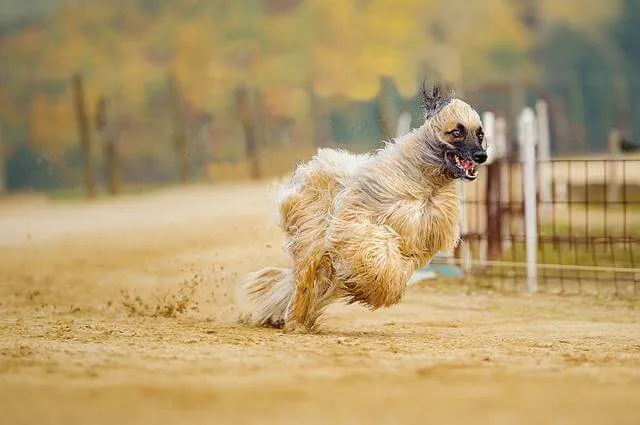
Afghan Hound
Health grade BThe Afghan Hound is a proud, extremely independent sight hound—bred to hunt entirely autonomously in rugged terrain. Its spectacular elegance masks an uncompromising hunter that prefers to make its own decisions.
- Height63–74 cm
- Weight20–30 kg
- Life expectancy12–14 yrs
- Puppy price1,200–2,500 €
- Energy4/5
The Essentials at a Glance
The Afghan Hound is a proud, extremely independent sight hound—bred to hunt entirely autonomously in rugged terrain. Its spectacular elegance masks an uncompromising hunter that prefers to make its own decisions.
- Health grade B: The Afghan Hound is prone to an above-average number of genetic health issues, particularly concerning the eyes.
- You appreciate a cat-like independence and don't need a dog that blindly anticipates your every wish.
- You have access to a securely fenced-in area where it can safely unleash its explosive sprints as a true sight hound.
- You expect it to remain recallable at the sight of a running hare—it has been selectively bred for centuries to switch to autopilot in exactly those moments.
Is the Afghan Hound right for you?
At a glance
Afghan Hound overview
The essentials — key facts, traits, and health priorities — before you dive deeper.
Health grade
Relative to other breeds
S
A
B
C
D
E
Very healthyHigher risk
Solid — a handful of items a good breeder watches.
See full health info & tests →
Note: This health overview is AI-assisted and editorially reviewed. It is for orientation only and does not replace veterinary advice.
Lifespan
12–14 yrs
Height
63–74 cm
Weight
20–30 kg
Practical
- Puppy price: 1,200 – 2,500 €
- Coat: Silky, long, no undercoat
- Origin: Afghanistan
Temperament
Energy
Trainability
Family fit
With kids
Daily life
Care effort
Shedding
Barking
City-friendly
Guard instinct
What matters most
Especially with a Afghan Hound, choosing the right breeder is the single most important decision you'll make. Serious breeders consistently test the parents for inherited conditions, prioritize healthy early socialization, and stay accountable long after handover. A cheap puppy without health screening tends to become the most expensive dog later on.
See HonestDog breeder standards →Colors & coat
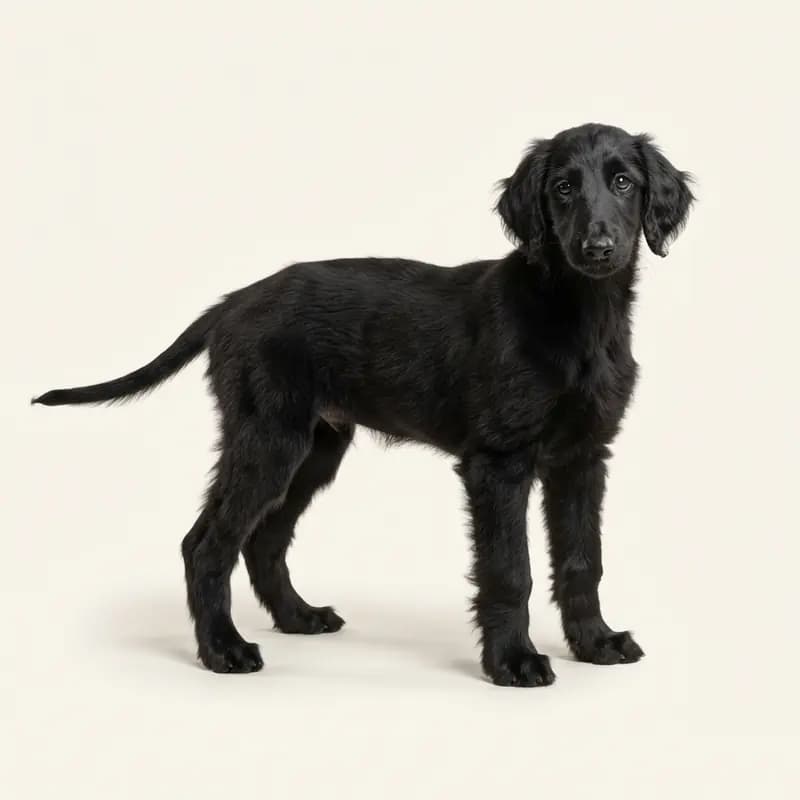
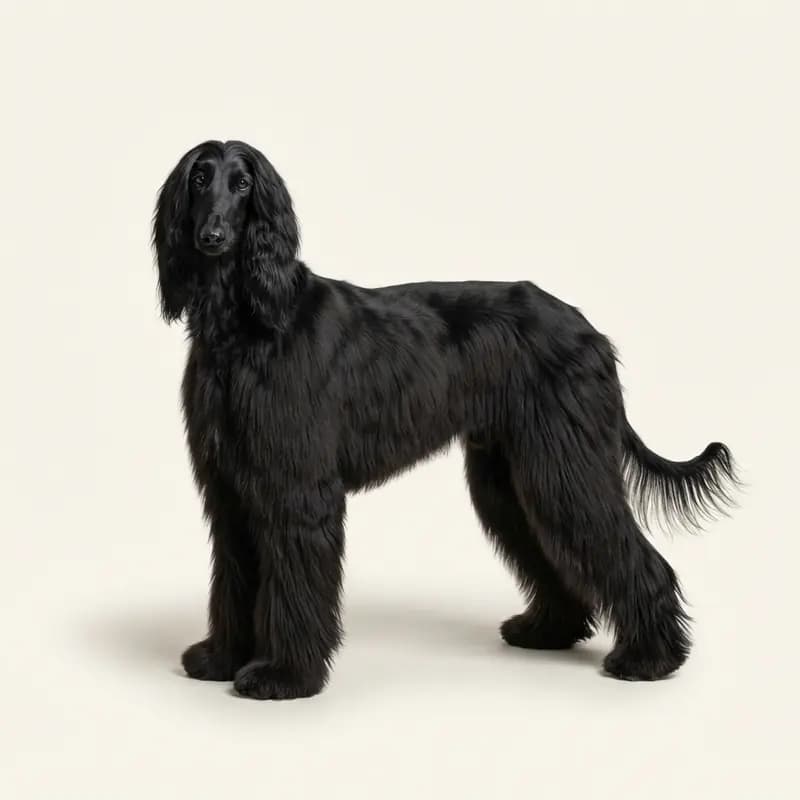
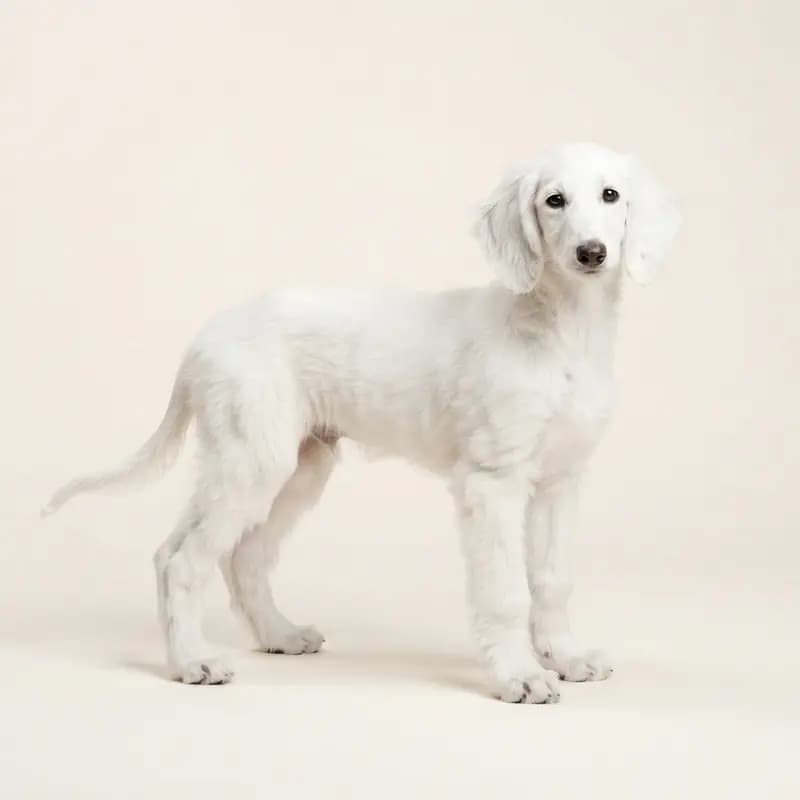
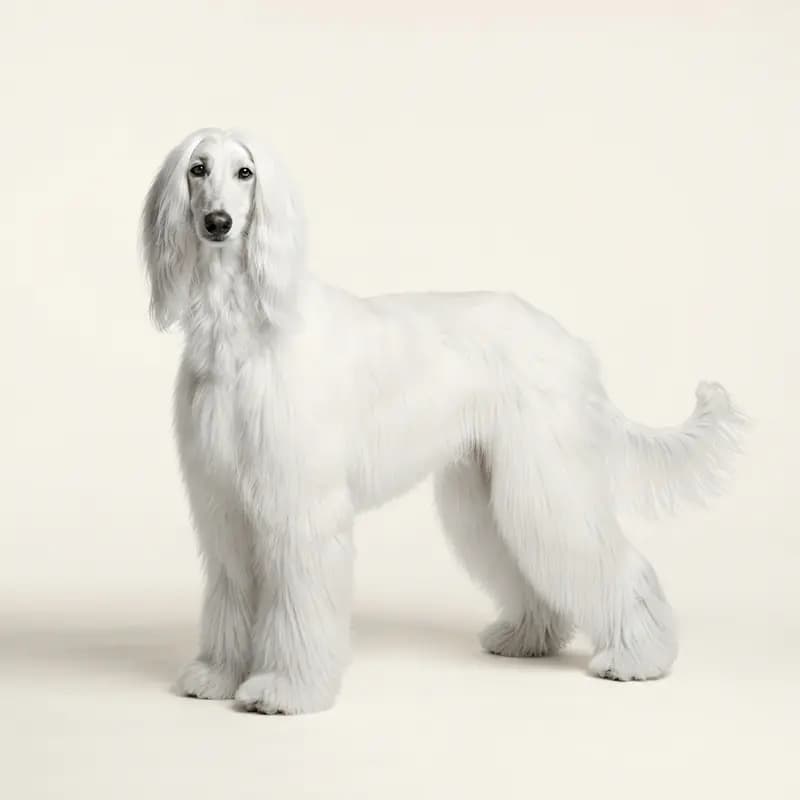
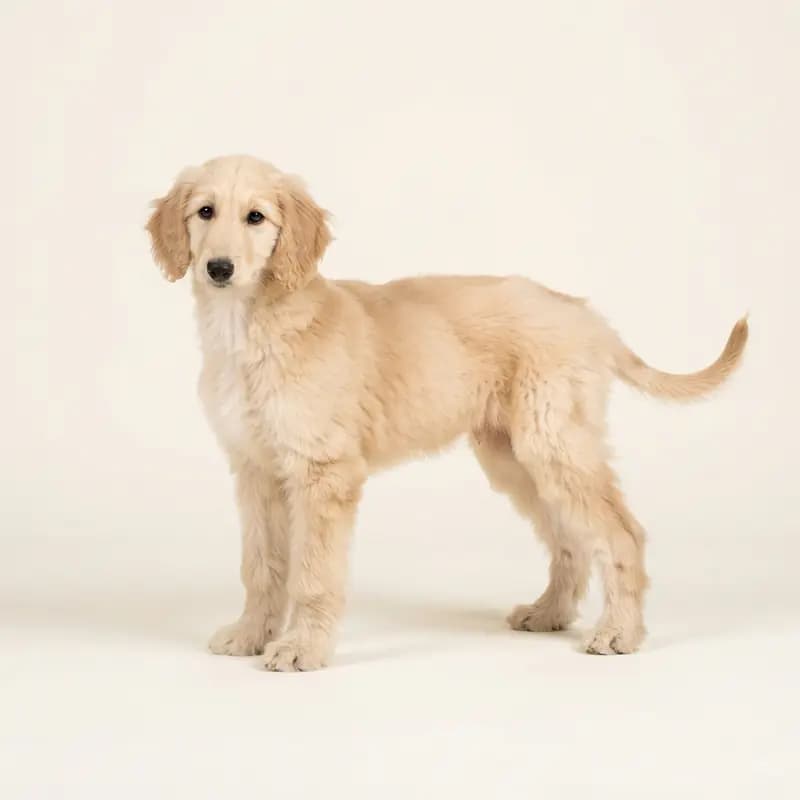
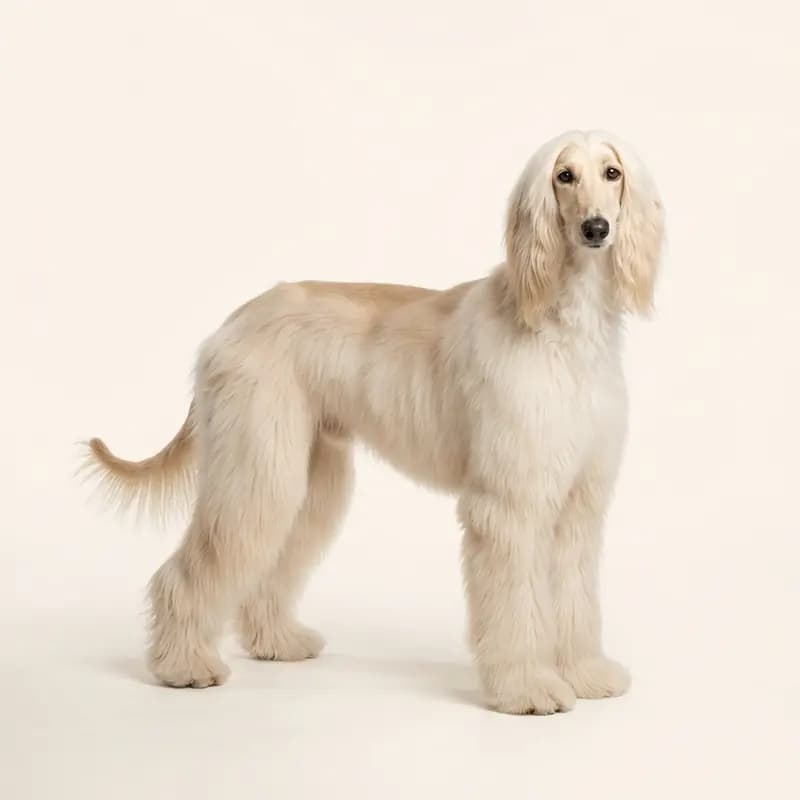
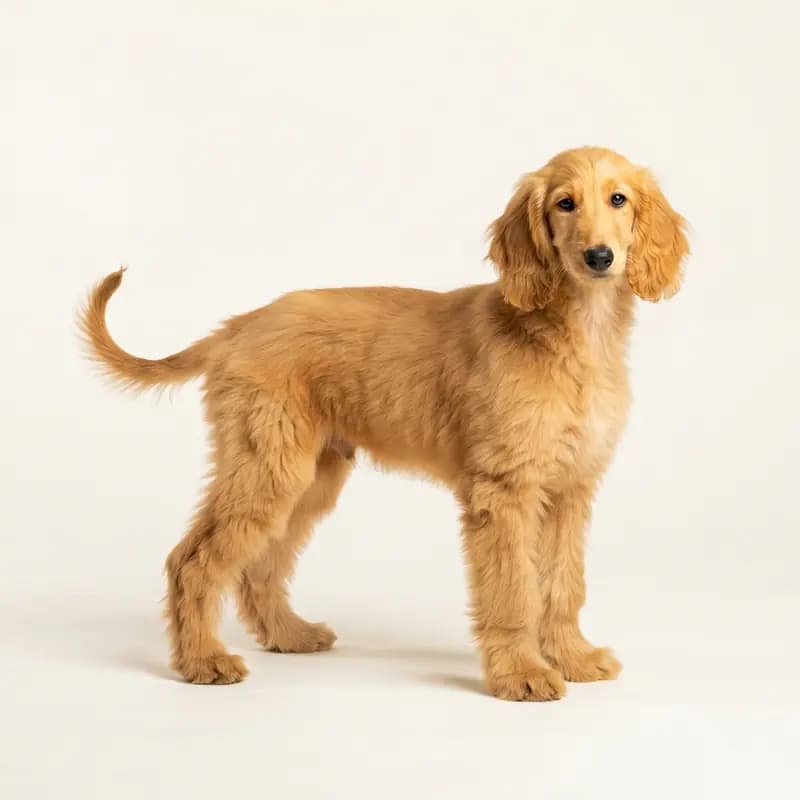
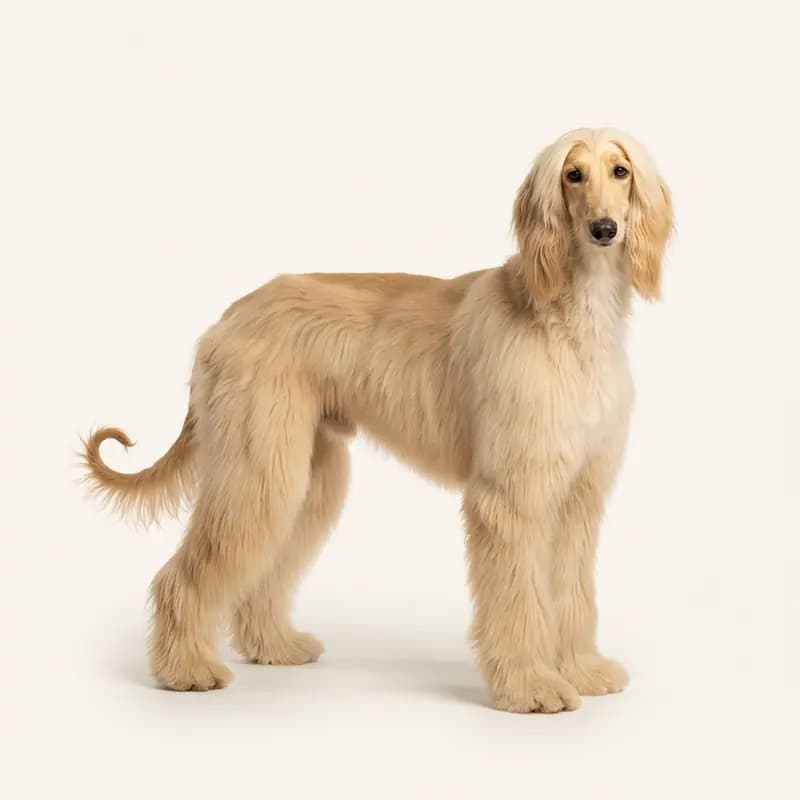
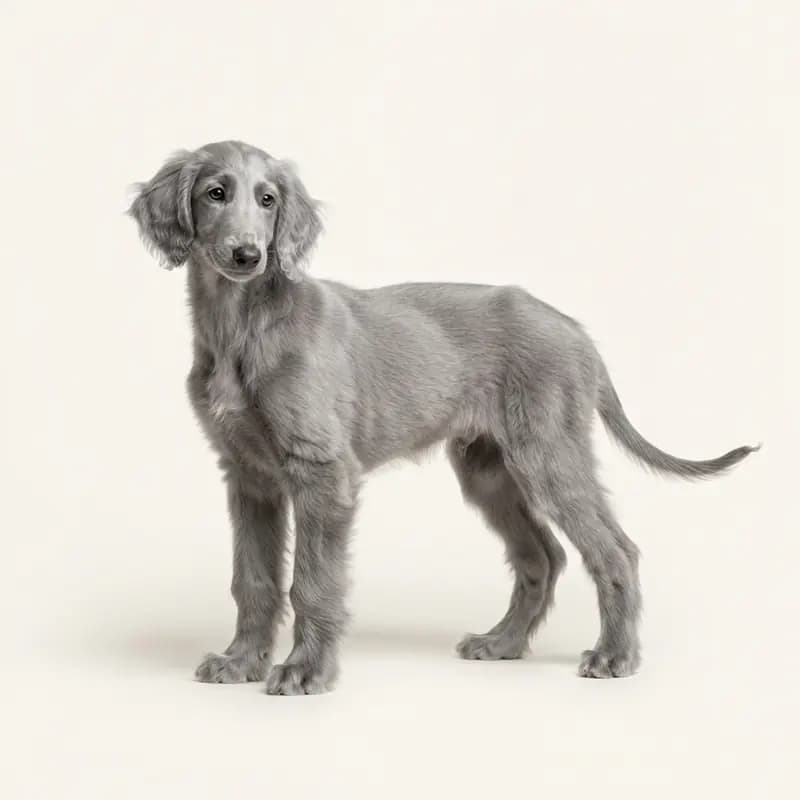
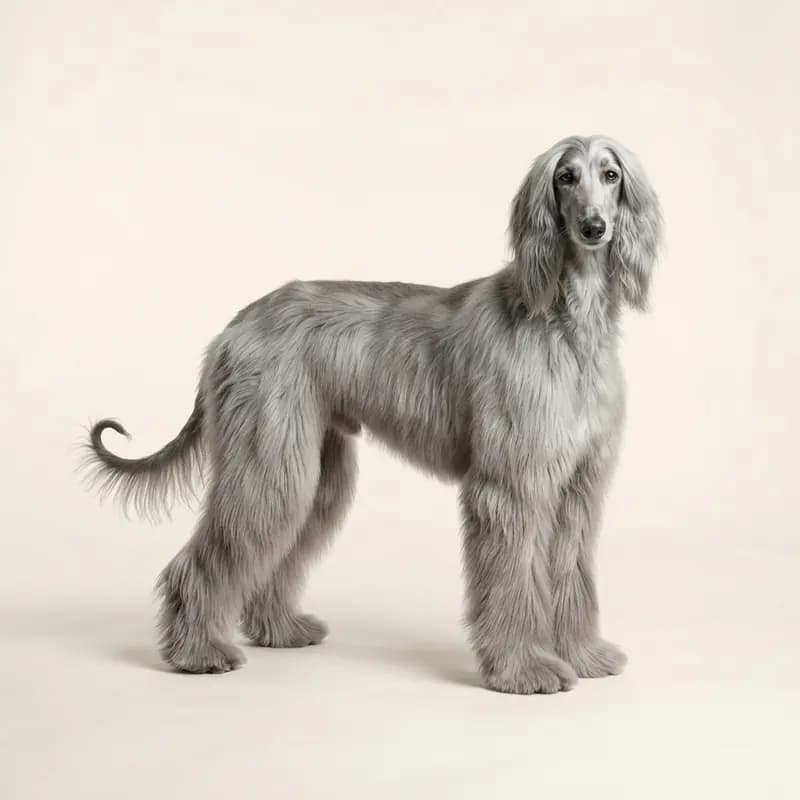
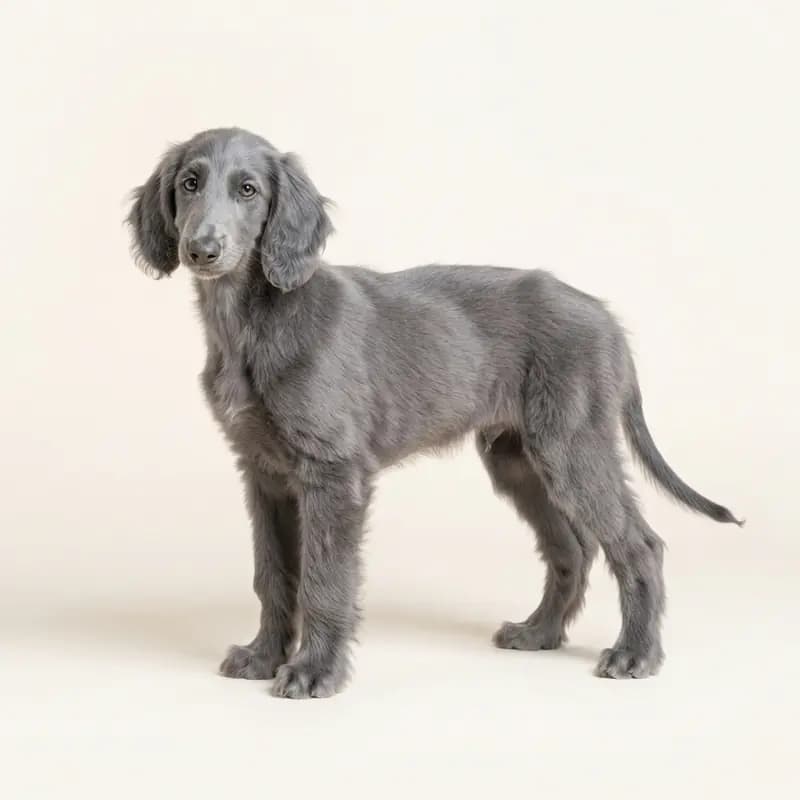
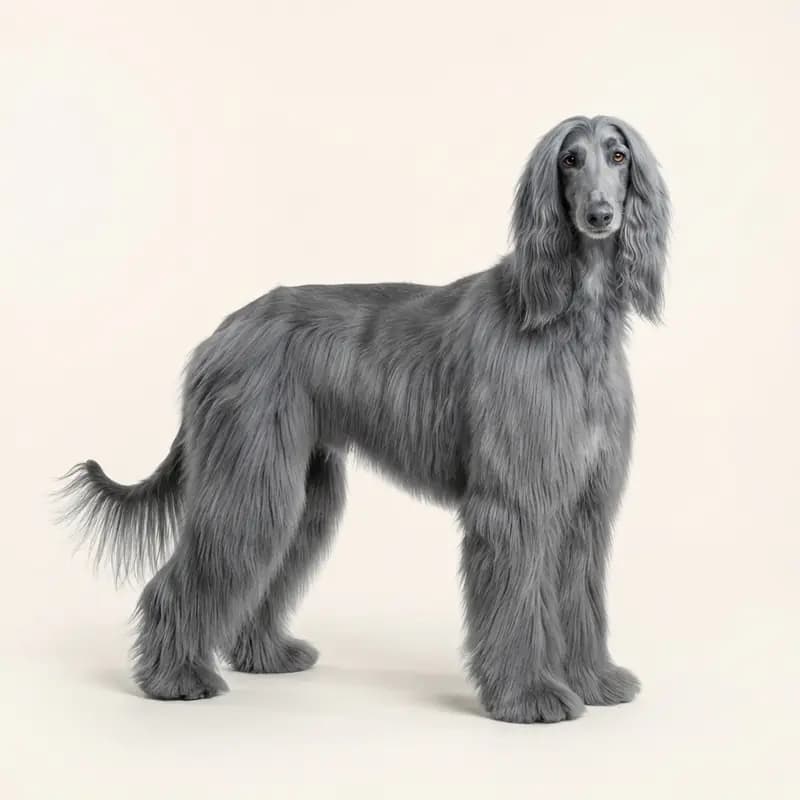
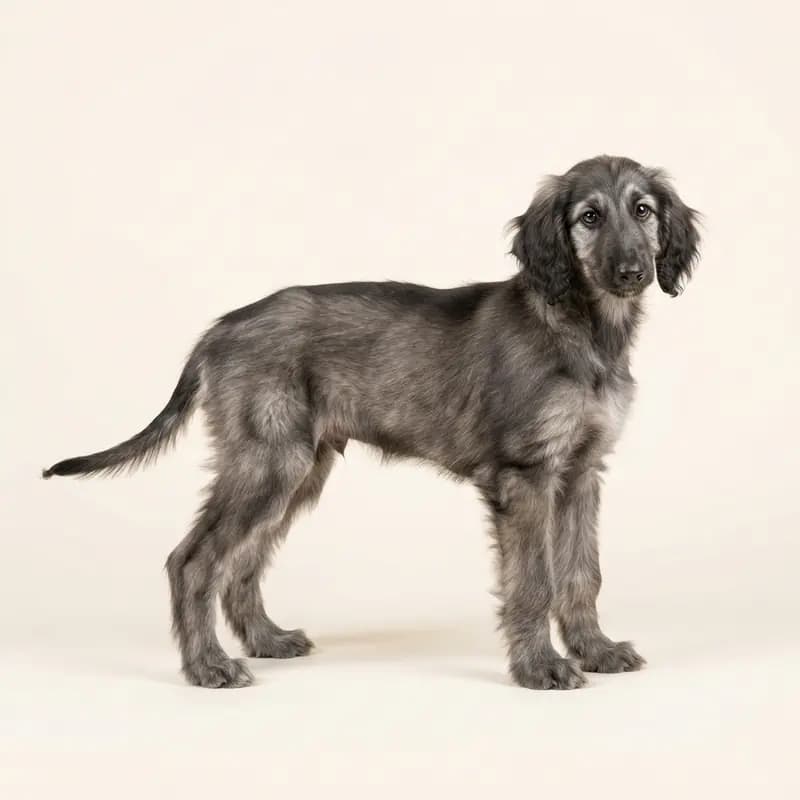
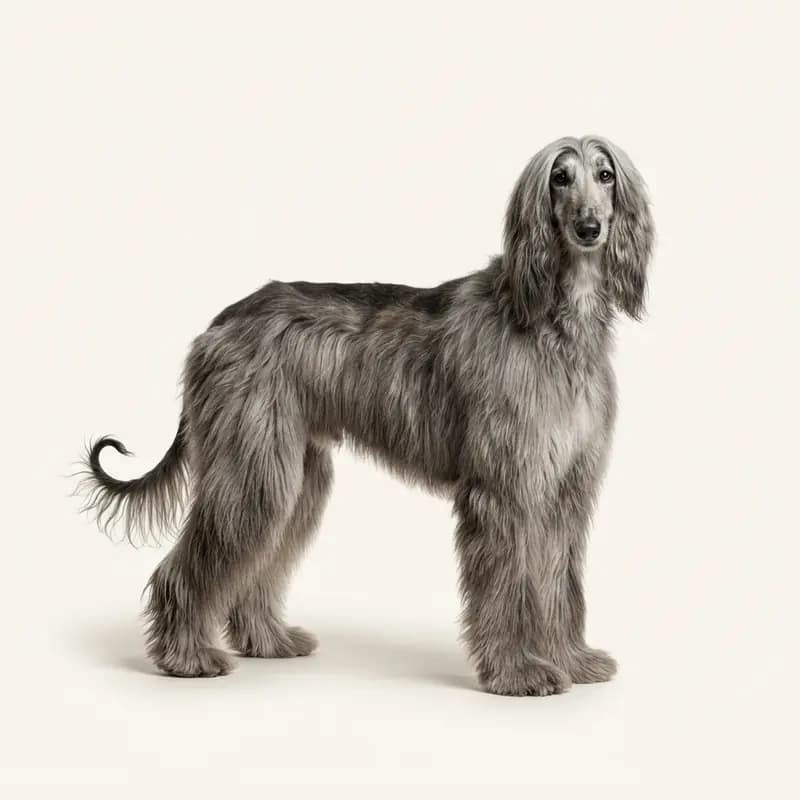
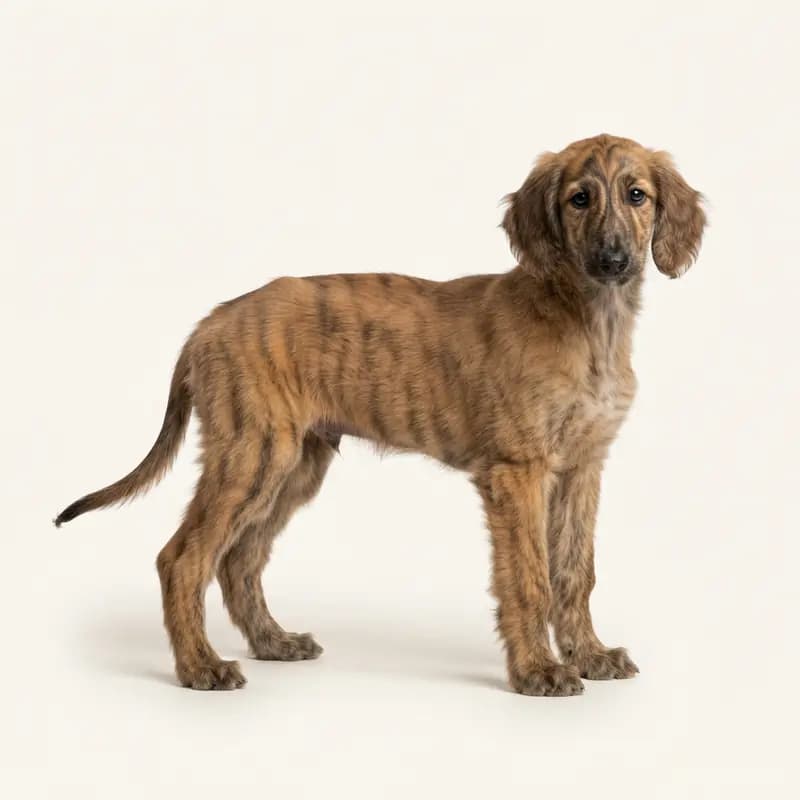
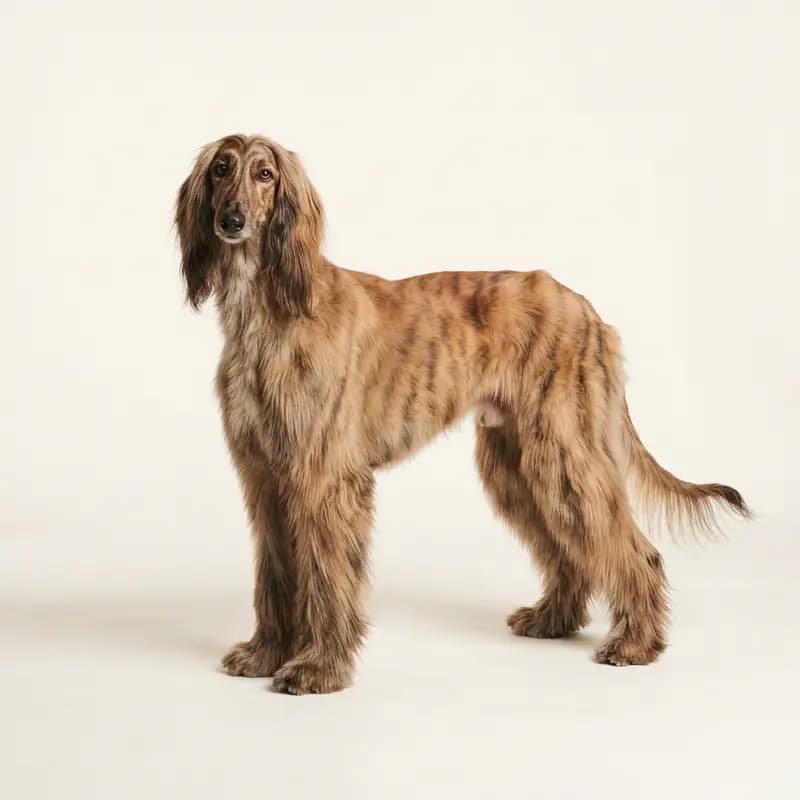
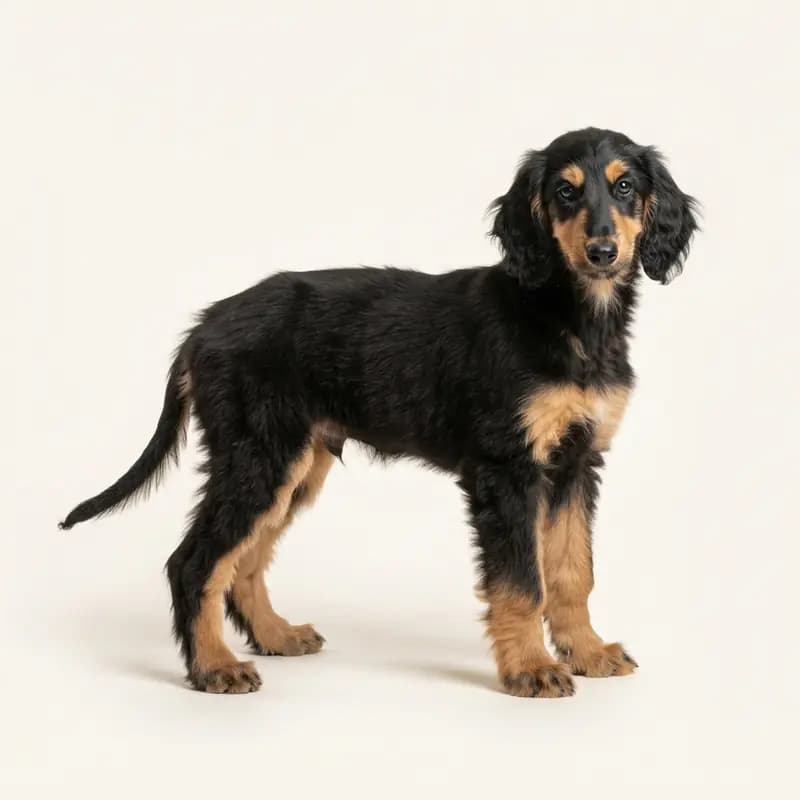
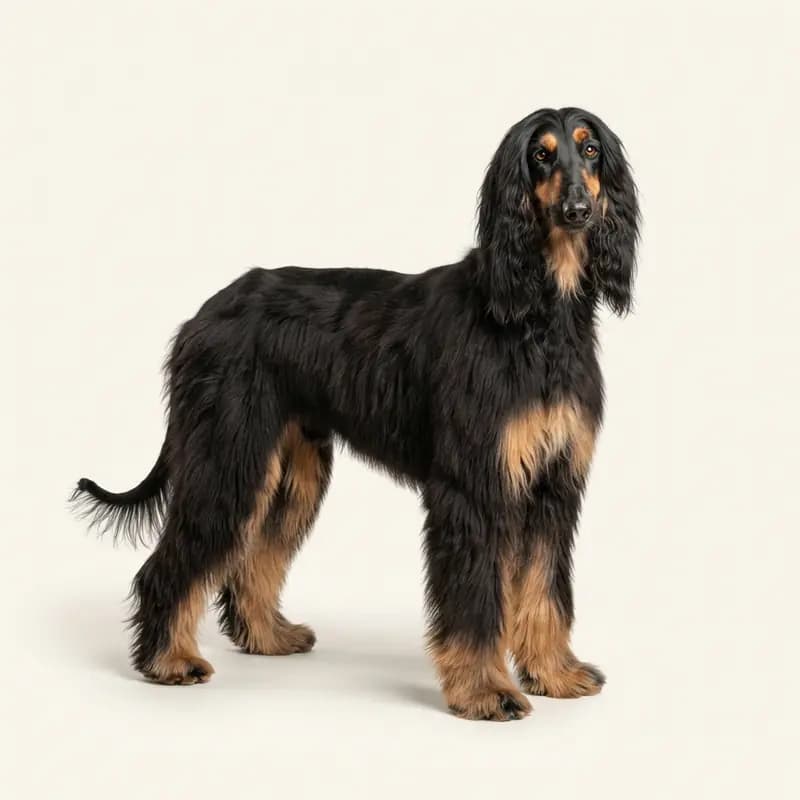
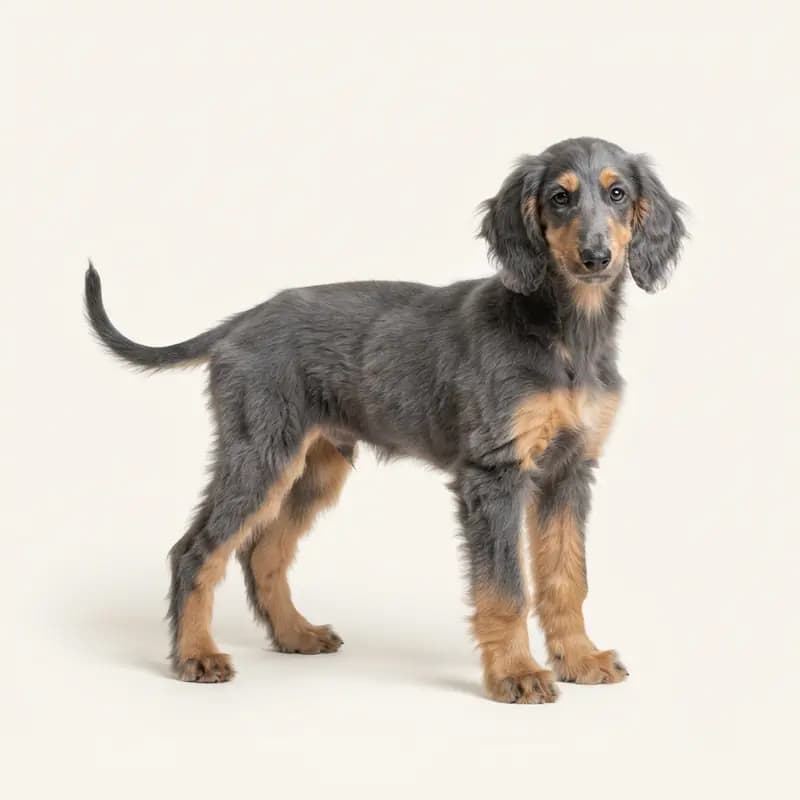
What colors does the Afghan Hound come in?
The coat colors you will see in Afghan Hound litters — including which ones fall outside the breed standard and which carry genetic risk.
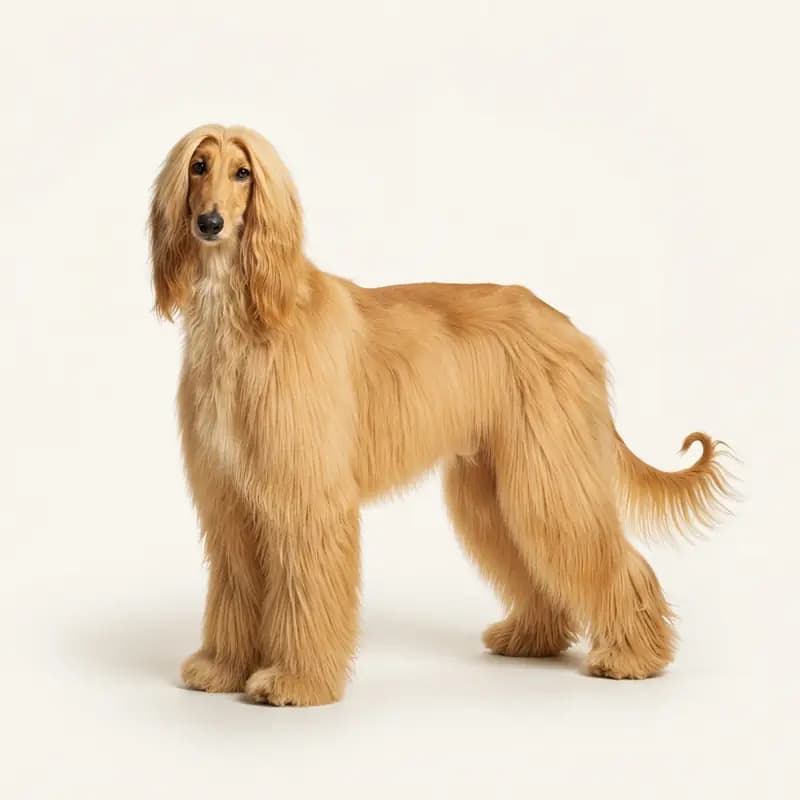
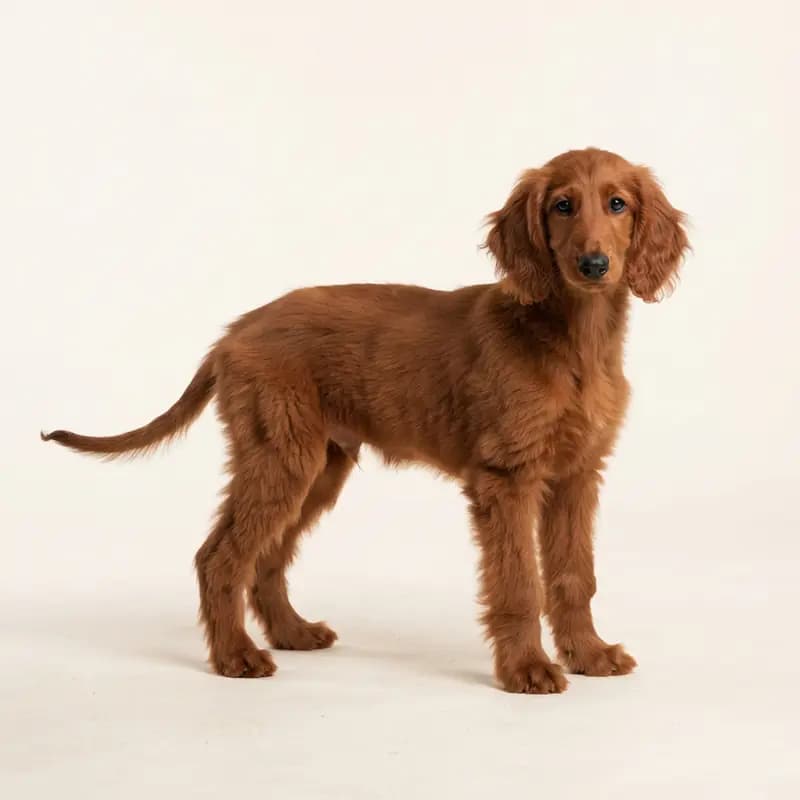
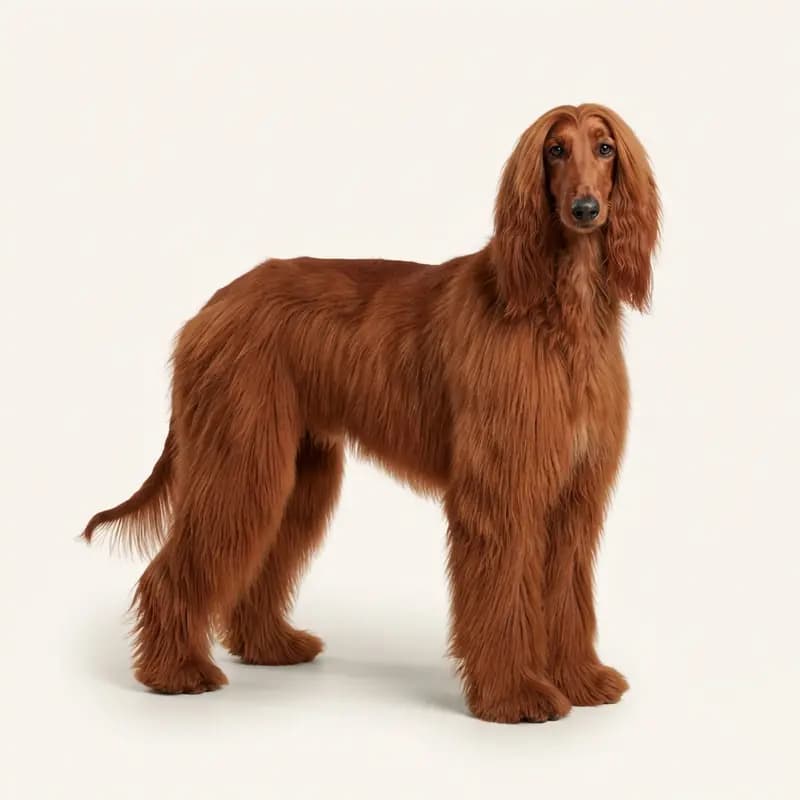
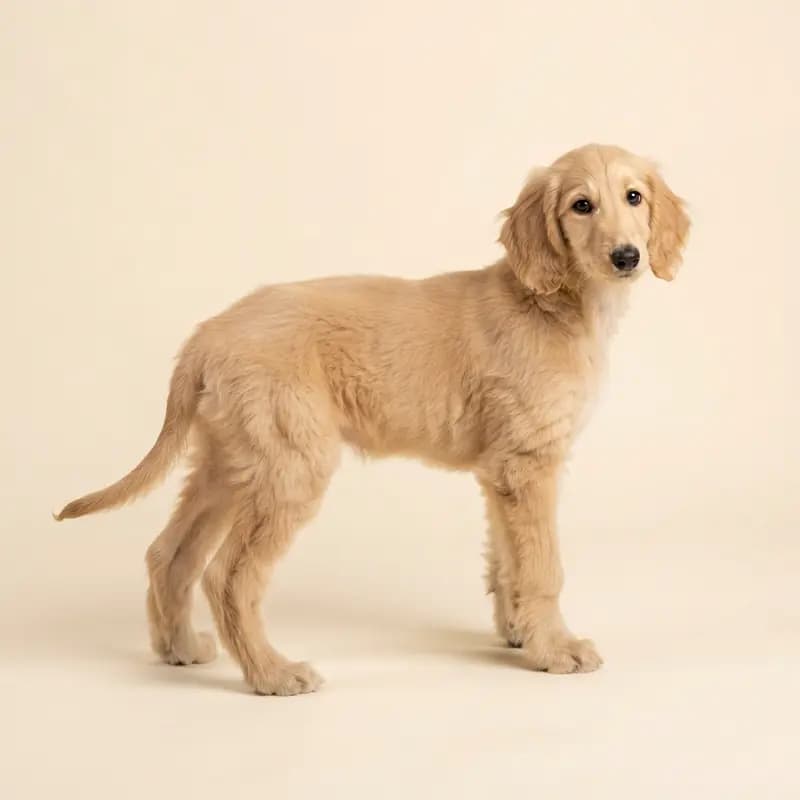
Eye colors
 Brown
Brown Amber
Amber
Coat type
 Long
Long Silky
Silky
Is the Afghan Hound right for you?
The Afghan Hound is a proud, extremely independent sight hound—bred to hunt entirely autonomously in rugged terrain. Its spectacular elegance masks an uncompromising hunter that prefers to make its own decisions.
Perfect for you if:
- You appreciate a cat-like independence and don't need a dog that blindly anticipates your every wish.
- You have access to a securely fenced-in area where it can safely unleash its explosive sprints as a true sight hound.
- You have plenty of time and patience for the daily, elaborate grooming that is an absolute must for its hair structure.
- You lead with calm, confident composure—pressure or harshness will only lead to complete defiance in this sensitive dog.
Less ideal if:
- You expect it to remain recallable at the sight of a running hare—it has been selectively bred for centuries to switch to autopilot in exactly those moments.
- You are looking for an obedient partner for dog sports or relaxed forest walks without a long line in open terrain.
- You have free-roaming small animals or cats in the household—its prey drive is deeply genetically anchored and does not stop at species boundaries.
The real vibes check
An Afghan Hound is not a typical companion, but an aristocratic roommate who grants you affection when it feels the time is right. Anyone looking for an obedient follower will despair at its majestic ignorance—but those who respect its wild, primal soul will gain a fascinating piece of natural history on their sofa.
Self-check
Would the Afghan Hound really fit your life?
Answer 6 quick questions about your everyday life and see how well the Afghan Hound fits you — including an honest cost estimate per month, per year, and across the dog's lifetime.
Fit checkCost estimateRisk dice
Takes about 1 minute · free & anonymous
Breed Profile
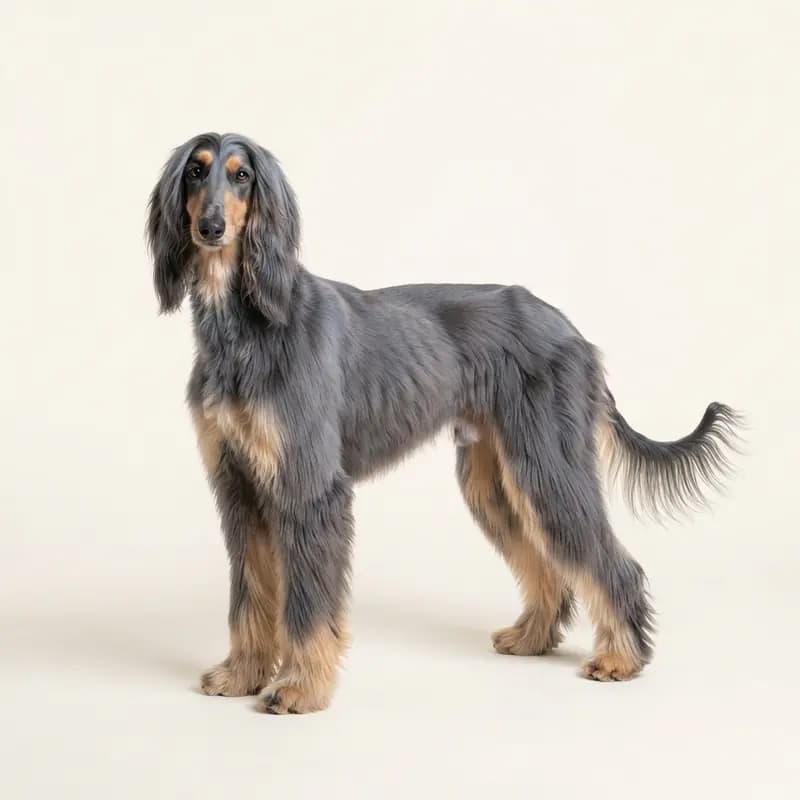
The Afghan Hound has a fascinating appearance with its elegant yet robust physique and long, silky coat. This impressive dog, whose origins lie in distant Afghanistan, is a real eye-catcher and attracts everyone's attention with its grace and beauty. Its large, almond-shaped eyes, which almost always have a mysterious or dreamy expression, its high, proud head and long, heavily muscled legs testify to a deep-rooted history and culture. The breed belongs to FCI Group 10, which includes greyhounds. Afghan Hounds are scent hounds and were bred primarily for hunting, being able to track their prey by both sight and smell. They are characterized by impressive speed and endurance. Despite their long history and tradition, there is no distinction between performance and show lines in Afghan Hounds.
All measurements in detail
- Height
- 63 - 69 cm (Female), 68 - 74 cm (Male)
- Weight
- 20 - 25 kg (Female), 25 - 30 kg (Male)
- Life Expectancy
- 12 - 14 yrs
- Character
- Independent, dignified, meek
- Coat
- Silky, long, no undercoat
- Coat Color
- All colors are allowed
- Price
- 1200 - 2500 €
Character & Temperament
Afghan Hounds are known for their independent and sometimes aloof nature. They are gentle and peace-loving, but can also show a certain dignity and reserve. They are often said to be "cat-like" because they tend to be very independent and sometimes a bit headstrong. However, this should not to be confused with lack of affection or loyalty. Afghan Hounds are very affectionate and can form deep bonds with their family, but they often show their affection in more subtle ways than other breeds. Despite their independence, Afghan Hounds are also known for being very sensitive and intuitive. They are very attuned to their surroundings and the moods of their people and can therefore respond well to the needs of their owners. However, due to their sensitivity, they should be treated with a lot of patience and empathy. Although they were originally bred as hunting dogs, Afghan Hounds now tend to have a rather calm and relaxed character. They enjoy spending time with their family and can be kept both indoors and in a house with a garden. However, they require regular exercise to maintain their muscles and stamina, and they love exploring their surroundings and taking in new smells. The pronounced hunting behavior can cause Afghan Hounds to suddenly run at the sight of small animals or when they detect interesting smells. It is therefore important that they are only allowed to run off-leash in safe and fenced areas and that retrieval is practiced reliably. Despite their passion for hunting, Afghan Hounds are generally not very watchdogs. While they are alert and attentive, they do not tend to overreact to strangers or unusual noises. However, their reserve towards strangers and their ability to remain calm and composed in the apartment make them pleasant roommates. Another important aspect of the Afghan Hound's character is its intelligence. These dogs are very smart and can learn quickly, but you should always take their independent nature into account. They can sometimes be a bit stubborn and therefore require a patient and sensitive hand when raising them.
| Trainability Has its own ideas and will test limits. | Strong-willed |
| Watchfulness Occasionally alerts but is fundamentally open. | Low |
| Openness to Strangers Neither pushily friendly nor suspicious. | Neutral |
| Hunting or Herding Drive Powerful instinct that can override recall when triggered. | Strong |
Fun Fact!
Afghan Hounds are not only fast, but also quite jumping. They can jump up to 2 meters high from a standing position!"
What Awaits You
Afghan Hounds are often valued for their appearance and their rapport with their people. They are rather suspicious of strangers. They are passionate, persistent and independent hunters. This passion for hunting is difficult or impossible to control by humans. Raising an Afghan Hound requires a lot of empathy and even more patience.
Housing & Care
The Afghan Hound is an independent, calm and easy-going dog that can be kept both in the city and in the country. This breed requires regular exercise and should be able to run safely in a fenced area. Small children and other pets, especially cats, can be problematic as the Afghan Hound has strong hunting behavior. However, with proper socialization and supervision, they can learn to get along well with them.
- Family Friendly
Gets on well with different people and varying routines.
Family-friendly - Child Friendly
Fine with calm, respectful children — not small tornadoes.
Better with older children - Dog Friendly
Usually gets on fine with other dogs.
Generally tolerant - City Friendly
Can manage in the city, but only with very active owners.
Difficult in cities
Owning a dog is a privilege, but it's also a real responsibility. Before you bring one into your life, be honest with yourself about the commitment it takes.
Training & Education
Afghan Hounds are smart and independent dogs that can sometimes be considered stubborn. They benefit from patient, positive and consistent parenting. While Afghan Hounds are athletic dogs that enjoy running and playing, they should not be kept overly busy as this can cause stress. Their natural independence and hunting instincts require special attention in terms of retrieval training and impulse control. They're not known for becoming ball junkies, but a healthy mix of mental and physical activity will keep them happy and busy. Frustration tolerance is an important aspect of their upbringing as they often have a mind of their own.
Nutrition & Care
The Afghan Hound's diet should be balanced and high quality to support its health and well-being. A mix of high quality feed and fresh foods can be a good option. However, keep in mind that Afghan Hounds can have sensitive stomachs, so care should be taken when feeding them. Changes in diet should always be made slowly and gradually to avoid digestive problems. The Afghan Hound has a long, silky coat with no undercoat that requires regular grooming. Brushing and combing should be done several times a week to avoid tangles. Despite the length of their coat, Afghan Hounds do not shed particularly heavily. They are relatively well adapted to the climate in Germany, but their thin fur means they can freeze in the cold. A coat for winter walks can therefore be a good idea.
| Care Level Daily care is non-negotiable — neglect affects health. | Very high-maintenance |
| Exercise Needs Needs several hours of serious exercise every day. | Very active |
| Shedding No or minimal hair loss — suitable for allergy sufferers. | No shedding |
| Trainability Has its own ideas and will test limits. | Strong-willed |
Our experts are still reviewing this information. Spotted something wrong? Email us at info@honestdog.de.
Health & hereditary diseases
Health
B
Solid
Health grade
The Afghan Hound is prone to an above-average number of genetic health issues, particularly concerning the eyes. Serious conditions such as Progressive Retinal Atrophy (PRA), cataracts, and glaucoma are prevalent in the breed and require consistent health testing to prevent blindness. Prospective buyers should be especially diligent in verifying that the parents have undergone comprehensive, documented health screenings.
Grade is relative to other breeds — AI-assisted and editorially reviewed.
In daily life this can mean
You should inform veterinarians about the sensitivity to anesthesia before any procedures and ensure regular eye and thyroid check-ups, as well as joint-friendly rearing.
The breeder's role
Reputable breeders have the hips, eyes, and thyroids of the parent animals tested and are aware of rare neurological conditions in their lines to specifically reduce risks.
Note: This health overview is AI-assisted and editorially reviewed. It is for orientation only and does not replace veterinary advice.
No Health Tests Available
No specific health tests are currently available for this breed.
Costs & where to find one
How much does a Afghan Hound cost?
A Afghan Hound costs around ~€200 per month (€100 – €370, depending on your setup). The first year adds up to roughly ~€5,030 including purchase, equipment and puppy school; across the dog's life (13 years) it comes to about ~€33,260.
With surgery cover, running costs come to about ~€200 per month — in return, your share of a major operation drops from several thousand euros to around 20 percent.
Per month
~€200
In the first year
~€5,030
Across the dog's life
~€33,260
Purchase from a breeder: €1,200 – €2,500
Estimate at a mid-range setup (suburban, dry food, 1–2 hours of daily exercise), average German prices, as of July 2026.
Calculate your personal costs1-minute self-check with your own answers
Looking for a Afghan Hound?
Appearance, variants & origin
History
The full history
The Afghan Hound is one of the oldest known dog breeds in the world. Its history goes back at least 4,000 years and is closely linked to the history of Afghanistan. The Afghan Hound was originally used to hunt gazelles, hares and even snow leopards. His long, thick fur offered him protection from the harsh weather conditions in the Afghan mountains. The breed was only brought to Europe and later to the USA in the 19th century and quickly became very popular. The Afghan Hound was recognized by the American Kennel Club in 1926 and has been a recognized breed ever since. Despite its long history and tradition, the Afghan Hound is still a fascinating and mysterious dog that can take your breath away.
Original Use
The Afghan Hound was used to hunt fast prey such as gazelles and hares in the mountains of Afghanistan. His long fur protects him from harsh climates.
Origin
Afghanistan
Date
Antike
Owner experiences
What owners say about the Afghan Hound
Sabine M., Halterin aus Hessen (Hündin, seit 2021)
Wer einen Hund sucht, der einem ständig den Ball vor die Füße legt und unbedingt gefallen will, ist beim Afghanen völlig falsch. Meine Hündin hat absolut keinen „Will to Please“. Sie lernt zwar extrem schnell, aber sie tut Dinge eigentlich nur dann, wenn für sie auch wirklich eine Belohnung dabei herausspringt. Manchmal kann diese Sturheit einen schon auf die Probe stellen, aber genau das macht für mich ihren faszinierenden Charakter aus.
Im Haus ist sie die Ruhe selbst – sie verhält sich drinnen eher wie eine elegante, flauschige Sofadecke als wie ein Hund. Sie schlawenzelt nicht permanent um mich herum, sondern genießt stolz ihre Unabhängigkeit. Sobald wir aber draußen sind, merkt man sofort den Windhund in ihr. Man muss einfach lernen, mit diesem eigenwilligen, fast katzenartigen Wesen umzugehen und darf keinen blinden Gehorsam erwarten.
Christian T., Halter aus Bayern (Rüde, seit 2018)
Die Fellpflege darf man bei dieser Rasse wirklich nicht unterschätzen. Ich verbringe jede Woche mehrere Stunden mit Waschen, Conditionieren, Föhnen und Bürsten, damit das lange, seidige Fell nicht verfilzt. Das ist ein echtes, zeitintensives Hobby! Und ja – mein Rüde ist felsenfest davon überzeugt, dass das Sofa und mein Bett ihm gehören. Da macht er es sich am liebsten gemütlich.
Eine weitere große Herausforderung im Alltag ist der Freilauf. Durch den extremen Sichtjagd- und Hetztrieb kann ich ihn in ungesichertem Gelände kaum jemals von der Leine lassen. Wenn ein Hase aufspringt, setzt bei ihm der Verstand aus und er rennt los. Da er in solchen Momenten auch absolut kein Gespür für Gefahren wie Autos hat, nutzen wir für den nötigen Freilauf fast ausschließlich sicher eingezäunte Ausläufe oder die Windhundrennbahn.
Isabelle K., Halterin aus Nordrhein-Westfalen (Rüde, seit 2020)
Man hört leider immer wieder das Vorurteil, Afghanen seien unverträglich oder gar aggressiv. Meiner Erfahrung nach liegt das aber fast immer an mangelnder Sozialisierung und Erziehung. Weil sie so eigenständig sind, denken manche Halter fälschlicherweise, man müsse oder könne mit ihnen gar nicht arbeiten. Wenn man sie aber von klein auf konsequent, aber ohne jede Härte fördert, hat man einen wunderbaren Begleiter.
Fremden gegenüber ist mein Rüde rassetypisch erst einmal distanziert und zurückhaltend – er wirft sich nicht jedem direkt an den Hals, was ich im Alltag sehr angenehm finde. Er ist unglaublich sensibel und reagiert sofort auf meine Stimmungen. Man darf einen Afghanen niemals mit Druck oder aggressivem Ton erziehen, sonst schaltet er komplett stur und blockiert.
Paraphrased from real owner reports
Loading owner stories
Community Posts
FAQ & more
Frequently asked questions about the Afghan Hound
Is a Afghan Hound the right dog for me?
The Afghan Hound is an active dog that needs plenty of exercise and mental stimulation. Research the temperament, grooming needs, and space requirements before deciding.
How long does a Afghan Hound live?
The average life expectancy of a Afghan Hound is 12-14 years. With proper care and regular vet visits, your dog can live a long, healthy life.
How much grooming does a Afghan Hound need?
Afghan Hound grooming requirements include regular brushing, nail trimming, and dental care. HonestDog provides detailed grooming tips for every breed.
Is a Afghan Hound good for families with children?
The Afghan Hound can be a great family dog. Proper training and socialization are key. HonestDog provides family suitability information for every breed.
What colors does the Afghan Hound come in?
The Afghan Hound comes in these colors: Black, White, Cream, Gold, Red, Fawn, Silver, Blue, Grizzle, Brindle, Black and tan, Blue and tan.
Loading related articles
Are you a Afghan Hound breeder?
Showcase your kennel on HonestDog and reach families searching for a responsibly bred Afghan Hound.
Why HonestDog?
What makes HonestDog different from other platforms
Full transparency
We lay out what we have: who the breeder is, how they work, and any health records they've uploaded. So you can judge for yourself.
Responsible breeding, assured
Every breeder on HonestDog has their identity and documents checked before their profile goes live. Health records they upload are shown on the profile, so you can see exactly what has been tested.
Trust and verification
We verify breeders and buyers alike, so every conversation happens on solid ground. It's a new standard of trust in dog breeding.
Less hassle, more time
We've already checked the breeders' documents and gathered the details, so you can skip the endless research and focus on finding the right puppy for your family.
Our Mission

We connect dog lovers with responsible breeders and shelters to ensure every dog finds the perfect home.
Founded by dog enthusiasts, our platform focuses on ethical dog breeding and adoption.
Why HonestDog?
We connect you with vetted breeders and shelters so you can find your — your new companion — with confidence.
Vetted Partners
Only verified breeders and shelters — for a safe start.
Highest Standards
Every animal's health and wellbeing is our top priority.
Guides & Resources
Guides, checklists, and breed profiles — so you can make a well-informed decision.