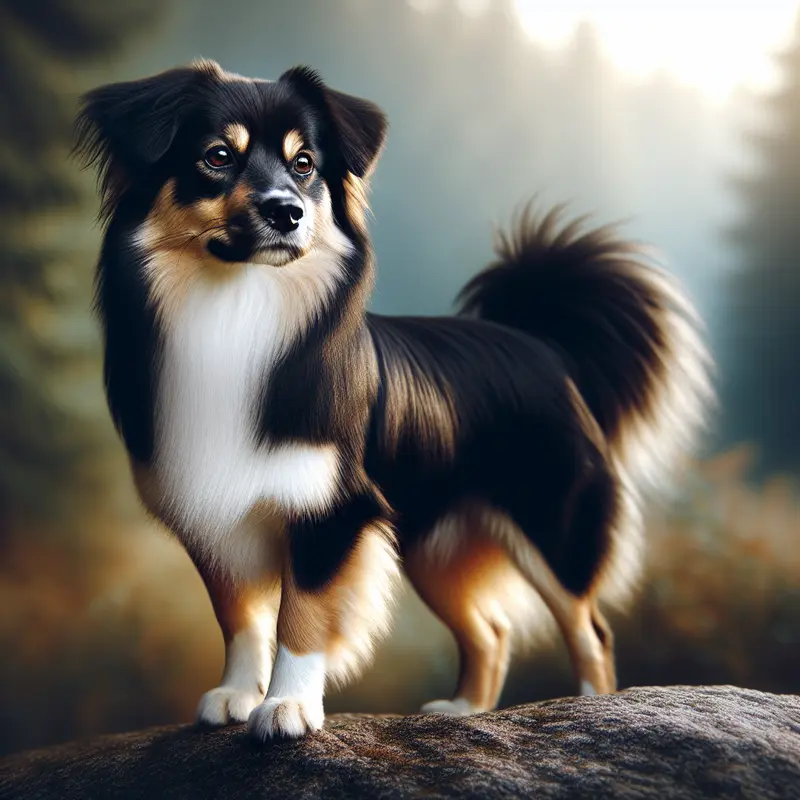
Jämthund temperament: The Scandinavian Elkhound in detail
If you're interested in Nordic dog breeds, you've likely already stumbled across a truly remarkable specimen. The Jämthund temperament fascinates both dog lovers and hunters alike through a unique blend of rugged power, deeply rooted calmness, and unbridled hunting passion. Experienced dog experts who work with many different breeds consistently describe the presence of these Swedish natives as something special.
The Jämthund, also known as the Swedish Elkhound, isn't just a simple pet. It's a working dog through and through, forged by the harsh, endless forests of Scandinavia. This article sheds light on the psyche of these impressive dogs in detail. We'll look beyond the theory and examine exactly how the Jämthund character manifests in everyday life and, most importantly, whether this dog is truly a fit for you, your lifestyle, and your living situation.
The typical Jämthund character: Between Nordic calm and hunting drive
To truly understand the nature of the Jämthund, we must look at its original purpose. For centuries, it was bred in Sweden to independently track moose and even bears through the vastness of the forests. Once it finds the game, it traps and holds it there with persistent, rhythmic barking until the hunter arrives. This history has left deep marks on its disposition.
Indoors, you'll often experience a dog that is stoically calm. A well-exercised Jämthund is content to simply lie down, observe family life, and remain composed. It isn't a dog that paces nervously, provided its needs are met. It builds an incredibly intense, loyal bond with its people, though it doesn't necessarily show this through constant cuddling, but rather through quiet presence. It loves to be wherever its "pack" is.
However, the moment you go outside, a switch flips. The calm observer turns into a focused athlete. Its senses are razor-sharp, its nose soaking up every scent in the forest. Here, the full strength of the Jämthund shows: it is courageous, persistent, and extremely goal-oriented. This duality is exactly what makes it so fascinating, but it also requires an owner who can handle both sides. If you want to learn more about its specific physical characteristics in advance, take a look at our detailed Jämthund breed profile.
Who is the Jämthund suitable for? An honest assessment
Expectations often clash with the dog's instincts. The Jämthund is beautiful, which is why many fall in love at first sight. But looks alone aren't enough for a harmonious life together. Let's look at who this dog is really for.
Beginners or experienced owners?
Let’s be very clear: in most cases, the Jämthund is not a beginner dog. On the scale of trainability, it sits in the lower middle range. This isn't because it's unintelligent—quite the opposite. It is highly intelligent. But it was bred for independent thinking and acting. When it's hunting moose kilometers away from the hunter, it can't wait for a command. It has to make decisions on its own.
This independence often manifests as stubbornness in daily life. A Jämthund won't follow commands just to please you (like a Labrador might). It weighs whether your command makes sense in its eyes. Anyone who hasn't handled a dog before often despairs at this Nordic self-sufficiency. It requires clear, confident, and absolutely consistent—but never harsh—leadership. Those with experience with livestock guardian dogs or other Nordic hunting breeds are the best prepared.
Family dog or a "one-man" dog?
Although it is an excellent hunting dog, the Jämthund deeply values its family. It is loyal and instinctively protects its pack without being unnecessarily aggressive. Towards strangers, it usually shows the typical Nordic reserve. It doesn't need to be touched by everyone and decides for itself who receives its affection.
For active families who spend a lot of time in nature and have older children, it can be a wonderful companion. It possesses a good degree of tolerance. However, with a shoulder height of up to 65 cm and a weight of around 30 to 35 kg, it is a true powerhouse. An accidental bump is enough to knock over small children. Therefore, interactions with small children should always be supervised.
Coexistence: Everyday life with a Swedish native
The Jämthund temperament largely dictates what your daily routine will look like. Whoever brings this dog into their home must adapt their lifestyle in certain ways.
Living situation: City apartment or house in the countryside?
The Jämthund is not suited for city life. This dog does not belong in a small apartment on the third floor in the middle of a bustling metropolis. The many stimuli, the lack of space, and the absence of nature would stress it out immensely over time.
The ideal living space for a Jämthund is rural. A house with a large, securely fenced garden is essentially a must. Caution with garden fences: Jämthunds are athletic and have a strong urge to roam. If the fence is too low or the dog is under-exercised, it will head out on its own exploration tour. The fence should be tall and anchored deeply, as Nordic dogs are also excellent diggers.
Children and other pets
As mentioned, it is usually friendly and level-headed with the children in its family. Things get tricky with other pets, however. The Jämthund has an immense prey drive. Cats, rabbits, or guinea pigs in the same household are often viewed as prey. Even if it grows up with a cat as a puppy, there is no guarantee that its hunting instinct won't emerge at some point.
It is generally well-behaved with other dogs, provided it was socialized early and comprehensively. It communicates very clearly and appreciates peers who also communicate cleanly in canine language.
Exercise requirements and breed-appropriate activity
Standard walks—20 minutes around the block three times a day—are absolute torture for a Jämthund. Its energy level is extremely high. This dog was bred for hours of sustained performance in snow and rough terrain.
To do justice to the Jämthund temperament, you must be specific about its activity. It needs a job. If you aren't a hunter, you must find substitute activities. These include:
- Sled dog sports: Canicross, bikejoring, or dog scootering are perfect for channeling its physical power in an organized way.
- Mantrailing and tracking: As it is an excellent tracker, scent work tires it out perfectly. This challenges it mentally and keeps it pleasantly tired.
- Extensive hiking: It is the perfect companion for long tours in the mountains or forests—preferably in cool weather, as this thick-coated dog doesn't handle heat well.
Further information on the needs and species-appropriate activity of large hunting dogs can be found on the websites of renowned kennel clubs, such as the guidelines provided by the Verband für das Deutsche Hundewesen (VDH).
Challenges of the Jämthund temperament
The same themes keep coming up when owners reach their limits with Nordic breeds. It's worth knowing the potential stumbling blocks before making a decision.
The strong hunting drive
The biggest issue with the Jämthund is its hunting drive. In wooded areas, you will often never be able to let this dog off-leash. Its nose is always on the ground or in the wind. If it picks up the scent of game, it switches modes. Calling, whistling, or waving treats will often be simply ignored. Leading it on a long-line (with a well-fitted harness) will likely be your constant companion.
Tendency to bark
Don't forget: Barking is its job. During a moose hunt, it "holds" the game with deep, persistent barking. Even as a watchdog on your property, it will vocally announce every visitor or unusual noise. If you have sensitive neighbors, a Jämthund will inevitably lead to conflicts. While barking can be channeled through training, trying to completely stop a Jämthund from barking would be robbing it of its identity.
Independence and Nordic stubbornness
Many Jämthund experiences from owners revolve around the famous "Nordic arrogance." There are days when the dog looks at you after a "sit" command as if you’ve gone crazy. One must not take this personally. It requires a sense of humor, immense patience, and confident perseverance. Pressure, shouting, or physical harshness will irreparably destroy the trust of this sensitive native breed.
Practical training: How to reach this Swede
How do you train a dog that has learned by nature to take the lead in a moose hunt? The magic word is relationship building.
A Jämthund does not submit because you are the human. It cooperates when it sees you as a capable, calm, and confident partner. You must prove to it that it's worth working with you.
- Positive reinforcement: Work with strong reward orientation. Find out what your dog considers an absolute premium reward (this could be a special snack, a tug toy, or simply a shared sprint).
- Impulse control: Practice enduring frustration from puppyhood. Make it sit before food is given or before the door opens to go outside. This helps immensely later with controlling its hunting drive.
- Clear structure: Nordic dogs love routines and clear rules. A "no" must always remain a "no." If you allow it on the sofa today but not tomorrow, it loses respect for your leadership.
It is also advisable to seek help early from trainers who are explicitly experienced with Nordic breeds. The Swedish Elchhund Club (Svenska Älghundklubben) repeatedly emphasizes in its historical documents the importance of the mental bond between leader and dog—a philosophy that also proves its worth in modern training approaches.
Real Jämthund experiences: What do owners say?
When you talk to people who share their lives with a Jämthund, a clear picture emerges. Genuine Jämthund experiences are marked by a deep respect for this breed.
Many owners rave about the incredible calmness indoors: after an extensive hike, a well-exercised Jämthund often simply retreats to its blanket, sleeps deeply, and remains pleasantly unobtrusive for the rest of the day.
On the other hand, many report the challenges of the hunting instinct. A common piece of advice: Never underestimate this dog's nose. Anyone who isn't prepared to slog through the forest for hours in wind and rain on a long-line while constantly scanning the environment for game will not be happy with this dog.
Grooming, however, is often described as uncomplicated if you get used to the shedding season. Twice a year, the Jämthund loses its thick undercoat in clumps. During this time, daily, intensive brushing is mandatory. Apart from that, the rough topcoat is almost self-cleaning.
Frequently Asked Questions (FAQ)
Can a Jämthund stay alone?
A Jämthund can certainly learn to stay alone, provided it is introduced carefully in small steps during puppyhood. However, because it has a strong need for its "pack" and is prone to barking, it shouldn't be left alone for eight hours a day. Under-stimulation and loneliness quickly lead to behavioral problems and excessive vocalization in this breed.
Is the Jämthund suitable for allergy sufferers?
No. The Jämthund has a very dense, weather-resistant coat with a lush undercoat. It sheds slightly throughout the year and extremely heavily during the change of coat in spring and autumn. Anyone allergic to dog hair or dander should look for breeds with a different coat structure.
How strong is the hunting drive really?
The hunting drive is enormously strong and deeply genetically anchored. The breed was selected exclusively for big game hunting. When the Jämthund scents game, its brain often switches into "work mode." Off-leash freedom in game-rich areas is almost impossible for non-hunters and otherwise requires extremely professional anti-hunting training.
Does the Jämthund need special care in the summer?
Yes, the Jämthund is built for cold Scandinavian winters. It often finds temperatures above 20 degrees Celsius uncomfortable. In summer, walks and sports activities must be moved to the early morning or late evening hours. It always needs access to cool, shady resting places and plenty of water. The coat, however, must not be shorn, as it acts as insulation and also protects against sunburn.
Conclusion: Is the Jämthund your perfect companion?
The Jämthund is undoubtedly a proud and impressive dog. Its character, however, demands a human who not only accepts the wild, original nature of Nordic dogs but also loves and can actively foster it. If you are looking for an unconditionally obedient companion dog for leisurely city walks, you have come to the wrong place.
But are you a nature-loving, active person with a large, fenced property? Are you looking for a loyal partner on equal footing with whom you can roam through the forests in wind and rain? Do you have the patience to engage with the independent and sometimes stubborn nature of a true working dog? Then you might find your ideal companion in the Swedish Elkhound.
Decisions about a life with a dog should never be made impulsively. Take your time, get to know the breed through reputable breeders, and ask yourself honestly if you can do justice to this powerhouse. Once you have made the decision, we at HonestDog will support you on your journey. On our platform, we bring together responsible breeders and future dog parents. Take a look, keep informing yourself, and discover verified litters if you would like to find Jämthund puppies.