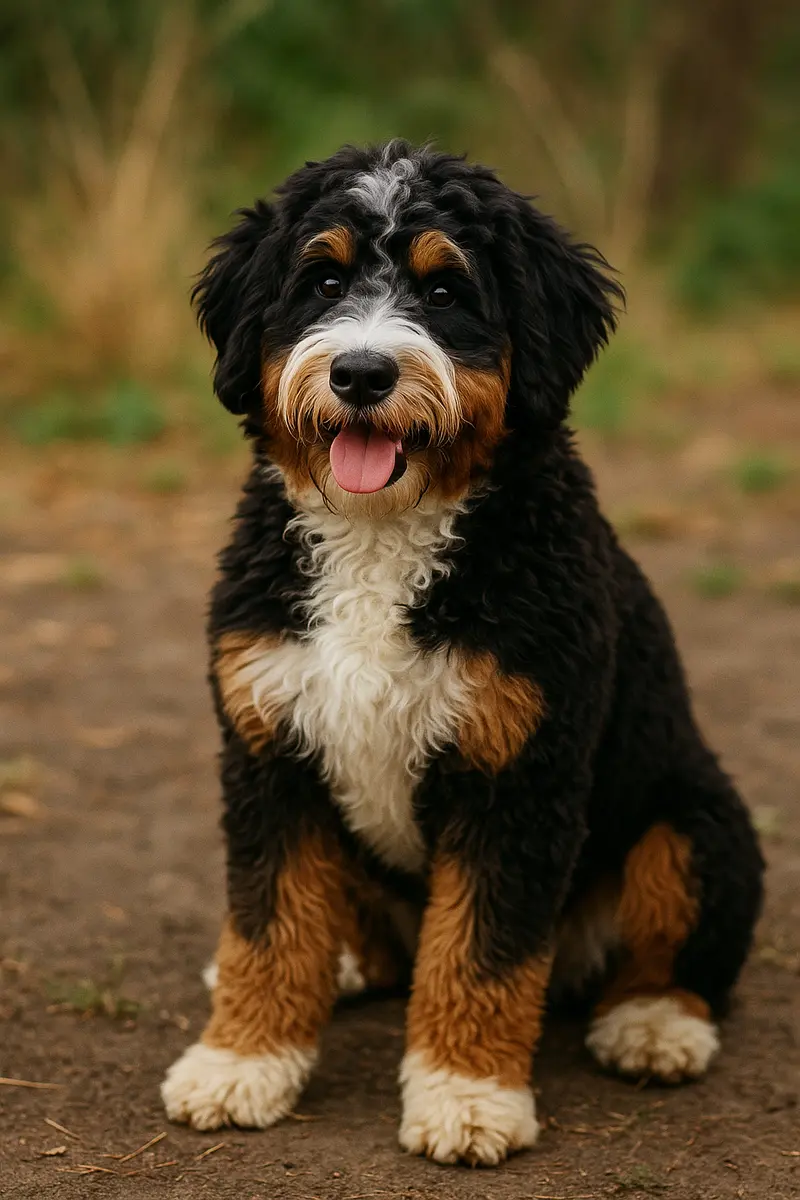
If you're searching for a fluffy companion that combines the cozy, teddy-bear aesthetic with the intelligence of a working dog, you’ve likely stumbled upon this fascinating hybrid breed. Many dog lovers consider the Bernedoodle (Bernese Mountain Dog x Poodle) personality to be the epitome of the perfect family dog. But does this charming, curly-haired pup truly live up to the promise behind those gentle brown eyes?
As a dog behaviorist, I often meet people in my practice who have fallen in love with these dogs' looks but underestimate the complex psychological profile beneath. In this comprehensive guide, we’ll dive deep into the soul of this fascinating mix. We’ll analyze the heritage of their parent breeds, shed light on daily challenges, and honestly assess whether this hybrid dog is the right fit for your lifestyle.
The Bernedoodle Temperament: A Psychological Profile
To truly understand the Bernedoodle (Bernese Mountain Dog x Poodle) nature, we must look at its origins. Originally from Canada, this hybrid was bred to combine the gentle, stoic demeanor of the Bernese Mountain Dog with the high intelligence and low-shedding coat of the Poodle. The result is a dog that often walks between two worlds.
The Bernese Mountain Dog is a historical farm dog—used for guarding, pulling carts, and possessing an immense level of composure. The Poodle, on the other hand, is a highly intelligent water-retriever with a strong “will-to-please” and quick cognitive skills.
When these two lines unite, the resulting Bernedoodle temperament is typically characterized by the following traits:
- High Attachment: These dogs are total “velcro dogs.” They form extremely close bonds with their owners and would prefer to join you for every bathroom break.
- The Clown in a Dog Suit: Thanks to the Poodle heritage, a silly, playful nature often shines through. They know exactly how to make their humans laugh.
- Stoic Calm: A well-socialized Bernedoodle is usually well-balanced. While purebred Poodles can sometimes be prone to nervousness, the Bernese “Berner” blood acts as an emotional anchor.
- Situational Stubbornness: The Poodle’s intelligence paired with the Bernese’s independence often results in a dog that evaluates commands before deciding whether to follow them.
Who Is This Breed Best Suited For? An Honest Assessment
Not every dog fits every household. Let’s look at how the Bernedoodle personality harmonizes with different lifestyles.
Families with Children
This is where the breed truly shines. Their high threshold for frustration and deep affection for “their” pack make them fantastic family dogs. They aren’t easily rattled. However, one must consider their physical mass: an adult male reaches a shoulder height of 25 to 29 inches and weighs an impressive 70 to 90 lbs. During the boisterous puppy phase, such a giant can unintentionally knock over small children. Supervised play is a must.
Singles and Couples
For active singles or couples, this dog is a wonderful companion, provided there is enough time. Because they form such strong bonds, they suffer intensely from loneliness. A full-time office job without the possibility of working from home or bringing the dog along is completely incompatible with the psychological profile of this breed.
First-Time Dog Owners
The trainability of this breed is rated 4 out of 5. This means they learn quickly and enjoy doing so, making them generally good for beginners. However, their training requires consistency. A 90-lb dog that pulls on the leash because it never learned proper manners as a puppy can quickly become a problem. Those willing to attend a professional training school will have a lot of fun.
Seniors
The breed can be suitable for active seniors, though one should critically consider the heavy final weight of the Standard variety. A 90-lb dog requires a certain amount of physical strength, especially in startling situations during walks.
Living Situation and Other Pets
A dog of this size does not belong in a small apartment on the fifth floor without an elevator. Especially in the first year, these dogs should not climb stairs to avoid interfering with joint development. A ground-level home, ideally with a fenced yard, is the perfect environment for the Bernedoodle temperament. If you want to learn more about joint health in large breeds, I recommend checking the information pages of the German Kennel Club (VDH).
Coexisting with other animals is usually uncomplicated. The hunting instinct is generally only moderately developed (Poodle heritage), while the Bernese Mountain Dog is a guardian, not a hunter. If the dog is socialized with cats, rabbits, or other dogs from puppyhood, it will see them as part of the pack it needs to protect.
Another major plus for indoor living: shedding is rated only 2 out of 5. This makes them pleasant housemates, but it means you must invest significantly more time in grooming. The fur doesn't fall out; it grows—and mats quickly if not regularly brushed and clipped.
Exercise Needs and Enrichment
I often hear in consultations: “We are looking for a calm family dog that is satisfied with three short walks a day.” As a dog behaviorist, I have to step in here. Even if the Bernese Mountain Dog radiates coziness, the Poodle in this mix is a high-performance athlete for the brain.
These dogs don't necessarily need hours of jogging (their heavy build isn't made for that in the long run anyway), but they do need quality stimulation. A walk for this mix should not just be a physical tally of distance, but a mental voyage of discovery.
- Nose Work (Mantrailing or Scent Work): Exhausts the intelligent Poodle brain and caters to the calm, focused nature of the Mountain Dog.
- Dummy Training: Many of these hybrids love retrieving—a legacy of their water-dog roots.
- Balance and Coordination Exercises: Strengthens core muscles, which is extremely important for preventing joint diseases in large, heavy dogs.
If a Bernedoodle is mentally under-stimulated, they will find their own “jobs.” This could be incessant guarding of the garden fence, herding the children, or destroying furniture out of pure boredom.
Challenges: Where the Bernedoodle Temperament Becomes Demanding
No dog is perfect, and the romanticized portrayal of hybrid breeds on the internet often ignores potential problem areas. From a psychological perspective, there are some points you must keep in mind.
The Notorious Separation Anxiety
As mentioned, this dog's bond with its owner is enormous. What is great outdoors (the dog won't run away) often becomes a problem indoors. Many Bernedoodle experiences from owners show that being left alone can be a real struggle. It must be built up in tiny, minute-long steps starting from eight weeks of age. Those who neglect this may end up with a dog that chews up the furniture or barks down the house due to fear of abandonment.
The “Mountain Dog Pause”
While a purebred Poodle hears a command and executes it immediately, the Bernese Mountain Dog often has a different approach. I like to call it the “Mountain Dog Pause.” You call “Sit!”, the dog looks at you, looks at the landscape, considers whether the wet ground is really worth sitting on—and then maybe does it. This form of gentle stubbornness requires a lot of patience and humor from the owner. Pressure or loud scolding will only cause these sensitive dogs to shut down completely.
Health and Financial Aspects
A responsibly bred puppy of this breed ranges in price from $2,000 to $4,000. The life expectancy of 12 to 15 years is pleasantly high for a dog of this size, often due to the so-called heterosis effect (hybrid vigor). However, hereditary diseases of both breeds (such as hip dysplasia or eye disorders) can occur. The German Federal Chamber of Veterinarians regularly warns against buying trendy dogs from unregulated backyard breeders. A psychologically healthy, stable dog always comes from a breeder who values the mental and physical health of the parents.
Training Tips from a Dog Behaviorist
How do you train a dog as intelligent as a Poodle and as physically robust as a Mountain Dog? The secret lies in positive reinforcement and building a relationship. Here are proven tips for your daily life:
1. Early Frustration Tolerance Training
A small puppy that immediately gets everything it whines for will become a 90-lb dog that demands its resources. Teach your dog from the start that calmness is rewarded. Place/mat training is key. The dog must learn that its bed is a sanctuary where nothing exciting happens, but where it can safely relax.
2. Leash Manners via Body Language
If this dog jumps into the leash as an adult, you as a human will have almost no chance of physically holding it. Leash manners must be established before the dog hits 30 lbs. Work on changing directions and using body language to block. The dog should learn to orient itself toward you, not the other way around.
3. Consistent but Gentle Leadership
The Bernedoodle nature is usually very soft. Harshness, shouting, or physical punishment will permanently destroy the trust this dog has in you. Work with positive reinforcement (treats, play, praise). If the dog is stubborn, just be more persistent than them—friendly, but firm.
To get even deeper insights into the genetic traits and the exact profile of the breed, I recommend studying the detailed Bernedoodle (Bernese Mountain Dog x Poodle) breed profile. There, you will find all the hard facts clearly presented.
Frequently Asked Questions (FAQ) about the Temperament
Is the Bernedoodle a good dog for beginners?
Yes, under certain conditions. Their high trainability (4/5) and people-oriented, friendly nature forgive many beginner mistakes. Due to their massive final size (up to 29 inches and 90 lbs), however, attending a competent dog school is absolutely essential for first-time owners to ensure they can control their powerhouse.
Are these dogs good at staying home alone?
No, not by nature. They are extremely pack-oriented and bond closely with their people. Staying alone is harder for this breed than for many others and must be practiced from puppyhood in tiny, positive steps to avoid severe separation anxiety.
How strong is the Bernedoodle's hunting instinct?
The hunting instinct is usually very controllable. The Bernese Mountain Dog does not have a natural hunting instinct, and while the Poodle—as a water retriever—sometimes reacts to movement, they are generally not passionate hunters and usually have an excellent recall during woodland walks.
Are Bernedoodles really stubborn?
Many owners report a certain level of willfulness in their Bernedoodle experiences. This is the legacy of the Bernese Mountain Dog. It is less true “stubbornness” than a comfortable, laid-back nature where the dog briefly considers the point of a command before executing it.
Conclusion: Is the Bernedoodle the Right Fit for Your Life?
The Bernedoodle is undoubtedly a dream dog for many people. It combines the imposing, calm, and infinitely loyal presence of the Bernese Mountain Dog with the sharp wit and humorous nature of the Poodle. If you are looking for a faithful, sometimes slightly goofy, and very affectionate companion for the whole family, you will find it here.
However, you must be willing to invest time in grooming, consistently work on separation training, and provide a dog of this size with both physical and mental stimulation. If you can manage that, you will gain a friend for the next 12 to 15 years who will literally stick with you through thick and thin.
Are you sure this breed is a perfect match for you and ready to take the next step? At HonestDog, we place the highest value on transparency, health, and the psychological well-being of animals. Find reputable breeders who raise their dogs with love and behavioral knowledge, and check here to see where you can find healthy Bernedoodle (Bernese Mountain Dog x Poodle) puppies. Make your dream of the perfect family dog come true today—safe, verified, and with the best feeling!