Loading breed
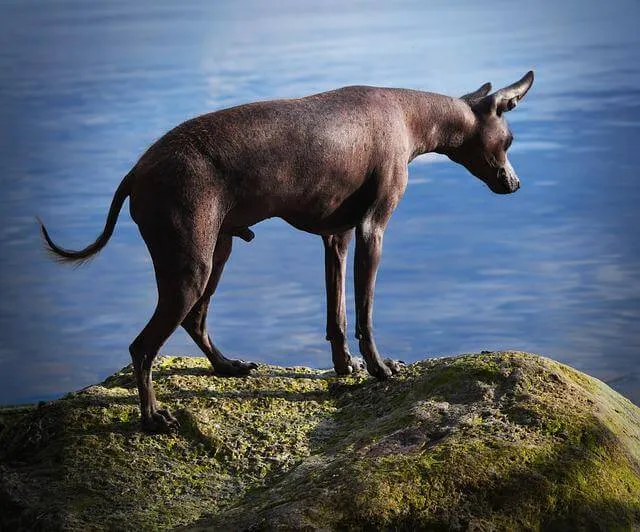
Xoloitzcuintle
Health grade BThe Xoloitzcuintle is a highly intelligent, sensitive exotic—a watchful primitive breed that has developed for thousands of years with almost no human interference; it is fiercely loyal to its family but deeply suspicious of strangers.
- Height25–60 cm
- Weight4–20 kg
- Life expectancy13–18 yrs
- Puppy price2,000–3,500 €
- Energy4/5
The Essentials at a Glance
The Xoloitzcuintle is a highly intelligent, sensitive exotic—a watchful primitive breed that has developed for thousands of years with almost no human interference; it is fiercely loyal to its family but deeply suspicious of strangers.
- Health grade B: The Xoloitzcuintle (Intermediate) shows an average genetic predisposition that can be very well managed through targeted breeding tests.
- You are looking for a close-knit family dog that ignores strangers—this primitive breed is extremely selective about who it bonds with.
- You lead with subtle, quiet communication, as this sensitive dog will immediately shut down under harsh pressure.
- You expect it to play with everyone at the dog park—as a primitive breed, it does not tolerate overfamiliarity and will correct rude behavior from other dogs very clearly.
Is the Xoloitzcuintle right for you?
At a glance
Xoloitzcuintle overview
The essentials — key facts, traits, and health priorities — before you dive deeper.
Health grade
Relative to other breeds
S
A
B
C
D
E
Very healthyHigher risk
Solid — a handful of items a good breeder watches.
See full health info & tests →
Note: This health overview is AI-assisted and editorially reviewed. It is for orientation only and does not replace veterinary advice.
Lifespan
13–18 yrs
Height
25–60 cm
Weight
4–20 kg
Practical
- Puppy price: 2,000 – 3,500 €
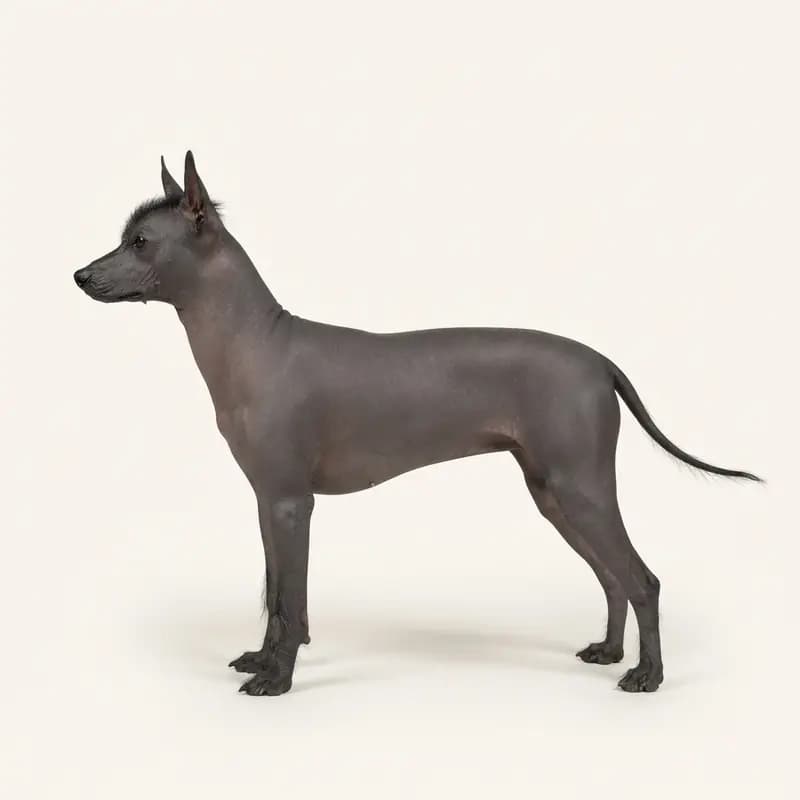
- Coat: Smooth, short or hairless
- Origin: Mexico
Temperament
Energy
Trainability
Family fit
With kids
Daily life
Care effort
Shedding
Barking
City-friendly
Guard instinct
What matters most
Especially with a Xoloitzcuintle, choosing the right breeder is the single most important decision you'll make. Serious breeders consistently test the parents for inherited conditions, prioritize healthy early socialization, and stay accountable long after handover. A cheap puppy without health screening tends to become the most expensive dog later on.
See HonestDog breeder standards →Colors & coat
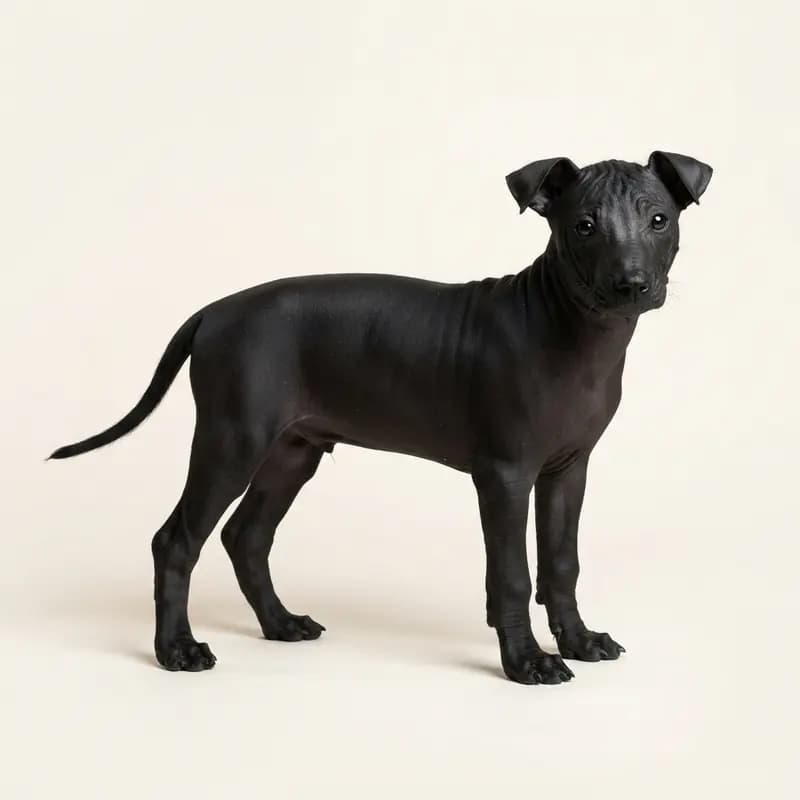
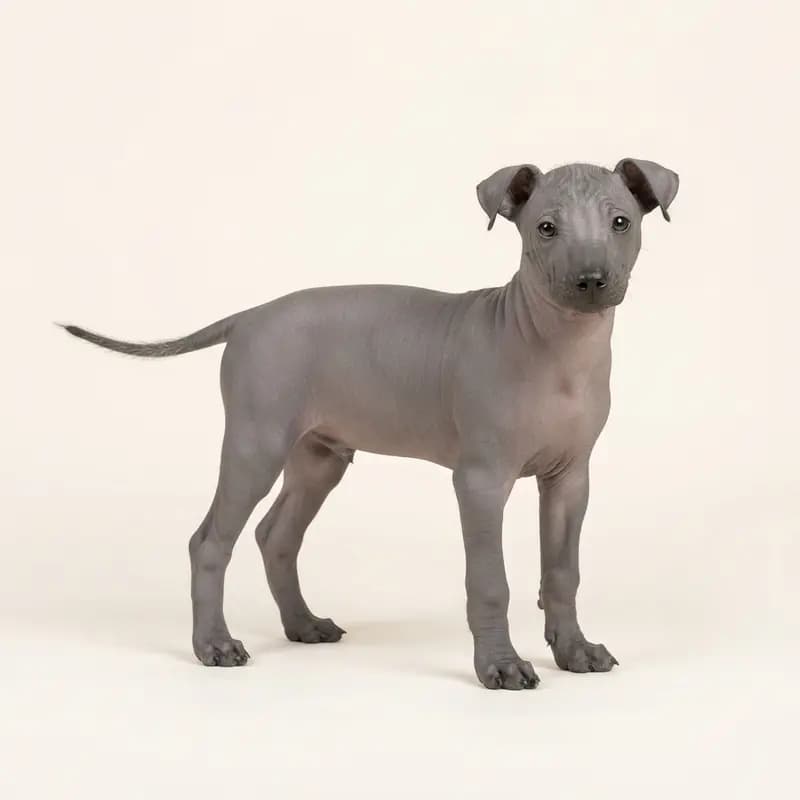
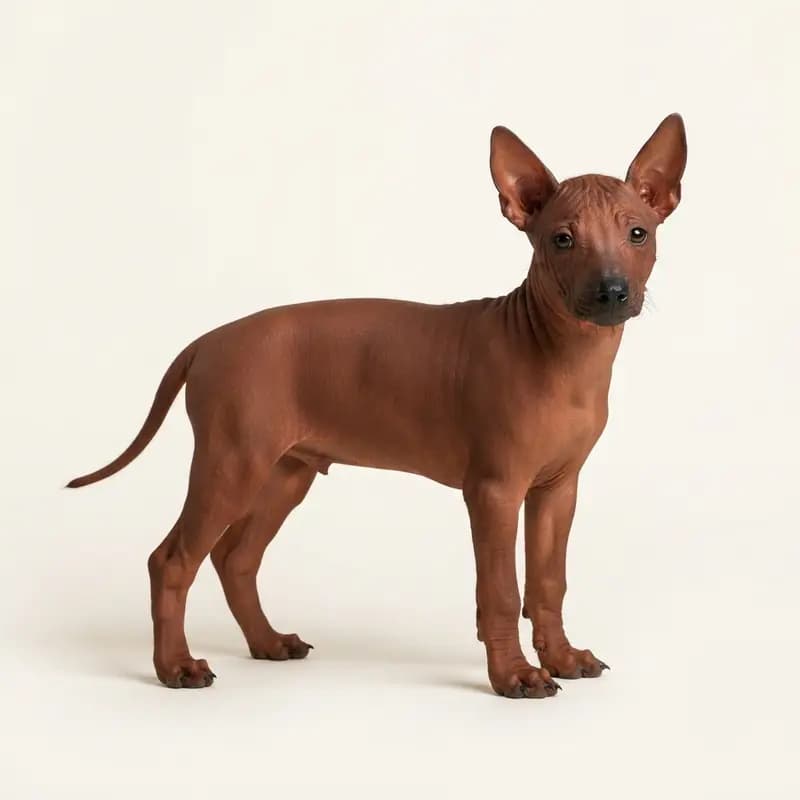
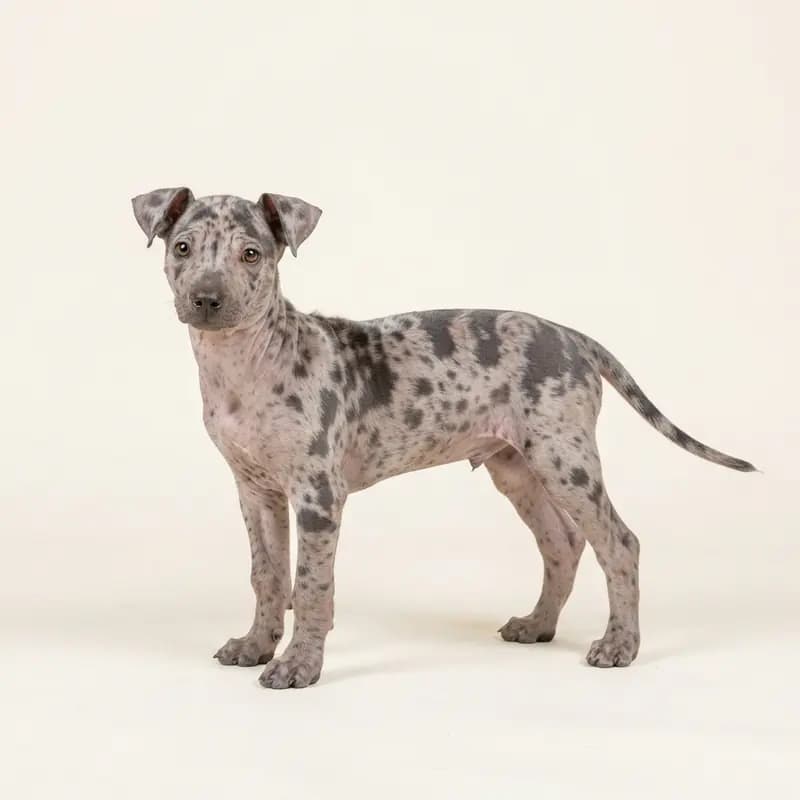
What colors does the Xoloitzcuintle come in?
The coat colors you will see in Xoloitzcuintle litters — including which ones fall outside the breed standard and which carry genetic risk.
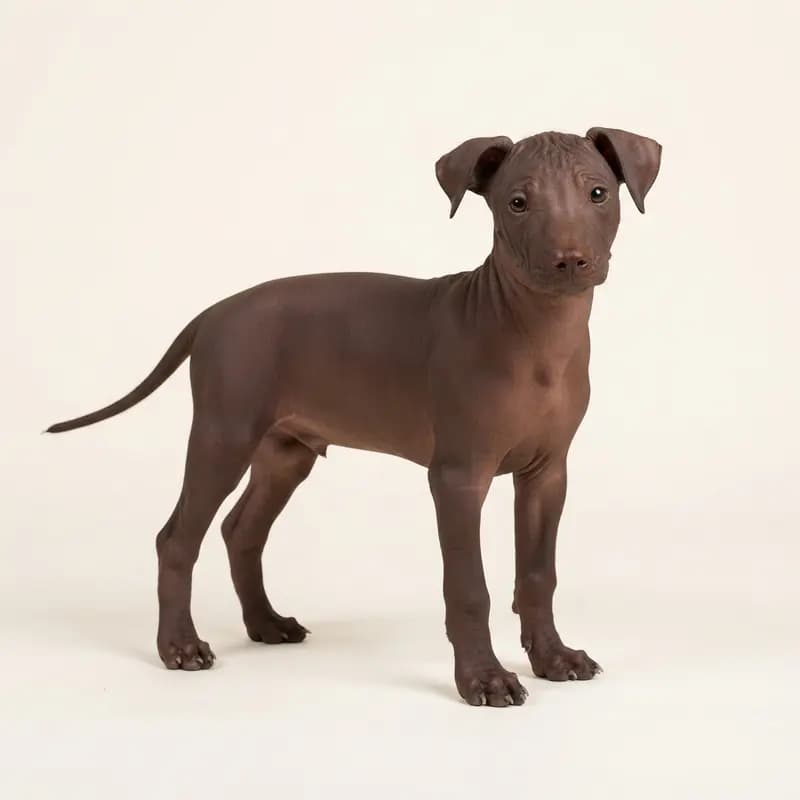
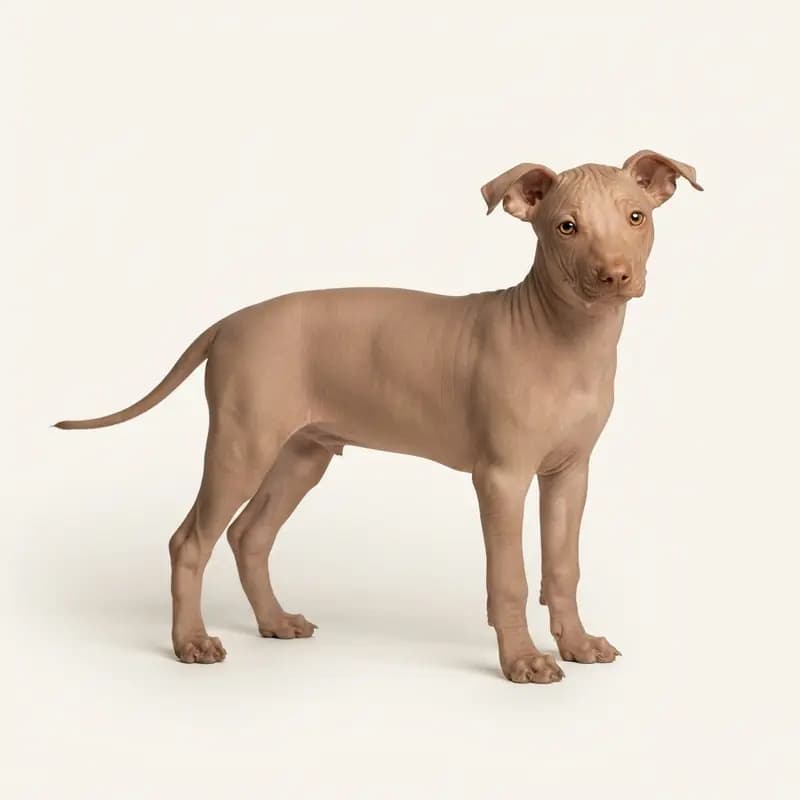
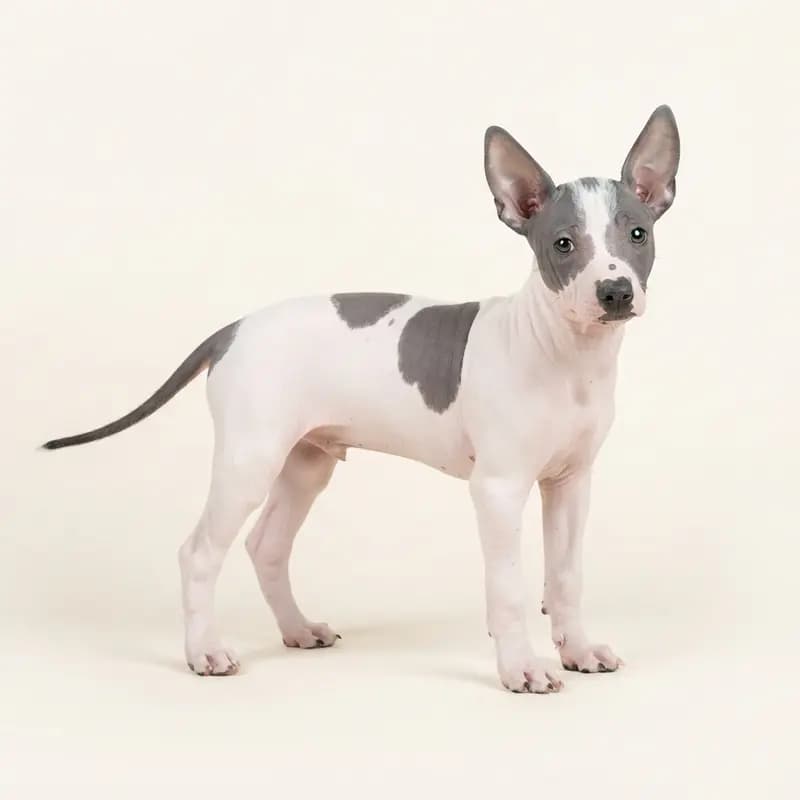
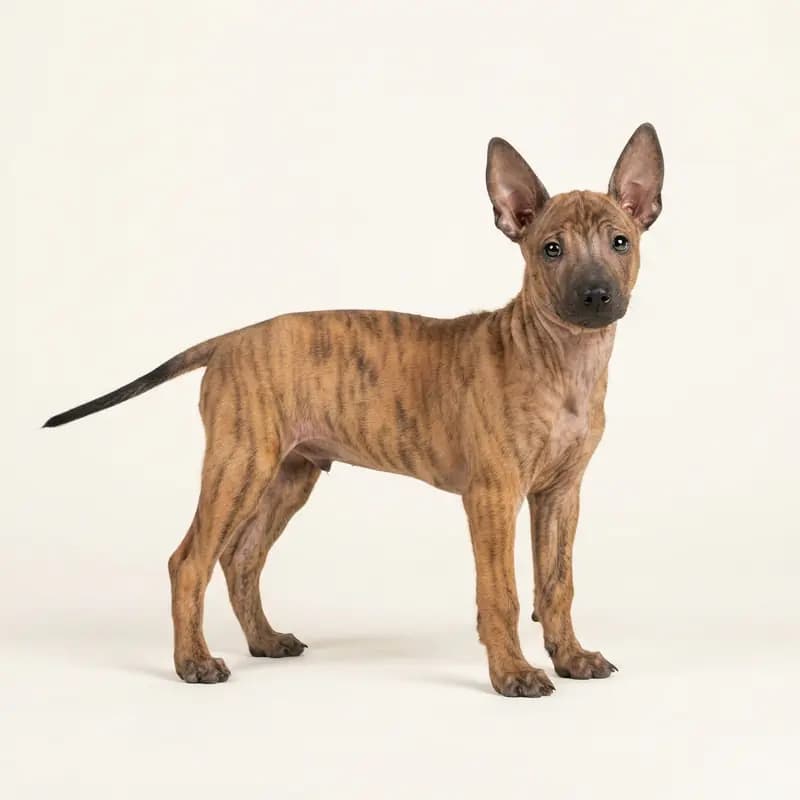

Eye colors
 Brown
Brown Amber
Amber
Coat type
 Illustrative image
Hairless
 Short
Short Smooth
Is the Xoloitzcuintle right for you?
The Xoloitzcuintle is a highly intelligent, sensitive exotic—a watchful primitive breed that has developed for thousands of years with almost no human interference; it is fiercely loyal to its family but deeply suspicious of strangers.
Perfect for you if:
- You are looking for a close-knit family dog that ignores strangers—this primitive breed is extremely selective about who it bonds with.
- You lead with subtle, quiet communication, as this sensitive dog will immediately shut down under harsh pressure.
- You are looking for a heat-loving companion for apartment living and are happy to reach for a dog coat in winter.
- You want an athletic companion that is persistent and active outdoors, but remains almost invisible and calm inside the house.
Less ideal if:
- You expect it to play with everyone at the dog park—as a primitive breed, it does not tolerate overfamiliarity and will correct rude behavior from other dogs very clearly.
- You live in a household with constantly changing visitors—its watchful heritage means it will loudly announce intruders and keep them at a distance.
- You expect blind obedience on the training field—it only follows commands if they make sense to it in that specific moment.
The real vibes check
The nature of a Xoloitzcuintle is often more reminiscent of a cat than a classic dog—it doesn't push itself on you, but observes everything from a safe distance until it decides you have earned its closeness. Once you have earned its trust, it becomes your inseparable shadow, but it remains aloof to the rest of the world.
Self-check
Would the Xoloitzcuintle really fit your life?
Answer 6 quick questions about your everyday life and see how well the Xoloitzcuintle fits you — including an honest cost estimate per month, per year, and across the dog's lifetime.
Fit checkCost estimateRisk dice
Takes about 1 minute · free & anonymous
Breed Profile
The Xoloitzcuintle, also known as the Xolo or Mexican Hairless Dog, is one of the oldest and rarest dog breeds in the world. This fascinating breed is bred in three sizes: Miniature, Medium and Standard, with each size having its own unique personality and use. The most famous and striking feature of the Xolo is its hairless skin, although there are also hairy varieties. The skin is smooth and firm and often has darker pigmentation that contrasts sharply with the dog's typical skin color. Xolos have almond-shaped eyes that vary in color from yellow to dark brown to black. They have a strong, elegant build and are slightly muscular. The Xoloitzcuintle belongs to FCI Group 5, which includes archetypes and pointed dogs.
All measurements in detail
- Height
- 25 - 60 cm (Female), 25 - 60 cm (Male)
- Weight
- 4 - 20 kg (Female), 4 - 20 kg (Male)
- Life Expectancy
- 13 - 18 yrs
- Character
- Affectionate, alert, intelligent
- Coat
- Smooth, short or hairless
- Coat Color
- All colors and combinations allowed
- Price
- 2000 - 3500 €
Character & Temperament
The Xoloitzcuintle is a remarkably versatile dog. Its personality varies depending on size, with the smaller Xolos often being more lively and alert, while the larger ones are calmer and more balanced. Regardless of size, Xolos are known for their affection and deep bonds with their humans. They are very people-oriented and love being close to their family. As a result, they may have difficulty staying alone and benefit from the company and interaction with their humans. Xolos are intelligent and alert, making them excellent watchdogs. They are often reserved towards strangers, but they are not aggressive. Instead, they prefer to observe from a distance and sound the alarm if they notice anything suspicious. Xolos are also very playful and enjoy various games and activities. Despite their vigilance, xolos do not necessarily exhibit strong hunting or prey-catching behavior. They are more interested in their people and their home than in hunting. However, they should always be supervised when outdoors as they can sometimes give in to the urge to chase small animals. In terms of their energy and activity, Xolos can be described as moderate to active. They enjoy walks and games, but also need enough rest and relaxation time. As with all dogs, they benefit from a healthy mix of physical activity and mental stimulation. It is important to note that although the Xoloitzcuintle is a loveable and affectionate dog, it also requires a fair amount of care and attention. Its hairless skin is sensitive to the sun and cold, and it requires protection in the form of sunscreen or clothing to prevent skin damage. Xolos can also be prone to skin problems and require regular skin care and checks. Despite these challenges, the Xoloitzcuintle is an incredibly rewarding breed. His unique appearance, his amazing character and his deep bond with his people make him an unforgettable companion. With proper care and attention, the Xolo will become a beloved member of any family.
| Trainability Willing to learn with clear rules and regular training. | Balanced |
| Watchfulness A natural watchdog with real protective instinct. | High |
| Openness to Strangers Warms up quickly and is generally welcoming. | Friendly |
| Hunting or Herding Drive Mild interest in movement and small animals — easily managed. | Low |
Fun Fact!
Did you know that the Xoloitzcuintle is one of the oldest dog breeds in the world? They were already revered by the Aztecs, Maya and other indigenous peoples of Central America and are considered national heritage in their native Mexico.
What Awaits You
The Xoloitzcuintle or Mexican Hairless Dog is known in many countries as a breed with torture breeding characteristics due to its nudity. This nudity is also accompanied by misaligned teeth.
Housing & Care
The Xoloitzcuintle is definitely suitable as a city dog. They are generally calm and balanced and adapt well to different living conditions as long as they receive enough exercise and mental stimulation. Xolos are very people-oriented and love being close to their family. They generally get along well with children, but like any dog, they should always be supervised. Xolos can also get along well with other pets, including cats, provided they are properly introduced and socialized.
- Family Friendly
Lives for its family — the born family companion.
Ideal family dog - Child Friendly
Takes boisterous and affectionate children in its stride.
Patient with children - Dog Friendly
Usually gets on fine with other dogs.
Generally tolerant - City Friendly
Small space, noise, lots of people — no problem at all.
Ideal city dog
Owning a dog is a privilege, but it's also a real responsibility. Before you bring one into your life, be honest with yourself about the commitment it takes.
Training & Education
Xolos are intelligent, alert dogs that love to learn. They respond well to positive reinforcement and are capable of learning a variety of commands and tricks. It is important that training is carried out consistently and patiently as they can sometimes be stubborn. Despite their calm temperament, Xolos require regular physical and mental stimulation. Games that stimulate their thinking skills, such as search or fetch games, can be very satisfying for them. However, it is important to be careful not to "over-busy" the dog as they also need rest and relaxation times. When it comes to training impulse control and frustration tolerance, Xolos are generally well balanced. But as with any dog, it can be useful to incorporate such exercises into your training to promote balanced behavior.
Nutrition & Care
The Xoloitzcuintle's diet should be well balanced and contain high quality protein, healthy fats, vitamins and minerals. They are not known to have any special nutritional needs, but as with any dog, their diet should be tailored to their age, weight, size and activity level. A veterinarian or qualified nutritionist can provide helpful recommendations. When it comes to care, Xolos are relatively easy to care for compared to many other breeds because they don't shed. However, they have bare, sensitive skin that requires special attention. Regular baths and skin checks are necessary, and sunscreen is a must for sunny days. In colder climates, such as Germany, it may be necessary to dress them in a coat or sweater to protect them from hypothermia.
| Care Level Minimal effort — occasional brushing and bathing. | Low-maintenance |
| Exercise Needs Needs several hours of serious exercise every day. | Very active |
| Shedding No or minimal hair loss — suitable for allergy sufferers. | No shedding |
| Trainability Willing to learn with clear rules and regular training. | Balanced |
Our experts are still reviewing this information. Spotted something wrong? Email us at info@honestdog.de.
Health & hereditary diseases
Health
B
Solid
Health grade
The Xoloitzcuintle (Intermediate) shows an average genetic predisposition that can be very well managed through targeted breeding tests. Mandatory health tests for hip dysplasia (HD) and elbow dysplasia (ED) protect the musculoskeletal system, while testing for progressive retinal atrophy (PRA) minimizes the risk of blindness. Prospective buyers should consistently ask the breeder for these health results of the parent dogs.
Grade is relative to other breeds — AI-assisted and editorially reviewed.
In daily life this can mean
In everyday life, you should protect its sensitive skin from sun and dryness, keep an eye on its weight to protect its joints, and regularly check the status of its teeth.
The breeder's role
Reputable breeders have the parents' knees, hips, eyes, and hearts tested and pay close attention to dental status as well as a responsible approach to the complex genetics of hairlessness.
Note: This health overview is AI-assisted and editorially reviewed. It is for orientation only and does not replace veterinary advice.
No Health Tests Available
No specific health tests are currently available for this breed.
Costs & where to find one
How much does a Xoloitzcuintle cost?
A Xoloitzcuintle costs around ~€160 per month (€80 – €290, depending on your setup). The first year adds up to roughly ~€5,490 including purchase, equipment and puppy school; across the dog's life (15.5 years) it comes to about ~€33,210.
With surgery cover, running costs come to about ~€150 per month — in return, your share of a major operation drops from several thousand euros to around 20 percent.
Per month
~€160
In the first year
~€5,490
Across the dog's life
~€33,210
Purchase from a breeder: €2,000 – €3,500
Estimate at a mid-range setup (suburban, dry food, 1–2 hours of daily exercise), average German prices, as of July 2026.
Calculate your personal costs1-minute self-check with your own answers
Looking for a Xoloitzcuintle?
HonestDog Concierge
No verified Xoloitzcuintle breeders on HonestDog yet
We currently have no breeders for this breed who have passed our verification. Create your short buyer profile: we'll set up your search alert, review a possible source and email you within 28 days.
Appearance, variants & origin
History
The full history
The history of the Xoloitzcuintle goes back more than 3,000 years. The breed comes from Mexico and is named after the god Xolotl and the Aztec word for dog, "itzcuintli." Xolos were revered as companions, guard dogs, and even sacred animals by the Aztecs, Mayans, and other pre-Columbian peoples. Xolos were believed to accompany the souls of the deceased on their journey to the afterlife. Over the centuries the breed was close to extinction, but through the efforts of dedicated breeders it was revived. The Xoloitzcuintle was officially recognized as a breed by the F"d"ration Cynologique Internationale (FCI) in 1956. Today, the Xolo is still a rare breed but is valued worldwide for its uniqueness and heritage.
Original Use
The Xoloitzcuintle was kept by the indigenous peoples of Mexico as a companion and guard dog and played a role in religious ceremonies.
Origin
Mexico
Date
Antike
Owner experiences
What owners say about the Xoloitzcuintle
Jenny G., Halterin aus Bayern (Rüde Nextic, seit 2015)
Mein Nextic ist ein absoluter Traumhund, aber man darf die Rasse wirklich nicht unterschätzen. Er bändelt sich unglaublich eng an mich – er ist ein richtiger Schoßhund, der am liebsten den ganzen Tag an mich gekuschelt daliegt, leise grunzt und gestreichelt werden will. Wenn er mal nicht direkt auf den Schoß darf, liegt er zumindest auf meinen Füßen. Diese extreme Anhänglichkeit bedeutet aber auch, dass das Alleinbleiben von Anfang an sehr konsequent und kleinschrittig geübt werden muss.
Untereinander kommunizieren Xolos extrem fein, spielen aber auch sehr wild mit vielen Nacken- und Kehlbissen sowie Pfotenhieben, was Hunde 'normaler' Rassen anfangs oft irritiert. Generell ist er aber sehr sozial und verträglich. Was die Ernährung angeht, hat Nextic zum Glück einen echten Saumagen und verträgt sowohl Trockenfutter als auch Rohfleisch problemlos, auch wenn er für seine Größe erstaunliche Mengen verdrückt.
Anja S., Halterin aus Hessen (Rüde Dante, seit 2017)
Das Leben mit Dante hat uns gezeigt, wie vielschichtig der Xoloitzcuintle wirklich ist. Viele sehen in ihm nur den sensiblen, anhänglichen Begleiter, aber er hat eine extrem ausgeprägte Wachhund-Seite. Dante kann blitzschnell umschalten: Er bewacht nicht nur unser Grundstück, sondern vor allem meinen Mann und mich, egal wo wir uns befinden. Diese Wachsamkeit erfordert eine sehr vorausschauende Führung.
Ein weiteres großes Thema ist die Reaktionen der Umwelt. Wenn wir im Winter mit Hundeklamotten durch die Stadt gehen, ernten wir oft skurrile Blicke und regelrechte Gesichtsentgleisungen, weil die Leute einfach nicht mit einem nackten, angezogenen Hund rechnen. Im Sommer ist es entspannter, aber man muss sich definitiv auf viele Fragen und Vorurteile einstellen. Seine Garderobe ist mittlerweile riesig, aber gefühlt immer noch zu klein für die verschiedenen Wetterlagen.
Sabine T., Halterin aus Nordrhein-Westfalen (Rüde, Coated-Variante)
Ich habe einen behaarten Xoloitzcuintle ('coated'). Viele wissen gar nicht, dass in fast jedem Wurf auch Welpen mit Fell geboren werden. Leider ist mein Rüde von klein auf psychisch sehr sensibel, extrem ängstlich und leicht gestresst, was sich bei ihm direkt auf den Magen schlägt. Wir hatten lange Zeit mit einer chronischen Magenschleimhautentzündung und morgendlichem Erbrechen zu kämpfen.
Erst die Umstellung auf das Barfen (Rohfütterung) hat bei uns die Wende gebracht. Er frisst seither gut und hat endlich ein gesundes Gewicht erreicht. Wer sich für einen Xolo entscheidet – egal ob nackt oder behaart –, sollte wissen, dass diese Urtypen feinfühlige Seelen sind, die Stress schlecht vertragen und eine sehr stabile, ruhige Führung brauchen.
Paraphrased from real owner reports
Loading owner stories
FAQ & more
Frequently asked questions about the Xoloitzcuintle
Is a Xoloitzcuintle the right dog for me?
The Xoloitzcuintle is an active dog that needs plenty of exercise and mental stimulation. Research the temperament, grooming needs, and space requirements before deciding.
How long does a Xoloitzcuintle live?
The average life expectancy of a Xoloitzcuintle is 13-18 years. With proper care and regular vet visits, your dog can live a long, healthy life.
How much grooming does a Xoloitzcuintle need?
Xoloitzcuintle grooming requirements include regular brushing, nail trimming, and dental care. HonestDog provides detailed grooming tips for every breed.
Is a Xoloitzcuintle good for families with children?
The Xoloitzcuintle can be a great family dog. Proper training and socialization are key. HonestDog provides family suitability information for every breed.
What colors does the Xoloitzcuintle come in?
The Xoloitzcuintle comes in these colors: Black, Grey, Red, Liver, Fawn, Piebald, Brindle, Merle, Black and tan. Colors that fall outside the breed standard are marked as such on the breed page.
Loading related articles
Are you a Xoloitzcuintle breeder?
Showcase your kennel on HonestDog and reach families searching for a responsibly bred Xoloitzcuintle.
Why HonestDog?
What makes HonestDog different from other platforms
Full transparency
We lay out what we have: who the breeder is, how they work, and any health records they've uploaded. So you can judge for yourself.
Responsible breeding, assured
Every breeder on HonestDog has their identity and documents checked before their profile goes live. Health records they upload are shown on the profile, so you can see exactly what has been tested.
Trust and verification
We verify breeders and buyers alike, so every conversation happens on solid ground. It's a new standard of trust in dog breeding.
Less hassle, more time
We've already checked the breeders' documents and gathered the details, so you can skip the endless research and focus on finding the right puppy for your family.
Our Mission

We connect dog lovers with responsible breeders and shelters to ensure every dog finds the perfect home.
Founded by dog enthusiasts, our platform focuses on ethical dog breeding and adoption.
Why HonestDog?
We connect you with vetted breeders and shelters so you can find your — your new companion — with confidence.
Vetted Partners
Only verified breeders and shelters — for a safe start.
Highest Standards
Every animal's health and wellbeing is our top priority.
Guides & Resources
Guides, checklists, and breed profiles — so you can make a well-informed decision.