Loading breed
Wolfspitz
Health grade BThe Wolfsspitz is a loyal, extremely people-oriented, and territorial guardian—bred to reliably watch over farms and ships without wandering off or hunting. Its lush coat often masks a robust and attentive core.
- Height44–55 cm
- Weight18–26 kg
- Life expectancy12–14 yrs
- Puppy price1,500–2,500 €
- Energy4/5
The Essentials at a Glance
The Wolfsspitz is a loyal, extremely people-oriented, and territorial guardian—bred to reliably watch over farms and ships without wandering off or hunting. Its lush coat often masks a robust and attentive core.
- Health grade B: The Wolfsspitz is considered a very robust and primitive breed with a refreshingly low genetic burden.
- You are looking for an attentive companion who will reliably alert you to visitors on your property without having a strong hunting instinct.
- You enjoy being outdoors in any weather and aren't put off by regular, intensive grooming.
- You live in an apartment with thin walls—this breed was bred for centuries to report anything unusual loudly and immediately; it is simply part of their hardware.
Is the Wolfspitz right for you?
At a glance
Wolfspitz overview
The essentials — key facts, traits, and health priorities — before you dive deeper.
Health grade
Relative to other breeds
S
A
B
C
D
E
Very healthyHigher risk
Solid — a handful of items a good breeder watches.
See full health info & tests →
Note: This health overview is AI-assisted and editorially reviewed. It is for orientation only and does not replace veterinary advice.
Lifespan
12–14 yrs
Height
44–55 cm
Weight
18–26 kg
Practical
- Puppy price: 1,500 – 2,500 €
- Coat: Dense, straight, stands out (undercoat)
- Origin: Germany
Temperament
Energy
Trainability
Family fit
With kids
Daily life
Care effort
Shedding
Barking
City-friendly
Guard instinct
What matters most
Especially with a Wolfspitz, choosing the right breeder is the single most important decision you'll make. Serious breeders consistently test the parents for inherited conditions, prioritize healthy early socialization, and stay accountable long after handover. A cheap puppy without health screening tends to become the most expensive dog later on.
See HonestDog breeder standards →Colors & coat
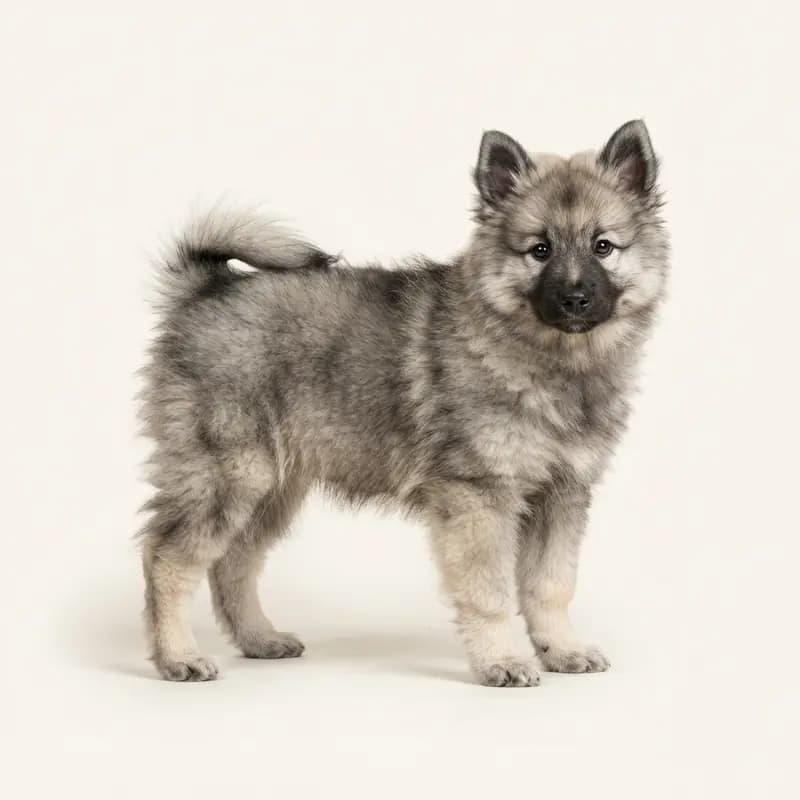
What colors does the Wolfspitz come in?
The coat colors you will see in Wolfspitz litters — including which ones fall outside the breed standard and which carry genetic risk.
Eye colors
 Brown
Brown
Coat type
 Long
Long Double coat
Is the Wolfspitz right for you?
The Wolfsspitz is a loyal, extremely people-oriented, and territorial guardian—bred to reliably watch over farms and ships without wandering off or hunting. Its lush coat often masks a robust and attentive core.
Perfect for you if:
- You are looking for an attentive companion who will reliably alert you to visitors on your property without having a strong hunting instinct.
- You enjoy being outdoors in any weather and aren't put off by regular, intensive grooming.
- You want a dog that is extremely closely bonded to its family and prefers to act as your constant shadow.
- You appreciate a clever, sometimes slightly stubborn character and prefer to lead with positive motivation rather than heavy-handed pressure.
Less ideal if:
- You live in an apartment with thin walls—this breed was bred for centuries to report anything unusual loudly and immediately; it is simply part of their hardware.
- You place great value on a hair-free home, as the shedding during seasonal coat changes is significant.
- You expect your dog to greet every stranger with immediate joy—the Wolfsspitz is typically reserved with strangers at first.
- You need an extremely athletic partner for hours of cycling or jogging in the heat of summer.
The real vibes check
A Wolfsspitz is like an attentive caretaker in a thick fur coat: he always keeps an eye on his territory and announces every visitor, but has absolutely no desire to leave the yard to chase a rabbit. You aren't getting a dog that blindly follows orders, but rather a vigilant, deeply connected companion who knows exactly where he belongs.
Self-check
Would the Wolfspitz really fit your life?
Answer 6 quick questions about your everyday life and see how well the Wolfspitz fits you — including an honest cost estimate per month, per year, and across the dog's lifetime.
Fit checkCost estimateRisk dice
Takes about 1 minute · free & anonymous
Breed Profile
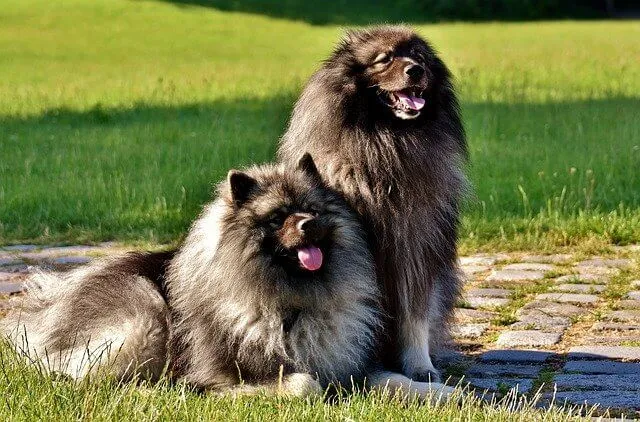
The Wolfsspitz is the largest variant of the German Spitz breed and is also known as the Keeshond or German Wolfsspitz. With its thick, double coat, bushy tail carried proudly across its back, and alert expression, it looks a bit like a small wolf, which explains its name. The FCI lists him in group 5: “Top and dogs of the original type”, Section 4: “European top”. The Wolfsspitz is a well-proportioned dog, with a strong, square shape that makes it appear both robust and agile. His eyes are almond-shaped and dark, his ears are small, thick and set high, giving his overall appearance an alert and intelligent expression.
All measurements in detail
- Height
- 44 - 55 cm (Female), 44 - 55 cm (Male)
- Weight
- 18 - 25 kg (Female), 18 - 26 kg (Male)
- Life Expectancy
- 12 - 14 yrs
- Character
- Alert, loyal, friendly
- Coat
- Dense, straight, stands out (undercoat)
- Coat Color
- Gray with a hint of black
- Price
- 1500 - 2500 €
Character & Temperament
The Wolfsspitz is a dog with a very distinctive character. He is loyal and affectionate towards his family, but rather reserved and watchful towards strangers. His vigilance makes him an excellent guard dog, reliably protecting his territory and his family. But despite its alertness and formidable appearance, the Wolfsspitz has a surprisingly gentle and friendly core. He is a very people-oriented dog who loves the company of his people and enjoys being around them. He is also playful and enjoys shared activities and games. A Wolfspitz can easily learn to stay alone, provided it has been properly prepared as a puppy and is sufficiently exercised. A Wolf Spitz usually shows little hunting behavior and is more focused on its people and home. However, he is fully capable of defending himself or protecting his family if necessary. In terms of temperament, the Wolfsspitz can be described as calm and balanced. He is generally not hyperactive, but he still needs regular exercise and mental work to be happy. Walks, brain games, and occasional fetch can be good ways to do this. Due to its dual nature as a guardian and family dog, it is important to socialize the Wolfspitz from an early age and to teach it that not every stranger is a threat. If you teach him as a puppy to face different situations and people in a relaxed manner, you will have a loyal, loving and reliable companion at your side who is not only a guardian but also a member of the family.
| Trainability Willing to learn with clear rules and regular training. | Balanced |
| Watchfulness A natural watchdog with real protective instinct. | High |
| Openness to Strangers Neither pushily friendly nor suspicious. | Neutral |
| Hunting or Herding Drive Mild interest in movement and small animals — easily managed. | Low |
Fun Fact!
In the past, the Wolfspitz was very popular as a guard dog on houseboats in Germany, as it loudly reported any intruders!
What Awaits You
Wolfspitzes are docile but also independent dogs. They are often territorial and good guardians. They can also be motivated to hunt. Consistent parenting requires good timing and a good sense for choosing motivation.
Housing & Care
Due to its size and guarding instinct, the Wolfspitz is not necessarily suitable as a typical city dog, but can also be kept in the city with enough exercise and activity. He is a family-friendly dog who gets along well with children. He also generally gets along well with cats and other pets, especially if he is socialized early.
- Family Friendly
Loves family life and thrives in a group.
Family-oriented - Child Friendly
Gets on well with children — with adult supervision.
With supervision - Dog Friendly
Usually gets on fine with other dogs.
Generally tolerant - City Friendly
City-appropriate with enough exercise and stimulation.
Manageable in cities
Owning a dog is a privilege, but it's also a real responsibility. Before you bring one into your life, be honest with yourself about the commitment it takes.
Training & Education
The Wolfspitz is intelligent, but sometimes a bit independent. Consistency and loving leadership are important here. He needs mental and physical activity, but you shouldn't overdo it either. Guard games, agility or obedience are great options. It is important to train frustration tolerance and impulse control as the Wolf Spitz can be a bit stubborn at times.
Nutrition & Care
Due to its size and guarding instinct, the Wolfspitz is not necessarily suitable as a typical city dog, but can also be kept in the city with enough exercise and activity. He is a family-friendly dog who gets along well with children. He also generally gets along well with cats and other pets, especially if he is socialized early.
| Care Level Regular brushing and occasional professional grooming. | Moderate |
| Exercise Needs Needs several hours of serious exercise every day. | Very active |
| Shedding Hair everywhere, always — no white clothing survives. | Very heavy |
| Trainability Willing to learn with clear rules and regular training. | Balanced |
Our experts are still reviewing this information. Spotted something wrong? Email us at info@honestdog.de.
Health & hereditary diseases
Health
B
Solid
Health grade
The Wolfsspitz is considered a very robust and primitive breed with a refreshingly low genetic burden. Hip dysplasia (HD) is the only major concern and is well-regulated through strict breeding requirements, while the formerly critical primary hyperparathyroidism (PHPT) has been almost completely eradicated thanks to consistent genetic testing. Prospective buyers should still insist on seeing the official HD evaluations of the parent dogs to avoid any unpleasant surprises regarding the musculoskeletal system.
Grade is relative to other breeds — AI-assisted and editorially reviewed.
In daily life this can mean
With joint-friendly rearing, thorough grooming to maintain healthy skin, and occasional veterinary check-ups, most dogs stay fit and active for a long time.
The breeder's role
Reputable breeders have the hips, elbows, knees, and eyes of the parent animals checked and perform genetic testing for the thyroid to reduce risks within the bloodline.
Note: This health overview is AI-assisted and editorially reviewed. It is for orientation only and does not replace veterinary advice.
No Health Tests Available
No specific health tests are currently available for this breed.
Costs & where to find one
How much does a Wolfspitz cost?
A Wolfspitz costs around ~€180 per month (€100 – €350, depending on your setup). The first year adds up to roughly ~€5,040 including purchase, equipment and puppy school; across the dog's life (13 years) it comes to about ~€31,500.
With surgery cover, running costs come to about ~€180 per month — in return, your share of a major operation drops from several thousand euros to around 20 percent.
Per month
~€180
In the first year
~€5,040
Across the dog's life
~€31,500
Purchase from a breeder: €1,500 – €2,500
Estimate at a mid-range setup (suburban, dry food, 1–2 hours of daily exercise), average German prices, as of July 2026.
Calculate your personal costs1-minute self-check with your own answers
Looking for a Wolfspitz?
Appearance, variants & origin
History
The full history
The Wolfsspitz can look back on a long history. It is believed that the Spitz are generally one of the oldest dog breeds in Europe and that they existed several thousand years ago. The Wolfsspitz in particular is said to have been known in the Middle Ages and was widespread throughout Europe over the centuries. In the 19th century it was defined and bred as a breed, particularly in England and Germany. The first breed standard was established in Germany in 1880. At that time the dogs were mainly used as guard dogs.
Original Use
The Wolfspitz was bred as a farm guard dog and companion dog, valued for its alertness and friendly nature.
Origin
Germany
Date
1700
Owner experiences
What owners say about the Wolfspitz
Sabine M., Halterin aus Nordrhein-Westfalen (Rüde, seit 2021)
Mein Wolfsspitz-Rüde ist jetzt knapp über drei Jahre alt und für mich der absolute Traumhund. Er ist unglaublich fixiert auf mich und weicht mir kaum von der Seite. Im Alltag zeigt er sich als sehr ausgeglichener Begleiter: Wenn Action angesagt ist, ist er sofort mit Begeisterung dabei, aber wenn mal nichts los ist, schläft er einfach entspannt.
Allerdings darf man den typischen Spitz-Charakter nicht unterschätzen. Er hat durchaus seinen eigenen, sturen Kopf und hat besonders in der Pubertät seine Grenzen sehr genau ausgetestet. Auch das Thema Wachen ist bei uns präsent: Fremden gegenüber ist er draußen erst einmal misstrauisch und lässt sich nicht gerne von jedem anfassen. Drinnen meldet er unbekannte Geräusche zuverlässig mit ein, zwei Wuffs – das lässt sich aber gut händeln, sobald ich nachsehe und das Signal gebe, dass alles okay ist.
Was die Pflege angeht, bin ich positiv überrascht. Einmal pro Woche gründlich bürsten reicht bei seinem dichten Fell völlig aus. Ein kleiner Tipp für künftige Halter: Im Sommer leidet er unter der Hitze, weshalb wir unsere großen Runden in die kühlen Morgen- und Abendstunden verlegen. Drinnen meidet er sein Körbchen und liegt am liebsten auf den kalten Fliesen.
Norbert K., Halter aus Hessen (Hündin, seit 2020)
Wir haben unsere Wolfsspitz-Hündin als Welpen bekommen und mussten schnell feststellen, dass diese Rasse ein sehr feines Gespür, aber auch einige Eigenheiten mitbringt. Sie ist extrem wachsam und nimmt ihre Aufgabe im Haus sehr ernst. Leider neigt sie im Dunkeln dazu, sehr schreckhaft zu sein, und fängt dann an, Passanten anzubellen.
Eine weitere große Herausforderung ist ihre Geräuschempfindlichkeit. Wenn es irgendwo knallt – sei es ein Gewitter oder ein Fehlzünder –, gerät sie in Panik. Wenn sie in so einem Moment frei läuft, ist es unglaublich schwer, sie wieder anzuleinen oder zu beruhigen. Hier ist von Anfang an ein extrem vorausschauendes Training nötig.
Auch beim Thema Fellpflege haben wir unsere Kämpfe. Obwohl wir früh damit angefangen haben, lässt sie sich bis heute nicht besonders gerne bürsten, was bei der enormen Unterwolle natürlich ein Geduldsspiel ist. Trotz dieser Baustellen lieben wir sie sehr, aber man sollte sich bewusst sein, dass ein Wolfsspitz kein Selbstläufer ist und eine konsequente, sensible Führung braucht.
Renate W., Halterin aus Bayern (Rüde, seit 2007)
Wir haben unseren Rüden im Alter von 5 Monaten direkt vom Züchter übernommen, da ihn dort aufgrund seines anfangs sehr abweisenden Verhaltens niemand haben wollte. Und ich muss ehrlich sagen: Für Anfänger ist diese Rasse in meinen Augen absolut nichts. Es hat uns sehr viel Zeit, Geduld und Konsequenz gekostet, überhaupt erst einmal sein Vertrauen zu gewinnen.
Ein Wolfsspitz ist kein Hund, der jedem gefallen möchte. Er hinterfragt Kommandos gerne und bringt eine ordentliche Portion Selbstbewusstsein mit. Wenn man aber einmal den Schlüssel zu seinem Herzen gefunden hat, bekommt man einen unglaublich loyalen Partner, der für seine Familie durchs Feuer geht.
Man muss sich jedoch darauf einstellen, dass die Erziehung viel positive Bestärkung erfordert. Druck oder Härte bewirken bei dieser Rasse genau das Gegenteil – dann machen sie komplett dicht. Heute ist er ein toller Begleiter, aber der Weg dorthin war ein echtes Stück Arbeit.
Paraphrased from real owner reports
Loading owner stories
Community Posts
FAQ & more
Frequently asked questions about the Wolfspitz
Is a Wolfsspitz the right dog for me?
The Wolfsspitz is an active dog that needs plenty of exercise and mental stimulation. Research the temperament, grooming needs, and space requirements before deciding.
How long does a Wolfsspitz live?
The average life expectancy of a Wolfsspitz is 12-14 years. With proper care and regular vet visits, your dog can live a long, healthy life.
How much grooming does a Wolfsspitz need?
Wolfsspitz grooming requirements include regular brushing, nail trimming, and dental care. HonestDog provides detailed grooming tips for every breed.
Is a Wolfsspitz good for families with children?
The Wolfsspitz can be a great family dog. Proper training and socialization are key. HonestDog provides family suitability information for every breed.
What colors does the Wolfsspitz come in?
The Wolfsspitz comes in these colors: Wolf grey.
Loading related articles
Are you a Wolfspitz breeder?
Showcase your kennel on HonestDog and reach families searching for a responsibly bred Wolfspitz.
Why HonestDog?
What makes HonestDog different from other platforms
Full transparency
We lay out what we have: who the breeder is, how they work, and any health records they've uploaded. So you can judge for yourself.
Responsible breeding, assured
Every breeder on HonestDog has their identity and documents checked before their profile goes live. Health records they upload are shown on the profile, so you can see exactly what has been tested.
Trust and verification
We verify breeders and buyers alike, so every conversation happens on solid ground. It's a new standard of trust in dog breeding.
Less hassle, more time
We've already checked the breeders' documents and gathered the details, so you can skip the endless research and focus on finding the right puppy for your family.
Our Mission

We connect dog lovers with responsible breeders and shelters to ensure every dog finds the perfect home.
Founded by dog enthusiasts, our platform focuses on ethical dog breeding and adoption.
Why HonestDog?
We connect you with vetted breeders and shelters so you can find your — your new companion — with confidence.
Vetted Partners
Only verified breeders and shelters — for a safe start.
Highest Standards
Every animal's health and wellbeing is our top priority.
Guides & Resources
Guides, checklists, and breed profiles — so you can make a well-informed decision.