Loading breed
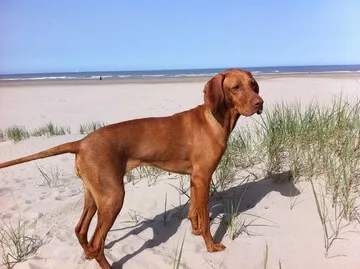
Wirehaired Vizsla
Health grade BThe Drahthaariger Ungarischer Vorstehhund is a robust, extremely people-oriented natural athlete—a classic pointing dog (Vorstehhund) bred for close, enduring cooperation during hunting in water and fields, and he needs exactly this kind of work for his inner balance.
- Height54–62 cm
- Weight20–35 kg
- Life expectancy12–14 yrs
- Puppy price1,500–2,500 €
- Energy5/5
The Essentials at a Glance
The Drahthaariger Ungarischer Vorstehhund is a robust, extremely people-oriented natural athlete—a classic pointing dog (Vorstehhund) bred for close, enduring cooperation during hunting in water and fields, and he needs exactly this kind of work for his inner balance.
- Health grade B: The Drahthaariger Ungarischer Vorstehhund is considered a robust working breed, but it is not free from breed-specific health risks.
- You want to do daily dummy training, tracking, or search and rescue dog sports—a simple walk will never be enough to tire out this highly specialized hunter.
- You are looking for a dog that forms an extremely close bond with you and prefers to stick to you like a shadow.
- You expect him to ignore game trails in the woods—he has been genetically programmed to locate and point exactly those.
Is the Wirehaired Vizsla right for you?
At a glance
Wirehaired Vizsla overview
The essentials — key facts, traits, and health priorities — before you dive deeper.
Health grade
Relative to other breeds
S
A
B
C
D
E
Very healthyHigher risk
Solid — a handful of items a good breeder watches.
See full health info & tests →
Note: This health overview is AI-assisted and editorially reviewed. It is for orientation only and does not replace veterinary advice.
Lifespan
12–14 yrs
Height
54–62 cm
Weight
20–35 kg
Practical
- Puppy price: 1,500 – 2,500 €
- Coat: Wiry, dense, 3-6 cm long, dense undercoat
- Origin: Hungary
Temperament
Energy
Trainability
Family fit
With kids
Daily life
Care effort
Shedding
Barking
City-friendly
Guard instinct
What matters most
Especially with a Wirehaired Vizsla, choosing the right breeder is the single most important decision you'll make. Serious breeders consistently test the parents for inherited conditions, prioritize healthy early socialization, and stay accountable long after handover. A cheap puppy without health screening tends to become the most expensive dog later on.
See HonestDog breeder standards →Colors & coat
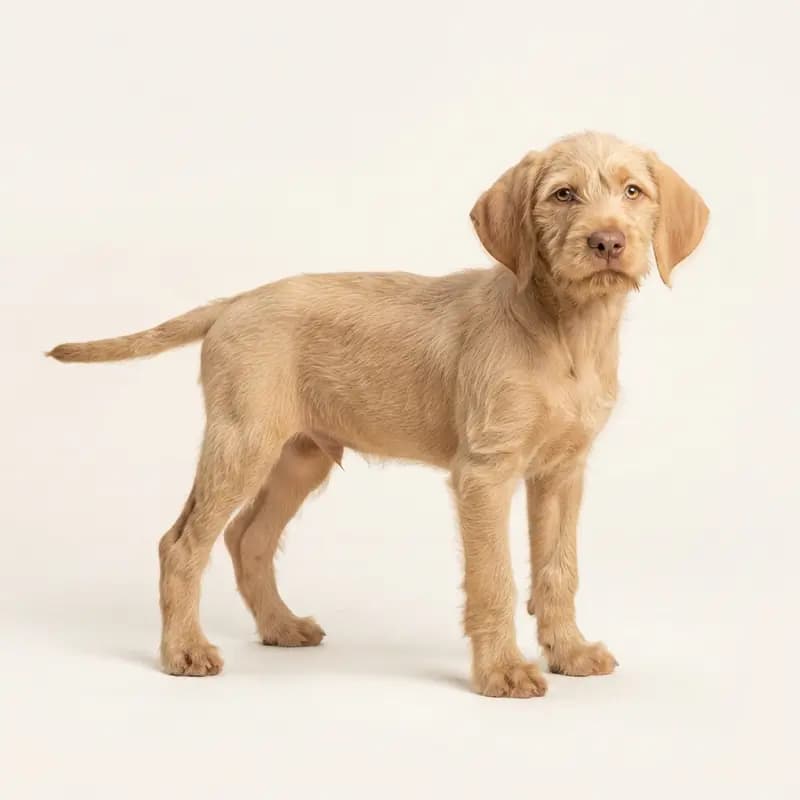
What colors does the Wirehaired Vizsla come in?
The coat colors you will see in Wirehaired Vizsla litters — including which ones fall outside the breed standard and which carry genetic risk.
Eye colors
 Brown
Brown
Coat type
 Wire
Wire Double coat
Is the Wirehaired Vizsla right for you?
The Drahthaariger Ungarischer Vorstehhund is a robust, extremely people-oriented natural athlete—a classic pointing dog (Vorstehhund) bred for close, enduring cooperation during hunting in water and fields, and he needs exactly this kind of work for his inner balance.
Perfect for you if:
- You want to do daily dummy training, tracking, or search and rescue dog sports—a simple walk will never be enough to tire out this highly specialized hunter.
- You are looking for a dog that forms an extremely close bond with you and prefers to stick to you like a shadow.
- You are outdoors in any weather and don't mind a wet, bearded dog who wants to hop on the sofa afterward.
- You lead with calm consistency, because despite his rugged exterior, he is sensitive and absolutely cannot handle harshness.
Less ideal if:
- You expect him to ignore game trails in the woods—he has been genetically programmed to locate and point exactly those.
- You have to leave your dog alone for long periods daily due to work, as this breed suffers massively from being separated from their humans.
- You are looking for a cozy companion for relaxed, short strolls in an urban environment.
The real vibes check
Don't be fooled by his rough, weather-resistant shell—underneath that wiry coat beats the heart of a highly sensitive shadow dog. If he is allowed to work cooperatively out in the field, he won't leave your side indoors and will demand the closest physical proximity he can get. You aren't getting a distant hunter, but a buddy who reads your mood before you even notice it yourself.
Self-check
Would the Wirehaired Vizsla really fit your life?
Answer 6 quick questions about your everyday life and see how well the Wirehaired Vizsla fits you — including an honest cost estimate per month, per year, and across the dog's lifetime.
Fit checkCost estimateRisk dice
Takes about 1 minute · free & anonymous
Breed Profile
The Wirehaired Hungarian Pointer, also known as the Wirehaired Vizsla, is a medium-sized dog with an elegant appearance and a muscular build. He belongs to FCI Group 7, the group of pointing dogs. His fur is a special feature because it is wiry, dense and protects him from the elements and undergrowth. This dog is characterized by its bushy eyebrows and characteristic beard, which gives its face a distinctive expression. In contrast to the short-haired Hungarian Pointer, the wire-haired dog is rather robust and suitable for various types of hunting.
All measurements in detail
- Height
- 54 - 58 cm (Female), 58 - 62 cm (Male)
- Weight
- 20 - 30 kg (Female), 25 - 35 kg (Male)
- Life Expectancy
- 12 - 14 yrs
- Character
- Intelligent, energetic, loyal
- Coat
- Wiry, dense, 3-6 cm long, dense undercoat
- Coat Color
- Typically vivid brown, also mold with brown plates or markings
- Price
- 1500 - 2500 €
Character & Temperament
The Wire-Haired Hungarian Pointer is a real bundle of energy and has a high willingness to work. He is extremely intelligent and has a keen nose, making him an excellent hunting dog. What is particularly noticeable is his passion for working in the water and in the fields. He is not only an excellent retriever, but also a skilled searching and pointing dog. So if you enjoy being out in nature and are perhaps even a passionate hunter, this dog could be your perfect companion. It is important to note that due to his high energy levels and intelligence, he needs plenty of exercise and mental stimulation. A garden to run around in is certainly an advantage, but long walks and activities are essential. The Wirehaired Hungarian Pointer is very people-oriented and forms a close bond with his family. He is loyal and affectionate, but tends to be particularly attached to one person. He is also well suited for families with children as he has a gentle and friendly nature. As far as suitability as a guard dog is concerned, he is rather reserved. He is not a very loud breed by nature, although he can draw attention to unfamiliar noises or people. One point that is particularly important to note with this breed is its strong hunting behavior. Unless kept as a hunting dog, this behavior needs to be managed well, otherwise he may have a tendency to prey on wild animals. This means that safe recall and good leash walking are particularly important. Staying alone is often a challenge for the Wire-Haired Hungarian Pointer. Since he is very affectionate, care should be taken to get him used to being alone slowly and carefully. Overall, the Wirehaired Hungarian Pointer is a wonderful breed for people who spend a lot of time outdoors and are willing to spend a lot of time with their dog. His sweet nature, coupled with intelligence and energy, makes him a great companion for active people who can provide him with the exercise he needs.
| Trainability Picks up commands quickly and wants to please. | Eager to learn |
| Watchfulness Occasionally alerts but is fundamentally open. | Low |
| Openness to Strangers Neither pushily friendly nor suspicious. | Neutral |
| Hunting or Herding Drive This drive runs deep — no amount of training eliminates it. | Very strong |
Fun Fact!
The Wirehaired Hungarian Pointer is known for its wiry coat, which not only protects it from bad weather, but also ensures that it is often lovingly referred to as "Roughbeard" in Hungary. is referred to.
What Awaits You
The Wirehaired Vizsla is an exuberant hunter on land and in water, whose thick, wiry fur distinguishes it from its close cousin, the Vizsla. Indoors, these cheerful Hungarians are calm and gentle and love to run, swim and play.
Housing & Care
The Wirehaired Hungarian Pointer is more of a country dog and is not necessarily suited to city life unless it gets enough exercise and mental stimulation. A house with a garden would be ideal. He gets along well with children, but due to his energy, supervision should always be present. He can also get along with cats and other pets if he is accustomed to them from an early age.
- Family Friendly
Loves family life and thrives in a group.
Family-oriented - Child Friendly
Gets on well with children — with adult supervision.
With supervision - Dog Friendly
Actively enjoys the company of other dogs.
Dog-friendly - City Friendly
Can manage in the city, but only with very active owners.
Difficult in cities
Owning a dog is a privilege, but it's also a real responsibility. Before you bring one into your life, be honest with yourself about the commitment it takes.
Training & Education
The Wirehaired Hungarian Pointer is intelligent and docile, but also independent. He needs consistent but loving upbringing. It is important to exercise him mentally and physically without overwhelming him. Sports such as agility, obedience or dummy training are suitable. Since he is originally a hunting dog, he has a strong hunting instinct. It is advisable to offer him alternatives such as search games and to start recall training early. Learning frustration tolerance and impulse control is also important. Ball games should be used in doses to prevent him from becoming a ball junkie.
Nutrition & Care
The Wirehaired Hungarian Pointer's diet should be balanced and nutritious to maintain its energy and health. A high-quality diet tailored to the needs of an active dog is recommended. It is also important to watch your weight, as being overweight can put strain on your joints. In terms of grooming, the Wirehaired Hungarian Pointer has a dense undercoat and a wiry top coat. The fur offers him protection from the weather, so he can cope well with the German climate. However, he sheds moderately, especially during shedding. Regular brushing is recommended to remove loose hair and keep the coat in good condition.
| Care Level Regular brushing and occasional professional grooming. | Moderate |
| Exercise Needs Working-dog energy that needs burning off every single day. | High-drive |
| Shedding Hair everywhere, always — no white clothing survives. | Very heavy |
| Trainability Picks up commands quickly and wants to please. | Eager to learn |
Our experts are still reviewing this information. Spotted something wrong? Email us at info@honestdog.de.
Health & hereditary diseases
Health
B
Solid
Health grade
The Drahthaariger Ungarischer Vorstehhund is considered a robust working breed, but it is not free from breed-specific health risks. In particular, hip dysplasia (HD) and elbow dysplasia (ED) require attention, and prospective buyers should ensure that parent dogs have undergone the necessary X-ray screenings before breeding. Additionally, one should look out for eye conditions such as progressive retinal atrophy (PRA) to maintain the overall fitness of these agile hunting dogs.
Grade is relative to other breeds — AI-assisted and editorially reviewed.
In daily life this can mean
With joint-friendly rearing, a diet adapted to support his metabolism, and regular eye check-ups, your dog will stay fit and active for a long time.
The breeder's role
Reputable breeders have the parents' hips, elbows, and eyes examined and pay attention to genetic tests regarding metabolism to reduce risks in the bloodline.
Note: This health overview is AI-assisted and editorially reviewed. It is for orientation only and does not replace veterinary advice.
No Health Tests Available
No specific health tests are currently available for this breed.
Costs & where to find one
How much does a Wirehaired Vizsla cost?
A Wirehaired Vizsla costs around ~€190 per month (€100 – €360, depending on your setup). The first year adds up to roughly ~€5,100 including purchase, equipment and puppy school; across the dog's life (13 years) it comes to about ~€32,360.
With surgery cover, running costs come to about ~€190 per month — in return, your share of a major operation drops from several thousand euros to around 20 percent.
Per month
~€190
In the first year
~€5,100
Across the dog's life
~€32,360
Purchase from a breeder: €1,500 – €2,500
Estimate at a mid-range setup (suburban, dry food, 1–2 hours of daily exercise), average German prices, as of July 2026.
Calculate your personal costs1-minute self-check with your own answers
Looking for a Wirehaired Vizsla?
Appearance, variants & origin
History
The full history
The history of the Wire-Haired Hungarian Pointer is closely linked to that of the Short-Haired Hungarian Pointer. The Vizsla breeds originally come from Hungary and were kept there as hunting dogs as early as the Middle Ages. However, the Wirehaired Hungarian Pointer is a relatively young breed. In the 1930s, targeted breeding programs began to create a more robust pointer that would be better suited to working in dense undergrowth. The Wirehaired Hungarian Pointer was developed by crossing short-haired Hungarian Pointers with other breeds, particularly the German Wirehaired Pointer. The breed was officially recognized in the 1970s.
Original Use
The Wirehaired Hungarian Pointer, also called the Wirehaired Magyar Vizsla, was bred to be a versatile hunting dog for field work and water work.
Origin
Hungary
Date
1936
Owner experiences
What owners say about the Wirehaired Vizsla
Thomas B., Jäger aus der Eifel (Rüde, seit 2022)
Als aktiver Jäger habe ich mich bewusst für den Drahthaarigen Ungarischen Vorstehhund (UD) entschieden, da er im Vergleich zum kurzhaarigen Vizsla als etwas robuster gilt. Im Revier zeigt sich mein Rüde extrem führerbezogen. Er ist kein ungestümer Draufgänger wie manch ein Deutsch Drahthaar, sondern jagt sehr eng mit mir zusammen und bleibt immer in Kontakt. Seine Nasenarbeit ist hervorragend, und es ist eine absolute Freude, ihn am Fasan vorstehen zu sehen.
Allerdings muss man wissen, dass der UD kein stahlharter Hund ist. In der Welpen- und Junghundphase zeigte er sich anfangs recht vorsichtig und fast schon ängstlich in neuen Situationen – da braucht es eine sehr feinfühlige Hand ohne jede Härte. Auch beim Thema Wasserfreude gibt es Grenzen: Er arbeitet zwar leidenschaftlich im Wasser, aber bei extrem eisigen Temperaturen im Spätherbst merkt man ihm an, dass er nicht die Kälteresistenz eines Labradors besitzt. Er jagt überwiegend stumm, gibt also selten Laut, was man bei der Waldarbeit und Nachsuche berücksichtigen muss. Für mich ist er dennoch der perfekte, treue Jagdbegleiter.
Andrea M., Rettungshundeführerin aus Oberbayern (Hündin, seit 2020)
Wir führen unsere Hündin nun schon seit einigen Jahren in der Rettungshundearbeit, was sich als die perfekte Alternative zur Jagd herausgestellt hat. Der Drahthaar-Vizsla ist ein absolutes Arbeitstier, das geistig und körperlich gefordert werden will. Durch die Einkreuzung des Deutsch Drahthaar ist sie zwar etwas kräftiger und wetterfester als die kurzhaarige Variante, aber die sensible, menschenbezogene Art des Vizslas ist geblieben. Sie lernt unglaublich schnell und arbeitet bei der Vermisstensuche mit einem enormen Finderwillen.
Eine kleine Herausforderung ist das Fell. Je nach Genetik fällt das drahthaarige Fell sehr unterschiedlich aus – manche Welpen aus dem Wurf waren fast glatt, unsere Hündin hat recht dichtes, drahtiges Haar mit dem typischen Bart bekommen. Das Fell schützt sie zwar super vor Dornen und Kälte, erfordert aber regelmäßiges Trimmen von Hand, damit es wetterfest bleibt. Wer einen reinen 'Nebenbei-Hund' sucht, wird mit dieser Rasse nicht glücklich, denn diese 'Granaten' fordern ihre Beschäftigung vehement ein.
Sabine S., Halterin aus Hessen (Rüde, seit 2021)
Als aktive Familie haben wir uns für einen drahthaarigen Vizsla entschieden. Er ist ein unfassbar treuer und anhänglicher Begleiter, der am liebsten rund um die Uhr Körperkontakt sucht. Diese extreme Fixierung auf uns macht ihn im Alltag wunderbar führig, bringt aber auch eine große Baustelle mit sich: Das Alleinbleiben war von Anfang an ein riesiges Drama. Wir mussten das in winzigen Schritten über Monate hinweg trainieren, da er extrem darunter leidet, von seinem 'Rudel' getrennt zu sein.
Zudem darf man den Jagdtrieb nicht unterschätzen. Der drahthaarige Vizsla gilt oft als noch etwas hartnäckiger und jagdlich ambitionierter als der Kurzhaar-Vizsla. Ohne Schleppleinentraining und eine konsequente Ersatzbeschäftigung wie Dummyarbeit würde er sofort jedem Kaninchen oder Reh hinterhergehen. Er ist im Haus zwar ein sanfter und sensibler Schmusebär, draußen aber ein echtes Energiebündel, das täglich mindestens zwei Stunden intensive Bewegung und Kopfarbeit braucht, um nicht frustriert oder hibbelig zu werden.
Paraphrased from real owner reports
Loading owner stories
FAQ & more
Frequently asked questions about the Wirehaired Vizsla
Is a Wirehaired Vizsla the right dog for me?
The Wirehaired Vizsla is an active dog that needs plenty of exercise and mental stimulation. Research the temperament, grooming needs, and space requirements before deciding.
How long does a Wirehaired Vizsla live?
The average life expectancy of a Wirehaired Vizsla is 12-14 years. With proper care and regular vet visits, your dog can live a long, healthy life.
How much grooming does a Wirehaired Vizsla need?
Wirehaired Vizsla grooming requirements include regular brushing, nail trimming, and dental care. HonestDog provides detailed grooming tips for every breed.
Is a Wirehaired Vizsla good for families with children?
The Wirehaired Vizsla can be a great family dog. Proper training and socialization are key. HonestDog provides family suitability information for every breed.
What colors does the Wirehaired Vizsla come in?
The Wirehaired Vizsla comes in these colors: Fawn.
Loading related articles
Are you a Wirehaired Vizsla breeder?
Showcase your kennel on HonestDog and reach families searching for a responsibly bred Wirehaired Vizsla.
Why HonestDog?
What makes HonestDog different from other platforms
Full transparency
We lay out what we have: who the breeder is, how they work, and any health records they've uploaded. So you can judge for yourself.
Responsible breeding, assured
Every breeder on HonestDog has their identity and documents checked before their profile goes live. Health records they upload are shown on the profile, so you can see exactly what has been tested.
Trust and verification
We verify breeders and buyers alike, so every conversation happens on solid ground. It's a new standard of trust in dog breeding.
Less hassle, more time
We've already checked the breeders' documents and gathered the details, so you can skip the endless research and focus on finding the right puppy for your family.
Our Mission

We connect dog lovers with responsible breeders and shelters to ensure every dog finds the perfect home.
Founded by dog enthusiasts, our platform focuses on ethical dog breeding and adoption.
Why HonestDog?
We connect you with vetted breeders and shelters so you can find your — your new companion — with confidence.
Vetted Partners
Only verified breeders and shelters — for a safe start.
Highest Standards
Every animal's health and wellbeing is our top priority.
Guides & Resources
Guides, checklists, and breed profiles — so you can make a well-informed decision.