Loading breed
Welsh Terrier
Health grade BThe Welsh Terrier is a robust, cheerful Erdhund (earth dog) — bred to hunt foxes and badgers independently in rough terrain. He brings that classic terrier courage to the table, but is often a touch more balanced than his more hot-headed relatives.
- Height37–41 cm
- Weight8–10 kg
- Life expectancy12–15 yrs
- Puppy price2,000–3,500 €
- Energy4/5
The Essentials at a Glance
The Welsh Terrier is a robust, cheerful Erdhund (earth dog) — bred to hunt foxes and badgers independently in rough terrain. He brings that classic terrier courage to the table, but is often a touch more balanced than his more hot-headed relatives.
- Health grade B: The Welsh Terrier is a robust and hardy breed, yet prospective buyers should be aware of hereditary conditions such as Primary Lens Luxation (PLL) and glaucoma, which can lead to blindness in severe cases.
- You appreciate having a confident problem-solver by your side — as a true Erdhund, he was bred to make decisions completely autonomously in narrow burrows.
- You have a sense of humor and plenty of patience to lovingly channel his charming but persistent terrier stubbornness in the right direction.
- You expect him to turn around immediately at your call the moment he spots a fleeing hare — his genetic programming tells him that's exactly when the fun begins.
Is the Welsh Terrier right for you?
At a glance
Welsh Terrier overview
The essentials — key facts, traits, and health priorities — before you dive deeper.
Health grade
Relative to other breeds
S
A
B
C
D
E
Very healthyHigher risk
Solid — a handful of items a good breeder watches.
See full health info & tests →
Note: This health overview is AI-assisted and editorially reviewed. It is for orientation only and does not replace veterinary advice.
Lifespan
12–15 yrs
Height
37–41 cm
Weight
8–10 kg
Practical
- Puppy price: 2,000 – 3,500 €
- Coat: Dense, wiry, medium length
- Origin: Wales, UK
Temperament
Energy
Trainability
Family fit
With kids
Daily life
Care effort
Shedding
Barking
City-friendly
Guard instinct
What matters most
Especially with a Welsh Terrier, choosing the right breeder is the single most important decision you'll make. Serious breeders consistently test the parents for inherited conditions, prioritize healthy early socialization, and stay accountable long after handover. A cheap puppy without health screening tends to become the most expensive dog later on.
See HonestDog breeder standards →Colors & coat
What colors does the Welsh Terrier come in?
The coat colors you will see in Welsh Terrier litters — including which ones fall outside the breed standard and which carry genetic risk.
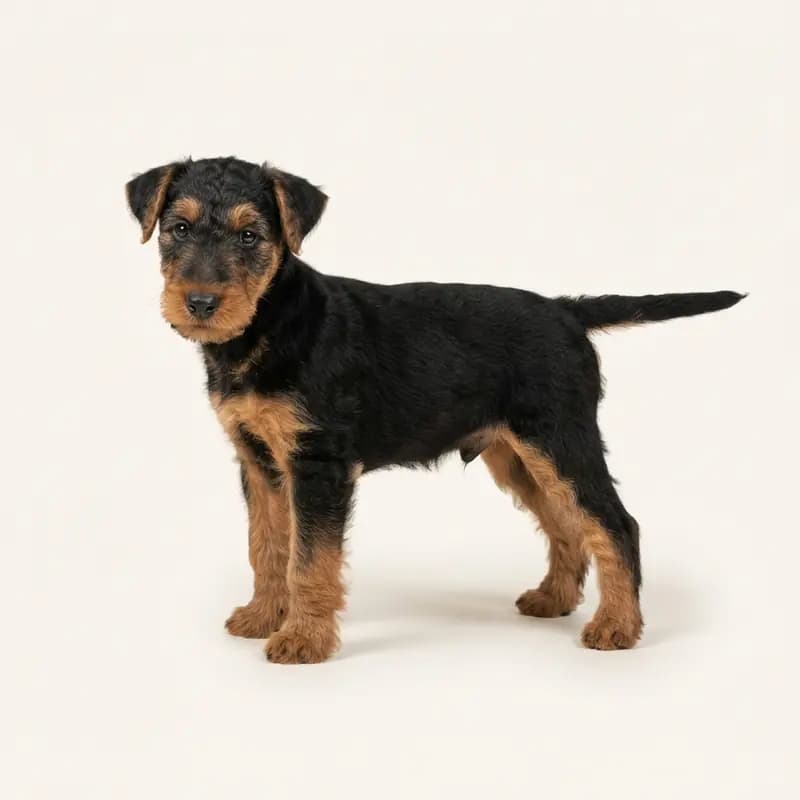
Eye colors
 Brown
Brown
Coat type
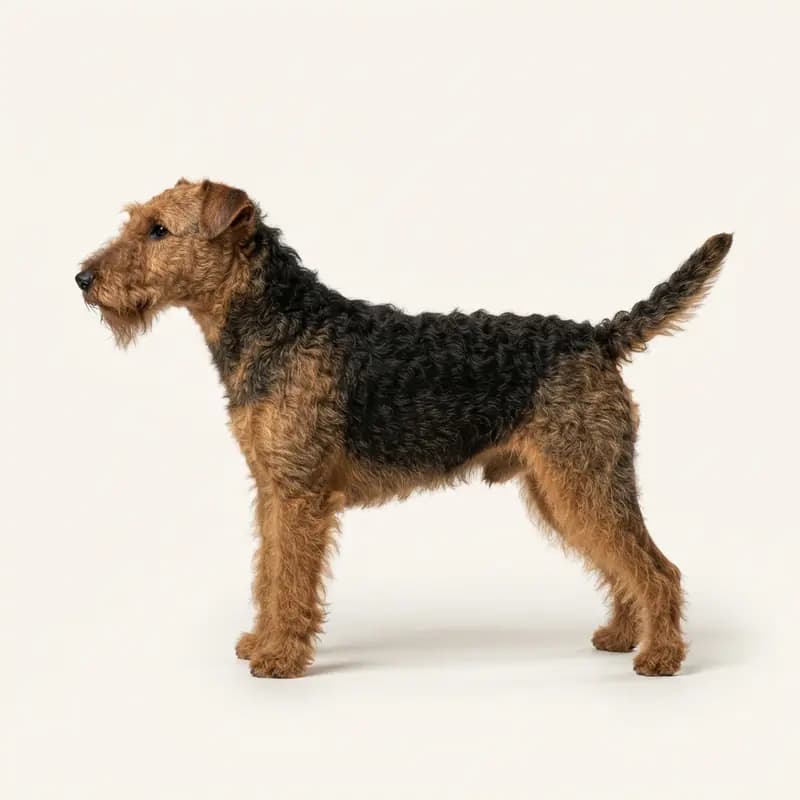 Illustrative image
Wire
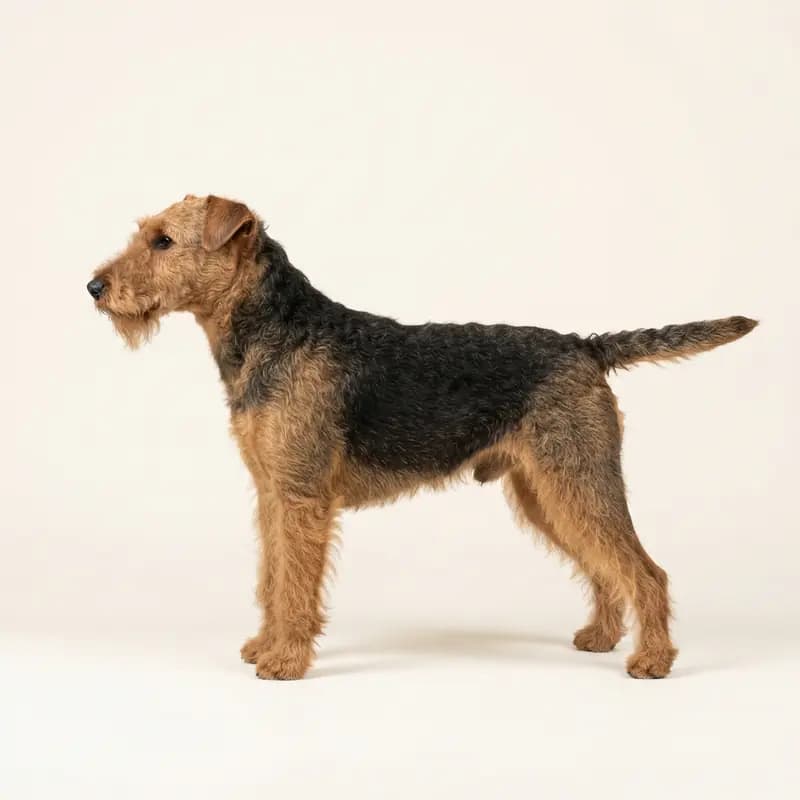 Illustrative image
Medium
 Double coat
Is the Welsh Terrier right for you?
The Welsh Terrier is a robust, cheerful Erdhund (earth dog) — bred to hunt foxes and badgers independently in rough terrain. He brings that classic terrier courage to the table, but is often a touch more balanced than his more hot-headed relatives.
Perfect for you if:
- You appreciate having a confident problem-solver by your side — as a true Erdhund, he was bred to make decisions completely autonomously in narrow burrows.
- You have a sense of humor and plenty of patience to lovingly channel his charming but persistent terrier stubbornness in the right direction.
- You enjoy spending long, active hours in nature and can provide the kind of stimulation his working heritage demands.
- You want a fearless, compact companion who won't be easily rattled, even in a bustling environment.
Less ideal if:
- You expect him to turn around immediately at your call the moment he spots a fleeing hare — his genetic programming tells him that's exactly when the fun begins.
- You have little patience for a dog who treats every new rule as a starting point for negotiation.
- You have small pets or cats at home and don't want to have to constantly manage who is allowed to move where safely.
The real vibes check
A Welsh Terrier doesn't ask for permission; at most, he informs you of his plans. What was vital for survival deep in a fox den makes for a dog in everyday life who often views commands as well-intentioned suggestions. If you celebrate this gritty independence, you'll have an intrepid buddy for every adventure — if you're looking for blind obedience, you'll both end up frustrated.
Self-check
Would the Welsh Terrier really fit your life?
Answer 6 quick questions about your everyday life and see how well the Welsh Terrier fits you — including an honest cost estimate per month, per year, and across the dog's lifetime.
Fit checkCost estimateRisk dice
Takes about 1 minute · free & anonymous
Breed Profile
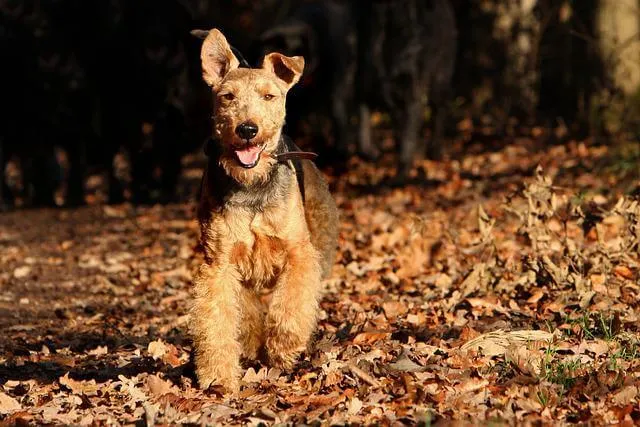
The Welsh Terrier is a medium-sized dog with a sturdy, square build that originated in Wales, Great Britain. He is a member of FCI Group 3, which includes terriers. Its distinctive coat color is usually black and tan, the coat itself is wiry, dense and weatherproof, giving it the characteristic shaggy appearance. The ears are small, V-shaped and fall forward towards its dark, expressive eyes. Its tail is often carried upright, giving it a cheerful appearance.
All measurements in detail
- Height
- 37 - 41 cm (Female), 37 - 41 cm (Male)
- Weight
- 8 - 10 kg (Female), 9 - 10 kg (Male)
- Life Expectancy
- 12 - 15 yrs
- Character
- Energetic, smart, loyal
- Coat
- Dense, wiry, medium length
- Coat Color
- Black and tan
- Price
- 2000 - 3500 €
Character & Temperament
The Welsh Terrier is an energetic, smart and loyal companion. He is known for his friendly and outgoing personality and his love of the game. These dogs are very people-oriented and tend to form strong bonds with their owners. They love to be around their humans and tend to be “their” people. To follow people everywhere. This, along with their intelligent and curious nature, can cause them to have difficulty staying alone. Early training can help mitigate this tendency. Welsh Terriers are also known for their strong hunting and prey catching behavior. This behavior can manifest itself in the form of digging or attempting to hunt small animals. It is therefore important to have a safe and escape-proof garden if you own a Welsh Terrier. On the other hand, these can Dogs can also be very alert and prove to be good guard dogs. Although they are not as hyperactive as some other terrier breeds, Welsh Terriers still have high energy and require plenty of exercise and mental stimulation. They love to run, play, and explore and require daily walks, playtime, and exercise time. Despite their energy, they are able to settle down and relax in quieter moments. In terms of intelligence, Welsh Terriers are smart dogs that learn quickly and have a good work ethic. They respond well to positive reinforcement and enjoy mental challenges. However, they can also be a bit stubborn, which can sometimes make training a challenge. But with patience, consistency and a loving hand, they can become wonderful and obedient companions.
| Trainability Willing to learn with clear rules and regular training. | Balanced |
| Watchfulness Reports unusual activity but stays controlled. | Moderate |
| Openness to Strangers Warms up quickly and is generally welcoming. | Friendly |
| Hunting or Herding Drive Noticeable drive — needs attention around small animals. | Moderate |
Fun Fact!
Although Welsh Terriers were bred as hunting dogs, they are now known to be among the friendliest and best socialized terriers.
What Awaits You
Welsh Terriers are intelligent, independent dogs. With appropriate experience and consistency, they can be versatile companions.
Housing & Care
Welsh Terriers are adaptable dogs that get along well in both the city and the country. However, they need sufficient exercise and mental stimulation, so they should have regular access to a garden or park. Despite their energy and playfulness, they are surprisingly calm indoors and can easily adapt to apartment life as long as they get enough exercise. This breed generally gets along well with children, especially if they are used to it from an early age. They are playful and patient and can be good playmates for older children. However, with younger children, a guardian should always be present to ensure that neither the dog nor the child are accidentally injured. Welsh Terriers can also get along well with other pets, including cats, if properly socialized.
- Family Friendly
Loves family life and thrives in a group.
Family-oriented - Child Friendly
Takes boisterous and affectionate children in its stride.
Patient with children - Dog Friendly
Usually gets on fine with other dogs.
Generally tolerant - City Friendly
Adapts well to city living and urban environments.
Well-suited to city life
Owning a dog is a privilege, but it's also a real responsibility. Before you bring one into your life, be honest with yourself about the commitment it takes.
Training & Education
The Welsh Terrier is a smart and willing to learn dog, but also has an independent and sometimes stubborn side. Therefore, his training can be challenging. Positive reinforcement in the form of treats and praise is the most effective way to train them. They do not respond well to harsh or strict training methods and can even become rebellious if the pressure is too high. Despite their hunting instincts, they can be well trained to return when called upon. However, training should begin in puppyhood and should always be carried out consistently. Because they are intelligent and energetic, they also need meaningful activity to keep their minds occupied and prevent overactivity or unwanted behavior. Agility, obedience or sniffing games can be good ways to satisfy their urge to move and their ambition. Welsh Terriers can become so-called "ball junkies" if they play with balls too frequently and intensively. It is therefore advisable to dose the ball game and supplement it with other activities. It is also important to teach them from the start to develop frustration tolerance and impulse control to avoid problems later in life.
Nutrition & Care
When it comes to nutrition, Welsh Terriers are straightforward. They need a balanced diet tailored to their age, weight and activity level. A high-quality feed that contains the necessary nutrients, vitamins and minerals should meet the needs well. However, it is important to control the amount of food because Welsh Terriers tend to become overweight if fed too much or too high-calorie food. Grooming the Welsh Terrier's coat is a little more complex. They have a dense, wiry coat with a warming undercoat that protects them well from the cooler temperatures in Germany. However, they hardly shed and are therefore also suitable for allergy sufferers. Their fur should be brushed regularly to prevent matting. A Welsh Terrier should be trimmed approximately every three months to remove dead hair and promote new hair growth.
| Care Level Regular brushing and occasional professional grooming. | Moderate |
| Exercise Needs Needs several hours of serious exercise every day. | Very active |
| Shedding No or minimal hair loss — suitable for allergy sufferers. | No shedding |
| Trainability Willing to learn with clear rules and regular training. | Balanced |
Our experts are still reviewing this information. Spotted something wrong? Email us at info@honestdog.de.
Health & hereditary diseases
Health
B
Solid
Health grade
The Welsh Terrier is a robust and hardy breed, yet prospective buyers should be aware of hereditary conditions such as Primary Lens Luxation (PLL) and glaucoma, which can lead to blindness in severe cases. Hip dysplasia (HD) also occurs occasionally. As there are currently no strictly mandated health tests for this breed, it is essential that you critically verify the eye examination results of the parent dogs before purchasing a puppy.
Grade is relative to other breeds — AI-assisted and editorially reviewed.
In daily life this can mean
With joint-friendly rearing, good coat care, and a watchful eye for any changes in his skin and eyes, your terrier will usually stay fit and active for a long time.
The breeder's role
Reputable breeders have the parents' knees and eyes checked and consistently exclude dogs with chronic skin or ear problems from their breeding programs.
Note: This health overview is AI-assisted and editorially reviewed. It is for orientation only and does not replace veterinary advice.
No Health Tests Available
No specific health tests are currently available for this breed.
Costs & where to find one
How much does a Welsh Terrier cost?
A Welsh Terrier costs around ~€170 per month (€90 – €310, depending on your setup). The first year adds up to roughly ~€5,600 including purchase, equipment and puppy school; across the dog's life (13.5 years) it comes to about ~€30,840.
With surgery cover, running costs come to about ~€160 per month — in return, your share of a major operation drops from several thousand euros to around 20 percent.
Per month
~€170
In the first year
~€5,600
Across the dog's life
~€30,840
Purchase from a breeder: €2,000 – €3,500
Estimate at a mid-range setup (suburban, dry food, 1–2 hours of daily exercise), average German prices, as of July 2026.
Calculate your personal costs1-minute self-check with your own answers
Looking for a Welsh Terrier?
Appearance, variants & origin
History
The full history
The Welsh Terrier's exact origins are not well documented, but it is believed to have descended from the ancient wire-haired terriers of Britain, which were particularly popular in Wales. It was originally bred as a working dog that could hunt foxes, otters and badgers. His adaptability and courage made him an invaluable companion to farmers and landowners. The Welsh Terrier was recognized as a separate breed by the Kennel Club in Great Britain in 1886. Shortly thereafter, in the 1880s, the first Welsh Terriers were imported to the United States. Despite its long history and charm, the Welsh Terrier is not as well known today as some of its terrier cousins, such as the Airedale Terrier or the Fox Terrier.
Original Use
Bred to hunt foxes, badgers and otters, the Welsh Terrier is known for its courage and endurance.
Origin
Wales, UK
Date
1700
Owner experiences
What owners say about the Welsh Terrier
Antje M., Halterin aus Hessen (zwei Welsh Terrier, seit 2008)
Ich sitze hier gerade im Büro mit meinen beiden Welsh Terriern und kann nur sagen: Sie sind absolut keine unerziehbaren Monster, wie manche vielleicht denken! Sie sind unglaublich brav und extrem arbeitsfreudig. Aber man darf den Zeitpunkt nicht verpassen: Wer zu spät mit der konsequenten Erziehung anfängt, weil die Welpen ja so unglaublich niedlich sind, der zieht sich tatsächlich ein kleines 'Monster' heran.
Was man definitiv nicht unterschätzen darf, ist ihre Energie. Wenn Action angesagt ist, machen sie unermüdlich mit und haben Power ohne Ende. Das Schöne ist aber, dass sie sich auch extrem gut anpassen können. Wenn mal nichts los ist, schlafen sie auch mal den ganzen Tag im Körbchen. Man muss von Anfang an klare Grenzen setzen, dann hat man wunderbare Begleiter.
Sabine R., Halterin aus Bayern (Rüde, seit 2009)
Unser Welsh Terrier ist im Alltag ein echter Feger – ein richtiger Wirbelwind mit unendlicher Energie! Sobald wir draußen sind, ist er voll in seinem Element. Er hat einen extrem ausgeprägten Jagdtrieb. Wenn er eine Katze oder ein Wildschwein sichtet, vergisst er manchmal seine gute Kinderstube. Da muss man wirklich hellwach sein.
Trotz dieser wilden Jagdleidenschaft gehorcht er im Alltag ansonsten wirklich prima, obwohl wir jetzt keine professionellen Hundetrainer sind. Er passt sich unserer Familie und unserem Rhythmus perfekt an. Wenn im Haus Ruhe herrscht, kann er auch stundenlang einfach nur dösen. Man bekommt hier einen sehr charakterstarken, aber auch anpassungsfähigen Hund.
Maggie W., Halterin aus Nordrhein-Westfalen (Rüde, seit 2016)
Wir haben uns ganz bewusst für einen Welsh Terrier entschieden, weil wir das typische Aussehen des Airedales lieben, uns die Rasse im Alter aber eine Nummer zu groß wurde. Unser Welsh ist ein toller, kompakter Hund, aber charakterlich unterscheidet er sich deutlich von den oft gemütlicheren Airedales. Er ist extrem wachsam – wenn es an der Tür klingelt, schlägt er sofort an, auch wenn er danach schnell wieder ablässt.
Was man wissen muss: Er ist kein klassischer, extrem verträglicher 'Rudelhund', der jeden Artgenossen liebt. Er ist sehr eigenständig und braucht eine feste, liebevolle Hand. Gesundheitlich ist er bisher zum Glück sehr robust, aber man muss sich im Klaren sein, dass man sich hier ein echtes Energiebündel ins Haus holt, das geistig und körperlich gefordert werden will.
Paraphrased from real owner reports
Loading owner stories
Community Posts
FAQ & more
Frequently asked questions about the Welsh Terrier
Is a Welsh Terrier the right dog for me?
The Welsh Terrier is an active dog that needs plenty of exercise and mental stimulation. Research the temperament, grooming needs, and space requirements before deciding.
How long does a Welsh Terrier live?
The average life expectancy of a Welsh Terrier is 12-15 years. With proper care and regular vet visits, your dog can live a long, healthy life.
How much grooming does a Welsh Terrier need?
Welsh Terrier grooming requirements include regular brushing, nail trimming, and dental care. HonestDog provides detailed grooming tips for every breed.
Is a Welsh Terrier good for families with children?
The Welsh Terrier can be a great family dog. Proper training and socialization are key. HonestDog provides family suitability information for every breed.
What colors does the Welsh Terrier come in?
The Welsh Terrier comes in these colors: Black and tan.
Loading related articles
Are you a Welsh Terrier breeder?
Showcase your kennel on HonestDog and reach families searching for a responsibly bred Welsh Terrier.
Why HonestDog?
What makes HonestDog different from other platforms
Full transparency
We lay out what we have: who the breeder is, how they work, and any health records they've uploaded. So you can judge for yourself.
Responsible breeding, assured
Every breeder on HonestDog has their identity and documents checked before their profile goes live. Health records they upload are shown on the profile, so you can see exactly what has been tested.
Trust and verification
We verify breeders and buyers alike, so every conversation happens on solid ground. It's a new standard of trust in dog breeding.
Less hassle, more time
We've already checked the breeders' documents and gathered the details, so you can skip the endless research and focus on finding the right puppy for your family.
Our Mission

We connect dog lovers with responsible breeders and shelters to ensure every dog finds the perfect home.
Founded by dog enthusiasts, our platform focuses on ethical dog breeding and adoption.
Why HonestDog?
We connect you with vetted breeders and shelters so you can find your — your new companion — with confidence.
Vetted Partners
Only verified breeders and shelters — for a safe start.
Highest Standards
Every animal's health and wellbeing is our top priority.
Guides & Resources
Guides, checklists, and breed profiles — so you can make a well-informed decision.