Loading breed

Weimaraner
Health grade BThe Weimaraner is a highly intelligent, elegant working machine—an uncompromising Vorstehhund (pointing dog) bred for field, water, and a distinct sharpness. Its aristocratic appearance unfortunately often leads people to underestimate its serious hunting and guarding instincts.
- Height57–70 cm
- Weight20–40 kg
- Life expectancy10–12 yrs
- Puppy price1,500–2,500 €
- Energy5/5
The Essentials at a Glance
The Weimaraner is a highly intelligent, elegant working machine—an uncompromising Vorstehhund (pointing dog) bred for field, water, and a distinct sharpness. Its aristocratic appearance unfortunately often leads people to underestimate its serious hunting and guarding instincts.
- Health grade B: The Weimaraner receives a grade of C because it is predisposed to an above-average number of hereditary conditions.
- You are looking for a true working partner for hunting or demanding tracking work—this Vorstehhund needs a job, not just a fun activity program.
- You are extremely confident, calm, and consistent in your leadership, as it will immediately test weaknesses and take control itself otherwise.
- You primarily admire its noble looks and are actually looking for an uncomplicated companion for city life or everyday routines.
Is the Weimaraner right for you?
At a glance
Weimaraner overview
The essentials — key facts, traits, and health priorities — before you dive deeper.
Health grade
Relative to other breeds
S
A
B
C
D
E
Very healthyHigher risk
Solid — a handful of items a good breeder watches.
See full health info & tests →
Note: This health overview is AI-assisted and editorially reviewed. It is for orientation only and does not replace veterinary advice.
Lifespan
10–12 yrs
Height
57–70 cm
Weight
20–40 kg
Practical
- Puppy price: 1,500 – 2,500 €
- Coat: Short, dense, without undercoat
- Origin: Germany
Temperament
Energy
Trainability
Family fit
With kids
Daily life
Care effort
Shedding
Barking
City-friendly
Guard instinct
What matters most
Especially with a Weimaraner, choosing the right breeder is the single most important decision you'll make. Serious breeders consistently test the parents for inherited conditions, prioritize healthy early socialization, and stay accountable long after handover. A cheap puppy without health screening tends to become the most expensive dog later on.
See HonestDog breeder standards →Colors & coat
What colors does the Weimaraner come in?
The coat colors you will see in Weimaraner litters — including which ones fall outside the breed standard and which carry genetic risk.



Eye colors
 Amber
Amber Blue
Blue
Coat type
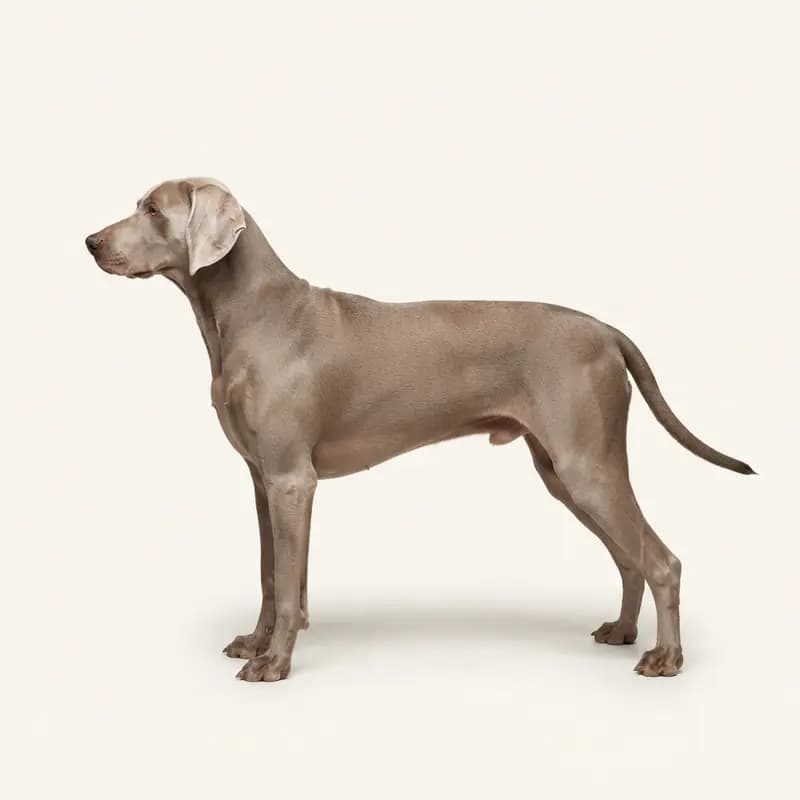 Illustrative image
Short
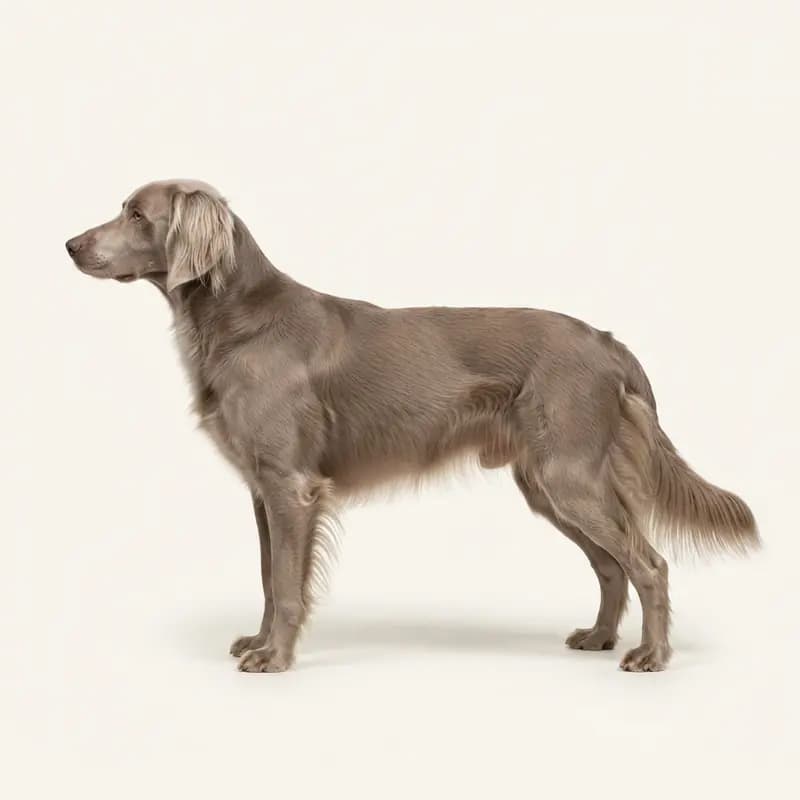 Illustrative image
Long
Is the Weimaraner right for you?
The Weimaraner is a highly intelligent, elegant working machine—an uncompromising Vorstehhund (pointing dog) bred for field, water, and a distinct sharpness. Its aristocratic appearance unfortunately often leads people to underestimate its serious hunting and guarding instincts.
Perfect for you if:
- You are looking for a true working partner for hunting or demanding tracking work—this Vorstehhund needs a job, not just a fun activity program.
- You are extremely confident, calm, and consistent in your leadership, as it will immediately test weaknesses and take control itself otherwise.
- You spend a lot of time actively in nature every day and have the physical strength to hold a powerful dog when it spots game.
- You live in a rural area with a securely fenced property and appreciate a dog that takes guarding its home and territory seriously.
Less ideal if:
- You primarily admire its noble looks and are actually looking for an uncomplicated companion for city life or everyday routines.
- You expect it to remain easily recallable when it sees fleeing game—it was bred to track down prey and, if necessary, take it down.
- You often have unannounced visitors or a lot of hustle and bustle in the house, as its innate sharpness makes it instinctively suspicious of strangers.
The real vibes check
A Weimaraner is not a silver accessory, but a highly bred elite athlete in a tailored suit. If you don't give it a real job, it will find one for itself—and that usually means uncompromisingly controlling your home or hunting in the woods. You will gain an absolutely loyal shadow who would walk through fire for you, as long as you prove to it every day that you are firmly in control.
Self-check
Would the Weimaraner really fit your life?
Answer 6 quick questions about your everyday life and see how well the Weimaraner fits you — including an honest cost estimate per month, per year, and across the dog's lifetime.
Fit checkCost estimateRisk dice
Takes about 1 minute · free & anonymous
Breed Profile
The Weimaraner, also known as the Weimaraner Pointer, is a dog of impressive elegance and breathtaking beauty. Its proud posture, short, shiny coat in various shades of gray and distinctive, bright eyes make it a distinctive representative among dog breeds. His muscular build shows his strength and energy and suggests his excellent abilities as a working dog. The Weimaraner belongs to FCI Group 7, the pointer dogs. A distinction is made between performance and show lines in the Weimaraner. Performance lines tend to be slightly lighter and more agile, and often have a more intense work ethic. Show lines can be slightly heavier and more robust and place more emphasis on appearance according to the breed standard.
All measurements in detail
- Height
- 57 - 65 cm (Female), 59 - 70 cm (Male)
- Weight
- 20 - 35 kg (Female), 25 - 40 kg (Male)
- Life Expectancy
- 10 - 12 yrs
- Character
- Intelligent, Energetic, Affectionate
- Coat
- Short, dense, without undercoat
- Coat Color
- Mouse gray, silver gray, deer gray
- Price
- 1500 - 2500 €
Character & Temperament
The Weimaraner is a dog with a distinctive character and high intelligence. Its original use as a versatile hunting dog can still be seen in its temperament and behavior today. He is highly energetic, persistent and has a strong hunting instinct. When bringing a Weimaraner into your home, you should be prepared to provide him with plenty of exercise and mental stimulation. A Weimaraner's temperament can be described as active to hyperactive. His energy and intelligence must be channeled through appropriate activities, otherwise he may become bored and develop undesirable behaviors. Sports activities such as running, swimming and playing fetch are ideal for this dog. The Weimaraner is known for being particularly people-oriented. He is strongly attached to his family and always wants to be near them. Sometimes this breed is even called a "shadow dog" because they literally follow their owners wherever they go. This makes them wonderful companions, but it can also cause separation anxiety when left alone. Therefore, it is important to teach them that it is okay to be alone for short periods of time. Weimaraners are also very playful and love spending time outdoors. Their intelligence makes them easy to train, but they require consistent training. It is important to note that the performance line has a more intense work ethic, so owners who choose a performance line may want to allow more time for training and employment. One thing to keep in mind if you're thinking about getting a Weimaraner is their hunting instincts. This dog was originally bred as a hunting dog and therefore has a natural drive to hunt. That's why it's important to ensure good accessibility right from the start and to always keep an eye on it, especially when around wild animals.
| Trainability Bred to work closely alongside humans. | Highly trainable |
| Watchfulness Occasionally alerts but is fundamentally open. | Low |
| Openness to Strangers Neither pushily friendly nor suspicious. | Neutral |
| Hunting or Herding Drive This drive runs deep — no amount of training eliminates it. | Very strong |
Fun Fact!
Did you know that the Weimaraner is sometimes referred to as the "ghost dog" due to its unusual gray coat color and its mesmerizing amber to blue-grey eyes? Its puppies are even born with blue eyes that only change color as they grow up.
What Awaits You
Weimaraners are hunting dogs and therefore have a high level of motivation to hunt. They also tend to defend their owner. Their employment and upbringing are demanding. Weimaraners are not suitable for beginners. There are two types of fur: long-haired and short-haired.
Housing & Care
Weimaraners aren't necessarily suited to city life unless you can ensure they get enough exercise and mental stimulation on a daily basis. She are best kept in a home with a large garden. Weimaraners are generally good with children, but due to their size and energy, it is advisable to leave them under supervision. They can also get along with other pets, including cats, if properly socialized.
- Family Friendly
Loves family life and thrives in a group.
Family-oriented - Child Friendly
Gets on well with children — with adult supervision.
With supervision - Dog Friendly
Usually gets on fine with other dogs.
Generally tolerant - City Friendly
Can manage in the city, but only with very active owners.
Difficult in cities
Owning a dog is a privilege, but it's also a real responsibility. Before you bring one into your life, be honest with yourself about the commitment it takes.
Training & Education
Weimaraners are intelligent dogs that like to be challenged mentally and physically. They are well suited to various dog sports such as agility, obedience and of course hunting. Because they tend to have strong hunting instincts, it is important to provide alternatives that meet their mental and physical needs without encouraging undesirable behavior. It's also important to teach them frustration tolerance and impulse control to prevent them from becoming "ball junkies" or becoming overly obsessed with certain activities. Consistent and positive parenting is important, and it is advisable to start training at an early age. Note that Weimaraners can be stubborn at times, so patience and consistency are important. The training should be varied and challenging to challenge them mentally.
Nutrition & Care
A balanced diet is essential for the Weimaraner. Due to their high energy and active lifestyle, they require a nutrient-dense diet that provides them with sufficient protein and fat. It is recommended to use high-quality food and seek the advice of a veterinarian regarding your dog's specific nutritional needs. In terms of grooming, the Weimaraner has short, dense fur with no undercoat. This means that it is not well suited to extremely cold climates, but it usually does well in the temperate climate of Germany. He sheds moderately, but regular brushing will help remove loose hair and keep the coat clean.
| Care Level Minimal effort — occasional brushing and bathing. | Low-maintenance |
| Exercise Needs Working-dog energy that needs burning off every single day. | High-drive |
| Shedding Hair everywhere, always — no white clothing survives. | Very heavy |
| Trainability Bred to work closely alongside humans. | Highly trainable |
Our experts are still reviewing this information. Spotted something wrong? Email us at info@honestdog.de.
Health & hereditary diseases
Health
B
Solid
Health grade
The Weimaraner receives a grade of C because it is predisposed to an above-average number of hereditary conditions. Hip dysplasia (HD) and incurable epilepsy are particularly serious risks for this large hunting breed. Additionally, eye conditions such as entropion must be closely monitored by breeders to prevent chronic pain.
Grade is relative to other breeds — AI-assisted and editorially reviewed.
In daily life this can mean
By ensuring joint-friendly development and strict rest periods after meals to prevent gastric torsion, you lay the foundation for a long, active life for your dog.
The breeder's role
Reputable breeders have hips, elbows, and eyes tested and use genetic testing for breed-specific nerve and urinary tract diseases to reduce risks within the bloodline.
Note: This health overview is AI-assisted and editorially reviewed. It is for orientation only and does not replace veterinary advice.
No Health Tests Available
No specific health tests are currently available for this breed.
Costs & where to find one
How much does a Weimaraner cost?
A Weimaraner costs around ~€190 per month (€100 – €360, depending on your setup). The first year adds up to roughly ~€5,080 including purchase, equipment and puppy school; across the dog's life (11 years) it comes to about ~€27,630.
With surgery cover, running costs come to about ~€190 per month — in return, your share of a major operation drops from several thousand euros to around 20 percent.
Per month
~€190
In the first year
~€5,080
Across the dog's life
~€27,630
Purchase from a breeder: €1,500 – €2,500
Estimate at a mid-range setup (suburban, dry food, 1–2 hours of daily exercise), average German prices, as of July 2026.
Calculate your personal costs1-minute self-check with your own answers
Looking for a Weimaraner?
Appearance, variants & origin
History
The full history
The Weimaraner has its roots in Germany, more specifically in the Thuringia region, where it is named after the city of Weimar. Its exact origins are unclear, but it was probably bred in the 19th century and was originally intended for the nobility. The Weimaraner was an all-rounder, used for browsing, pointing and retrieving. In 1897 the "Weimaraner Club" founded, which established strict breeding rules to ensure the quality of the breed. The breed was not officially recognized until 1935. After World War II, Weimaraners were brought to the United States and Great Britain, where they quickly became very popular.
Original Use
The Weimaraner was bred as a hunting dog for pre- and post-shot work, particularly for hunting large game.
Origin
Germany
Date
1800
Owner experiences
What owners say about the Weimaraner
Michael S., Förster aus dem Sauerland (Rüde, seit 2014)
Als Förster führe ich nun schon meinen zweiten Weimaraner-Rüden im täglichen Reviereinsatz. Für mich ist diese Rasse bei der Jagd unersetzlich: Sie sind unglaublich kompromisslos, ausdauernd und zeigen bei der Nachsuche eine hervorragende Nase. Was viele unterschätzen, ist die rassetypische Mannschärfe und der ausgeprägte Schutztrieb. Ein Weimaraner ist kein weichgespülter Begleithund, sondern ein ernsthafter Gebrauchshund mit einer gesunden Portion Schärfe, die man absolut lenken können muss.
Im Haus ist mein Rüde ein extrem anhänglicher, treuer Partner, der am liebsten jede Sekunde eng bei mir und meiner Familie verbringt. Doch er braucht diese klare, konsequente Führung. Ohne eine feste Hand und die tägliche Arbeit im Wald würde er seine Energie schnell in unerwünschte Bahnen lenken. Für mich gehört ein Weimaraner daher primär in Jägerhand oder zumindest zu Menschen, die genau wissen, wie man mit diesem Schutz- und Jagdtrieb im Alltag umgeht.
Sabine T., Halterin aus Frankfurt (Rüde, seit 2021)
Ich habe mich damals unsterblich in das edle, silbergraue Aussehen des Weimaraners verliebt – ein typischer Fehler, wie ich heute weiß. Mein Rüde ist mein absoluter Schatten, er weicht mir im Haus nicht von der Seite. Diese extreme Anhänglichkeit ist wunderschön, hat aber auch eine Kehrseite: Das Alleinebleiben war von Anfang an ein riesiges Drama und hat uns monatelanges, hartes Training gekostet. Wenn er unterfordert ist, neigt er außerdem dazu, die Wohnung umzudekorieren.
Da ich kein Jäger bin, laste ich ihn intensiv mit Mantrailing und anspruchsvoller Dummyarbeit aus. Das braucht er auch, denn ein reiner Spaziergang reicht diesem hochintelligenten Arbeitshund hinten und vorne nicht. Man muss sich bewusst sein, dass Weimaraner jede Schwäche in der Erziehung sofort erkennen und gnadenlos ausnutzen. Ohne absolute Konsequenz tanzen sie einem schnell auf der Nase herum. Ich liebe meinen Grauen über alles, aber die Haltung ist ein echter Vollzeitjob.
Christian M., Familienvater aus Bayern (Hündin, seit 2018)
Wir führen eine Weimaraner-Hündin in unserer Familie. Sie ist im Haus unglaublich verschmust, sensibel und verhält sich im Umgang mit unseren Kindern extrem geduldig und liebevoll. Sie ist im Grunde ein traumhafter Familienhund – allerdings nur unter der Voraussetzung, dass wir sie täglich geistig fordern. Ein Weimaraner, der keine Aufgabe hat, wird schnell unausgeglichen und lässt das seine Umwelt spüren.
Eine große Herausforderung im Alltag ist ihr ausgeprägter Schutztrieb. Fremde Personen, die unser Grundstück oder Haus betreten, werden sehr ernsthaft gestellt. Da ist absolute Vorsicht geboten und wir müssen sie extrem eng führen. Auch Spaziergänge ohne Leine im Wald sind aufgrund ihres enormen Jagdtriebs alles andere als entspannt; man muss immer hellwach und schneller als der Hund sein. Wer einen unkomplizierten 'Nebenher-Hund' sucht, ist mit dieser anspruchsvollen Rasse definitiv schlecht beraten.
Paraphrased from real owner reports
Loading owner stories
Community Posts
FAQ & more
Frequently asked questions about the Weimaraner
Is a Weimaraner the right dog for me?
The Weimaraner is an active dog that needs plenty of exercise and mental stimulation. Research the temperament, grooming needs, and space requirements before deciding.
How long does a Weimaraner live?
The average life expectancy of a Weimaraner is 10-12 years. With proper care and regular vet visits, your dog can live a long, healthy life.
How much grooming does a Weimaraner need?
Weimaraner grooming requirements include regular brushing, nail trimming, and dental care. HonestDog provides detailed grooming tips for every breed.
Is a Weimaraner good for families with children?
The Weimaraner can be a great family dog. Proper training and socialization are key. HonestDog provides family suitability information for every breed.
What colors does the Weimaraner come in?
The Weimaraner comes in these colors: Silver, Grey, Blue. Colors that fall outside the breed standard are marked as such on the breed page.
Loading related articles
Are you a Weimaraner breeder?
Showcase your kennel on HonestDog and reach families searching for a responsibly bred Weimaraner.
Why HonestDog?
What makes HonestDog different from other platforms
Full transparency
We lay out what we have: who the breeder is, how they work, and any health records they've uploaded. So you can judge for yourself.
Responsible breeding, assured
Every breeder on HonestDog has their identity and documents checked before their profile goes live. Health records they upload are shown on the profile, so you can see exactly what has been tested.
Trust and verification
We verify breeders and buyers alike, so every conversation happens on solid ground. It's a new standard of trust in dog breeding.
Less hassle, more time
We've already checked the breeders' documents and gathered the details, so you can skip the endless research and focus on finding the right puppy for your family.
Our Mission

We connect dog lovers with responsible breeders and shelters to ensure every dog finds the perfect home.
Founded by dog enthusiasts, our platform focuses on ethical dog breeding and adoption.
Why HonestDog?
We connect you with vetted breeders and shelters so you can find your — your new companion — with confidence.
Vetted Partners
Only verified breeders and shelters — for a safe start.
Highest Standards
Every animal's health and wellbeing is our top priority.
Guides & Resources
Guides, checklists, and breed profiles — so you can make a well-informed decision.