Loading breed

Saint Bernard
Health grade DThe St. Bernard is a good-natured, stoic, and massive mountain dog—bred to locate travelers in deep snow and act as an imposing guardian. They are 80 kilos of resting power that require plenty of space and even more understanding for their slow pace.
- Height65–90 cm
- Weight55–100 kg
- Life expectancy8–10 yrs
- Puppy price1,800–3,000 €
- Energy3/5
The Essentials at a Glance
The St. Bernard is a good-natured, stoic, and massive mountain dog—bred to locate travelers in deep snow and act as an imposing guardian. They are 80 kilos of resting power that require plenty of space and even more understanding for their slow pace.
- Health grade D: Due to its enormous size and mass, the St.
- You live on the ground floor of a house with a garden—constant stair climbing is not an option for this weight class.
- You are looking for a companion for leisurely walks rather than sweat-inducing jogging sessions or agility training.
- You live in an apartment or a very warm environment—heat is extremely hard on this alpine hardware type.
Is the Saint Bernard right for you?
At a glance
Saint Bernard overview
The essentials — key facts, traits, and health priorities — before you dive deeper.
Health grade
Relative to other breeds
S
A
B
C
D
E
Very healthyHigher risk
Elevated risk — responsible breeding really matters.
See full health info & tests →
Note: This health overview is AI-assisted and editorially reviewed. It is for orientation only and does not replace veterinary advice.
Lifespan
8–10 yrs
Height
65–90 cm
Weight
55–100 kg
Practical
- Puppy price: 1,800 – 3,000 €
- Coat: Dense, short or medium length, with an undercoat
- Origin: Switzerland
Temperament
Energy
Trainability
Family fit
With kids
Daily life
Care effort
Shedding
Barking
City-friendly
Guard instinct
What matters most
Especially with a Saint Bernard, choosing the right breeder is the single most important decision you'll make. Serious breeders consistently test the parents for inherited conditions, prioritize healthy early socialization, and stay accountable long after handover. A cheap puppy without health screening tends to become the most expensive dog later on.
See HonestDog breeder standards →Colors & coat
What colors does the Saint Bernard come in?
The coat colors you will see in Saint Bernard litters — including which ones fall outside the breed standard and which carry genetic risk.

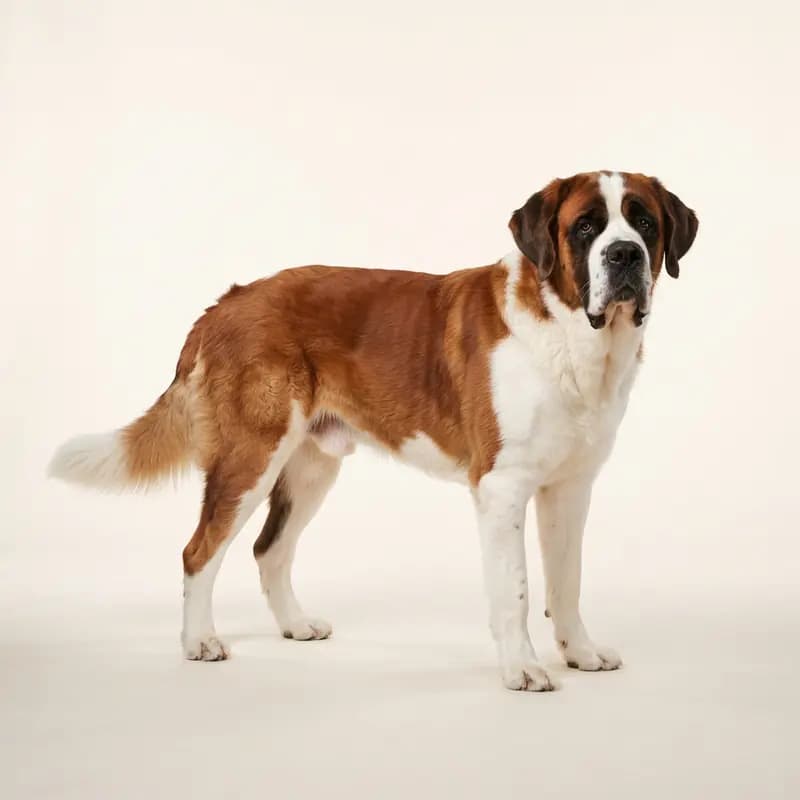

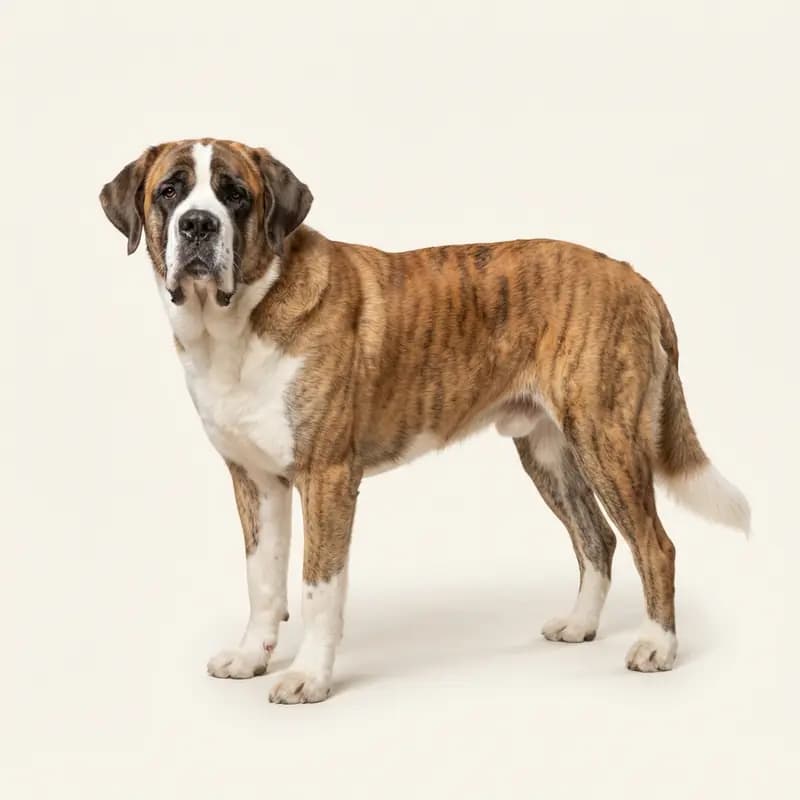
Eye colors
 Brown
Brown
Coat type
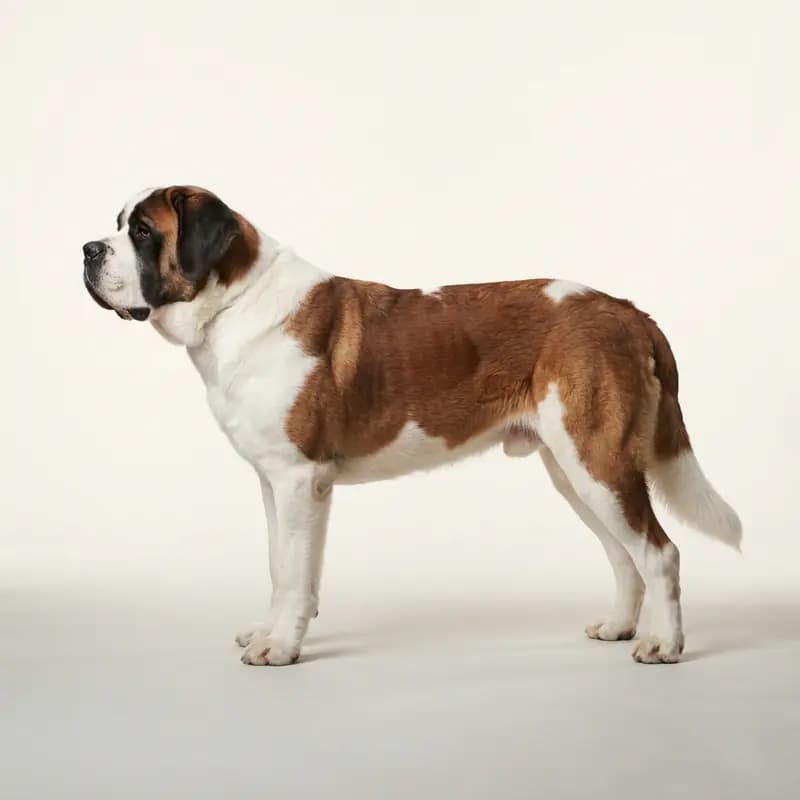 Illustrative image
Short
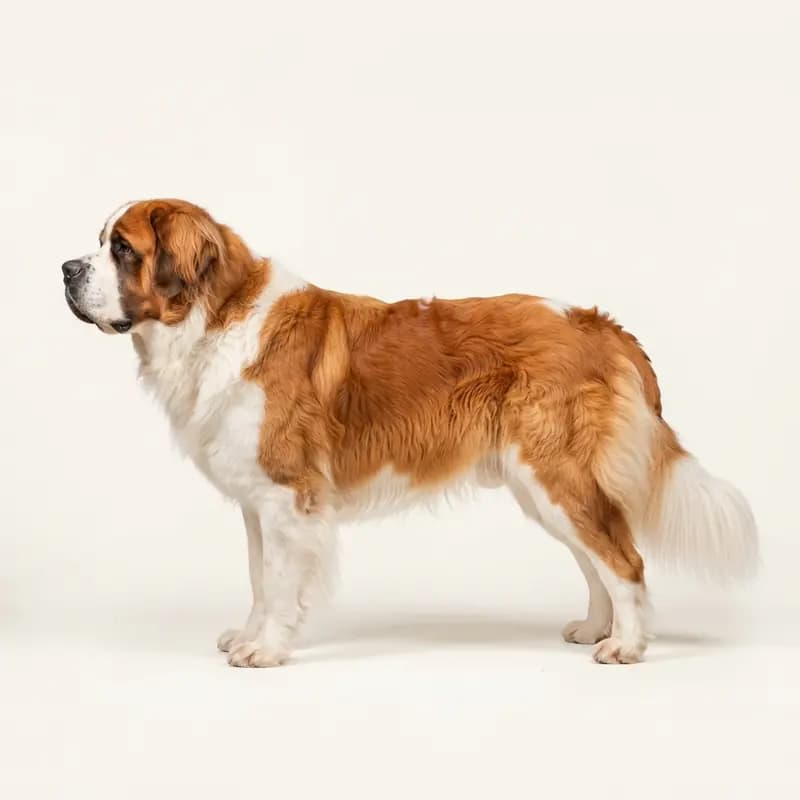 Illustrative image
Long
 Double coat
Is the Saint Bernard right for you?
The St. Bernard is a good-natured, stoic, and massive mountain dog—bred to locate travelers in deep snow and act as an imposing guardian. They are 80 kilos of resting power that require plenty of space and even more understanding for their slow pace.
Perfect for you if:
- You live on the ground floor of a house with a garden—constant stair climbing is not an option for this weight class.
- You are looking for a companion for leisurely walks rather than sweat-inducing jogging sessions or agility training.
- You have the mental composure to lead a dog that often only reacts after careful consideration—blind obedience is not in their Berghund (mountain dog) genetics.
- You appreciate an extremely people-oriented, gentle giant who prefers to lie quietly in the middle of family life, simply observing.
- vibesLessIdealFor
Less ideal if:
- You live in an apartment or a very warm environment—heat is extremely hard on this alpine hardware type.
- You are fussy about cleanliness—drool on the walls and mountains of hair on the floor are part of the standard package.
- You underestimate the daily logistics that an 80-kilo dog brings with it regarding food, accessories, and the trunk of your car.
- You expect quick reactions on the training field—they were bred to make independent decisions in snowstorms, not to execute commands in rapid succession.
The real vibes check
A St. Bernard is like a good-natured boulder in your living room—you won't move them an inch with pressure or harshness, only with calm consistency. You aren't getting a snappy command-follower, but a stoic, loving guardian. If you embrace their slowness as a strength, you will have the most loyal shadow of your life.
Self-check
Would the Saint Bernard really fit your life?
Answer 6 quick questions about your everyday life and see how well the Saint Bernard fits you — including an honest cost estimate per month, per year, and across the dog's lifetime.
Fit checkCost estimateRisk dice
Takes about 1 minute · free & anonymous
Breed Profile
The St. Bernard is an impressive sight. He is one of the largest dog breeds and his physical size is only surpassed by his generosity and loving character. He belongs to FCI Group 2, the Molossians. His strong, massive physique is typical of this group. His head is expressive with a broad forehead, deep wrinkles and dark, gentle eyes. Its ears are medium sized and hang close to its head. Despite his size, he moves with a certain grace and suppleness.
All measurements in detail
- Height
- 65 - 80 cm (Female), 70 - 90 cm (Male)
- Weight
- 55 - 80 kg (Female), 65 - 100 kg (Male)
- Life Expectancy
- 8 - 10 yrs
- Character
- Gentle, loyal, friendly
- Coat
- Dense, short or medium length, with an undercoat
- Coat Color
- White with red or brindle plates
- Price
- 1800 - 3000 €
Character & Temperament
Saint Bernards are incredibly people-oriented dogs. They are known for their kindness, even-tempered character and devotion to their family. They are very patient and gentle, making them excellent dogs for families with children. At the same time, they are also very attentive and vigilant, which makes them excellent watchdogs. However, they are not aggressive and only intervene when they see their family in danger. Their original role as rescue dogs has led them to have a strong instinct to help and protect people. This also means that they can sometimes have difficulty staying alone. They prefer to always be close to their humans and are happiest when they are included in their daily activities. Although Saint Bernards are not overly active, they do enjoy regular physical activity. They love being outside and can be very playful. They need daily walks and playtime to stay healthy and happy. However, your activity should be moderate so as not to put strain on your joints. Another important aspect of her character is her intelligence. They are very smart dogs and learn quickly. This also makes them good working dogs that can perform various tasks. Despite their intelligence, they can sometimes be stubborn. They need consistent but loving guidance to reach their full potential. As far as the hunting instinct is concerned, it is not particularly strong in St. Bernards. They were originally bred as rescue dogs rather than hunting dogs. However, they can react to smaller animals if they are not used to them from an early age. It is therefore important to teach them how to behave around other animals.
| Trainability Willing to learn with clear rules and regular training. | Balanced |
| Watchfulness Occasionally alerts but is fundamentally open. | Low |
| Openness to Strangers Neither pushily friendly nor suspicious. | Neutral |
| Hunting or Herding Drive Barely any prey drive — small animals trigger nothing. | Very low |
Fun Fact!
Saint Bernards are named after Saint Bernard of Menthon, the patron saint of travelers to the Alps. The dogs were bred at a hospice in the Swiss Alps to rescue travelers trapped in snowstorms.
What Awaits You
Saint Bernards are large and calm dogs. They can be alert and territorially motivated. Unfortunately, this breed is also affected by many tortuous breeding characteristics. In addition to problems with the musculoskeletal system, epilepsy and cancer are common.
Housing & Care
Although Saint Bernards are a large breed, they are certainly suitable as city dogs as long as they get enough exercise and mental stimulation. They are extremely child-friendly and are known to be patient and gentle with children of all ages. Their gentle and calm nature also makes them compatible with other pets, including cats, as long as they are properly socialized.
- Family Friendly
Lives for its family — the born family companion.
Ideal family dog - Child Friendly
Extraordinarily patient and loving — a true family dog.
Excellent with children - Dog Friendly
Actively enjoys the company of other dogs.
Dog-friendly - City Friendly
City-appropriate with enough exercise and stimulation.
Manageable in cities
Owning a dog is a privilege, but it's also a real responsibility. Before you bring one into your life, be honest with yourself about the commitment it takes.
Training & Education
Saint Bernards are intelligent and quick learners, making them good candidates for a variety of activities and dog sports, from rescue services to agility and obedience training. It is important to start education and training early as their large growth quickly makes them physically strong. Positive reinforcement and consistent training are critical to success. Although St. Bernards are not one of the breeds that tend to be ball-dependent, it is always important to maintain a balance between play and rest periods. This breed also benefits greatly from training sessions that include impulse control and frustration tolerance.
Nutrition & Care
As a large breed, the St. Bernard needs a balanced diet high in protein and enough calories to maintain its energy. Due to their susceptibility to gastric torsion, it is important to avoid large meals and instead give them smaller meals throughout the day. It is also advisable to avoid physical activity immediately before or after meals. Grooming a Saint Bernard is relatively easy as their coat is short to medium long and dense, with a thick undercoat. It sheds all year round and especially during the shedding periods in spring and autumn. Regular brushing helps remove loose hair and keeps the coat healthy and shiny. Saint Bernards are adapted to the cold climate of the Swiss Alps and also cope well with the German climate.
| Care Level Regular brushing and occasional professional grooming. | Moderate |
| Exercise Needs Needs 1–2 hours of real exercise daily. | Active |
| Shedding Hair everywhere, always — no white clothing survives. | Very heavy |
| Trainability Willing to learn with clear rules and regular training. | Balanced |
Our experts are still reviewing this information. Spotted something wrong? Email us at info@honestdog.de.
Health & hereditary diseases
Health
D
Elevated risks
Health grade
Due to its enormous size and mass, the St. Bernard carries a high risk of severe joint diseases such as hip dysplasia (HD) and elbow dysplasia (ED), as well as life-threatening gastric dilatation-volvulus (GDV) and dilated cardiomyopathy. A health-oriented breeder actively tries to minimize these dangers by only breeding with dogs whose joints are proven to be healthy and meet strict limit values. Before buying a puppy, make sure to ask to see the official X-ray evaluations of the parent animals, which rule out hip dysplasia (HD) with a result of C or better and elbow dysplasia (ED) with grade 1 or better, as well as current cardiological findings to rule out heart failure.
Grade is relative to other breeds — AI-assisted and editorially reviewed.
In daily life this can mean
During the first year, you must ensure slow growth, consistently protect their joints, and budget for higher veterinary costs for regular heart and eye check-ups.
The breeder's role
Responsible breeders have joints, hearts, eyes, and nerves tested and pay attention to clear airways—however, the fundamental risks of this giant breed cannot be completely eliminated.
Note: This health overview is AI-assisted and editorially reviewed. It is for orientation only and does not replace veterinary advice.
No Health Tests Available
No specific health tests are currently available for this breed.
Costs & where to find one
How much does a Saint Bernard cost?
A Saint Bernard costs around ~€260 per month (€140 – €510, depending on your setup). The first year adds up to roughly ~€6,350 including purchase, equipment and puppy school; across the dog's life (9 years) it comes to about ~€31,350.
With surgery cover, running costs come to about ~€270 per month — in return, your share of a major operation drops from several thousand euros to around 20 percent.
Per month
~€260
In the first year
~€6,350
Across the dog's life
~€31,350
Purchase from a breeder: €1,800 – €3,000
Estimate at a mid-range setup (suburban, dry food, 1–2 hours of daily exercise), average German prices, as of July 2026.
Calculate your personal costs1-minute self-check with your own answers
Looking for a Saint Bernard?
HonestDog Concierge
No verified Saint Bernard breeders on HonestDog yet
We currently have no breeders for this breed who have passed our verification. Create your short buyer profile: we'll set up your search alert, review a possible source and email you within 28 days.
Appearance, variants & origin
History
The full history
The Saint Bernard, also known as the St. Bernard Dog, has its roots in Switzerland. It was bred in the Middle Ages by the monks of the hospice on the Great St. Bernard Pass to help travelers in bad weather. The dogs were supposed to find and rescue lost or buried travelers. The breed was officially recognized in the 19th century and has retained its popularity as both a working dog and a family dog ever since.
Original Use
The St. Bernard was originally used as a guard dog and later as an avalanche dog in the hospice on the Great St. Bernard.
Origin
Switzerland
Date
1600
Owner experiences
What owners say about the Saint Bernard
Sabine M., Halterin aus Bayern (Rüde, seit 2021)
Als wir uns für unseren Bernhardiner-Rüden entschieden haben, wussten wir natürlich, dass er groß wird. Aber die Realität übertrifft doch jede Vorstellung. Er ist die Gutmütigkeit in Person und absolut kinderlieb – er lässt sich durch nichts aus der Ruhe bringen. Zu Hause ist er ein extrem anhänglicher, verschmuster Riese, der am liebsten immer mitten im Geschehen ist.
Man darf die Rasse allerdings keinesfalls unterschätzen. Er hat einen ausgeprägten Schutz- und Revierinstinkt entwickelt. Wenn jemand an unserem Grundstück vorbeigeht, schlägt er lautstark an und stürmt auch mal bellend an den Zaun. Bei einem Hund mit diesem Gewicht wirkt das auf Fremde natürlich extrem einschüchternd. Zudem ist er unglaublich stur. Wenn er beim Spaziergang beschließt, dass er jetzt nicht mehr weitergehen möchte, dann steht er da wie eine Statue. Da hilft kein Ziehen und kein Locken, man braucht einfach unendlich viel Geduld und eine konsequente Erziehung von Anfang an.
Anja H., Halterin aus dem Oberallgäu (Hündin, seit 2022)
Ich liebe meine Bernhardiner-Hündin über alles, sie ist ein fantastischer Begleiter und unglaublich treu. Was man vor dem Kauf aber unbedingt wissen muss: Diese Hunde haaren und sabbern in einem Ausmaß, das man sich vorher kaum ausmalen kann. Nach dem Trinken schüttelt sie sich gern und der Sabber klebt buchstäblich an den Wänden und Möbeln. Auch der Dreck, den sie mit ihrem langen Fell von draußen hereinträgt, ist nicht zu unterschätzen.
Ein weiterer wichtiger Punkt ist das Wetter. Der Sommer ist definitiv nicht ihre Jahreszeit. Sobald es warm wird, leidet sie sichtlich unter der Hitze, hechelt viel und braucht ständig ein schattiges Plätzchen sowie frisches Wasser. Lange Spaziergänge verschieben wir dann komplett in die kühlen Morgen- oder Abendstunden. Wer einen penibel sauberen Haushalt will oder im Sommer viel aktiv sein möchte, für den ist diese Rasse definitiv nichts.
Monika K., Halterin aus Niedersachsen (Hündin, seit 2020)
Unsere Greta ist eine Seele von Hund und im Alltag extrem entspannt. Trotzdem stürzen einen die schiere Größe und das Gewicht im Alltag manchmal in ungeahnte Herausforderungen. Man muss sich bewusst sein, dass alle Anschaffungen – vom Spezialfutter über die XXL-Hundebox bis hin zu den Tierarztkosten (Medikamente werden nach Gewicht dosiert!) – extrem ins Geld gehen. Auch das Auto muss groß genug sein, damit der Hund überhaupt reinpasst.
Zudem ist eine extrem gute Sozialisierung im Welpenalter Pflicht. Greta ist sehr verspielt, aber wenn sie mit ihren über 60 Kilo ungestüm auf andere Hunde oder Menschen zuläuft, bekommen es viele verständlicherweise mit der Angst zu tun. Einmal wollte sie unbedingt mit einem kleinen Dackel spielen, der sich dann verängstigt unter einem Auto verkroch. Man muss einen solchen Riesen jederzeit kräftemäßig und erziehungstechnisch unter Kontrolle haben, denn wegschieben oder mal eben halten kann man sie im Ernstfall nicht.
Paraphrased from real owner reports
Loading owner stories
FAQ & more
Frequently asked questions about the Saint Bernard
Is a Saint Bernard the right dog for me?
The Saint Bernard is an adaptable dog that adjusts well to various lifestyles. Research the temperament, grooming needs, and space requirements before deciding.
How long does a Saint Bernard live?
The average life expectancy of a Saint Bernard is 8-10 years. With proper care and regular vet visits, your dog can live a long, healthy life.
How much grooming does a Saint Bernard need?
Saint Bernard grooming requirements include regular brushing, nail trimming, and dental care. HonestDog provides detailed grooming tips for every breed.
Is a Saint Bernard good for families with children?
The Saint Bernard can be a great family dog. Proper training and socialization are key. HonestDog provides family suitability information for every breed.
What colors does the Saint Bernard come in?
The Saint Bernard comes in these colors: Red and white, Brindle, Fawn.
Loading related articles
Are you a Saint Bernard breeder?
Showcase your kennel on HonestDog and reach families searching for a responsibly bred Saint Bernard.
Why HonestDog?
What makes HonestDog different from other platforms
Full transparency
We lay out what we have: who the breeder is, how they work, and any health records they've uploaded. So you can judge for yourself.
Responsible breeding, assured
Every breeder on HonestDog has their identity and documents checked before their profile goes live. Health records they upload are shown on the profile, so you can see exactly what has been tested.
Trust and verification
We verify breeders and buyers alike, so every conversation happens on solid ground. It's a new standard of trust in dog breeding.
Less hassle, more time
We've already checked the breeders' documents and gathered the details, so you can skip the endless research and focus on finding the right puppy for your family.
Our Mission

We connect dog lovers with responsible breeders and shelters to ensure every dog finds the perfect home.
Founded by dog enthusiasts, our platform focuses on ethical dog breeding and adoption.
Why HonestDog?
We connect you with vetted breeders and shelters so you can find your — your new companion — with confidence.
Vetted Partners
Only verified breeders and shelters — for a safe start.
Highest Standards
Every animal's health and wellbeing is our top priority.
Guides & Resources
Guides, checklists, and breed profiles — so you can make a well-informed decision.