Loading breed
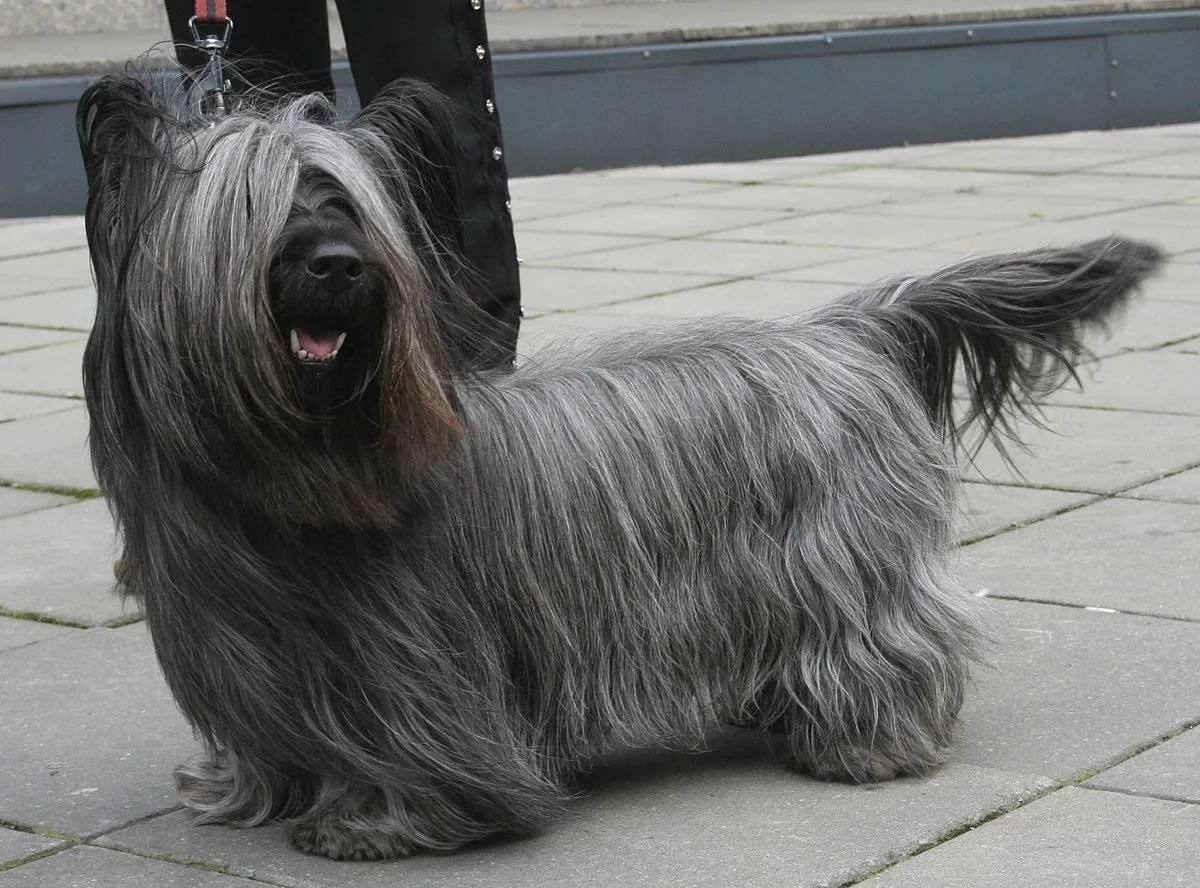
Skye Terrier
Health grade DThe Skye Terrier is a dignified, deeply devoted Erdhund (earth dog) — bred to hunt foxes and badgers in the rugged rocks of Scotland. Beneath that glamorous coat lies an uncompromising, independent-minded character.
- Height23–26 cm
- Weight12–18 kg
- Life expectancy12–14 yrs
- Puppy price1,500–2,500 €
- Energy3/5
The Essentials at a Glance
The Skye Terrier is a dignified, deeply devoted Erdhund (earth dog) — bred to hunt foxes and badgers in the rugged rocks of Scotland. Beneath that glamorous coat lies an uncompromising, independent-minded character.
- Health grade D: The Skye Terrier is rated D for health, as this breed carries serious risks for severe conditions such as chronic hepatitis, spongiform leucoencephalomyelopathy (SLEM), as well as joint problems like hip dysplasia (HD) and elbow dysplasia (ED).
- You are looking for a dog that makes its own decisions rather than obeying blindly — terriers of this breeding were required to act completely autonomously deep underground.
- You appreciate a dog that forms an extremely close bond with its family while remaining polite but entirely indifferent toward strangers.
- You expect him to ignore small animals fleeing — he was bred to track down defensive prey and hold on with tenacity.
Is the Skye Terrier right for you?
At a glance
Skye Terrier overview
The essentials — key facts, traits, and health priorities — before you dive deeper.
Health grade
Relative to other breeds
S
A
B
C
D
E
Very healthyHigher risk
Elevated risk — responsible breeding really matters.
See full health info & tests →
Note: This health overview is AI-assisted and editorially reviewed. It is for orientation only and does not replace veterinary advice.
Lifespan
12–14 yrs
Height
23–26 cm
Weight
12–18 kg
Practical
- Puppy price: 1,500 – 2,500 €
- Coat: Straight, long, with a dense undercoat
- Origin: Isle of Skye, Scotland
Temperament
Energy
Trainability
Family fit
With kids
Daily life
Care effort
Shedding
Barking
City-friendly
Guard instinct
What matters most
Especially with a Skye Terrier, choosing the right breeder is the single most important decision you'll make. Serious breeders consistently test the parents for inherited conditions, prioritize healthy early socialization, and stay accountable long after handover. A cheap puppy without health screening tends to become the most expensive dog later on.
See HonestDog breeder standards →Colors & coat
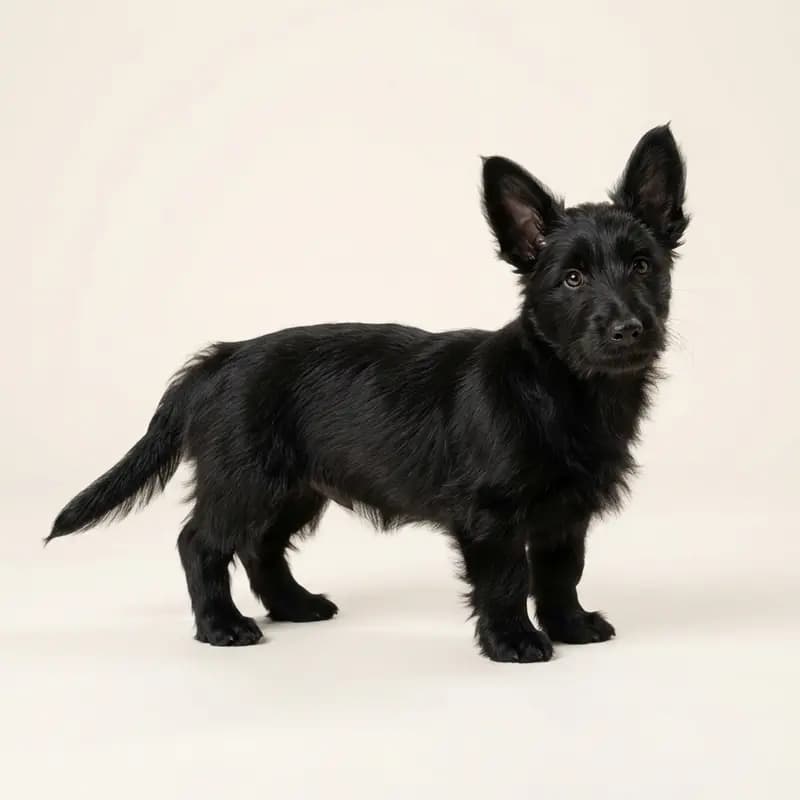
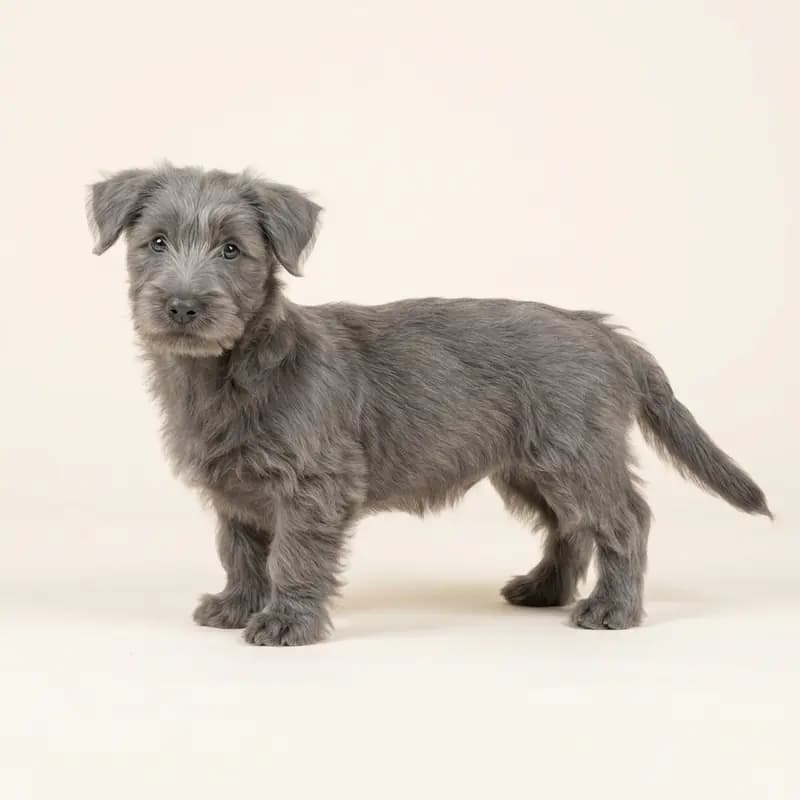
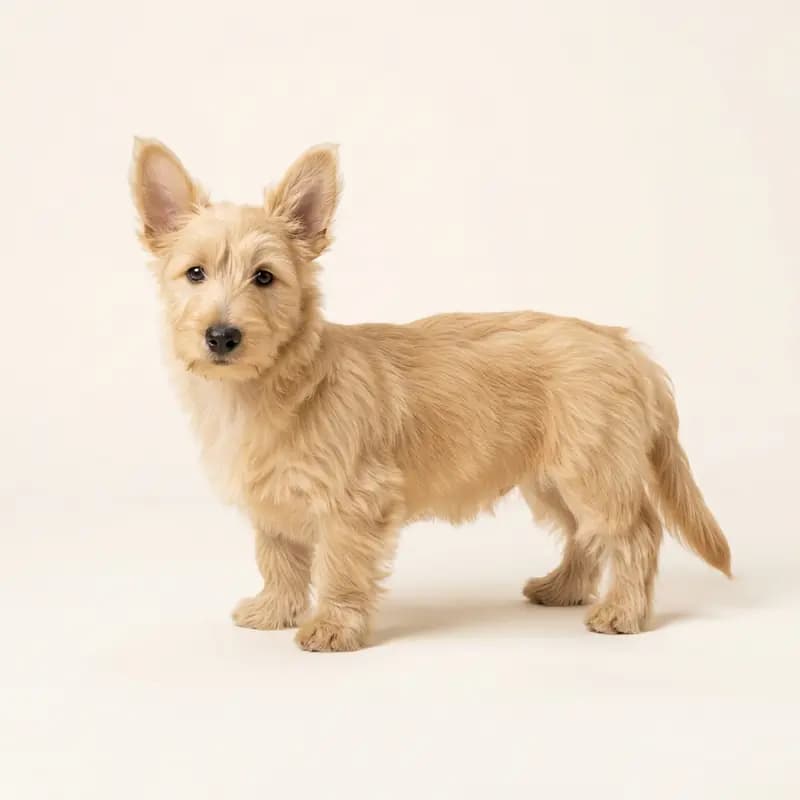
What colors does the Skye Terrier come in?
The coat colors you will see in Skye Terrier litters — including which ones fall outside the breed standard and which carry genetic risk.
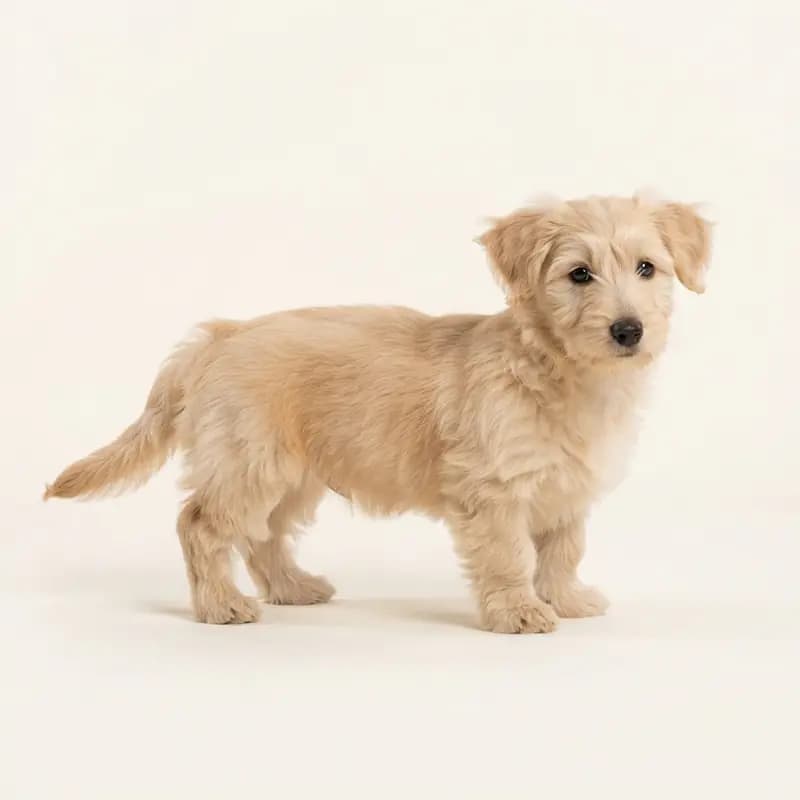
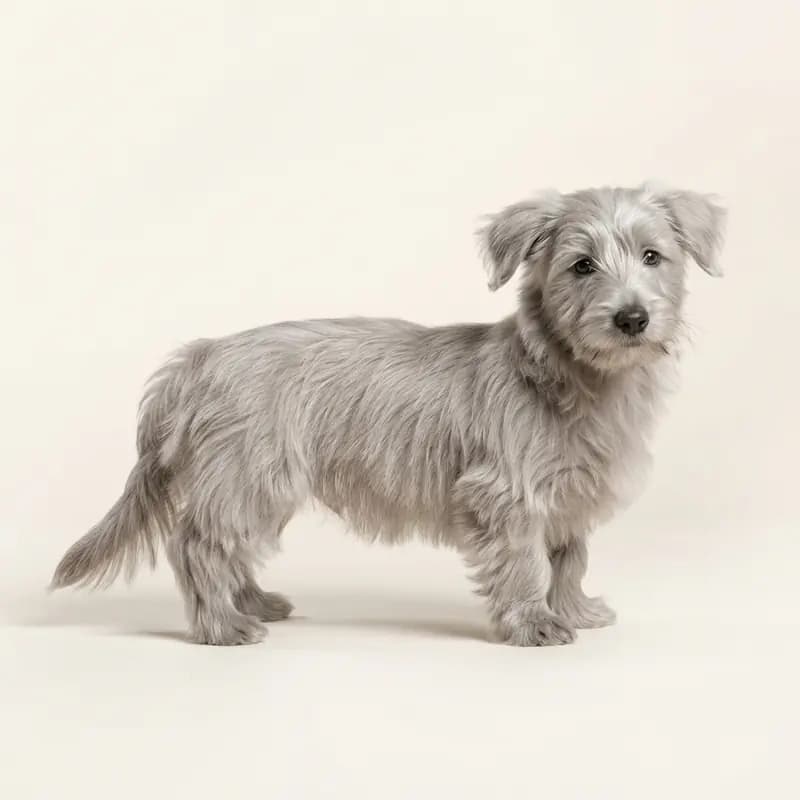
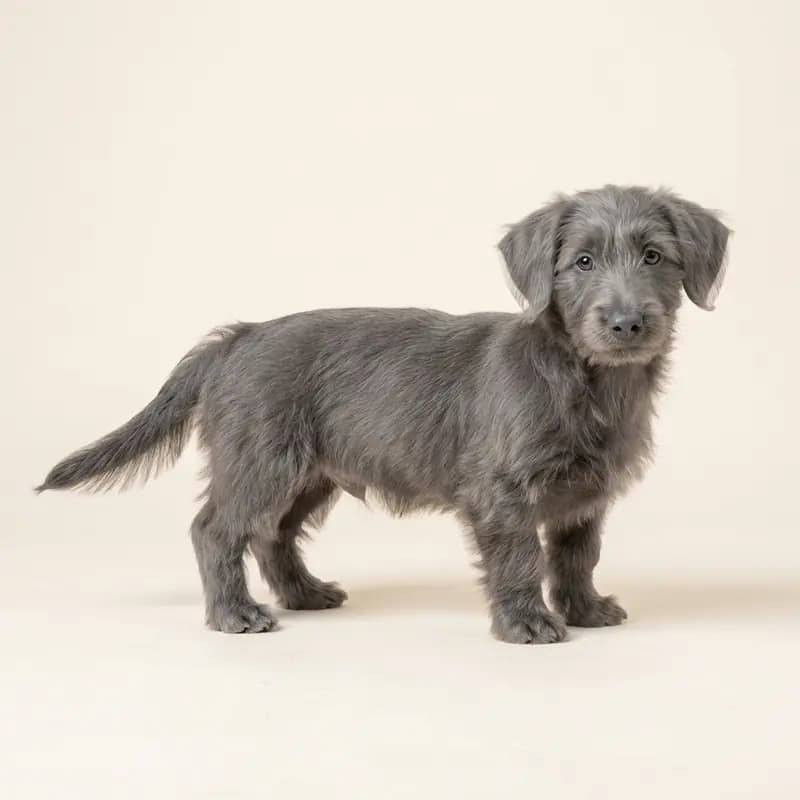
Eye colors
 Brown
Brown
Coat type
 Long
Long Double coat
Is the Skye Terrier right for you?
The Skye Terrier is a dignified, deeply devoted Erdhund (earth dog) — bred to hunt foxes and badgers in the rugged rocks of Scotland. Beneath that glamorous coat lies an uncompromising, independent-minded character.
Perfect for you if:
- You are looking for a dog that makes its own decisions rather than obeying blindly — terriers of this breeding were required to act completely autonomously deep underground.
- You appreciate a dog that forms an extremely close bond with its family while remaining polite but entirely indifferent toward strangers.
- You enjoy daily, long walks at a moderate pace without needing to plan for hours of dog sports or jogging sessions.
- You have the time and patience to brush that lush, floor-length double coat regularly and thoroughly.
Less ideal if:
- You expect him to ignore small animals fleeing — he was bred to track down defensive prey and hold on with tenacity.
- You have a home with a constant stream of visitors and want a dog that greets every guest with immediate joy.
- You lose your patience quickly when faced with stubbornness or use pressure in training, as he will respond to that by withdrawing completely.
- You live on the top floor without an elevator — his long, deep back is not anatomically designed for constant stair climbing.
The real vibes check
A Skye Terrier is like a Scottish lord: he demands respect, chooses his friends extremely carefully, and refuses to be rushed by anyone. You aren't getting a happy-go-lucky clown who wants to please everyone, but a deeply loyal aristocrat. If you accept his stubborn dignity, he will never leave your side again.
Self-check
Would the Skye Terrier really fit your life?
Answer 6 quick questions about your everyday life and see how well the Skye Terrier fits you — including an honest cost estimate per month, per year, and across the dog's lifetime.
Fit checkCost estimateRisk dice
Takes about 1 minute · free & anonymous
Breed Profile
The Skye Terrier is a dog breed that is characterized by its elegance and distinctive long hair. They have a long, low build and their ears can be worn either erect or drooping. The striking mane of long, straight hair that covers their bodies gives them a distinctive appearance while protecting them from harsh weather. They belong to FCI group 3, the terriers, and can be found in the low-legged terrier section. There is no distinction between performance and show lines in the Skye Terrier, meaning the breed is fairly uniform overall. A special feature of the Skye Terrier is its adaptability. Although they have a rural origin, they are also able to adapt well to life in urban environments as long as they receive adequate exercise and mental stimulation.
All measurements in detail
- Height
- 23 - 25 cm (Female), 25 - 26 cm (Male)
- Weight
- 12 - 14 kg (Female), 16 - 18 kg (Male)
- Life Expectancy
- 12 - 14 yrs
- Character
- Loyal, brave, intelligent
- Coat
- Straight, long, with a dense undercoat
- Coat Color
- Black, gray, cream, fawn, blue, silver or various shades of these colors
- Price
- 1500 - 2500 €
Character & Temperament
The Skye Terrier may be small, but he definitely has a big heart! This brave little dog is known for his courageous and fearless character. They were originally bred to crawl into narrow crevices and search for prey. This has led them to be very courageous and determined. If you are looking for a dog that will keep you company and form a strong bond, then the Skye Terrier could be the right choice for you. They are extremely loyal to their family and tend to form a particularly close relationship with one person. This also means that they can sometimes be reserved around strangers and need appropriate socialization. In terms of temperament, Skye Terriers tend to be calm and dignified. However, that doesn't mean they don't have a playful side! They enjoy playing with their favorite person and being mentally challenged. It's important to provide them with enough mental stimulation and moderate exercise to keep them happy. Skye Terriers are also very adaptable when it comes to living in different environments. They can be just as happy in a house with a garden as in a city apartment, as long as their needs are met. As for staying alone, Skye Terriers can learn it, but they definitely prefer it when their favorite person is around. When it comes to hunting and prey catching behavior, it is important to know that Skye Terriers still have the instinct to chase prey, although not as strong as some other terriers. It is advisable to have a safe area for them to play and to keep them on a leash when you are outside with them. One important thing you should know is that Skye Terriers can be a little wary. They are good guard dogs and will protect their family if they think something is wrong. It is important to teach them when it is appropriate to bark and when it is not. Overall, the Skye Terrier is a wonderful companion that is both courageous and affectionate. He is adaptable and intelligent, meaning he can be happy in different environments. With proper socialization and a loving environment, the Skye Terrier will become a loyal friend and member of the family.
| Trainability Has its own ideas and will test limits. | Strong-willed |
| Watchfulness Occasionally alerts but is fundamentally open. | Low |
| Openness to Strangers Warms up quickly and is generally welcoming. | Friendly |
| Hunting or Herding Drive Mild interest in movement and small animals — easily managed. | Low |
Fun Fact!
Did you know that the Skye Terrier was one of Queen Victoria's favorite dog breeds? Their love for this breed helped make them popular in the 19th century!
What Awaits You
The Skye Terrier is an exceptional breed that has unfortunately become very rare in Germany today. However, it was so popular in the 19th century that one could speak of “fashion dogs”. Queen Victoria and Queen Alexandra of England bred them at Windsor Castle, and for decades Skyes were favorites of the nobility across Europe. His floor-length, simply falling body hair gives him a very elegant look. His hair - long, hard, straight top coat with a soft, dense undercoat - is easy to care for. Thorough combing and brushing once a week is enough to keep it in good condition. The Skye Terrier is a dignified dog, understanding, loving and loyal. He needs attention, a lot of human love and understanding for his character.
Housing & Care
Skye Terriers are suitable for urban living as long as they get enough exercise and mental stimulation. They are rather calm dogs and adapt well to different environments. They often get along well with children, but as with any dog breed, it is important to supervise interactions between dogs and small children. Skye Terriers can also get along well with other pets, including cats, especially if they have been socialized from an early age.
- Family Friendly
Loves family life and thrives in a group.
Family-oriented - Child Friendly
Takes boisterous and affectionate children in its stride.
Patient with children - Dog Friendly
Usually gets on fine with other dogs.
Generally tolerant - City Friendly
Adapts well to city living and urban environments.
Well-suited to city life
Owning a dog is a privilege, but it's also a real responsibility. Before you bring one into your life, be honest with yourself about the commitment it takes.
Training & Education
It is important to note that Skye Terriers are intelligent and have a natural curiosity. You benefit from consistent upbringing and varied training. Skye Terriers can also participate in dog sports such as agility and obedience. It is important that Skye Terriers learn to develop frustration tolerance and impulse control as they can be stubborn at times. They are not overly active dogs, but they do need regular exercise and mental stimulation to be happy. Be careful not to let the dog become a “ball junkie.” Offer a variety of activities to challenge your mind and body in a balanced way.
Nutrition & Care
Skye Terriers are not particularly picky about their diet, but it is important to provide them with a balanced and nutritious diet. You could consider both commercial and homemade food, as long as it contains all the necessary nutrients. When it comes to grooming, Skye Terriers are quite high maintenance due to their long coat. They have a dense undercoat that requires regular brushing to prevent matting. The climate in Germany should not be a problem for Skye Terriers, as their thick fur protects them from both cold and moderate heat. They shed on average, so be prepared to brush and vacuum regularly!
| Care Level Needs regular professional grooming — time-consuming and costly. | High-maintenance |
| Exercise Needs Needs 1–2 hours of real exercise daily. | Active |
| Shedding Hair everywhere, always — no white clothing survives. | Very heavy |
| Trainability Has its own ideas and will test limits. | Strong-willed |
Our experts are still reviewing this information. Spotted something wrong? Email us at info@honestdog.de.
Health & hereditary diseases
Health
D
Elevated risks
Health grade
The Skye Terrier is rated D for health, as this breed carries serious risks for severe conditions such as chronic hepatitis, spongiform leucoencephalomyelopathy (SLEM), as well as joint problems like hip dysplasia (HD) and elbow dysplasia (ED). A responsible breeder actively counters these dangers by having their breeding dogs undergo comprehensive health screenings. Before buying a puppy, you should therefore always ask to see the official test results of the parent dogs, proving they are free from chronic hepatitis and SLEM, and confirming that hip dysplasia (HD), elbow dysplasia (ED), and patellar luxation (PL) (here limit: Grade 1 or better) have been veterinary examined.
Grade is relative to other breeds — AI-assisted and editorially reviewed.
In daily life this can mean
During his growth phase, you should strictly ensure joint-friendly exercise and avoid jumping or obesity to relieve pressure on his long back and joints in everyday life.
The breeder's role
Reputable breeders have the parents' knees, eyes, and spine checked and monitor liver values closely to avoid breed-specific diseases in the lineage.
Note: This health overview is AI-assisted and editorially reviewed. It is for orientation only and does not replace veterinary advice.
No Health Tests Available
No specific health tests are currently available for this breed.
Costs & where to find one
How much does a Skye Terrier cost?
A Skye Terrier costs around ~€180 per month (€90 – €330, depending on your setup). The first year adds up to roughly ~€4,970 including purchase, equipment and puppy school; across the dog's life (13 years) it comes to about ~€30,640.
With surgery cover, running costs come to about ~€180 per month — in return, your share of a major operation drops from several thousand euros to around 20 percent.
Per month
~€180
In the first year
~€4,970
Across the dog's life
~€30,640
Purchase from a breeder: €1,500 – €2,500
Estimate at a mid-range setup (suburban, dry food, 1–2 hours of daily exercise), average German prices, as of July 2026.
Calculate your personal costs1-minute self-check with your own answers
Looking for a Skye Terrier?
HonestDog Concierge
No verified Skye Terrier breeders on HonestDog yet
We currently have no breeders for this breed who have passed our verification. Create your short buyer profile: we'll set up your search alert, review a possible source and email you within 28 days.
Appearance, variants & origin
History
The full history
The history of the Skye Terrier is as fascinating as the breed itself. They originally come from the Isle of Skye in Scotland, from which they get their name. The breed is believed to have originated in the 16th century, evolving from terriers that were used by hunters to drive foxes and other game from their hiding places. In the 19th century, the Skye Terrier's popularity rose rapidly, particularly among the aristocracy and even royalty. Queen Victoria was known to be a great admirer of the breed and had several Skye Terriers as pets. This contributed to the breed becoming internationally known. The Skye Terrier was recognized by the American Kennel Club in 1887 and has been a valued and rare breed ever since.
Original Use
The Skye Terrier was originally bred to hunt foxes and badgers in the rocky regions of the Isle of Skye.
Origin
Isle of Skye, Scotland
Date
1600
Owner experiences
What owners say about the Skye Terrier
Margret W., Halterin aus Schleswig-Holstein (Rüde, seit 2013)
Ich habe mich damals Hals über Kopf in diese Rasse verliebt, als ich ein Foto von diesen unglaublich ausdrucksstarken, tiefen Augen sah. Und es stimmt wirklich: Wenn ein Skye Terrier dich so ansieht, vergisst du sofort all deine Vorsätze. Mein Rüde ist mir treu ergeben und im Alltag ein absolut robuster, mutiger Begleiter, der sich vor nichts fürchtet.
Man darf bei dieser Rasse allerdings niemals ungerecht oder zu grob werden. Wenn ich ihn mal zu Unrecht gemaßregelt habe, straft er mich sofort mit eiskalter Missachtung. Er versteht es dann meisterhaft, mich komplett zu ignorieren, sodass am Ende ich diejenige bin, die wieder ankommen und sich bei ihm einschmeicheln muss! Diese sensible, aber gleichzeitig stolze Art muss man einfach mögen und respektieren.
Sabine T., Halterin aus Hessen (Hündin, seit 2021)
Wer sich einen Skye Terrier anschafft, darf den Pflegeaufwand nicht unterschätzen. Das wunderschöne, bodenlange Fell muss fast täglich gründlich gekämmt werden, um schmerzhafte Verfilzungen zu verhindern. Besonders während des Fellwechsels ist das Ausbürsten der dichten Unterwolle ein echter Kraftakt. Auch die Haare an den Augen und Ohren müssen wir regelmäßig kontrollieren und freischneiden.
Eine weitere Besonderheit im Alltag ist ihr Körperbau: Durch den extrem langen Rücken und die kurzen Beine ist Treppensteigen für sie tabu, um die Wirbelsäule nicht zu schädigen. Bei der Erziehung braucht man unendlich viel Geduld und Fingerspitzengefühl. Sie lernt zwar schnell, hinterfragt aber jedes Kommando. Druck oder Härte bringen bei ihr gar nichts – sie schaltet dann sofort auf stur und verweigert jede Mitarbeit.
Dieter K., Halter aus Bayern (Rüde, seit 2018)
Mein Skye ist ein waschechter Einmannhund. Er hat mich von Anfang an als seine absolute Hauptbezugsperson auserkoren. Meiner Familie gegenüber ist er zwar lieb, aber die engste Bindung hat er definitiv zu mir. Fremden Menschen gegenüber ist er extrem distanziert und misstrauisch. Eine sehr frühe und konsequente Sozialisierung war bei uns Pflicht, damit er bei Begegnungen draußen nicht sofort in Alarmbereitschaft verfällt.
Obwohl wir in einer Wohnung leben und er drinnen ein angenehm ruhiger Mitbewohner ist, braucht er draußen Beschäftigung für den Kopf. Sein Jagdtrieb ist nicht ohne – er hat immer noch das Erbe eines passionierten Erdhundes in sich. Ihn ohne Leine laufen zu lassen, ist wegen seiner Eigenwilligkeit und dem Drang, Fährten nachzugehen, nur in absolut gesicherten Bereichen möglich. Er ist eben ein echter Charakterkopf, der eine starke Führung braucht.
Paraphrased from real owner reports
Loading owner stories
FAQ & more
Frequently asked questions about the Skye Terrier
Is a Skye Terrier the right dog for me?
The Skye Terrier is an adaptable dog that adjusts well to various lifestyles. Research the temperament, grooming needs, and space requirements before deciding.
How long does a Skye Terrier live?
The average life expectancy of a Skye Terrier is 12-14 years. With proper care and regular vet visits, your dog can live a long, healthy life.
How much grooming does a Skye Terrier need?
Skye Terrier grooming requirements include regular brushing, nail trimming, and dental care. HonestDog provides detailed grooming tips for every breed.
Is a Skye Terrier good for families with children?
The Skye Terrier can be a great family dog. Proper training and socialization are key. HonestDog provides family suitability information for every breed.
What colors does the Skye Terrier come in?
The Skye Terrier comes in these colors: Black, Grey, Fawn, Cream, Silver, Blue.
Loading related articles
Are you a Skye Terrier breeder?
Showcase your kennel on HonestDog and reach families searching for a responsibly bred Skye Terrier.
Why HonestDog?
What makes HonestDog different from other platforms
Full transparency
We lay out what we have: who the breeder is, how they work, and any health records they've uploaded. So you can judge for yourself.
Responsible breeding, assured
Every breeder on HonestDog has their identity and documents checked before their profile goes live. Health records they upload are shown on the profile, so you can see exactly what has been tested.
Trust and verification
We verify breeders and buyers alike, so every conversation happens on solid ground. It's a new standard of trust in dog breeding.
Less hassle, more time
We've already checked the breeders' documents and gathered the details, so you can skip the endless research and focus on finding the right puppy for your family.
Our Mission

We connect dog lovers with responsible breeders and shelters to ensure every dog finds the perfect home.
Founded by dog enthusiasts, our platform focuses on ethical dog breeding and adoption.
Why HonestDog?
We connect you with vetted breeders and shelters so you can find your — your new companion — with confidence.
Vetted Partners
Only verified breeders and shelters — for a safe start.
Highest Standards
Every animal's health and wellbeing is our top priority.
Guides & Resources
Guides, checklists, and breed profiles — so you can make a well-informed decision.