Loading breed
Shiba Inu
Health grade BThe Shiba Inu is a self-confident, almost cat-like individualist—an ancient Jagdspitz (hunting spitz) bred in the mountains of Japan for independent small-game hunting. He decides for himself whether cooperation makes sense to him.
- Height35–42 cm
- Weight6–11 kg
- Life expectancy12–15 yrs
- Puppy price1,500–2,500 €
- Energy3/5
The Essentials at a Glance
The Shiba Inu is a self-confident, almost cat-like individualist—an ancient Jagdspitz (hunting spitz) bred in the mountains of Japan for independent small-game hunting. He decides for himself whether cooperation makes sense to him.
- Health grade B: The Shiba Inu is a robust breed with an average health risk, primarily associated with hip dysplasia (HD) and hereditary eye conditions.
- You appreciate an independent companion on equal footing and don't need a dog that blindly follows every command.
- You have the patience for humorous, extremely consistent training—this ancient hunter asks 'why' with every command.
- You expect a classic 'will-to-please' and unconditional obedience on command—he was bred to hunt completely autonomously in the mountains.
Is the Shiba Inu right for you?
At a glance
Shiba Inu overview
The essentials — key facts, traits, and health priorities — before you dive deeper.
Health grade
Relative to other breeds
S
A
B
C
D
E
Very healthyHigher risk
Solid — a handful of items a good breeder watches.
See full health info & tests →
Note: This health overview is AI-assisted and editorially reviewed. It is for orientation only and does not replace veterinary advice.
Lifespan
12–15 yrs
Height
35–42 cm
Weight
6–11 kg
Practical
- Puppy price: 1,500 – 2,500 €
- Coat: Stiff, straight top coat with a soft, dense undercoat
- Origin: Japan
Temperament
Energy
Trainability
Family fit
With kids
Daily life
Care effort
Shedding
Barking
City-friendly
Guard instinct
What matters most
Especially with a Shiba Inu, choosing the right breeder is the single most important decision you'll make. Serious breeders consistently test the parents for inherited conditions, prioritize healthy early socialization, and stay accountable long after handover. A cheap puppy without health screening tends to become the most expensive dog later on.
See HonestDog breeder standards →Colors & coat
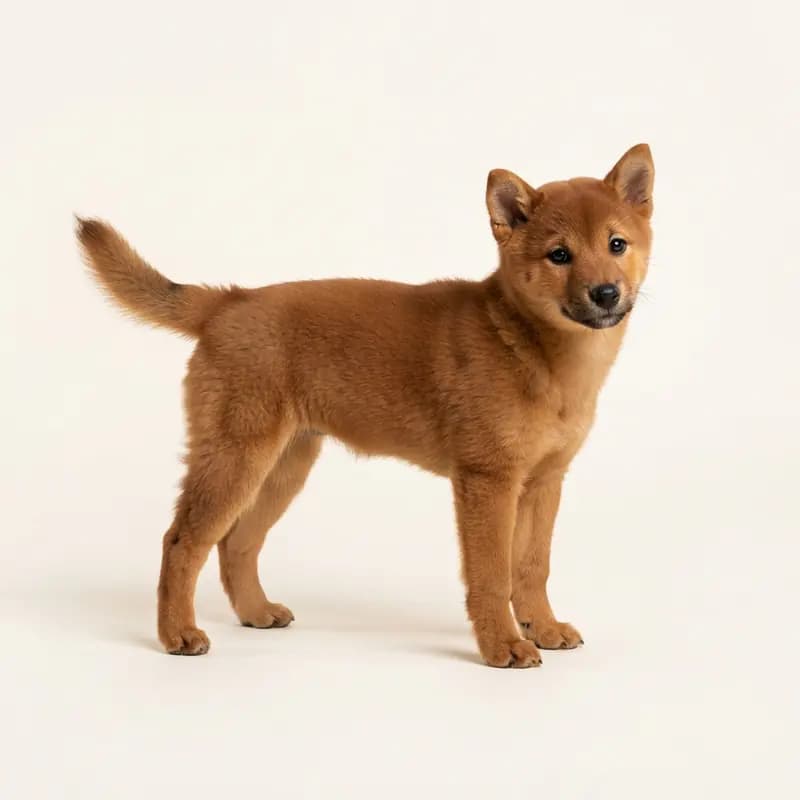
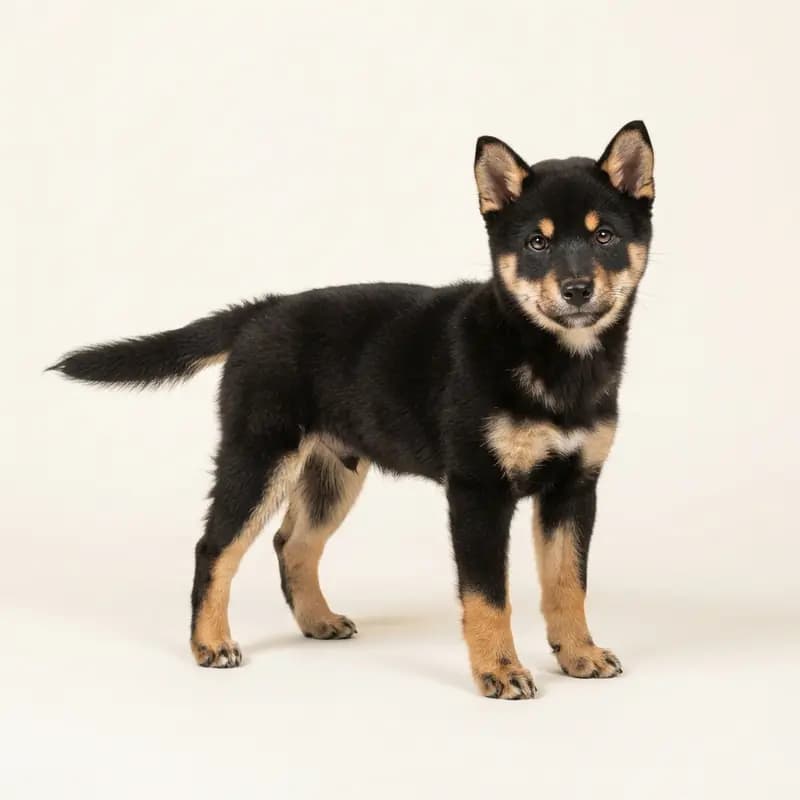
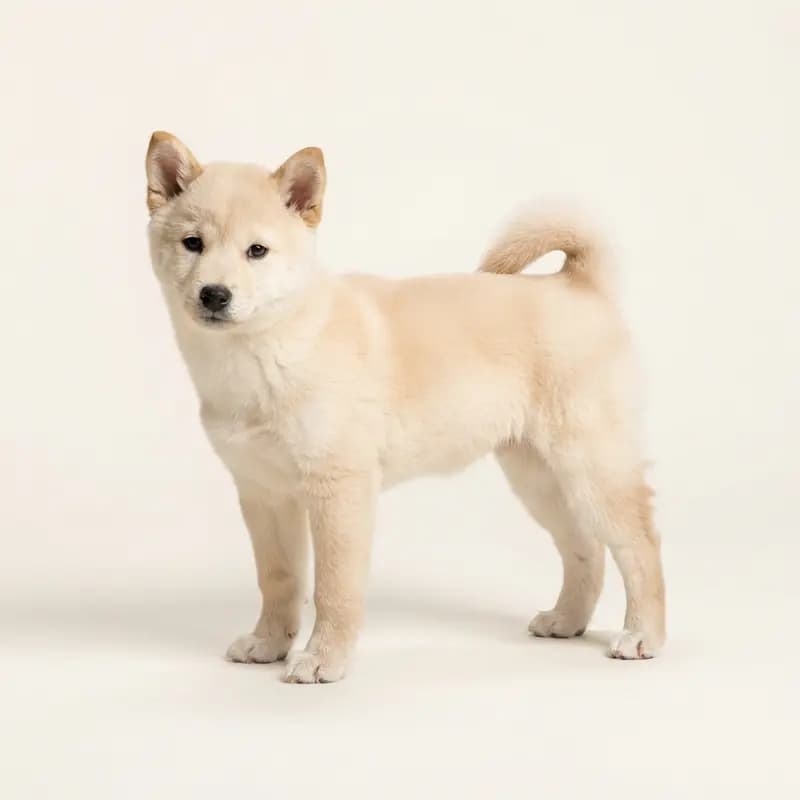
What colors does the Shiba Inu come in?
The coat colors you will see in Shiba Inu litters — including which ones fall outside the breed standard and which carry genetic risk.
Eye colors
 Brown
Brown
Coat type
 Short
Short Double coat
Is the Shiba Inu right for you?
The Shiba Inu is a self-confident, almost cat-like individualist—an ancient Jagdspitz (hunting spitz) bred in the mountains of Japan for independent small-game hunting. He decides for himself whether cooperation makes sense to him.
Perfect for you if:
- You appreciate an independent companion on equal footing and don't need a dog that blindly follows every command.
- You have the patience for humorous, extremely consistent training—this ancient hunter asks 'why' with every command.
- You live in a rather quiet household without constant hustle and bustle from visitors, which he often perceives as intrusive.
- You can live with keeping him on a long leash in areas rich in wildlife, because the visual stimulus of movement makes him turn a deaf ear to your calls.
Less ideal if:
- You expect a classic 'will-to-please' and unconditional obedience on command—he was bred to hunt completely autonomously in the mountains.
- You are looking for a dog park fan who wants to romp around exuberantly with every strange dog immediately—Shibas are often very picky and do not tolerate disrespect.
- You tend to get impatient with training problems—this breed reacts to that with stubborn withdrawal and a complete loss of trust.
The real vibes check
A Shiba Inu is not a dog that wants to please you—he is a charismatic roommate who happens to live in your house and pays rent in the form of occasional affection. If you see his cat-like distance and pride as a compliment rather than an insult, you will gain an incredibly loyal companion.
Self-check
Would the Shiba Inu really fit your life?
Answer 6 quick questions about your everyday life and see how well the Shiba Inu fits you — including an honest cost estimate per month, per year, and across the dog's lifetime.
Fit checkCost estimateRisk dice
Takes about 1 minute · free & anonymous
Breed Profile
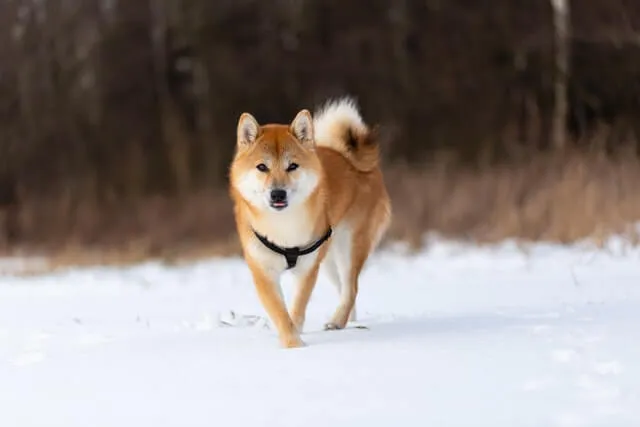
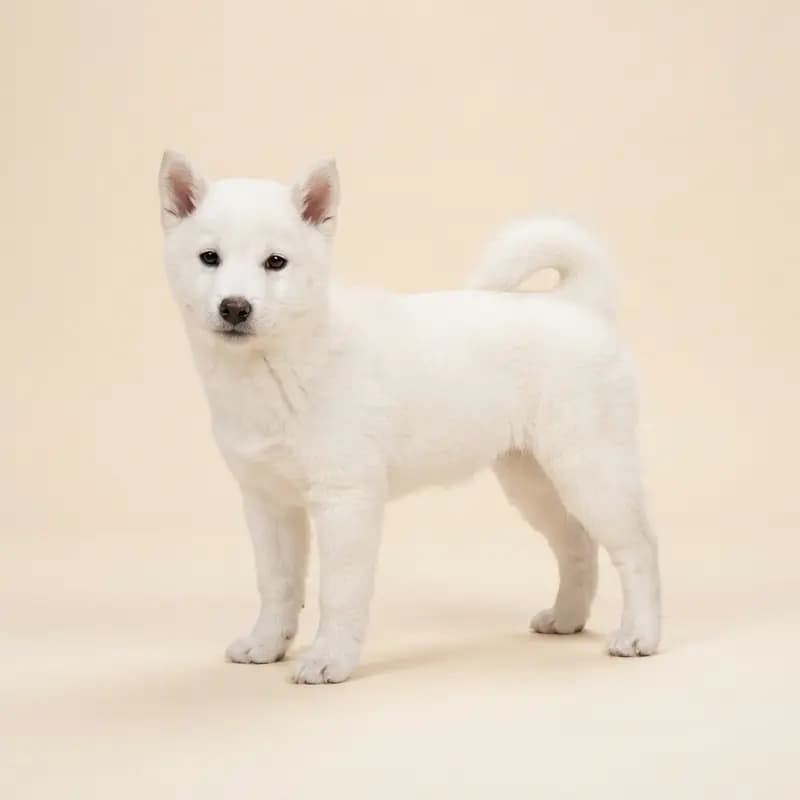
The Shiba Inu is a small breed of dog that originated in Japan. He falls under FCI Group 5, which also includes other Spitz and archetype dogs. Shiba Inus are compactly built, with good bone structure and well-developed muscles. Their expression is alert and their behavior is sometimes a bit cat-like. Their ears are small and triangular, and their tail is long and bushy, often carried over their back. They have a distinctive and attractive coloration, with the Urajiro coloration (cream markings on the muzzle, cheeks, chest, belly and legs) being characteristic. The eyes are small, triangular and dark, giving the Shiba Inu a mischievous appearance. There is no distinction between performance and show lines.
All measurements in detail
- Height
- 35 - 39 cm (Female), 38 - 42 cm (Male)
- Weight
- 6 - 9 kg (Female), 8 - 11 kg (Male)
- Life Expectancy
- 12 - 15 yrs
- Character
- Independent, Alert, Intelligent
- Coat
- Stiff, straight top coat with a soft, dense undercoat
- Coat Color
- Red, sesame (black with red undercoat), black tan
- Price
- 1500 - 2500 €
Character & Temperament
The Shiba Inu is a fascinating breed with a unique character. If you are looking for a Shiba If you choose Inu, you will quickly notice that these little dogs have a big personality. By nature, Shiba Inus are independent and can sometimes be a little reserved. They are not overly affectionate dogs, but they form strong bonds with their family and are often particularly loyal to a particular person in the household. However, their independence does not mean that they enjoy being alone - they enjoy the company of their people and can develop separation anxiety if left alone for long periods of time. Shiba Inus are intelligent and quick learners, but their independence can sometimes be perceived as stubbornness. It is important to be patient and use positive reinforcement in parenting. When it comes to temperament, Shiba Inus are typically calm and collected, but they are also alert and attentive. Their hunting instinct is still strong and they can act on the urge to chase small animals if given the opportunity. Therefore, it is important to keep them on a leash and let them play in a safe area. As original hunting dogs, Shiba Inus have a strong guarding instinct and are often suspicious of strangers. However, they are not aggressive dogs and with proper socialization will learn to accept visitors into their home. The Shiba Inu has a cat-like way of moving and behaving. He is clean and often grooms himself. He is also known to be very vocal, with a range of sounds including the famous 'Shiba cry' which he makes when he is excited or unhappy. All in all, the Shiba Inu is a charismatic, intelligent and independent dog that can form strong bonds with its family. He needs consistent training and socialization, as well as sufficient mental and physical stimulation. If you are willing to invest the time and energy required to understand and train this wonderful dog, you will find him a loyal and fascinating companion.
| Trainability Has its own ideas and will test limits. | Strong-willed |
| Watchfulness Reports unusual activity but stays controlled. | Moderate |
| Openness to Strangers Careful around unfamiliar people — thaws slowly. | Cautious |
| Hunting or Herding Drive Powerful instinct that can override recall when triggered. | Strong |
Fun Fact!
Did you know that the Shiba Inu is the most popular dog breed in its home country of Japan and is considered a national natural monument?
What Awaits You
Like the Akita Inu, Shiba Inus are also very independent dogs with a great passion for hunting. They are dogs that need consistent training with experience and dog sense in order to become pleasant companions.
Housing & Care
The Shiba Inu can be kept in the city, but he needs daily walks and mental stimulation. He is an active dog who loves to explore his surroundings. Shiba Inus are generally compatible with older children, but they don't necessarily like to be handled roughly, so caution is advised around small children. They are often wary of other dogs and pets, especially cats. Early socialization is crucial here.
- Family Friendly
Gets on well with different people and varying routines.
Family-friendly - Child Friendly
Fine with calm, respectful children — not small tornadoes.
Better with older children - Dog Friendly
Can get on with dogs it knows — strangers are a different story.
With familiar dogs - City Friendly
City-appropriate with enough exercise and stimulation.
Manageable in cities
Owning a dog is a privilege, but it's also a real responsibility. Before you bring one into your life, be honest with yourself about the commitment it takes.
Training & Education
Shiba Inus are smart but also independent, which can make training challenging. It is important to start training early and be consistent. Positive reinforcement works best with this breed. They are suitable for various dog sports such as agility, but be careful not to overwhelm the dog. Shiba Inus have a strong hunting instinct, so it's important to offer them alternatives such as search games and make sure they learn to control their impulses. Frustration tolerance and abandoning commands are also important aspects of training.
Nutrition & Care
A balanced diet is crucial for your Shiba Inu's health. It is advisable to choose a high-quality feed that contains all the necessary nutrients. Make sure that your dog does not become overweight, as this can lead to health problems. When it comes to fur care: Yes, Shiba Inus have a thick undercoat. They shed regularly and particularly heavily during shedding. Regular brushing is necessary to keep the coat in good condition. Shiba Inus are well adapted to the climate in Germany and cope well with the seasons.
| Care Level Regular brushing and occasional professional grooming. | Moderate |
| Exercise Needs Needs 1–2 hours of real exercise daily. | Active |
| Shedding Hair everywhere, always — no white clothing survives. | Very heavy |
| Trainability Has its own ideas and will test limits. | Strong-willed |
Our experts are still reviewing this information. Spotted something wrong? Email us at info@honestdog.de.
Health & hereditary diseases
Health
B
Solid
Health grade
The Shiba Inu is a robust breed with an average health risk, primarily associated with hip dysplasia (HD) and hereditary eye conditions. Fortunately, these known vulnerabilities are well-managed through two mandatory breeding tests. Prospective buyers should still consistently insist on seeing the official health screening results of the parent dogs to minimize genetic risks.
Grade is relative to other breeds — AI-assisted and editorially reviewed.
In daily life this can mean
You should ensure a healthy weight and joint-friendly exercise, as well as regularly check his skin and eyes, so that your dog stays fit for a long time.
The breeder's role
Reputable breeders have the knees, hips, and eyes of the parent animals checked and pay attention to genetic tests for neurological diseases to reduce hereditary risks.
Note: This health overview is AI-assisted and editorially reviewed. It is for orientation only and does not replace veterinary advice.
No Health Tests Available
No specific health tests are currently available for this breed.
Costs & where to find one
How much does a Shiba Inu cost?
A Shiba Inu costs around ~€170 per month (€90 – €310, depending on your setup). The first year adds up to roughly ~€4,840 including purchase, equipment and puppy school; across the dog's life (13.5 years) it comes to about ~€29,920.
With surgery cover, running costs come to about ~€160 per month — in return, your share of a major operation drops from several thousand euros to around 20 percent.
Per month
~€170
In the first year
~€4,840
Across the dog's life
~€29,920
Purchase from a breeder: €1,500 – €2,500
Estimate at a mid-range setup (suburban, dry food, 1–2 hours of daily exercise), average German prices, as of July 2026.
Calculate your personal costs1-minute self-check with your own answers
Looking for a Shiba Inu?
Appearance, variants & origin
History
The full history
The Shiba Inu is one of the six native Japanese dog breeds and the smallest among them. The word "Shiba" means "small" in Japanese or "undergrowth", while "Inu" "Dog" means. The Shiba Inu was originally bred to hunt small game and birds in the mountainous regions of Japan. The breed is very old and can date back to the 3rd century BC. can be traced back. During World War II, the Shiba Inus were nearly extinct, but after the war efforts were made to restore the breed by crossing the few remaining purebred Shibas. The Japan Kennel Club officially recognized the Shiba Inu as a breed in 1937, and it was classified as a natural monument of Japan, which contributed to its protection. The Shiba Inu was introduced to the United States in the 1950s and has since gained popularity worldwide. He is valued as both a companion and show dog and is known for his clean and well-groomed appearance.
Original Use
The Shiba Inu was originally bred for hunting small game and birds in the mountainous regions of Japan, known for its independence and alertness.
Origin
Japan
Date
Antike
Owner experiences
What owners say about the Shiba Inu
Philipp S., Halter aus Hessen (Rüde, seit 2017)
Wer sich einen Shiba Inu ins Haus holt, muss sich darüber im Klaren sein, dass diese Rasse absolut keinen 'Will to please' besitzt. Mein Rüde ist unglaublich klug, aber er hinterfragt schlichtweg jedes Kommando. Wenn er keinen Sinn darin sieht, mir zu gefallen, kooperiert er auch nicht. Er verhält sich charakterlich oft eher wie eine Mischung aus Katze und Terrier – sehr unabhängig und extrem eigensinnig.
Besonders das Thema Freilauf ist bei uns eine echte Herausforderung. Wegen seines enormen Jagdtriebs und seiner Eigenständigkeit kann ich ihn in den meisten Gebieten überhaupt nicht von der Leine lassen. Man braucht unendlich viel Geduld und eine sehr feine Kommunikation, da er auf Druck oder Härte völlig auf stur schaltet. Wer einen leichtführigen Begleiter sucht, der einfach so nebenherläuft, wird mit einem Shiba wahrscheinlich verzweifeln.
Doris M., Halterin aus Bayern (Hündin, seit 2015)
Für mich ist meine Shiba-Hündin der absolut tollste Hund, aber man muss mit ihren rassetypischen Eigenheiten umgehen können. Was mich anfangs wirklich überrascht hat, ist das Haaren. Wenn der Fellwechsel ansteht, tauscht sie gefühlt ihr komplettes äußeres Fell aus. In dieser Zeit versinkt die Wohnung trotz Bürsten regelrecht in Haaren – von wegen pflegeleichtes Fell, wie man es manchmal liest!
Ein weiterer wichtiger Punkt ist die Verträglichkeit. Als sie erwachsen wurde, hat sich eine deutliche Individualdistanz entwickelt. Sie ist anderen Hündinnen gegenüber extrem unnachgiebig und geht Konflikten nicht aus dem Weg, da sie sich niemals unterwirft. Wir weichen stürmischen Hunden oder fremden Hündinnen beim Spaziergang lieber großräumig aus, da es sonst schnell mal krachen kann. Zuhause ist sie dagegen die sauberste und leiseste Mitbewohnerin, die man sich wünschen kann.
Enrico K., Halter aus Baden-Württemberg (Rüde, seit 2023)
Ich liebe das fröhliche, fast lächelnde Gesicht meines Shibas und seine unheimlich aufmerksame Art. Ihm entgeht draußen wirklich gar nichts. Er ist extrem neugierig, lernt unglaublich schnell und bellt so gut wie nie – selbst wenn er von anderen Hunden provoziert wird, bleibt er meistens stumm und schaut nur verständnislos.
Allerdings darf man die Erziehung nicht unterschätzen. Gerade in den ersten Monaten war die Leinenführigkeit ein echtes Geduldsspiel. Er hat einen extremen Dickkopf und schaltet sofort auf stur, wenn man versucht, ihn mit Druck zu korrigieren. Wir arbeiten viel mit positiver Verstärkung und kreativer Motivation, um seine Aufmerksamkeit zu bekommen. Man muss einfach lernen, sturer und geduldiger zu sein als der Hund selbst.
Paraphrased from real owner reports
Loading owner stories
Community Posts
FAQ & more
Frequently asked questions about the Shiba Inu
Is a Shiba Inu the right dog for me?
The Shiba Inu is an adaptable dog that adjusts well to various lifestyles. Research the temperament, grooming needs, and space requirements before deciding.
How long does a Shiba Inu live?
The average life expectancy of a Shiba Inu is 12-15 years. With proper care and regular vet visits, your dog can live a long, healthy life.
How much grooming does a Shiba Inu need?
Shiba Inu grooming requirements include regular brushing, nail trimming, and dental care. HonestDog provides detailed grooming tips for every breed.
Is a Shiba Inu good for families with children?
The Shiba Inu can be a great family dog. Proper training and socialization are key. HonestDog provides family suitability information for every breed.
What colors does the Shiba Inu come in?
The Shiba Inu comes in these colors: Red, Black and tan, Cream, White. Colors that fall outside the breed standard are marked as such on the breed page.
Loading related articles
Are you a Shiba Inu breeder?
Showcase your kennel on HonestDog and reach families searching for a responsibly bred Shiba Inu.
Why HonestDog?
What makes HonestDog different from other platforms
Full transparency
We lay out what we have: who the breeder is, how they work, and any health records they've uploaded. So you can judge for yourself.
Responsible breeding, assured
Every breeder on HonestDog has their identity and documents checked before their profile goes live. Health records they upload are shown on the profile, so you can see exactly what has been tested.
Trust and verification
We verify breeders and buyers alike, so every conversation happens on solid ground. It's a new standard of trust in dog breeding.
Less hassle, more time
We've already checked the breeders' documents and gathered the details, so you can skip the endless research and focus on finding the right puppy for your family.
Our Mission

We connect dog lovers with responsible breeders and shelters to ensure every dog finds the perfect home.
Founded by dog enthusiasts, our platform focuses on ethical dog breeding and adoption.
Why HonestDog?
We connect you with vetted breeders and shelters so you can find your — your new companion — with confidence.
Vetted Partners
Only verified breeders and shelters — for a safe start.
Highest Standards
Every animal's health and wellbeing is our top priority.
Guides & Resources
Guides, checklists, and breed profiles — so you can make a well-informed decision.