Loading breed
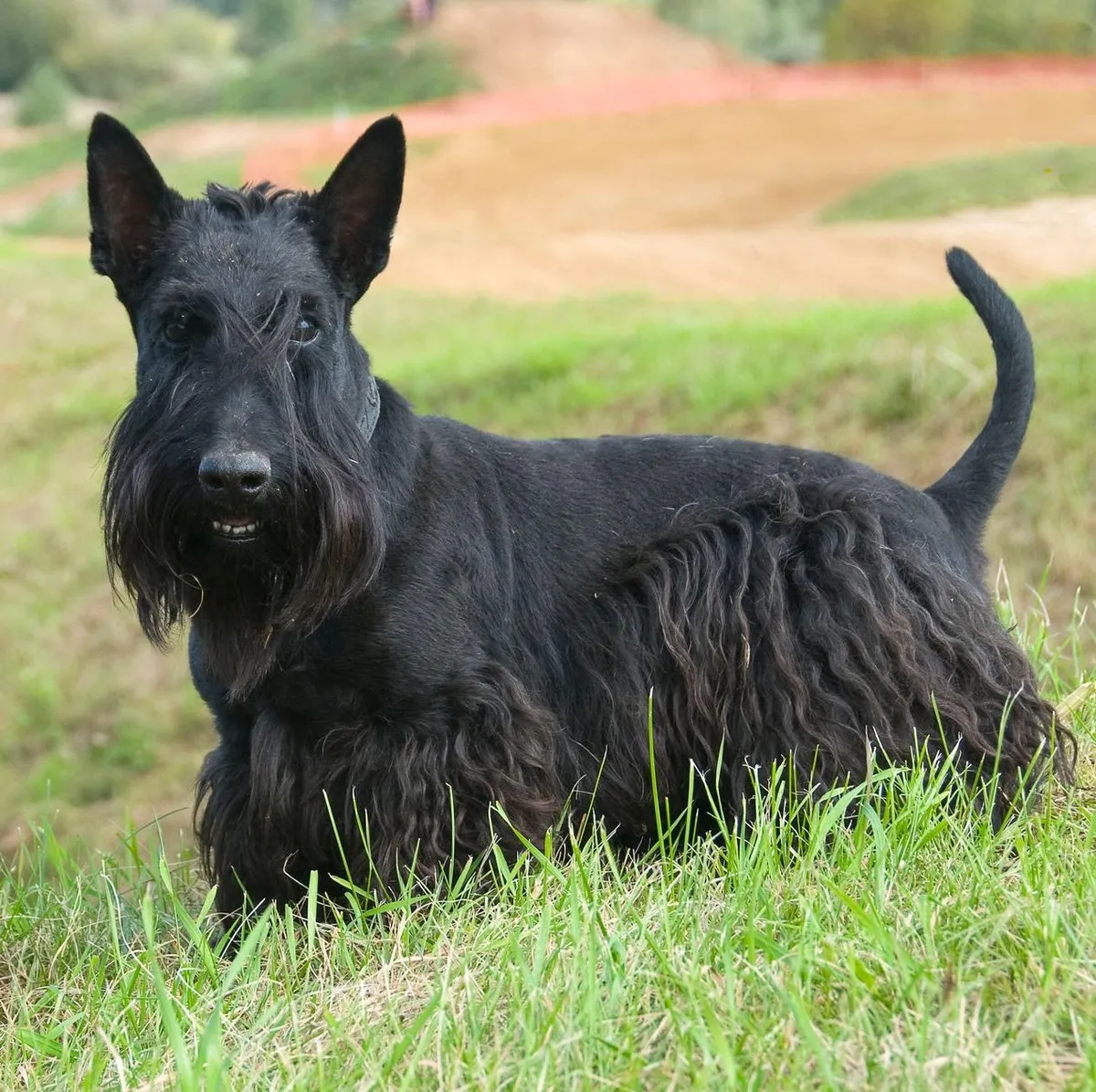
Scottish Terrier
Health grade DThe Scottish Terrier is a dignified, strong-willed Erdhund (earth dog) — bred to fearlessly and independently hunt foxes or badgers in their dens across the rugged Highlands. It is precisely this ironclad independence that makes him a loyal, yet often extremely stubborn companion.
- Height25–28 cm
- Weight8–10 kg
- Life expectancy12–15 yrs
- Puppy price1,200–2,500 €
- Energy3/5
The Essentials at a Glance
The Scottish Terrier is a dignified, strong-willed Erdhund (earth dog) — bred to fearlessly and independently hunt foxes or badgers in their dens across the rugged Highlands. It is precisely this ironclad independence that makes him a loyal, yet often extremely stubborn companion.
- Health grade D: With a grade of D, the Scottish Terrier shows significant breed-specific problems, with the serious spongiform leucoencephalomyelopathy (SLEM), chronic hepatitis, as well as the painful craniomandibular osteopathy (lion jaw) and Scotty cramp particularly burdening the breed.
- You appreciate the dry humor and self-reliance of a terrier and don't expect unconditional obedience every single day.
- You enjoy nature walks where sniffing and digging are more important than playing fetch — for this Baujäger (den hunter), retrieving is usually a waste of time.
- You expect a dog that anticipates your every wish — he was bred to make his own decisions underground, not to wait for commands.
Is the Scottish Terrier right for you?
At a glance
Scottish Terrier overview
The essentials — key facts, traits, and health priorities — before you dive deeper.
Health grade
Relative to other breeds
S
A
B
C
D
E
Very healthyHigher risk
Elevated risk — responsible breeding really matters.
See full health info & tests →
Note: This health overview is AI-assisted and editorially reviewed. It is for orientation only and does not replace veterinary advice.
Lifespan
12–15 yrs
Height
25–28 cm
Weight
8–10 kg
Practical
- Puppy price: 1,200 – 2,500 €
- Coat: Wiry, dense, undercoat present
- Origin: Scotland
Temperament
Energy
Trainability
Family fit
With kids
Daily life
Care effort
Shedding
Barking
City-friendly
Guard instinct
What matters most
Especially with a Scottish Terrier, choosing the right breeder is the single most important decision you'll make. Serious breeders consistently test the parents for inherited conditions, prioritize healthy early socialization, and stay accountable long after handover. A cheap puppy without health screening tends to become the most expensive dog later on.
See HonestDog breeder standards →Colors & coat
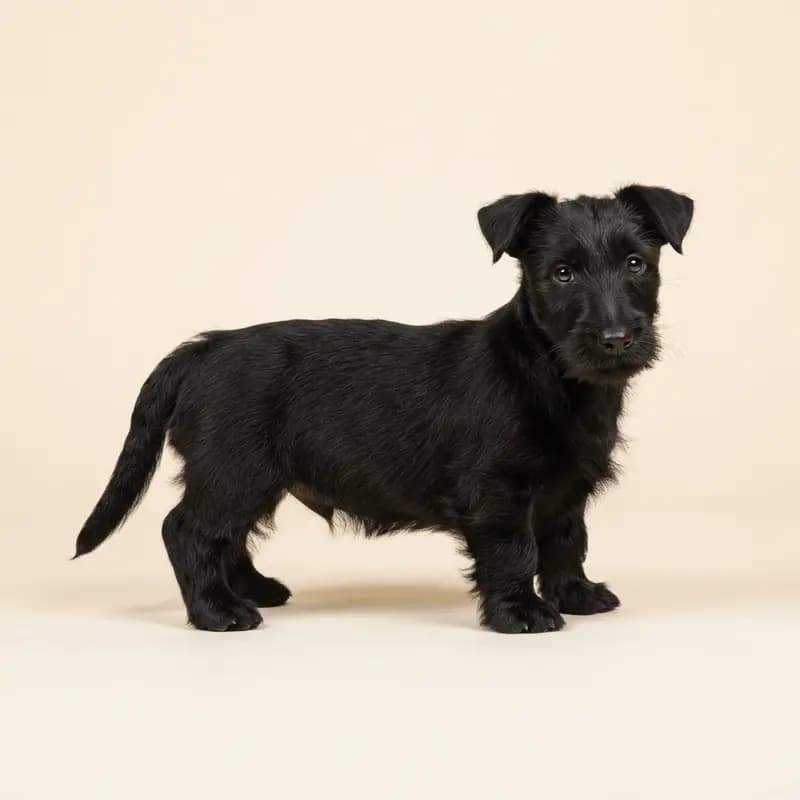
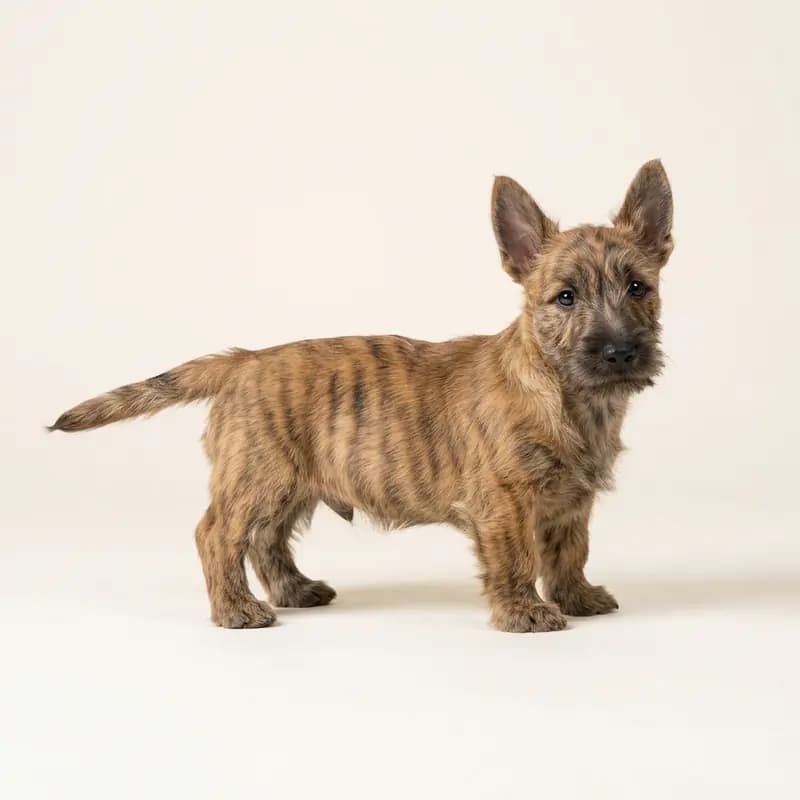
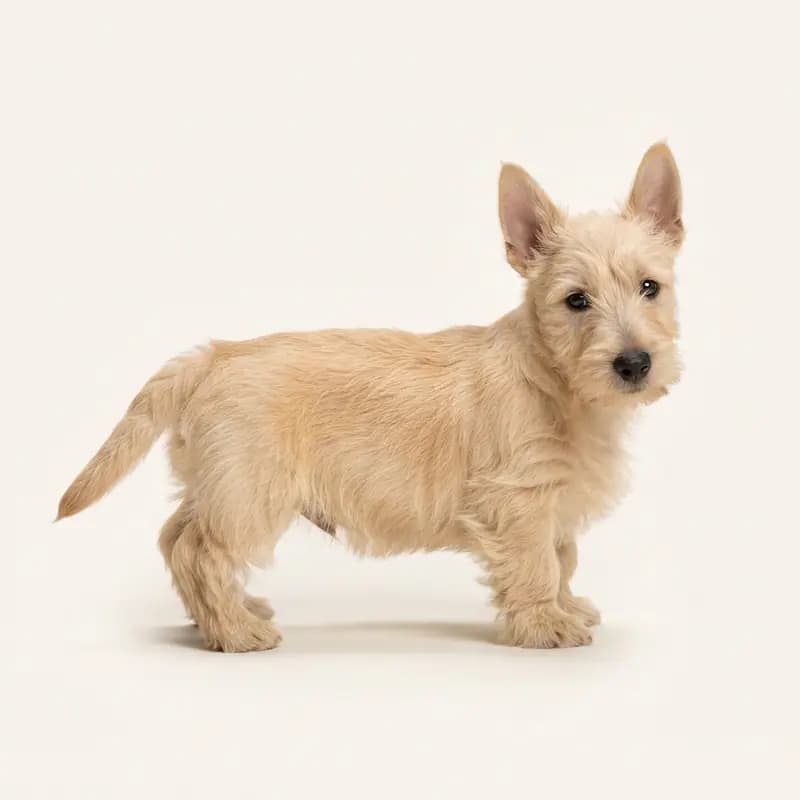
What colors does the Scottish Terrier come in?
The coat colors you will see in Scottish Terrier litters — including which ones fall outside the breed standard and which carry genetic risk.
Eye colors
 Brown
Brown
Coat type
 Wire
Wire Double coat
Is the Scottish Terrier right for you?
The Scottish Terrier is a dignified, strong-willed Erdhund (earth dog) — bred to fearlessly and independently hunt foxes or badgers in their dens across the rugged Highlands. It is precisely this ironclad independence that makes him a loyal, yet often extremely stubborn companion.
Perfect for you if:
- You appreciate the dry humor and self-reliance of a terrier and don't expect unconditional obedience every single day.
- You enjoy nature walks where sniffing and digging are more important than playing fetch — for this Baujäger (den hunter), retrieving is usually a waste of time.
- You are looking for a vigilant but calm dog who will alert you to visitors without being a nervous yapper.
- You can lead with calm consistency, as pressure only leads to total stubbornness in this breed.
Less ideal if:
- You expect a dog that anticipates your every wish — he was bred to make his own decisions underground, not to wait for commands.
- You place great value on a pristine lawn — his powerful paws are anatomically perfect shovels, and he will use them.
- You are looking for an athletic companion for jogging or cycling — his short legs and heavy build are designed for strength in the den, not for endurance sprints.
- You want to relax at crowded dog parks every day, as he is often very distant or grumpy toward strange dogs.
The real vibes check
A Scottish Terrier is not a dog you give orders to — he is a little Scottish lord who is moving in with you and expects to negotiate compromises. What was vital for survival deep in a fox den manifests today as ironclad stubbornness, like when he simply refuses to move from a street corner in the rain. If you respect his proud character, you will gain an unwavering friend; if you try to force him, you will hit a brick wall.
Self-check
Would the Scottish Terrier really fit your life?
Answer 6 quick questions about your everyday life and see how well the Scottish Terrier fits you — including an honest cost estimate per month, per year, and across the dog's lifetime.
Fit checkCost estimateRisk dice
Takes about 1 minute · free & anonymous
Breed Profile
The Scottish Terrier, also affectionately known as “Scottie”, is a small but powerful and well-muscled dog. Its build is compact and powerful, with short legs and a deep chest. Its head is long and narrow, with alert eyes and pricked ears, giving it a lively and intelligent expression. Its thick, wiry coat with plenty of undercoat offers it protection from the harsh weather conditions of its Scottish homeland. The Scottish Terrier belongs to FCI Group 3, the Terriers, and here to Section 2, the Low-Ranged Terriers. It is valued both as a working dog, particularly as a rat catcher and fox digger, and as a companion dog. When breeding, no explicit distinction is made between working and show lines, but there can be differences in appearance and temperament.
All measurements in detail
- Height
- 25 - 28 cm (Female), 25 - 28 cm (Male)
- Weight
- 8 - 10 kg (Female), 8 - 10 kg (Male)
- Life Expectancy
- 12 - 15 yrs
- Character
- Independent, loyal, brave
- Coat
- Wiry, dense, undercoat present
- Coat Color
- Black, Brindle, Wheat
- Price
- 1200 - 2500 €
Character & Temperament
The Scottish Terrier is a dog with a strong character. He is known for his independence and courage. Despite his small size, he is a fearless and determined dog who does not shy away from taking on bigger challenges. These character traits make him an excellent guard dog, defending his territory and his family with determination. On the other hand, the Scottie is a very loyal and affectionate dog. He has a close bond with his caregiver and enjoys their company. However, he is not a dog that is constantly looking for attention or always needs to be the center of attention. He is happy when he can just be with you and appreciates quiet moments and cozy cuddles. Scotties are very intelligent and capable of learning, but they can also be stubborn and headstrong. They are not always easy to train and need consistent and loving leadership. However, with patience and understanding, they can become obedient and well-behaved dogs. In general, the Scottish Terrier is an active dog that requires regular exercise. He loves walks and games, and although he's not a big sport, he enjoys activities that challenge his body and mind. The Scottish Terrier is a rather calm dog that is not prone to hyperactive behavior. However, he has a strong hunting instinct and tends to go after small animals. It is important to keep him in a safe environment and teach him to walk well on a leash. The Scottish Terrier can sometimes be a bit reserved around other dogs and animals. He is not necessarily a dog that makes friends easily with everyone. However, with proper socialization and training, he can learn to get along with other dogs and animals. Some Scotties can learn to stay alone, although this can be challenging and requires a lot of patience and training. They are happier and more balanced when they have regular company and are not left alone for long periods of time. Although the Scottish Terrier has a strong personality and can be challenging at times, he is a loving and loyal companion. With his courageous and independent nature, coupled with his loyalty and affection, the Scottish Terrier is a wonderful dog that can enrich the life of any family.
| Trainability Willing to learn with clear rules and regular training. | Balanced |
| Watchfulness A natural watchdog with real protective instinct. | High |
| Openness to Strangers Neither pushily friendly nor suspicious. | Neutral |
| Hunting or Herding Drive Noticeable drive — needs attention around small animals. | Moderate |
Fun Fact!
Did you know that there is a Monopoly game piece of the Scottish Terrier?
What Awaits You
The Scottish Terrier is considered an independent, hunting-motivated dog. He is territorial and often less tolerant of other dogs.
Housing & Care
The Scottish Terrier is a flexible dog that gets along well in both the city and the country. He is small enough to live in an apartment but needs regular exercise and mental stimulation. Despite its small size, the Scottie is a brave and alert dog that will guard its home and family well. The Scottish Terrier is patient and gentle when dealing with children, although interactions between dogs and small children should always be supervised to ensure that both parties treat each other with respect. Other pets, including cats, may be accepted, especially if the Scottie is raised with them from an early age.
- Family Friendly
Loves family life and thrives in a group.
Family-oriented - Child Friendly
Takes boisterous and affectionate children in its stride.
Patient with children - Dog Friendly
Usually gets on fine with other dogs.
Generally tolerant - City Friendly
Adapts well to city living and urban environments.
Well-suited to city life
Owning a dog is a privilege, but it's also a real responsibility. Before you bring one into your life, be honest with yourself about the commitment it takes.
Training & Education
Raising a Scottish Terrier can be challenging as these dogs can be intelligent, independent and sometimes stubborn. They respond best to positive reinforcement and to training that is varied and interesting. Early socialization and training are important to ensure your Scottie grows into a well-adjusted and well-behaved dog. Scotties are active and curious dogs that need physical and mental stimulation. You can enjoy activities like agility training, obedience training, tracking, and even dog sports like flyball. Since they have a strong hunting instinct, impulse control training and good leash walking can be helpful. It's important that you teach your Scottie how to deal with frustration and control his impulses. Training should always be patient, consistent, and respect your dog's natural instincts and personality. Over-busyness should be avoided as it can lead to stress and over-excitement.
Nutrition & Care
A Scottish Terrier's diet should be balanced and nutritious. As with most dogs, their food should contain a high proportion of high-quality animal protein, supplemented with healthy carbohydrates, fats, vitamins and minerals. Because some Scottish Terriers tend to be overweight, it is important to control the amount of food they eat and ensure regular exercise. Grooming the Scottish Terrier's coat requires some effort. Its thick, wiry coat should be brushed regularly to prevent matting and keep its skin healthy. The coat should be trimmed by a professional once a year. The Scottish Terrier has an undercoat that helps it cope with the German climate. He doesn't shed excessively, but regular brushing will help remove loose hair and reduce the amount of hair in your home.
| Care Level Regular brushing and occasional professional grooming. | Moderate |
| Exercise Needs Needs 1–2 hours of real exercise daily. | Active |
| Shedding No or minimal hair loss — suitable for allergy sufferers. | No shedding |
| Trainability Willing to learn with clear rules and regular training. | Balanced |
Our experts are still reviewing this information. Spotted something wrong? Email us at info@honestdog.de.
Health & hereditary diseases
Health
D
Elevated risks
Health grade
With a grade of D, the Scottish Terrier shows significant breed-specific problems, with the serious spongiform leucoencephalomyelopathy (SLEM), chronic hepatitis, as well as the painful craniomandibular osteopathy (lion jaw) and Scotty cramp particularly burdening the breed. A responsible breeder counteracts this by having their breeding dogs undergo comprehensive genetic and clinical examinations. Before buying a puppy, you should definitely ask to see the results of the parent animals: for spongiform leucoencephalomyelopathy (SLEM) and craniomandibular osteopathy (lion jaw), the dogs must be clear or carriers (in which case only mated with a clear partner), and there must also be proof of testing for chronic hepatitis as well as clear results for cataracts and von Willebrand disease.
Grade is relative to other breeds — AI-assisted and editorially reviewed.
In daily life this can mean
If you ensure joint-friendly exercise and inform your vet about potential blood clotting sensitivities before any procedures, most of these dogs will remain active for a long time.
The breeder's role
Reputable breeders have the knees and blood clotting of the parent animals checked and use genetic testing to specifically rule out jaw and nerve disorders in the lineage.
Note: This health overview is AI-assisted and editorially reviewed. It is for orientation only and does not replace veterinary advice.
No Health Tests Available
No specific health tests are currently available for this breed.
Costs & where to find one
How much does a Scottish Terrier cost?
A Scottish Terrier costs around ~€170 per month (€90 – €310, depending on your setup). The first year adds up to roughly ~€4,700 including purchase, equipment and puppy school; across the dog's life (13.5 years) it comes to about ~€29,940.
With surgery cover, running costs come to about ~€160 per month — in return, your share of a major operation drops from several thousand euros to around 20 percent.
Per month
~€170
In the first year
~€4,700
Across the dog's life
~€29,940
Purchase from a breeder: €1,200 – €2,500
Estimate at a mid-range setup (suburban, dry food, 1–2 hours of daily exercise), average German prices, as of July 2026.
Calculate your personal costs1-minute self-check with your own answers
Looking for a Scottish Terrier?
Appearance, variants & origin
History
The full history
The Scottish Terrier, often affectionately called the Scottie, hails from the rugged Scottish Highlands and is one of the oldest British terrier breeds. Originally, this low-slung, sturdy dog was bred for the demanding task of hunting foxes, badgers, and otters, as well as for vermin control on rocky farms. Its deep chest, powerful jaw, and weather-resistant, wiry coat made it the ideal companion for Scottish gamekeepers and farmers, as it could courageously and persistently enter narrow burrows. For a long time, various Scottish terrier variants, including the modern-day Cairn, West Highland White, and Skye Terrier, were grouped under the collective term Skye Terrier. It was not until the end of the 19th century that the deliberate separation of these types into distinct breeds began. Captain Gordon Murray was instrumental in the development of the modern Scottish Terrier, shaping the breed type in the 1870s. The first official breed standard was written around 1880, and the first Scottish Terrier Club was founded in Scotland in 1882. Official recognition by the British Kennel Club solidified the breed, while the Fédération Cynologique Internationale later officially classified the Scottish Terrier in the section for low-legged terriers. Over the course of the 20th century, the former working dog increasingly transitioned into a cherished companion, though it has retained its watchful and self-confident terrier heritage to this day.
Original Use
The Scottish Terrier was bred for hunting foxes and badgers, known for its courage and determination.
Origin
Scotland
Date
1800
Owner experiences
What owners say about the Scottish Terrier
Sabine H., Halterin aus Hessen (Rüde, 2017–2024)
Unser Scottie war ein echter Charakterkopf – im Grunde ein riesiger Hund im Körper eines kleinen. Er war unglaublich unabhängig und hatte mit Fremden oder Gästen absolut nichts am Hut. Er hat lieber sein eigenes Ding gemacht, anstatt ständig zu kuscheln, und war oft regelrecht distanziert.
Mit anderen Hunden war es nicht immer einfach. Im Hundepark gab es schnell mal Ärger, weil er sich nichts gefallen ließ und sofort schnappte, wenn ihm ein anderer Hund zu nahe kam. Man muss auch die Fellpflege bedenken: Das drahtige Fell muss alle paar Monate professionell getrimmt werden, was ganz schön ins Geld gehen kann, wenn man es nicht selbst lernt. Trotzdem war er ein loyaler Begleiter, den wir sehr geliebt haben.
Thomas M., Halter aus Hamburg (Hündin, seit 2022)
Unsere vierjährige Scottie-Hündin ist die perfekte Mitbewohnerin für unsere Wohnung. Sie ist extrem unabhängig und sucht sich oft die ruhigsten Ecken, um sich zurückzuziehen – besonders wenn es ihr mal zu trubelig wird. Sie ist absolut kein hyperaktiver Hund, sondern genießt ihre Auszeiten sehr.
Man darf den typischen Terrier-Dickschädel allerdings nicht unterschätzen. Die Erziehung erfordert extrem viel Geduld, da sie nicht einfach blind gehorcht, sondern jeden Befehl erst mal hinterfragt. Aber wenn man sich darauf einlässt, bekommt man einen tollen Begleiter, der sowohl lange Schnüffelspaziergänge liebt als auch stundenlang gemütlich auf dem Sofa entspannen kann.
Brigitte K., Halterin aus Bayern (Rüde, seit 2020)
Unser Scottie ist ein kleiner Clown und draußen ein leidenschaftlicher Jäger. Er liebt es, nach Mäusen und anderen Kleintieren in ihren Erdlöchern zu stöbern. Man muss wegen dieses starken Jagdtriebs immer ein Auge auf ihn haben. Trotz seiner kurzen Beine ist er erstaunlich robust, aber man muss aufpassen: Wegen des langen Rückens sollte er nicht zu viel springen oder am Fahrrad laufen, um Verletzungen zu vermeiden.
Auch gesundheitlich muss man sich vorab gut informieren. Die Rasse hat leider ein erhöhtes Risiko für Krebserkrankungen und Gelenk- oder Kieferprobleme. Wir füttern ihn deshalb sehr schonend und bürsten sein Fell täglich, da sich im Bart und an den Beinen beim Spaziergang im Wald schnell Schmutz und Blätter verfangen. Er ist ein treuer, wachsamer Hund, der uns jeden Tag zum Lachen bringt.
Paraphrased from real owner reports
Loading owner stories
Community Posts
FAQ & more
Frequently asked questions about the Scottish Terrier
Is a Scottish Terrier the right dog for me?
The Scottish Terrier is an adaptable dog that adjusts well to various lifestyles. Research the temperament, grooming needs, and space requirements before deciding.
How long does a Scottish Terrier live?
The average life expectancy of a Scottish Terrier is 12-15 years. With proper care and regular vet visits, your dog can live a long, healthy life.
How much grooming does a Scottish Terrier need?
Scottish Terrier grooming requirements include regular brushing, nail trimming, and dental care. HonestDog provides detailed grooming tips for every breed.
Is a Scottish Terrier good for families with children?
The Scottish Terrier can be a great family dog. Proper training and socialization are key. HonestDog provides family suitability information for every breed.
What colors does the Scottish Terrier come in?
The Scottish Terrier comes in these colors: Black, Brindle, Wheaten.
Loading related articles
Are you a Scottish Terrier breeder?
Showcase your kennel on HonestDog and reach families searching for a responsibly bred Scottish Terrier.
Why HonestDog?
What makes HonestDog different from other platforms
Full transparency
We lay out what we have: who the breeder is, how they work, and any health records they've uploaded. So you can judge for yourself.
Responsible breeding, assured
Every breeder on HonestDog has their identity and documents checked before their profile goes live. Health records they upload are shown on the profile, so you can see exactly what has been tested.
Trust and verification
We verify breeders and buyers alike, so every conversation happens on solid ground. It's a new standard of trust in dog breeding.
Less hassle, more time
We've already checked the breeders' documents and gathered the details, so you can skip the endless research and focus on finding the right puppy for your family.
Our Mission

We connect dog lovers with responsible breeders and shelters to ensure every dog finds the perfect home.
Founded by dog enthusiasts, our platform focuses on ethical dog breeding and adoption.
Why HonestDog?
We connect you with vetted breeders and shelters so you can find your — your new companion — with confidence.
Vetted Partners
Only verified breeders and shelters — for a safe start.
Highest Standards
Every animal's health and wellbeing is our top priority.
Guides & Resources
Guides, checklists, and breed profiles — so you can make a well-informed decision.