Loading breed
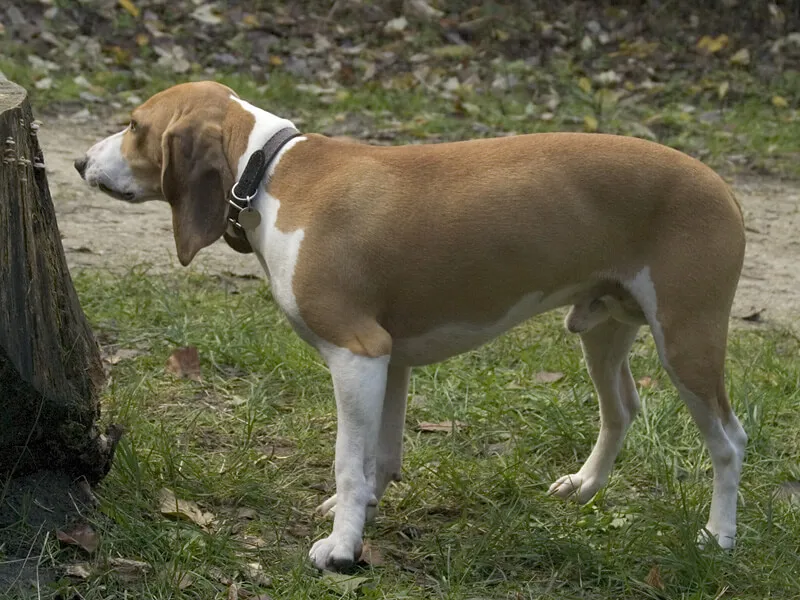
Small Schwyz Hound
Health grade BThe Schweizer Niederlaufhund is a passionate, sharp-nosed little hound—bred as a tireless scent-tracking specialist that independently tracks and hunts game in rugged alpine terrain.
- Height33–43 cm
- Weight12–16 kg
- Life expectancy12–14 yrs
- Puppy price1,200–2,500 €
- Energy4/5
The Essentials at a Glance
The Schweizer Niederlaufhund is a passionate, sharp-nosed little hound—bred as a tireless scent-tracking specialist that independently tracks and hunts game in rugged alpine terrain.
- Health grade B: The Schwyzer Niederlaufhund is a very robust hunting breed with no known breed-specific hereditary diseases of major concern.
- You are looking for a persistent companion for mantrailing, tracking work, or hours of hiking—his nose needs real tasks, not just tagging along.
- You live in a rural area and ideally have a fenced garden where he can settle down after his sniffing sessions.
- You expect a dog that stays reliably by your side off-leash in the woods—once he picks up a fresh scent, his brain switches to autopilot.
Is the Small Schwyz Hound right for you?
At a glance
Small Schwyz Hound overview
The essentials — key facts, traits, and health priorities — before you dive deeper.
Health grade
Relative to other breeds
S
A
B
C
D
E
Very healthyHigher risk
Solid — a handful of items a good breeder watches.
See full health info & tests →
Note: This health overview is AI-assisted and editorially reviewed. It is for orientation only and does not replace veterinary advice.
Lifespan
12–14 yrs
Height
33–43 cm
Weight
12–16 kg
Practical
- Puppy price: 1,200 – 2,500 €
- Coat: Short, dense, smooth
- Origin: Switzerland
Temperament
Energy
Trainability
Family fit
With kids
Daily life
Care effort
Shedding
Barking
City-friendly
Guard instinct
What matters most
Especially with a Small Schwyz Hound, choosing the right breeder is the single most important decision you'll make. Serious breeders consistently test the parents for inherited conditions, prioritize healthy early socialization, and stay accountable long after handover. A cheap puppy without health screening tends to become the most expensive dog later on.
See HonestDog breeder standards →Colors & coat
What colors does the Small Schwyz Hound come in?
The coat colors you will see in Small Schwyz Hound litters — including which ones fall outside the breed standard and which carry genetic risk.
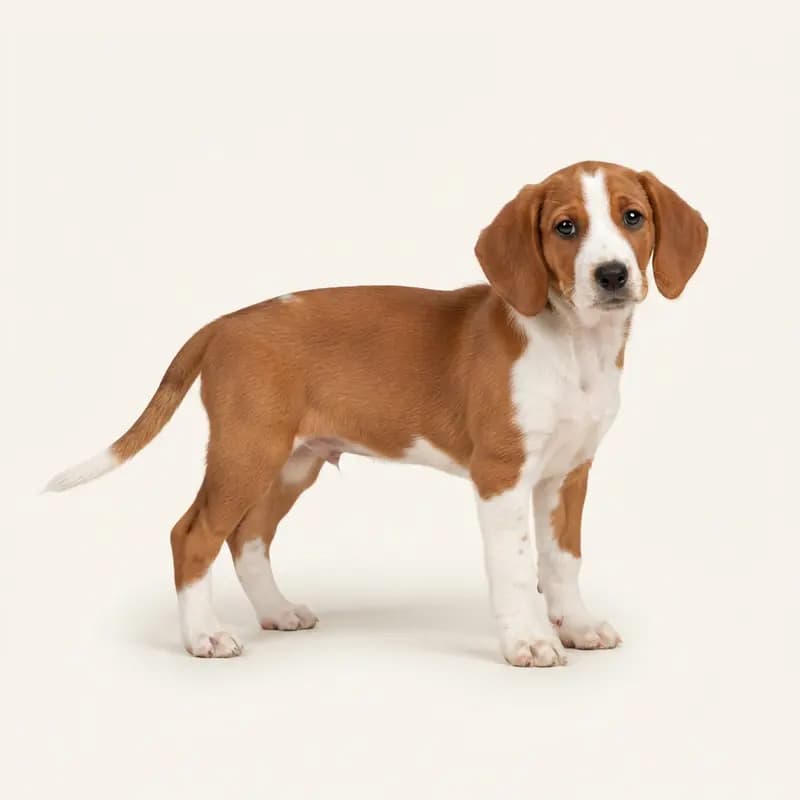
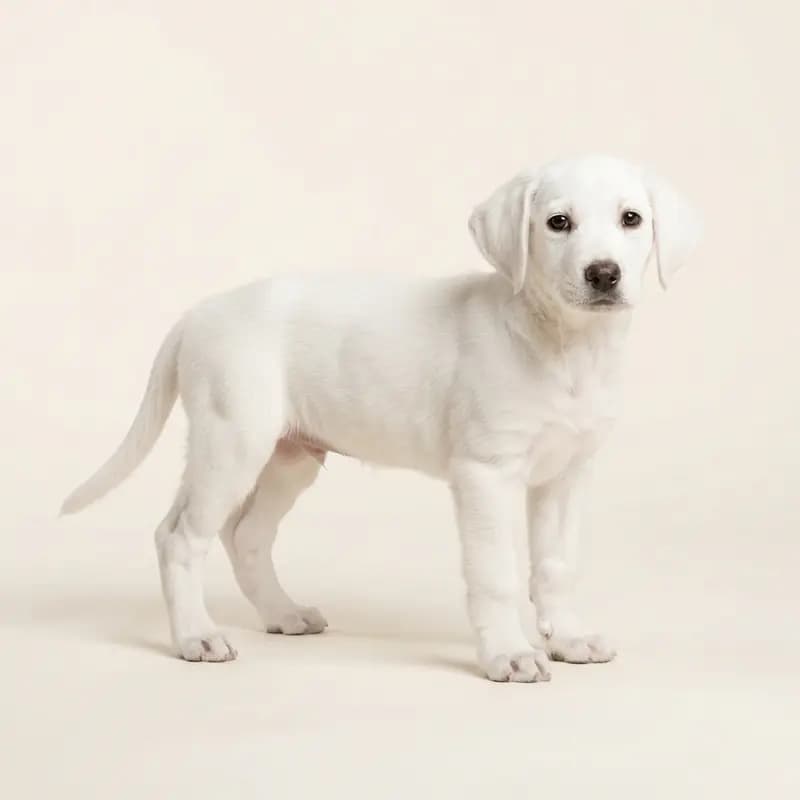
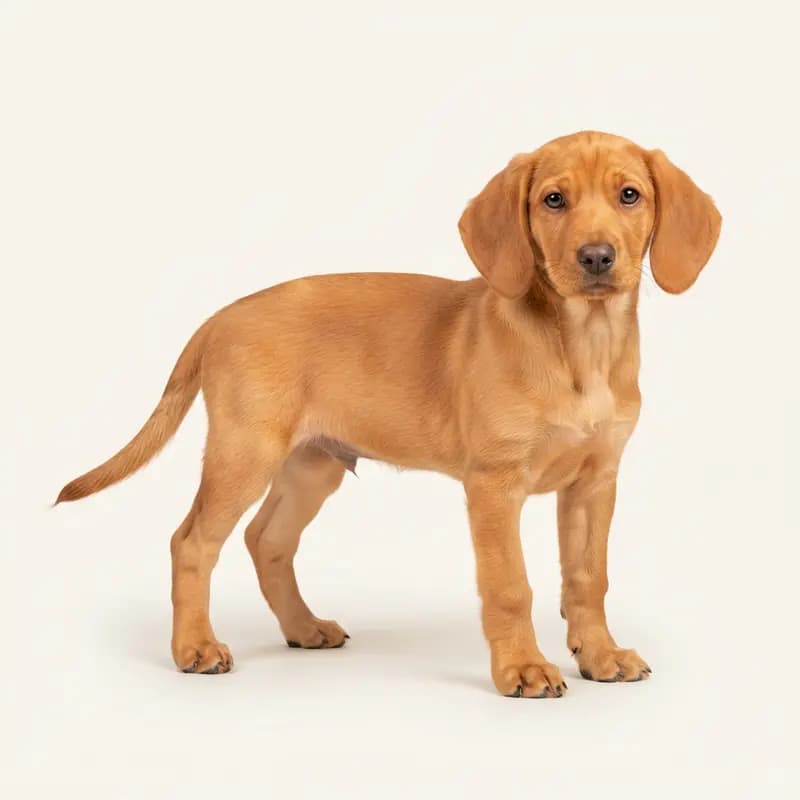
Eye colors
 Brown
Brown
Coat type
 Short
Short Smooth
Is the Small Schwyz Hound right for you?
The Schweizer Niederlaufhund is a passionate, sharp-nosed little hound—bred as a tireless scent-tracking specialist that independently tracks and hunts game in rugged alpine terrain.
Perfect for you if:
- You are looking for a persistent companion for mantrailing, tracking work, or hours of hiking—his nose needs real tasks, not just tagging along.
- You live in a rural area and ideally have a fenced garden where he can settle down after his sniffing sessions.
- You lead with patience and humor because you know that a dog bred for independent hunting considers blind obedience a waste of time.
- You appreciate a gentle, people-oriented housemate who is very calm indoors and prefers to relax on the sofa after a job well done.
Less ideal if:
- You expect a dog that stays reliably by your side off-leash in the woods—once he picks up a fresh scent, his brain switches to autopilot.
- You live in a noisy city apartment and have neighbors who would be bothered by a loud, melodic hunting voice (the Spurlaut).
- You are looking for a partner for fast-paced dog sports like agility or obedience who reacts to your commands in a flash.
- You are out of the house full-time and are looking for a dog that is satisfied with short walks around the block.
The real vibes check
In the living room, he is a gentle cuddle bug who will sleep on the sofa for hours—but as soon as he gets a scent in the woods, he transforms into a highly specialized, vocal hunter. You aren't getting a classic command-follower, but an independent explorer who perceives the world primarily through scents. Those who provide him with this nose work will be rewarded with a deep, calm bond.
Self-check
Would the Small Schwyz Hound really fit your life?
Answer 6 quick questions about your everyday life and see how well the Small Schwyz Hound fits you — including an honest cost estimate per month, per year, and across the dog's lifetime.
Fit checkCost estimateRisk dice
Takes about 1 minute · free & anonymous
Breed Profile
The Swiss Low Running Dog, also known as the Schwyzer Low Running Dog, is a small to medium-sized dog that originated in Switzerland. He belongs to FCI Group 6, which includes running and bloodhounds. These dogs are characterized by their keen sense of smell and their ability to track game over long distances. The Swiss Low Hound has an elegant appearance with a strong, muscular build and pronounced running legs, indicating its use as a working dog. Its coat is short, dense and smooth-fitting, making it easy to care for and suitable for a wide range of climate conditions. Coat colors can vary, with white with black or orange markings being the most common. There is no clear distinction between performance and show lines in this breed. This means that, regardless of their area of application, all Swiss Low Running Dogs meet the same breed standards and can be kept both as working dogs and as show dogs.
All measurements in detail
- Height
- 33 - 40 cm (Female), 35 - 43 cm (Male)
- Weight
- 12 - 15 kg (Female), 13 - 16 kg (Male)
- Life Expectancy
- 12 - 14 yrs
- Character
- Adaptable, loyal, balanced
- Coat
- Short, dense, smooth
- Coat Color
- White with black or orange markings
- Price
- 1200 - 2500 €
Character & Temperament
The Swiss Low Hound is an extremely adaptable dog with a balanced and loyal character. Although originally bred for hunting, it shows amazing versatility and can adapt well to different lifestyles as long as it gets enough physical and mental exercise. Its nature is based on its use as a scent hound. He is an active and energetic dog who loves exercise and has strong stamina. At the same time, he is also a very people-oriented dog who loves the company of his people and enjoys spending time with them. He is perfectly capable of remaining alone if properly prepared, but he is happiest when involved in his family's daily activities. By nature, the Swiss Low Hound is rather calm and balanced. He doesn't tend to be hyperactive, but he still needs enough exercise and activity to stay happy and healthy. He is a good learner and can learn a variety of tasks and tricks, making him an ideal candidate for various dog sports such as agility, obedience or tracking. The Swiss Low Hound usually shows a moderate hunting instinct. Although he was bred to pursue game, his hunting instincts are usually well controlled, especially if he receives good socialization and training from an early age. However, this does not mean that he does not exhibit prey catching behavior - he may well be interested in small animals or moving objects, but with solid training this can be well managed. One of the most notable characteristics of the Swiss Hound is its alertness. Although not a classic guard dog, he is very alert and will likely bark to alert his humans to visitors or unusual situations. This alertness coupled with his loyal and people-oriented nature makes him an excellent family dog and companion. Although the Swiss Low Hound is a relatively unknown dog, it still has a lot to offer. With his combination of activity and balance, his versatility and his strong bond with his people, he is a wonderful companion for active families and individuals looking for a loyal and adaptable dog. With the right exercise and a loving environment, the Swiss Low Hound will certainly lead a happy and fulfilling life.
| Trainability Has its own ideas and will test limits. | Strong-willed |
| Watchfulness Reports unusual activity but stays controlled. | Moderate |
| Openness to Strangers Warms up quickly and is generally welcoming. | Friendly |
| Hunting or Herding Drive This drive runs deep — no amount of training eliminates it. | Very strong |
Fun Fact!
Did you know that the Swiss Low Hound is one of the oldest dog breeds in Switzerland and can trace its origins back to the Middle Ages?
What Awaits You
The Swiss Niederlaufhund is a lively and enduring hunting dog, particularly suitable for tracking and retrieving. It is characterized by its good obedience and pronounced sense of smell. These dogs are friendly and eager to work but require consistent training and sufficient activity. The Swiss Niederlaufhund is a reliable companion for active people and families with an interest in hunting.
Housing & Care
The Swiss Low Hound is a versatile dog that can get along well in both the city and the country. It is important that he gets enough exercise and mental exercise. He goes well with active families and will enjoy the daily walk in the park or the weekend hike. His adaptability and calm temperament make him a pleasant companion in various environments. He is well compatible with children and other pets as long as he has been well socialized from an early age. His friendly and patient nature makes him a great family dog. He can also get along well with cats or other pets in the family as long as proper introductions and supervision are provided.
- Family Friendly
Loves family life and thrives in a group.
Family-oriented - Child Friendly
Takes boisterous and affectionate children in its stride.
Patient with children - Dog Friendly
Actively enjoys the company of other dogs.
Dog-friendly - City Friendly
City-appropriate with enough exercise and stimulation.
Manageable in cities
Owning a dog is a privilege, but it's also a real responsibility. Before you bring one into your life, be honest with yourself about the commitment it takes.
Training & Education
The Swiss Low Hound is an intelligent and docile dog that enjoys training. He responds well to positive reinforcement and reward-based training methods. He is a natural tracker and can enjoy activities such as tracking or mantrailing. At the same time, he should learn to control his impulses and not chase every interesting smell. His endurance and energy make him a good candidate for dog sports such as agility or obedience. It is important to be careful not to over-exercise or over-stimulate the dog to avoid stress or anxiety. The Swiss Hound shows a moderate hunting instinct. That's why it's important to get him used to good recall exercise from an early age and to keep him off-leash in safe areas. Frustration tolerance and impulse control are important aspects of training.
Nutrition & Care
The Swiss Low Hound has no special nutritional requirements and gets along well with a balanced, high-quality dog food. It is important to ensure an adequate supply of all necessary nutrients, especially during the puppy's growth phase. A balanced diet not only supports the puppy's growth and development, but also helps maintain the ideal weight and prevent possible health problems. The Swiss Low Hound has a short, dense coat without an undercoat that is relatively easy to care for. Regular brushing helps remove dead hair and keeps the coat clean and healthy. They shed on average, so expect a bit of shedding, especially during shedding periods. When it comes to the climate in Germany, the Swiss Low Hound can cope well with the different seasons. Although he doesn't have a thick undercoat, his fur keeps him warm enough in winter. However, in extremely cold temperatures, additional measures such as a coat may be necessary.
| Care Level Minimal effort — occasional brushing and bathing. | Low-maintenance |
| Exercise Needs Needs several hours of serious exercise every day. | Very active |
| Shedding Regular shedding — dog hair on clothes is now normal. | Moderate |
| Trainability Has its own ideas and will test limits. | Strong-willed |
Our experts are still reviewing this information. Spotted something wrong? Email us at info@honestdog.de.
Health & hereditary diseases
Health
B
Solid
Health grade
The Schwyzer Niederlaufhund is a very robust hunting breed with no known breed-specific hereditary diseases of major concern. Nevertheless, buyers should be mindful of general health issues such as hip dysplasia (HD) and hereditary eye conditions like cataracts, which can occur in scent hounds. While few genetic tests are strictly required, ensuring a healthy breeding foundation remains important, making the careful selection of parent dogs essential.
Grade is relative to other breeds — AI-assisted and editorially reviewed.
In daily life this can mean
You should pay attention to a healthy weight and joint-friendly exercise to relieve pressure on the back, and keep his long, hanging ears well-maintained.
The breeder's role
Reputable breeders have the spines, knees, hips, and eyes of the parent animals thoroughly checked and avoid extreme body proportions to reduce orthopedic risks in the line.
Note: This health overview is AI-assisted and editorially reviewed. It is for orientation only and does not replace veterinary advice.
No Health Tests Available
No specific health tests are currently available for this breed.
Costs & where to find one
How much does a Small Schwyz Hound cost?
A Small Schwyz Hound costs around ~€160 per month (€90 – €300, depending on your setup). The first year adds up to roughly ~€4,640 including purchase, equipment and puppy school; across the dog's life (13 years) it comes to about ~€28,120.
With surgery cover, running costs come to about ~€160 per month — in return, your share of a major operation drops from several thousand euros to around 20 percent.
Per month
~€160
In the first year
~€4,640
Across the dog's life
~€28,120
Purchase from a breeder: €1,200 – €2,500
Estimate at a mid-range setup (suburban, dry food, 1–2 hours of daily exercise), average German prices, as of July 2026.
Calculate your personal costs1-minute self-check with your own answers
Looking for a Small Schwyz Hound?
HonestDog Concierge
No verified Small Schwyz Hound breeders on HonestDog yet
We currently have no breeders for this breed who have passed our verification. Create your short buyer profile: we'll set up your search alert, review a possible source and email you within 28 days.
Appearance, variants & origin
History
The full history
The Swiss Low Running Dog is one of the four variants of the Swiss Running Dogs, a breed group that has been known in Switzerland since the Middle Ages. The Schwyzer Niederlaufhund itself was only officially recognized as a separate breed in the 1900s, but its roots go back much further. The breed originated from crossing native Swiss hounds with French hounds to produce a smaller, more agile dog suitable for hunting smaller game species. Despite its long history and contribution to Swiss dog breeding, the Swiss Low Hound is relatively unknown outside of its homeland. However, in Switzerland itself, he is highly valued and is a valued addition to both hunters and families looking for a loyal and versatile companion dog.
Original Use
The Swiss Low Hound was bred for hunting small game in rough terrain, known for its endurance and fine nose.
Origin
Switzerland
Date
1900
Owner experiences
What owners say about the Small Schwyz Hound
Christian S., Jäger aus dem Schwarzwald (Berner Niederlaufhund, seit 2021)
Ich führe meinen Berner Niederlaufhund-Rüden jetzt seit drei Jahren aktiv bei der Jagd im Schwarzwald. Für unsere heutigen, oft kleineren Revierverhältnisse ist der Niederlaufhund einfach perfekt: Im Gegensatz zu den großen Laufhunden, die gerne mal extrem weit überjagen und stundenlang weg sind, ist sein Radius viel kontrollierter. Er jagt mit einem tollen, wohlklingenden Spurlaut, bleibt aber in einem guten Rahmen und bricht nach angemessener Zeit ab, um verlässlich zurückzukommen.
Sein Spurwille und seine feine Nase sind phänomenal. Er arbeitet extrem konzentriert und ausdauernd auf der Fährte. Sobald wir aber wieder zu Hause sind, vollzieht sich eine totale Verwandlung. Drinnen ist er absolut ruhig, ausgeglichen und fast schon unsichtbar. Er liebt es, sich einzukuscheln, und zeigt im Alltag ein unglaublich sanftmütiges Wesen. Man darf nur nicht vergessen, dass er im Herzen ein Arbeitshund bleibt – ohne jagdliche Auslastung würde ihm definitiv etwas fehlen.
Sabine M., Halterin aus Oberbayern (Schwyzer Niederlaufhund, seit 2020)
Wenn ich mit meiner Schwyzer Niederlaufhund-Hündin unterwegs bin, werde ich ständig gefragt: „Ist das ein Beagle?“ oder „Ein Basset?“. Die Rasse ist hierzulande einfach kaum bekannt, obwohl ihre wunderschönen, lang gefalteten Ohren und ihr eleganter Körperbau sofort auffallen. Da ich keinen Jagdschein habe, war mir von Anfang an klar, dass ich ihr eine echte Alternative bieten muss. Wir machen jetzt intensiv Mantrailing, und es ist der Wahnsinn zu sehen, mit welchem Eifer und welcher Präzision sie ihre feine Nase einsetzt.
Man darf sich von ihrem sanften, verschmusten Blick aber nicht täuschen lassen. Als echte Bracke bringt sie eine gehörige Portion Eigensinn und Selbstständigkeit mit. Wenn sie im Wald eine frische Spur in die Nase bekommt, schaltet sie komplett auf Durchzug – da hilft nur eine absolut konsequente, aber liebevolle Erziehung ohne jede Härte, da sie eigentlich sehr sensibel ist. Ein Freilauf ist bei uns nur in sehr überschaubarem Gelände möglich, da ihr Jagdtrieb einfach tief verwurzelt ist.
Michael T., Halter aus der Schweiz (Luzerner Niederlaufhund, seit 2018)
Wir haben uns ganz bewusst für einen Schweizer Niederlaufhund entschieden, weil wir einen aktiven, aber im Haus ausgeglichenen Familienhund gesucht haben. Und genau das ist er auch: extrem menschenbezogen, freundlich und sehr verträglich mit anderen Hunden. Er will einfach überall dabei sein. Seine Sensibilität erfordert im Alltag viel Geduld, aber mit positiver Verstärkung lernt er unglaublich schnell.
Ein ganz wichtiges Thema, das mir als Halter am Herzen liegt, ist die Gesundheit. Vor einigen Jahren gab es in der Szene große Unruhe wegen der neurologischen Speicherkrankheit NCL (Neuronale Ceroid-Lipofuszinose), die vermehrt in einer bestimmten Dissidenzzucht aufgetreten ist. Zum Glück haben die Zuchtvereine und die Forschung in Bern schnell reagiert und einen Gentest (NCL7) entwickelt. Wer sich für diese wunderbare, aber seltene Rasse interessiert, sollte unbedingt ganz genau hinschauen und nur bei seriösen Züchtern kaufen, die im VDH/FCI oder dem Schweizer Club (SNLC) organisiert sind und die Elterntiere auf HD und NCL testen lassen.
Paraphrased from real owner reports
Loading owner stories
FAQ & more
Frequently asked questions about the Small Schwyz Hound
Is a Small Schwyz Hound the right dog for me?
The Small Schwyz Hound is an active dog that needs plenty of exercise and mental stimulation. Research the temperament, grooming needs, and space requirements before deciding.
How long does a Small Schwyz Hound live?
The average life expectancy of a Small Schwyz Hound is 12-14 years. With proper care and regular vet visits, your dog can live a long, healthy life.
How much grooming does a Small Schwyz Hound need?
Small Schwyz Hound grooming requirements include regular brushing, nail trimming, and dental care. HonestDog provides detailed grooming tips for every breed.
Is a Small Schwyz Hound good for families with children?
The Small Schwyz Hound can be a great family dog. Proper training and socialization are key. HonestDog provides family suitability information for every breed.
What colors does the Small Schwyz Hound come in?
The Small Schwyz Hound comes in these colors: Red and white, White, Orange.
Loading related articles
Are you a Small Schwyz Hound breeder?
Showcase your kennel on HonestDog and reach families searching for a responsibly bred Small Schwyz Hound.
Why HonestDog?
What makes HonestDog different from other platforms
Full transparency
We lay out what we have: who the breeder is, how they work, and any health records they've uploaded. So you can judge for yourself.
Responsible breeding, assured
Every breeder on HonestDog has their identity and documents checked before their profile goes live. Health records they upload are shown on the profile, so you can see exactly what has been tested.
Trust and verification
We verify breeders and buyers alike, so every conversation happens on solid ground. It's a new standard of trust in dog breeding.
Less hassle, more time
We've already checked the breeders' documents and gathered the details, so you can skip the endless research and focus on finding the right puppy for your family.
Our Mission

We connect dog lovers with responsible breeders and shelters to ensure every dog finds the perfect home.
Founded by dog enthusiasts, our platform focuses on ethical dog breeding and adoption.
Why HonestDog?
We connect you with vetted breeders and shelters so you can find your — your new companion — with confidence.
Vetted Partners
Only verified breeders and shelters — for a safe start.
Highest Standards
Every animal's health and wellbeing is our top priority.
Guides & Resources
Guides, checklists, and breed profiles — so you can make a well-informed decision.