Loading breed
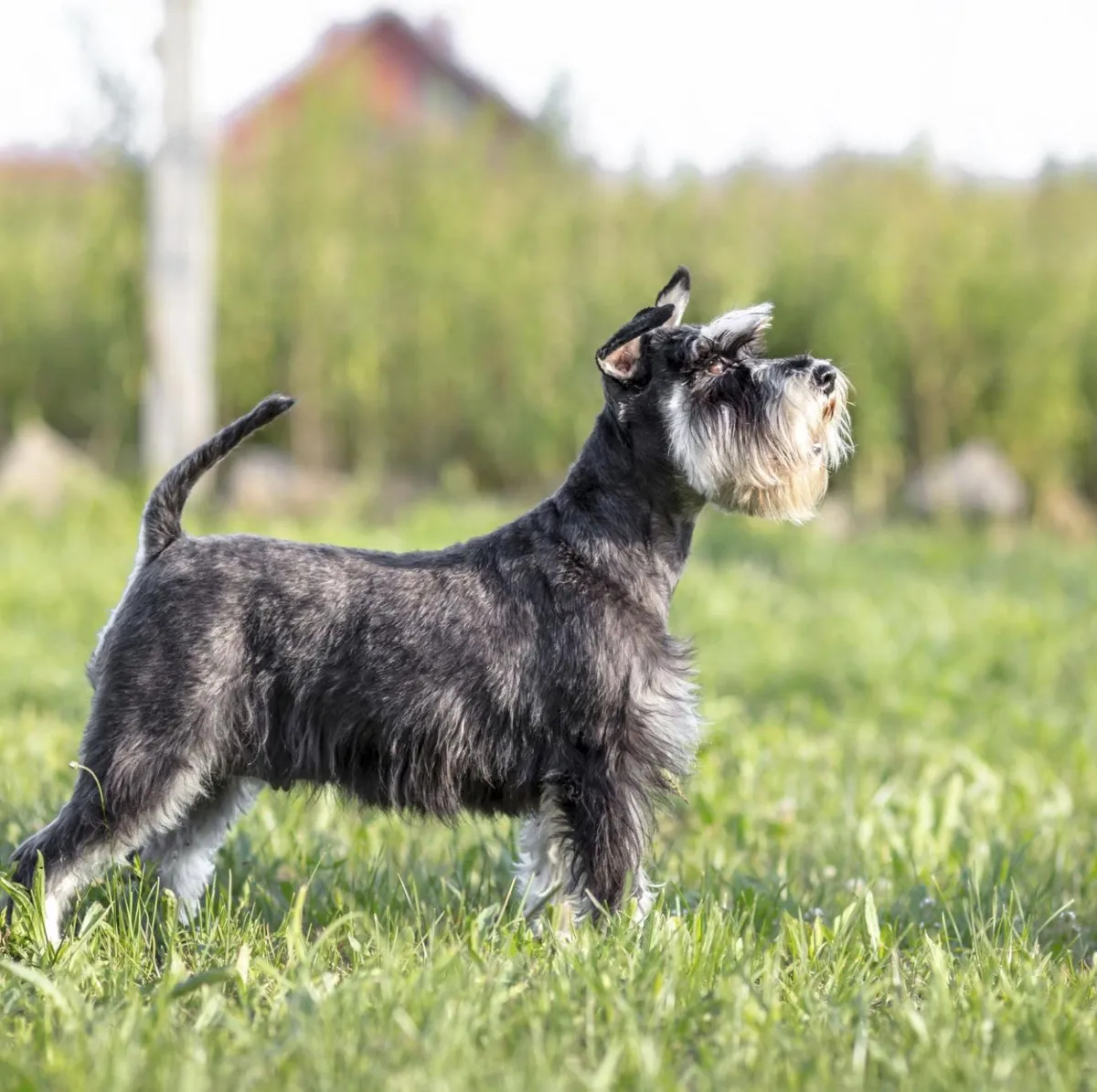
Standard Schnauzer
Health grade BThe Schnauzer is a spirited, incorruptible character—bred as a robust house and farm guardian that independently accompanied carriages and kept stables free of rats. This blend of vigilance and lightning-fast reactions makes him a loyal, yet independently thinking companion.
- Height45–50 cm
- Weight14–20 kg
- Life expectancy12–14 yrs
- Puppy price1,200–2,500 €
- Energy3/5
The Essentials at a Glance
The Schnauzer is a spirited, incorruptible character—bred as a robust house and farm guardian that independently accompanied carriages and kept stables free of rats. This blend of vigilance and lightning-fast reactions makes him a loyal, yet independently thinking companion.
- Health grade B: The Standard Schnauzer is a robust breed with an average health profile, which is why it receives a B grade.
- You appreciate a dog with its own opinion and lead it with humorous consistency rather than rigid drilling.
- You are looking for an active all-rounder for long hikes or dog sports, as this former stable dog can handle a lot both physically and mentally.
- You live in a thin-walled apartment and expect a quiet dog—he was bred to immediately report any suspicious activity on the farm.
Is the Standard Schnauzer right for you?
At a glance
Standard Schnauzer overview
The essentials — key facts, traits, and health priorities — before you dive deeper.
Health grade
Relative to other breeds
S
A
B
C
D
E
Very healthyHigher risk
Solid — a handful of items a good breeder watches.
See full health info & tests →
Note: This health overview is AI-assisted and editorially reviewed. It is for orientation only and does not replace veterinary advice.
Lifespan
12–14 yrs
Height
45–50 cm
Weight
14–20 kg
Practical
- Puppy price: 1,200 – 2,500 €
- Coat: Wiry, dense, medium length with undercoat
- Origin: Germany
Temperament
Energy
Trainability
Family fit
With kids
Daily life
Care effort
Shedding
Barking
City-friendly
Guard instinct
What matters most
Especially with a Standard Schnauzer, choosing the right breeder is the single most important decision you'll make. Serious breeders consistently test the parents for inherited conditions, prioritize healthy early socialization, and stay accountable long after handover. A cheap puppy without health screening tends to become the most expensive dog later on.
See HonestDog breeder standards →Colors & coat
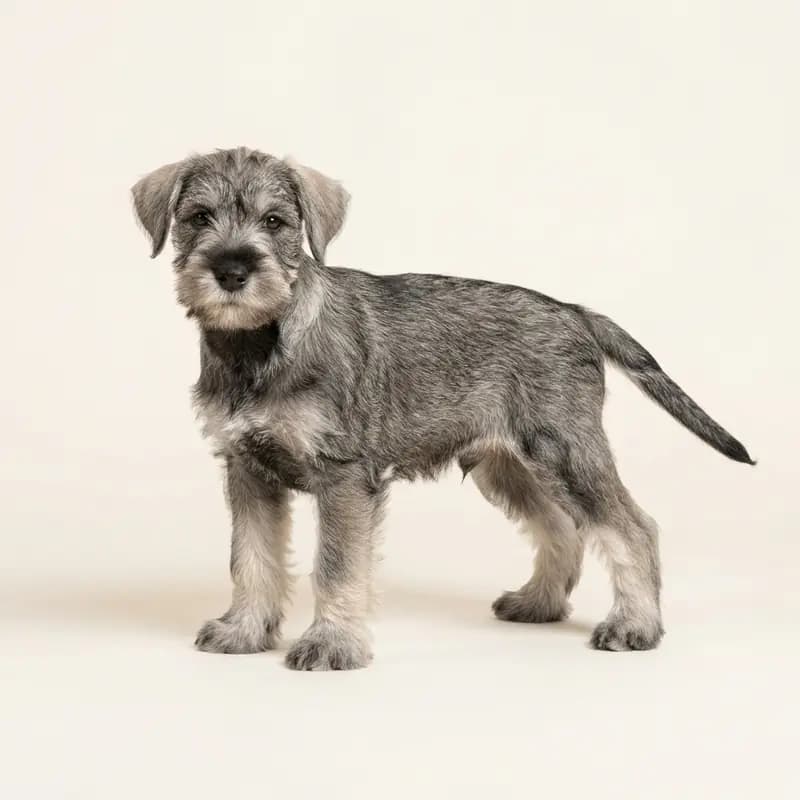
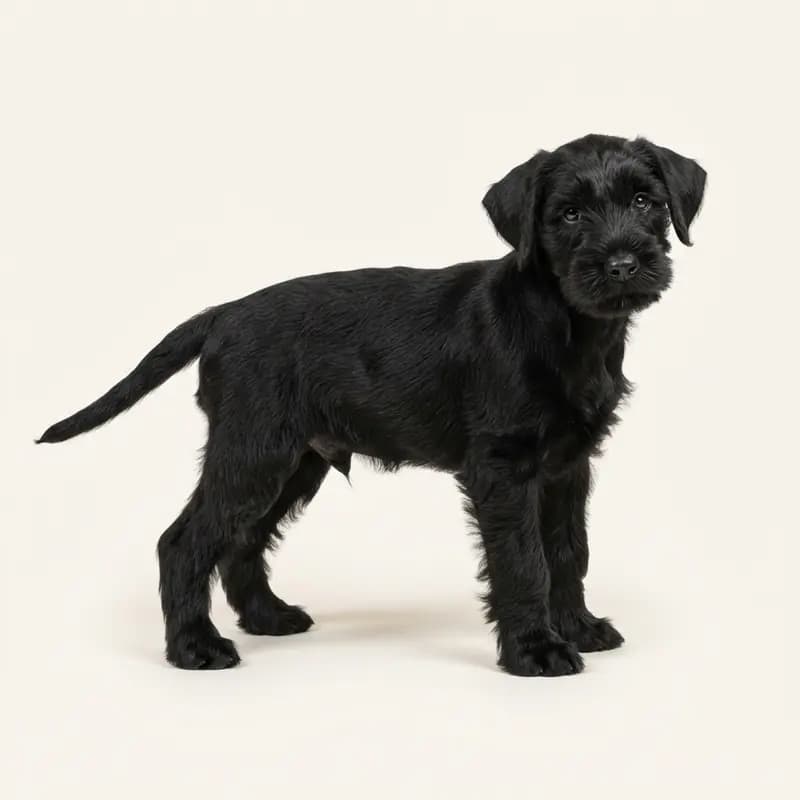
What colors does the Standard Schnauzer come in?
The coat colors you will see in Standard Schnauzer litters — including which ones fall outside the breed standard and which carry genetic risk.
Eye colors
 Brown
Brown
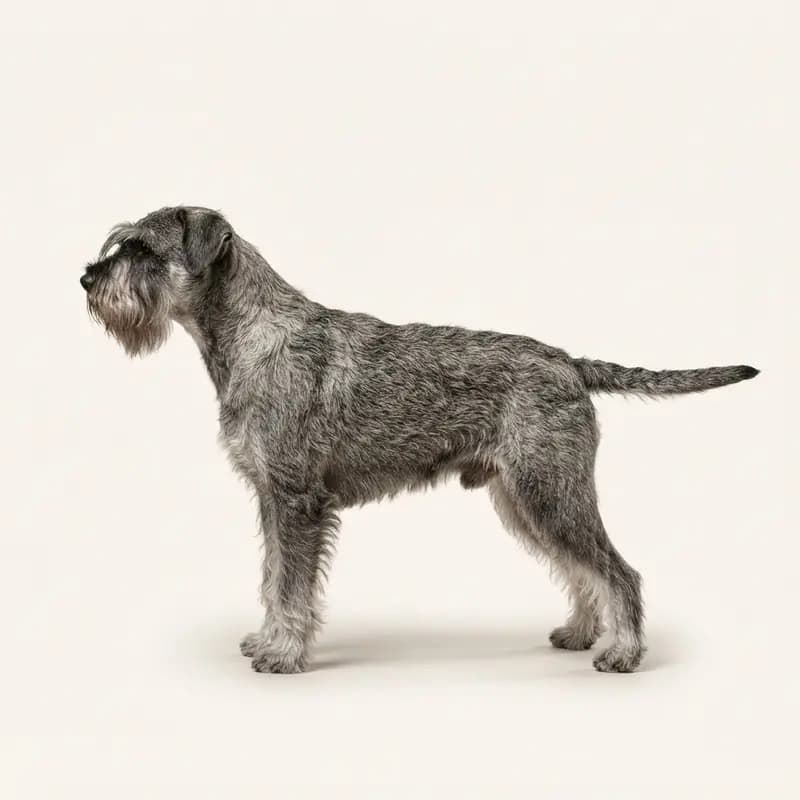
Coat type
 Illustrative image
Wire
 Double coat
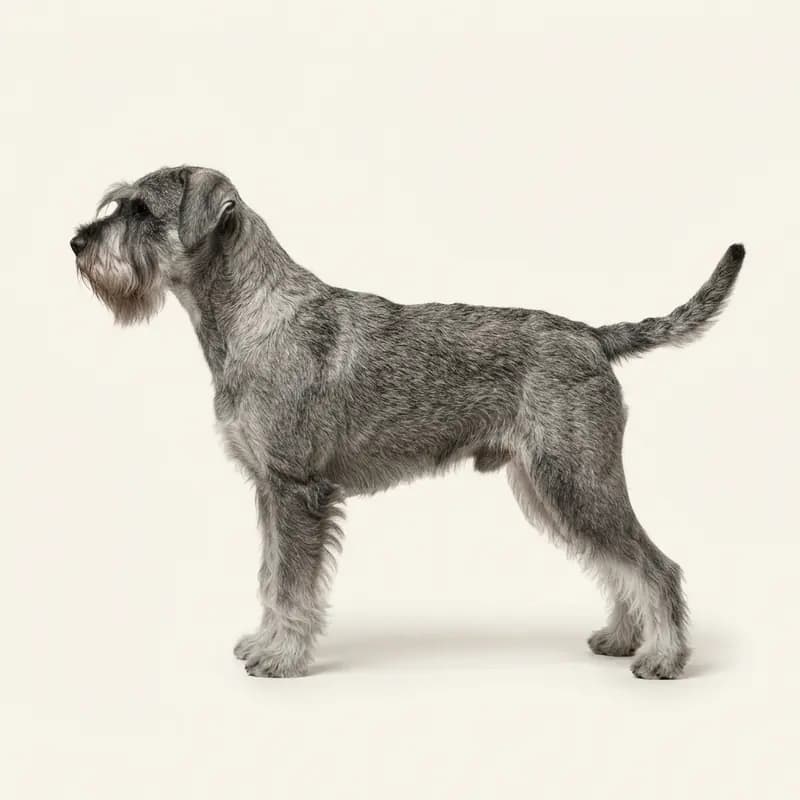 Illustrative image
Medium
Is the Standard Schnauzer right for you?
The Schnauzer is a spirited, incorruptible character—bred as a robust house and farm guardian that independently accompanied carriages and kept stables free of rats. This blend of vigilance and lightning-fast reactions makes him a loyal, yet independently thinking companion.
Perfect for you if:
- You appreciate a dog with its own opinion and lead it with humorous consistency rather than rigid drilling.
- You are looking for an active all-rounder for long hikes or dog sports, as this former stable dog can handle a lot both physically and mentally.
- You want an incorruptible protector who keeps a serious eye on your home and doesn't joyfully greet every stranger immediately.
- Ideally, you offer a home with a garden where he can live out his territorial nature in a regulated way.
Less ideal if:
- You live in a thin-walled apartment and expect a quiet dog—he was bred to immediately report any suspicious activity on the farm.
- You wish for an 'everybody's darling' who lets every stranger cuddle them during walks.
- You have free-roaming small pets at home and underestimate that he carries the lightning-fast heritage of a professional rat catcher.
- You give in quickly during dog-related disagreements, because this dog immediately sees through inconsistency and will take the lead himself.
The real vibes check
A Schnauzer is not a submissive order-follower, but a spirited foreman who always keeps an eye on his 'business'. He might briefly debate the point of a task, but he will walk through fire for his family unconditionally. If you can guide his rough exterior and vigilant seriousness, you will gain a loyal bodyguard for life.
Self-check
Would the Standard Schnauzer really fit your life?
Answer 6 quick questions about your everyday life and see how well the Standard Schnauzer fits you — including an honest cost estimate per month, per year, and across the dog's lifetime.
Fit checkCost estimateRisk dice
Takes about 1 minute · free & anonymous
Breed Profile
The Schnauzer is a robust and strong dog breed that is particularly noticeable because of its distinctive beard and bushy eyebrows. The breed belongs to FCI Group 2 and can be classified in the Pinscher and Schnauzer section. There are different sizes of this breed - the Miniature Schnauzer, the Medium Schnauzer, which is often simply referred to as a Schnauzer, and the Giant Schnauzer. In this portrait we focus on the Mittelschnauzer. Its fur is wiry and dense, giving it a distinctive appearance. The ears are medium sized and V-shaped, lying close to the head. The eyes are oval and dark, resulting in a lively and intelligent expression.
All measurements in detail
- Height
- 45 - 50 cm (Female), 45 - 50 cm (Male)
- Weight
- 14 - 20 kg (Female), 14 - 20 kg (Male)
- Life Expectancy
- 12 - 14 yrs
- Character
- Intelligent, Alert, Loyal
- Coat
- Wiry, dense, medium length with undercoat
- Coat Color
- Salt and pepper, fawn, black, black with silver markings
- Price
- 1200 - 2500 €
Character & Temperament
Dear dog lovers, if you are looking for a loyal companion with a watchful eye and a heart of gold, the Schnauzer could be just the right friend for you. With his lively and intelligent nature, he is always up for adventure and loves being part of the family. His strong protective instincts make him an excellent watchdog, and you can trust him to always keep an eye on his home and loved ones. The Schnauzer is a versatile dog that excels in a variety of roles. Whether as a family dog, companion dog or even as a working dog - his adaptable character and intelligence make him a breed, which can be easily integrated into different lifestyles. His temperament is balanced, and although he is lively and energetic, he does not tend to be hyperactive. He is very people-oriented and loves spending time with his family. His playful nature also makes him a great partner with children, and he is often very patient with them. Despite his attachment to people, the Schnauzer also values his independence and can easily learn to stay alone as long as this is done gradually and with positive reinforcement. He's usually not an extreme barker, but if he notices something suspicious, he'll certainly raise the alarm. The Schnauzer does not show strong hunting behavior, but as a former rat hunter, it can sometimes follow the instinct to chase small animals. It is therefore important to socialize him well and teach him how to behave around other animals. When it comes to training, the Schnauzer is intelligent and learns quickly, but it can also be a little stubborn. Consistent but loving upbringing is the key here. Through positive reinforcement and building a strong bond, the Schnauzer will become an obedient and happy member of the family. If you are looking for a loyal friend who will bring both alertness and affection into your life, and are willing to invest the time in raising and caring for him, the Schnauzer could be the perfect addition to your family. With his striking looks and golden heart, he will surely be a beloved companion who will enrich your life.
| Trainability Bred to work closely alongside humans. | Highly trainable |
| Watchfulness A natural watchdog with real protective instinct. | High |
| Openness to Strangers Neither pushily friendly nor suspicious. | Neutral |
| Hunting or Herding Drive Mild interest in movement and small animals — easily managed. | Low |
Fun Fact!
Did you know that the Schnauzer was originally bred in Germany to catch rats and other vermin and is therefore often referred to as the "Rattler"? was designated?
What Awaits You
Schnauzers are alert dogs that are also motivated to hunt. They are self-sufficient and independent dogs that - with the right motivation - can be trained well. However, the intelligent dogs quickly notice inconsistencies in their training.
Housing & Care
The Schnauzer is happy both as a city dog and in the country as long as it receives enough exercise and mental stimulation. He usually gets along well with children, but as with any dog, supervision and proper training of children around dogs is important. The Schnauzer can also get along with cats and other pets, especially if he is raised with them from an early age.
- Family Friendly
Loves family life and thrives in a group.
Family-oriented - Child Friendly
Gets on well with children — with adult supervision.
With supervision - Dog Friendly
Usually gets on fine with other dogs.
Generally tolerant - City Friendly
Adapts well to city living and urban environments.
Well-suited to city life
Owning a dog is a privilege, but it's also a real responsibility. Before you bring one into your life, be honest with yourself about the commitment it takes.
Training & Education
The Schnauzer is intelligent and capable of learning, but also a bit stubborn. He needs consistent but loving upbringing. Due to his natural protective and guarding instincts, he is well suited for guard and protection dog training. He also enjoys participating in dog sports such as agility and obedience. It is important to note that although the Schnauzer needs to be mentally and physically busy, over-exertion should be avoided. He can have a tendency to become a ball junkie, so it is important to dose his play with the ball. Another important aspect of education is training frustration tolerance and impulse control. This helps the schnauzer stay calm and balanced even if he doesn't get what he wants right away.
Nutrition & Care
Schnauzers are not particularly picky when it comes to their diet. However, a balanced diet with high-quality food tailored to the dog's needs is important. Fresh water should always be available. When it comes to grooming, the Schnauzer has a wiry coat with a thick undercoat. The coat should be brushed regularly to prevent matting and remove dead hair. The climate in Germany is generally favorable to the schnauzer, as its thick fur protects it from both cold and wet conditions.
| Care Level Regular brushing and occasional professional grooming. | Moderate |
| Exercise Needs Needs 1–2 hours of real exercise daily. | Active |
| Shedding No or minimal hair loss — suitable for allergy sufferers. | No shedding |
| Trainability Bred to work closely alongside humans. | Highly trainable |
Our experts are still reviewing this information. Spotted something wrong? Email us at info@honestdog.de.
Health & hereditary diseases
Health
B
Solid
Health grade
The Standard Schnauzer is a robust breed with an average health profile, which is why it receives a B grade. Prospective buyers should primarily ensure that the parent dogs have undergone mandatory health tests for hip dysplasia (HD) and hereditary eye conditions. When these standard tests are consistently performed, the risk of serious hereditary diseases in this breed is refreshingly low.
Grade is relative to other breeds — AI-assisted and editorially reviewed.
In daily life this can mean
You should ensure joint-friendly development during his growth and schedule regular veterinary heart and eye check-ups to detect potential changes early on.
The breeder's role
Reputable breeders have the hips, eyes, and hearts of the parent animals thoroughly examined and are familiar with the health history of their lines to specifically minimize risks.
Note: This health overview is AI-assisted and editorially reviewed. It is for orientation only and does not replace veterinary advice.
No Health Tests Available
No specific health tests are currently available for this breed.
Costs & where to find one
How much does a Standard Schnauzer cost?
A Standard Schnauzer costs around ~€180 per month (€90 – €330, depending on your setup). The first year adds up to roughly ~€4,780 including purchase, equipment and puppy school; across the dog's life (13 years) it comes to about ~€30,010.
With surgery cover, running costs come to about ~€170 per month — in return, your share of a major operation drops from several thousand euros to around 20 percent.
Per month
~€180
In the first year
~€4,780
Across the dog's life
~€30,010
Purchase from a breeder: €1,200 – €2,500
Estimate at a mid-range setup (suburban, dry food, 1–2 hours of daily exercise), average German prices, as of July 2026.
Calculate your personal costs1-minute self-check with your own answers
Looking for a Standard Schnauzer?
Appearance, variants & origin
History
The full history
The Schnauzer originally comes from Germany and has a long history that dates back to the Middle Ages. The breed was originally kept as a farm dog and was responsible for a variety of tasks such as herding livestock, guarding the farm and hunting rats and mice. In the 19th century, breeders began to specifically develop the breed, and the Schnauzer became increasingly popular due to its striking appearance and loyal personality. He was also used as a police and military dog. The Schnauzer was recognized as an independent breed by the German Kennel Club in 1904 and has been known and appreciated worldwide ever since.
Original Use
The Schnauzer was originally bred as a stable dog for rat control and as a guard dog, known for its hardiness and intelligence.
Origin
Germany
Date
1400
Owner experiences
What owners say about the Standard Schnauzer
Kathrin B., Halterin aus Sachsen (Hündin, seit 2017)
Ich halte alle drei Größen des Schnauzers, aber meine schwarze Mittelschnauzer-Hündin ist noch mal eine ganz eigene Hausnummer. Sie ist der absolute 'Urschnauzer' – unglaublich selbstbewusst, unabhängig und ja, verdammt stur. Sie sucht sich ganz genau aus, welche Menschen sie mag und wer ihr gestohlen bleiben kann. Fremden gegenüber ist sie rassetypisch erst einmal sehr skeptisch.
Was uns im Training extrem rettet, ist ihre unglaubliche Verfressenheit. Für Futter würde sie quasi ihr Vaterland verraten! Dadurch konnte ich sie erfolgreich zur Begleithundeprüfung führen und sie liebt die Fährtenarbeit. Man muss aber auch ehrlich sagen: Sie wacht extrem leidenschaftlich, hat ein sehr lautes Organ und schlägt gerne an. Auch ihr Jagdtrieb ist nicht ohne, da muss ich beim Spazierengehen immer auf der Hut sein.
Für die Fellqualität ist uns das regelmäßige Trimmen super wichtig, damit das dichte Drahthaar wetterfest bleibt. Sie ist ein toller, charakterstarker Hund, aber man darf sich von ihrem Dickkopf definitiv nicht unterkriegen lassen.
Sabine W., Halterin aus Hessen (Hündin, 2015)
Unsere pfeffer-salzfarbene Mittelschnauzer-Hündin war im Alltag ein absoluter Traum und eine unglaublich tolle Begleiterin. Im Umgang mit uns als Familie, mit fremden Menschen und auch mit anderen Hunden war sie einfach nur super sozial und freundlich. Sie hatte dieses typisch weise, intelligente Aussehen, in das man sich sofort verliebt.
Allerdings hat uns ihre Erziehung am Anfang einiges abverlangt, da wir damals noch nicht so viel Hundeerfahrung hatten. Ihr Jagdtrieb war nämlich ziemlich ausgeprägt und bezog sich bei ihr fast ausschließlich auf Katzen und vorbeifahrende Fahrräder. Das war ein hartes Stück Arbeit und wir mussten sehr mühsam lernen, konsequent dagegenzusteuern.
Im Nachhinein weiß ich: Mit etwas mehr Erfahrung und klareren Regeln von Anfang an wäre es für uns beide viel leichter gewesen. Wer sich einen Schnauzer zulegt, sollte sich auf diesen eigenwilligen Charakter einstellen und von Tag eins an liebevoll, aber absolut konsequent erziehen.
Thomas M., Halter aus Bayern (Rüde, seit 2018)
Mein Mittelschnauzer-Rüde ist der perfekte Begleiter für mich, weil er so wunderbar anpassungsfähig ist. Wir gehen super gerne wandern und machen am Wochenende lange Touren in den Bergen, wo er mit voller Begeisterung dabei ist. Er ist extrem aufgeweckt, intelligent und für jede Beschäftigung zu haben.
Das Schöne an der Rasse ist aber, dass er kein hyperaktiver Workaholic ist. Wenn mal eine Woche lang nicht viel ansteht, kann er auch einfach mal 'fünfe gerade sein lassen' und entspannt im Garten chillen, ohne direkt unruhig zu werden. Anderen Hunden gegenüber verhält er sich meistens eher ignorant und geht gelassen seine eigenen Wege.
Ein wichtiger Punkt, den man nicht unterschätzen darf, ist die Fellpflege. Damit das typische Drahthaar schön wetterfest bleibt und nicht verfilzt, muss er regelmäßig fachgerecht getrimmt werden. Scheren zerstört die Haarstruktur, deshalb investieren wir hier gerne die Zeit.
Paraphrased from real owner reports
Loading owner stories
Community Posts
FAQ & more
Frequently asked questions about the Standard Schnauzer
Is a Schnauzer the right dog for me?
The Schnauzer is an adaptable dog that adjusts well to various lifestyles. Research the temperament, grooming needs, and space requirements before deciding.
How long does a Schnauzer live?
The average life expectancy of a Schnauzer is 12-14 years. With proper care and regular vet visits, your dog can live a long, healthy life.
How much grooming does a Schnauzer need?
Schnauzer grooming requirements include regular brushing, nail trimming, and dental care. HonestDog provides detailed grooming tips for every breed.
Is a Schnauzer good for families with children?
The Schnauzer can be a great family dog. Proper training and socialization are key. HonestDog provides family suitability information for every breed.
What colors does the Schnauzer come in?
The Schnauzer comes in these colors: Salt and pepper, Black.
Loading related articles
Are you a Standard Schnauzer breeder?
Showcase your kennel on HonestDog and reach families searching for a responsibly bred Standard Schnauzer.
Why HonestDog?
What makes HonestDog different from other platforms
Full transparency
We lay out what we have: who the breeder is, how they work, and any health records they've uploaded. So you can judge for yourself.
Responsible breeding, assured
Every breeder on HonestDog has their identity and documents checked before their profile goes live. Health records they upload are shown on the profile, so you can see exactly what has been tested.
Trust and verification
We verify breeders and buyers alike, so every conversation happens on solid ground. It's a new standard of trust in dog breeding.
Less hassle, more time
We've already checked the breeders' documents and gathered the details, so you can skip the endless research and focus on finding the right puppy for your family.
Our Mission

We connect dog lovers with responsible breeders and shelters to ensure every dog finds the perfect home.
Founded by dog enthusiasts, our platform focuses on ethical dog breeding and adoption.
Why HonestDog?
We connect you with vetted breeders and shelters so you can find your — your new companion — with confidence.
Vetted Partners
Only verified breeders and shelters — for a safe start.
Highest Standards
Every animal's health and wellbeing is our top priority.
Guides & Resources
Guides, checklists, and breed profiles — so you can make a well-informed decision.