Loading breed
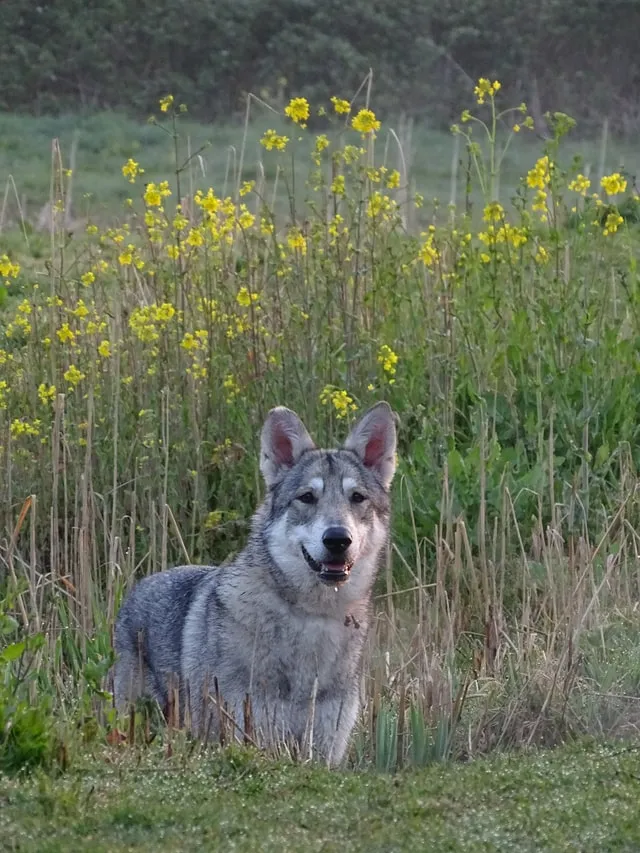
Saarloos Wolfdog
Health grade CThe Saarloos Wolfhond is a highly sensitive, shy wolfdog—bred from the German Shepherd and the European wolf with the goal of creating a working dog, but which instead inherited the cautious, flight-oriented nature of its wild ancestors.
- Height60–75 cm
- Weight30–41 kg
- Life expectancy10–12 yrs
- Puppy price1,000–2,500 €
- Energy4/5
The Essentials at a Glance
The Saarloos Wolfhond is a highly sensitive, shy wolfdog—bred from the German Shepherd and the European wolf with the goal of creating a working dog, but which instead inherited the cautious, flight-oriented nature of its wild ancestors.
- Health grade C: The Saarloos Wolfhond has an above-average genetic burden, requiring seven mandatory health tests.
- You possess absolute composure and infinite patience for a dog whose instincts are often stronger than any learned obedience.
- You have an absolutely escape-proof garden—its flight instinct when overwhelmed is pure hardware, and it will climb over standard fences in a panic.
- You live in the middle of the city—tram noise, crowds, and tight encounters mean pure stress for its vigilant, shy wolf heritage.
Is the Saarloos Wolfdog right for you?
At a glance
Saarloos Wolfdog overview
The essentials — key facts, traits, and health priorities — before you dive deeper.
Health grade
Relative to other breeds
S
A
B
C
D
E
Very healthyHigher risk
Average — several important tests are expected.
See full health info & tests →
Note: This health overview is AI-assisted and editorially reviewed. It is for orientation only and does not replace veterinary advice.
Lifespan
10–12 yrs
Height
60–75 cm
Weight
30–41 kg
Practical
- Puppy price: 1,000 – 2,500 €
- Coat: Thick and straight, medium length, with an undercoat
- Origin: Netherlands
Temperament
Energy
Trainability
Family fit
With kids
Daily life
Care effort
Shedding
Barking
City-friendly
Guard instinct
What matters most
Especially with a Saarloos Wolfdog, choosing the right breeder is the single most important decision you'll make. Serious breeders consistently test the parents for inherited conditions, prioritize healthy early socialization, and stay accountable long after handover. A cheap puppy without health screening tends to become the most expensive dog later on.
See HonestDog breeder standards →Colors & coat
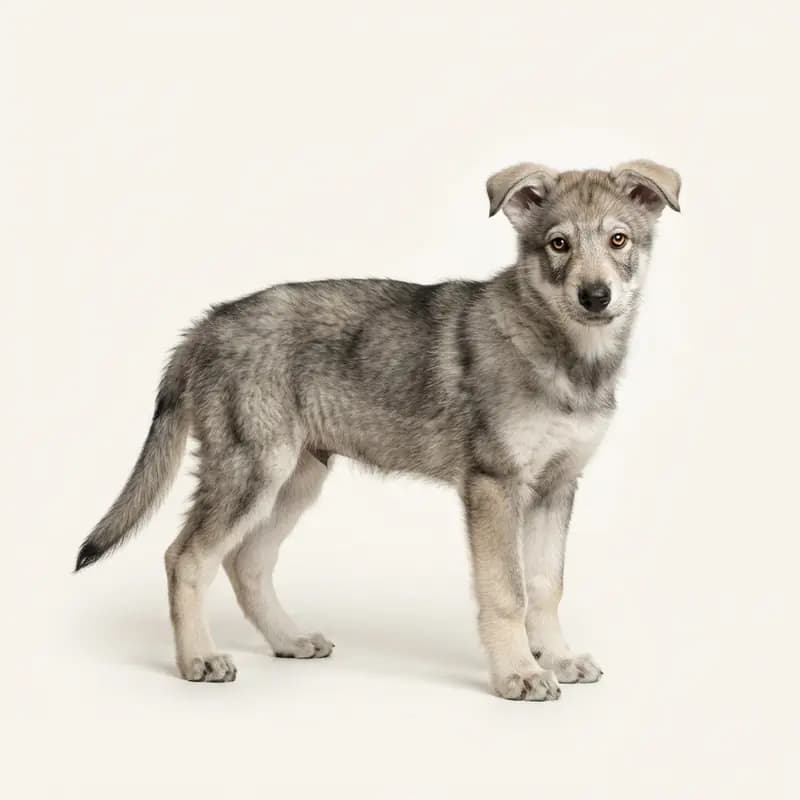
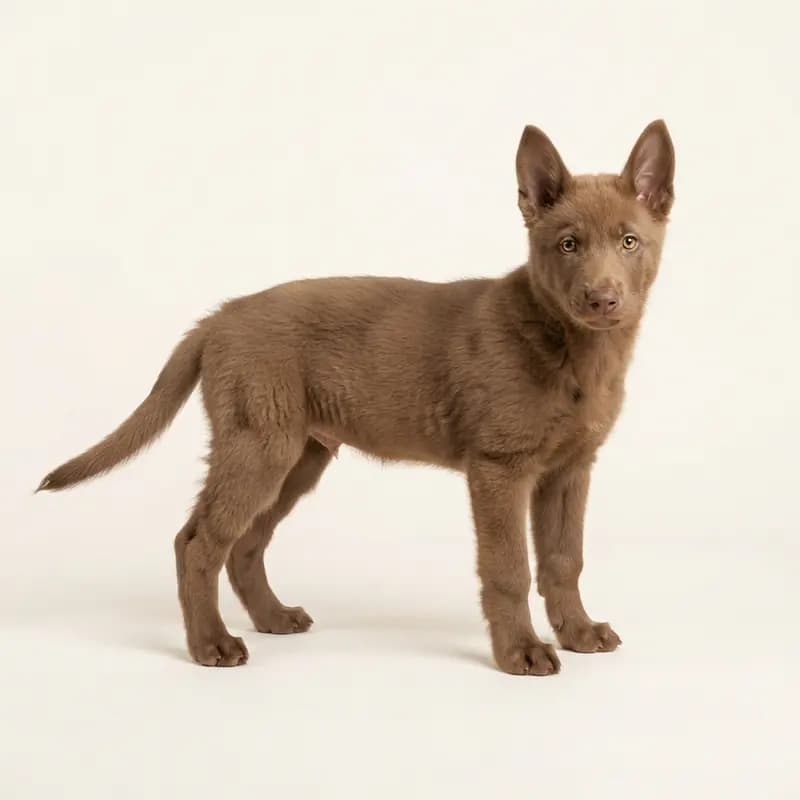
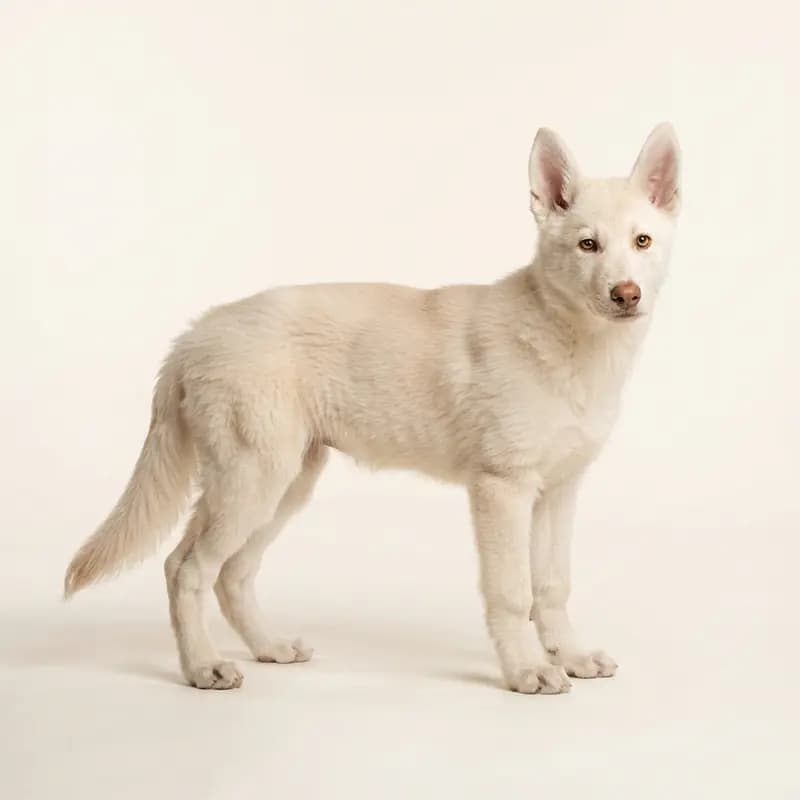
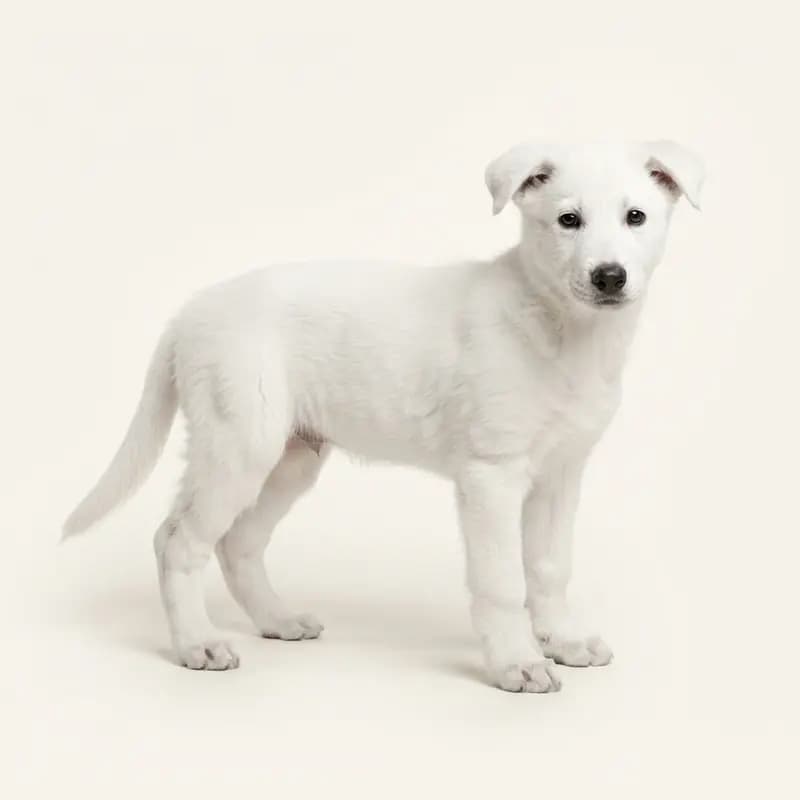
What colors does the Saarloos Wolfdog come in?
The coat colors you will see in Saarloos Wolfdog litters — including which ones fall outside the breed standard and which carry genetic risk.
Eye colors
 Amber
Amber
Coat type
 Medium
 Double coat
Is the Saarloos Wolfdog right for you?
The Saarloos Wolfhond is a highly sensitive, shy wolfdog—bred from the German Shepherd and the European wolf with the goal of creating a working dog, but which instead inherited the cautious, flight-oriented nature of its wild ancestors.
Perfect for you if:
- You possess absolute composure and infinite patience for a dog whose instincts are often stronger than any learned obedience.
- You have an absolutely escape-proof garden—its flight instinct when overwhelmed is pure hardware, and it will climb over standard fences in a panic.
- You ideally already have a confident second dog that this extreme pack animal can look to for guidance in our loud human world.
- You are looking for a companion you want to observe and understand, rather than one that performs commands on a training field.
Less ideal if:
- You live in the middle of the city—tram noise, crowds, and tight encounters mean pure stress for its vigilant, shy wolf heritage.
- You have to leave it alone regularly—separation anxiety is deeply genetically anchored in this breed and is extremely difficult to train away.
- You expect a brave protector—in the face of danger, a Saarloos almost always chooses to retreat rather than attack.
The real vibes check
A Saarloos Wolfhond looks like a predator from the wild, but will hide behind your legs at the sound of a backfiring exhaust. You aren't getting a fearless protector, but a highly sensitive being that often doesn't understand our modern world. If you offer it a quiet life away from the hustle and bustle, it will gift you a quiet, deep bond that you have to earn anew every single day.
Self-check
Would the Saarloos Wolfdog really fit your life?
Answer 6 quick questions about your everyday life and see how well the Saarloos Wolfdog fits you — including an honest cost estimate per month, per year, and across the dog's lifetime.
Fit checkCost estimateRisk dice
Takes about 1 minute · free & anonymous
Breed Profile
The Saarloos Wolfhond is a fascinating breed of dog that cannot deny its wolf-like appearance. With its strong build, piercing eyes and thick, straight fur covering the entire surface of its body, this dog is strongly reminiscent of its distant ancestor, the wolf. Despite its impressive size and powerful appearance, the Saarloos Wolfhond exudes a kind of quiet dignity and reserved elegance. According to the FCI classification, the Saarloos Wolfhond belongs to Group 1, the herding and driving dogs (excluding Swiss Mountain Dogs), and there to Section 1, the Shepherd dogs. It has the standard number 311. Something special about this breed is that there is no strict distinction between performance and show lines. Instead, the Saarloos Wolfhound is valued primarily for its natural abilities and unique nature.
All measurements in detail
- Height
- 60 - 70 cm (Female), 65 - 75 cm (Male)
- Weight
- 30 - 35 kg (Female), 36 - 41 kg (Male)
- Life Expectancy
- 10 - 12 yrs
- Character
- Independent, reserved, loyal
- Coat
- Thick and straight, medium length, with an undercoat
- Coat Color
- Wolf gray, forest gray, cream white
- Price
- 1000 - 2500 €
Character & Temperament
The Saarloos Wolfhond is an incredibly fascinating dog with a unique character. His character is strongly influenced by his special genetic origins - a mix of the hard-working German Shepherd and the independent, wild wolf. This breed is known for its independence and independent character. Although the Saarloos Wolfhond needs contact with his family, he also values his personal freedom and can spend hours exploring his surroundings or simply listening to the sounds of nature. In general, the Saarloos Wolfhond is not an exuberant or extremely playful dog. Instead, he shows a rather calm and reserved nature. He is not the type of dog that always needs to be the center of attention or is constantly looking for attention. He can initially be reserved and cautious towards strangers. But despite his independence and reserve, deep down the Saarloos Wolfhond is a loyal and devoted companion. Once he has formed a bond, he is loyal to his person and has a strong bond with his family. He is certainly capable of building deep and meaningful relationships with his people, but this takes time and patience. In terms of its working ability, the Saarloos Wolfhond is more of an endurance athlete than a high-performance sprinter. His enduring temperament and natural curiosity make him a great companion for long hikes or nature trips. Although the Saarloos Wolfhond has a strong hunting instinct, its caution and reticence towards new things can often outweigh this. That's why he's not necessarily inclined to run out impulsively and chase game. Nevertheless, you should always keep an eye on him when he is running free. Another interesting aspect of the Saarloos Wolfhound is its natural alertness. Although he is not a typical guard dog and is reserved and non-aggressive towards strangers, he has a strong awareness of his surroundings and is always attentive to what is happening around him. He probably won't bark or actively drive away an intruder, but he will certainly pay attention and alert his human to any unusual activity. When it comes to staying alone, with some training the Saarloos Wolfhond can learn to stay alone for short periods of time. However, it should be remembered that he is a sociable dog that prefers the company of his family and does not like to be left alone for long periods of time. Too much time alone can lead to stress and anxiety, which can have a negative impact on his well-being. Overall, the Saarloos Wolfhond is a fascinating and unique dog that combines both the independence and alertness of the wolf and the loyalty and hard work of the German Shepherd. His character requires a certain amount of patience and understanding, but if you are willing to invest the time and effort, you will gain a loyal, fascinating and independent companion who will enrich your life in a very special way.
| Trainability Bred to make decisions without human direction. | Very independent |
| Watchfulness A natural watchdog with real protective instinct. | High |
| Openness to Strangers Neither pushily friendly nor suspicious. | Neutral |
| Hunting or Herding Drive Mild interest in movement and small animals — easily managed. | Low |
Fun Fact!
Did you know that the Saarloos Wolfhond was named after its breeder, Leendert Saarloos? He crossed a European wolf with a German Shepherd to create a breed of dog that combines the strength and appearance of a wolf with the trainability and loyalty of a dog.
What Awaits You
The Saarloos Wolfdog is a strong and independent dog with a pronounced protective instinct. It requires consistent training and plenty of exercise, as it is very active and alert. Due to its strong territorial behavior, it is especially suitable for experienced owners who can provide clear leadership. The Saarloos Wolfdog is not a typical family dog but shows a close bond with its caregivers.
Housing & Care
The Saarloos Wolfhond is an independent dog that needs a lot of space and activity. Therefore, it is not necessarily suitable as a city dog, but can be kept well in a house with a garden or in the country. He needs a lot of exercise and mental stimulation to be happy and balanced. He is friendly with children, but due to his size and strength, careful supervision is required around young children. He can also get along well with other dogs and pets as long as he has been properly socialized.
- Family Friendly
Gets on well with different people and varying routines.
Family-friendly - Child Friendly
Gets on well with children — with adult supervision.
With supervision - Dog Friendly
Usually gets on fine with other dogs.
Generally tolerant - City Friendly
Can manage in the city, but only with very active owners.
Difficult in cities
Owning a dog is a privilege, but it's also a real responsibility. Before you bring one into your life, be honest with yourself about the commitment it takes.
Training & Education
The Saarloos Wolfhond is an intelligent animal that requires careful and consistent training. He responds best to positive reinforcement and needs an owner who is calm, patient and assertive. It's important to give him social interaction from an early age so he learns how to behave in different situations. The Saarloos Wolfhond is by nature an active and persistent dog that loves to run and play. He would be well suited to dog sports such as canicross, mantrailing or agility. It is important to ensure that the dog does not become overly busy and has enough time to rest. The Saarloos Wolfhound can definitely become a ball junkie, so you shouldn't overuse playing with the ball and instead offer him a variety of activities. Since the Saarloos Wolfhond has a strong hunting instinct, it is important to teach him to control this impulse and develop frustration tolerance. This can be achieved through targeted training and mental stimulation.
Nutrition & Care
The Saarloos Wolfhond's diet should be balanced and varied. As with any dog, it is important to ensure an adequate supply of high-quality proteins, carbohydrates, fats, vitamins and minerals. There are many different types of dog food on the market, and it is important to find a food that meets your dog's specific needs. It may be helpful to seek advice from a veterinarian or a canine nutritionist. The Saarloos Wolfhond has a thick coat with a dense undercoat that protects it from cold and wet conditions. The coat needs to be brushed regularly to avoid mats and skin problems. You should plan more time for fur care, especially during the coat change periods in spring and autumn. The Saarloos Wolfhond copes well with the German climate and can live well in both the heat and the cold.
| Care Level Minimal effort — occasional brushing and bathing. | Low-maintenance |
| Exercise Needs Needs several hours of serious exercise every day. | Very active |
| Shedding Hair everywhere, always — no white clothing survives. | Very heavy |
| Trainability Bred to make decisions without human direction. | Very independent |
Our experts are still reviewing this information. Spotted something wrong? Email us at info@honestdog.de.
Health & hereditary diseases
Health
C
Solid, watch carefully
Health grade
The Saarloos Wolfhond has an above-average genetic burden, requiring seven mandatory health tests. Of particular concern are the incurable Degenerative Myelopathy (DM), which leads to paralysis, and hip dysplasia (HD), a typical issue in large breeds. Eye conditions such as Progressive Retinal Atrophy (PRA) must also be actively managed through consistent breeding tests.
Grade is relative to other breeds — AI-assisted and editorially reviewed.
In daily life this can mean
Through joint-friendly rearing, adapted exercise, and regular health and eye check-ups, you can best support your dog's well-being in everyday life.
The breeder's role
Reputable breeders have the parents' hips, elbows, and eyes checked and use genetic testing for neurological diseases and growth disorders to reduce risks in the lineage.
Note: This health overview is AI-assisted and editorially reviewed. It is for orientation only and does not replace veterinary advice.
No Health Tests Available
No specific health tests are currently available for this breed.
Costs & where to find one
How much does a Saarloos Wolfdog cost?
A Saarloos Wolfdog costs around ~€200 per month (€100 – €380, depending on your setup). The first year adds up to roughly ~€4,930 including purchase, equipment and puppy school; across the dog's life (11 years) it comes to about ~€28,470.
With surgery cover, running costs come to about ~€200 per month — in return, your share of a major operation drops from several thousand euros to around 20 percent.
Per month
~€200
In the first year
~€4,930
Across the dog's life
~€28,470
Purchase from a breeder: €1,000 – €2,500
Estimate at a mid-range setup (suburban, dry food, 1–2 hours of daily exercise), average German prices, as of July 2026.
Calculate your personal costs1-minute self-check with your own answers
Looking for a Saarloos Wolfdog?
HonestDog Concierge
No verified Saarloos Wolfdog breeders on HonestDog yet
We currently have no breeders for this breed who have passed our verification. Create your short buyer profile: we'll set up your search alert, review a possible source and email you within 28 days.
Appearance, variants & origin
History
The full history
The Saarloos Wolfhond owes its name to its breeder, Leendert Saarloos, a Dutch breeder who in the 1920s aimed to breed a robust and healthy working dog that combined the best of domestic dogs and wild wolves. Saarloos crossed a Siberian wolf with a female German Shepherd and dedicated his life to breeding and caring for the resulting dogs, now known as the Saarloos Wolfhond. Unfortunately, Saarloos died in 1969 before he could see his dogs recognized as an official breed. It was not until 1975, six years after his death, that the Saarloos Wolfhond was recognized as an independent breed by the FCI. The breed is relatively rare and not well known to the public, but is enjoying growing popularity in the Netherlands and some other European countries.
Original Use
The Saarloos Wolfhond was created by crossing German Shepherds and wolves to create a robust working dog.
Origin
Netherlands
Date
1930
Owner experiences
What owners say about the Saarloos Wolfdog
Melanie S., Halterin aus Hessen (Hündin, seit 2018)
Als ich zum ersten Mal einen Saarloos Wolfhond auf einer Ausstellung sah, war ich sofort von dieser wölfischen Aura und dem tiefen, ruhigen Blick fasziniert. Doch die Warnungen von anderen Haltern über ihre extreme Scheuheit ließen mich zögern. Ich habe fünf Jahre lang intensiv recherchiert, Züchter besucht und Tausende Kilometer zurückgelegt, bevor unsere Hündin schließlich bei uns einzog.
Heute kann ich sagen: Die wölfische Zurückhaltung ist absolut real. Es ist kein einfaches, gesundes Misstrauen, sondern eine tief sitzende Scheu vor dem Unbekannten. Wenn Fremde uns besuchen, weicht sie erst einmal zurück und entscheidet selbst, wann und ob sie Kontakt aufnimmt. Man braucht unendlich viel Geduld und darf den Hund niemals bedrängen oder mit Härte erziehen. Klassische Drillmethoden würden ihre sensible Seele völlig zerstören.
Für uns ist sie ein absolut loyaler, sanfter Partner im Alltag geworden, aber man muss sich darauf einstellen, dass man keinen typischen, unkomplizierten Hund bekommt. Die Sozialisierung ist ein dauerhafter Prozess, und man muss lernen, die Welt mit ihren vorsichtigen Augen zu sehen.
Christian M., Halter aus Bayern (Rüde, seit 2020)
Wer sich einen Saarloos ins Haus holt, sollte sich auf einiges gefasst machen – besonders in den ersten zwei Jahren. Unser Rüde hat uns anfangs an unsere absoluten Grenzen gebracht. Das Alleinbleiben war eine absolute Katastrophe: In seiner Panik hat er Türen zerkratzt und sogar die Autoeinrichtung komplett zerlegt, als ich nur kurz an der Tankstelle bezahlen war. Diese extreme Trennungsangst ist tief in ihrer wölfischen Natur verankert.
Dazu kam anfangs eine extreme Reiseübelkeit beim Autofahren und eine panische Angst vor neuen Räumen, als würde ihm gleich der Himmel auf den Kopf fallen. Man darf in solchen Momenten nicht verzweifeln, muss aber extrem konsequent und gleichzeitig unglaublich sanft im Training bleiben. Ein lautes Wort oder Frust bewirken bei dieser Rasse nur das Gegenteil.
Inzwischen ist er ein ruhiger, treuer Begleiter, der im Haus kaum zu spüren ist. Er bleibt mittlerweile auch mal ein paar Stunden entspannt alleine, aber der Weg dorthin war ein harter, tränenreicher Spagat, der extrem viel Zeit und Nerven gekostet hat.
Sabine K., Halterin aus Nordrhein-Westfalen (Hündin, seit 2021)
Vor der Anschaffung habe ich oft gelesen, dass der Saarloos Wolfhond nicht für Familien mit Kindern geeignet sei. Meine Erfahrung ist eine ganz andere: Mit unseren eigenen Kindern ist unsere Hündin unglaublich sanft, geduldig und absolut zuverlässig. Allerdings sieht das bei fremden Kindern ganz anders aus – diese kann sie schwer einschätzen und reagiert dann rassetypisch sehr scheu und zieht sich sofort zurück.
Was man definitiv nicht unterschätzen darf, ist ihr ausgeprägter Dickkopf. Sie lernt zwar blitzschnell, hat aber absolut keinen Will-to-Please. Wenn man eine Übung dreimal wiederholt, langweilt sie sich und stellt auf stur. Man muss sich ständig neue, kreative Wege einfallen lassen, um sie zu motivieren.
Im Haus verhält sie sich wunderbar ruhig und bellt fast nie – stattdessen 'nörgelt' oder winselt sie leise, wenn sie Aufmerksamkeit möchte. Draußen muss man wegen ihres ausgeprägten Jagdtriebs allerdings immer auf der Hut sein. Ein entspanntes Freilaufen ist nur in absolut überschaubarem Gelände möglich.
Paraphrased from real owner reports
Loading owner stories
FAQ & more
Frequently asked questions about the Saarloos Wolfdog
Is a Saarloos Wolfdog the right dog for me?
The Saarloos Wolfdog is an active dog that needs plenty of exercise and mental stimulation. Research the temperament, grooming needs, and space requirements before deciding.
How long does a Saarloos Wolfdog live?
The average life expectancy of a Saarloos Wolfdog is 10-12 years. With proper care and regular vet visits, your dog can live a long, healthy life.
How much grooming does a Saarloos Wolfdog need?
Saarloos Wolfdog grooming requirements include regular brushing, nail trimming, and dental care. HonestDog provides detailed grooming tips for every breed.
Is a Saarloos Wolfdog good for families with children?
The Saarloos Wolfdog can be a great family dog. Proper training and socialization are key. HonestDog provides family suitability information for every breed.
What colors does the Saarloos Wolfdog come in?
The Saarloos Wolfdog comes in these colors: Wolf grey, Brown, Cream, White.
Loading related articles
Are you a Saarloos Wolfdog breeder?
Showcase your kennel on HonestDog and reach families searching for a responsibly bred Saarloos Wolfdog.
Why HonestDog?
What makes HonestDog different from other platforms
Full transparency
We lay out what we have: who the breeder is, how they work, and any health records they've uploaded. So you can judge for yourself.
Responsible breeding, assured
Every breeder on HonestDog has their identity and documents checked before their profile goes live. Health records they upload are shown on the profile, so you can see exactly what has been tested.
Trust and verification
We verify breeders and buyers alike, so every conversation happens on solid ground. It's a new standard of trust in dog breeding.
Less hassle, more time
We've already checked the breeders' documents and gathered the details, so you can skip the endless research and focus on finding the right puppy for your family.
Our Mission

We connect dog lovers with responsible breeders and shelters to ensure every dog finds the perfect home.
Founded by dog enthusiasts, our platform focuses on ethical dog breeding and adoption.
Why HonestDog?
We connect you with vetted breeders and shelters so you can find your — your new companion — with confidence.
Vetted Partners
Only verified breeders and shelters — for a safe start.
Highest Standards
Every animal's health and wellbeing is our top priority.
Guides & Resources
Guides, checklists, and breed profiles — so you can make a well-informed decision.