Loading breed
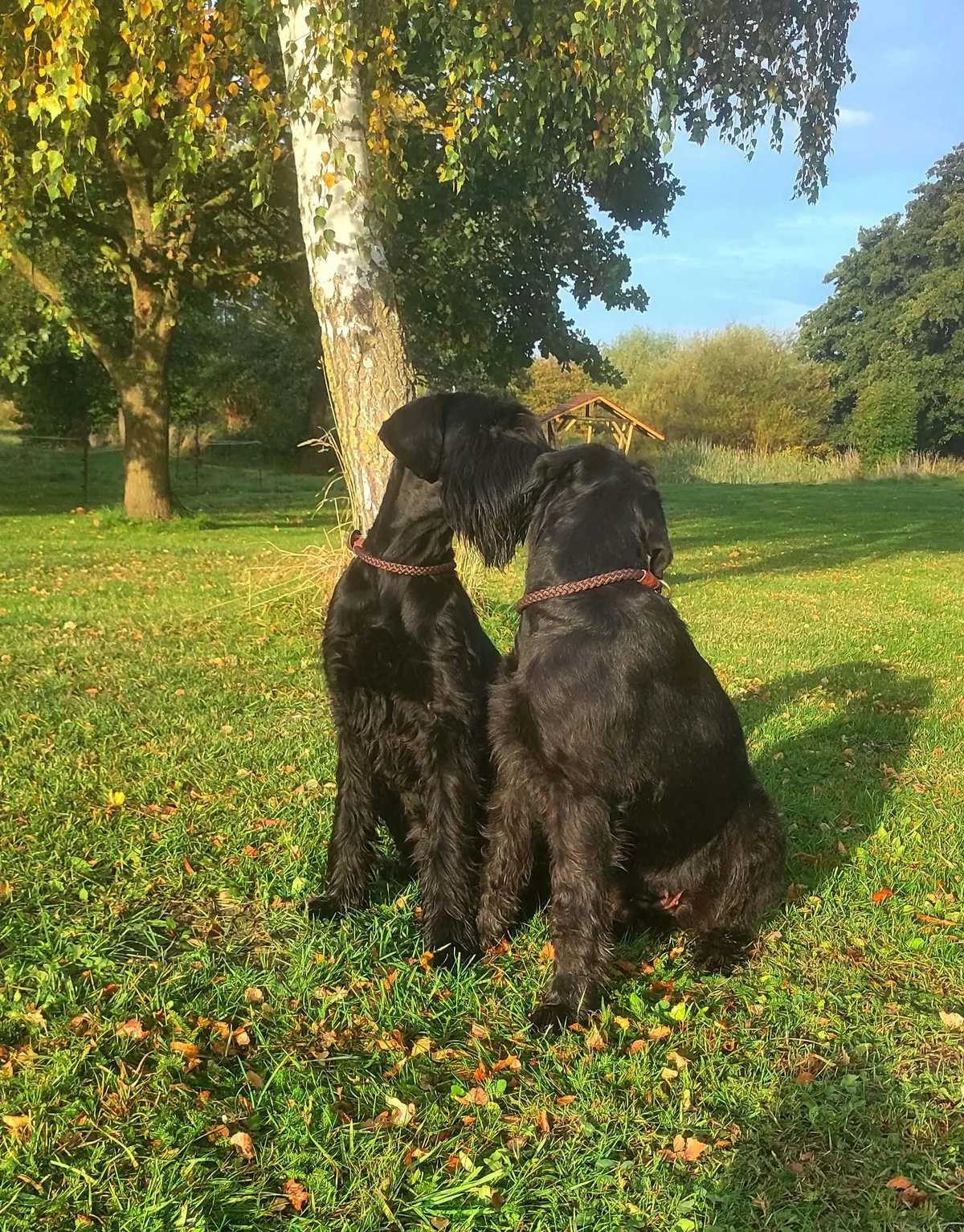
Giant Schnauzer
Health grade BThe Riesenschnauzer is an imposing, incorruptible companion—a formidable Gebrauchshund (working dog) bred for driving livestock and uncompromising protection, demanding real work and unwavering leadership.
- Height60–70 cm
- Weight35–47 kg
- Life expectancy10–12 yrs
- Puppy price1,800–3,000 €
- Energy5/5
The Essentials at a Glance
The Riesenschnauzer is an imposing, incorruptible companion—a formidable Gebrauchshund (working dog) bred for driving livestock and uncompromising protection, demanding real work and unwavering leadership.
- Health grade B: The Riesenschnauzer receives a B grade, as it possesses a solid health foundation that is typical for its size.
- You are not looking for a mere follower, but a true working partner for dog sports, tracking, or search and rescue, as this breed gets frustrated quickly without a job.
- You have experience with large, territorial breeds and can manage a strong protective instinct confidently, fairly, and with absolute consistency.
- You expect a dog that greets every visitor with a wagging tail—he was bred to be suspicious and controlling toward strangers.
Is the Giant Schnauzer right for you?
At a glance
Giant Schnauzer overview
The essentials — key facts, traits, and health priorities — before you dive deeper.
Health grade
Relative to other breeds
S
A
B
C
D
E
Very healthyHigher risk
Solid — a handful of items a good breeder watches.
See full health info & tests →
Note: This health overview is AI-assisted and editorially reviewed. It is for orientation only and does not replace veterinary advice.
Lifespan
10–12 yrs
Height
60–70 cm
Weight
35–47 kg
Practical
- Puppy price: 1,800 – 3,000 €
- Coat: Wiry, dense, short with undercoat
- Origin: Germany
Temperament
Energy
Trainability
Family fit
With kids
Daily life
Care effort
Shedding
Barking
City-friendly
Guard instinct
What matters most
Especially with a Giant Schnauzer, choosing the right breeder is the single most important decision you'll make. Serious breeders consistently test the parents for inherited conditions, prioritize healthy early socialization, and stay accountable long after handover. A cheap puppy without health screening tends to become the most expensive dog later on.
See HonestDog breeder standards →Colors & coat
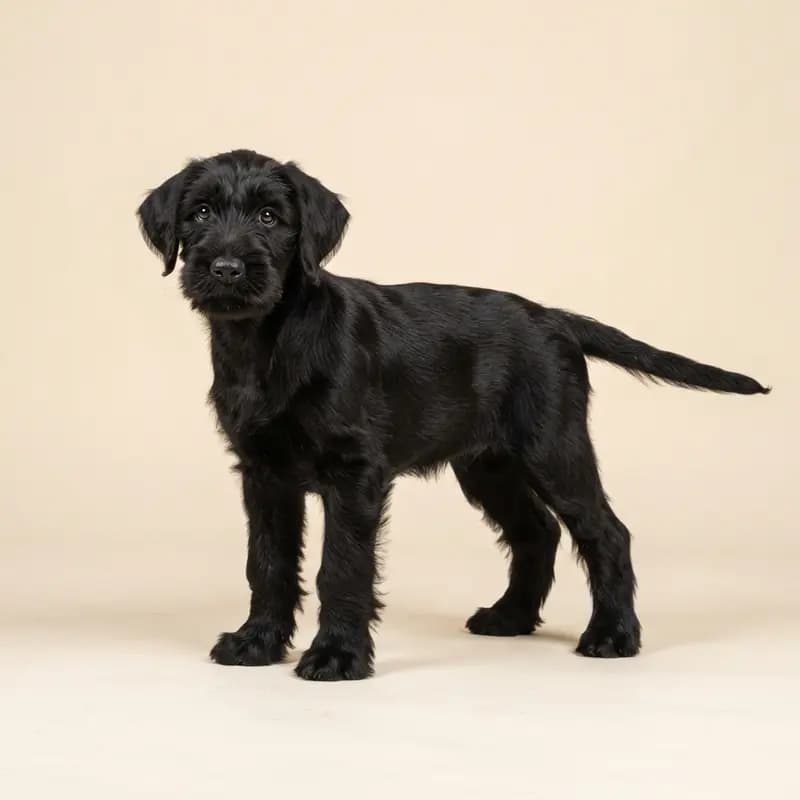
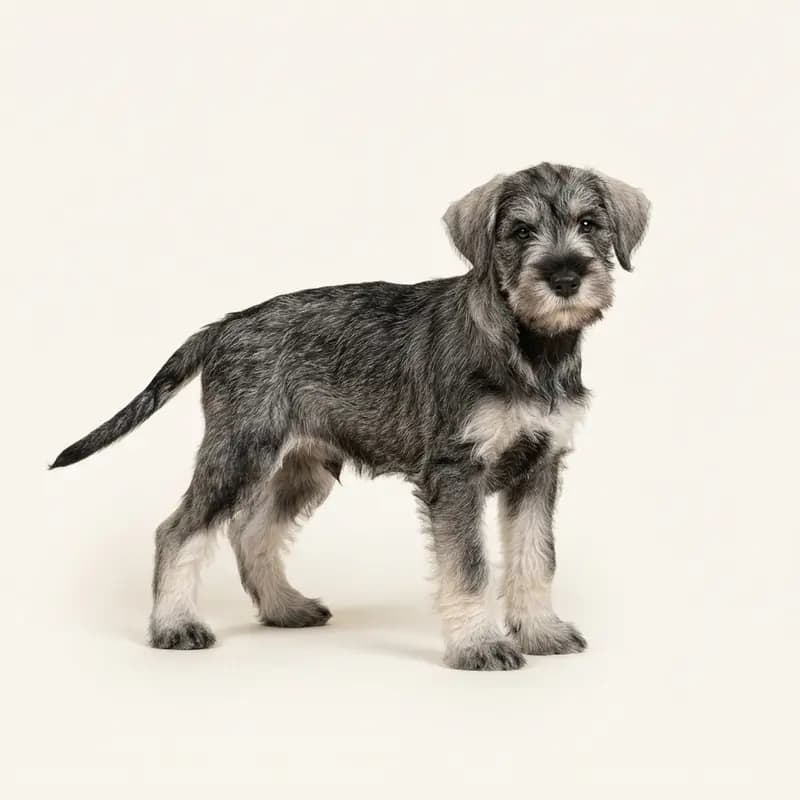
What colors does the Giant Schnauzer come in?
The coat colors you will see in Giant Schnauzer litters — including which ones fall outside the breed standard and which carry genetic risk.
Eye colors
 Brown
Brown
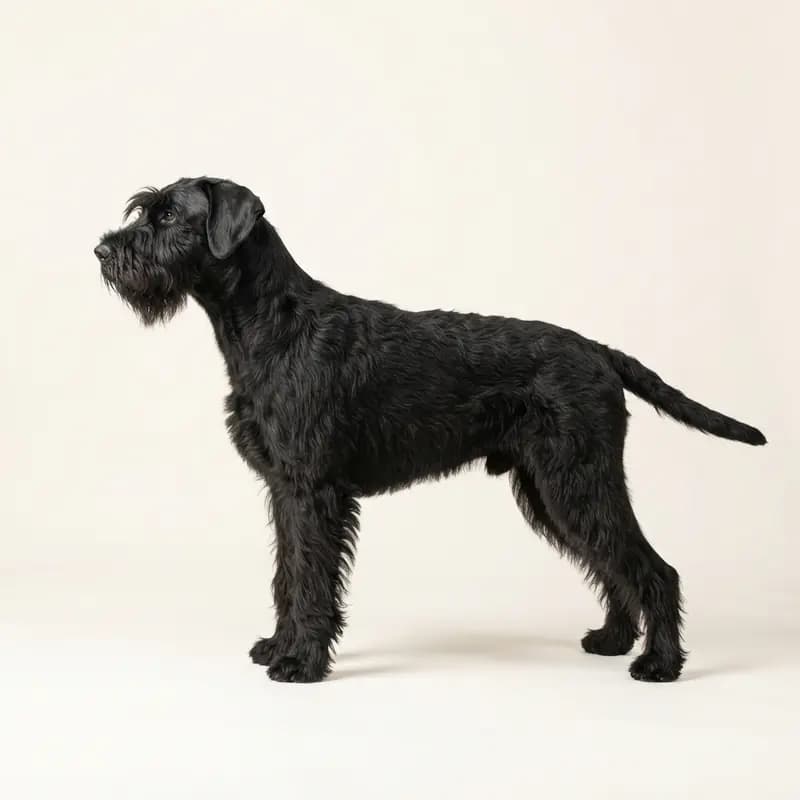
Coat type
 Illustrative image
Wire
 Short
Short Double coat
Is the Giant Schnauzer right for you?
The Riesenschnauzer is an imposing, incorruptible companion—a formidable Gebrauchshund (working dog) bred for driving livestock and uncompromising protection, demanding real work and unwavering leadership.
Perfect for you if:
- You are not looking for a mere follower, but a true working partner for dog sports, tracking, or search and rescue, as this breed gets frustrated quickly without a job.
- You have experience with large, territorial breeds and can manage a strong protective instinct confidently, fairly, and with absolute consistency.
- You ideally offer a house with a securely fenced property that he can guard without causing conflicts with neighbors.
- You are prepared for daily, intensive physical and mental stimulation in absolutely any weather.
Less ideal if:
- You expect a dog that greets every visitor with a wagging tail—he was bred to be suspicious and controlling toward strangers.
- You live in a busy city apartment with high foot traffic in the stairwell, where his innate guarding instinct will become a constant source of stress for you both.
- You underestimate the raw power of over 40 kilos of energy if he decides he needs to handle a situation before you do.
The real vibes check
A Riesenschnauzer is not a teddy bear in XXL format, but a highly intelligent bouncer in a tailored suit. If you take his need for work and structure seriously, you will have the most loyal shadow by your side. However, if you leave the decision-making to him, he will take over the management of your entire daily life without being asked—and with enormous force.
Self-check
Would the Giant Schnauzer really fit your life?
Answer 6 quick questions about your everyday life and see how well the Giant Schnauzer fits you — including an honest cost estimate per month, per year, and across the dog's lifetime.
Fit checkCost estimateRisk dice
Takes about 1 minute · free & anonymous
Breed Profile
The Giant Schnauzer, also known as the Giant Schnauzer, belongs to FCI Group 2, Section 1 (Pinscher and Schnauzer). It is the largest of the three Schnauzer breeds and immediately stands out due to its striking appearance. With his strong build, wiry coat and characteristic eyebrows and beard, he exudes a certain strength and determination. In terms of breeding lines, there is no strict distinction between performance and show lines in the Giant Schnauzer. However, there can be individual differences between breeders, with some placing more emphasis on work ability and others on physical appearance.
All measurements in detail
- Height
- 60 - 70 cm (Female), 60 - 70 cm (Male)
- Weight
- 35 - 47 kg (Female), 35 - 47 kg (Male)
- Life Expectancy
- 10 - 12 yrs
- Character
- Intelligent, alert, loyal
- Coat
- Wiry, dense, short with undercoat
- Coat Color
- Black, pepper-salt
- Price
- 1800 - 3000 €
Character & Temperament
If you're thinking about adding a Giant Schnauzer to your family, be prepared for a dog with a strong personality and lots of energy. He is naturally alert and has a strong protective instinct. This makes him ideal as a guard dog. But don't worry, behind his impressive appearance there is a loving heart. He is very loyal to his family and often develops a particularly close bond. In terms of temperament, the Giant Schnauzer is rather active and requires both physical and mental challenges. Boredom is a no-go for him. He loves having tasks and working. This can manifest itself in various forms, such as dog sports, obedience training or simply long walks and games. The Giant Schnauzer is a very people-oriented dog. He loves the company of his people and would like to always be there. But this also means that he has to learn to stay alone without becoming bored or destructive. It is important to slowly get him used to being alone as a puppy. One trait to keep in mind is that the Giant Schnauzer can sometimes be suspicious of strangers. This makes him a good guard dog, but it is important to socialize him well from an early age and teach him how to behave in different situations. Hunting or prey-catching behavior is not particularly strong in the Giant Schnauzer, but as with any dog, there can be individual differences. Therefore, it is advisable to pay attention to how your Giant Schnauzer reacts to wild animals or other small animals. In conclusion, the Giant Schnauzer is a fantastic companion for people who are willing to deal with its energy and personality. He is a loyal friend who is ready to protect you, but also needs a responsible owner who is willing to invest the time and effort into his training and socialization. If you are ready to take on this challenge, you will find a wonderful companion in the Giant Schnauzer.
| Trainability Bred to work closely alongside humans. | Highly trainable |
| Watchfulness Strong territorial instinct — may actively confront intruders. | Very high |
| Openness to Strangers Careful around unfamiliar people — thaws slowly. | Cautious |
| Hunting or Herding Drive Noticeable drive — needs attention around small animals. | Moderate |
Fun Fact!
Did you know that the Giant Schnauzer was originally used as a working dog in the Bavarian and Württemberg regions of Germany, where it served as a guard dog on farms and as a herdsman?
What Awaits You
Giant Schnauzers are often described as dogs with strong protective behavior. They are territorial, intelligent and highly trainable and are suitable for many sporting activities. They need experienced dog owners who know how to exercise these dogs according to their type.
Housing & Care
The Giant Schnauzer is an active dog and needs sufficient exercise and activity. He can be kept in the city if he is provided with enough exercise and mental stimulation. A garden would be ideal, but is not essential. When it comes to children, Giant Schnauzers are generally tolerable when properly socialized. Nonetheless It is important to always supervise the interaction between dogs and children. Giant Schnauzers can also get along with other pets, including cats, if socialized early and properly.
- Family Friendly
Loves family life and thrives in a group.
Family-oriented - Child Friendly
Gets on well with children — with adult supervision.
With supervision - Dog Friendly
Usually gets on fine with other dogs.
Generally tolerant - City Friendly
City-appropriate with enough exercise and stimulation.
Manageable in cities
Owning a dog is a privilege, but it's also a real responsibility. Before you bring one into your life, be honest with yourself about the commitment it takes.
Training & Education
Since the Giant Schnauzer is an intelligent and energetic dog, it benefits from consistent and positively reinforcing training. They tend to be very engaged when playing and exercising and it is important to be careful not to keep them overly busy as this can lead to stress. The Giant Schnauzer is suitable for various dog sports such as agility or obedience. It is also important that the Giant Schnauzer learns frustration tolerance and impulse control in order to be able to handle him well in everyday life. Balanced training that includes physical and mental activity is essential for this breed. As a working dog, you have to make sure that the Giant Schnauzer has a task that challenges him mentally so that he is satisfied. This could be nose work or search games, for example.
Nutrition & Care
In terms of nutrition, it is important to provide the Giant Schnauzer with a balanced and high-quality diet that meets its energy needs. Since they are prone to hip dysplasia, it is particularly important to maintain an appropriate weight and avoid being overweight. When it comes to grooming, the Giant Schnauzer has a dense, wiry coat with an undercoat. This coat requires regular brushing to prevent matting and remove dead hair. Since the Giant Schnauzer has an undercoat, it copes well with the German climate and does not shed excessively.
| Care Level Regular brushing and occasional professional grooming. | Moderate |
| Exercise Needs Working-dog energy that needs burning off every single day. | High-drive |
| Shedding Hair everywhere, always — no white clothing survives. | Very heavy |
| Trainability Bred to work closely alongside humans. | Highly trainable |
Our experts are still reviewing this information. Spotted something wrong? Email us at info@honestdog.de.
Health & hereditary diseases
Health
B
Solid
Health grade
The Riesenschnauzer receives a B grade, as it possesses a solid health foundation that is typical for its size. Important risks such as hip dysplasia (HD) and the metabolic disorder hyperuricosuria (HUU) are already well-controlled through mandatory health tests in breeding programs. Before purchasing a puppy, you should also actively verify the parents' test results to rule out hereditary eye conditions.
Grade is relative to other breeds — AI-assisted and editorially reviewed.
In daily life this can mean
You should focus on joint-friendly rearing and maintaining a healthy weight, as well as scheduling regular veterinary check-ups for the heart, eyes, and thyroid.
The breeder's role
Reputable breeders have the hips, elbows, eyes, and hearts of the parent animals tested and keep an eye on thyroid values to reduce health risks.
Note: This health overview is AI-assisted and editorially reviewed. It is for orientation only and does not replace veterinary advice.
No Health Tests Available
No specific health tests are currently available for this breed.
Costs & where to find one
How much does a Giant Schnauzer cost?
A Giant Schnauzer costs around ~€210 per month (€110 – €400, depending on your setup). The first year adds up to roughly ~€5,740 including purchase, equipment and puppy school; across the dog's life (11 years) it comes to about ~€30,880.
With surgery cover, running costs come to about ~€210 per month — in return, your share of a major operation drops from several thousand euros to around 20 percent.
Per month
~€210
In the first year
~€5,740
Across the dog's life
~€30,880
Purchase from a breeder: €1,800 – €3,000
Estimate at a mid-range setup (suburban, dry food, 1–2 hours of daily exercise), average German prices, as of July 2026.
Calculate your personal costs1-minute self-check with your own answers
Looking for a Giant Schnauzer?
Appearance, variants & origin
History
The full history
The roots of the Giant Schnauzer go back to the 19th century and can be found in southern Germany. Originally he was used as a working dog on farms, where he herded livestock, guarded the property and served as a draft animal. Later, the Giant Schnauzer was also used as a police and military dog, which underlines its intelligence and versatility. The Giant Schnauzer was recognized as an independent breed by the German Schnauzer Club in 1923. Since then, he has made a name for himself around the world, both as a working dog and as a loyal family companion.
Original Use
The Giant Schnauzer was used as a herd and guard dog for livestock and as a brewery dog.
Origin
Germany
Date
1800
Owner experiences
What owners say about the Giant Schnauzer
Susanne S., Halterin aus der Region Stuttgart (Hündin, 13 Jahre)
Ich habe eigentlich schon mein ganzes Leben lang Riesenschnauzer um mich herum. Meine Hündin Ronja ist mittlerweile stolze 13 Jahre alt [1.1.3]. Für mich ist diese Rasse einfach der Inbegriff eines echten Gebrauchshundes. Ronja blüht bei der Fährtenarbeit und im Schutzdienst richtig auf – man merkt einfach, wofür diese Hunde ursprünglich selektiert und gezüchtet wurden.
Im Alltag muss man sich allerdings auf ein paar Eigenheiten einstellen. Schnauzertypisch kommentiert Ronja gerne mal alles: Sie fiept und kläfft, wenn sie aufgeregt ist. Auf dem Hundeplatz weiß jeder sofort, in welchem Auto der Schnauzer sitzt, weil sie so ungeduldig ist. Fremden gegenüber ist sie sehr reserviert. Sie würde von sich aus niemanden einfach so in den Garten lassen und schlägt sofort an. Wenn ich dabei bin, ist es kein Problem, aber sie ist eben kein 'Ich liebe alle Menschen'-Hund, sondern ganz eng auf ihre Familie bezogen.
Jan N., Halter aus Hessen (Rüde, 17 Monate)
Mein Rüde ist jetzt knapp anderthalb Jahre alt und steckt mitten in einer extremen Testphase. Ich musste erst lernen, dass Riesenschnauzer echte Spätentwickler sind. Die Pubertät setzt gefühlt später ein als bei anderen Rassen, zieht sich dafür aber ordentlich in die Länge. Er hinterfragt im Moment fast jede Grenze und fordert mich täglich heraus.
Im Umgang mit anderen Hunden ist er schnauzertypisch recht forsch und manchmal regelrecht unsensibel. Wenn uns ein anderer Rüde dumm kommt oder knurrt, schießen bei ihm sofort die Hormone ein – da muss ich als Halter extrem vorausschauend agieren und ihn gut sichern. Ein weiteres großes Thema bei uns ist sein ausgeprägter Jagdtrieb. Einfach so ohne Leine laufen lassen ist im Wald aktuell nicht drin. Trotzdem liebe ich seinen Charakter: Er hat keinerlei Futterneid, ist im Haus eine treue Seele und sucht ständig unsere Nähe.
Katrin M., Hundesportlerin aus Bayern (Rüde, seit 2018)
Ich führe meinen Riesenschnauzer-Rüden aktiv im Hundesport, vor allem im Obedience und im Schutzdienst. Was ich an dieser Rasse so faszinierend finde, ist ihre fast schon schizophrene Art im Alltag: Er kann stundenlang völlig tiefenentspannt und dekorativ im größten Trubel herumliegen, als könnte ihn nichts erschüttern. Aber sobald ich sage 'Action!', fliegt er gefühlt auf Kopfhöhe neben mir her.
Er ist ein echter Showman. Beim Schutzdienst reicht es ihm nicht, einfach nur den Ärmel als Belohnung zu tragen – nein, er muss damit stolz am Publikum vorbeilaufen und sich bewundern lassen. Diese Power muss man aber auch händeln können. Zudem darf man den Pflegeaufwand nicht unterschätzen. Damit er im Haus kaum haart, muss das drahtige Fell regelmäßig gründlich getrimmt werden. Wer einen unkomplizierten 'Nebenbei-Hund' sucht, ist hier definitiv an der falschen Adresse.
Paraphrased from real owner reports
Loading owner stories
Community Posts
FAQ & more
Frequently asked questions about the Giant Schnauzer
Is a Giant Schnauzer the right dog for me?
The Giant Schnauzer is an active dog that needs plenty of exercise and mental stimulation. Research the temperament, grooming needs, and space requirements before deciding.
How long does a Giant Schnauzer live?
The average life expectancy of a Giant Schnauzer is 10-12 years. With proper care and regular vet visits, your dog can live a long, healthy life.
How much grooming does a Giant Schnauzer need?
Giant Schnauzer grooming requirements include regular brushing, nail trimming, and dental care. HonestDog provides detailed grooming tips for every breed.
Is a Giant Schnauzer good for families with children?
The Giant Schnauzer can be a great family dog. Proper training and socialization are key. HonestDog provides family suitability information for every breed.
What colors does the Giant Schnauzer come in?
The Giant Schnauzer comes in these colors: Black, Salt and pepper.
Loading related articles
Are you a Giant Schnauzer breeder?
Showcase your kennel on HonestDog and reach families searching for a responsibly bred Giant Schnauzer.
Why HonestDog?
What makes HonestDog different from other platforms
Full transparency
We lay out what we have: who the breeder is, how they work, and any health records they've uploaded. So you can judge for yourself.
Responsible breeding, assured
Every breeder on HonestDog has their identity and documents checked before their profile goes live. Health records they upload are shown on the profile, so you can see exactly what has been tested.
Trust and verification
We verify breeders and buyers alike, so every conversation happens on solid ground. It's a new standard of trust in dog breeding.
Less hassle, more time
We've already checked the breeders' documents and gathered the details, so you can skip the endless research and focus on finding the right puppy for your family.
Our Mission

We connect dog lovers with responsible breeders and shelters to ensure every dog finds the perfect home.
Founded by dog enthusiasts, our platform focuses on ethical dog breeding and adoption.
Why HonestDog?
We connect you with vetted breeders and shelters so you can find your — your new companion — with confidence.
Vetted Partners
Only verified breeders and shelters — for a safe start.
Highest Standards
Every animal's health and wellbeing is our top priority.
Guides & Resources
Guides, checklists, and breed profiles — so you can make a well-informed decision.