Loading breed
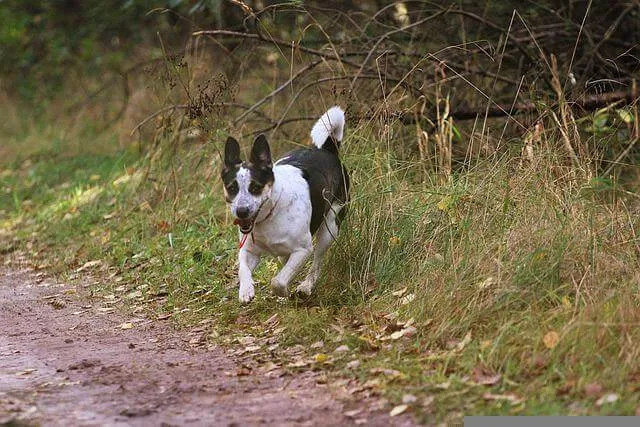
Rat Terrier
Health grade BThe Rat Terrier is a lightning-fast, tough little farm dog—bred as an agile Erdhund (earth dog) designed to clear American farms of rats and mice independently and uncompromisingly.
- Height25–46 cm
- Weight3–7 kg
- Life expectancy12–18 yrs
- Puppy price1,200–2,500 €
- Energy4/5
The Essentials at a Glance
The Rat Terrier is a lightning-fast, tough little farm dog—bred as an agile Erdhund (earth dog) designed to clear American farms of rats and mice independently and uncompromisingly.
- Health grade B: The Rat Terrier is considered an exceptionally robust and healthy breed with a high life expectancy.
- You enjoy active mental stimulation and fast-paced movement games like agility or Barn Hunt—he needs an outlet for his work ethic.
- You are looking for an affectionate companion who loves to cuddle indoors as soon as the 'work mode' is switched off after a walk.
- You expect him to ignore small animals or free-roaming cats—he was bred to pounce immediately and without hesitation at the sight of small, quick movements.
Is the Rat Terrier right for you?
At a glance
Rat Terrier overview
The essentials — key facts, traits, and health priorities — before you dive deeper.
Health grade
Relative to other breeds
S
A
B
C
D
E
Very healthyHigher risk
Solid — a handful of items a good breeder watches.
See full health info & tests →
Note: This health overview is AI-assisted and editorially reviewed. It is for orientation only and does not replace veterinary advice.
Lifespan
12–18 yrs
Height
25–46 cm
Weight
3–7 kg
Practical
- Puppy price: 1,200 – 2,500 €
- Coat: Short, smooth, dense, without undercoat
- Origin: USA
Temperament
Energy
Trainability
Family fit
With kids
Daily life
Care effort
Shedding
Barking
City-friendly
Guard instinct
What matters most
Especially with a Rat Terrier, choosing the right breeder is the single most important decision you'll make. Serious breeders consistently test the parents for inherited conditions, prioritize healthy early socialization, and stay accountable long after handover. A cheap puppy without health screening tends to become the most expensive dog later on.
See HonestDog breeder standards →Colors & coat
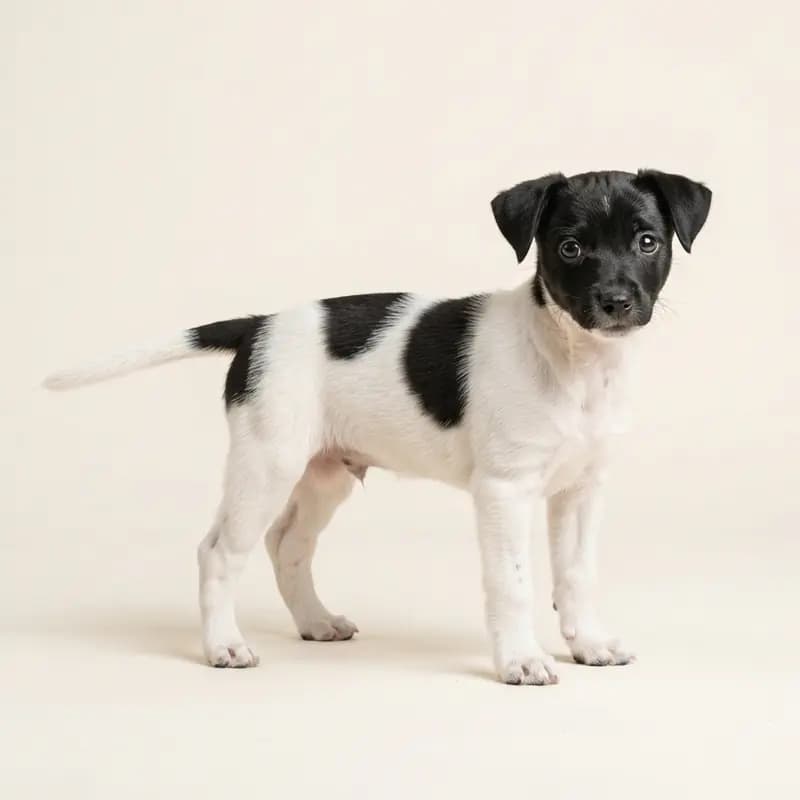
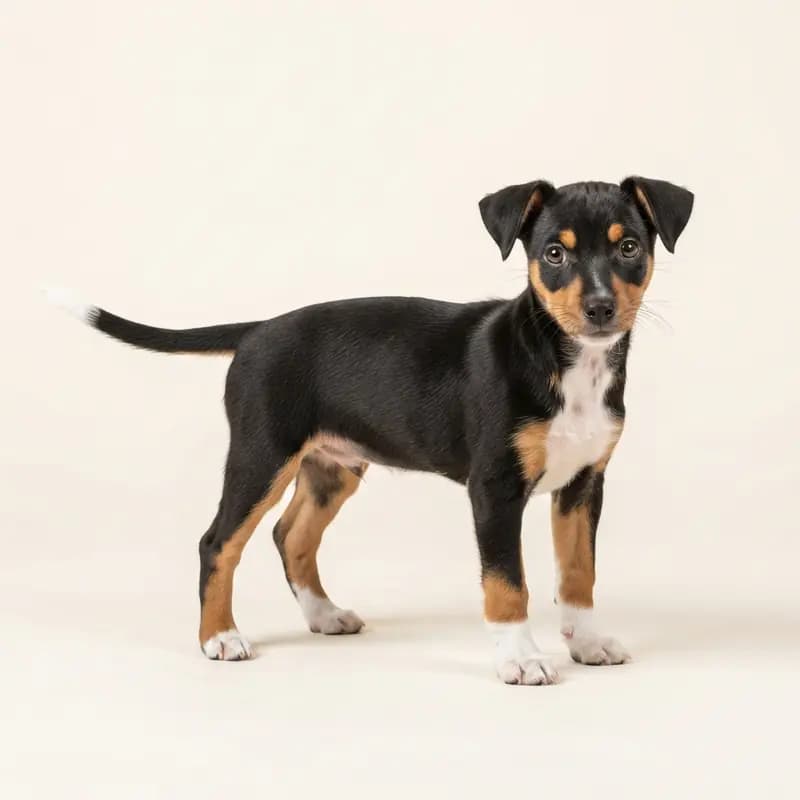
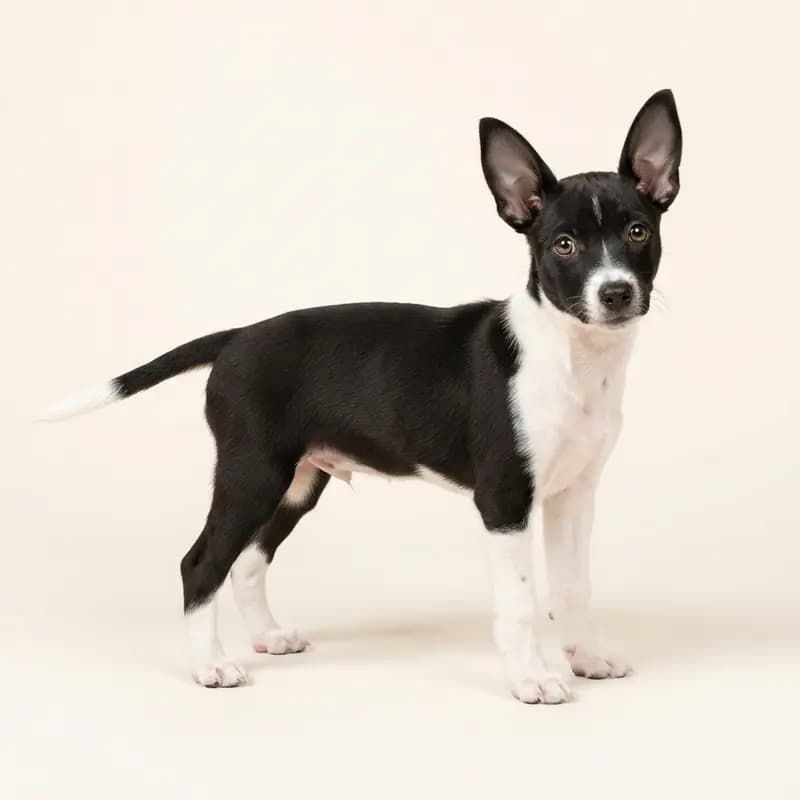
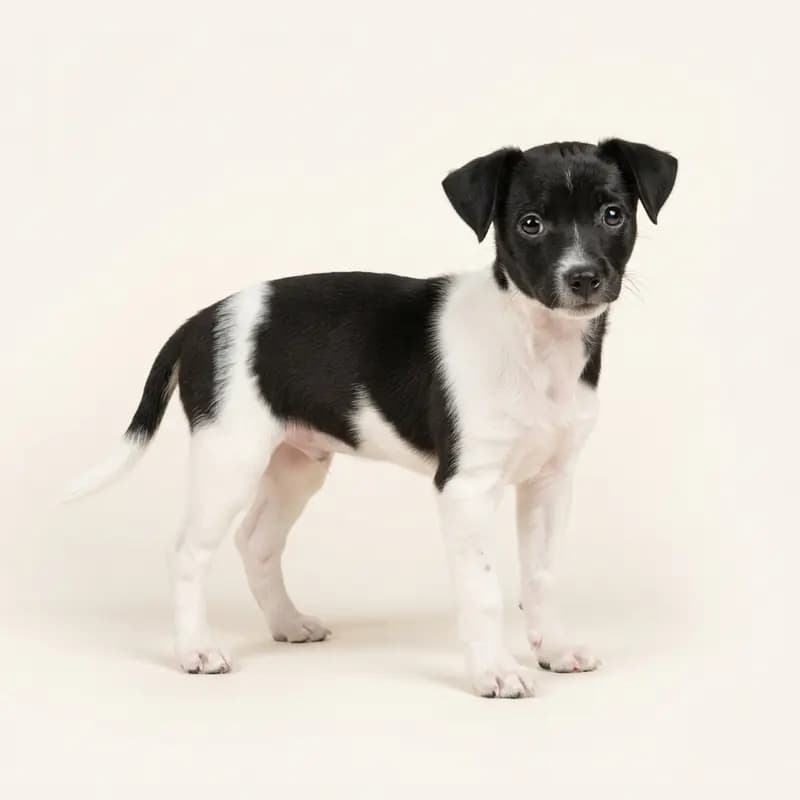
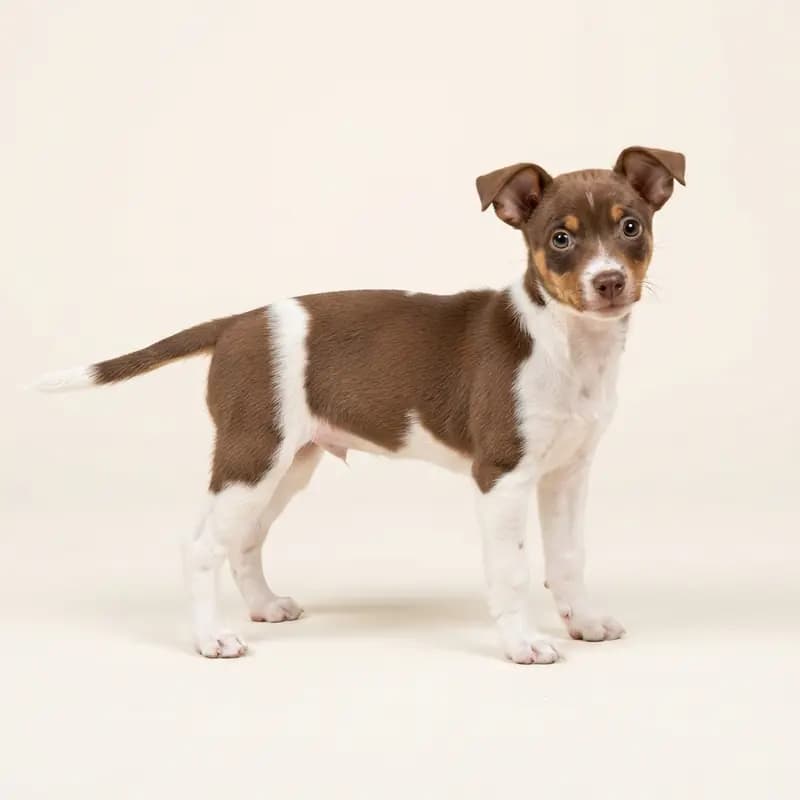
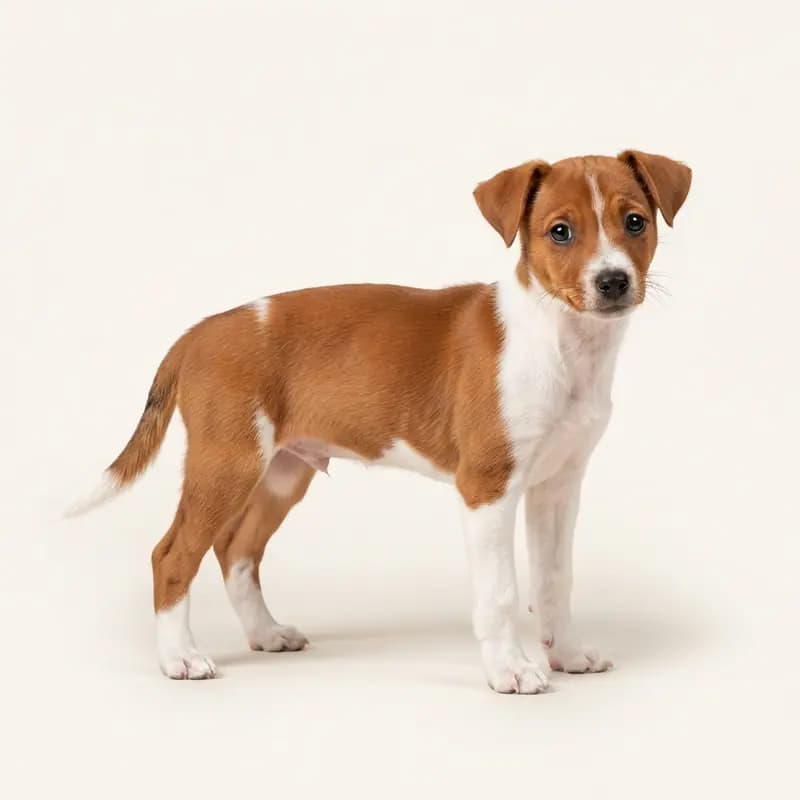
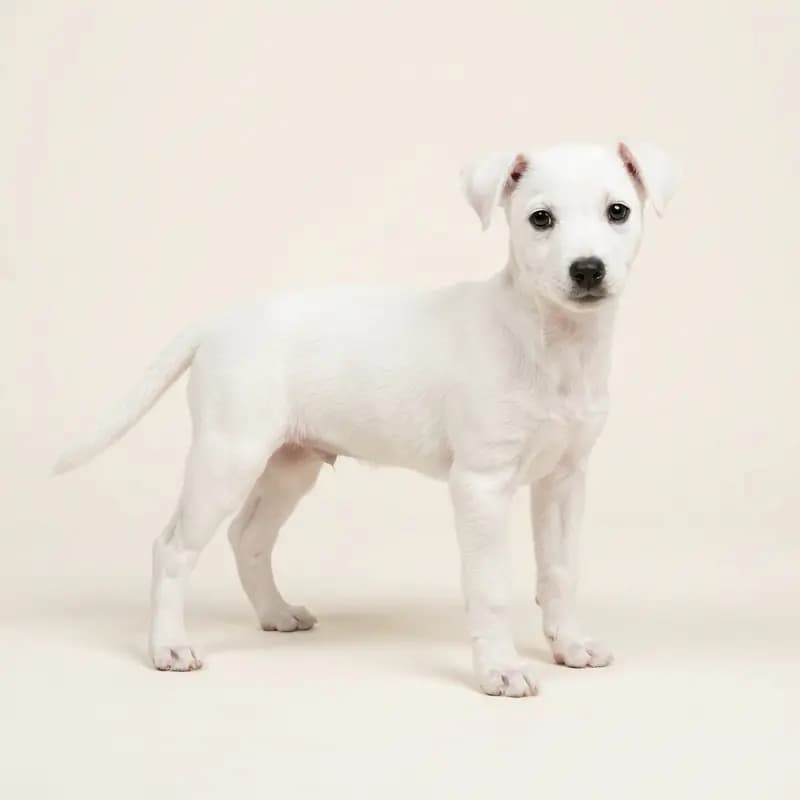
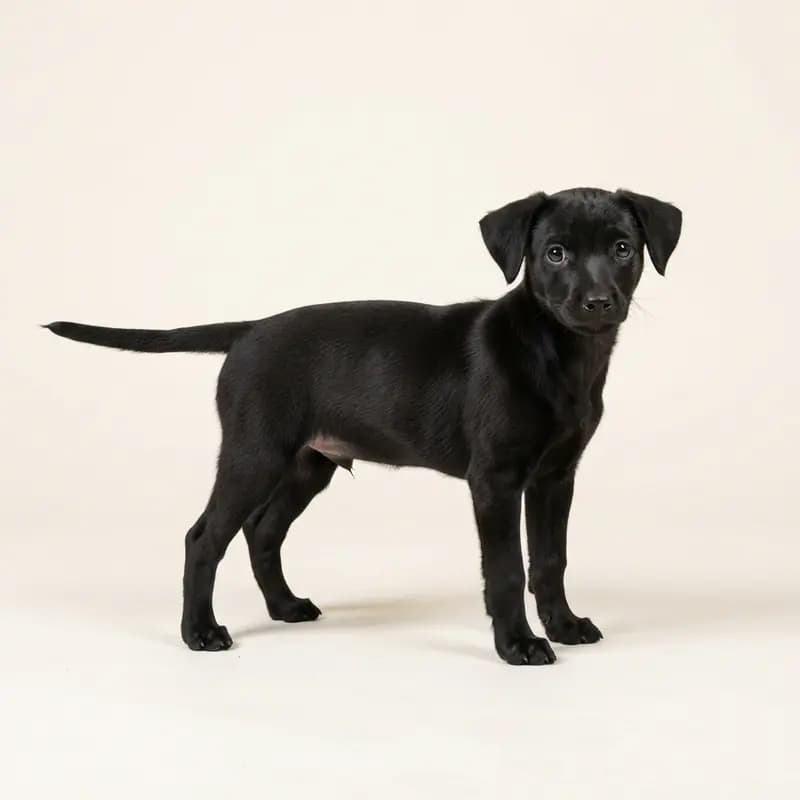
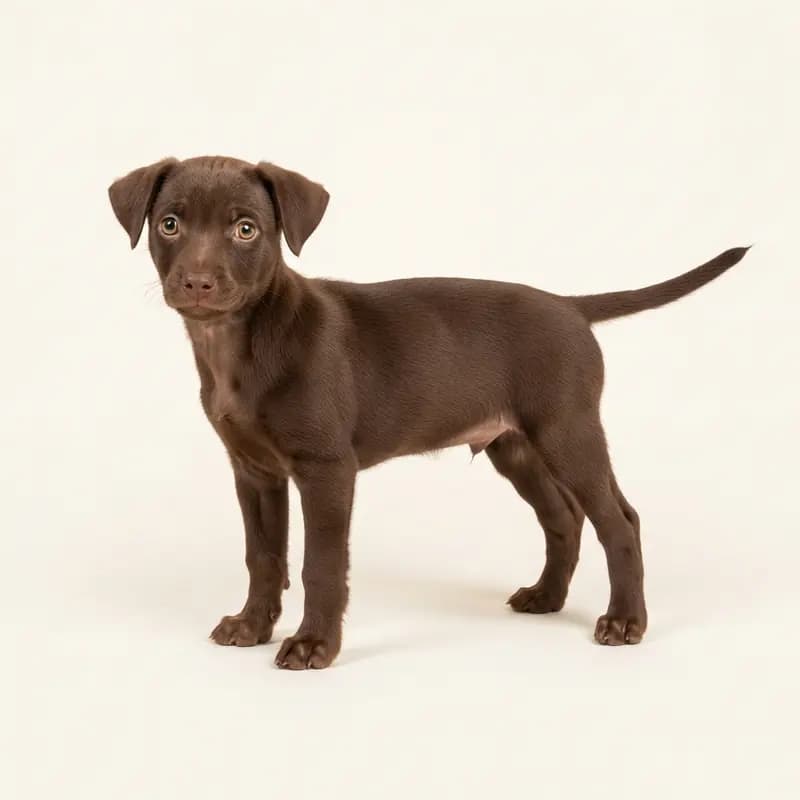
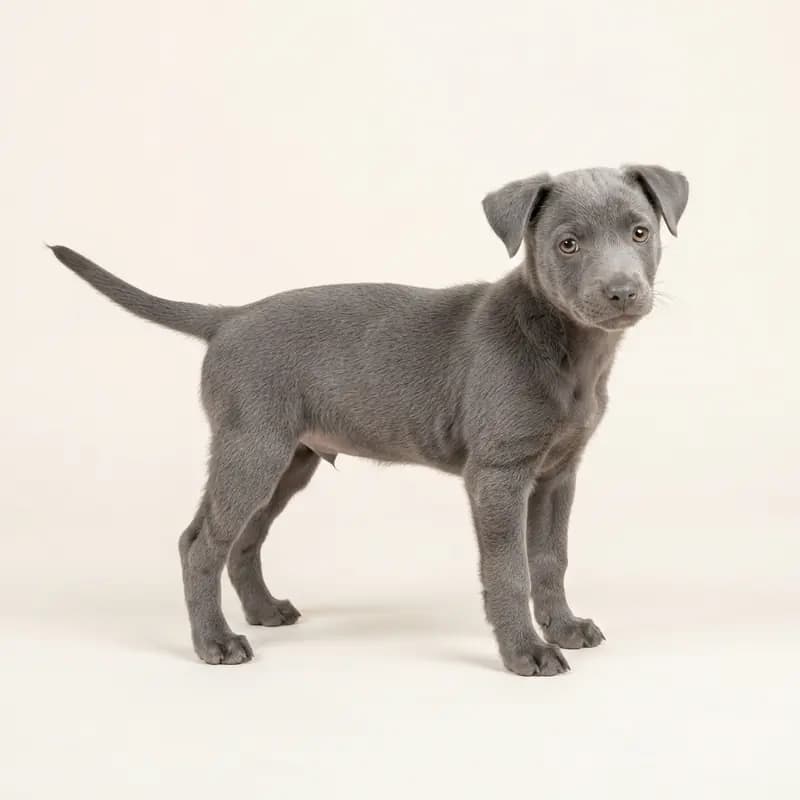
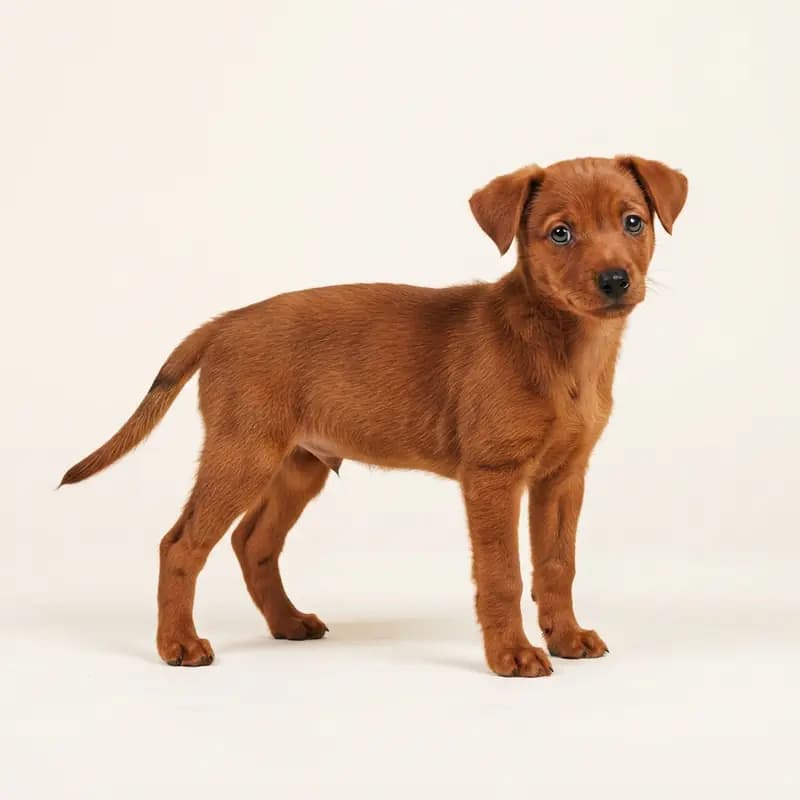
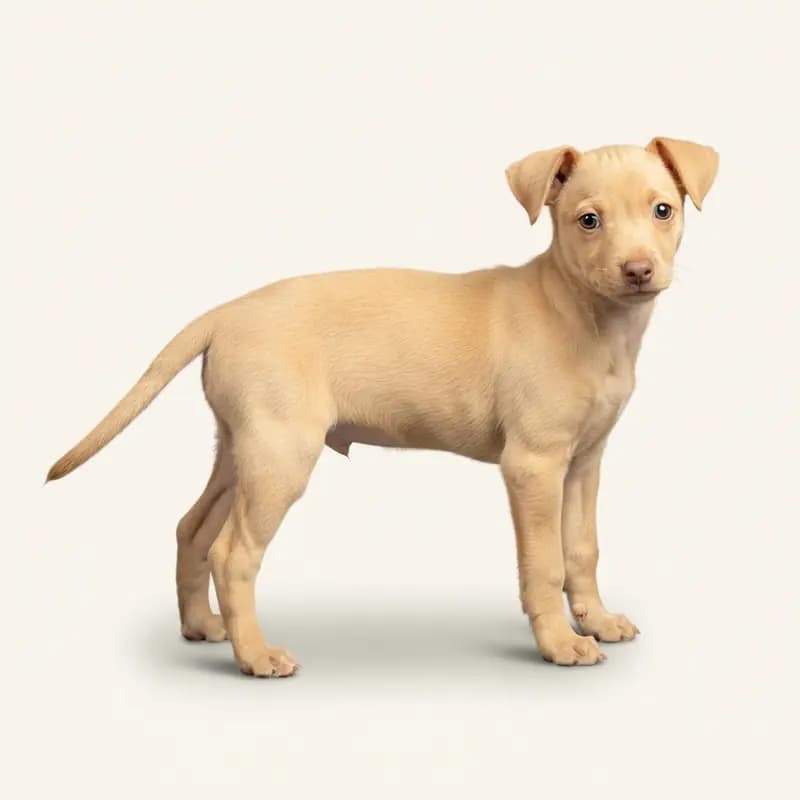
What colors does the Rat Terrier come in?
The coat colors you will see in Rat Terrier litters — including which ones fall outside the breed standard and which carry genetic risk.
Eye colors
 Brown
Brown Amber
Amber Blue
Blue
Coat type
 Short
Short Smooth
Is the Rat Terrier right for you?
The Rat Terrier is a lightning-fast, tough little farm dog—bred as an agile Erdhund (earth dog) designed to clear American farms of rats and mice independently and uncompromisingly.
Perfect for you if:
- You enjoy active mental stimulation and fast-paced movement games like agility or Barn Hunt—he needs an outlet for his work ethic.
- You are looking for an affectionate companion who loves to cuddle indoors as soon as the 'work mode' is switched off after a walk.
- You have a garden that is absolutely escape- and dig-proof, or you consistently use a long leash when outdoors.
- You lead with humor and consistency, as this terrier tests rules with lightning speed and intelligence.
Less ideal if:
- You expect him to ignore small animals or free-roaming cats—he was bred to pounce immediately and without hesitation at the sight of small, quick movements.
- You live in an apartment with thin walls and need a quiet dog; as a vigilant terrier, he will alert you to every unfamiliar sound.
- You have little patience for a dog that prefers to persistently dig for mice during a walk rather than just trotting obediently by your side.
The real vibes check
A Rat Terrier is like a highly sensitive motion detector on four legs. Indoors, he loves to cuddle with you for hours, but outdoors, his brain switches to 'mission mode' at the slightest rustle in the bushes. If you understand this switch and channel his hunting instinct into shared tasks, you get a brilliant partner—if not, he will decide for himself when the hunt begins.
Self-check
Would the Rat Terrier really fit your life?
Answer 6 quick questions about your everyday life and see how well the Rat Terrier fits you — including an honest cost estimate per month, per year, and across the dog's lifetime.
Fit checkCost estimateRisk dice
Takes about 1 minute · free & anonymous
Breed Profile
The Rat Terrier is a small to medium-sized dog that belongs to FCI Group 3, Terriers. He is characterized by a slim but muscular physique. The head is moderately broad with a pronounced stop and a powerful jaw. The ears are set high and can be worn erect or semi-erect with a fold. The Rat Terrier has an elegant gait and shows a certain elegance in his posture. This breed does not differentiate between performance and show lines and is considered a uniform breed.
All measurements in detail
- Height
- 25 - 46 cm (Female), 25 - 46 cm (Male)
- Weight
- 3 - 7 kg (Female), 3 - 7 kg (Male)
- Life Expectancy
- 12 - 18 yrs
- Character
- Intelligent, alert, playful
- Coat
- Short, smooth, dense, without undercoat
- Coat Color
- Varied including black, white, brown, blue, tan, chocolate, lemon
- Price
- 1200 - 2500 €
Character & Temperament
Are you looking for a lively companion who will keep you on your toes? Then the Rat Terrier could be just the thing for you! This breed is known for its intelligence and alertness. Despite their small size, they are courageous and can be very alert, making them excellent watchdogs. You'll probably find that your Rat Terrier will always keep you updated when someone is at the door! Another notable feature of the Rat Terrier is its playful temperament. He loves to romp and play and is often an endless source of entertainment. But be careful, his energy can sometimes seem limitless! It is important that you are prepared to provide your Rat Terrier with sufficient exercise and mental stimulation. Otherwise, he may become bored and prone to unwanted behavior such as digging or chewing. In terms of its people-oriented nature, the Rat Terrier is a breed that is closely tied to its family. He is very loyal and will often "stick" - he always wants to be near you. This means that he must learn to stay alone without feeling undue stress. It is therefore important to train him to be alone gradually and to ensure that he has enough to do when you are not there. As a terrier, the Rat Terrier also has a strong hunting instinct. He is attracted to small, fast-moving objects and may chase after a squirrel or cat if not properly trained. It is advisable to keep him on a leash when you are in areas where he might pursue his passion for hunting. When it comes to training, the Rat Terrier is intelligent, but sometimes a bit stubborn. It is important to start training early and be consistent but loving. Positive reinforcement often works best with this breed. The Rat Terrier also has a talent for canine sports such as agility and can excel in activities that challenge both his body and mind. In conclusion, the Rat Terrier can be a wonderful companion for those who are willing to invest in his training and employment. His intelligence, alertness and playful temperament make him an entertaining and loyal member of the family.
| Trainability Picks up commands quickly and wants to please. | Eager to learn |
| Watchfulness Reports unusual activity but stays controlled. | Moderate |
| Openness to Strangers Warms up quickly and is generally welcoming. | Friendly |
| Hunting or Herding Drive This drive runs deep — no amount of training eliminates it. | Very strong |
Fun Fact!
Did you know that the Rat Terrier was once known as “The Enemy of the Rats?” was well known and highly valued for his farm pest control skills?
What Awaits You
The Rat Terrier, an American original with a breed name said to have been coined by Teddy Roosevelt, is a compact, tough, smooth-coated dog used as an exterminator. RTs come in two sizes and are cheerful, playful and wearable companions.
Housing & Care
The Rat Terrier can thrive as a city dog if it gets regular exercise and mental stimulation. He generally gets along well with children, but it is important that interactions are supervised, especially when the children are very young. The Rat Terrier can also get along with cats and other pets if introduced to them from an early age.
- Family Friendly
Lives for its family — the born family companion.
Ideal family dog - Child Friendly
Takes boisterous and affectionate children in its stride.
Patient with children - Dog Friendly
Usually gets on fine with other dogs.
Generally tolerant - City Friendly
Adapts well to city living and urban environments.
Well-suited to city life
Owning a dog is a privilege, but it's also a real responsibility. Before you bring one into your life, be honest with yourself about the commitment it takes.
Training & Education
When it comes to education and training, the Rat Terrier brings a lot of energy and intelligence. It is ideal for dog sports such as agility, obedience and flyball. It is important to exercise this breed both physically and mentally, but you should be careful not to "over-work" the dog. Sometimes Rat Terriers can become "ball junkies," which is why it's important to offer them a variety of activities and limit ball play. An important skill to teach a Rat Terrier is impulse control. Because they have a strong hunting instinct, it can be difficult for them to control themselves when they see something interesting. Train recall and practice in safe areas. It is also advisable to introduce him to other animals in a controlled environment to manage his hunting instinct.
Nutrition & Care
The Rat Terrier benefits from a balanced diet tailored to his needs. A combination of high-quality dry and wet food is often a good choice. Make sure that the food has a high meat content and is free of artificial additives. When it comes to care, the Rat Terrier is relatively easy to care for. He has a short, smooth coat without an undercoat that only requires occasional brushing. The Rat Terrier sheds moderately and copes well with the climate in Germany, although he should wear a dog coat in colder weather as he has no undercoat to keep him warm.
| Care Level Minimal effort — occasional brushing and bathing. | Low-maintenance |
| Exercise Needs Needs several hours of serious exercise every day. | Very active |
| Shedding Hair everywhere, always — no white clothing survives. | Very heavy |
| Trainability Picks up commands quickly and wants to please. | Eager to learn |
Our experts are still reviewing this information. Spotted something wrong? Email us at info@honestdog.de.
Health & hereditary diseases
Health
B
Solid
Health grade
The Rat Terrier is considered an exceptionally robust and healthy breed with a high life expectancy. Nevertheless, prospective buyers should be aware of typical concerns such as Primary Lens Luxation (PLL), patellar luxation, and hip dysplasia (HD), which can occur in isolated cases. Since there are hardly any severe breed-specific defects, the genetic risk is refreshingly low.
Grade is relative to other breeds — AI-assisted and editorially reviewed.
In daily life this can mean
With joint-friendly rearing and regular veterinary eye check-ups, most dogs of this breed remain active and healthy well into old age.
The breeder's role
Reputable breeders have the knees, hips, eyes, and hearts of the parent animals tested to reduce health risks in the line from the very beginning.
Note: This health overview is AI-assisted and editorially reviewed. It is for orientation only and does not replace veterinary advice.
No Health Tests Available
No specific health tests are currently available for this breed.
Costs & where to find one
How much does a Rat Terrier cost?
A Rat Terrier costs around ~€150 per month (€80 – €280, depending on your setup). The first year adds up to roughly ~€4,530 including purchase, equipment and puppy school; across the dog's life (15 years) it comes to about ~€30,470.
With surgery cover, running costs come to about ~€140 per month — in return, your share of a major operation drops from several thousand euros to around 20 percent.
Per month
~€150
In the first year
~€4,530
Across the dog's life
~€30,470
Purchase from a breeder: €1,200 – €2,500
Estimate at a mid-range setup (suburban, dry food, 1–2 hours of daily exercise), average German prices, as of July 2026.
Calculate your personal costs1-minute self-check with your own answers
Looking for a Rat Terrier?
HonestDog Concierge
No verified Rat Terrier breeders on HonestDog yet
We currently have no breeders for this breed who have passed our verification. Create your short buyer profile: we'll set up your search alert, review a possible source and email you within 28 days.
Appearance, variants & origin
History
The full history
The Rat Terrier originated in the United States and was developed in the 19th century from various terrier breeds, including Fox Terriers and Old English White Terriers. Its name comes from its ability to hunt rats and other vermin, a task for which it was particularly suited due to its agility and keen sense of smell. He was also used as a hunting and farm dog. In the 1920s and 1930s, Rat Terriers were particularly popular because of their effectiveness in pest control. The breed was recognized by the United Kennel Club (UKC) in 1999 and was also officially recognized as a breed by the American Kennel Club (AKC) in 2013.
Original Use
The Rat Terrier was bred to fight rodents and hunt small game.
Origin
USA
Date
1800
Owner experiences
What owners say about the Rat Terrier
Sabine M., Halterin aus Hessen (Hündin, 2011–2024)
Meine Hündin Cammie hat mir über die Jahre einiges an Nerven gekostet, denn sie ist eine absolute Ausbrecherkönigin. Selbst in einem gut eingezäunten Garten fand sie bis ins hohe Alter hinein immer wieder die kleinste Lücke, quetschte sich hindurch oder buddelte sich einfach unter dem Zaun durch, um die Nachbarschaft zu erkunden.
Wenn sie erst einmal entwischt war, stattete sie den Nachbarn gerne Besuche ab, klaute dort Futter, wühlte im Müll und bellte die Leute an. Ich bin anfangs regelmäßig in Panik geraten und mit dem Auto die Straße abgefahren, um sie zu suchen. Sobald sie mich dann hörte, kam sie zwar freudig auf mich zugerannt, aber das Risiko war einfach zu groß.
An sich ist sie eine sehr gehorsame Hündin – allerdings nur, wenn sie auch wirklich Lust dazu hat. Dieser typische, rebellische Terrier-Dickkopf ist bei ihr sehr ausgeprägt. Am Ende half im ungesicherten Bereich nur noch die Schleppleine, bis sie im Alter schließlich etwas ruhiger wurde und den Drang zum Ausbüxen verlor.
Renate K., Halterin aus Bayern (Rüde, seit 2015)
Unser Rat Terrier Peru ist ein ganz besonderes Familienmitglied und ein echter Sonnenanbeter. Er liebt die Wärme über alles und nutzt jeden Sonnenstrahl aus, um sich darin aufzuwärmen. Seine ursprüngliche Aufgabe als robuster Rattenfänger merkt man ihm kaum noch an, denn er ist im Alltag ein sehr anhänglicher und verschmuster Begleiter.
Eine Sache hasst er allerdings abgrundtief: Wasser und Hundeshampoo. Wenn er sich mal wieder im Dreck gewälzt hat und ein Bad unumgänglich ist, zeigt er uns danach mit einem herrlich anklagenden Blick, was er davon hält. Eingemummelt im Badetuch zittert er dann und meckert leise vor sich hin – das klingt bei ihm wie ein vorwurfsvolles „Woowoowoowoo“.
Inzwischen ist er ein richtiger Hunde-Opa geworden. Da die Gelenke im Alter nicht mehr so mitmachen, haben wir ihm eine kleine Kletterhilfe gebaut, damit er seine erhöhten Lieblingsplätze immer noch problemlos erreichen kann. Mit viel Kuscheln und dem einen oder anderen Trost-Leckerchen ist er aber auch als Senior der glücklichste Hund der Welt.
Christian S., Halter aus Niedersachsen (Hündin, seit 2024)
Wir haben vor einigen Monaten Ylvi, eine vierjährige Corgi-Rat-Terrier-Mischlingshündin aus dem Tierschutz, bei uns aufgenommen. Sie ist eine unglaublich liebe und schlaue Hündin, allerdings brachte sie von Anfang an einige gesundheitliche Baustellen mit, die uns seither stark beschäftigen.
Sie leidet unter extremem Juckreiz, ständigem Schmatzen und immer wiederkehrendem weichen Stuhl. Nach Rücksprache mit dem Tierarzt vermuten wir, dass sie unter Sodbrennen und einer ausgeprägten Futtermittelallergie leidet. Die Futterumstellung gestaltet sich als echte Geduldsprobe.
Wir testen uns aktuell mühsam durch verschiedene Monoprotein-Nassfuttersorten wie Lamm, Rind, Pute und Pferd, um herauszufinden, was ihr empfindlicher Magen-Darm-Trakt verträgt. Es ist eine Herausforderung, aber wir hoffen sehr, ihre Allergien bald in den Griff zu bekommen, damit sie ihr Terrier-Leben wieder unbeschwert genießen kann.
Paraphrased from real owner reports
Loading owner stories
FAQ & more
Frequently asked questions about the Rat Terrier
Is a Rat Terrier the right dog for me?
The Rat Terrier is an active dog that needs plenty of exercise and mental stimulation. Research the temperament, grooming needs, and space requirements before deciding.
How long does a Rat Terrier live?
The average life expectancy of a Rat Terrier is 12-18 years. With proper care and regular vet visits, your dog can live a long, healthy life.
How much grooming does a Rat Terrier need?
Rat Terrier grooming requirements include regular brushing, nail trimming, and dental care. HonestDog provides detailed grooming tips for every breed.
Is a Rat Terrier good for families with children?
The Rat Terrier can be a great family dog. Proper training and socialization are key. HonestDog provides family suitability information for every breed.
What colors does the Rat Terrier come in?
The Rat Terrier comes in these colors: Piebald, Tricolor, Bicolor, Black and white, Brown and white, Red and white, White, Black, Chocolate, Blue, Red, Fawn.
Loading related articles
Are you a Rat Terrier breeder?
Showcase your kennel on HonestDog and reach families searching for a responsibly bred Rat Terrier.
Why HonestDog?
What makes HonestDog different from other platforms
Full transparency
We lay out what we have: who the breeder is, how they work, and any health records they've uploaded. So you can judge for yourself.
Responsible breeding, assured
Every breeder on HonestDog has their identity and documents checked before their profile goes live. Health records they upload are shown on the profile, so you can see exactly what has been tested.
Trust and verification
We verify breeders and buyers alike, so every conversation happens on solid ground. It's a new standard of trust in dog breeding.
Less hassle, more time
We've already checked the breeders' documents and gathered the details, so you can skip the endless research and focus on finding the right puppy for your family.
Our Mission

We connect dog lovers with responsible breeders and shelters to ensure every dog finds the perfect home.
Founded by dog enthusiasts, our platform focuses on ethical dog breeding and adoption.
Why HonestDog?
We connect you with vetted breeders and shelters so you can find your — your new companion — with confidence.
Vetted Partners
Only verified breeders and shelters — for a safe start.
Highest Standards
Every animal's health and wellbeing is our top priority.
Guides & Resources
Guides, checklists, and breed profiles — so you can make a well-informed decision.