Loading breed
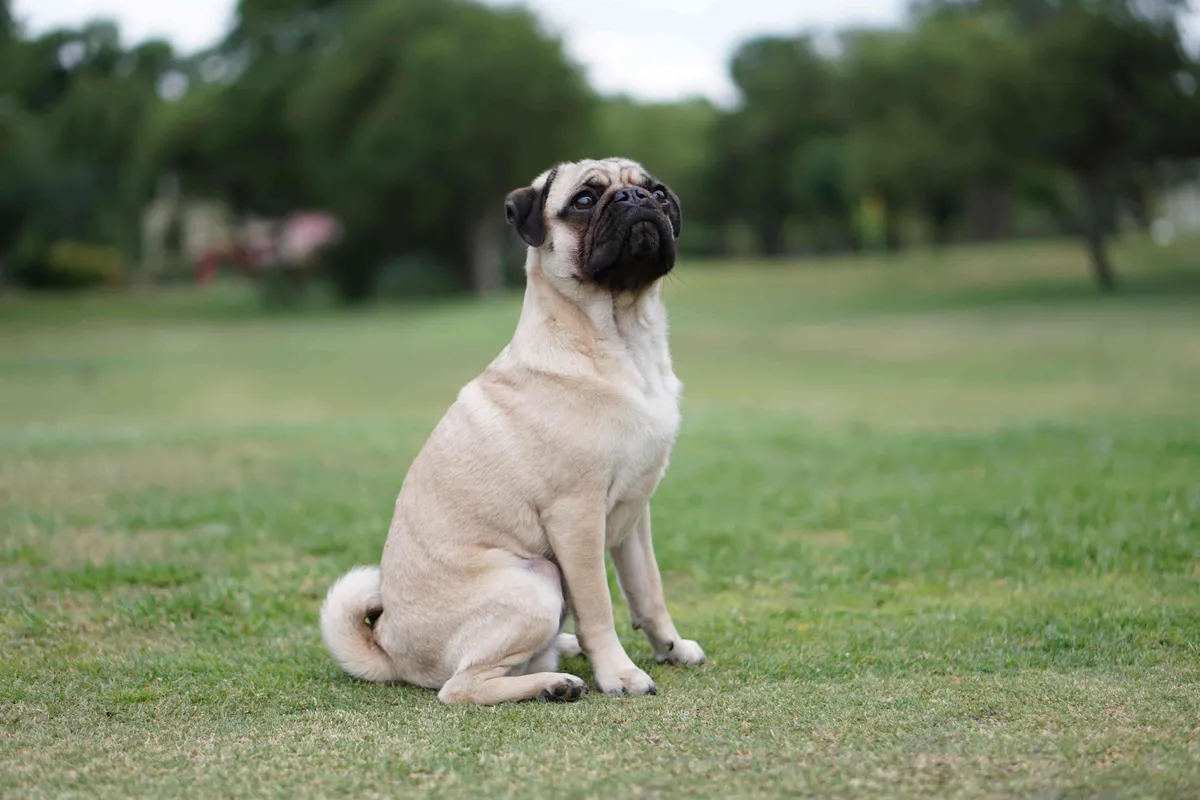
Pug
Health grade EThe Pug is a humorous, extremely people-oriented companion dog—bred as a small Molosser whose only job is to accompany its owner every step of the way.
- Height23–32 cm
- Weight6–9 kg
- Life expectancy12–15 yrs
- Puppy price1,500–2,800 €
- Energy2/5
Why this breed is missing
Why we don't currently place Pug puppies
The breed-specific health risks for the Pug are high—especially when it comes to breathing and stamina. In these cases, a lot depends on the breeder: on consistent screenings, transparent results, and breeding selection that prioritizes health over appearance. Assessing this breed is complex and not straightforward. We currently don't have a standard for this that we would rely on—which is why we aren't showing any breeders or puppies for this breed for the time being. As soon as we can change this, we'll include the breed again.
See dogs available for adoptionThe Essentials at a Glance
The Pug is a humorous, extremely people-oriented companion dog—bred as a small Molosser whose only job is to accompany its owner every step of the way.
- Health grade E: The Pug is classified with a health grade of E, as a large majority of all Pugs show measurable airway restriction due to brachycephalic obstructive airway syndrome (BOAS) and many animals are significantly restricted even under mild exertion or heat.
- You are looking for a dog whose primary life purpose is to be right by your side—they were bred purely for companionship
- You prefer cozy, shorter walks and don't need an athletic companion for hours of hiking
- You have to leave them alone regularly for a normal workday—as a companion dog selected over centuries, they suffer immensely without their humans
Is the Pug right for you?
At a glance
Pug overview
The essentials — key facts, traits, and health priorities — before you dive deeper.
Health grade
Relative to other breeds
S
A
B
C
D
E
Very healthyHigher risk
High risk — only worth it from a thoroughly tested program.
See full health info & tests →
Note: This health overview is AI-assisted and editorially reviewed. It is for orientation only and does not replace veterinary advice.
Lifespan
12–15 yrs
Height
23–32 cm
Weight
6–9 kg
Practical
- Puppy price: 1,500 – 2,800 €
- Coat: Smooth, short, no undercoat
- Origin: China
Temperament
Energy
Trainability
Family fit
With kids
Daily life
Care effort
Shedding
Barking
City-friendly
Guard instinct
What matters most
Especially with a Pug, choosing the right breeder is the single most important decision you'll make. Serious breeders consistently test the parents for inherited conditions, prioritize healthy early socialization, and stay accountable long after handover. A cheap puppy without health screening tends to become the most expensive dog later on.
See HonestDog breeder standards →Colors & coat
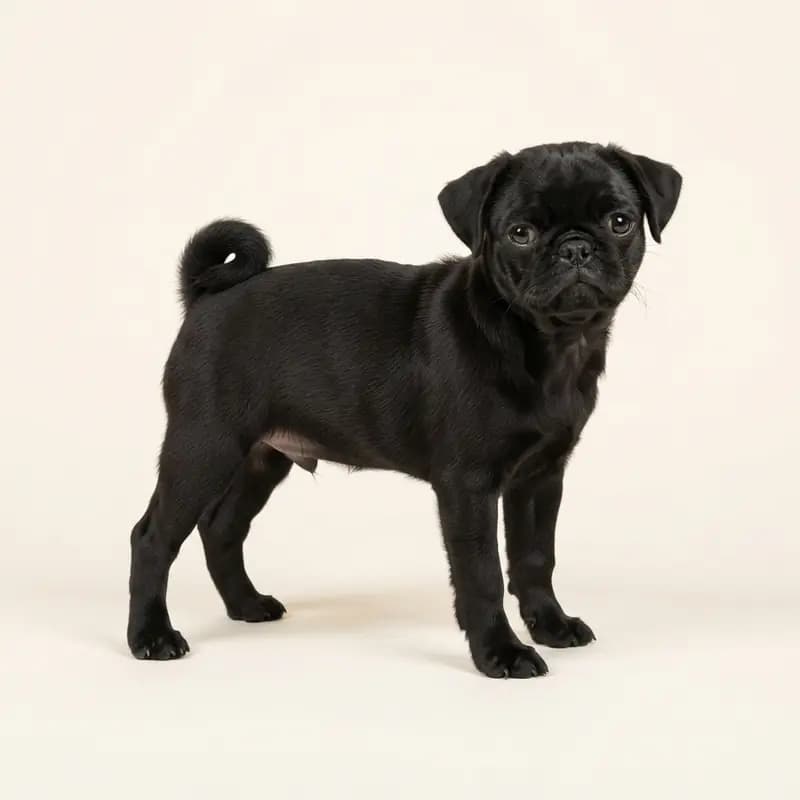
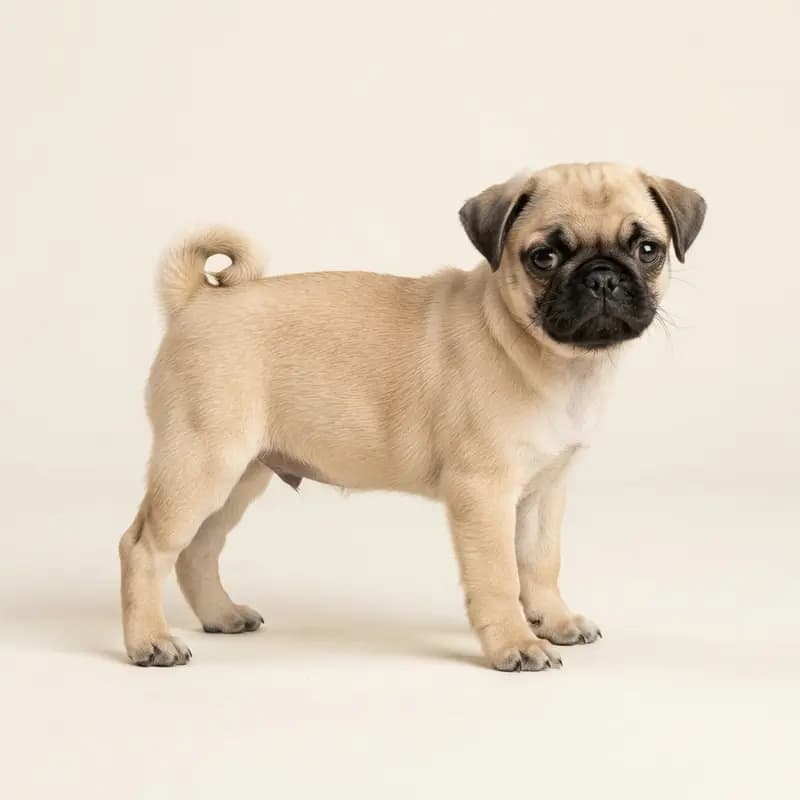
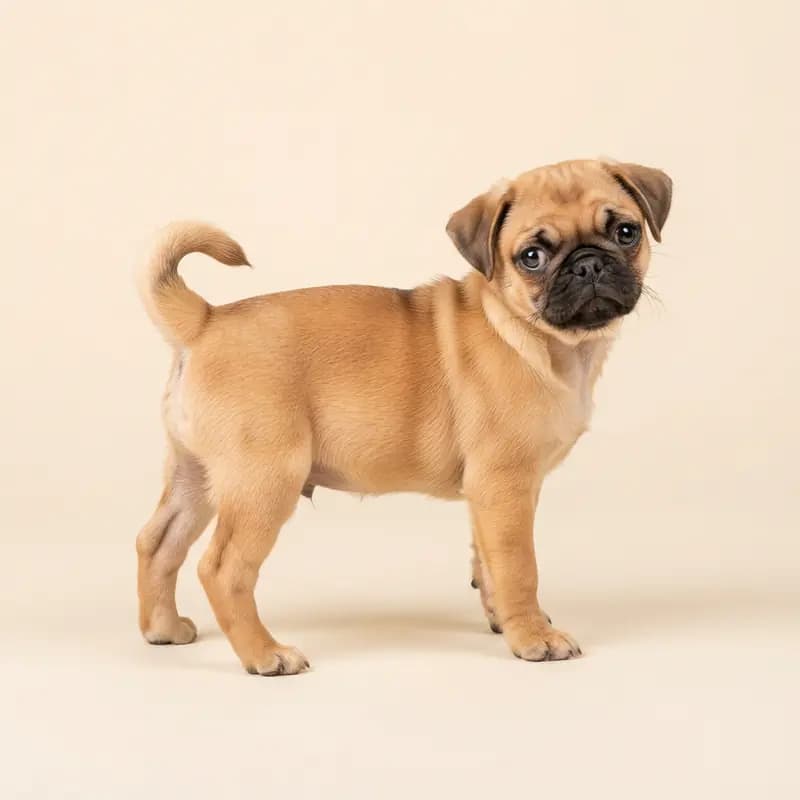
What colors does the Pug come in?
The coat colors you will see in Pug litters — including which ones fall outside the breed standard and which carry genetic risk.
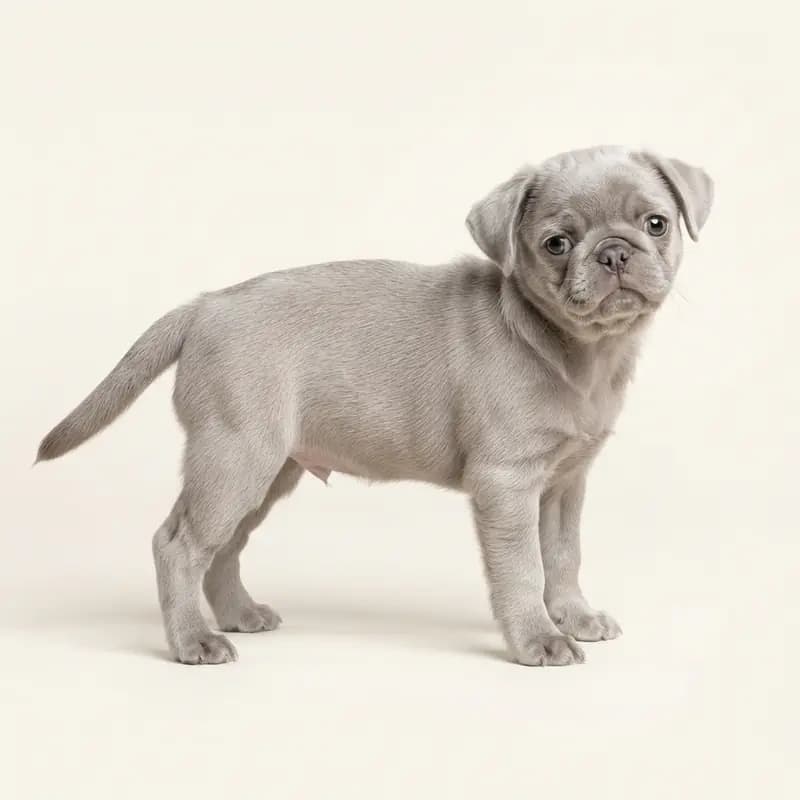
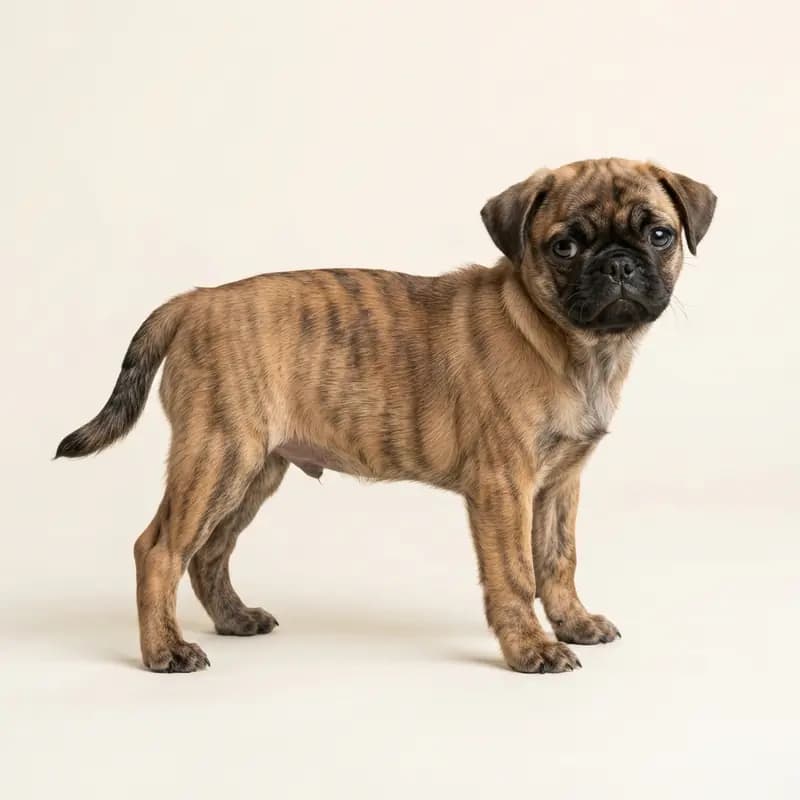
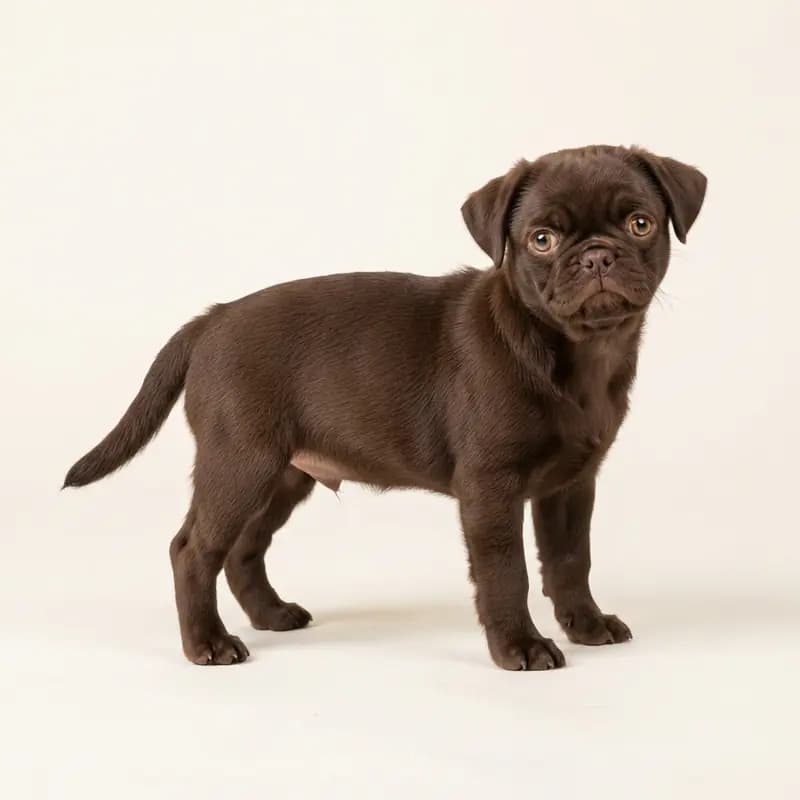
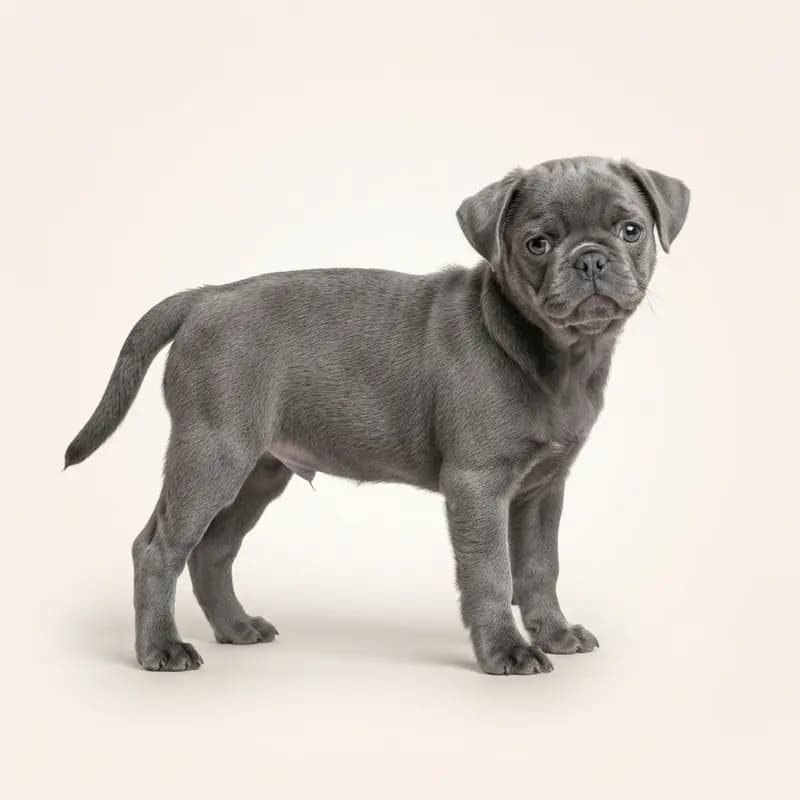
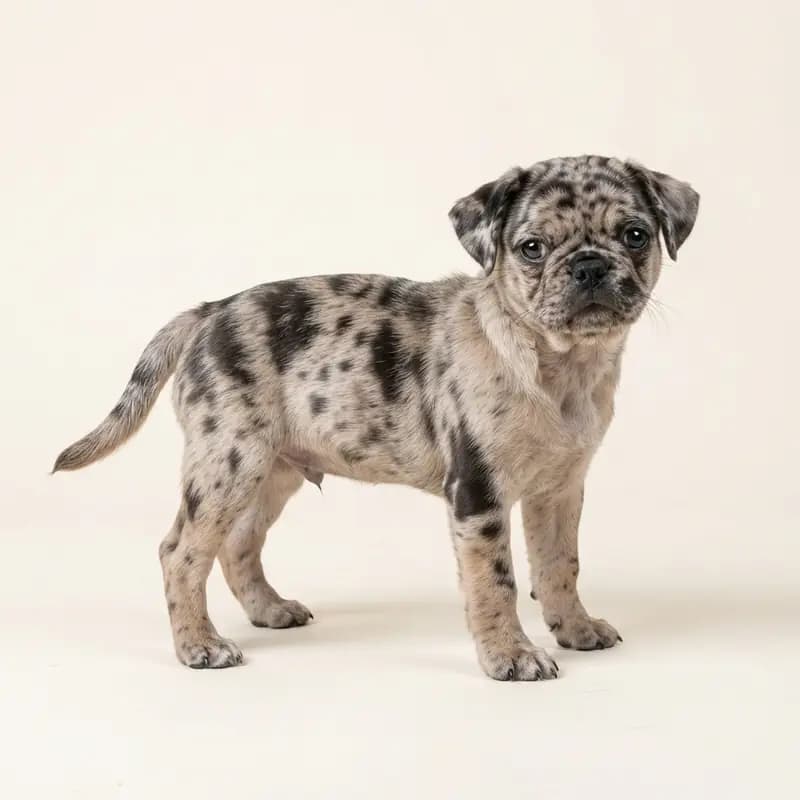
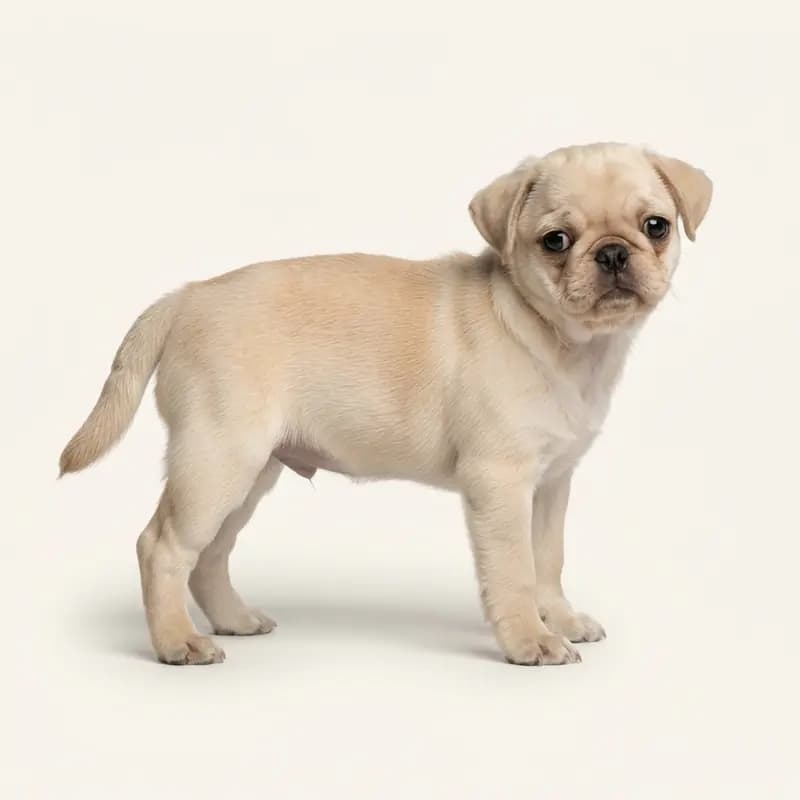
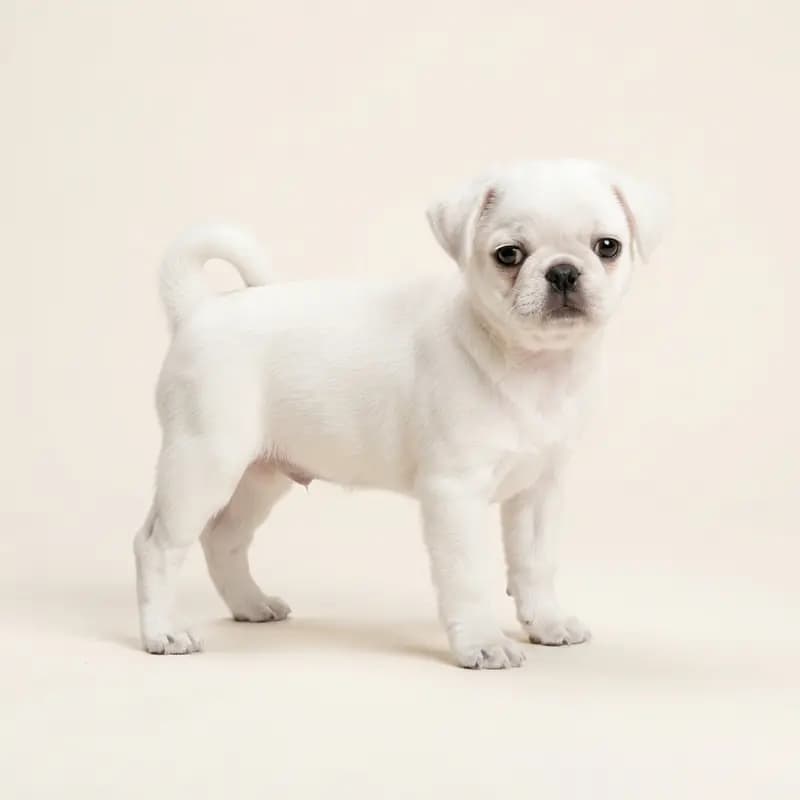
Eye colors
 Brown
Brown
Coat type
 Short
Short Smooth
Is the Pug right for you?
The Pug is a humorous, extremely people-oriented companion dog—bred as a small Molosser whose only job is to accompany its owner every step of the way.
Perfect for you if:
- You are looking for a dog whose primary life purpose is to be right by your side—they were bred purely for companionship
- You prefer cozy, shorter walks and don't need an athletic companion for hours of hiking
- You have a great sense of humor and appreciate a charming clown who occasionally pursues their own stubborn ideas
- You live in the middle of the city, as they don't need a large garden to be perfectly content
Less ideal if:
- You have to leave them alone regularly for a normal workday—as a companion dog selected over centuries, they suffer immensely without their humans
- You plan long outdoor activities in midsummer or live in a hot attic apartment—their anatomy makes them highly sensitive to heat
- You expect an absolutely silent roommate, as snoring, grunting, and wheezing are part of their daily soundscape
- You expect blind obedience—this little Molosser likes to question commands and often decides based on their mood for the day
The real vibes check
A Pug isn't just a dog that trots along beside you—they are a persistent shadow with their own opinions and built-in sound effects. If you accept that they would rather cuddle on the sofa than train in the rain, you will get the most loyal and funniest roommate imaginable.
Self-check
Would the Pug really fit your life?
Answer 6 quick questions about your everyday life and see how well the Pug fits you — including an honest cost estimate per month, per year, and across the dog's lifetime.
Fit checkCost estimateRisk dice
Takes about 1 minute · free & anonymous
Breed Profile
The Pug is a small, powerful and muscular dog breed with a characteristic flat face and large, expressive eyes. He has a short, straight nose and wrinkled skin on his face. Its ears are soft, small, and either "rose-shaped" or "button-shaped." The pug has a straight, high-set tail that often curls into a ring. He belongs to FCI Group 9, the companion and companion dogs. There is no distinction between performance and show lines in the Pug as it is bred primarily as a companion dog.
All measurements in detail
- Height
- 23 - 27 cm (Female), 28 - 32 cm (Male)
- Weight
- 6 - 9 kg (Female), 6 - 9 kg (Male)
- Life Expectancy
- 12 - 15 yrs
- Character
- Adorable, playful, affectionate
- Coat
- Smooth, short, no undercoat
- Coat Color
- Beige, black, silver, apricot
- Price
- 1500 - 2800 €
Character & Temperament
The pug is a real treasure. His cheerful, playful character coupled with his lovable nature makes him a perfect companion. He is often known as the clown of dog breeds because he likes to be the center of attention and make people laugh with his funny antics. His temperament is rather calm, but that doesn't mean he is lazy - he loves to play and run around, especially with children. The bond with his family is of central importance for the Pug. He is very affectionate and people-oriented and loves being part of family life. He enjoys being petted and cared for and is happy to return this affection. The Pug is a breed that wants to be close to its people and therefore does not like to be left alone. If you have to work all day, it is important to have someone to look after your Pug or to find a solution that allows him not to be alone for too long. A pug may not have a strong hunting instinct, but it is curious and can sometimes follow an interesting smell or movement. It is advisable to keep him on a leash in unfamiliar or unsafe areas. Even though the Mugs wasn't bred to be a guard dog, he is alert and will alert his family if he notices anything unusual. However, he is generally friendly towards strangers. Now that you have an idea of what an adorable little companion the Pug is, it's important to also consider a few special features. Due to its flat snout, the Pug is a brachycephalic breed, meaning it can be prone to breathing problems. It's important to pay attention to your pug's health and make sure he doesn't become overweight, which can worsen his breathing problems. In terms of nutrition, the Pug needs a balanced and nutritious diet. He tends to gain weight, so it is important to watch his weight and ensure he is not overfed. Even if the pug is not a sports ace, he still enjoys moderate exercise. Walks and playtime help him stay fit and also provide opportunities for social interaction and mental stimulation. When it comes to training, Pugs are docile, but sometimes a little stubborn. It's important to be patient and use positive reinforcement. They respond well to rewards and praise.
| Trainability Has its own ideas and will test limits. | Strong-willed |
| Watchfulness Reports unusual activity but stays controlled. | Moderate |
| Openness to Strangers Warms up quickly and is generally welcoming. | Friendly |
| Hunting or Herding Drive Barely any prey drive — small animals trigger nothing. | Very low |
Fun Fact!
The Pug is one of the oldest dog breeds and was originally bred as a lap dog for Chinese emperors!
What Awaits You
The Pug is one of the breeds whose appearance is their downfall. Many of these dogs suffer from so-called torture breeding traits, one of which is short nose. The suffering of the dog, the care required for humans and the veterinary costs are very high for many of these dogs. There are now some, not uncontroversial, attempts to breed healthier dogs through cross-breeding (e.g. Retromops).
Housing & Care
The Pug is a great city dog because it doesn't require a lot of space and can adapt well to apartment life. He gets along well with children, but care should always be taken to ensure that interactions are respectful and that the dog is not harassed. Since the Pug has a sociable nature, it often gets along well with cats and other pets if it is properly socialized.
- Family Friendly
Lives for its family — the born family companion.
Ideal family dog - Child Friendly
Takes boisterous and affectionate children in its stride.
Patient with children - Dog Friendly
Actively enjoys the company of other dogs.
Dog-friendly - City Friendly
Small space, noise, lots of people — no problem at all.
Ideal city dog
Owning a dog is a privilege, but it's also a real responsibility. Before you bring one into your life, be honest with yourself about the commitment it takes.
Training & Education
The Pug is a naturally happy and playful dog. He needs mental stimulation, but not intensive physical training. It's important to be patient and use positive reinforcement when training. Since pugs are prone to breathing problems, care should be taken not to overexert them. Short training sessions and gentle walks are ideal. Since the Pug is a social dog, activities that involve social interactions, such as visits to the dog park, can be very enriching for him. It is also important to start socialization early and provide the Pug with a variety of experiences and environments. Frustration tolerance training can be helpful in teaching the Pug how to deal with situations where he doesn't get what he wants right away.
Nutrition & Care
Pugs tend to gain weight, so a balanced diet is crucial. It is advisable to choose high quality food and control the amount of food to avoid obesity. The pug has a short, smooth coat without an undercoat. This makes care relatively easy. Regular brushing helps remove loose hair and keep the coat clean. However, pugs shed quite heavily, so regular brushing is recommended. **Attitude** The Pug is a great city dog because it doesn't require a lot of space and can adapt well to apartment life. He gets along well with children, but care should always be taken to ensure that interactions are respectful and that the dog is not harassed. Since the Pug has a sociable nature, it often gets along well with cats and other pets if it is properly socialized.
| Care Level Minimal effort — occasional brushing and bathing. | Low-maintenance |
| Exercise Needs Enjoys daily movement but isn't a sports dog. | Moderate |
| Shedding Hair everywhere, always — no white clothing survives. | Very heavy |
| Trainability Has its own ideas and will test limits. | Strong-willed |
Our experts are still reviewing this information. Spotted something wrong? Email us at info@honestdog.de.
Health & hereditary diseases
Health
E
High risks
Health grade
The Pug is classified with a health grade of E, as a large majority of all Pugs show measurable airway restriction due to brachycephalic obstructive airway syndrome (BOAS) and many animals are significantly restricted even under mild exertion or heat. In addition to this severe burden, diseases such as keratoconjunctivitis sicca (KCS), meningitis (SRMA), and complex vertebral malformation (CVM) also occur as breed-typical conditions. Responsible breeders counteract these risks through targeted selection and have their breeding animals comprehensively tested. Before buying a puppy, you should therefore definitely ask to see the test results of the parent animals: a clear result for keratoconjunctivitis sicca (KCS) is required, as well as proof of Grade A for meningitis (SRMA) and complex vertebral malformation (CVM).
Grade is relative to other breeds — AI-assisted and editorially reviewed.
In daily life this can mean
You should pay attention to strict weight management, avoid heat and overexertion, and plan for a higher budget for vet visits and potential surgeries from the very beginning.
The breeder's role
Responsible breeders have the airways and spine checked and use DNA tests for neurological issues to avoid extreme over-typing—though the fundamental risks cannot be completely eliminated.
Note: This health overview is AI-assisted and editorially reviewed. It is for orientation only and does not replace veterinary advice.
No Health Tests Available
No specific health tests are currently available for this breed.
Costs & where to find one
How much does a Pug cost?
Keeping a Pug costs around ~€160 per month (€80 – €280, depending on your setup) — about ~€25,950 across the dog's life (13.5 years). We deliberately don't quote a purchase price: we don't place puppies of this breed.
With surgery cover, running costs come to about ~€150 per month — in return, your share of a major operation drops from several thousand euros to around 20 percent.
Per month
~€160
In the first year
~€2,690
Across the dog's life
~€25,950
Estimate at a mid-range setup (suburban, dry food, 1–2 hours of daily exercise), average German prices, as of July 2026.
Calculate your personal costs1-minute self-check with your own answers
Looking for a Pug?
Appearance, variants & origin
History
The full history
The pug has a long and fascinating history. The breed is believed to have originated in China and existed more than 2,000 years ago. In China, these small dogs were highly valued companions of the nobility. In the 16th century, pugs made their way to Europe, where they quickly became favorites of the European nobility, especially in the Netherlands and later in England. They were often depicted in paintings and portraits of the time. The pug was recognized as a separate breed at the end of the 19th century.
Original Use
The Pug was bred as a companion dog for the Chinese imperial family, valued for its friendly and playful nature.
Origin
China
Date
1500
Owner experiences
Loading owner stories
Community Posts
FAQ & more
Frequently asked questions about the Pug
Is a Mops the right dog for me?
The Mops is an adaptable dog that adjusts well to various lifestyles. Research the temperament, grooming needs, and space requirements before deciding.
How long does a Mops live?
The average life expectancy of a Mops is 12-15 years. With proper care and regular vet visits, your dog can live a long, healthy life.
How much grooming does a Mops need?
Mops grooming requirements include regular brushing, nail trimming, and dental care. HonestDog provides detailed grooming tips for every breed.
Is a Mops good for families with children?
The Mops can be a great family dog. Proper training and socialization are key. HonestDog provides family suitability information for every breed.
What colors does the Mops come in?
The Mops comes in these colors: Black, Fawn, Apricot, Silver, Brindle, Chocolate, Blue, Merle, Cream, White. Colors that fall outside the breed standard are marked as such on the breed page.
Loading related articles
Are you a Pug breeder?
Showcase your kennel on HonestDog and reach families searching for a responsibly bred Pug.
Why HonestDog?
What makes HonestDog different from other platforms
Full transparency
We lay out what we have: who the breeder is, how they work, and any health records they've uploaded. So you can judge for yourself.
Responsible breeding, assured
Every breeder on HonestDog has their identity and documents checked before their profile goes live. Health records they upload are shown on the profile, so you can see exactly what has been tested.
Trust and verification
We verify breeders and buyers alike, so every conversation happens on solid ground. It's a new standard of trust in dog breeding.
Less hassle, more time
We've already checked the breeders' documents and gathered the details, so you can skip the endless research and focus on finding the right puppy for your family.
Our Mission

We connect dog lovers with responsible breeders and shelters to ensure every dog finds the perfect home.
Founded by dog enthusiasts, our platform focuses on ethical dog breeding and adoption.
Why HonestDog?
We connect you with vetted breeders and shelters so you can find your — your new companion — with confidence.
Vetted Partners
Only verified breeders and shelters — for a safe start.
Highest Standards
Every animal's health and wellbeing is our top priority.
Guides & Resources
Guides, checklists, and breed profiles — so you can make a well-informed decision.