Loading breed
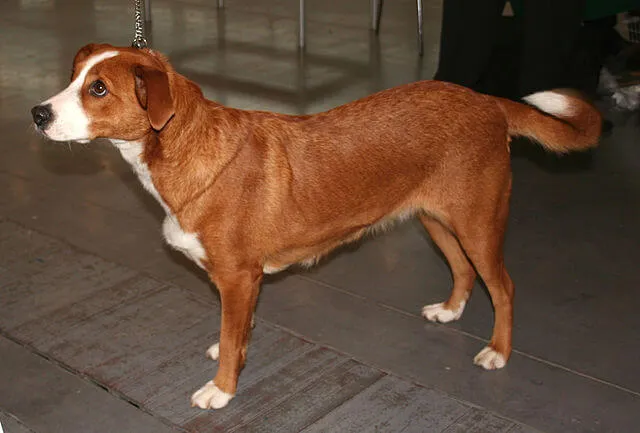
Austrian Pinscher
Health grade BThe Österreichischer Pinscher is a robust, incorruptible companion—bred as a territorial farm dog that loudly announces every stranger, keeps rats away, and never leaves its home voluntarily.
- Height42–50 cm
- Weight12–20 kg
- Life expectancy12–14 yrs
- Puppy price1,500–2,500 €
- Energy4/5
The Essentials at a Glance
The Österreichischer Pinscher is a robust, incorruptible companion—bred as a territorial farm dog that loudly announces every stranger, keeps rats away, and never leaves its home voluntarily.
- Health grade B: The Österreichischer Pinscher is considered a robust landrace breed with above-average baseline health.
- You own a house with a garden or yard where his deeply rooted job as a watchdog won't trigger neighborhood disputes.
- You are looking for a loyal companion who bonds closely with his family but keeps a healthy distance from strangers.
- You live in a thin-walled apartment—he was bred to bark at every noise, and that is exactly what he will do.
Is the Austrian Pinscher right for you?
At a glance
Austrian Pinscher overview
The essentials — key facts, traits, and health priorities — before you dive deeper.
Health grade
Relative to other breeds
S
A
B
C
D
E
Very healthyHigher risk
Solid — a handful of items a good breeder watches.
See full health info & tests →
Note: This health overview is AI-assisted and editorially reviewed. It is for orientation only and does not replace veterinary advice.
Lifespan
12–14 yrs
Height
42–50 cm
Weight
12–20 kg
Practical
- Puppy price: 1,500 – 2,500 €
- Coat: Short, dense, with an undercoat
- Origin: Austria
Temperament
Energy
Trainability
Family fit
With kids
Daily life
Care effort
Shedding
Barking
City-friendly
Guard instinct
What matters most
Especially with a Austrian Pinscher, choosing the right breeder is the single most important decision you'll make. Serious breeders consistently test the parents for inherited conditions, prioritize healthy early socialization, and stay accountable long after handover. A cheap puppy without health screening tends to become the most expensive dog later on.
See HonestDog breeder standards →Colors & coat
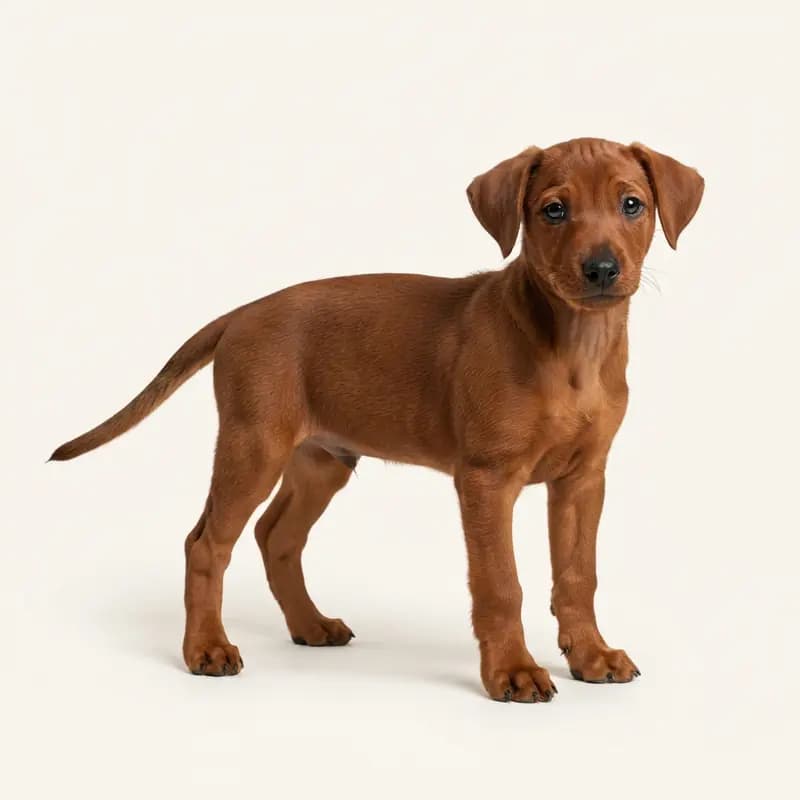
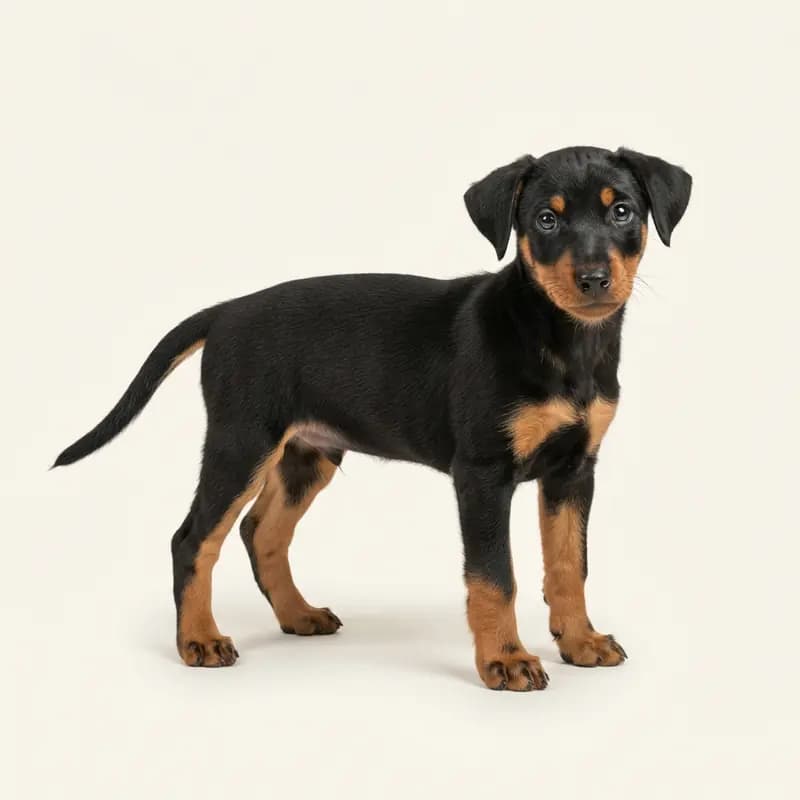
What colors does the Austrian Pinscher come in?
The coat colors you will see in Austrian Pinscher litters — including which ones fall outside the breed standard and which carry genetic risk.
Yellow
- Red
- Black and tan
Eye colors
 Brown
Brown
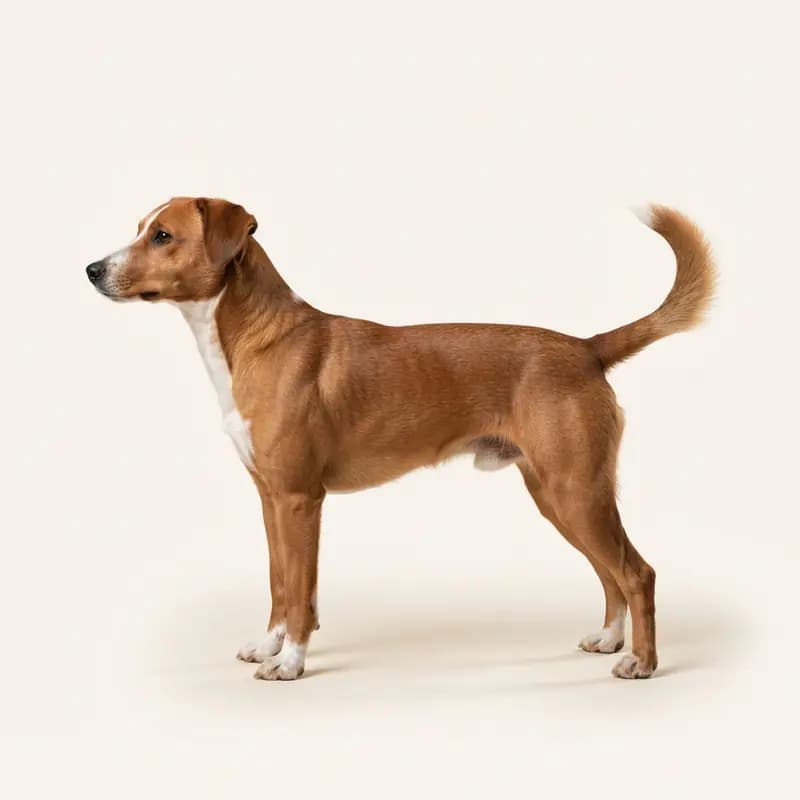
Coat type
 Illustrative image
Short
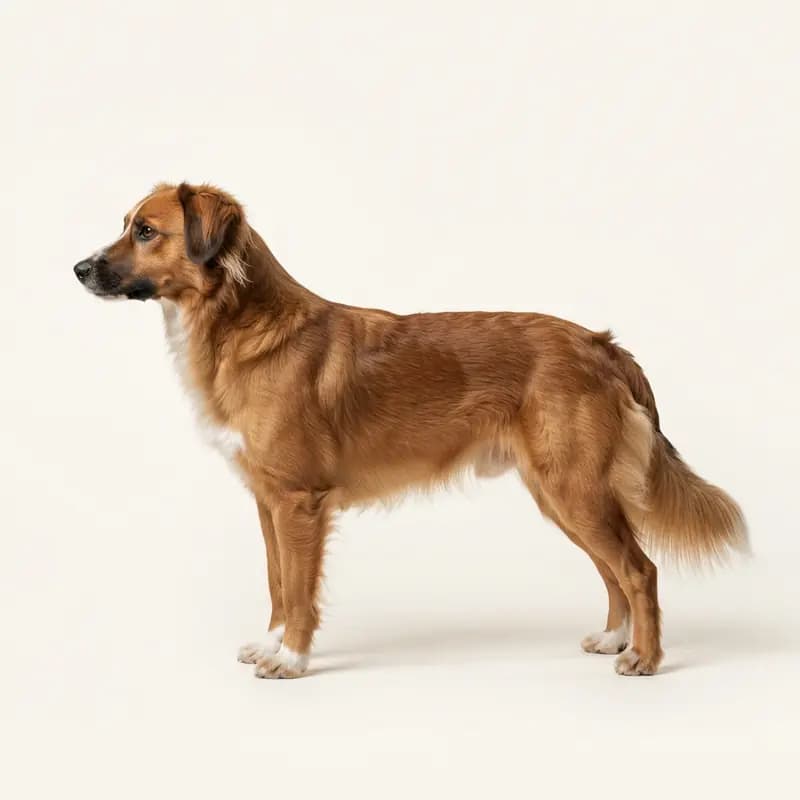 Illustrative image
Medium
 Smooth
 Double coat
Is the Austrian Pinscher right for you?
The Österreichischer Pinscher is a robust, incorruptible companion—bred as a territorial farm dog that loudly announces every stranger, keeps rats away, and never leaves its home voluntarily.
Perfect for you if:
- You own a house with a garden or yard where his deeply rooted job as a watchdog won't trigger neighborhood disputes.
- You are looking for a loyal companion who bonds closely with his family but keeps a healthy distance from strangers.
- You want a persistent partner for hikes who can usually run off-leash in a relaxed manner thanks to his lack of a hunting instinct for big game.
- You appreciate his rustic, independent character and don't need a dog that blindly follows every command on the training field.
Less ideal if:
- You live in a thin-walled apartment—he was bred to bark at every noise, and that is exactly what he will do.
- You expect your dog to joyfully greet every visitor at the door—as a guardian, he views strangers as suspicious by default.
- You keep small pets like guinea pigs or rabbits—as a genetically hardwired ratter, he often makes short work of rodents.
The real vibes check
An Österreichischer Pinscher is not a trendy city dog, but rather the incorruptible caretaker of your life. He patrols the property boundaries, reliably reports the unknown, and then lies deeply relaxed at your feet. You aren't getting an 'everybody's darling,' but a sturdy guardian who would literally walk through fire for his family.
Self-check
Would the Austrian Pinscher really fit your life?
Answer 6 quick questions about your everyday life and see how well the Austrian Pinscher fits you — including an honest cost estimate per month, per year, and across the dog's lifetime.
Fit checkCost estimateRisk dice
Takes about 1 minute · free & anonymous
Breed Profile
The Austrian Pinscher is a medium-sized, powerfully built dog whose appearance reflects its role as a farm and family companion dog. His strong physique, characterized by strong legs and a compact appearance, shows his working history. The head is strong and fairly broad, with high-set, semi-rigid ears that stand in a characteristic V-shape when alert. He belongs to FCI Group 2, Section 1.1: Pinscher, although there is no division into performance and show lines. Every Austrian Pinscher should have both a beautiful appearance and good working ability. The breed is bred exclusively in the solid, hardy form that maintains its farm working abilities.
All measurements in detail
- Height
- 42 - 48 cm (Female), 44 - 50 cm (Male)
- Weight
- 12 - 18 kg (Female), 14 - 20 kg (Male)
- Life Expectancy
- 12 - 14 yrs
- Character
- Robust, alert, people-oriented
- Coat
- Short, dense, with an undercoat
- Coat Color
- Varies from yellow, deer red to black and shades of brown, often with white markings
- Price
- 1500 - 2500 €
Character & Temperament
In essence, the Austrian Pinscher is a true all-rounder. He is both a reliable working dog and a loving family dog. Its robust and uncomplicated nature makes it an ideal companion for country life. But he can also be a happy dog in the city if he gets enough exercise. Despite his work history, he is not hyperactive, but rather moderately active with sufficient urge to move. Although he needs regular exercise and mental activity, he is by no means a sports junkie. A few long walks, some play and training, maybe even a game of fetch or nose work are usually enough to keep him happy and balanced. The Austrian Pinscher is a very people-oriented dog. He is very attached to his family and always wants to be there. He enjoys the company of people and is generally friendly towards strangers as long as he does not see them as threatening. He usually gets along well with children and is a patient and gentle playmate. He can certainly learn to stay alone for a few hours, but should not be left alone all day. He needs the company of his people and may develop problems with separation anxiety if he is alone for too long or too often. In general, the Austrian Pinscher does not have a strong hunting instinct, but can show an interest in small animals, especially when they are escaping. It is therefore important to socialize him well from an early age and teach him that chasing cats or other pets is not desired. What sets the Austrian Pinscher apart is its alertness. He is always attentive and alert and quickly becomes aware of any unusual noises or movements. He doesn't bark excessively, but can be loud when he feels he needs to protect his family or territory. He is not an aggressive dog, but he will not hesitate to defend his family if he believes they are threatened. The Austrian Pinscher is a versatile, charming and easy-going dog that can adapt well to different living conditions. He is equally suitable for country life and city life, as long as he gets enough exercise and activity. His robustness and adaptability, combined with his friendly and people-oriented character, make him a wonderful companion for many different people.
| Trainability Willing to learn with clear rules and regular training. | Balanced |
| Watchfulness A natural watchdog with real protective instinct. | High |
| Openness to Strangers Neither pushily friendly nor suspicious. | Neutral |
| Hunting or Herding Drive Mild interest in movement and small animals — easily managed. | Low |
Fun Fact!
Even though he's "Pinscher" that is, the Austrian Pinscher is actually not a real Pinscher. The name "Pinscher" was previously simply used for all small to medium-sized dogs with short fur and pointy ears!
What Awaits You
The Austrian Pinscher is a lively and alert dog that requires a lot of exercise and activity. He is intelligent and eager to learn, making him easy to train. This breed is well suited as a family dog if it gets enough exercise and mental stimulation. The Austrian Pinscher is robust and shows a strong bond with his people.
Housing & Care
The Austrian Pinscher is suitable for life in both the country and the city, provided he gets enough exercise and activity. He is robust and adaptable and can easily get used to different living conditions. Children are no problem for the Austrian Pinscher, on the contrary, he loves to play and run around with them. He is patient and gentle and a great playmate for children. Nevertheless, interactions between children and dogs should always be supervised by adults. For other pets, it may depend on how well the dog is socialized. The Austrian Pinscher typically has a moderate prey drive, but with good socialization and training, he can learn to accept cats and other pets.
- Family Friendly
Loves family life and thrives in a group.
Family-oriented - Child Friendly
Gets on well with children — with adult supervision.
With supervision - Dog Friendly
Usually gets on fine with other dogs.
Generally tolerant - City Friendly
City-appropriate with enough exercise and stimulation.
Manageable in cities
Owning a dog is a privilege, but it's also a real responsibility. Before you bring one into your life, be honest with yourself about the commitment it takes.
Training & Education
The Austrian Pinscher is an intelligent and willing to learn dog that is easy to train. He is not a “ball junkie”, but still needs enough mental and physical exercise. In addition to the usual walks and play sessions, he can enjoy nose work, search games or fetch, for example. Its natural alertness makes it an attentive and vigilant companion, reacting quickly to unusual noises or movements. However, this alertness should not be encouraged excessively to prevent the dog from becoming too nervous or over-reactive. Instead, it may make sense to train the dog to remain calm and composed in such situations and to wait for your instructions. It is important that the Austrian Pinscher learns to control his impulses and tolerate frustration. He is a very people-oriented dog and always wants to be there. He should therefore learn to stay alone sometimes to avoid separation anxiety.
Nutrition & Care
An Austrian Pinscher is not picky about his food. Whether you choose dry or wet food, or a raw or cooked diet, your Pinscher will likely accept it happily. However, make sure that the food has a good balance of proteins, fats, carbohydrates, vitamins and minerals. When it comes to grooming, the Austrian Pinscher is relatively easy to care for. It has a dense undercoat and a short, hard top coat that repels dirt and water well. The coat should be brushed regularly "about once a week" to remove dead hair and promote skin health. The Austrian Pinscher changes its coat twice a year, usually in spring and autumn, and sheds more heavily during this time. With its thick undercoat, it copes well with the German climate.
| Care Level Minimal effort — occasional brushing and bathing. | Low-maintenance |
| Exercise Needs Needs several hours of serious exercise every day. | Very active |
| Shedding Regular shedding — dog hair on clothes is now normal. | Moderate |
| Trainability Willing to learn with clear rules and regular training. | Balanced |
Our experts are still reviewing this information. Spotted something wrong? Email us at info@honestdog.de.
Health & hereditary diseases
Health
B
Solid
Health grade
The Österreichischer Pinscher is considered a robust landrace breed with above-average baseline health. Nevertheless, prospective buyers should pay attention to hip dysplasia (HD) and patellar luxation, as these joint issues require active monitoring within breeding programs. Isolated cases of epilepsy also occur, which is why a thorough review of the puppy's pedigree is advisable before purchase.
Grade is relative to other breeds — AI-assisted and editorially reviewed.
In daily life this can mean
With joint-friendly exercise during the first year, a healthy weight, and regular eye check-ups, you can do a lot to ensure your dog stays active and fit for a long time.
The breeder's role
Reputable breeders have the parents' hips, elbows, knees, and eyes tested and pay special attention to diverse bloodlines due to the small gene pool.
Note: This health overview is AI-assisted and editorially reviewed. It is for orientation only and does not replace veterinary advice.
No Health Tests Available
No specific health tests are currently available for this breed.
Costs & where to find one
How much does a Austrian Pinscher cost?
A Austrian Pinscher costs around ~€170 per month (€90 – €310, depending on your setup). The first year adds up to roughly ~€4,830 including purchase, equipment and puppy school; across the dog's life (13 years) it comes to about ~€28,840.
With surgery cover, running costs come to about ~€160 per month — in return, your share of a major operation drops from several thousand euros to around 20 percent.
Per month
~€170
In the first year
~€4,830
Across the dog's life
~€28,840
Purchase from a breeder: €1,500 – €2,500
Estimate at a mid-range setup (suburban, dry food, 1–2 hours of daily exercise), average German prices, as of July 2026.
Calculate your personal costs1-minute self-check with your own answers
Looking for a Austrian Pinscher?
HonestDog Concierge
No verified Austrian Pinscher breeders on HonestDog yet
We currently have no breeders for this breed who have passed our verification. Create your short buyer profile: we'll set up your search alert, review a possible source and email you within 28 days.
Appearance, variants & origin
History
The full history
The Austrian Pinscher is, as the name suggests, a breed of dog that originated in Austria. It evolved from the original farm dogs that have worked on Austrian farms for centuries, helping to protect property, herd herds and control pests. It is a very ancient breed, but its exact origin is difficult to determine as it probably evolved over the centuries from various local dog breeds. It was only in the 20th century that the breed began to be standardized and selectively bred. It was only recognized as an independent breed in 1928 by the Austrian Cynological Association. Unfortunately, the breed was almost extinct after the Second World War, but was revived by dedicated breeders and is now relatively common again, albeit mainly in its home country.
Original Use
The Austrian Pinscher was used as a versatile farm dog for herding livestock and as a guard dog.
Origin
Austria
Date
1800
Owner experiences
What owners say about the Austrian Pinscher
Sabine P., Halterin aus Oberösterreich (zwei Hündinnen, seit 2005)
Ich lebe nun schon seit vielen Jahren mit zwei Österreichischen Pinscher-Hündinnen zusammen und kann sagen: Sie sind wunderbare, vielseitige Begleiter, aber sie bringen auch ihren ganz eigenen Kopf mit. Man darf keinen Hund erwarten, der wie ein Schäferhund bedingungslos gefallen möchte. Wenn wir beim Agility-Training eine Passage zum fünften Mal wiederholen, schaltet meine Hündin gerne mal auf stur, wird demonstrativ langsamer und hinterfragt den Sinn der Übung. Mit der richtigen Motivation über Spielzeug oder Futter arbeiten sie aber extrem gerne mit.
Zu Hause und auf unserem Grundstück wissen beide ganz genau, was ihr Territorium ist. Unterwegs – zum Beispiel beim Camping oder im Gasthaus – verhalten sie sich dagegen völlig neutral und ruhig, ohne dass wir Probleme mit unnötigem Bellen hätten. Ihre feine Nase entgeht nichts; im Garten wird leidenschaftlich nach jedem Mausloch gestöbert, denn das Jagen von kleinen Nagern liegt ihnen einfach im Blut.
Wer sich für diese tolle Rasse interessiert, sollte sich allerdings gut informieren. Da die Rasse sehr selten ist und der Genpool klein war, sollte man beim Kauf unbedingt auf einen sehr niedrigen Inzuchtkoeffizienten achten. Ich empfehle daher, sich direkt an seriöse Züchter in Österreich zu wenden, um einen gesunden und wesensfesten Hund zu bekommen.
Dieter M., Halter aus Brandenburg (Rüde, seit 2019)
Wir haben lange nach dem perfekten Hund gesucht, der robust genug für unsere Reisen im Wohnmobil ist, und haben in unserem 'ÖPi' den idealen Partner gefunden. Er ist aktiv, liebt die Natur und passt sich unserem mobilen Alltag super an. Allerdings merkt man ihm seine Vergangenheit als Hofhund deutlich an: Fremden gegenüber ist er erst einmal misstrauisch. Wenn jemand unserem Stellplatz oder Territorium zu nahe kommt, meldet er das sofort lautstark.
Er rennt dann auch gerne mal bellend um den 'Eindringling' herum, bleibt dabei aber immer auf Abstand und wird nicht aggressiv. Dieses misstrauische Verhalten muss man als Halter einfach händeln können und in die richtigen Bahnen lenken. Auch bei Hundebegegnungen an der Leine gibt es ab und zu noch aufgeregtes Bellen, weil er unbedingt hinterschnüffeln oder spielen will.
Für uns ist er der beste Begleiter, den wir uns wünschen konnten. Er ist aufmerksam, extrem menschenbezogen und will am liebsten immer mitten im Geschehen sein. Man bekommt hier einen echten, urigen Charakterhund, der gefordert werden will, aber im Haus auch wunderbar zur Ruhe kommt.
Michael T., Halter aus Kärnten (Hündin, 12 Jahre)
Meine Pinscher-Hündin hat mich stolze 12 Jahre lang begleitet und war eine absolute Seele von einem Hund. Sie war so sanft und geduldig, dass sie sogar eine Ausbildung zum Therapiehund absolviert hat. In der Familie war sie extrem anhänglich und kinderlieb. Größeres Wild im Wald hat sie nie interessiert, aber wehe, es hat sich eine Maus oder Ratte im Garten gezeigt – da kam sofort der leidenschaftliche Jagdtrieb durch.
Was man bei dieser Rasse definitiv wissen muss: Sie sind unheimlich schlau und lernen schnell, nutzen aber auch jede Unsicherheit des Halters sofort schamlos aus. Wenn man nicht konsequent und souverän führt, trifft der Pinscher seine eigenen Entscheidungen. Außerdem war meine Hündin extrem verfressen, was die Erziehung mit Leckerlis zwar erleichtert hat, aber man musste beim Gewicht wirklich aufpassen.
Für mich ist der Österreichische Pinscher der perfekte Allrounder für aktive, selbstbewusste Menschen, die viel draußen sind. Sie sind robust, unkompliziert im Alltag und treue Wächter, solange man von Anfang an klare Grenzen setzt.
Paraphrased from real owner reports
Loading owner stories
FAQ & more
Frequently asked questions about the Austrian Pinscher
Is a Austrian Pinscher the right dog for me?
The Austrian Pinscher is an active dog that needs plenty of exercise and mental stimulation. Research the temperament, grooming needs, and space requirements before deciding.
How long does a Austrian Pinscher live?
The average life expectancy of a Austrian Pinscher is 12-14 years. With proper care and regular vet visits, your dog can live a long, healthy life.
How much grooming does a Austrian Pinscher need?
Austrian Pinscher grooming requirements include regular brushing, nail trimming, and dental care. HonestDog provides detailed grooming tips for every breed.
Is a Austrian Pinscher good for families with children?
The Austrian Pinscher can be a great family dog. Proper training and socialization are key. HonestDog provides family suitability information for every breed.
What colors does the Austrian Pinscher come in?
The Austrian Pinscher comes in these colors: Yellow, Red, Black and tan.
Loading related articles
Are you a Austrian Pinscher breeder?
Showcase your kennel on HonestDog and reach families searching for a responsibly bred Austrian Pinscher.
Why HonestDog?
What makes HonestDog different from other platforms
Full transparency
We lay out what we have: who the breeder is, how they work, and any health records they've uploaded. So you can judge for yourself.
Responsible breeding, assured
Every breeder on HonestDog has their identity and documents checked before their profile goes live. Health records they upload are shown on the profile, so you can see exactly what has been tested.
Trust and verification
We verify breeders and buyers alike, so every conversation happens on solid ground. It's a new standard of trust in dog breeding.
Less hassle, more time
We've already checked the breeders' documents and gathered the details, so you can skip the endless research and focus on finding the right puppy for your family.
Our Mission

We connect dog lovers with responsible breeders and shelters to ensure every dog finds the perfect home.
Founded by dog enthusiasts, our platform focuses on ethical dog breeding and adoption.
Why HonestDog?
We connect you with vetted breeders and shelters so you can find your — your new companion — with confidence.
Vetted Partners
Only verified breeders and shelters — for a safe start.
Highest Standards
Every animal's health and wellbeing is our top priority.
Guides & Resources
Guides, checklists, and breed profiles — so you can make a well-informed decision.