Loading breed

Nova Scotia Duck Tolling Retriever
Health grade CThe Nova Scotia Duck Tolling Retriever is a highly intelligent, extremely responsive Apportierhund (retriever)—bred to playfully lure waterfowl to the shore and retrieve them from icy water, making it the most work-intensive of all retrievers.
- Height45–51 cm
- Weight17–23 kg
- Life expectancy12–14 yrs
- Puppy price1,800–3,000 €
- Energy4/5
The Essentials at a Glance
The Nova Scotia Duck Tolling Retriever is a highly intelligent, extremely responsive Apportierhund (retriever)—bred to playfully lure waterfowl to the shore and retrieve them from icy water, making it the most work-intensive of all retrievers.
- Health grade C: The Nova Scotia Duck Tolling Retriever receives a grade of C because the breed carries an above-average genetic burden, requiring 11 mandatory health tests.
- You want to incorporate daily dummy work, agility, or search tasks—no dog of this breed can be satisfied with just walks.
- You appreciate a dog with an extreme will-to-please that simultaneously requires sensitive, clear guidance to prevent it from becoming overstimulated.
- You expect the deeply relaxed Labrador mode—the Toller was bred for maximum reactivity and tends to let out the infamous, shrill 'Toller scream' when frustrated.
Is the Nova Scotia Duck Tolling Retriever right for you?
At a glance
Nova Scotia Duck Tolling Retriever overview
The essentials — key facts, traits, and health priorities — before you dive deeper.
Health grade
Relative to other breeds
S
A
B
C
D
E
Very healthyHigher risk
Average — several important tests are expected.
See full health info & tests →
Note: This health overview is AI-assisted and editorially reviewed. It is for orientation only and does not replace veterinary advice.
Lifespan
12–14 yrs
Height
45–51 cm
Weight
17–23 kg
Practical
- Puppy price: 1,800 – 3,000 €
- Coat: Medium length, water-repellent, dense undercoat
- Origin: Canada
Temperament
Energy
Trainability
Family fit
With kids
Daily life
Care effort
Shedding
Barking
City-friendly
Guard instinct
What matters most
Especially with a Nova Scotia Duck Tolling Retriever, choosing the right breeder is the single most important decision you'll make. Serious breeders consistently test the parents for inherited conditions, prioritize healthy early socialization, and stay accountable long after handover. A cheap puppy without health screening tends to become the most expensive dog later on.
See HonestDog breeder standards →Colors & coat
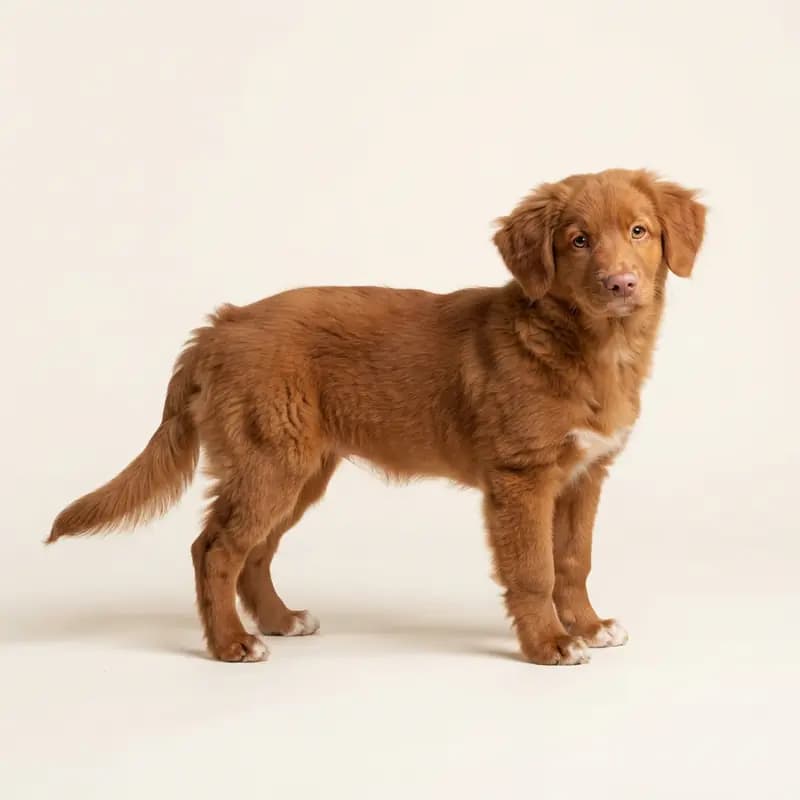
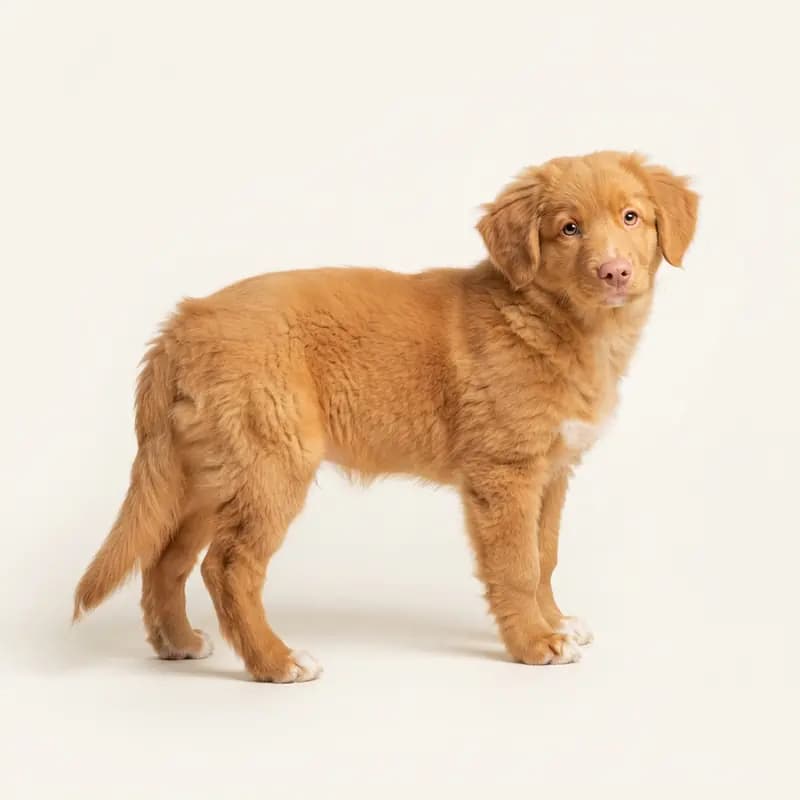
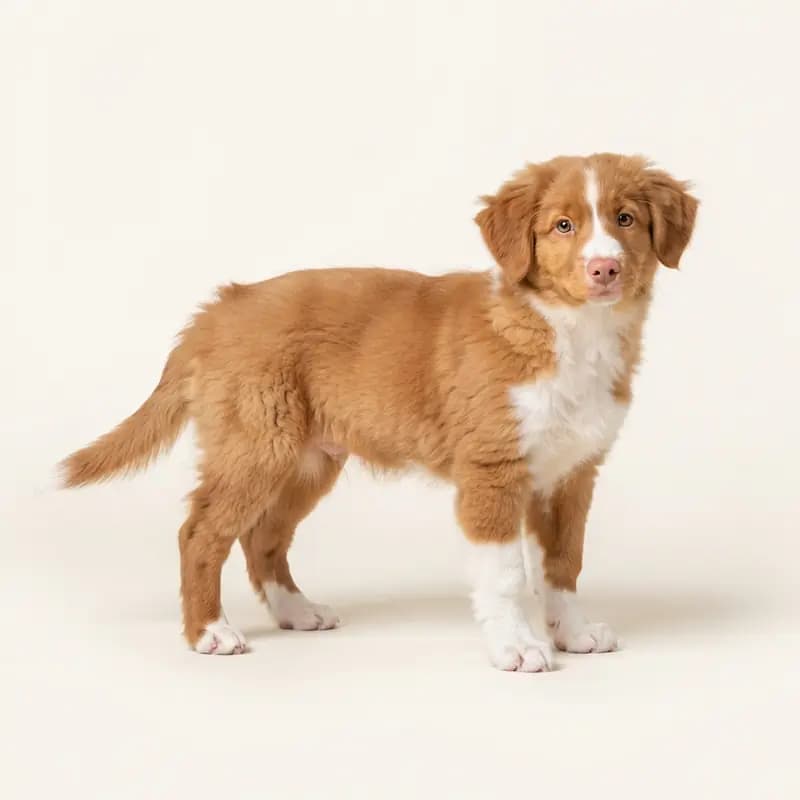
What colors does the Nova Scotia Duck Tolling Retriever come in?
The coat colors you will see in Nova Scotia Duck Tolling Retriever litters — including which ones fall outside the breed standard and which carry genetic risk.
Eye colors
 Amber
Amber Brown
Brown
Coat type
 Medium
 Double coat
Is the Nova Scotia Duck Tolling Retriever right for you?
The Nova Scotia Duck Tolling Retriever is a highly intelligent, extremely responsive Apportierhund (retriever)—bred to playfully lure waterfowl to the shore and retrieve them from icy water, making it the most work-intensive of all retrievers.
Perfect for you if:
- You want to incorporate daily dummy work, agility, or search tasks—no dog of this breed can be satisfied with just walks.
- You appreciate a dog with an extreme will-to-please that simultaneously requires sensitive, clear guidance to prevent it from becoming overstimulated.
- You prefer to spend your free time actively in nature and aren't put off by wind, weather, or muddy water.
- Ideally, you already have experience with high-drive breeds and know how to actively teach a dog how to settle down.
Less ideal if:
- You expect the deeply relaxed Labrador mode—the Toller was bred for maximum reactivity and tends to let out the infamous, shrill 'Toller scream' when frustrated.
- You have to leave him alone for eight hours every day while he waits idly for you to get home.
- You live in a very loud, chaotic household where the dog is constantly exposed to stimuli and can never switch off.
The real vibes check
The Toller is often called a Border Collie in a retriever costume, and that hits the nail on the head. When there is work to be done, he literally explodes with eagerness, but he needs your active help afterward to find the off-switch. You aren't getting an uncomplicated 'sidekick' dog, but a sensitive specialist who will go through fire—and into the coldest water—for you.
Self-check
Would the Nova Scotia Duck Tolling Retriever really fit your life?
Answer 6 quick questions about your everyday life and see how well the Nova Scotia Duck Tolling Retriever fits you — including an honest cost estimate per month, per year, and across the dog's lifetime.
Fit checkCost estimateRisk dice
Takes about 1 minute · free & anonymous
Breed Profile
The Nova Scotia Duck Tolling Retriever, affectionately often referred to as the “Toller”. is the smallest of the retriever breeds. With his sparkling, almond-shaped eyes and fluffy tail that is often in motion, he is a real eye-catcher. Its medium-length coat is soft and water-repellent with a thick undercoat that protects it from cold water. The Toller belongs to FCI Group 8, the retrieving dogs, searching dogs and water dogs. There is no real distinction between performance and show lines in this breed, as they are usually presented for both work purposes and in exhibitions.
All measurements in detail
- Height
- 45 - 48 cm (Female), 48 - 51 cm (Male)
- Weight
- 17 - 20 kg (Female), 20 - 23 kg (Male)
- Life Expectancy
- 12 - 14 yrs
- Character
- Intelligent, playful, loving
- Coat
- Medium length, water-repellent, dense undercoat
- Coat Color
- Different shades of red or orange
- Price
- 1800 - 3000 €
Character & Temperament
The Toller is an intelligent, energetic and playful dog who reaches deep into the hearts of those lucky enough to share his life. Due to his hunting history, he is an extremely attentive and focused dog who enjoys working. You'll find that he has an incredible enthusiasm for retrieving - he just loves bringing things back! He is also a very people-oriented dog. The Toller forms a close bond with his family and would like to be there everywhere. He is often reserved towards strangers, but not aggressive. He is generally good with children, but as with any breed, it is important that both children and dogs learn to be respectful of one another. If you are thinking of a dog that will accompany you on long walks, then the Toller is perfect. He loves being outside and exploring, especially when there is water nearby. Swimming is one of his favorite activities! But pay attention: He tends to show strong prey-catching and hunting behavior. This may mean that he has a tendency to hunt birds, squirrels and other animals. So it's important that you work on teaching him how to behave in such situations right from the start. A Toller can also learn to stay alone, but he will prefer it not to be too often or for too long. As an intelligent dog, he needs mental stimulation and can become bored if left alone for long periods of time. This can lead to undesirable behavior. He is also an alert dog and will often bark to let you know when someone is at the door or there is movement on your property. If you live in an apartment, you may need to work on limiting barking. Overall, the Nova Scotia Duck Tolling Retriever is a wonderful companion, especially if you have an active lifestyle. He will fill your life with joy, laughter and lots of ball fetch games. Don't forget that he also needs commitment and time for training and mental stimulation. If you are willing to give him that, you will find in him a loyal friend who will make every day a little brighter.
| Trainability Bred to work closely alongside humans. | Highly trainable |
| Watchfulness Occasionally alerts but is fundamentally open. | Low |
| Openness to Strangers Warms up quickly and is generally welcoming. | Friendly |
| Hunting or Herding Drive Powerful instinct that can override recall when triggered. | Strong |
Fun Fact!
The name "Duck Tolling" comes from this breed's unique hunting technique, where they lure waterfowl with their playful movements, allowing hunters to get closer!
What Awaits You
Nova Scotia Duck Tolling Retrievers are active dogs that are also motivated to hunt. They need lots of exercise and activity.
Housing & Care
Tollers are active dogs that require lots of exercise and mental stimulation. Living in the city is possible if you are willing to take long walks every day and keep yourself mentally occupied. They are very family oriented and get along well with children. Their social nature also makes them compatible with other pets, including cats, when properly socialized.
- Family Friendly
Lives for its family — the born family companion.
Ideal family dog - Child Friendly
Extraordinarily patient and loving — a true family dog.
Excellent with children - Dog Friendly
Actively enjoys the company of other dogs.
Dog-friendly - City Friendly
City-appropriate with enough exercise and stimulation.
Manageable in cities
Owning a dog is a privilege, but it's also a real responsibility. Before you bring one into your life, be honest with yourself about the commitment it takes.
Training & Education
Raising a Toller should start early. They are intelligent and dogs who like to work and respond well to positive reinforcement. Their natural water work skills can be developed through swimming and retrieving. Due to their high energy, they are also suitable for dog sports such as agility. It is important to be careful not to "over-occupy" the dog, as he may have a tendency to become obsessed with balls or toys. Frustration tolerance and impulse control are essential and should be included in training.
Nutrition & Care
A Toller needs a balanced diet with high-quality food to stay healthy and active. Make sure the food contains all the necessary nutrients. When it comes to grooming: The Toller has a dense undercoat and a water-repellent top coat that requires regular brushing to prevent matting and remove dead hair. He sheds all year round and especially during the changing seasons. The Toller adapts well to different climates and its thick fur protects it from cold and wet, which is particularly advantageous in the German climate.
| Care Level Minimal effort — occasional brushing and bathing. | Low-maintenance |
| Exercise Needs Needs several hours of serious exercise every day. | Very active |
| Shedding Hair everywhere, always — no white clothing survives. | Very heavy |
| Trainability Bred to work closely alongside humans. | Highly trainable |
Our experts are still reviewing this information. Spotted something wrong? Email us at info@honestdog.de.
Health & hereditary diseases
Health
C
Solid, watch carefully
Health grade
The Nova Scotia Duck Tolling Retriever receives a grade of C because the breed carries an above-average genetic burden, requiring 11 mandatory health tests. Serious joint issues such as hip dysplasia (HD) as well as eye conditions like progressive retinal atrophy (PRA) and cataracts are inherent to the breed. While these risks are actively managed through breeding requirements, prospective puppy buyers must carefully verify the health test results of the parents.
Grade is relative to other breeds — AI-assisted and editorially reviewed.
In daily life this can mean
You should ensure the dog is raised in a way that is gentle on the joints and, in the case of non-specific symptoms, consider potential autoimmune issues early on so that your dog can remain active for a long time.
The breeder's role
Reputable breeders have the hips, elbows, eyes, and nervous systems of the parent animals tested and are aware of the autoimmune risks in their lines in order to specifically reduce them.
Note: This health overview is AI-assisted and editorially reviewed. It is for orientation only and does not replace veterinary advice.
No Health Tests Available
No specific health tests are currently available for this breed.
Costs & where to find one
How much does a Nova Scotia Duck Tolling Retriever cost?
A Nova Scotia Duck Tolling Retriever costs around ~€170 per month (€90 – €330, depending on your setup). The first year adds up to roughly ~€5,310 including purchase, equipment and puppy school; across the dog's life (13 years) it comes to about ~€30,330.
With surgery cover, running costs come to about ~€170 per month — in return, your share of a major operation drops from several thousand euros to around 20 percent.
Per month
~€170
In the first year
~€5,310
Across the dog's life
~€30,330
Purchase from a breeder: €1,800 – €3,000
Estimate at a mid-range setup (suburban, dry food, 1–2 hours of daily exercise), average German prices, as of July 2026.
Calculate your personal costs1-minute self-check with your own answers
Looking for a Nova Scotia Duck Tolling Retriever?
HonestDog Concierge
No verified Nova Scotia Duck Tolling Retriever breeders on HonestDog yet
We currently have no breeders for this breed who have passed our verification. Create your short buyer profile: we'll set up your search alert, review a possible source and email you within 28 days.
Appearance, variants & origin
History
The full history
The Nova Scotia Duck Tolling Retriever's roots lie in the Canadian province of Nova Scotia, where it was bred for a very special hunting technique. The breed was developed to attract waterfowl ("tolling" in English means "to attract"). The dog plays and frolic on the bank, and the curious ducks come closer to see what is going on. When they are close enough, the hunters take advantage of the opportunity. This technique was first documented in the early 19th century. The breed as we know it today was created by crossing retrievers, spaniels and probably also the collie. The Nova Scotia Duck Tolling Retriever was recognized by the Canadian Kennel Club in 1945 and recognized by the American Kennel Club in 1987.
Original Use
The Nova Scotia Duck Tolling Retriever was bred to lure ducks and retrieve waterfowl.
Origin
Canada
Date
1800
Owner experiences
What owners say about the Nova Scotia Duck Tolling Retriever
Bastian S., Halter aus dem Hamburger Umland (Hündin, seit 2020)
Als ich meine Hündin mit acht Wochen vom Züchter abholte, war sie von Anfang an extrem aufgeweckt und neugierig. Ihre größte Stärke ist gleichzeitig unsere größte Herausforderung im Alltag: Sie liebt Menschen und andere Hunde über alles. Was im ersten Moment süß klingt, führt im echten Leben dazu, dass sie in sozialen Situationen extrem schnell hochfährt. Sobald uns beim Spaziergang ein anderer Hund entgegenkommt, steht sie nur noch auf zwei Pfoten und zieht wie verrückt an der Leine.
Mir war vor dem Kauf bewusst, dass der Toller ein arbeitsintensiver Hund ist, der viel Beschäftigung braucht. Wir lasten sie täglich körperlich und geistig aus, aber diese extreme Erregbarkeit ist eine echte Belastung. Wenn wir Besuch bekommen, springt sie minutenlang an den Gästen hoch und lässt sich kaum beruhigen. Wer sich einen Toller anschafft, sollte sich darauf einstellen, dass das Training der Impulskontrolle und Frustrationstoleranz ein absolutes Dauerthema sein kann.
Marion D., Halterin aus Westfalen (Hündin, seit 2006)
Für mich ist der Toller der „Border Collie unter den Retrievern“. Wer einen gemütlichen Familienhund sucht, der einfach so nebenherläuft, wird mit dieser Rasse nicht glücklich werden. Unsere Hündin braucht eine echte Aufgabe – wir sind in der Rettungshundestaffel aktiv, und erst bei dieser anspruchsvollen Arbeit blüht sie so richtig auf. Im Haus ist sie dafür eine sehr angenehme, ruhige Mitbewohnerin, die allerdings wachsam ist und ungewöhnliche Geräusche sofort meldet.
Eine ganz typische Eigenheit ist der berüchtigte „Tollerschrei“. Wenn die Erregung oder die Vorfreude steigt – zum Beispiel, wenn wir am Spazierweg aus dem Auto steigen –, stößt sie diesen extrem schrillen, lautstarken Schrei aus. Das kann bei hoher Erregung auch mal in ein hysterisches Kläffen umschlagen. Zudem ist sie, ganz anders als ein typischer Labrador, Fremden gegenüber sehr reserviert und weicht lieber aus, anstatt sich ungefragt anfassen zu lassen.
Nadine K., Halterin aus Hessen (Rüde, seit 2022)
Die wichtigste Lektion, die ich mit meinem Toller-Rüden lernen musste, ist: Diese Hunde müssen von Tag eins an lernen, zur Ruhe zu kommen und Grenzen zu akzeptieren. Da sie unglaublich intelligent sind, durchschauen und manipulieren sie ihre Besitzer sehr schnell. Mein Rüde hat vor allem als Welpe und jetzt in der Pubertät jede einzelne Regel unermüdlich hinterfragt und ausgetestet.
Wenn man hier nicht von Anfang an konsequent bleibt und klare Grenzen setzt, zieht man sich ganz schnell einen völlig zappeligen, schreienden Hund heran. Der Toller ist für mich ein großartiger, sportlicher Begleiter, der für jeden Spaß zu haben ist, aber man darf sich von der hübschen Optik nicht täuschen lassen – sie fordern ihren Halter mental extrem heraus.
Paraphrased from real owner reports
Loading owner stories
FAQ & more
Frequently asked questions about the Nova Scotia Duck Tolling Retriever
Is a Nova Scotia Duck Tolling Retriever the right dog for me?
The Nova Scotia Duck Tolling Retriever is an active dog that needs plenty of exercise and mental stimulation. Research the temperament, grooming needs, and space requirements before deciding.
How long does a Nova Scotia Duck Tolling Retriever live?
The average life expectancy of a Nova Scotia Duck Tolling Retriever is 12-14 years. With proper care and regular vet visits, your dog can live a long, healthy life.
How much grooming does a Nova Scotia Duck Tolling Retriever need?
Nova Scotia Duck Tolling Retriever grooming requirements include regular brushing, nail trimming, and dental care. HonestDog provides detailed grooming tips for every breed.
Is a Nova Scotia Duck Tolling Retriever good for families with children?
The Nova Scotia Duck Tolling Retriever can be a great family dog. Proper training and socialization are key. HonestDog provides family suitability information for every breed.
What colors does the Nova Scotia Duck Tolling Retriever come in?
The Nova Scotia Duck Tolling Retriever comes in these colors: Red, Orange, Red and white.
Loading related articles
Are you a Nova Scotia Duck Tolling Retriever breeder?
Showcase your kennel on HonestDog and reach families searching for a responsibly bred Nova Scotia Duck Tolling Retriever.
Why HonestDog?
What makes HonestDog different from other platforms
Full transparency
We lay out what we have: who the breeder is, how they work, and any health records they've uploaded. So you can judge for yourself.
Responsible breeding, assured
Every breeder on HonestDog has their identity and documents checked before their profile goes live. Health records they upload are shown on the profile, so you can see exactly what has been tested.
Trust and verification
We verify breeders and buyers alike, so every conversation happens on solid ground. It's a new standard of trust in dog breeding.
Less hassle, more time
We've already checked the breeders' documents and gathered the details, so you can skip the endless research and focus on finding the right puppy for your family.
Our Mission

We connect dog lovers with responsible breeders and shelters to ensure every dog finds the perfect home.
Founded by dog enthusiasts, our platform focuses on ethical dog breeding and adoption.
Why HonestDog?
We connect you with vetted breeders and shelters so you can find your — your new companion — with confidence.
Vetted Partners
Only verified breeders and shelters — for a safe start.
Highest Standards
Every animal's health and wellbeing is our top priority.
Guides & Resources
Guides, checklists, and breed profiles — so you can make a well-informed decision.