Loading breed
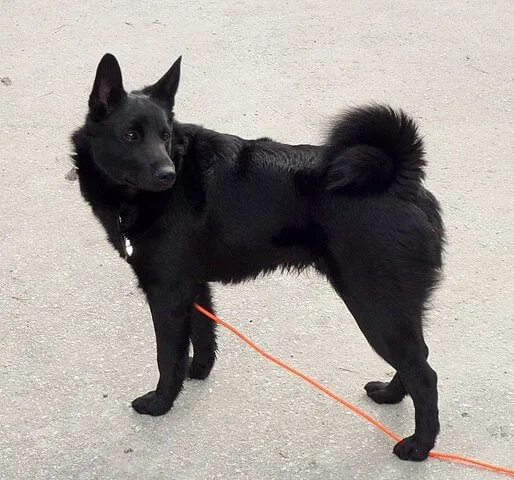
Norwegian Elkhound (Black)
Health grade CThe Norwegian Elkhound (black) is a courageous, lightning-fast Nordic hunting Spitz—bred to track big game in icy forests and hold it at bay with great endurance. A highly specialized athlete built for independent work in rugged terrain.
- Height43–49 cm
- Weight13–18 kg
- Life expectancy12–15 yrs
- Puppy price1,500–2,500 €
- Energy5/5
The Essentials at a Glance
The Norwegian Elkhound (black) is a courageous, lightning-fast Nordic hunting Spitz—bred to track big game in icy forests and hold it at bay with great endurance. A highly specialized athlete built for independent work in rugged terrain.
- Health grade C: The Norwegian Elkhound (black) requires an above-average number of mandatory health tests, which focus almost exclusively on eye health.
- You enjoy intensive tracking or search work—this dog was selected for persistent scent work and will become frustrated without a real job to do.
- You are outdoors in any weather and ideally live in a rural area with a securely fenced garden.
- You expect him to remain responsive when he spots game—he was bred to track scents independently, which often makes off-leash exercise impossible.
Is the Norwegian Elkhound (Black) right for you?
At a glance
Norwegian Elkhound (Black) overview
The essentials — key facts, traits, and health priorities — before you dive deeper.
Health grade
Relative to other breeds
S
A
B
C
D
E
Very healthyHigher risk
Average — several important tests are expected.
See full health info & tests →
Note: This health overview is AI-assisted and editorially reviewed. It is for orientation only and does not replace veterinary advice.
Lifespan
12–15 yrs
Height
43–49 cm
Weight
13–18 kg
Practical
- Puppy price: 1,500 – 2,500 €
- Coat: Straight, hard upper hair; dense, soft undercoat
- Origin: Norway
Temperament
Energy
Trainability
Family fit
With kids
Daily life
Care effort
Shedding
Barking
City-friendly
Guard instinct
What matters most
Especially with a Norwegian Elkhound (Black), choosing the right breeder is the single most important decision you'll make. Serious breeders consistently test the parents for inherited conditions, prioritize healthy early socialization, and stay accountable long after handover. A cheap puppy without health screening tends to become the most expensive dog later on.
See HonestDog breeder standards →Colors & coat
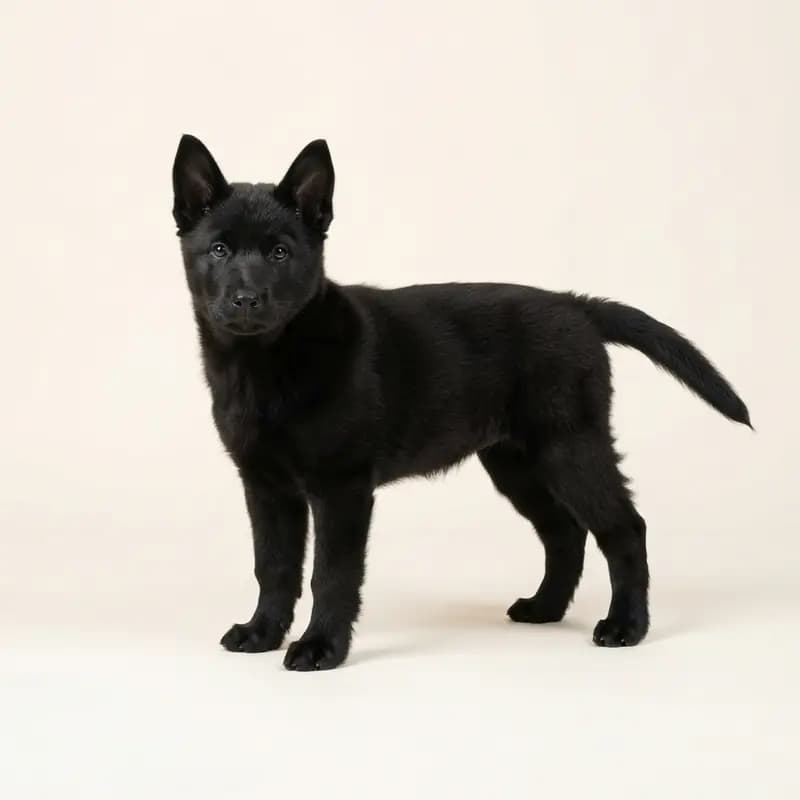
What colors does the Norwegian Elkhound (Black) come in?
The coat colors you will see in Norwegian Elkhound (Black) litters — including which ones fall outside the breed standard and which carry genetic risk.
Eye colors
 Brown
Brown
Coat type
 Medium
 Double coat
Is the Norwegian Elkhound (Black) right for you?
The Norwegian Elkhound (black) is a courageous, lightning-fast Nordic hunting Spitz—bred to track big game in icy forests and hold it at bay with great endurance. A highly specialized athlete built for independent work in rugged terrain.
Perfect for you if:
- You enjoy intensive tracking or search work—this dog was selected for persistent scent work and will become frustrated without a real job to do.
- You are outdoors in any weather and ideally live in a rural area with a securely fenced garden.
- You set clear, confident rules and guide his Nordic independence with humor rather than harshness.
- You are looking for a vigilant, loyal companion who forms a close bond with their primary person.
Less ideal if:
- You expect him to remain responsive when he spots game—he was bred to track scents independently, which often makes off-leash exercise impossible.
- You live in an apartment with thin walls, as loud and persistent barking at game is his genetic task and often carries over into daily life.
- You demand blind obedience and constant attention—he likes working with you, but never as your unconditional servant.
- vibesCheck
- A Norwegian Elkhound (black) is not a servant, but an independent forest worker who, when in doubt, trusts his nose more than you. You aren't getting a dog that worships you, but a robust partner on equal footing. If you share his passion for nature and tracking, he won't leave your side—but if you try to suppress him, he will turn stubborn.
- healthProfile
- The Norwegian Elkhound (black) is generally considered a robust and long-lived dog, though it can occasionally face issues with joints, eyes, and the thyroid.
- healthDailyLife
- By ensuring joint-friendly development, maintaining a healthy weight, and scheduling regular veterinary check-ups for eyes and thyroid, you lay the foundation for a long, active life.
- healthBreederRole
- Reputable breeders have the hips, knees, eyes, and thyroid of the parent animals tested to reduce avoidable health risks in the lineage.
The real vibes check
A Norwegian Elkhound (black) is not a servant, but an independent forest worker who, when in doubt, trusts his nose more than you. You aren't getting a dog that worships you, but a robust partner on equal footing. If you share his passion for nature and tracking, he won't leave your side—but if you try to suppress him, he will turn stubborn.
Self-check
Would the Norwegian Elkhound (Black) really fit your life?
Answer 6 quick questions about your everyday life and see how well the Norwegian Elkhound (Black) fits you — including an honest cost estimate per month, per year, and across the dog's lifetime.
Fit checkCost estimateRisk dice
Takes about 1 minute · free & anonymous
Breed Profile
The Norwegian Elkhound Black is one of two variants of the breed, the other being gray. The black variant is slightly rarer and smaller than the gray one. This dog has a robust but compact exterior with rich black fur and a bushy tail that curls over the back. The ears are medium-sized, pointed and erect, giving the dog an attentive and intelligent appearance. The Norwegian Elkhound Black belongs to FCI Group 5, the Spitz and Urtypes. This breed does not differentiate between performance and show lines.
All measurements in detail
- Height
- 43 - 46 cm (Female), 46 - 49 cm (Male)
- Weight
- 13 - 16 kg (Female), 15 - 18 kg (Male)
- Life Expectancy
- 12 - 15 yrs
- Character
- Confident, loyal, intelligent
- Coat
- Straight, hard upper hair; dense, soft undercoat
- Coat Color
- Black
- Price
- 1500 - 2500 €
Character & Temperament
Norwegian Elkhounds are known for their loyalty and bond with their people. They are very people-oriented and love being part of the family. Their intelligence and strong self-confidence make them attentive and vigilant dogs that reliably protect their home and family. Their origins as hunting dogs have given them a certain independence and initiative. They tend to make decisions on their own in new situations, which can make them excellent working dogs but also challenging to train. Their hunting instinct is still strong, which means they need to be well supervised when walking in the wild. An unsupervised Elkhound might be tempted to follow an interesting smell or movement into the woods. Despite their independence, Norwegian Elkhounds are very playful and love spending time with their people. They are energetic and active, meaning they need plenty of exercise and mental stimulation to be happy and balanced. A well-socialized Norwegian Elkhound can learn to stay alone, although he prefers to be in company. Since they are very attached to their people, they may develop separation anxiety if they are regularly left alone for long periods of time. It is therefore important to teach them as puppies that being alone is not scary and that you will always come back. The Norwegian Elkhound Black is not a dog for couch potatoes. His high energy and intelligence require regular physical and mental activity. Long walks, hikes or dog sports like agility are perfect for this breed. They love completing tasks and, when challenged, become happy, well-adjusted companions. They are good learners, but their strong personalities require consistent and loving leadership. Despite their size and robustness, Norwegian Elkhounds are not aggressive. They are reserved towards strangers, but not hostile. They are extremely friendly and loving with their people and the people they know and like. They also tend to get along well with children and other dogs, but should always be supervised to ensure play doesn't become too rough. Even though the Norwegian Elkhound has a strong personality and is not always the easiest dog to train, he is still a loyal, loving and energetic companion. With the right leadership and enough activity, this sturdy, handsome dog will become a valuable part of your life and a loyal friend for many years.
| Trainability Willing to learn with clear rules and regular training. | Balanced |
| Watchfulness A natural watchdog with real protective instinct. | High |
| Openness to Strangers Neither pushily friendly nor suspicious. | Neutral |
| Hunting or Herding Drive Noticeable drive — needs attention around small animals. | Moderate |
Fun Fact!
Did you already know? The Norwegian Elkhound is one of the oldest dog breeds in the world and its origins can be traced back up to 5000 years!
What Awaits You
In addition to the black Norwegian Elkhound, there is also the gray Norwegian Elkhound. These dogs are independent hunters with a large radius. These active dogs are not very suitable for comfortable people.
Housing & Care
As a robust and active dog, the Norwegian Elkhound is suitable for both city life and the country, as long as there is enough exercise and exercise. The Norwegian Elkhound also gets along well with children, but, as with all dogs, responsible handling should be ensured. As for other pets, the Norwegian Elkhound can certainly learn to live with them, although its hunting instinct can be challenging.
- Family Friendly
Loves family life and thrives in a group.
Family-oriented - Child Friendly
Takes boisterous and affectionate children in its stride.
Patient with children - Dog Friendly
Usually gets on fine with other dogs.
Generally tolerant - City Friendly
Can manage in the city, but only with very active owners.
Difficult in cities
Owning a dog is a privilege, but it's also a real responsibility. Before you bring one into your life, be honest with yourself about the commitment it takes.
Training & Education
Although they are intelligent and willing to learn, Norwegian Elkhounds can be challenging to train due to their strong personalities and minds of their own. It is therefore important to start early with consistent but loving upbringing. They are ideal for various dog sports, such as agility, obedience or tracking. It is important to exercise the dog both physically and mentally without overtaxing him. A good balance is the be-all and end-all here. It is also recommended to teach the Norwegian Elkhound frustration tolerance and impulse control. This can be achieved through various exercises and games that encourage the dog to remain calm and patient even when he wants something.
Nutrition & Care
The Norwegian Elkhound is an active dog and therefore requires a high-quality food that meets its nutritional needs. You can use both dry and wet food, but it is important to have a balanced mix of proteins, fats and carbohydrates. When it comes to grooming, the Norwegian Elkhound has a thick undercoat that protects it from the extreme weather conditions of its homeland. This also makes it well suited to the climate in Germany. However, this also means that he sheds heavily, especially during the shedding periods in spring and autumn. Regular brushing can help control shedding and keep your home clean.
| Care Level Regular brushing and occasional professional grooming. | Moderate |
| Exercise Needs Working-dog energy that needs burning off every single day. | High-drive |
| Shedding Regular shedding — dog hair on clothes is now normal. | Moderate |
| Trainability Willing to learn with clear rules and regular training. | Balanced |
Our experts are still reviewing this information. Spotted something wrong? Email us at info@honestdog.de.
Health & hereditary diseases
Health
C
Solid, watch carefully
Health grade
The Norwegian Elkhound (black) requires an above-average number of mandatory health tests, which focus almost exclusively on eye health. Conditions such as glaucoma and cataracts require consistent monitoring to prevent blindness within the bloodline. In addition, hip dysplasia (HD) must be actively managed through selective breeding, which is why prospective buyers should only choose puppies from breeders who can provide complete, verified health reports.
Grade is relative to other breeds — AI-assisted and editorially reviewed.
In daily life this can mean
By ensuring joint-friendly development, maintaining a healthy weight, and scheduling regular veterinary check-ups for eyes and thyroid, you lay the foundation for a long, active life.
The breeder's role
Reputable breeders have the hips, knees, eyes, and thyroid of the parent animals tested to reduce avoidable health risks in the lineage.
Note: This health overview is AI-assisted and editorially reviewed. It is for orientation only and does not replace veterinary advice.
No Health Tests Available
No specific health tests are currently available for this breed.
Costs & where to find one
How much does a Norwegian Elkhound (Black) cost?
A Norwegian Elkhound (Black) costs around ~€170 per month (€90 – €320, depending on your setup). The first year adds up to roughly ~€4,900 including purchase, equipment and puppy school; across the dog's life (13.5 years) it comes to about ~€30,770.
With surgery cover, running costs come to about ~€170 per month — in return, your share of a major operation drops from several thousand euros to around 20 percent.
Per month
~€170
In the first year
~€4,900
Across the dog's life
~€30,770
Purchase from a breeder: €1,500 – €2,500
Estimate at a mid-range setup (suburban, dry food, 1–2 hours of daily exercise), average German prices, as of July 2026.
Calculate your personal costs1-minute self-check with your own answers
Looking for a Norwegian Elkhound (Black)?
Appearance, variants & origin
History
The full history
The Norwegian Elkhound is a very old dog breed whose origins go back several thousand years. Fossil finds show that dogs of this species lived in Norway as early as the Stone Age. They were originally used to hunt elk and other large game species. The Norwegian Elkhound Black has been recognized as a separate breed since 1877. It was and is particularly popular in Scandinavian countries, but is also beginning to gain international recognition.
Original Use
The Norwegian Elkhound (black) was used to hunt moose and bears in the Norwegian forests.
Origin
Norway
Date
1800
Owner experiences
What owners say about the Norwegian Elkhound (Black)
Jürgen B., Jäger aus der Eifel (Rüde, seit 2021)
Ich habe mir meinen schwarzen Elchhund – in Norwegen auch «Svarthund» genannt – gezielt als Jagdbegleiter aus Skandinavien importiert. Er ist im Vergleich zum bekannteren grauen Elchhund etwas kleiner, leichter und extrem wendig. Bei der Nachsuche und als sogenannter Bandhund (an der Leine geführter Fährtenhund) leistet er hervorragende Arbeit. Seine Nase ist phänomenal, und er arbeitet auf der Fährte unglaublich konzentriert und leise, ohne das Wild vorzeitig aufzuschrecken.
Im Haus ist er erstaunlich ruhig und sucht extrem viel Nähe zu uns. Man merkt einfach, dass diese Rasse sehr menschenbezogen ist und eine tiefe Bindung zur Familie aufbaut. Allerdings ist er kein Hund für Jedermann: Sein Jagdtrieb ist enorm, und ohne echte jagdliche Aufgabe oder Fährtenarbeit wäre er völlig unterfordert. Gesundheitlich ist er extrem robust, aber man muss beim Kauf unbedingt darauf achten, dass die Elterntiere auf Erbkrankheiten wie Glaukom und Ataxie getestet wurden, da die Zuchtbasis recht klein ist.
Sabine M., aktive Halterin aus dem Harz (Hündin, seit 2022)
Als absolut outdoorbegeisterte Familie haben wir uns für den schwarzen Norwegischen Elchhund entschieden. Unsere Hündin läuft problemlos am Fahrrad mit und liebt stundenlange Wanderungen bei jedem Wetter. Sie ist extrem witterungsrobust – Regen, Wind oder Schnee machen ihr überhaupt nichts aus. Wenn sie draußen richtig ausgepowert wurde, kuschelt sie im Haus unglaublich gerne und ist eine treue Seele.
Die größte Herausforderung im Alltag ist definitiv ihr Fell und ihr Dickkopf. Zweimal im Jahr haart sie durch die extrem dichte Unterwolle so stark, dass man gefühlt täglich einen neuen Hund bürsten könnte. Zudem ist sie ein typischer nordischer Spitz: Sie hinterfragt Kommandos und entscheidet gerne selbst, ob sich das Gehorchen gerade lohnt. Ohne konsequente Erziehung und viel Beschäftigung sucht sie sich schnell eigene Aufgaben im Garten.
Dieter K., erfahrener Hundehalter aus Schleswig-Holstein (Rüde, seit 2020)
Wer einen Hund sucht, der wie ein Labrador gefallen möchte, ist beim schwarzen Elchhund völlig falsch. Mein Rüde ist extrem intelligent, aber auch sehr eigenständig. Er arbeitet eher wie ein Partner auf Augenhöhe und trifft gerne eigene Entscheidungen. Das macht das Training manchmal zu einer echten Geduldsprobe, da er blinden Gehorsam einfach verweigert. Man muss extrem konsequent sein.
Dazu kommt ein ausgeprägter Wachinstinkt. Er schlägt sofort an und bellt lautstark, wenn sich jemand unserem Grundstück nähert. Er ist dabei niemals aggressiv, sondern Fremden gegenüber anfangs einfach nur reserviert und wachsam. Sobald er jemanden kennt, ist er aber der freundlichste Hund überhaupt. Man muss sich bewusst sein, dass diese Rasse eine konsequente Führung und tägliche geistige Auslastung braucht, sonst wird das Zusammenleben anstrengend.
Paraphrased from real owner reports
Loading owner stories
FAQ & more
Frequently asked questions about the Norwegian Elkhound (Black)
Is a Norwegian Elkhound (Black) the right dog for me?
The Norwegian Elkhound (Black) is an active dog that needs plenty of exercise and mental stimulation. Research the temperament, grooming needs, and space requirements before deciding.
How long does a Norwegian Elkhound (Black) live?
The average life expectancy of a Norwegian Elkhound (Black) is 12-15 years. With proper care and regular vet visits, your dog can live a long, healthy life.
How much grooming does a Norwegian Elkhound (Black) need?
Norwegian Elkhound (Black) grooming requirements include regular brushing, nail trimming, and dental care. HonestDog provides detailed grooming tips for every breed.
Is a Norwegian Elkhound (Black) good for families with children?
The Norwegian Elkhound (Black) can be a great family dog. Proper training and socialization are key. HonestDog provides family suitability information for every breed.
What colors does the Norwegian Elkhound (Black) come in?
The Norwegian Elkhound (Black) comes in these colors: Black.
Loading related articles
Are you a Norwegian Elkhound (Black) breeder?
Showcase your kennel on HonestDog and reach families searching for a responsibly bred Norwegian Elkhound (Black).
Why HonestDog?
What makes HonestDog different from other platforms
Full transparency
We lay out what we have: who the breeder is, how they work, and any health records they've uploaded. So you can judge for yourself.
Responsible breeding, assured
Every breeder on HonestDog has their identity and documents checked before their profile goes live. Health records they upload are shown on the profile, so you can see exactly what has been tested.
Trust and verification
We verify breeders and buyers alike, so every conversation happens on solid ground. It's a new standard of trust in dog breeding.
Less hassle, more time
We've already checked the breeders' documents and gathered the details, so you can skip the endless research and focus on finding the right puppy for your family.
Our Mission

We connect dog lovers with responsible breeders and shelters to ensure every dog finds the perfect home.
Founded by dog enthusiasts, our platform focuses on ethical dog breeding and adoption.
Why HonestDog?
We connect you with vetted breeders and shelters so you can find your — your new companion — with confidence.
Vetted Partners
Only verified breeders and shelters — for a safe start.
Highest Standards
Every animal's health and wellbeing is our top priority.
Guides & Resources
Guides, checklists, and breed profiles — so you can make a well-informed decision.