Loading breed
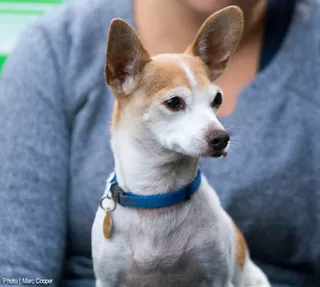
Norwegian Lundehund
Health grade DThe Norwegian Lundehund is an agile, alert, and independent climber—a highly specialized cliff hunter bred with six toes and extreme flexibility to catch puffins in inaccessible rock crevices.
- Height32–38 cm
- Weight5–8 kg
- Life expectancy12–14 yrs
- Puppy price1,800–3,000 €
- Energy4/5
The Essentials at a Glance
The Norwegian Lundehund is an agile, alert, and independent climber—a highly specialized cliff hunter bred with six toes and extreme flexibility to catch puffins in inaccessible rock crevices.
- Health grade D: With the Norwegian Lundehund, you must pay special attention to serious eye diseases such as primary lens luxation (PLL), primary open-angle glaucoma, and progressive retinal atrophy, generic.
- You are looking for an agile companion for hikes in rugged terrain where he can put his unique climbing hardware to good use.
- You appreciate the primitive, independent nature of Nordic breeds and prefer training with loving consistency rather than dull drills.
- You are looking for a dog that can be reliably walked off-leash in the woods—he was bred to track down birds independently, and this hunting instinct is deeply ingrained.
Is the Norwegian Lundehund right for you?
At a glance
Norwegian Lundehund overview
The essentials — key facts, traits, and health priorities — before you dive deeper.
Health grade
Relative to other breeds
S
A
B
C
D
E
Very healthyHigher risk
Elevated risk — responsible breeding really matters.
See full health info & tests →
Note: This health overview is AI-assisted and editorially reviewed. It is for orientation only and does not replace veterinary advice.
Lifespan
12–14 yrs
Height
32–38 cm
Weight
5–8 kg
Practical
- Puppy price: 1,800 – 3,000 €
- Coat: Double coat, rough, short to medium length, dense undercoat
- Origin: Norway
Temperament
Energy
Trainability
Family fit
With kids
Daily life
Care effort
Shedding
Barking
City-friendly
Guard instinct
What matters most
Especially with a Norwegian Lundehund, choosing the right breeder is the single most important decision you'll make. Serious breeders consistently test the parents for inherited conditions, prioritize healthy early socialization, and stay accountable long after handover. A cheap puppy without health screening tends to become the most expensive dog later on.
See HonestDog breeder standards →Colors & coat
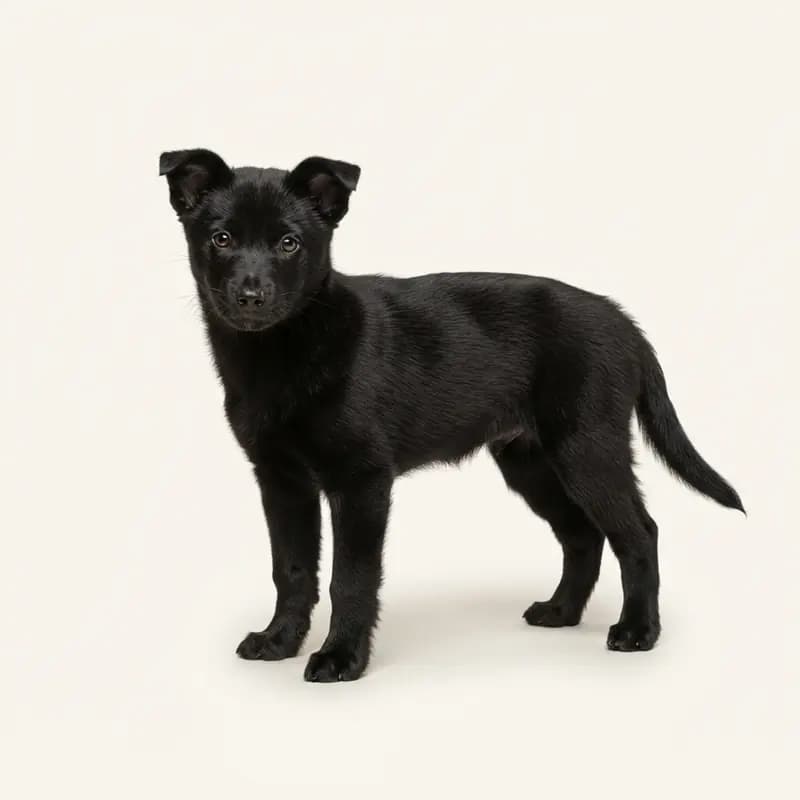
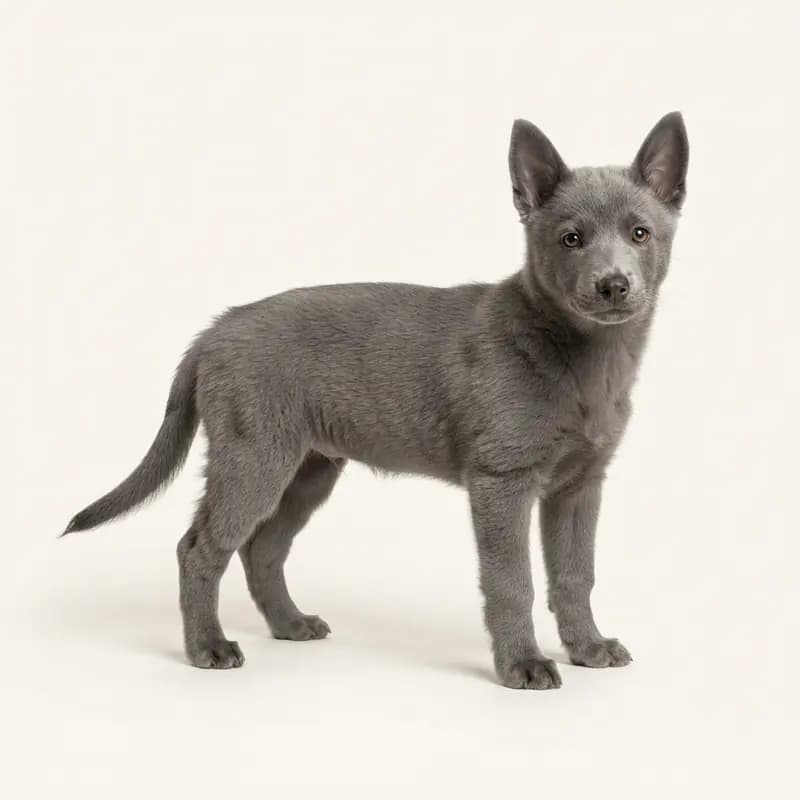
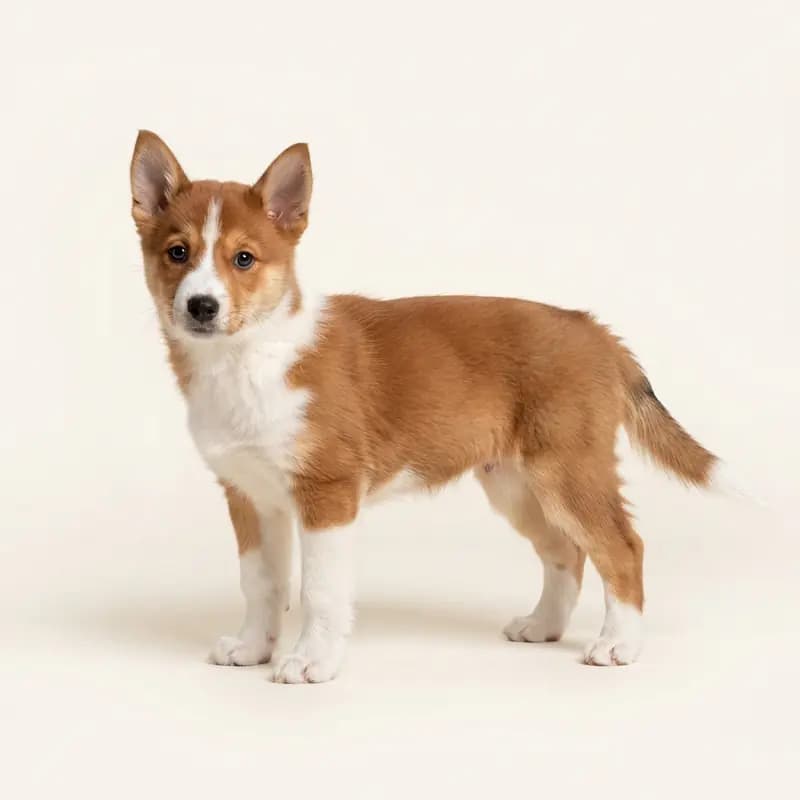
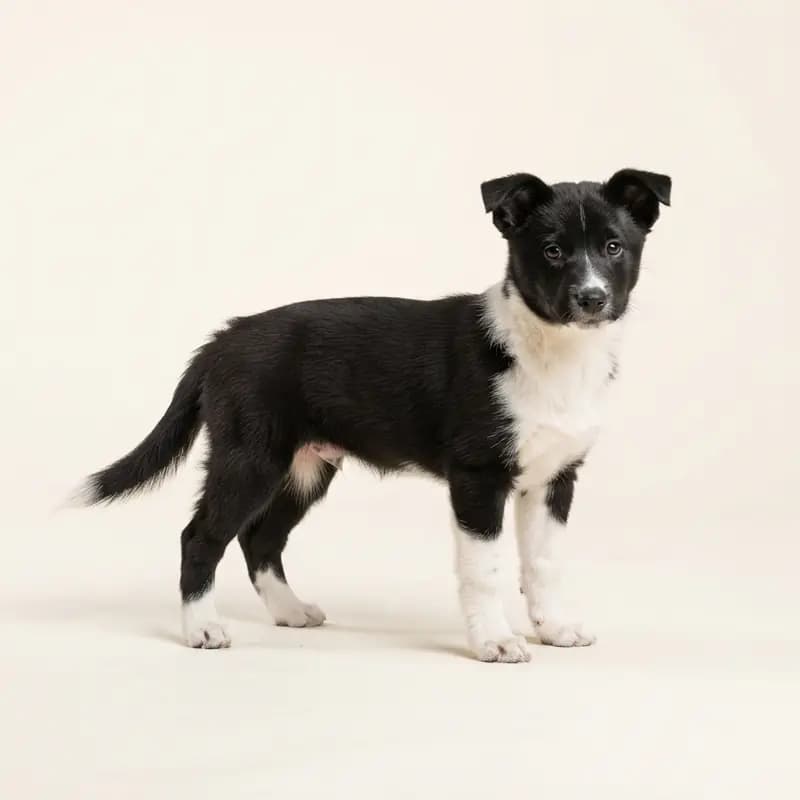
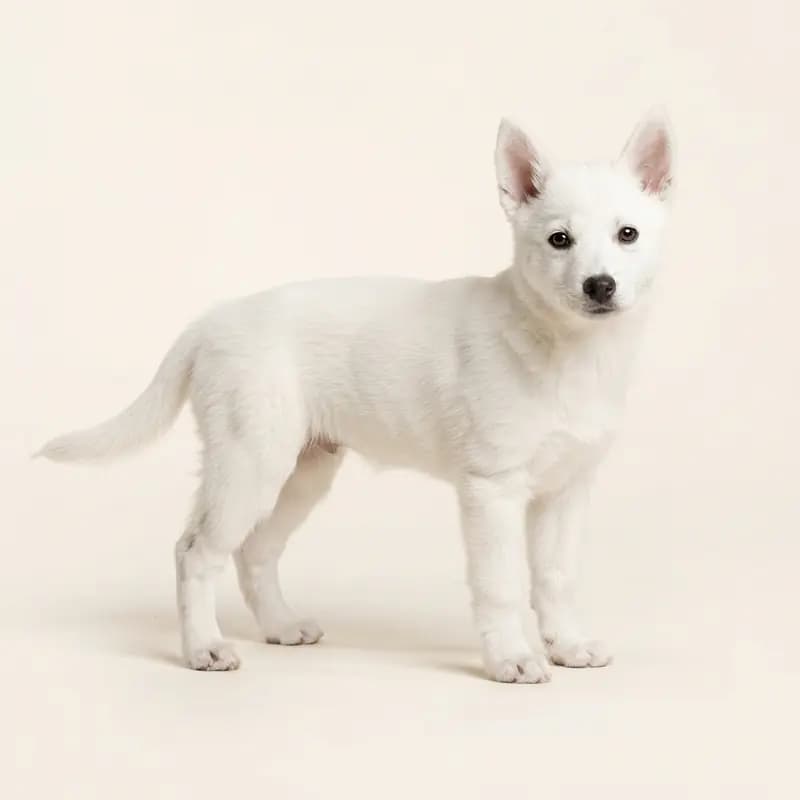
What colors does the Norwegian Lundehund come in?
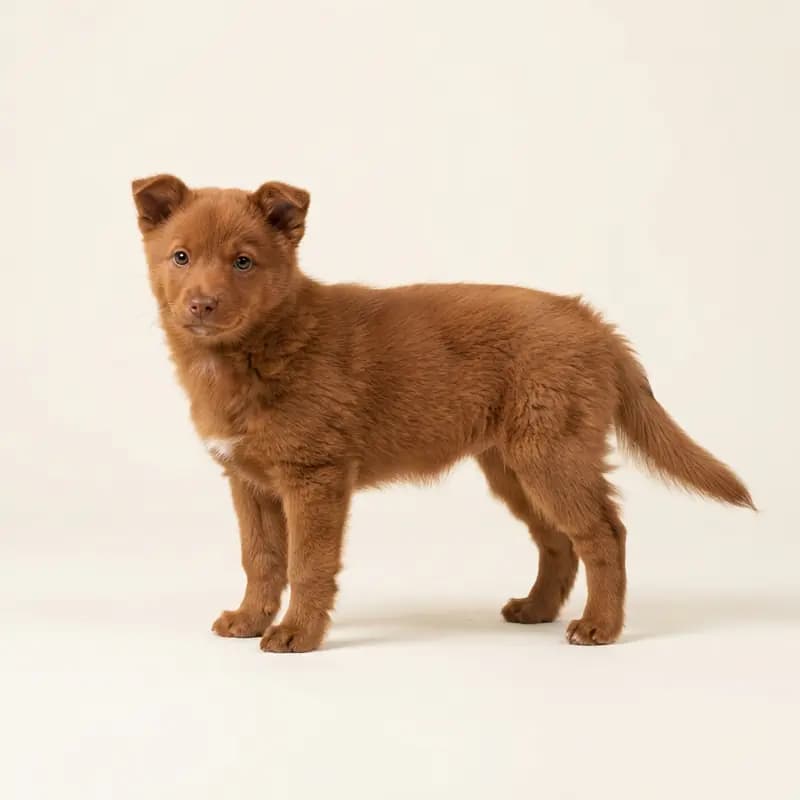
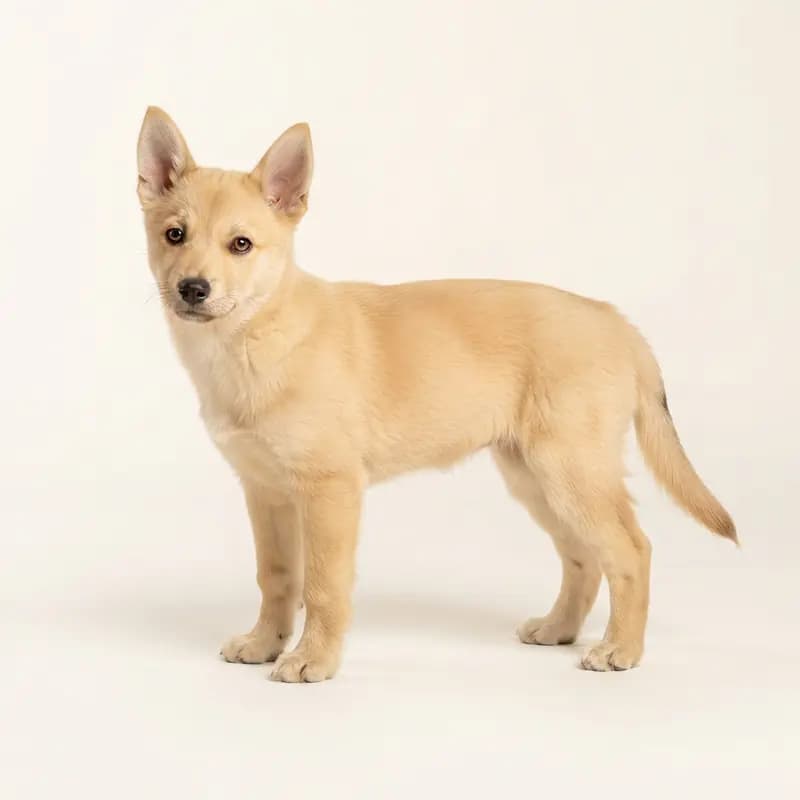
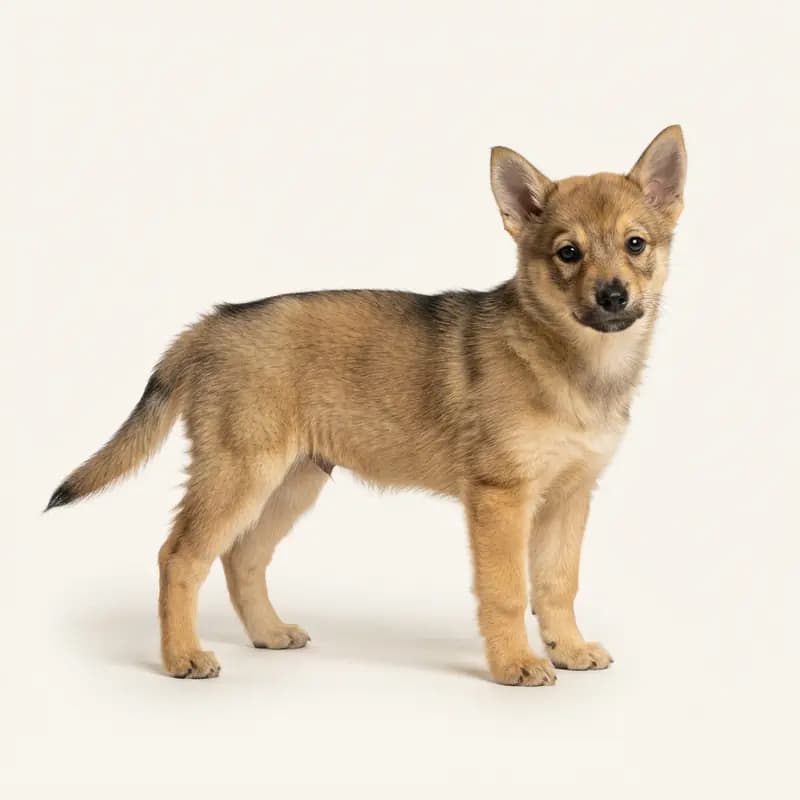
The coat colors you will see in Norwegian Lundehund litters — including which ones fall outside the breed standard and which carry genetic risk.
Eye colors
 Brown
Brown Amber
Amber
Coat type
 Double coat
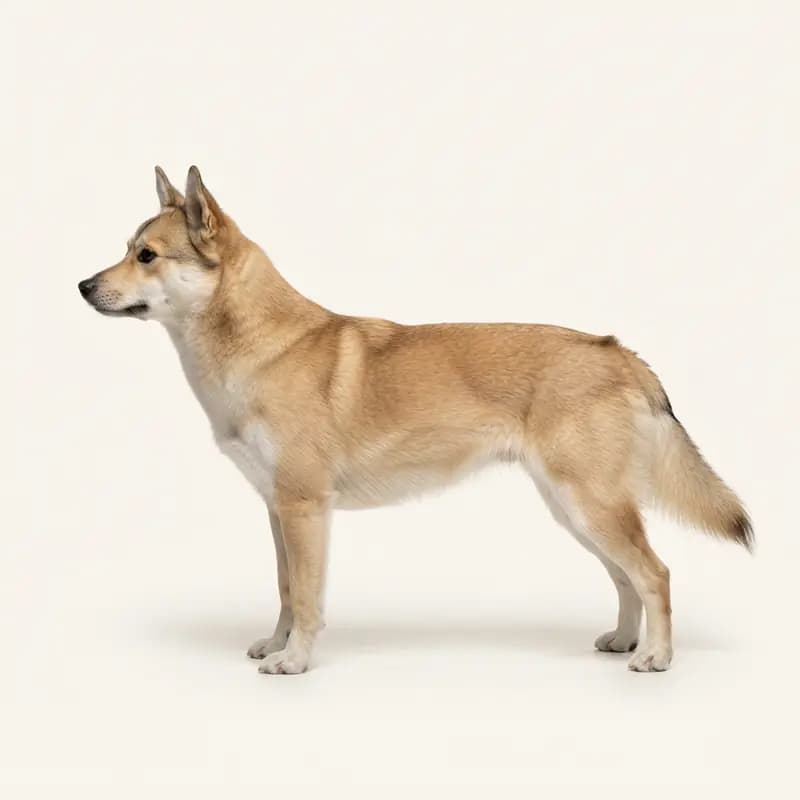 Illustrative image
Short
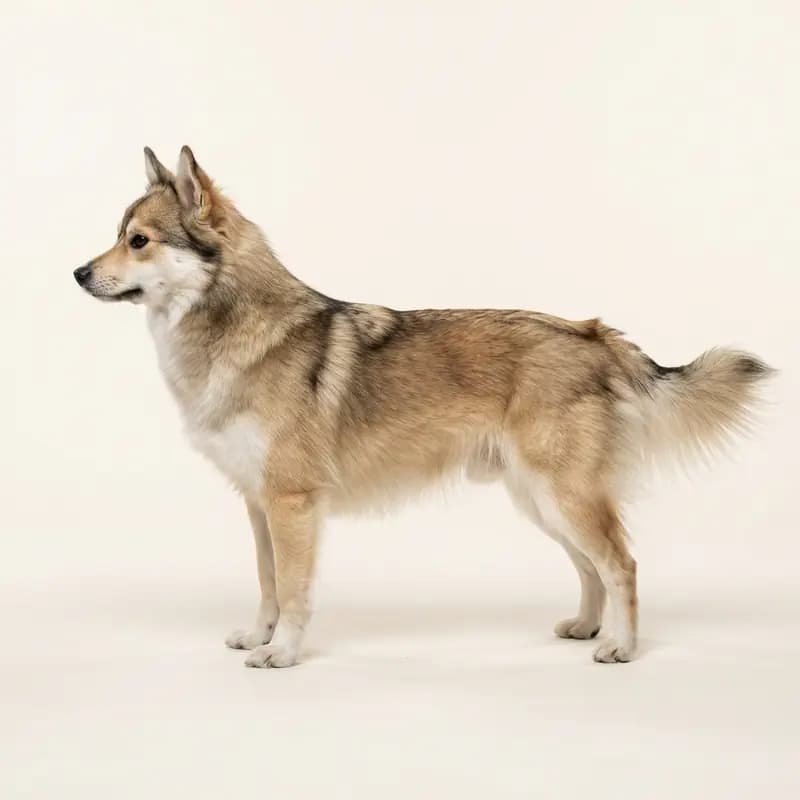 Illustrative image
Medium
Is the Norwegian Lundehund right for you?
The Norwegian Lundehund is an agile, alert, and independent climber—a highly specialized cliff hunter bred with six toes and extreme flexibility to catch puffins in inaccessible rock crevices.
Perfect for you if:
- You are looking for an agile companion for hikes in rugged terrain where he can put his unique climbing hardware to good use.
- You appreciate the primitive, independent nature of Nordic breeds and prefer training with loving consistency rather than dull drills.
- You have an escape-proof garden—his anatomical flexibility allows him to slip through gaps that are impassable for other dogs.
- You like a watchful, communicative dog that bonds closely with its pack but remains reserved toward strangers, as is typical for a Spitz breed.
Less ideal if:
- You are looking for a dog that can be reliably walked off-leash in the woods—he was bred to track down birds independently, and this hunting instinct is deeply ingrained.
- You live in an apartment with thin walls—as a Nordic Spitz, he loves to report visual and acoustic stimuli persistently with a bright, high-pitched voice.
- You expect absolute perfection in housebreaking—the Lundehund is considered extremely difficult to house-train reliably, often requiring months or even years of management.
The real vibes check
A Lundehund is like a foxy acrobat that ignores physics and fits through almost any gap if he wants to explore something. You aren't getting a classic follower of commands, but a physically unique specialist who only cooperates with you if he sees the point of it. If you can take his vocal independence with a sense of humor, you will gain a fascinating, tireless companion.
Self-check
Would the Norwegian Lundehund really fit your life?
Answer 6 quick questions about your everyday life and see how well the Norwegian Lundehund fits you — including an honest cost estimate per month, per year, and across the dog's lifetime.
Fit checkCost estimateRisk dice
Takes about 1 minute · free & anonymous
Breed Profile
The Norwegian Lundehund is a small to medium-sized dog with a light and lithe build that allows it to move with skill and nimbleness. He belongs to FCI group 5, the top and original dogs. Its proportions are particularly striking: the head is small and wedge-shaped, the ears are triangular and stand upright, and the torso is slightly rectangular. One of the Lundehund's most notable features is its polydactyl paws, meaning it has more toes than most other dog breeds - usually six on each paw. Equally fascinating is the exceptional mobility of this breed; the Lundehund can bend its head back to its back and extend its legs to the sides, similar to human arms.
All measurements in detail
- Height
- 32 - 35 cm (Female), 35 - 38 cm (Male)
- Weight
- 5 - 7 kg (Female), 6 - 8 kg (Male)
- Life Expectancy
- 12 - 14 yrs
- Character
- Intelligent, lively, independent
- Coat
- Double coat, rough, short to medium length, dense undercoat
- Coat Color
- Often fawn with white markings or vice versa, also black and white or various shades of sable and red
- Price
- 1800 - 3000 €
Character & Temperament
Are you wondering whether the Norwegian Lundehund has the right temperament for you? Well, the nature of the Lundehund is an exciting mix of intelligence, liveliness and independence. They are curious dogs who love to explore their surroundings and still have the hunter instinct that makes them fabulous observers. While the Lundehund can be a little reserved around strangers at first, he develops a close bond with his family and enjoys being in company. If you let a Lundehund into your life, you will find that he can be quite playful and a happy companion. Since the Lundehund was originally a working dog that had to make decisions independently, it often shows an independent character. This means that he can be a little stubborn at times and doesn't always respond to commands straight away. It is important to understand that this is part of his nature and patience is required in the relationship. Another aspect you should keep in mind is that Lundehunds tend to exhibit strong hunting or prey-catching behavior. This means that they sometimes tend to prey on birds or small animals. It is advisable to play with them in a fenced area and to be attentive during walks. A Lundehund can learn to stay alone, but it is important to teach him from the start that this is a normal routine. Because they form a close bond with their family, it may be difficult for them to stay alone at first, but with patience and training this can be achieved. The Norwegian Lundehund is also a very alert dog. He will alert you if something is wrong around him or if visitors come. This makes him a good watchdog, but it is important to be careful that this does not lead to excessive barking.
| Trainability Has its own ideas and will test limits. | Strong-willed |
| Watchfulness Occasionally alerts but is fundamentally open. | Low |
| Openness to Strangers Warms up quickly and is generally welcoming. | Friendly |
| Hunting or Herding Drive Noticeable drive — needs attention around small animals. | Moderate |
Fun Fact!
Did you know that the Norwegian Lundehund has six toes on each foot? These extra toes helped them climb better in Norway's harsh landscape when they were used to hunt puffins.
What Awaits You
The uniquely built Norwegian Lundehund from the Norwegian rocky island of Vaeroy is the only dog breed created for puffin hunting. Since puffins are now a protected species, the Lundehund is now a friendly, sporty companion.
Housing & Care
The Lundehund is an active and agile dog that does best in an environment with plenty of space to run around and explore. He can be kept in the city if he gets enough exercise, but a house with a garden would be ideal. He generally gets along well with children, but due to his energy, it is advisable to monitor interactions with very young children. Lundehunds can also get along with cats and other pets if properly socialized.
- Family Friendly
Loves family life and thrives in a group.
Family-oriented - Child Friendly
Gets on well with children — with adult supervision.
With supervision - Dog Friendly
Actively enjoys the company of other dogs.
Dog-friendly - City Friendly
City-appropriate with enough exercise and stimulation.
Manageable in cities
Owning a dog is a privilege, but it's also a real responsibility. Before you bring one into your life, be honest with yourself about the commitment it takes.
Training & Education
The Norwegian Lundehund is intelligent, but also stubborn. Consistent but gentle training is key. This breed brings hunting instincts, so it's important to provide alternatives, such as nose work, to engage their senses. Frustration tolerance and impulse control are particularly important for Lundehunds to avoid overexcitement. Becoming a ball junkie is entirely possible with this breed, so it is important to make sure that the dog is sufficiently challenged mentally and not just physically.
Nutrition & Care
The Lundehund needs a balanced diet with high-quality proteins, fats and a good balance of vitamins and minerals. Especially because of Lundehund syndrome, it is important to keep an eye on digestion and adjust your diet if necessary. When it comes to grooming, the Lundehund is quite easy to care for. He has a double coat with a soft undercoat and a harsher upper coat. He sheds moderately, but regular brushing can help keep the coat clean and tangle-free. The breed is adapted to the harsh climate of Norway and copes well with the German climate.
| Care Level Regular brushing and occasional professional grooming. | Moderate |
| Exercise Needs Needs several hours of serious exercise every day. | Very active |
| Shedding Hair everywhere, always — no white clothing survives. | Very heavy |
| Trainability Has its own ideas and will test limits. | Strong-willed |
Our experts are still reviewing this information. Spotted something wrong? Email us at info@honestdog.de.
Health & hereditary diseases
Health
D
Elevated risks
Health grade
With the Norwegian Lundehund, you must pay special attention to serious eye diseases such as primary lens luxation (PLL), primary open-angle glaucoma, and progressive retinal atrophy, generic. A responsible breeder therefore has their breeding dogs undergo comprehensive ophthalmological examinations and only uses animals that achieve the limit value 'free' for these diseases. In addition, an examination for patellar luxation (PL) with the limit value 'unaffected' as well as proof regarding hip dysplasia (HD) with a maximum limit value of C is important. Before buying, make sure to ask for the official, written test results of the parent animals for all these findings, as well as for cataracts and pectinate ligament dysplasia (PLD).
Grade is relative to other breeds — AI-assisted and editorially reviewed.
In daily life this can mean
You should pay attention to a very carefully balanced diet and early veterinary support to best manage the highly sensitive digestive system of this breed in everyday life.
The breeder's role
Reputable breeders have the blood values, knees, and eyes of the parent animals checked and pay strict attention to genetic diversity to reduce the specific risks within the line.
Note: This health overview is AI-assisted and editorially reviewed. It is for orientation only and does not replace veterinary advice.
No Health Tests Available
No specific health tests are currently available for this breed.
Costs & where to find one
How much does a Norwegian Lundehund cost?
A Norwegian Lundehund costs around ~€160 per month (€90 – €300, depending on your setup). The first year adds up to roughly ~€5,180 including purchase, equipment and puppy school; across the dog's life (13 years) it comes to about ~€28,640.
With surgery cover, running costs come to about ~€160 per month — in return, your share of a major operation drops from several thousand euros to around 20 percent.
Per month
~€160
In the first year
~€5,180
Across the dog's life
~€28,640
Purchase from a breeder: €1,800 – €3,000
Estimate at a mid-range setup (suburban, dry food, 1–2 hours of daily exercise), average German prices, as of July 2026.
Calculate your personal costs1-minute self-check with your own answers
Looking for a Norwegian Lundehund?
Appearance, variants & origin
History
The full history
The Norwegian Lundehund has a long history dating back to the 16th century, although some theories suggest this breed may be even older. Its origins lie in Norway, where it was bred specifically to hunt puffins (Norwegian: lunde) and their eggs on the steep cliffs of the Norwegian coast. The breed evolved with unique characteristics such as polydactyl paws and incredible agility to adapt to the challenges of hunting in the harsh terrain. While the Lundehund was widespread on the remote Norwegian islands such as V"r"y and Lofoten, the decline in the puffin population and the introduction of nets for bird hunting meant that the Lundehunde were less needed. The breed was almost forgotten and was threatened with extinction. Fortunately, rescue efforts were made in the 1930s and 1940s. The Norwegian Lundehund was recognized as a separate breed in 1943.
Original Use
The Norwegian Lundehund was bred to hunt puffins in rocky areas that are difficult to access.
Origin
Norway
Date
1600
Owner experiences
What owners say about the Norwegian Lundehund
Sabine M., Halterin aus Oberbayern (Rüde, seit 2020)
Ich habe meinen Lundehund-Rüden nun schon seit einigen Jahren und er ist ein unglaublich treuer und verspielter Begleiter. Seine Anatomie ist wirklich faszinierend – er klettert unglaublich flink und nutzt seine sechs Zehen voll aus. Im Haus ist er extrem verschmust und sucht immer die Nähe. Nachts schläft er am liebsten ganz nah bei mir im Bett, fast wie ein kleines Wärmekissen.
Allerdings darf man die Rasse nicht unterschätzen. Er hat einen sehr ausgeprägten Jagdtrieb und zeigt ein starkes Beutefangverhalten, besonders bei Vögeln. Man muss beim Spazierengehen wirklich immer aufmerksam sein. Außerdem ist er extrem wachsam und neigt dazu, sehr viel zu bellen – nicht nur bei Gefahr, sondern bei allem, was er spannend findet. Das erfordert bei der Erziehung eine Menge Geduld und Konsequenz.
Christian T., Halter aus Hessen (Rüde, seit 2021)
Was viele vor der Anschaffung unterschätzen, ist die Sensibilität dieser Hunde. Mein Lundehund reagiert extrem empfindlich auf Stress und Ortswechsel. Wir haben anfangs versucht, ihn auf längere Reisen mitzunehmen, aber er reagiert in fremden Umgebungen schnell mit Magen-Darm-Problemen. Er braucht einfach seine feste Routine und seine vertraute Umgebung, um sich wohlzufühlen.
Auch bei der Ernährung muss man höllisch aufpassen. Lundehunde vertragen bestimmte tierische Eiweiße und Fette von Säugetieren (wie Schweinefleisch) extrem schlecht. Wir müssen sehr auf die Schonkost achten, da die Rasse eine genetische Veranlagung für das gefürchtete Lundehundsyndrom (eine schwere Proteinverlust-Enteropathie) hat. Wer sich diesen Hund holt, sollte sich auf ein sehr spezielles Diätmanagement einstellen.
Annett S., Halterin aus Thüringen (Hündin, seit 2018)
Wer einen absolut gehorsamen Hund sucht, ist beim Lundehund falsch. Meine Hündin hat einen enormen Dickkopf und ordnet sich nicht einfach unter. Sie trifft gerne eigene Entscheidungen – ein Erbe ihrer Vergangenheit als selbstständiger Kletter-Jäger in den Klippen. Mit Druck erreicht man bei ihr gar nichts, man muss rein über positive Verstärkung und viel Humor arbeiten.
Ein weiteres Thema ist die Ausbruchssicherheit. Durch ihre extrem flexiblen Gelenke und die zusätzliche Zehenanzahl klettern diese Hunde wie Katzen. Ein normaler Gartenzaun ist für meine Hündin überhaupt kein Hindernis; sie klettert da mühelos hoch und springt rüber. Man muss den Garten wirklich speziell sichern, wenn man sie mal unbeaufsichtigt laufen lassen möchte.
Paraphrased from real owner reports
Loading owner stories
FAQ & more
Frequently asked questions about the Norwegian Lundehund
Is a Norwegian Lundehund the right dog for me?
The Norwegian Lundehund is an active dog that needs plenty of exercise and mental stimulation. Research the temperament, grooming needs, and space requirements before deciding.
How long does a Norwegian Lundehund live?
The average life expectancy of a Norwegian Lundehund is 12-14 years. With proper care and regular vet visits, your dog can live a long, healthy life.
How much grooming does a Norwegian Lundehund need?
Norwegian Lundehund grooming requirements include regular brushing, nail trimming, and dental care. HonestDog provides detailed grooming tips for every breed.
Is a Norwegian Lundehund good for families with children?
The Norwegian Lundehund can be a great family dog. Proper training and socialization are key. HonestDog provides family suitability information for every breed.
What colors does the Norwegian Lundehund come in?
The Norwegian Lundehund comes in these colors: Red, Fawn, Sable, Black, Grey, Red and white, Black and white, White.
Loading related articles
Are you a Norwegian Lundehund breeder?
Showcase your kennel on HonestDog and reach families searching for a responsibly bred Norwegian Lundehund.
Why HonestDog?
What makes HonestDog different from other platforms
Full transparency
We lay out what we have: who the breeder is, how they work, and any health records they've uploaded. So you can judge for yourself.
Responsible breeding, assured
Every breeder on HonestDog has their identity and documents checked before their profile goes live. Health records they upload are shown on the profile, so you can see exactly what has been tested.
Trust and verification
We verify breeders and buyers alike, so every conversation happens on solid ground. It's a new standard of trust in dog breeding.
Less hassle, more time
We've already checked the breeders' documents and gathered the details, so you can skip the endless research and focus on finding the right puppy for your family.
Our Mission

We connect dog lovers with responsible breeders and shelters to ensure every dog finds the perfect home.
Founded by dog enthusiasts, our platform focuses on ethical dog breeding and adoption.
Why HonestDog?
We connect you with vetted breeders and shelters so you can find your — your new companion — with confidence.
Vetted Partners
Only verified breeders and shelters — for a safe start.
Highest Standards
Every animal's health and wellbeing is our top priority.
Guides & Resources
Guides, checklists, and breed profiles — so you can make a well-informed decision.