Loading breed
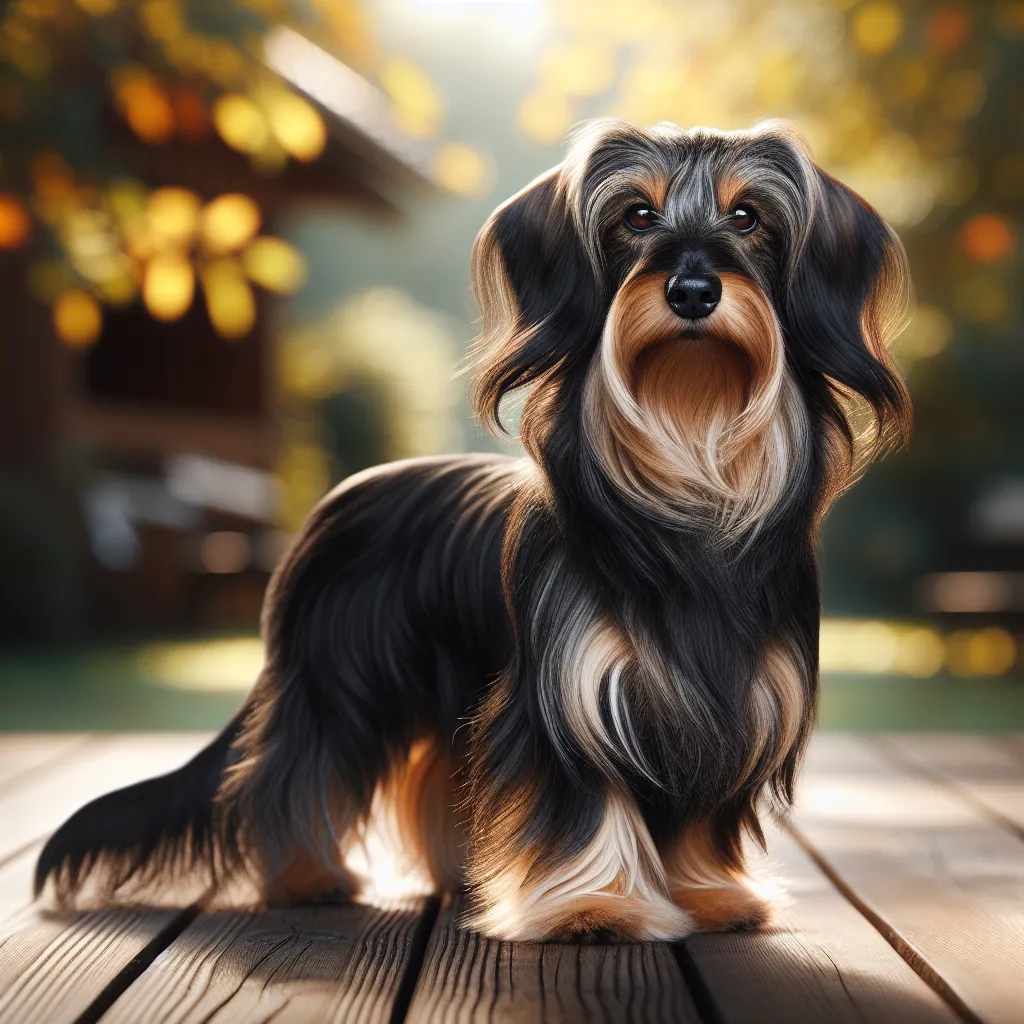
Miniature Long-haired Dachshund
Health grade DThe Long-haired Zwergdackel is a charming yet headstrong Baujäger (burrow hunter)—bred to make decisions completely independently while underground, equipped with a healthy dose of hunting instinct and a softer temperament than its short-haired relatives.
- Height18–21 cm
- Weight3–6 kg
- Life expectancy12–16 yrs
- Puppy price1,200–2,500 €
- Energy3/5
The Essentials at a Glance
The Long-haired Zwergdackel is a charming yet headstrong Baujäger (burrow hunter)—bred to make decisions completely independently while underground, equipped with a healthy dose of hunting instinct and a softer temperament than its short-haired relatives.
- Health grade D: With a grade D, the long-haired Miniature Dachshund shows significant breed-specific problems, with Chondrodystrophy (CDDY) and the associated risk of intervertebral disc disease (IVDD) being the main burdens on the breed: about one in five Dachshunds suffers a herniated disc (IVDD) in the course of their life — the most common serious disease of the breed.
- You appreciate a dog that thinks for itself and makes its own decisions rather than showing blind obedience.
- You enjoy being out in nature and are keen on scent work to keep its hunting-oriented mind occupied.
- You expect it to turn around immediately when called in the woods—it was bred as a Baujäger to follow a trail uncompromisingly if necessary.
Is the Miniature Long-haired Dachshund right for you?
At a glance
Miniature Long-haired Dachshund overview
The essentials — key facts, traits, and health priorities — before you dive deeper.
Health grade
Relative to other breeds
S
A
B
C
D
E
Very healthyHigher risk
Elevated risk — responsible breeding really matters.
See full health info & tests →
Note: This health overview is AI-assisted and editorially reviewed. It is for orientation only and does not replace veterinary advice.
Lifespan
12–16 yrs
Height
18–21 cm
Weight
3–6 kg
Practical
- Puppy price: 1,200 – 2,500 €
- Coat: Silky, long, no undercoat
- Origin: Germany
Temperament
Energy
Trainability
Family fit
With kids
Daily life
Care effort
Shedding
Barking
City-friendly
Guard instinct
What matters most
Especially with a Miniature Long-haired Dachshund, choosing the right breeder is the single most important decision you'll make. Serious breeders consistently test the parents for inherited conditions, prioritize healthy early socialization, and stay accountable long after handover. A cheap puppy without health screening tends to become the most expensive dog later on.
See HonestDog breeder standards →Colors & coat
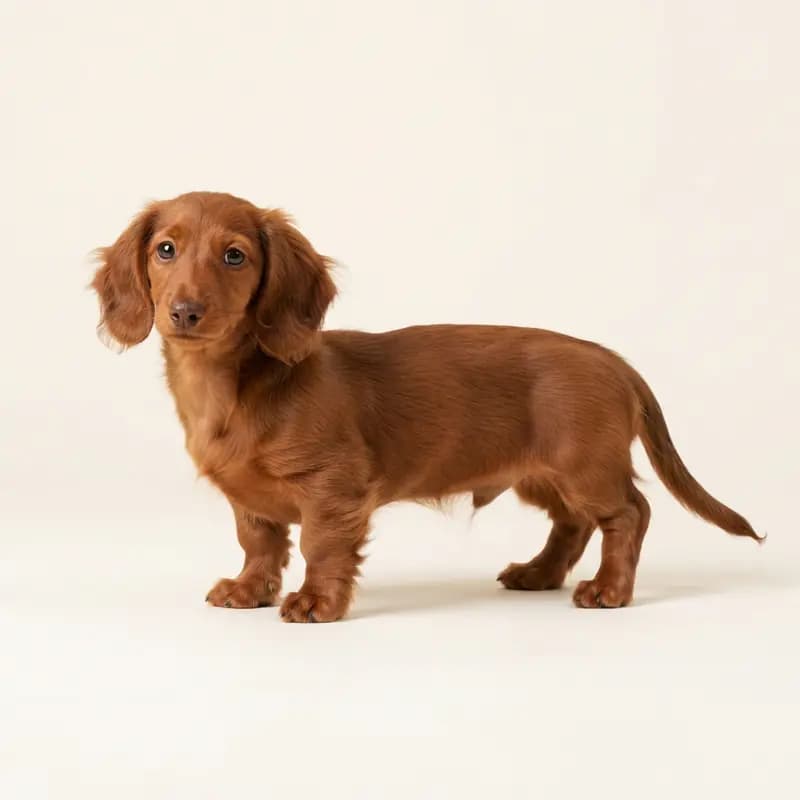
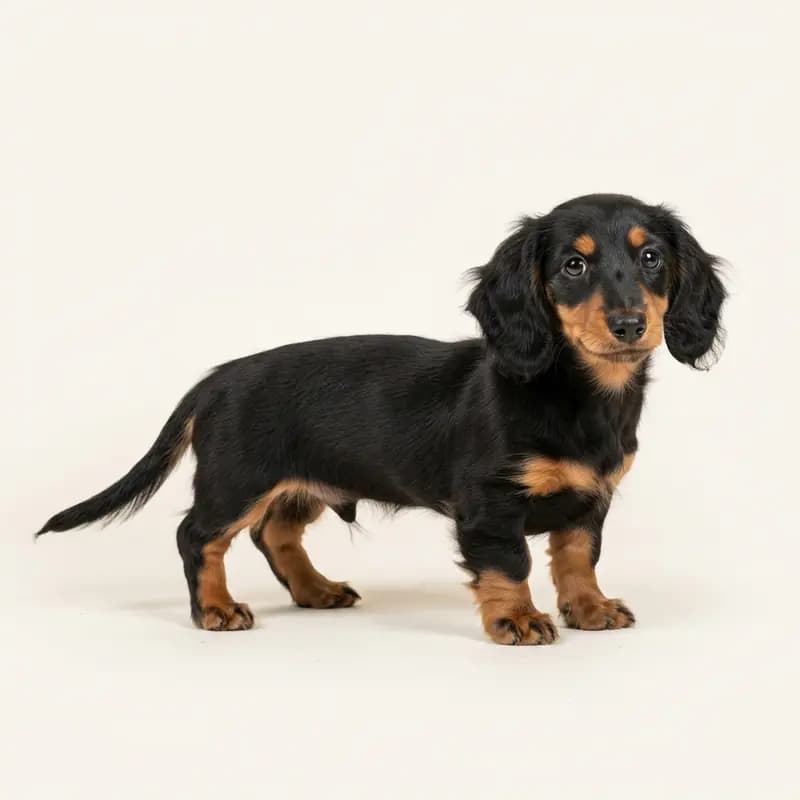
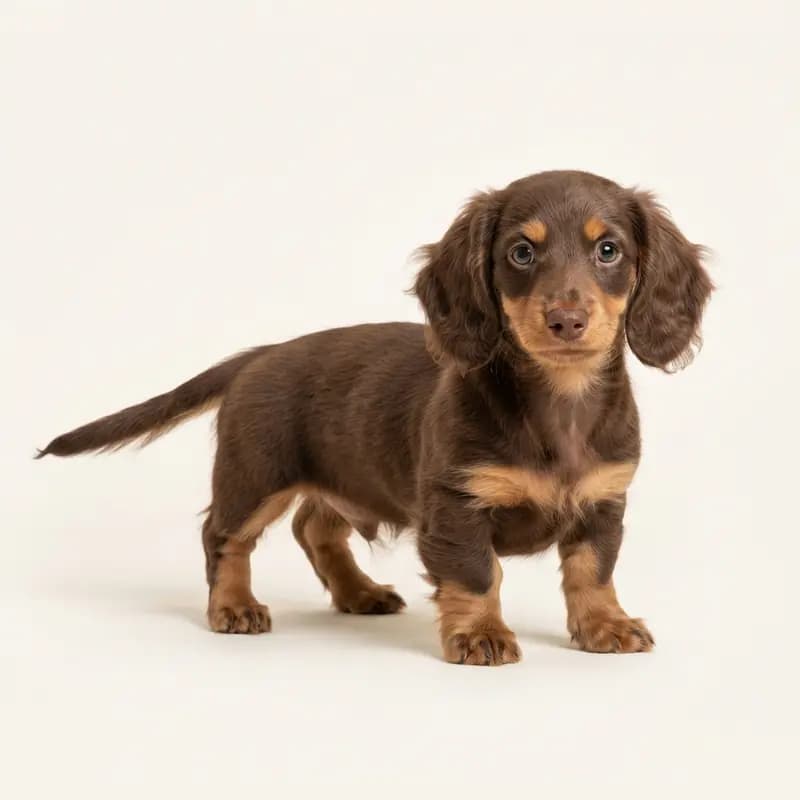
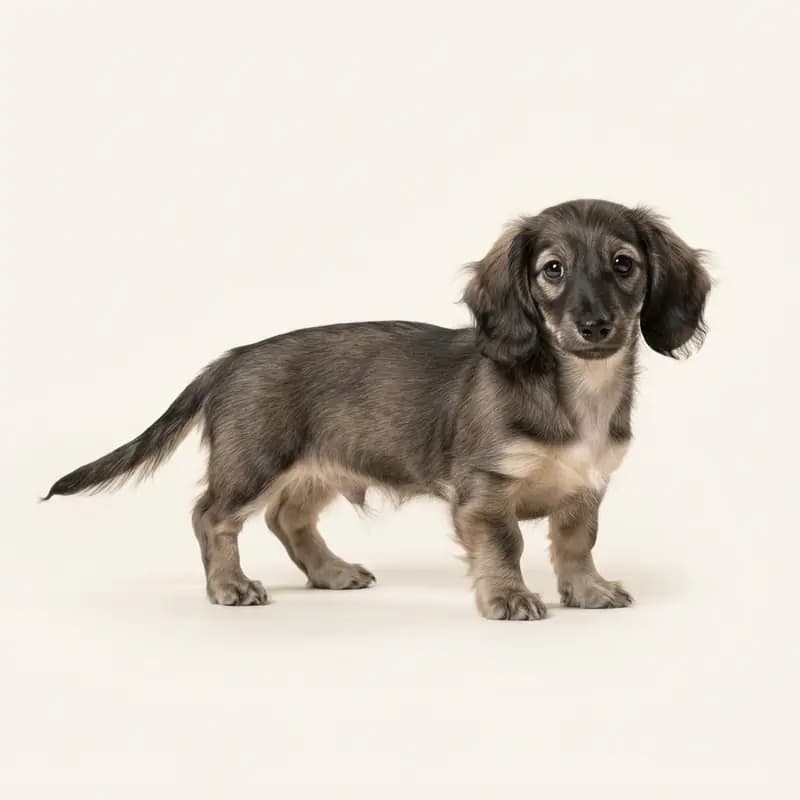
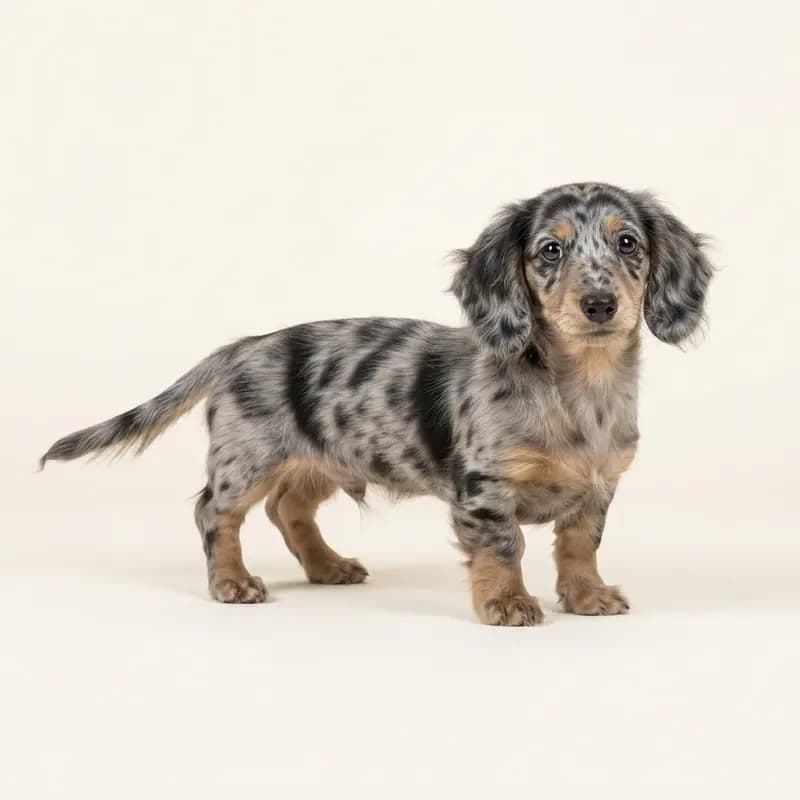
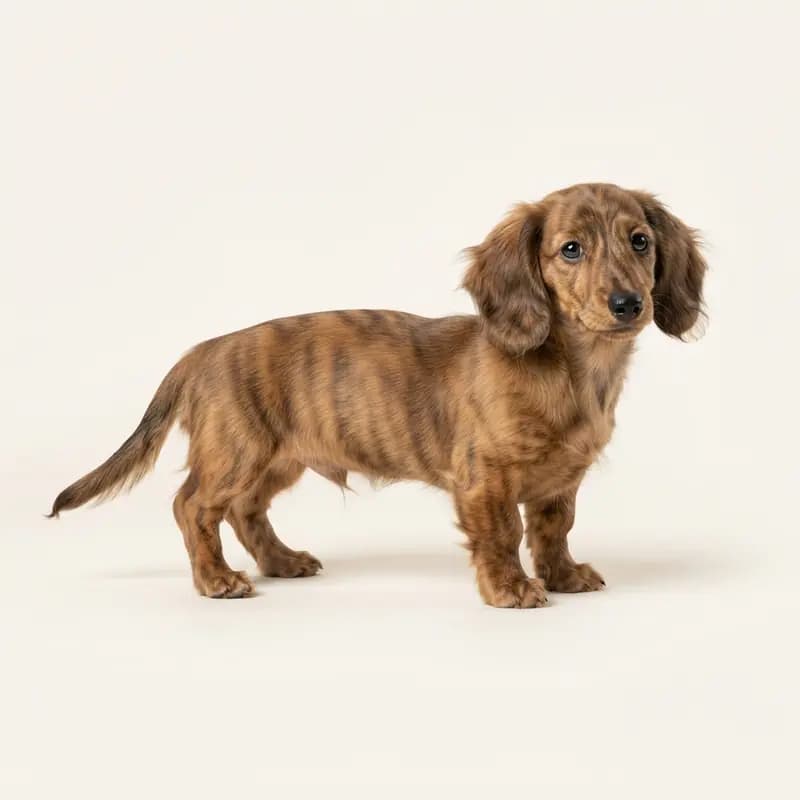
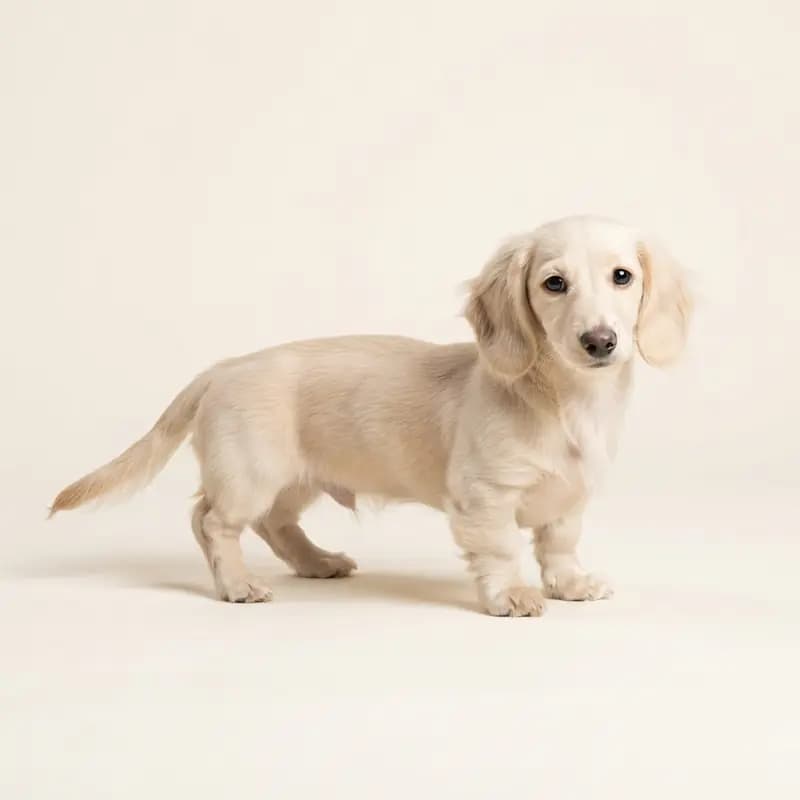
What colors does the Miniature Long-haired Dachshund come in?
The coat colors you will see in Miniature Long-haired Dachshund litters — including which ones fall outside the breed standard and which carry genetic risk.
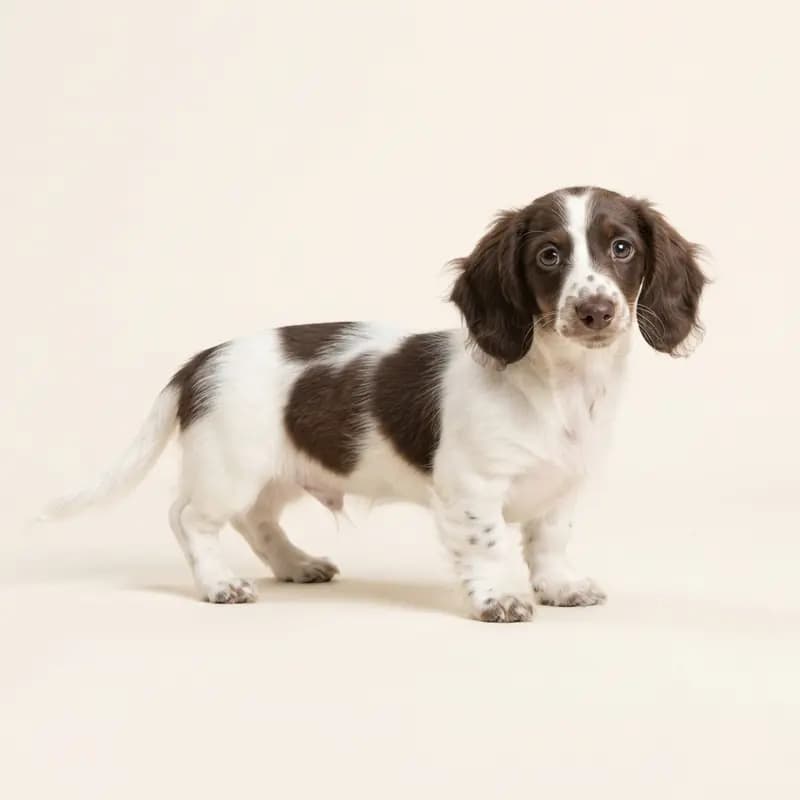
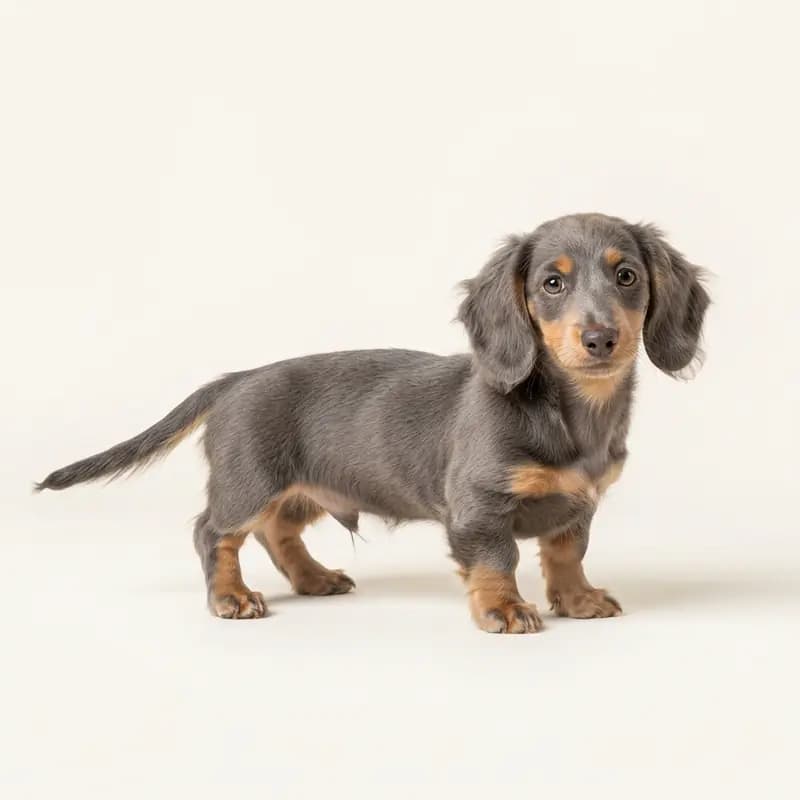
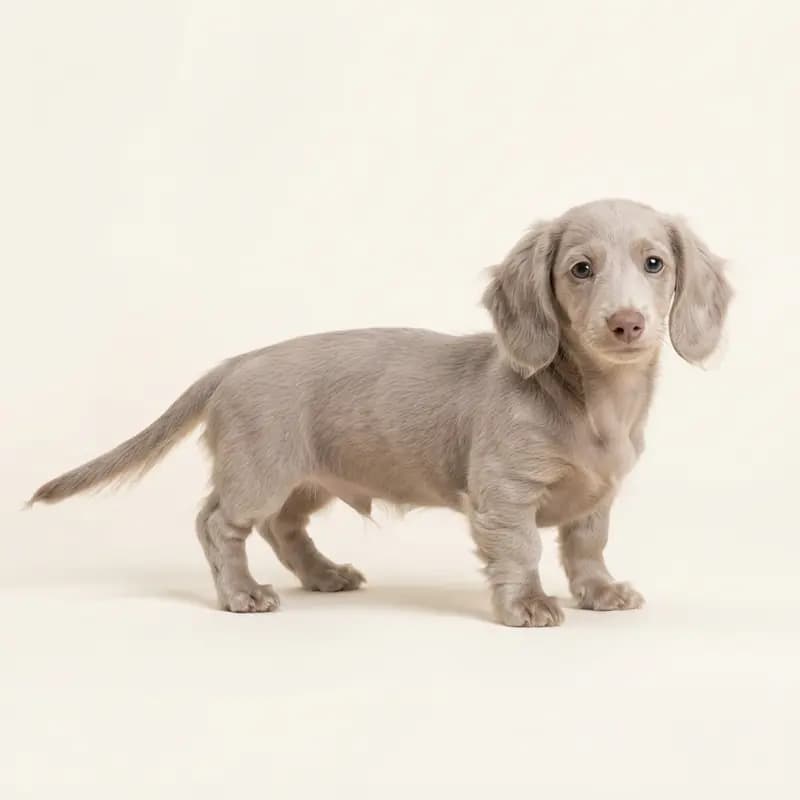
Eye colors
 Brown
Brown Odd-eyed
 Partial (split eye)
Coat type
 Long
Long Silky
Silky
Is the Miniature Long-haired Dachshund right for you?
The Long-haired Zwergdackel is a charming yet headstrong Baujäger (burrow hunter)—bred to make decisions completely independently while underground, equipped with a healthy dose of hunting instinct and a softer temperament than its short-haired relatives.
Perfect for you if:
- You appreciate a dog that thinks for itself and makes its own decisions rather than showing blind obedience.
- You enjoy being out in nature and are keen on scent work to keep its hunting-oriented mind occupied.
- You are looking for a compact companion that, thanks to its long coat, often appears a bit more gentle and cuddly than other Dackels.
- You have a sense of humor and the consistency to let the legendary 'Dackel look' charm you without giving in to it.
Less ideal if:
- You expect it to turn around immediately when called in the woods—it was bred as a Baujäger to follow a trail uncompromisingly if necessary.
- You live in an apartment on an upper floor without an elevator, as its long spine makes daily stair climbing a no-go.
- You live in a place with thin walls and are bothered by alertness—a Dackel likes to announce visitors loudly.
- You don't have the patience for regular grooming and combing out burrs and twigs after every walk in the woods.
The real vibes check
A Long-haired Zwergdackel is not a decorative lapdog in a plush coat—it is a full-fledged hunting dog on very short legs. What was vital for survival deep in a burrow is not something it leaves behind on the sofa: in case of doubt, it decides for itself. If you take this stubborn independence with a sense of humor, you will gain an incredibly loyal, cuddly companion.
Self-check
Would the Miniature Long-haired Dachshund really fit your life?
Answer 6 quick questions about your everyday life and see how well the Miniature Long-haired Dachshund fits you — including an honest cost estimate per month, per year, and across the dog's lifetime.
Fit checkCost estimateRisk dice
Takes about 1 minute · free & anonymous
Breed Profile
The miniature dachshund (long-haired) is a small but strong-willed dog breed that belongs to the dachshund group. Originally bred in Germany for hunting badgers and other small game, the miniature dachshund is distinguished by its long body, short legs, and dense, soft long hair, which gives it a particularly charming appearance. Its head is elongated with expressive, dark eyes and long, hanging ears. Despite its compact size, the miniature dachshund shows a lot of courage and endurance. Within the breed, there are various color patterns and markings that emphasize the individual character. The miniature dachshund is a lively and intelligent companion, appreciated both as a family dog and as a hunting dog.
All measurements in detail
- Height
- 18 - 21 cm (Female), 18 - 21 cm (Male)
- Weight
- 3 - 6 kg (Female), 4 - 6 kg (Male)
- Life Expectancy
- 12 - 16 yrs
- Character
- Loyal, intelligent, attached to the family, but reserved towards strangers, high hunting drive
- Coat
- Silky, long, no undercoat
- Coat Color
- Diverse; including black, brown, red, and more.
- Price
- 1200 - 2500 €
Character & Temperament
The miniature dachshund (long-haired) is a lively and charming companion with a distinct character. Despite its small size, it shows a great deal of courage and self-confidence, making it a watchful and sometimes stubborn dog. Its long-haired, soft coat gives it a particularly friendly and appealing appearance. Miniature dachshunds are very people-oriented and enjoy being close to their family. They are playful and curious, which makes them entertaining and active companions. At the same time, they can show a certain stubbornness, so consistent but loving training is important. Due to their hunting instinct, which comes from their original use as a dachshund, they tend to chase small animals, which should be trained early on. The miniature dachshund learns quickly but also needs sufficient mental and physical activity to stay balanced. Despite their size, they require regular exercise and mental challenges to avoid overstrain or frustration. They are not classic guard dogs but show a good sense of their surroundings through their attentive nature. Overall, the miniature dachshund (long-haired) is a loyal, lively, and loving companion who brings much joy to the daily life of its people with the right guidance and enough activity.
| Trainability Has its own ideas and will test limits. | Strong-willed |
| Watchfulness Reports unusual activity but stays controlled. | Moderate |
| Openness to Strangers Neither pushily friendly nor suspicious. | Neutral |
| Hunting or Herding Drive Powerful instinct that can override recall when triggered. | Strong |
Fun Fact!
Miniature Dachshund (Long-haired): The miniature dachshund with its long, silky coat not only looks cute but was originally bred to hunt in narrow fox burrows. Despite its small size, it has remarkable endurance and an unwavering hunting instinct – a true little adventurer on short legs!
What Awaits You
The miniature dachshund (long-haired) is a lively and affectionate companion. These small dogs are curious and often show a strong hunting instinct. They require consistent training and sufficient activity to remain balanced. Due to their long coat, they are particularly high-maintenance but are well suited as family dogs and loyal companions.
Housing & Care
Miniature dachshunds (long-haired) are lively and affectionate dogs that make good companions for families. They are very people-oriented and enjoy being close to their owners, but also need enough activity to stay mentally stimulated. Despite their small size, they are brave and often show surprising alertness. Miniature dachshunds generally get along well with children but should be handled carefully with small children as they can be sensitive. They usually get along well with other dogs and pets if socialized early. They are suitable for living in the city or an apartment as long as they get regular exercise and playtime outdoors.
- Family Friendly
Loves family life and thrives in a group.
Family-oriented - Child Friendly
Gets on well with children — with adult supervision.
With supervision - Dog Friendly
Usually gets on fine with other dogs.
Generally tolerant - City Friendly
Adapts well to city living and urban environments.
Well-suited to city life
Owning a dog is a privilege, but it's also a real responsibility. Before you bring one into your life, be honest with yourself about the commitment it takes.
Training & Education
Miniature Dachshunds (long-haired) are lively and intelligent dogs that, despite their small size, bring a large dose of stubbornness. Their training requires patience and consistency, as they tend to assert their own will. It is important to make the training varied and playful to keep motivation high. Short, regular sessions are more effective than long training sessions. Miniature Dachshunds learn quickly but also show a certain stubbornness, which is why positive reinforcement and rewards work particularly well. They are well suited for basic obedience and small tricks but are less suitable for intensive dog sports. Due to their hunting drive, it is important to work on impulse control early and establish reliable recall. Socialization and calm rest periods are also important to promote a balanced character. Those who are willing to invest time and patience will get a charming, lively, and loyal companion in the Miniature Dachshund, who impresses with their own mind and a lot of heart.
Nutrition & Care
Miniature Dachshund (Long-haired): Miniature Dachshunds are small, lively dogs that need a balanced diet to stay healthy and fit. High-quality food with a good proportion of proteins and essential nutrients is ideal. Be careful to avoid overweight, as the short legs and long back of the miniature dachshund are prone to back problems. The long-haired coat of the miniature dachshund is soft and silky but requires regular care. Brush your dog at least 2-3 times a week to prevent matting and keep the coat shiny. During the shedding season in spring and autumn, increased shedding can occur, and more intensive brushing is helpful then. Miniature dachshunds adapt well to the Central European climate. Their coat protects them from the cold, but they should wear a dog coat in very cold weather. In summer, make sure there is enough shade and water to avoid overheating.
| Care Level Regular brushing and occasional professional grooming. | Moderate |
| Exercise Needs Needs 1–2 hours of real exercise daily. | Active |
| Shedding Regular shedding — dog hair on clothes is now normal. | Moderate |
| Trainability Has its own ideas and will test limits. | Strong-willed |
Our experts are still reviewing this information. Spotted something wrong? Email us at info@honestdog.de.
Health & hereditary diseases
Health
D
Elevated risks
Health grade
With a grade D, the long-haired Miniature Dachshund shows significant breed-specific problems, with Chondrodystrophy (CDDY) and the associated risk of intervertebral disc disease (IVDD) being the main burdens on the breed: about one in five Dachshunds suffers a herniated disc (IVDD) in the course of their life — the most common serious disease of the breed. A responsible breeder actively counteracts this and also has their breeding dogs tested for Progressive Retinal Atrophy - Cone-Rod Dystrophy 4, Patellar Luxation (PL), Osteogenesis Imperfecta (OI), and Neuronal Ceroid Lipofuscinosis (NCL). Before buying, you should therefore ask to see the official results of the parent animals: for Patellar Luxation (PL), the result must be clear (Grade 0), for Chondrodystrophy (CDDY), a registered result must be available, and for Progressive Retinal Atrophy - Cone-Rod Dystrophy 4, Osteogenesis Imperfecta (OI), and Neuronal Ceroid Lipofuscinosis (NCL), the dogs must be clear or carriers, whereby carriers may only be mated with a clear partner.
Grade is relative to other breeds — AI-assisted and editorially reviewed.
In daily life this can mean
You should strictly limit stair climbing and jumping, maintain a lean weight, and honestly budget for higher veterinary costs regarding potential back issues.
The breeder's role
Responsible breeders have the spine, eyes, bones, and knees thoroughly checked and avoid excessively long backs—though the anatomical risks inherent to this breed cannot be completely eliminated.
Note: This health overview is AI-assisted and editorially reviewed. It is for orientation only and does not replace veterinary advice.
No Health Tests Available
No specific health tests are currently available for this breed.
Costs & where to find one
How much does a Miniature Long-haired Dachshund cost?
A Miniature Long-haired Dachshund costs around ~€170 per month (€90 – €310, depending on your setup). The first year adds up to roughly ~€4,680 including purchase, equipment and puppy school; across the dog's life (14 years) it comes to about ~€30,650.
With surgery cover, running costs come to about ~€160 per month — in return, your share of a major operation drops from several thousand euros to around 20 percent.
Per month
~€170
In the first year
~€4,680
Across the dog's life
~€30,650
Purchase from a breeder: €1,200 – €2,500
Estimate at a mid-range setup (suburban, dry food, 1–2 hours of daily exercise), average German prices, as of July 2026.
Calculate your personal costs1-minute self-check with your own answers
Looking for a Miniature Long-haired Dachshund?
Appearance, variants & origin
History
The full history
The history of the miniature dachshund (long-haired) begins in the 19th century in Germany. Originally, dachshunds were bred as hunting dogs to pursue badgers and other animals in their burrows. The smaller variant, the miniature dachshund, was created through selective breeding to produce an agile and compact dog that could also work in tight burrows. The long-haired coat was preferred because it offered additional protection against rough terrain. The miniature dachshund quickly became valued as a versatile companion and family dog. Over time, the breed was standardized and recognized by the German Teckel Club.
Original Use
The long-haired miniature dachshund originated as a hunting dog for dense forests and smaller animals.
Origin
Germany
Date
1800
Owner experiences
What owners say about the Miniature Long-haired Dachshund
Sabine M., Halterin aus Köln (Rüde, seit 2021)
Als wir uns für unseren Zwergdackel-Rüden entschieden haben, hieß es oft, Langhaardackel seien die 'sanftesten' unter den Teckeln. Das kann ich absolut bestätigen! Er ist unglaublich anhänglich, extrem verschmust und sucht ständig unsere Nähe. Im Vergleich zu den Rauhaardackeln im Bekanntenkreis ist er im Haus viel sensibler und feinfühliger.
Aber man darf sich von den treuen Kulleraugen nicht täuschen lassen: Draußen kommt der waschechte Jagdhund durch. Sobald wir im Wald sind, klebt seine Nase am Boden. Wenn er eine Fährte wittert oder ein Kaninchen aufschreckt, schaltet sein Gehör komplett auf Durchzug. Der sprichwörtliche Dackel-Dickkopf ist keine Übertreibung – er wägt ganz genau ab, ob sich das Zurückkommen für ihn lohnt.
Man braucht für die Erziehung eine Engelsgeduld und viel Humor. Wer einen Hund sucht, der bedingungslos aufs Wort gehorcht, wird mit einem Zwergdackel wahrscheinlich nicht glücklich. Wer aber einen charakterstarken, intelligenten Partner sucht, der einen jeden Tag zum Lachen bringt, für den ist er perfekt.
Christian B., Halter aus Hamburg (Hündin, seit 2023)
Unsere Hündin bereichert unser Leben ungemein, aber man muss ehrlich sagen: Ein Langhaar-Zwergdackel ist kein pflegeleichter 'Nebenbei-Hund'. Das wunderschöne, seidige Fell erfordert richtig viel Arbeit. Wir bürsten sie mindestens dreimal die Woche gründlich durch, besonders hinter den Ohren, an den Beinen und am Bauch, da das feine Haar dort extrem schnell verfilzt. Auch die Haare zwischen den Pfotenballen müssen wir regelmäßig kürzen.
Ein weiteres großes Thema ist die Gesundheit. Wegen des langen Rückens und der kurzen Beine haben wir von Anfang an penibel darauf geachtet, dass sie keine Treppen steigt und nicht ungebremst von der Couch springt. Das Risiko für einen Bandscheibenvorfall (die typische Teckellähme) ist einfach zu hoch, weshalb wir im Haus überall kleine Rampen aufgestellt haben.
Wer sich einen Langhaardackel anschafft, sollte die tägliche Fellpflegezeit einplanen und den Hund körperlich schonen, ohne ihn zu unterfordern. Sie liebt lange Spaziergänge und Kopfarbeit, aber eben rückenfreundlich.
Thomas S., Halter aus München (Rüde, seit 2024)
Als Hundeanfänger dachte ich naiv: 'Ach, der Zwergdackel ist so klein und süß, der läuft einfach so mit.' Ein riesiger Irrtum! Unser Rüde hat mich in den ersten Wochen regelrecht an meine Grenzen gebracht. Diese Hunde wurden für die selbstständige Jagd unter der Erde gezüchtet. Das bedeutet, er wartet nicht auf meine Befehle, sondern trifft leidenschaftlich gern eigene Entscheidungen.
Er ist extrem wachsam und schlägt sofort an, wenn sich im Treppenhaus etwas rührt. Das mussten wir mühsam trainieren, damit er nicht zum Kläffer wird. Auch der Bewegungsdrang wird oft unterschätzt. Unter zwei Stunden Auslauf und Beschäftigung am Tag gibt er sich nicht zufrieden. Er will gefordert werden, sei es durch Suchspiele oder lange Schnüffelrunden.
Man darf sich von der 'handlichen' Größe nicht täuschen lassen – im Herzen ist der Zwergdackel ein großer, mutiger Arbeitshund. Wer bereit ist, sich auf diese Eigenständigkeit einzulassen und konsequent, aber liebevoll Grenzen setzt, bekommt einen unfassbar treuen und klugen Begleiter.
Paraphrased from real owner reports
Loading owner stories
FAQ & more
Frequently asked questions about the Miniature Long-haired Dachshund
Is a Miniature Long-haired Dachshund the right dog for me?
The Miniature Long-haired Dachshund is an adaptable dog that adjusts well to various lifestyles. Research the temperament, grooming needs, and space requirements before deciding.
How long does a Miniature Long-haired Dachshund live?
The average life expectancy of a Miniature Long-haired Dachshund is 12-16 years. With proper care and regular vet visits, your dog can live a long, healthy life.
How much grooming does a Miniature Long-haired Dachshund need?
Miniature Long-haired Dachshund grooming requirements include regular brushing, nail trimming, and dental care. HonestDog provides detailed grooming tips for every breed.
Is a Miniature Long-haired Dachshund good for families with children?
The Miniature Long-haired Dachshund can be a great family dog. Proper training and socialization are key. HonestDog provides family suitability information for every breed.
What colors does the Miniature Long-haired Dachshund come in?
The Miniature Long-haired Dachshund comes in these colors: Red, Black and tan, Brown and tan, Wild boar, Merle, Brindle, Cream, Piebald, Blue and tan, Isabella. Colors that fall outside the breed standard are marked as such on the breed page.
Loading related articles
Are you a Miniature Long-haired Dachshund breeder?
Showcase your kennel on HonestDog and reach families searching for a responsibly bred Miniature Long-haired Dachshund.
Why HonestDog?
What makes HonestDog different from other platforms
Full transparency
We lay out what we have: who the breeder is, how they work, and any health records they've uploaded. So you can judge for yourself.
Responsible breeding, assured
Every breeder on HonestDog has their identity and documents checked before their profile goes live. Health records they upload are shown on the profile, so you can see exactly what has been tested.
Trust and verification
We verify breeders and buyers alike, so every conversation happens on solid ground. It's a new standard of trust in dog breeding.
Less hassle, more time
We've already checked the breeders' documents and gathered the details, so you can skip the endless research and focus on finding the right puppy for your family.
Our Mission
We connect dog lovers with responsible breeders and shelters to ensure every dog finds the perfect home.
Founded by dog enthusiasts, our platform focuses on ethical dog breeding and adoption.
Why HonestDog?
We connect you with vetted breeders and shelters so you can find your — your new companion — with confidence.
Vetted Partners
Only verified breeders and shelters — for a safe start.
Highest Standards
Every animal's health and wellbeing is our top priority.
Guides & Resources
Guides, checklists, and breed profiles — so you can make a well-informed decision.