Loading breed
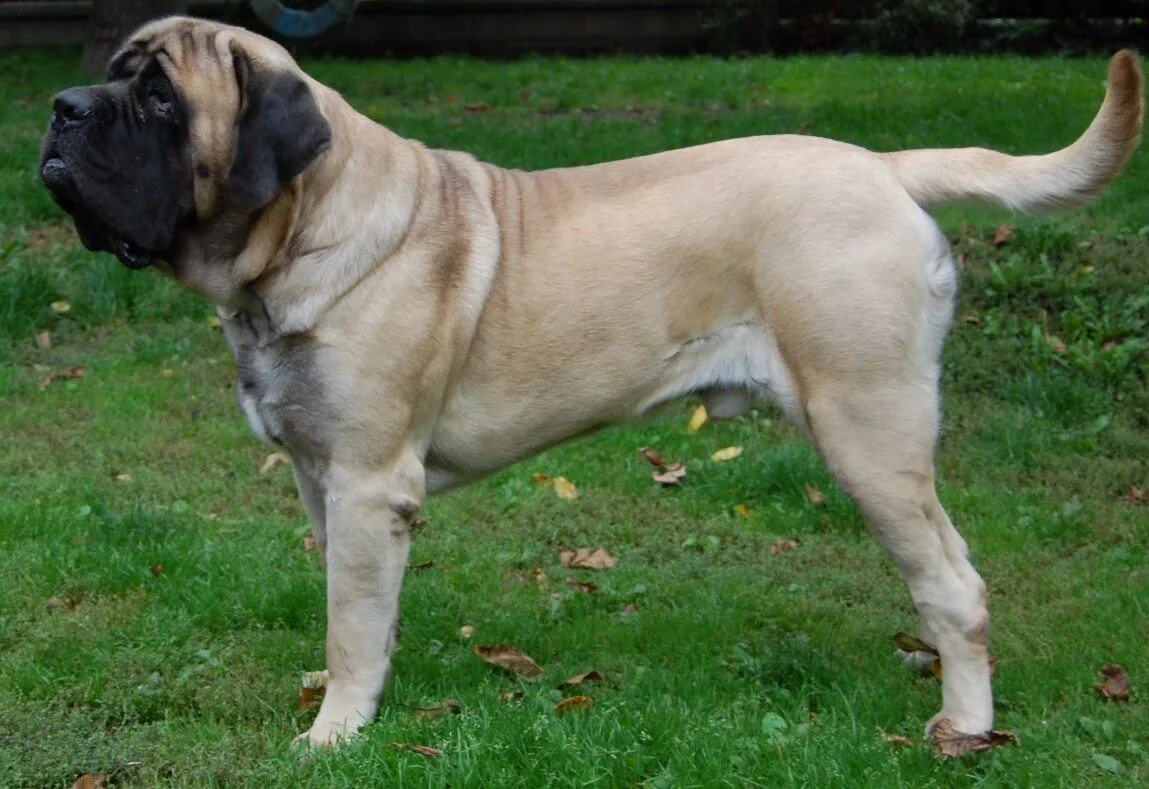
Mastiff
Health grade DThe Mastiff is a massive, extremely good-natured giant—a mastiff-type silent guardian that protects simply through its sheer presence, without ever needing to bark nervously. Its composure is legendary, yet it hides a deeply rooted, vigilant core.
- Height70–86 cm
- Weight54–100 kg
- Life expectancy6–10 yrs
- Puppy price2,000–4,000 €
- Energy3/5
The Essentials at a Glance
The Mastiff is a massive, extremely good-natured giant—a mastiff-type silent guardian that protects simply through its sheer presence, without ever needing to bark nervously. Its composure is legendary, yet it hides a deeply rooted, vigilant core.
- Health grade D: Due to its enormous body mass and genetic predisposition, the Mastiff carries a high risk of serious joint and heart diseases such as hip dysplasia (HD), elbow dysplasia (ED), and pulmonic stenosis (PS).
- You live on the ground floor and have plenty of space in your daily life for a dog that effortlessly blocks half the hallway.
- You prefer cozy, slow-paced walks rather than looking for an agile partner for jogging or dog sports.
- You live on an upper floor without an elevator—the immense weight of this Molosser makes regular stair climbing simply impossible.
Is the Mastiff right for you?
At a glance
Mastiff overview
The essentials — key facts, traits, and health priorities — before you dive deeper.
Health grade
Relative to other breeds
S
A
B
C
D
E
Very healthyHigher risk
Elevated risk — responsible breeding really matters.
See full health info & tests →
Note: This health overview is AI-assisted and editorially reviewed. It is for orientation only and does not replace veterinary advice.
Lifespan
6–10 yrs
Height
70–86 cm
Weight
54–100 kg
Practical
- Puppy price: 2,000 – 4,000 €
- Coat: Short, dense, smooth, undercoat present
- Origin: England
Temperament
Energy
Trainability
Family fit
With kids
Daily life
Care effort
Shedding
Barking
City-friendly
Guard instinct
What matters most
Especially with a Mastiff, choosing the right breeder is the single most important decision you'll make. Serious breeders consistently test the parents for inherited conditions, prioritize healthy early socialization, and stay accountable long after handover. A cheap puppy without health screening tends to become the most expensive dog later on.
See HonestDog breeder standards →Colors & coat
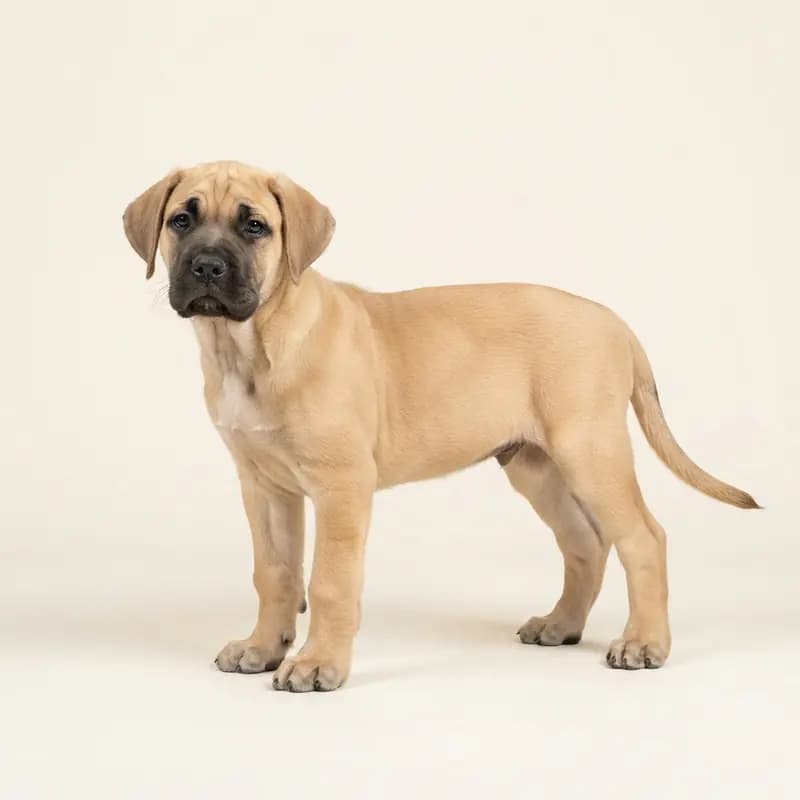
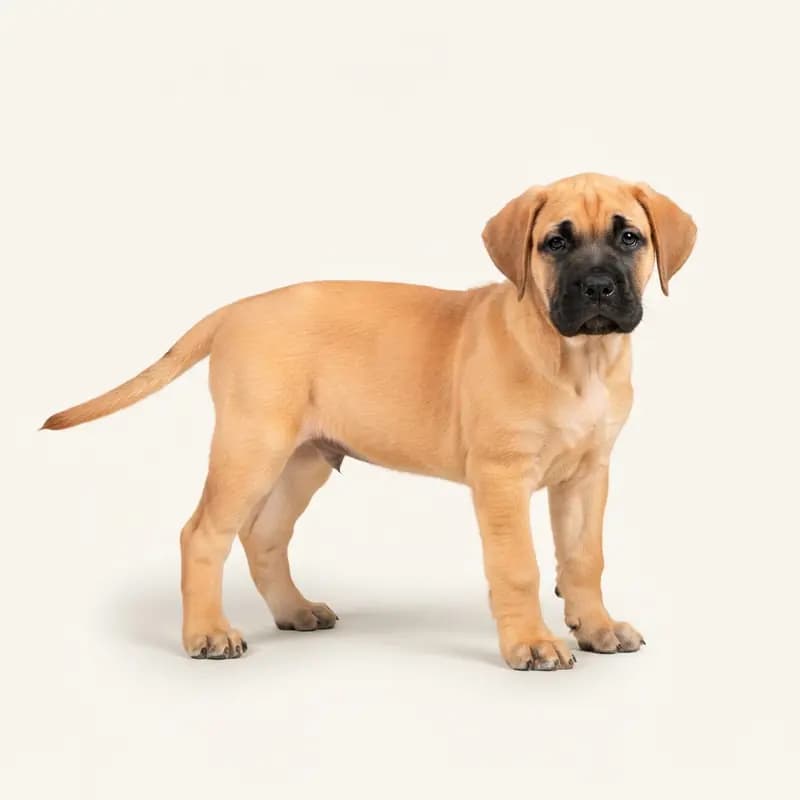
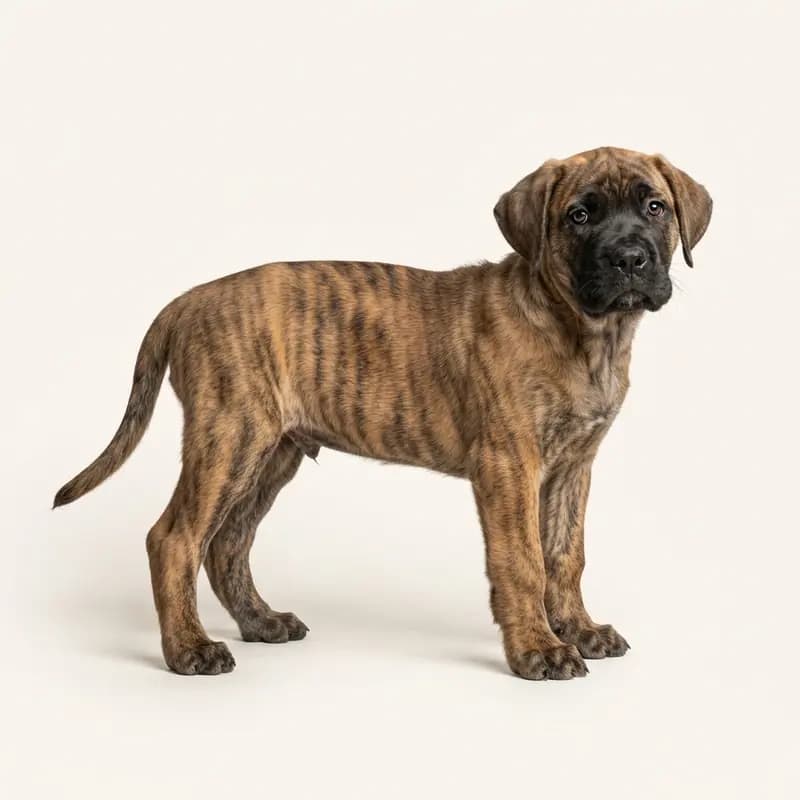
What colors does the Mastiff come in?
The coat colors you will see in Mastiff litters — including which ones fall outside the breed standard and which carry genetic risk.
Eye colors
 Brown
Brown
Coat type
 Short
Short Smooth
 Double coat
Is the Mastiff right for you?
The Mastiff is a massive, extremely good-natured giant—a mastiff-type silent guardian that protects simply through its sheer presence, without ever needing to bark nervously. Its composure is legendary, yet it hides a deeply rooted, vigilant core.
Perfect for you if:
- You live on the ground floor and have plenty of space in your daily life for a dog that effortlessly blocks half the hallway.
- You prefer cozy, slow-paced walks rather than looking for an agile partner for jogging or dog sports.
- You appreciate the stoic calm of this silent guardian and lead him with loving consistency, without expecting quick, blind obedience.
- You can easily afford the budget for the enormous costs of food, bedding, and equipment for an 80-kilo dog.
Less ideal if:
- You live on an upper floor without an elevator—the immense weight of this Molosser makes regular stair climbing simply impossible.
- You expect him to greet every stranger with a wagging tail—he was bred as a guardian to keep intruders at a critical distance first.
- You would not be physically capable of holding back nearly a hundred kilos of pure mass on a leash in an absolute emergency.
- You place great value on a spotlessly clean house and cannot calmly deal with drool on furniture or walls.
The real vibes check
A Mastiff is like a warm, soft wall in the living room—most of the time he sleeps deeply, soundly, and preferably right in the middle of the path. But if he senses his family is threatened, his old guard dog hardware awakens in a split second. You aren't getting a dog that follows orders, but a loyal bodyguard who decides for himself when he needs to intervene.
Self-check
Would the Mastiff really fit your life?
Answer 6 quick questions about your everyday life and see how well the Mastiff fits you — including an honest cost estimate per month, per year, and across the dog's lifetime.
Fit checkCost estimateRisk dice
Takes about 1 minute · free & anonymous
Breed Profile
The Mastiff, also known as the English Mastiff, is a breed of dog of impressive size and stature. Its powerful head, broad chest and strong muscles create an imposing impression. Despite his size, he moves with amazing grace and ease. Its short, dense fur has a pleasant texture and can come in a variety of colors. This breed does not differentiate between performance and show lines, although it always depends on the individual dog and its characteristics. The Mastiff belongs to FCI Group 2, Section 2.1, which includes molossoid, mastiff-like dogs. These dogs are known for their size and strength as well as their alertness and courage.
All measurements in detail
- Height
- 70 - 80 cm (Female), 76 - 86 cm (Male)
- Weight
- 54 - 77 kg (Female), 73 - 100 kg (Male)
- Life Expectancy
- 6 - 10 yrs
- Character
- Gentle, loyal, patient
- Coat
- Short, dense, smooth, undercoat present
- Coat Color
- fawn, apricot, brindle (brindle)
- Price
- 2000 - 4000 €
Character & Temperament
Despite its impressive size, the Mastiff is a gentle giant. His nature is characterized by calm and serenity. He is very people-oriented and forms a close bond with his family. He is often reserved towards strangers at first, but without being aggressive. His alertness and natural distrust of strangers make him a good watchdog, but he never attacks without a reason. Although the Mastiff is a rather calm breed, he still has his instinct to play and enjoys shared activities with his family. However, with his moderate energy level, he is not a hyperactive dog, but also appreciates quiet phases and cozy hours on the sofa. The Mastiff likes to learn and proves to be quite intelligent. He wants to please his people and is willing to learn to do so. However, he can also be a bit stubborn at times, especially when he doesn't understand the purpose of a task. A loving and consistent upbringing is therefore particularly important. Mastiffs generally get along well with other dogs and pets. They are tolerant and patient, which makes them good companions for children. However, their size and power require careful handling, especially when around small children and the elderly. Mastiffs are not prone to strong hunting or prey-catching behavior. They are usually quiet and reserved and do not show the typical behavior of hunting dogs. However, you should always keep in mind that a Mastiff is also a dog and therefore has a certain hunting instinct. Overall, the Mastiff is a wonderful family dog for people who are willing to invest the time and energy into training and caring for such a large and strong animal. With his love and loyalty he will reward any owner who is willing to offer him a loving and safe home.
| Trainability Willing to learn with clear rules and regular training. | Balanced |
| Watchfulness Strong territorial instinct — may actively confront intruders. | Very high |
| Openness to Strangers Neither pushily friendly nor suspicious. | Neutral |
| Hunting or Herding Drive Mild interest in movement and small animals — easily managed. | Low |
Fun Fact!
Although Mastiffs are known as one of the largest dog breeds, they are also known for their gentle and loving nature and are often referred to as "gentle giants."
What Awaits You
Mastiffs are generally calm dogs with a high stimulus threshold. They can be alert and territorial, as well as motivated to hunt. Like many large breeds, musculoskeletal problems are common in Mastiffs. In addition, a shortened life expectancy must be expected.
Housing & Care
Despite their size, Mastiffs can live well in the city provided they get enough exercise and mental stimulation. They are calm and adaptable dogs that can live in an apartment as long as they are walked regularly. However, since they require a lot of space, they are best kept in a house with a garden. Mastiffs tend to get along well with children and other pets, including cats. They are tolerant and patient, which makes them good companions for children. However, their size and power require careful handling, especially when around small children.
- Family Friendly
Loves family life and thrives in a group.
Family-oriented - Child Friendly
Extraordinarily patient and loving — a true family dog.
Excellent with children - Dog Friendly
Actively enjoys the company of other dogs.
Dog-friendly - City Friendly
Can manage in the city, but only with very active owners.
Difficult in cities
Owning a dog is a privilege, but it's also a real responsibility. Before you bring one into your life, be honest with yourself about the commitment it takes.
Training & Education
Mastiffs are intelligent and eager to learn, but they can also be a little stubborn. Positive and patient parenting is most effective. They respond well to rewards and praise and love to please their people. They can also be trained well in various dog sports and activities, including obedience, agility, and even weight pulling. However, it is important that training is age and size appropriate to avoid injury. Mastiffs are naturally alert and protective, and their training should encourage these qualities in a positive and controlled manner. It is important to teach them to differentiate between friend and foe to avoid false alarms and unwanted behavior. It is also important to socialize Mastiffs early on and teach them to be comfortable in different situations and with different people and animals.
Nutrition & Care
Mastiffs require a balanced diet tailored to their specific needs as a large dog breed. They need high-quality protein to support their muscle development and healthy fats for energy. It is important to carefully control the amount of feeding to avoid excess weight, which can put additional strain on the joints. When it comes to grooming, Mastiffs require regular brushing to remove dead hair and keep skin healthy. They have an undercoat and can shed a lot, especially when they are shedding their fur. Grooming a Mastiff should also include regular teeth cleanings and nail trims. The ears should also be checked and cleaned to prevent infection.
| Care Level Minimal effort — occasional brushing and bathing. | Low-maintenance |
| Exercise Needs Needs 1–2 hours of real exercise daily. | Active |
| Shedding Regular shedding — dog hair on clothes is now normal. | Moderate |
| Trainability Willing to learn with clear rules and regular training. | Balanced |
Our experts are still reviewing this information. Spotted something wrong? Email us at info@honestdog.de.
Health & hereditary diseases
Health
D
Elevated risks
Health grade
Due to its enormous body mass and genetic predisposition, the Mastiff carries a high risk of serious joint and heart diseases such as hip dysplasia (HD), elbow dysplasia (ED), and pulmonic stenosis (PS). A health-oriented breeder consistently counteracts this by having their breeding dogs comprehensively tested and only breeding with dogs that meet strict limit values. Before buying a puppy, you should therefore absolutely ask to see the official results of the parent dogs: for hip dysplasia (HD), a result of B or better is required, for elbow dysplasia (ED), grade 1 or better, and for pulmonic stenosis (PS), a clear result. In addition, proof of a genetic test for cystinuria (limit value: clear or carrier, whereby carriers may only be mated with clear partners) as well as current eye examinations for cataracts, ectropion / entropion, and exposure keratopathy syndrome should be available.
Grade is relative to other breeds — AI-assisted and editorially reviewed.
In daily life this can mean
During the growth phase, you must pay extreme attention to weight and joint-friendly exercise, and honestly factor in a very high veterinary budget for these massive dogs.
The breeder's role
Responsible breeders have the hips, elbows, eyes, heart, and metabolism of the parent animals checked and ensure clear airways—however, the fundamental risks of this breed cannot be completely eliminated even with that.
Note: This health overview is AI-assisted and editorially reviewed. It is for orientation only and does not replace veterinary advice.
No Health Tests Available
No specific health tests are currently available for this breed.
Costs & where to find one
How much does a Mastiff cost?
A Mastiff costs around ~€250 per month (€130 – €500, depending on your setup). The first year adds up to roughly ~€6,870 including purchase, equipment and puppy school; across the dog's life (8 years) it comes to about ~€28,130.
With surgery cover, running costs come to about ~€270 per month — in return, your share of a major operation drops from several thousand euros to around 20 percent.
Per month
~€250
In the first year
~€6,870
Across the dog's life
~€28,130
Purchase from a breeder: €2,000 – €4,000
Estimate at a mid-range setup (suburban, dry food, 1–2 hours of daily exercise), average German prices, as of July 2026.
Calculate your personal costs1-minute self-check with your own answers
Looking for a Mastiff?
HonestDog Concierge
No verified Mastiff breeders on HonestDog yet
We currently have no breeders for this breed who have passed our verification. Create your short buyer profile: we'll set up your search alert, review a possible source and email you within 28 days.
Legal Notice
In some German federal states, special regulations apply to Mastiff as a listed or dangerous dog. Depending on your location, this may include a temperament test, permit or other official requirements, leash and muzzle obligations, and higher insurance or tax costs. Always check with your local authorities.
Full guide to restricted-breed ownership in GermanyAppearance, variants & origin
History
The full history
The mastiff's roots can be traced back to ancient Britain. The Romans were already impressed by the strength and bravery of these dogs and brought some examples to Rome, where they were used as war and fighting dogs. In the Middle Ages, Mastiffs were kept in England as guard and hunting dogs. They were supposed to protect houses and farms and were also used to hunt predators such as wolves and bears. Today's Mastiff as we know it was primarily bred in the 19th century. The breed was recognized by the English Kennel Club in 1885 and by the American Kennel Club in 1888. Since then, the Mastiff has developed into a popular family dog that impresses with both its impressive appearance and its friendly and gentle nature.
Original Use
The Mastiff was used as a guard and protection dog, known for its size and imposing appearance.
Origin
England
Date
Antike
Owner experiences
What owners say about the Mastiff
Katrin S., Halterin aus Nordrhein-Westfalen (Hündin, seit 2021)
Als wir uns für unsere Mastiff-Hündin entschieden haben, dachten wir als sportliche Familie, wir könnten sie nach und nach an entspannte Joggingrunden oder kurze Strecken am Fahrrad gewöhnen. Aber da haben wir die Rechnung ohne die typische Sturheit dieser Rasse gemacht! Unsere Hündin bockt einfach komplett, wenn wir versuchen, das Tempo anzuziehen. Sie will schlichtweg nicht laufen und zeigt uns sehr deutlich, dass gemütliches Spazierengehen ihr Maximum an sportlicher Betätigung ist.
Wer einen aktiven Sportpartner sucht, ist beim Mastiff definitiv an der falschen Adresse. Sie sind im Alltag unglaublich liebevoll und ruhig, aber eben auch extrem träge. Dazu kommt das nicht zu unterschätzende Sabber-Potenzial. Man muss sich einfach daran gewöhnen, dass nach dem Trinken oder bei Aufregung der Speichel fliegt. Für uns ist sie trotzdem der perfekte Familienhund, aber man muss ihre gemütliche, manchmal dickköpfige Art einfach so akzeptieren, wie sie ist.
Tobias M., Halter aus Bayern (Rüde, seit 2020)
Unser Rüde ist mit seinen knapp 95 kg ein absoluter Traum von einem Hund – extrem gelassen, gutmütig und absolut loyal gegenüber der Familie. Allerdings sollte man sich vor der Anschaffung in Deutschland genau über die rechtliche Lage informieren. In Bayern und vielen anderen Bundesländern steht der Mastiff auf der Liste der Kategorie 2. Das bedeutete für uns: Wesenstest, behördliche Auflagen und eine deutlich höhere Hundesteuer. Man wird im Alltag auch oft schief angeschaut, weil die schiere Masse den Leuten Angst macht.
Neben der Bürokratie darf man die finanziellen Dimensionen nicht unterschätzen. Ein Hund dieser Gewichtsklasse frisst einem sprichwörtlich die Haare vom Kopf, und auch die Tierarzt- und Versicherungskosten sind gigantisch. Wer bereit ist, dieses Geld in die Hand zu nehmen und den Hund von Anfang an konsequent, aber liebevoll zu erziehen (denn 95 kg hält niemand mehr nur an der Leine), bekommt den treuesten Begleiter, den man sich vorstellen kann.
Sabine W., Halterin aus Hessen (Rüde, verstarb mit 8 Jahren)
Mein Mastiff-Rüde war charakterlich die absolute Seele von Hund – sensibel, unendlich verschmust und im Haus kaum zu bemerken, weil er am liebsten den ganzen Tag geschlafen hat. Doch so schön die Zeit mit ihm war, so schwer war sie auch gesundheitlich. Die extreme Zucht auf Größe und Masse fordert bei dieser Rasse leider ihren Tribut. Wir hatten früh mit Gelenkproblemen zu kämpfen, und die Pflege der tiefen Gesichtsfalten war tägliche Pflicht, um schmerzhafte Entzündungen zu verhindern.
Auch das Risiko einer Magendrehung schwebte immer wie ein Damoklesschwert über uns, weshalb wir das Futter auf mehrere kleine Portionen aufteilen und danach strikte Ruhe verordnen mussten. Mit nur 8 Jahren mussten wir ihn schließlich wegen seiner schweren Arthrose gehen lassen. Die Lebenserwartung ist bei diesen Riesen leider sehr kurz. Ich würde mir immer wieder einen Mastiff holen, aber man muss sich dieses gesundheitlichen Risikos von Anfang an voll bewusst sein.
Paraphrased from real owner reports
Loading owner stories
FAQ & more
Frequently asked questions about the Mastiff
Is a Mastiff the right dog for me?
The Mastiff is an adaptable dog that adjusts well to various lifestyles. Research the temperament, grooming needs, and space requirements before deciding.
How long does a Mastiff live?
The average life expectancy of a Mastiff is 6-10 years. With proper care and regular vet visits, your dog can live a long, healthy life.
How much grooming does a Mastiff need?
Mastiff grooming requirements include regular brushing, nail trimming, and dental care. HonestDog provides detailed grooming tips for every breed.
Is a Mastiff good for families with children?
The Mastiff can be a great family dog. Proper training and socialization are key. HonestDog provides family suitability information for every breed.
What colors does the Mastiff come in?
The Mastiff comes in these colors: Fawn, Apricot, Brindle.
Loading related articles
Are you a Mastiff breeder?
Showcase your kennel on HonestDog and reach families searching for a responsibly bred Mastiff.
Why HonestDog?
What makes HonestDog different from other platforms
Full transparency
We lay out what we have: who the breeder is, how they work, and any health records they've uploaded. So you can judge for yourself.
Responsible breeding, assured
Every breeder on HonestDog has their identity and documents checked before their profile goes live. Health records they upload are shown on the profile, so you can see exactly what has been tested.
Trust and verification
We verify breeders and buyers alike, so every conversation happens on solid ground. It's a new standard of trust in dog breeding.
Less hassle, more time
We've already checked the breeders' documents and gathered the details, so you can skip the endless research and focus on finding the right puppy for your family.
Our Mission

We connect dog lovers with responsible breeders and shelters to ensure every dog finds the perfect home.
Founded by dog enthusiasts, our platform focuses on ethical dog breeding and adoption.
Why HonestDog?
We connect you with vetted breeders and shelters so you can find your — your new companion — with confidence.
Vetted Partners
Only verified breeders and shelters — for a safe start.
Highest Standards
Every animal's health and wellbeing is our top priority.
Guides & Resources
Guides, checklists, and breed profiles — so you can make a well-informed decision.