Loading breed
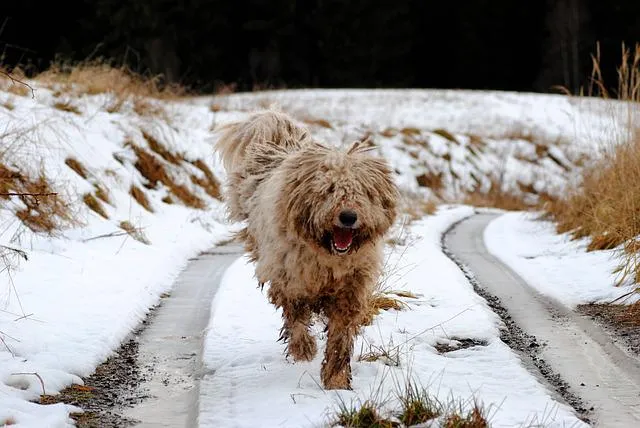
Komondor
Health grade CThe Komondor is an imposing, uncompromising, and self-sufficient Herdenschützer (livestock guardian dog) — bred to independently defend Hungarian sheep flocks against predators. Beneath his shaggy, corded coat lies not a cuddly giant, but a vigilant guardian.
- Height65–80 cm
- Weight36–60 kg
- Life expectancy10–12 yrs
- Puppy price2,000–3,500 €
- Energy3/5
The Essentials at a Glance
The Komondor is an imposing, uncompromising, and self-sufficient Herdenschützer (livestock guardian dog) — bred to independently defend Hungarian sheep flocks against predators. Beneath his shaggy, corded coat lies not a cuddly giant, but a vigilant guardian.
- Health grade C: The Komondor requires an above-average number of mandatory health tests, particularly concerning the eyes.
- You own a large, securely fenced property in the countryside that he can guard as his territory
- You are confident and know how to lead a dog that considers blind obedience a waste of time
- You live in a densely populated neighborhood or city – his job is to patrol at night and bark at every unfamiliar sound
Is the Komondor right for you?
At a glance
Komondor overview
The essentials — key facts, traits, and health priorities — before you dive deeper.
Health grade
Relative to other breeds
S
A
B
C
D
E
Very healthyHigher risk
Average — several important tests are expected.
See full health info & tests →
Note: This health overview is AI-assisted and editorially reviewed. It is for orientation only and does not replace veterinary advice.
Lifespan
10–12 yrs
Height
65–80 cm
Weight
36–60 kg
Practical
- Puppy price: 2,000 – 3,500 €
- Coat: Cord-like structure, long, dense undercoat
- Origin: Hungary
Temperament
Energy
Trainability
Family fit
With kids
Daily life
Care effort
Shedding
Barking
City-friendly
Guard instinct
What matters most
Especially with a Komondor, choosing the right breeder is the single most important decision you'll make. Serious breeders consistently test the parents for inherited conditions, prioritize healthy early socialization, and stay accountable long after handover. A cheap puppy without health screening tends to become the most expensive dog later on.
See HonestDog breeder standards →Colors & coat
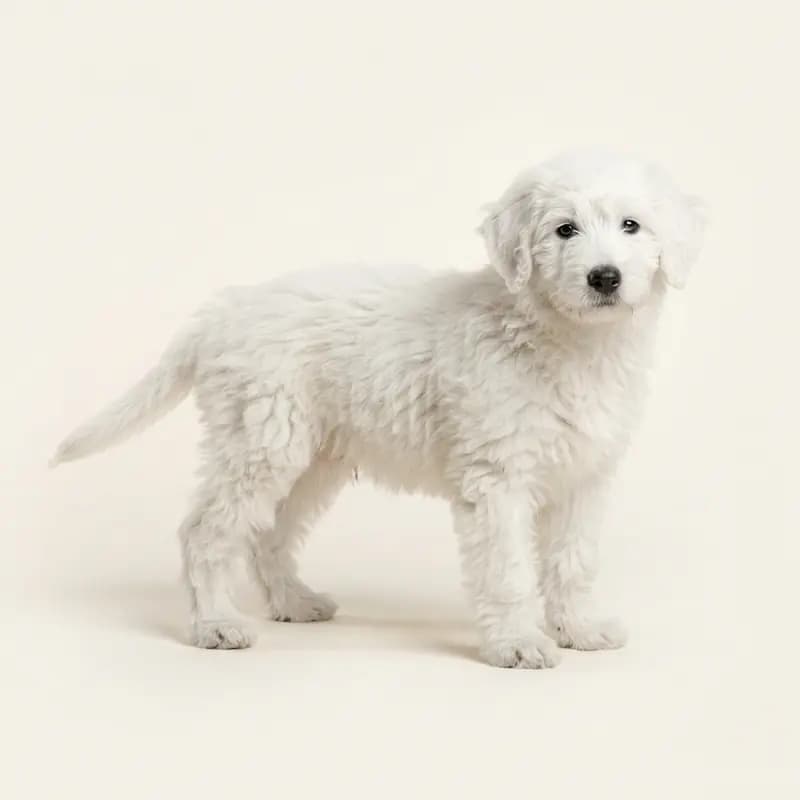
What colors does the Komondor come in?
The coat colors you will see in Komondor litters — including which ones fall outside the breed standard and which carry genetic risk.
Eye colors
 Brown
Brown
Coat type
 Long
Long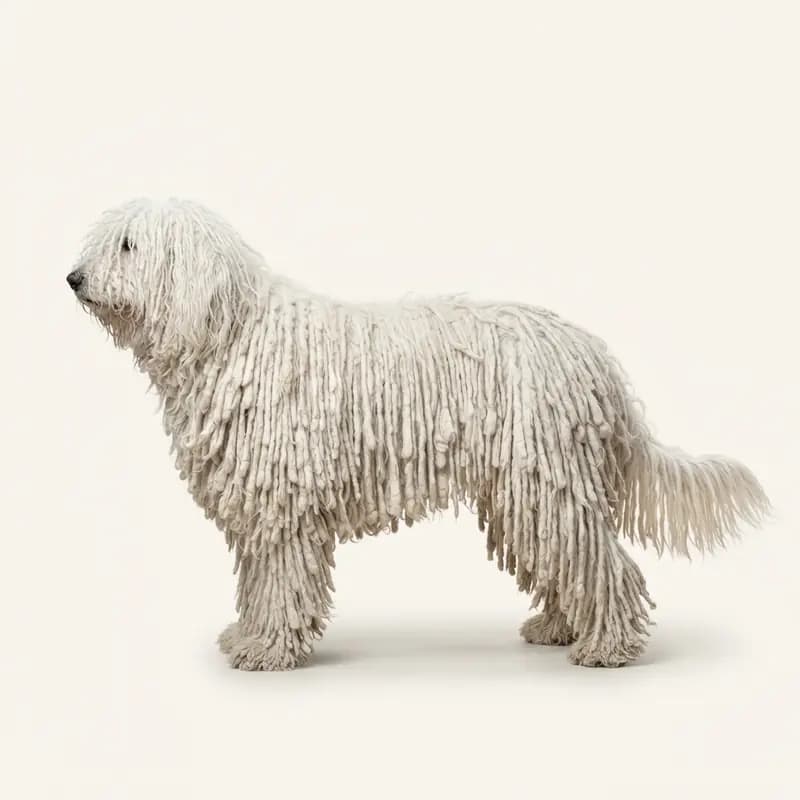 Illustrative image
Corded
 Double coat
Is the Komondor right for you?
The Komondor is an imposing, uncompromising, and self-sufficient Herdenschützer (livestock guardian dog) — bred to independently defend Hungarian sheep flocks against predators. Beneath his shaggy, corded coat lies not a cuddly giant, but a vigilant guardian.
Perfect for you if:
- You own a large, securely fenced property in the countryside that he can guard as his territory
- You are confident and know how to lead a dog that considers blind obedience a waste of time
- You have a quiet home without constant visitor traffic, as he is fundamentally suspicious of strangers
- You value his deeply rooted independence as a strength and are not looking for a dog with a classic 'will-to-please'
Less ideal if:
- You live in a densely populated neighborhood or city – his job is to patrol at night and bark at every unfamiliar sound
- You want a relaxed companion for busy dog parks, cafes, or family vacations
- You expect him to drop everything at your call – he is genetically programmed to assess situations himself rather than wait for commands
The real vibes check
Visually, he may remind you of a cozy, oversized mop — but at heart, the Komondor is a highly territorial bodyguard. You aren't buying a subordinate, but an autonomous security expert who takes over your property while you sleep. Those who respect this uncompromising nature gain an incorruptible partner; those who treat him like a standard companion dog will fail.
Self-check
Would the Komondor really fit your life?
Answer 6 quick questions about your everyday life and see how well the Komondor fits you — including an honest cost estimate per month, per year, and across the dog's lifetime.
Fit checkCost estimateRisk dice
Takes about 1 minute · free & anonymous
Breed Profile
The Komondor is an impressive sight. He attracts everyone's attention with his unique, cord-like fur that makes him look like a cross between a mop and a lion. The head is broad and the expression serious. He belongs to FCI Group 1 of herding and driving dogs. The breed does not have different performance and show lines. His powerful stature and courageous demeanor make him an impressive guard dog, but at the same time he is also a loyal and loving companion.
All measurements in detail
- Height
- 65 - 70 cm (Female), 70 - 80 cm (Male)
- Weight
- 36 - 50 kg (Female), 50 - 60 kg (Male)
- Life Expectancy
- 10 - 12 yrs
- Character
- Brave, alert, loyal
- Coat
- Cord-like structure, long, dense undercoat
- Coat Color
- White
- Price
- 2000 - 3500 €
Character & Temperament
Those who have the privilege of owning a Komondor will be amazed by his unwavering courage and loyalty. This dog takes its role as a protector very seriously. He is naturally vigilant and will not hesitate to defend his family and home. You can count on the Komondor to act courageously and decisively in difficult situations. He was born as a herding dog, and this role is deeply rooted in his nature. Not only is he alert, but he is also very independent. He is programmed to make decisions to protect the herd, and this legacy is expressed in his everyday behavior. If you are looking for a dog that is not only a pet but also a protector, then the Komondor could be just the thing for you. But not everything is work for the Komondor. He is extremely loyal to his family and can be very loving and affectionate. It is important to teach him from an early age that visitors and friends are welcome so that he learns to distinguish between friend and enemy. In terms of his activity level, the Komondor is rather calm and calm. He is not hyperactive, but he needs regular exercise to stay fit and healthy. He is also quite intelligent, but can sometimes be stubborn when it comes to training. His intelligence also means he is good at problem solving, which can be challenging in some situations. The Komondor does not tend to exhibit strong hunting or prey catching behavior. His main instinct is to protect, and this is what is most strongly expressed in his behavior. Regarding other pets, the Komondor can get along well with them if he is used to them from an early age. However, he may tend to have smaller pets as part of his "herd." to look at and protect them. An important point is that the Komondor is not particularly good at being alone for long periods of time. He needs company and the feeling of having a purpose to be happy. Overall, the Komondor is a wonderful breed for someone looking for a loyal and courageous protector. But he needs an owner who is willing to invest the time needed to properly raise and train him and who understands and respects the importance of his protective instincts. You should also be ready to commit to a lifelong friendship characterized by loyalty, courage and a deep bond.
| Trainability Has its own ideas and will test limits. | Strong-willed |
| Watchfulness Strong territorial instinct — may actively confront intruders. | Very high |
| Openness to Strangers Careful around unfamiliar people — thaws slowly. | Cautious |
| Hunting or Herding Drive Noticeable drive — needs attention around small animals. | Moderate |
Fun Fact!
Did you know that the Komondor's cord-like fur helped it camouflage itself as a sheep and carry out surprise attacks against predators that threatened the herd?
What Awaits You
The Komodor is considered a good guardian, acting independently and tending to defend its territory. He is often intolerant to aggressive towards strangers in his territory.
Housing & Care
The Komondor is a herding dog designed for rural life. It is therefore not particularly suitable for keeping in the city unless you can provide it with sufficient exercise and mental stimulation. He has a strong protective instinct and should be kept in a fenced area. Regarding small children: The Komondor can be a loving family dog, but it is important to supervise both the dog and the children and ensure that they are respectful of each other. The Komondor can get along with other pets if socialized with them from an early age.
- Family Friendly
Loves family life and thrives in a group.
Family-oriented - Child Friendly
Takes boisterous and affectionate children in its stride.
Patient with children - Dog Friendly
Usually gets on fine with other dogs.
Generally tolerant - City Friendly
Can manage in the city, but only with very active owners.
Difficult in cities
Owning a dog is a privilege, but it's also a real responsibility. Before you bring one into your life, be honest with yourself about the commitment it takes.
Training & Education
The Komondor is an intelligent and independent-minded dog that requires consistent but gentle training. As a livestock guard dog, he has a strong protective instinct, so it is important to teach him how to behave in different situations. Early socialization is crucial. The Komondor can benefit from activities such as obedience, agility and protection dog training. It is important to ensure that the dog is not over-employed, as he also needs rest periods. It is important to teach the Komondor frustration tolerance and impulse control as they can sometimes be stubborn and stubborn. Ball games should be used moderately to avoid obsessive behavior. Training should always be positive and reward based.
Nutrition & Care
Komondors require a balanced diet consisting of high quality proteins, carbohydrates, fats, vitamins and minerals. Puppies need special puppy food tailored to their growth needs. Adult dogs should be fed a diet tailored to their age, weight, activity level and health status. It is advisable to follow the manufacturer's feeding recommendations and adjust the amount of food if necessary to maintain a healthy body weight. It's best to consult with your veterinarian or a pet nutritionist to develop a nutritional plan for your Komondor. In terms of care: The Komondor features a thick undercoat and a unique, cord-like topcoat. The coat needs to be groomed regularly to avoid matting. Particular care must be taken to ensure that the typical “cords” do not grow together. A Komondor does not shed heavily, but does lose hair in its cords, so these need to be groomed regularly. The thick coat provides protection from cold in winter and heat in summer, although the dog can be prone to overheating in extreme temperatures.
| Care Level Needs regular professional grooming — time-consuming and costly. | High-maintenance |
| Exercise Needs Needs 1–2 hours of real exercise daily. | Active |
| Shedding Hair everywhere, always — no white clothing survives. | Very heavy |
| Trainability Has its own ideas and will test limits. | Strong-willed |
Our experts are still reviewing this information. Spotted something wrong? Email us at info@honestdog.de.
Health & hereditary diseases
Health
C
Solid, watch carefully
Health grade
The Komondor requires an above-average number of mandatory health tests, particularly concerning the eyes. Conditions such as cataracts and eyelid malformations like entropion must be monitored through regular breeding screenings. Additionally, hip dysplasia (HD) is a significant concern for this large breed, which is why prospective buyers should always insist on seeing certified health test results for both parents.
Grade is relative to other breeds — AI-assisted and editorially reviewed.
In daily life this can mean
You should ensure joint-friendly development, check his eyes regularly, and enforce strict rest periods after feeding to prevent life-threatening gastric torsion.
The breeder's role
Reputable breeders have the hips, elbows, and eyes of the parent animals thoroughly checked and prioritize a stable gastrointestinal tract in their breeding plans to reduce avoidable risks.
Note: This health overview is AI-assisted and editorially reviewed. It is for orientation only and does not replace veterinary advice.
No Health Tests Available
No specific health tests are currently available for this breed.
Costs & where to find one
How much does a Komondor cost?
A Komondor costs around ~€230 per month (€120 – €450, depending on your setup). The first year adds up to roughly ~€6,330 including purchase, equipment and puppy school; across the dog's life (11 years) it comes to about ~€33,830.
With surgery cover, running costs come to about ~€240 per month — in return, your share of a major operation drops from several thousand euros to around 20 percent.
Per month
~€230
In the first year
~€6,330
Across the dog's life
~€33,830
Purchase from a breeder: €2,000 – €3,500
Estimate at a mid-range setup (suburban, dry food, 1–2 hours of daily exercise), average German prices, as of July 2026.
Calculate your personal costs1-minute self-check with your own answers
Looking for a Komondor?
HonestDog Concierge
No verified Komondor breeders on HonestDog yet
We currently have no breeders for this breed who have passed our verification. Create your short buyer profile: we'll set up your search alert, review a possible source and email you within 28 days.
Appearance, variants & origin
History
The full history
The Komondor comes from Hungary and is one of the oldest dog breeds known there. It is believed that he came to what is now Hungary with the Magyars, a nomadic people, around the year 896. The Hungarians used the Komondor as a herding dog to protect their herds from predators. Its cord-like fur not only helped it camouflage itself among flocks of sheep, but also offered it protection from the claws and teeth of wolves and other predators. The breed was recognized by the Kennel Club of Hungary in 1920 and recognized as a separate breed by the American Kennel Club (AKC) in 1937.
Original Use
The Komondor was used as a livestock guard dog to protect herds of livestock from predators.
Origin
Hungary
Date
Antike
Owner experiences
What owners say about the Komondor
Thomas S., Halter aus Brandenburg (zwei Hunde, seit über 10 Jahren)
Ich halte mittlerweile seit vielen Jahren Komondore und habe aktuell zwei Hunde bei mir auf dem Hof. Meine Erfahrung ist, dass sie im Alltag eigentlich ziemlich entspannte Gefährten sind. Sie brauchen nicht permanent Action oder stundenlange Beschäftigung, aber sie benötigen definitiv ihren Platz im Freien – für eine reine Wohnungshaltung sind sie absolut nicht geeignet.
Als ehemalige Herdenschutzhunde sind sie die meiste Zeit ruhig und gelassen. Doch sobald sie eine Bedrohung wahrnehmen, fackeln sie nicht lange. Sie sind absolut furchtlos, wenn es darum geht, ihr Territorium und ihre Familie zu verteidigen. Das Schöne ist, dass sie gegenüber ihrer eigenen Familie unglaublich sanft sind. Meine beiden Töchter können praktisch alles mit ihnen machen, da gibt es überhaupt keine Probleme. Sie sind fantastische, treue Begleiter, wenn man ihnen den nötigen Raum gibt.
Gabriele R., Züchterin aus Sachsen (Hündin, seit 2015)
Als erfahrene Halterin und Züchterin muss ich ehrlich sagen: Ein Komondor ist kein Hund für jedermann und besonders für Familien mit ganz kleinen Kindern oft eine Herausforderung. Ein junger Komondor ist extrem wild und verspielt. Mit etwa 10 Monaten wiegt so ein Hund schnell mal 25 bis 30 Kilo. Wenn er dann im Spiel stürmisch anspringt oder mit seinen spitzen Junghundzähnen zubeißt, kann das für kleine Kinder gefährlich werden.
Die Erziehung erfordert eine sehr starke, konsequente Führung. Der Hund muss genau wissen, wer der Chef ist, und die Rangordnung muss von Anfang an klar sein. Gleichzeitig darf man niemals mit Härte oder gar Gewalt arbeiten – ein Komondor vergisst ungerechte Behandlung niemals. Man muss eine feine Balance aus absoluter Konsequenz, viel Lob und tiefer Liebe finden, damit die Beziehung funktioniert.
Birgit M., Halterin aus Oberbayern (Rüde, seit 2018)
Viele Leute, die uns begegnen, fragen mich als Erstes, ob das Fell nicht furchtbar stinkt oder dreckig ist. Ich kann dazu nur sagen: Ein gut gepflegter Komondor riecht nicht mehr oder weniger als jeder andere Hund auch. Aber der Weg dorthin ist harte Arbeit. Die Fellpflege ist extrem zeitaufwendig, denn man darf diese Hunde auf keinen Fall mit einer normalen Bürste kämmen.
Stattdessen muss man die typischen Schnüre von klein auf regelmäßig mit den Fingern vorsichtig bis zum Ansatz auseinanderziehen und entwirren, damit das Fell nicht zu einer einzigen Matte verfilzt. Außerdem ist es aus hygienischen Gründen super wichtig, die Haare an den Schenkelinnenseiten und rund um die Genitalien freizuschneiden, damit sich dort kein Urin festsetzt. Wer diese intensive Pflege scheut, sollte sich definitiv keinen Komondor anschaffen.
Paraphrased from real owner reports
Loading owner stories
Community Posts
FAQ & more
Frequently asked questions about the Komondor
Is a Komondor the right dog for me?
The Komondor is an adaptable dog that adjusts well to various lifestyles. Research the temperament, grooming needs, and space requirements before deciding.
How long does a Komondor live?
The average life expectancy of a Komondor is 10-12 years. With proper care and regular vet visits, your dog can live a long, healthy life.
How much grooming does a Komondor need?
Komondor grooming requirements include regular brushing, nail trimming, and dental care. HonestDog provides detailed grooming tips for every breed.
Is a Komondor good for families with children?
The Komondor can be a great family dog. Proper training and socialization are key. HonestDog provides family suitability information for every breed.
What colors does the Komondor come in?
The Komondor comes in these colors: White.
Loading related articles
Are you a Komondor breeder?
Showcase your kennel on HonestDog and reach families searching for a responsibly bred Komondor.
Why HonestDog?
What makes HonestDog different from other platforms
Full transparency
We lay out what we have: who the breeder is, how they work, and any health records they've uploaded. So you can judge for yourself.
Responsible breeding, assured
Every breeder on HonestDog has their identity and documents checked before their profile goes live. Health records they upload are shown on the profile, so you can see exactly what has been tested.
Trust and verification
We verify breeders and buyers alike, so every conversation happens on solid ground. It's a new standard of trust in dog breeding.
Less hassle, more time
We've already checked the breeders' documents and gathered the details, so you can skip the endless research and focus on finding the right puppy for your family.
Our Mission

We connect dog lovers with responsible breeders and shelters to ensure every dog finds the perfect home.
Founded by dog enthusiasts, our platform focuses on ethical dog breeding and adoption.
Why HonestDog?
We connect you with vetted breeders and shelters so you can find your — your new companion — with confidence.
Vetted Partners
Only verified breeders and shelters — for a safe start.
Highest Standards
Every animal's health and wellbeing is our top priority.
Guides & Resources
Guides, checklists, and breed profiles — so you can make a well-informed decision.