Loading breed
Karelian Bear Dog
Health grade CThe Karelian Bear Dog is a fearless, highly reactive Nordic hunting spitz—bred to independently track and hold large, defensive game like bears or moose at bay with loud, persistent barking.
- Height49–60 cm
- Weight17–28 kg
- Life expectancy10–12 yrs
- Puppy price1,500–2,500 €
- Energy4/5
The Essentials at a Glance
The Karelian Bear Dog is a fearless, highly reactive Nordic hunting spitz—bred to independently track and hold large, defensive game like bears or moose at bay with loud, persistent barking.
- Health grade C: The Karelian Bear Dog requires an above-average number of mandatory breeding tests, reflecting a broad spectrum of potential hereditary conditions.
- You are looking for a true working dog for demanding hunting tasks, or you are prepared to keep him occupied through intense sled dog sports or advanced mantrailing.
- You live in a very rural area, ideally with a high, escape-proof fenced property far away from sensitive neighbors who might be bothered by noise.
- You expect a dog that will immediately stop chasing a deer on command—he has been genetically programmed to track and hold defensive game autonomously for hours.
Is the Karelian Bear Dog right for you?
At a glance
Karelian Bear Dog overview
The essentials — key facts, traits, and health priorities — before you dive deeper.
Health grade
Relative to other breeds
S
A
B
C
D
E
Very healthyHigher risk
Average — several important tests are expected.
See full health info & tests →
Note: This health overview is AI-assisted and editorially reviewed. It is for orientation only and does not replace veterinary advice.
Lifespan
10–12 yrs
Height
49–60 cm
Weight
17–28 kg
Practical
- Puppy price: 1,500 – 2,500 €
- Coat: short to medium long, dense, with undercoat
- Origin: Finland
Temperament
Energy
Trainability
Family fit
With kids
Daily life
Care effort
Shedding
Barking
City-friendly
Guard instinct
What matters most
Especially with a Karelian Bear Dog, choosing the right breeder is the single most important decision you'll make. Serious breeders consistently test the parents for inherited conditions, prioritize healthy early socialization, and stay accountable long after handover. A cheap puppy without health screening tends to become the most expensive dog later on.
See HonestDog breeder standards →Colors & coat
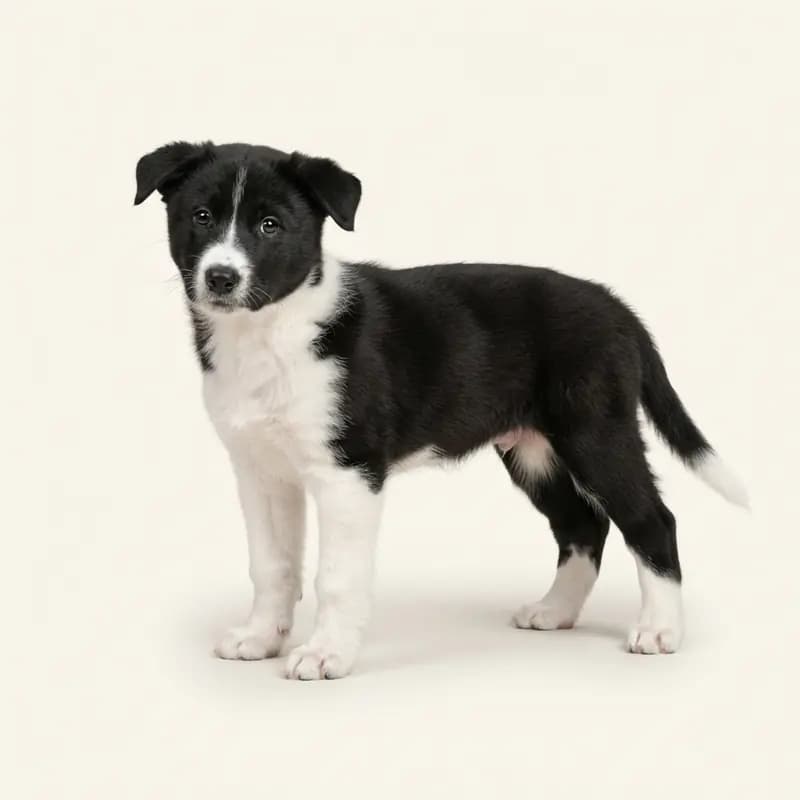
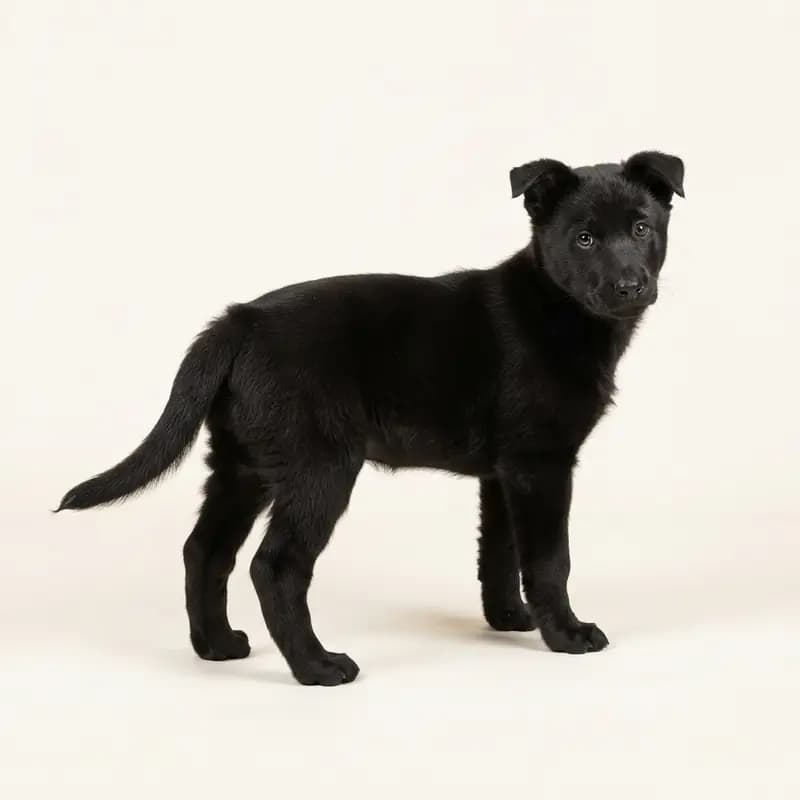
What colors does the Karelian Bear Dog come in?
The coat colors you will see in Karelian Bear Dog litters — including which ones fall outside the breed standard and which carry genetic risk.
Eye colors
 Brown
Brown
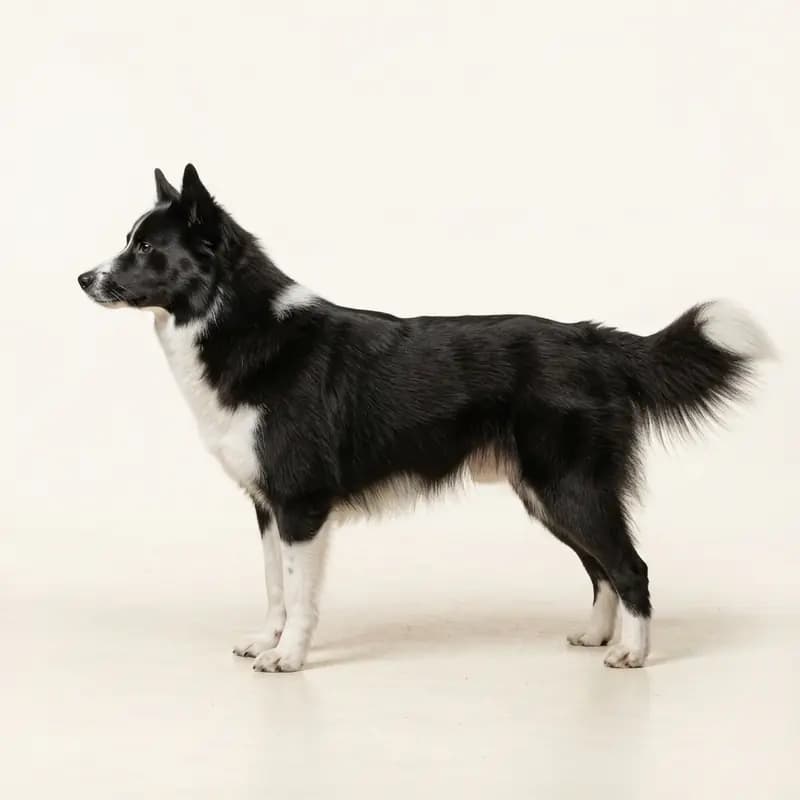
Coat type
 Illustrative image
Medium
 Double coat
 Smooth
Is the Karelian Bear Dog right for you?
The Karelian Bear Dog is a fearless, highly reactive Nordic hunting spitz—bred to independently track and hold large, defensive game like bears or moose at bay with loud, persistent barking.
Perfect for you if:
- You are looking for a true working dog for demanding hunting tasks, or you are prepared to keep him occupied through intense sled dog sports or advanced mantrailing.
- You live in a very rural area, ideally with a high, escape-proof fenced property far away from sensitive neighbors who might be bothered by noise.
- You lead with absolute confidence and fairness, as this dog will instinctively make his own decisions if he doesn't trust your leadership.
- You have no issue with the fact that your dog often views other dogs as unnecessary or even as serious competition.
Less ideal if:
- You expect a dog that will immediately stop chasing a deer on command—he has been genetically programmed to track and hold defensive game autonomously for hours.
- You live in a densely populated area where his breed-typical, piercing bark at every sight on the property will quickly lead to major conflicts.
- You are looking for an easy-going companion for relaxed walks in the city park—for this dog, the confinement of urban life means constant stress.
The real vibes check
A Karelian Bear Dog won't ask for your permission when you're out and about; he is a highly specialized survivalist who takes command the moment he enters the woods. What keeps him alive in Scandinavia when facing a bear—lightning-fast, autonomous decision-making and absolute fearlessness—quickly becomes a risk in a typical suburban setting. You aren't getting a cuddle-bug, but an uncompromising child of nature that needs real work to thrive.
Self-check
Would the Karelian Bear Dog really fit your life?
Answer 6 quick questions about your everyday life and see how well the Karelian Bear Dog fits you — including an honest cost estimate per month, per year, and across the dog's lifetime.
Fit checkCost estimateRisk dice
Takes about 1 minute · free & anonymous
Breed Profile
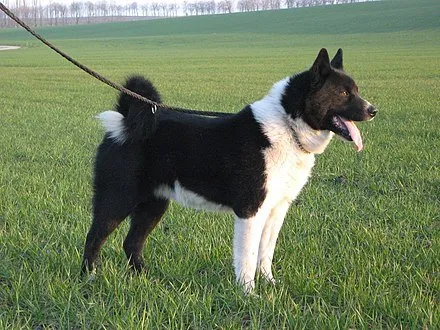
The Karelian Bear Dog is a medium-sized dog with a strong and robust body structure. This athletic dog has a broad chest, powerful legs, and a bushy tail that is carried curled over its back. Its head is broad with a pronounced forehead and a straight bridge of the nose. The eyes are dark brown, small and round, the ears are medium sized and set high, they are upright and tilted slightly forward. The coat of the Karelian Bear Dog is dense and straight, the length varies from short to medium long. A thick undercoat protects it from extreme weather conditions. The coat color is primarily black with white markings commonly found on the chest, neck, face, legs and tail. The Karelian Bear Dog belongs to FCI Group 5, the Spitz and Urtype dogs, more precisely to Section 2, the Nordic hunting dogs. There is no distinction between performance and show lines, all Karelian Bear Dogs are working dogs valued for their game handling skills.
All measurements in detail
- Height
- 49 - 55 cm (Female), 54 - 60 cm (Male)
- Weight
- 17 - 20 kg (Female), 25 - 28 kg (Male)
- Life Expectancy
- 10 - 12 yrs
- Character
- independent, courageous, energetic
- Coat
- short to medium long, dense, with undercoat
- Coat Color
- black with white markings
- Price
- 1500 - 2500 €
Character & Temperament
The Karelian Bear Dog is an energetic, independent and courageous dog. It was bred to hunt in the wild without human guidance, so it is characterized by a high level of independence and determination. However, he is also loyal and can develop a strong bond with his owner. As a hunting dog, the Karelian Bear Dog has a strong hunting instinct. It shows a strong interest in game and can react quickly when it sees prey. This instinct can become a problem if not managed properly, so it is important that the Karelian Bear Dog is kept in a controlled environment and that it is well trained. The Karelian Bear Dog is an active dog that needs a lot of exercise. He enjoys long walks and games, but he also needs mental stimulation to be happy. Despite his independence, he enjoys the company of people and can integrate well into a family as long as his needs are met. The Karelian Bear Dog is an alert dog that is very aware of its surroundings. He tends to guard his territory and can be suspicious of strangers. However, despite its size and strength, the Karelian Bear Dog is not an aggressive dog and does not typically display aggressive behavior unless it feels threatened. Although the Karelian Bear Dog enjoys spending time with his family, he can learn to stay alone as long as he is properly prepared. It is important to note that this breed does not like to be ignored and they require sufficient mental and physical stimulation to be happy and well-adjusted. So if you have an active lifestyle and are looking for a dog to accompany you on your adventures, the Karelian Bear Dog could be the perfect choice for you. Please note, however, that this dog requires clear leadership and consistent training to reach its full potential.
| Trainability Bred to make decisions without human direction. | Very independent |
| Watchfulness Strong territorial instinct — may actively confront intruders. | Very high |
| Openness to Strangers Neither pushily friendly nor suspicious. | Neutral |
| Hunting or Herding Drive Powerful instinct that can override recall when triggered. | Strong |
Fun Fact!
Did you know that the Karelian Bear Dog is so popular in its native Finland that it has even been featured on a postage stamp? Yes it is! This impressive breed has achieved postage stamp fame.
What Awaits You
The Karelian Bear Dog is a strong and enduring hunting dog, particularly suited for work in dense forests. It shows a high degree of independence while still being loyal to its owner. These dogs are alert and brave but require consistent training and sufficient activity. Due to their strong hunting drive, they are less suitable as purely family dogs but are well suited to active people with experience handling hunting dogs.
Housing & Care
The Karelian Bear Dog is an active and energetic dog that requires plenty of exercise and mental stimulation. It is therefore more suitable for rural areas or houses with a large, secure garden than for a city apartment. He enjoys long walks and outdoor activities. Although he generally gets along well with children, his size and energy may make him not the best choice for families with very young children. However, there should be no problems with older children who know how to treat dogs with respect. As for other pets, it should be noted that the Karelian Bear Dog has a strong hunting instinct. So it could be difficult with cats and small pets unless he grew up with them from a young age.
- Family Friendly
Loves family life and thrives in a group.
Family-oriented - Child Friendly
Gets on well with children — with adult supervision.
With supervision - Dog Friendly
Usually gets on fine with other dogs.
Generally tolerant - City Friendly
Can manage in the city, but only with very active owners.
Difficult in cities
Owning a dog is a privilege, but it's also a real responsibility. Before you bring one into your life, be honest with yourself about the commitment it takes.
Training & Education
Raising the Karelian Bear Dog requires patience, consistency and clear leadership. He is intelligent and learns quickly, but can also be stubborn. He needs lots of mental stimulation and tasks that satisfy his hunting instincts. Therefore, activities such as tracking or mantrailing are ideal for this breed. Although the Karelian Bear Dog is a working dog, you should be careful not to overwhelm him. As with any breed, there is a risk that he will become a "ball junkie" if he is trained too intensively. becomes. It is important to ensure sufficient periods of relaxation and also to integrate playful elements into training. An important aspect of training is teaching the Karelian Bear Dog to control its instincts. Since he is a strong hunter, it is important to get him used to dealing with other animals early on and to train him to have a strong recall command. Promoting frustration tolerance and impulse control should also be part of the training. Distraction training can be particularly helpful here. If you are willing to invest enough time and energy into training, you will find that the Karelian Bear Dog can be a loyal and capable companion.
Nutrition & Care
When it comes to nutrition, the Karelian Bear Dog is not particularly demanding and does well with a balanced, high-quality dog food. However, make sure that it doesn't over because being overweight can seriously affect your dog's health. When it comes to grooming, the Karelian Bear Dog has a dense, water-repellent double coat that protects it from the harsh climatic conditions of its homeland. So he can also cope well with the German climate. However, during the shedding phases in spring and autumn, he can shed quite heavily. Regular brushing helps keep the coat clean and healthy and the hair in your home in check.
| Care Level Regular brushing and occasional professional grooming. | Moderate |
| Exercise Needs Needs several hours of serious exercise every day. | Very active |
| Shedding Hair everywhere, always — no white clothing survives. | Very heavy |
| Trainability Bred to make decisions without human direction. | Very independent |
Our experts are still reviewing this information. Spotted something wrong? Email us at info@honestdog.de.
Health & hereditary diseases
Health
C
Solid, watch carefully
Health grade
The Karelian Bear Dog requires an above-average number of mandatory breeding tests, reflecting a broad spectrum of potential hereditary conditions. The primary focus is on eye diseases such as Collie Eye Anomaly (CEA) and cataracts, as well as hip dysplasia (HD) regarding the musculoskeletal system. Thanks to consistent mandatory health tests, these risks can be effectively monitored in controlled breeding; however, prospective buyers should specifically ask to see the official health results.
Grade is relative to other breeds — AI-assisted and editorially reviewed.
In daily life this can mean
With joint-friendly rearing, a healthy weight, and regular veterinary check-ups for the eyes and thyroid, most of these dogs remain active well into old age.
The breeder's role
Reputable breeders have the hips, elbows, and eyes of the parent dogs tested and keep a close eye on thyroid levels to minimize risks within the bloodline.
Note: This health overview is AI-assisted and editorially reviewed. It is for orientation only and does not replace veterinary advice.
No Health Tests Available
No specific health tests are currently available for this breed.
Costs & where to find one
How much does a Karelian Bear Dog cost?
A Karelian Bear Dog costs around ~€180 per month (€100 – €350, depending on your setup). The first year adds up to roughly ~€5,050 including purchase, equipment and puppy school; across the dog's life (11 years) it comes to about ~€27,200.
With surgery cover, running costs come to about ~€180 per month — in return, your share of a major operation drops from several thousand euros to around 20 percent.
Per month
~€180
In the first year
~€5,050
Across the dog's life
~€27,200
Purchase from a breeder: €1,500 – €2,500
Estimate at a mid-range setup (suburban, dry food, 1–2 hours of daily exercise), average German prices, as of July 2026.
Calculate your personal costs1-minute self-check with your own answers
Looking for a Karelian Bear Dog?
HonestDog Concierge
No verified Karelian Bear Dog breeders on HonestDog yet
We currently have no breeders for this breed who have passed our verification. Create your short buyer profile: we'll set up your search alert, review a possible source and email you within 28 days.
Appearance, variants & origin
History
The full history
The Karelian Bear Dog, also called Karjalankarhukoira, comes from the Karelia region, which lies between Finland and Russia. This breed is the result of centuries of breeding dogs specifically designed to hunt large game such as bears and elk. This breed is believed to be closely related to the primitive dogs that lived in this region thousands of years ago. The development of the modern breed began in the late 19th and early 20th centuries, when the Finns began to systematically breed the best hunting dogs. During World War II, the Karelian Bear Dogs were threatened with extinction because many dogs went to war or lived in the war zones. After the war, efforts were made to revive the breed by importing dogs from the remote parts of Karelia. The Karelian Bear Dog was recognized as a separate breed by the Finnish Kennel Club in 1945. Today is the Karelian Bear dog very popular in Finland and is still used mainly for hunting large game. However, this breed is rare in the rest of the world.
Original Use
The Karelian Bear Dog was bred to hunt large game such as bears and elk.
Origin
Finland
Date
1600
Owner experiences
What owners say about the Karelian Bear Dog
Jens M., Halter aus dem Harz (Rüde, seit 2021)
Als wir uns damals für einen Karelischen Bärenhund entschieden haben, wussten wir zwar theoretisch, worauf wir uns einlassen, aber die Praxis ist doch noch mal eine andere Hausnummer. Unser Rüde ist extrem treu und hat eine unglaublich enge Bindung zu mir aufgebaut. Wenn wir zusammen draußen in der Natur unterwegs sind, ist er in seinem Element. Er ist extrem mutig und robust, das dichte Fell schützt ihn vor jedem Wetter.
Aber man darf sich nichts vormachen: Der Jagdtrieb ist gigantisch und lässt sich nicht einfach „abtrainieren“. Er jagt von Natur aus stumm, bis er das Wild gestellt hat – das macht den Freilauf ohne Leine im Wald praktisch unmöglich, da der Rückruf bei Wildsichtung sofort aussetzt. Zudem ist er extrem stur und hinterfragt Kommandos eigenständig. Wer einen leichtführigen Begleiter sucht, wird mit dieser Rasse definitiv verzweifeln. Man braucht unendlich viel Geduld und eine absolut konsequente, aber gewaltfreie Hand.
Sabine K., Halterin aus Oberbayern (Hündin, seit 2022)
Wir nutzen unsere Hündin zwar nicht aktiv für die Großwildjagd, aber wir sind täglich stundenlang im Gelände und beim Wandern unterwegs. Die Auslastung ist das A und O. Wenn diese Hunde nicht körperlich und geistig gefordert werden, neigen sie schnell dazu, frustriert und im Haus extrem unruhig oder gar zerstörerisch zu werden. Sie ist wie ein „Husky auf Crack“, wenn sie nicht rennen darf.
Ein weiteres Thema ist die Verträglichkeit. Sie ist Fremden gegenüber sehr distanziert und bewacht unser Grundstück extrem wachsam. Mit anderen Hunden ist es leider oft kompliziert; sie zeigt eine deutliche, selektive Unverträglichkeit gegenüber Artgenossen, weshalb Hundewiesen für uns absolut tabu sind. Man muss sich bewusst sein, dass man hier ein echtes Urgestein an der Leine hat, das sehr unabhängig agiert und eine starke, erfahrene Führung benötigt.
Michael T., Halter aus der Eifel (Rüde, seit 2023)
Ich habe meinen Karelier nun schon seit über drei Jahren und kann bestätigen: Es ist eine der lohnendsten, aber auch anstrengendsten Erfahrungen meines Lebens. Die Rasse ist extrem intelligent und lernt unglaublich schnell – allerdings nur das, was sie auch für sinnvoll erachtet. Da es sich um eine sehr ursprüngliche Rasse mit einem primitiven Jagdinstinkt handelt, reagieren sie überhaupt nicht gut auf harte Erziehungsmethoden, sondern brauchen eine sehr feinfühlige, aber absolut konsequente Führung.
Was man unterschätzt, ist die Wachsamkeit und das Mitteilungsbedürfnis. Wenn sich jemand dem Haus nähert, schlägt er sofort an. Auch die Fellpflege während des Fellwechsels ist intensiv, da die Unterwolle extrem dicht ist. Wer einen unkomplizierten Begleithund sucht, sollte die Finger von dieser Rasse lassen. Für aktive Outdoor-Spezialisten, die bereit sind, viel Zeit in die Sozialisierung und das Schleppleinentraining zu investieren, ist er jedoch ein treuer, unerschrockener Partner.
Paraphrased from real owner reports
Loading owner stories
FAQ & more
Frequently asked questions about the Karelian Bear Dog
Is a Karelian Bear Dog the right dog for me?
The Karelian Bear Dog is an active dog that needs plenty of exercise and mental stimulation. Research the temperament, grooming needs, and space requirements before deciding.
How long does a Karelian Bear Dog live?
The average life expectancy of a Karelian Bear Dog is 10-12 years. With proper care and regular vet visits, your dog can live a long, healthy life.
How much grooming does a Karelian Bear Dog need?
Karelian Bear Dog grooming requirements include regular brushing, nail trimming, and dental care. HonestDog provides detailed grooming tips for every breed.
Is a Karelian Bear Dog good for families with children?
The Karelian Bear Dog can be a great family dog. Proper training and socialization are key. HonestDog provides family suitability information for every breed.
What colors does the Karelian Bear Dog come in?
The Karelian Bear Dog comes in these colors: Black and white, Black.
Loading related articles
Are you a Karelian Bear Dog breeder?
Showcase your kennel on HonestDog and reach families searching for a responsibly bred Karelian Bear Dog.
Why HonestDog?
What makes HonestDog different from other platforms
Full transparency
We lay out what we have: who the breeder is, how they work, and any health records they've uploaded. So you can judge for yourself.
Responsible breeding, assured
Every breeder on HonestDog has their identity and documents checked before their profile goes live. Health records they upload are shown on the profile, so you can see exactly what has been tested.
Trust and verification
We verify breeders and buyers alike, so every conversation happens on solid ground. It's a new standard of trust in dog breeding.
Less hassle, more time
We've already checked the breeders' documents and gathered the details, so you can skip the endless research and focus on finding the right puppy for your family.
Our Mission

We connect dog lovers with responsible breeders and shelters to ensure every dog finds the perfect home.
Founded by dog enthusiasts, our platform focuses on ethical dog breeding and adoption.
Why HonestDog?
We connect you with vetted breeders and shelters so you can find your — your new companion — with confidence.
Vetted Partners
Only verified breeders and shelters — for a safe start.
Highest Standards
Every animal's health and wellbeing is our top priority.
Guides & Resources
Guides, checklists, and breed profiles — so you can make a well-informed decision.