Loading breed
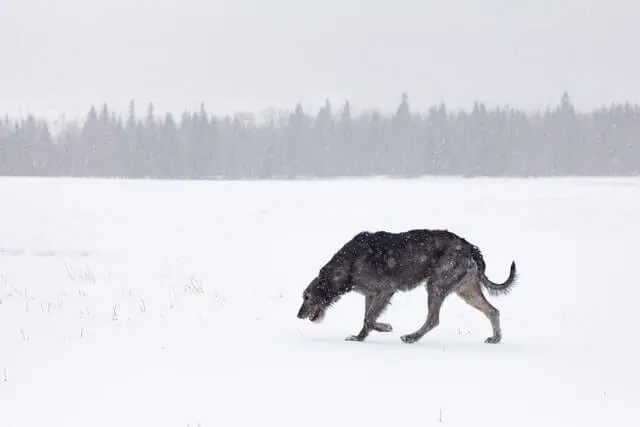
Irish Wolfhound
Health grade EThe Irish Wolfhound is a gentle, imposing wire-haired sighthound—originally bred to hunt wolves at full sprint. Today, this giant athlete is surprisingly calm indoors, but needs plenty of space outside for its explosive sprints.
- Height71–86 cm
- Weight40–70 kg
- Life expectancy6–8 yrs
- Puppy price2,500–4,000 €
- Energy4/5
The Essentials at a Glance
The Irish Wolfhound is a gentle, imposing wire-haired sighthound—originally bred to hunt wolves at full sprint. Today, this giant athlete is surprisingly calm indoors, but needs plenty of space outside for its explosive sprints.
- Health grade E: The Irish Wolfhound reaches an average age of only about seven years; heart disease and bone cancer are the most common causes of death.
- You have a ground-level home with a securely fenced garden, as constant stair climbing is a no-go for this giant.
- You can offer him safe off-leash time in areas with little wildlife, allowing him to live out his sighthound heritage in short, rapid sprints.
- You expect him to ignore wildlife—as a true sighthound, his genetics are often stronger than your recall when a stimulus flees.
Is the Irish Wolfhound right for you?
At a glance
Irish Wolfhound overview
The essentials — key facts, traits, and health priorities — before you dive deeper.
Health grade
Relative to other breeds
S
A
B
C
D
E
Very healthyHigher risk
High risk — only worth it from a thoroughly tested program.
See full health info & tests →
Note: This health overview is AI-assisted and editorially reviewed. It is for orientation only and does not replace veterinary advice.
Lifespan
6–8 yrs
Height
71–86 cm
Weight
40–70 kg
Practical
- Puppy price: 2,500 – 4,000 €
- Coat: Rough, wiry, undercoat present
- Origin: Ireland
Temperament
Energy
Trainability
Family fit
With kids
Daily life
Care effort
Shedding
Barking
City-friendly
Guard instinct
What matters most
Especially with a Irish Wolfhound, choosing the right breeder is the single most important decision you'll make. Serious breeders consistently test the parents for inherited conditions, prioritize healthy early socialization, and stay accountable long after handover. A cheap puppy without health screening tends to become the most expensive dog later on.
See HonestDog breeder standards →Colors & coat
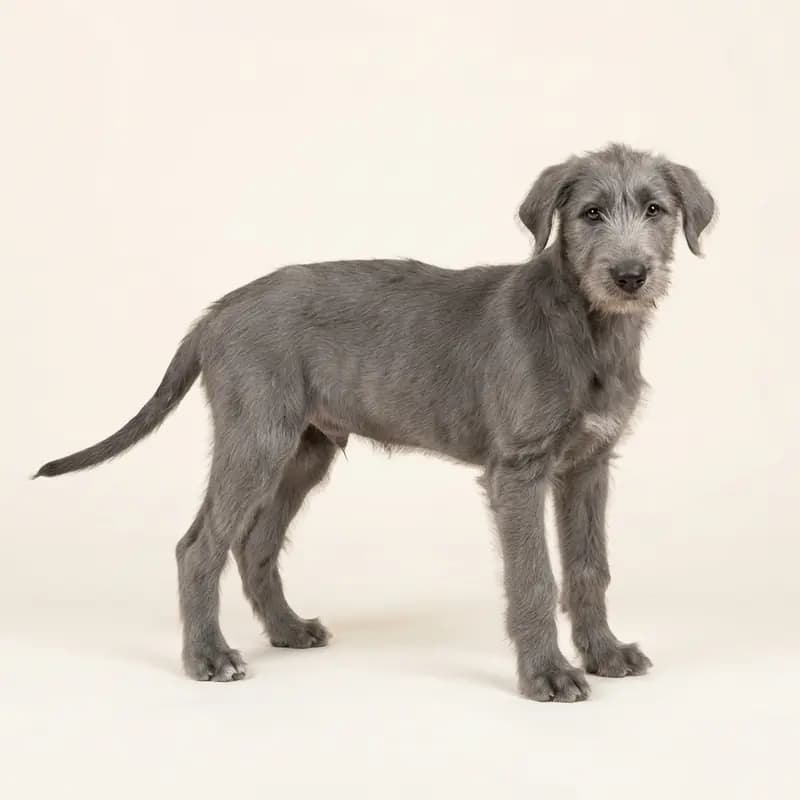
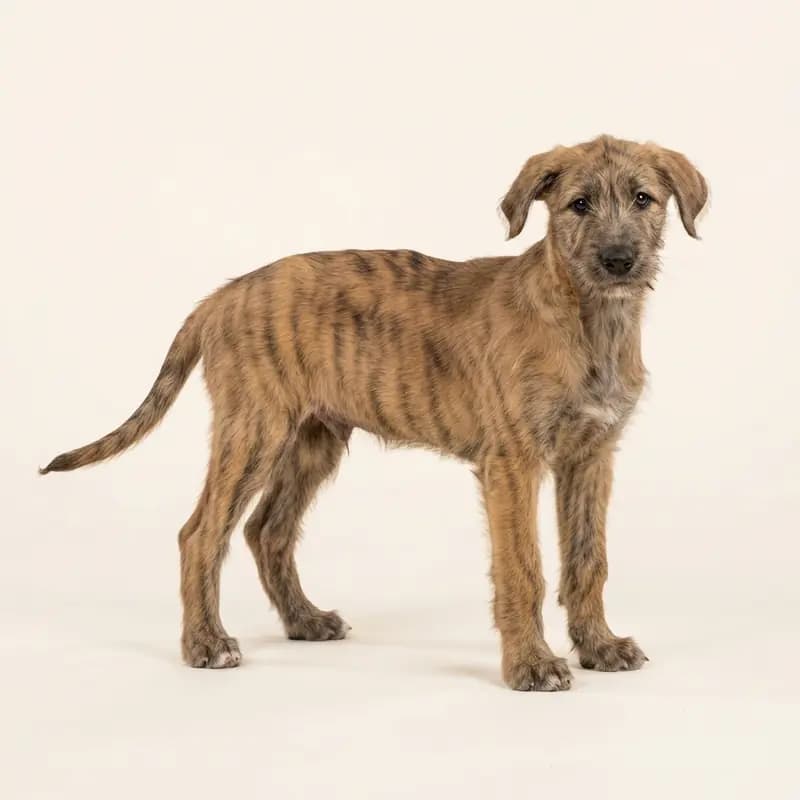
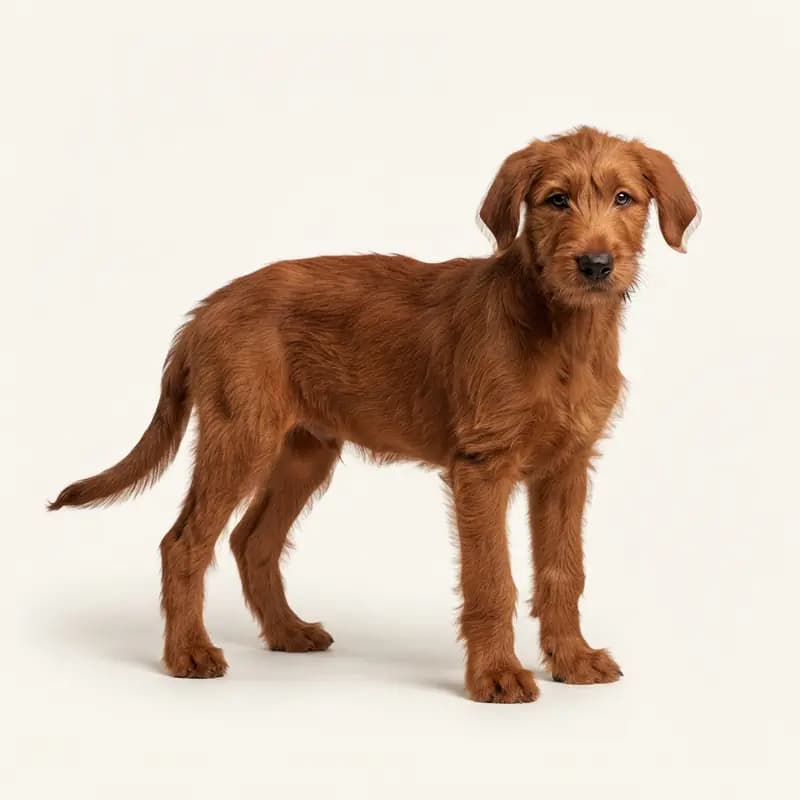
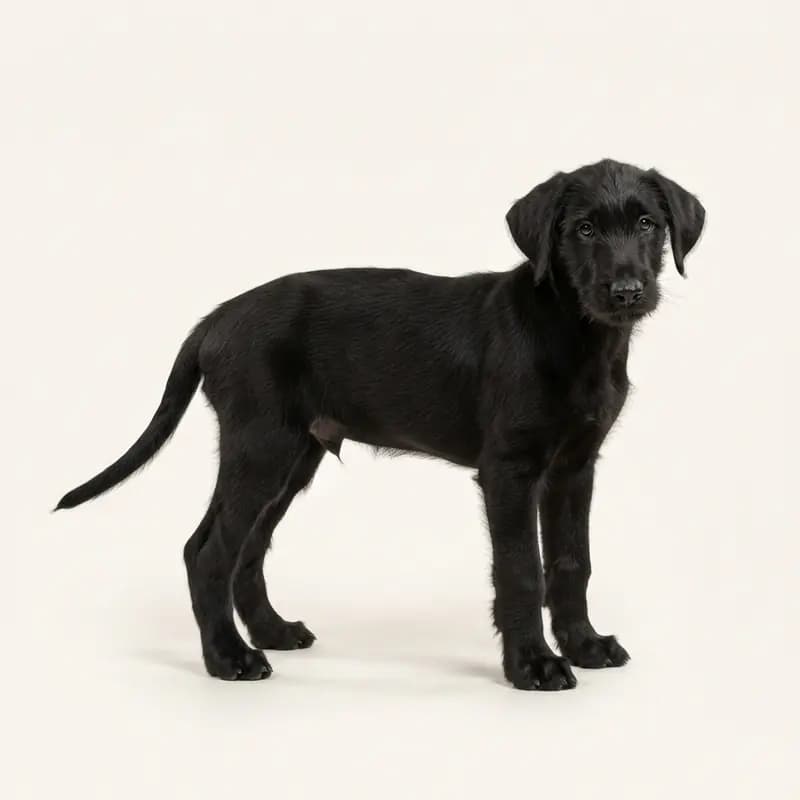
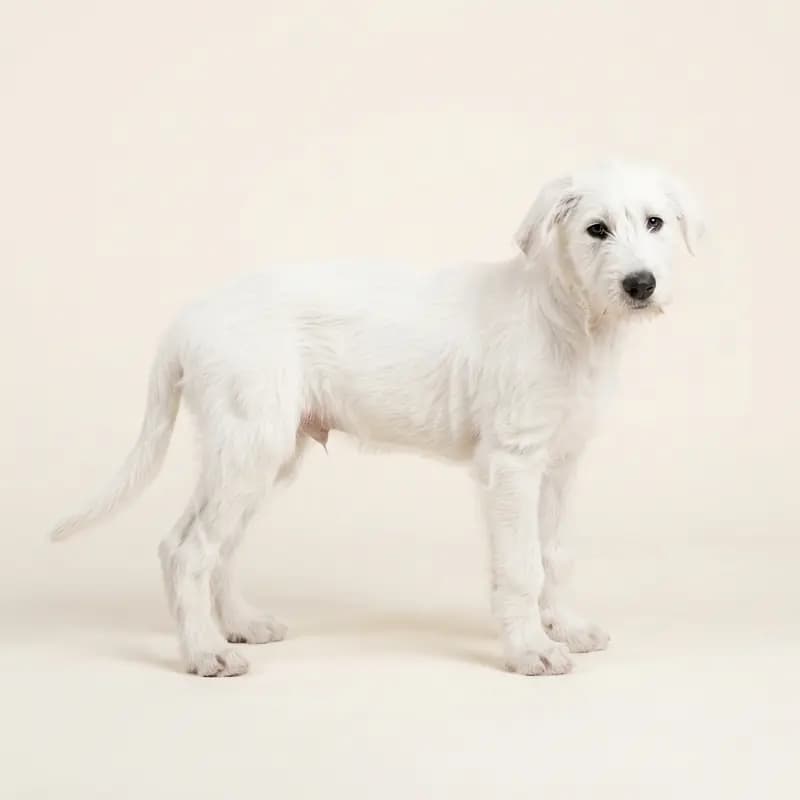
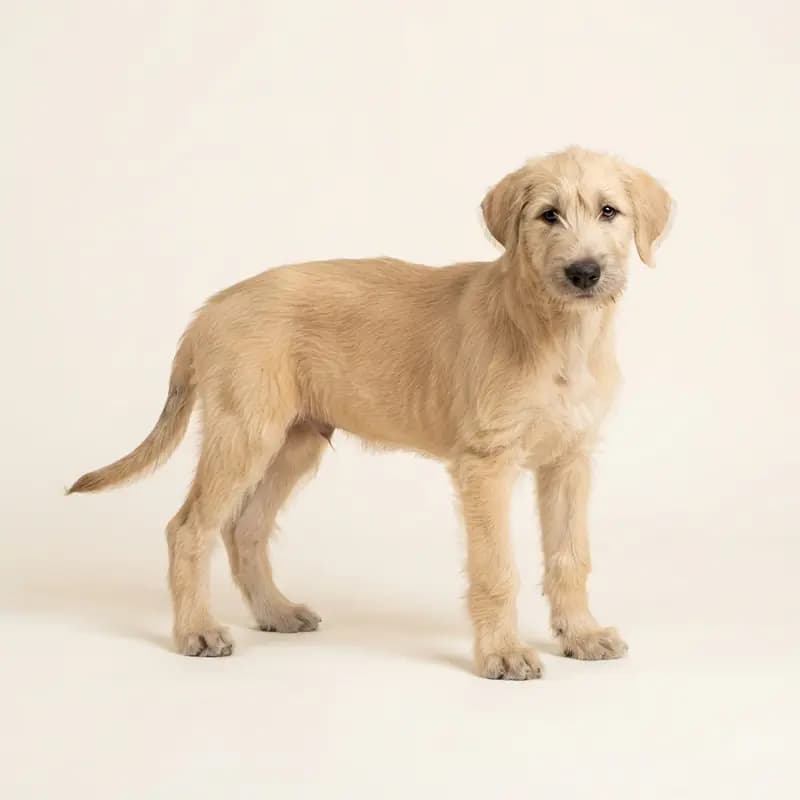
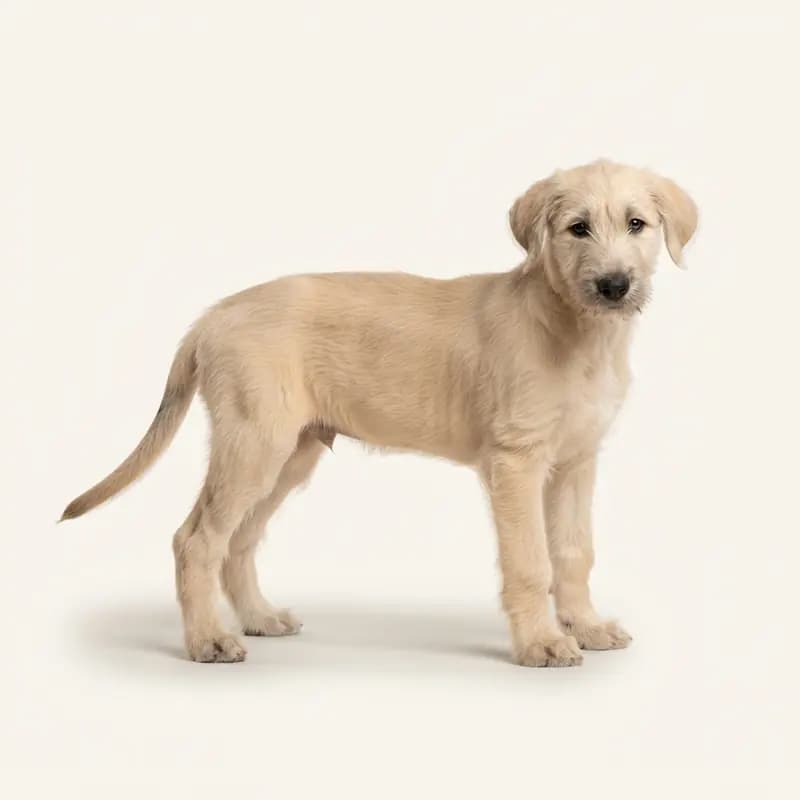
What colors does the Irish Wolfhound come in?
The coat colors you will see in Irish Wolfhound litters — including which ones fall outside the breed standard and which carry genetic risk.
Eye colors
 Brown
Brown
Coat type
 Wire
Wire Double coat
Is the Irish Wolfhound right for you?
The Irish Wolfhound is a gentle, imposing wire-haired sighthound—originally bred to hunt wolves at full sprint. Today, this giant athlete is surprisingly calm indoors, but needs plenty of space outside for its explosive sprints.
Perfect for you if:
- You have a ground-level home with a securely fenced garden, as constant stair climbing is a no-go for this giant.
- You can offer him safe off-leash time in areas with little wildlife, allowing him to live out his sighthound heritage in short, rapid sprints.
- You appreciate a gentle companion who doesn't follow blind commands but seeks a partnership-based bond.
- You are prepared for his enormous dimensions—from an XL trunk and giant dog beds to the corresponding budget for food.
Less ideal if:
- You expect him to ignore wildlife—as a true sighthound, his genetics are often stronger than your recall when a stimulus flees.
- You live in an apartment without an elevator or generally have very cramped living conditions.
- You are attached to fragile decor at coffee-table height—his powerful tail will effortlessly clear everything at that level.
- You find it emotionally difficult to cope with the fact that the lifespan of these giants is unfortunately significantly shorter than that of smaller dogs.
The real vibes check
An Irish Wolfhound is like a gentle giant from an old legend—indoors a huge, cuddly couch potato, outdoors an explosive sprinter. You aren't getting an obedient command-follower, but a confident roommate in pony-format who goes through life with stoic calm, until something flees on the horizon.
Self-check
Would the Irish Wolfhound really fit your life?
Answer 6 quick questions about your everyday life and see how well the Irish Wolfhound fits you — including an honest cost estimate per month, per year, and across the dog's lifetime.
Fit checkCost estimateRisk dice
Takes about 1 minute · free & anonymous
Breed Profile
The Irish Wolfhound is the largest dog breed in the world when measured at shoulder height. With its impressive size and powerful appearance, it is a real eye-catcher. Its build is muscular and proportional, with a deep chest and long legs that give it an elegant gait. The head is long and narrow, with dark eyes and high-set ears. The tail is long and slightly curved. His rough coat is dense and wiry and serves to protect him from the elements. The Irish Wolfhound belongs to FCI Group 10, the group of sighthounds.
All measurements in detail
- Height
- 71 - 81 cm (Female), 79 - 86 cm (Male)
- Weight
- 40 - 55 kg (Female), 54 - 70 kg (Male)
- Life Expectancy
- 6 - 8 yrs
- Character
- Kind, patient, gentle
- Coat
- Rough, wiry, undercoat present
- Coat Color
- Diverse, including grey, brindle, red, black, pure white or fawn
- Price
- 2500 - 4000 €
Character & Temperament
Despite its impressive size and courageous heritage, the Irish Wolfhound is an incredibly gentle and friendly dog. He is known for his love for people and his patience and gentleness with children. He is a good family dog and gets along well with other dogs and pets. He is not aggressive and tends to stay out of conflict rather than participate in it. Because of its history as a hunting dog, the Irish Wolfhound has some hunting instinct, but it is not as strong as some other breeds. He is not particularly alert and is not prone to barking or growling unless he feels threatened or challenged. The Irish Wolfhound is intelligent and learns quickly, but it can also be a bit stubborn. He needs loving but consistent training to bring out his best behavior. He is a calm and easy-going dog who does not have excessive energy, although he enjoys getting regular exercise. He is not a dog that always wants to play or run, but rather enjoys spending quiet time with his family. He is happy to live in both a rural and urban environment as long as he has enough space to move around. It is not suitable for living in a small apartment or in a house without a garden. Despite its size, the Irish Wolfhound is not meant to live outdoors - it is a family dog that enjoys spending time indoors with its family. The Irish Wolfhound is good at staying alone, although he prefers to have his family nearby. He can be a bit clingy and loves being around his people. He is not the type of dog that likes to be alone, he would rather be with his people or other dogs. Training an Irish Wolfhound can be challenging as they can be stubborn at times. But with patience, consistency, and positive reinforcement, he can be a very well-behaved and well-adjusted dog.
| Trainability Has its own ideas and will test limits. | Strong-willed |
| Watchfulness Occasionally alerts but is fundamentally open. | Low |
| Openness to Strangers Warms up quickly and is generally welcoming. | Friendly |
| Hunting or Herding Drive Noticeable drive — needs attention around small animals. | Moderate |
Fun Fact!
Although the Irish Wolfhound is known for its impressive size, it is often referred to as a "gentle giant." - a perfect description of his loving and calm nature.
What Awaits You
The Irish Wolfhound is considered a calm dog. The life expectancy of this breed is rather low. This breed also has many diseases typical of large breeds, such as problems with the musculoskeletal system, but heart disease and bone cancer are also common.
Housing & Care
The Irish Wolfhound is generally suitable as a city dog, but needs sufficient exercise and mental stimulation. Due to its size, it should be kept in an apartment with enough space and ideally with access to a garden. He gets along well with children and is generally very gentle and patient. However, a supervisor should always be present as it could accidentally knock over a small child due to its size. The Irish Wolfhound can also live well with other pets, including cats, provided it is properly socialized.
- Family Friendly
Lives for its family — the born family companion.
Ideal family dog - Child Friendly
Extraordinarily patient and loving — a true family dog.
Excellent with children - Dog Friendly
Actively enjoys the company of other dogs.
Dog-friendly - City Friendly
Can manage in the city, but only with very active owners.
Difficult in cities
Owning a dog is a privilege, but it's also a real responsibility. Before you bring one into your life, be honest with yourself about the commitment it takes.
Training & Education
Training the Irish Wolfhound should begin early and always be consistent but loving. He is intelligent and learns quickly, but can also be stubborn. That's why patience is very important when raising children. Due to its history as a hunting dog, the Irish Wolfhound has a certain hunting instinct. This should be considered and controlled when raising children. It may make sense to offer him alternatives such as search games to satisfy his hunting instinct. It's also important to teach him early on how to deal with frustration and practice impulse control, otherwise he may be prone to becoming overly excited or restless. The Irish Wolfhound is an active dog that requires regular exercise and mental stimulation. Sports like agility or obedience can be a good way to exercise both physically and mentally. However, care should be taken not to overwhelm him as this can lead to health problems.
Nutrition & Care
Due to its size and rapid growth as a puppy, proper nutrition for the Irish Wolfhound is particularly important. He needs a balanced feed with high protein and low fat content. Overfeeding should be avoided as this can lead to joint problems. Caring for the Irish Wolfhound is relatively straightforward. His rough coat should be brushed regularly to prevent matting and skin problems. It has an undercoat that protects it from the cold and therefore copes well with the German climate. He sheds moderately, but it can Increased hair loss occurs during shedding in spring and autumn.
| Care Level Minimal effort — occasional brushing and bathing. | Low-maintenance |
| Exercise Needs Needs several hours of serious exercise every day. | Very active |
| Shedding Hair everywhere, always — no white clothing survives. | Very heavy |
| Trainability Has its own ideas and will test limits. | Strong-willed |
Our experts are still reviewing this information. Spotted something wrong? Email us at info@honestdog.de.
Health & hereditary diseases
Health
E
High risks
Health grade
The Irish Wolfhound reaches an average age of only about seven years; heart disease and bone cancer are the most common causes of death. Due to this significant breed-specific risk (Grade E), carefully choosing a breeder is vital for survival: a responsible breeder must have their breeding dogs tested for hip dysplasia (HD) (FCI limit Grade A or B) and perform regular heart screenings. Before buying, ask to see complete medical records of the parent animals ruling out dilated cardiomyopathy, as well as proof of an unremarkable portosystemic shunt (hepatic encephalopathy) via bile acid levels in the puppies, and freedom from elbow dysplasia (ED) with a limit of 0.
Grade is relative to other breeds — AI-assisted and editorially reviewed.
In daily life this can mean
For a long dog life, you should ensure slow growth, joint-friendly exercise, and regular heart check-ups, while also keeping an eye on the risk of bloat.
The breeder's role
Reputable breeders have the parents' hearts, joints, and eyes checked, test puppies early for liver diseases, and pay special attention to longevity in their bloodlines.
Note: This health overview is AI-assisted and editorially reviewed. It is for orientation only and does not replace veterinary advice.
No Health Tests Available
No specific health tests are currently available for this breed.
Costs & where to find one
How much does a Irish Wolfhound cost?
A Irish Wolfhound costs around ~€230 per month (€120 – €440, depending on your setup). The first year adds up to roughly ~€6,780 including purchase, equipment and puppy school; across the dog's life (7 years) it comes to about ~€23,000.
With surgery cover, running costs come to about ~€240 per month — in return, your share of a major operation drops from several thousand euros to around 20 percent.
Per month
~€230
In the first year
~€6,780
Across the dog's life
~€23,000
Purchase from a breeder: €2,500 – €4,000
Estimate at a mid-range setup (suburban, dry food, 1–2 hours of daily exercise), average German prices, as of July 2026.
Calculate your personal costs1-minute self-check with your own answers
Looking for a Irish Wolfhound?
Appearance, variants & origin
History
The full history
The Irish Wolfhound is a very ancient breed originating from Ireland. Originally bred for hunting wolves, elk, and wild boar, the breed was renowned for its speed, power, and courage. In fact, the name "Wolfhound" translates to "hound of the wolf" in the Irish language. References to the Irish Wolfhound appear as early as ancient Roman writings, and the dogs were highly prized gifts among the nobility and royalty of Europe. The breed faced near-extinction after its original role as a hunting dog declined, but it was revived in the 19th century through the dedication of breeders who introduced dogs from foreign lines into the Irish stock. The breed was recognized by the Kennel Club in Great Britain in 1897 and by the American Kennel Club in 1925. Today, the Irish Wolfhound is primarily a companion and family dog, though it has retained its characteristic bravery and spirit.
Original Use
Hunting dog (wolves, giant deer), war dog
Origin
Ireland
Date
Antike
Owner experiences
What owners say about the Irish Wolfhound
Anja S., Halterin aus Hessen (Hündin, Welpe)
Wir haben uns vor Kurzem den Traum vom Irish Wolfhound erfüllt und ein 15 Wochen altes Baby bei uns aufgenommen. Sie ist im Alltag wirklich eine unglaublich Süße und zeigt sich im großen Garten schon super pudelwohl. Was uns allerdings am meisten beschäftigt, ist das extrem sensible Thema Wachstum und Bewegung.
Man liest überall so widersprüchliche Dinge darüber, wie sehr man diese Rasse im ersten Jahr schonen muss. Unser Züchter hat uns streng eingeschärft, auf keinen Fall normales Welpenfutter zu füttern, damit sie nicht zu schnell wächst, da das sofort auf die Knochen geht. Auch beim Spazierengehen halten wir uns strikt an die Regel, pro Lebensmonat nur etwa 5 Minuten am Stück an der Leine zu laufen, da Wölfe extrem zu Wachstumsschmerzen neigen. Man muss da wirklich eine Gratwanderung meistern, weil die Kleinen am liebsten alles fressen würden, was sie finden, was das rasante Höhenwachstum aber nur ungesund beschleunigt.
Thomas B., erfahrener Windhund-Halter (Rüde, Langzeiterfahrung)
Ich bin seit vielen Jahren in der Windhund-Szene aktiv und habe die Entwicklung der Rasse mit Sorge beobachtet. Der Irish Wolfhound ist vom Wesen her ein absolut faszinierender, sanfter Riese, aber gesundheitlich leider ein echtes Sorgenkind. Viele Hunde sind heute durch falsche Zucht viel zu massig, plump und quadratisch gezüchtet, obwohl sie eigentlich athletische Windhunde sein sollten, die rennen und jagen wollen.
Ein weiteres großes Thema, das viele unterschätzen, ist die medizinische Versorgung. Eine Narkose ist beim Irish Wolfhound extrem riskant und erfordert einen Tierarzt, der sich wirklich mit Windhunden auskennt. Weil das Verhältnis von Muskelmasse zu Fettgewebe bei ihnen völlig anders ist als bei normalen Hunderassen und sie Barbiturate gar nicht vertragen, kann eine falsche Dosierung schnell tödlich enden. Man muss sich vor dem Kauf also extrem gut über die Genetik, die Zuchtlinien und die gesundheitlichen Risiken dieser wundervollen Rasse informieren.
Paraphrased from real owner reports
Loading owner stories
Community Posts
FAQ & more
Frequently asked questions about the Irish Wolfhound
Is a Irish Wolfhound the right dog for me?
The Irish Wolfhound is an active dog that needs plenty of exercise and mental stimulation. Research the temperament, grooming needs, and space requirements before deciding.
How long does a Irish Wolfhound live?
The average life expectancy of a Irish Wolfhound is 6-8 years. With proper care and regular vet visits, your dog can live a long, healthy life.
How much grooming does a Irish Wolfhound need?
Irish Wolfhound grooming requirements include regular brushing, nail trimming, and dental care. HonestDog provides detailed grooming tips for every breed.
Is a Irish Wolfhound good for families with children?
The Irish Wolfhound can be a great family dog. Proper training and socialization are key. HonestDog provides family suitability information for every breed.
What colors does the Irish Wolfhound come in?
The Irish Wolfhound comes in these colors: Grey, Brindle, Red, Black, White, Fawn, Wheaten.
Loading related articles
Are you a Irish Wolfhound breeder?
Showcase your kennel on HonestDog and reach families searching for a responsibly bred Irish Wolfhound.
Why HonestDog?
What makes HonestDog different from other platforms
Full transparency
We lay out what we have: who the breeder is, how they work, and any health records they've uploaded. So you can judge for yourself.
Responsible breeding, assured
Every breeder on HonestDog has their identity and documents checked before their profile goes live. Health records they upload are shown on the profile, so you can see exactly what has been tested.
Trust and verification
We verify breeders and buyers alike, so every conversation happens on solid ground. It's a new standard of trust in dog breeding.
Less hassle, more time
We've already checked the breeders' documents and gathered the details, so you can skip the endless research and focus on finding the right puppy for your family.
Our Mission

We connect dog lovers with responsible breeders and shelters to ensure every dog finds the perfect home.
Founded by dog enthusiasts, our platform focuses on ethical dog breeding and adoption.
Why HonestDog?
We connect you with vetted breeders and shelters so you can find your — your new companion — with confidence.
Vetted Partners
Only verified breeders and shelters — for a safe start.
Highest Standards
Every animal's health and wellbeing is our top priority.
Guides & Resources
Guides, checklists, and breed profiles — so you can make a well-informed decision.