Loading breed
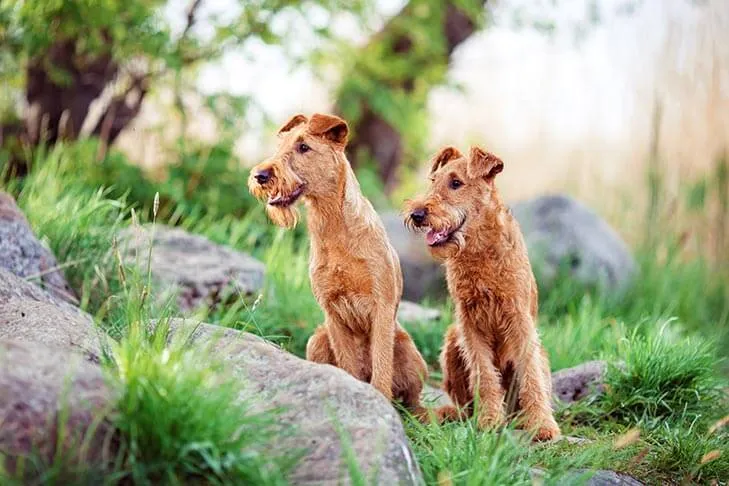
Irish Terrier
Health grade CThe Irish Terrier is a fiery, fearless companion—a long-legged Erdhund (earth dog) historically bred as a versatile farm guardian and intrepid hunter. Their absolute loyalty to their family is paired with an uncompromising terrier stubbornness.
- Height43–47 cm
- Weight11–15 kg
- Life expectancy13–15 yrs
- Puppy price1,500–2,500 €
- Energy4/5
The Essentials at a Glance
The Irish Terrier is a fiery, fearless companion—a long-legged Erdhund (earth dog) historically bred as a versatile farm guardian and intrepid hunter. Their absolute loyalty to their family is paired with an uncompromising terrier stubbornness.
- Health grade C: While the Irish Terrier is considered a robust breed, it carries an above-average list of hereditary conditions, which is why we have assigned it a grade of C.
- You are looking for an active, enduring companion for hiking, jogging, or dog sports
- You can lead with confidence and a good sense of humor rather than expecting blind, robotic obedience
- You expect relaxed visits to the dog park—they were bred never to back down from a confrontation, which often leads to friction with other dogs
Is the Irish Terrier right for you?
At a glance
Irish Terrier overview
The essentials — key facts, traits, and health priorities — before you dive deeper.
Health grade
Relative to other breeds
S
A
B
C
D
E
Very healthyHigher risk
Average — several important tests are expected.
See full health info & tests →
Note: This health overview is AI-assisted and editorially reviewed. It is for orientation only and does not replace veterinary advice.
Lifespan
13–15 yrs
Height
43–47 cm
Weight
11–15 kg
Practical
- Puppy price: 1,500 – 2,500 €
- Coat: Wiry, short, double undercoat
- Origin: Ireland
Temperament
Energy
Trainability
Family fit
With kids
Daily life
Care effort
Shedding
Barking
City-friendly
Guard instinct
What matters most
Especially with a Irish Terrier, choosing the right breeder is the single most important decision you'll make. Serious breeders consistently test the parents for inherited conditions, prioritize healthy early socialization, and stay accountable long after handover. A cheap puppy without health screening tends to become the most expensive dog later on.
See HonestDog breeder standards →Colors & coat
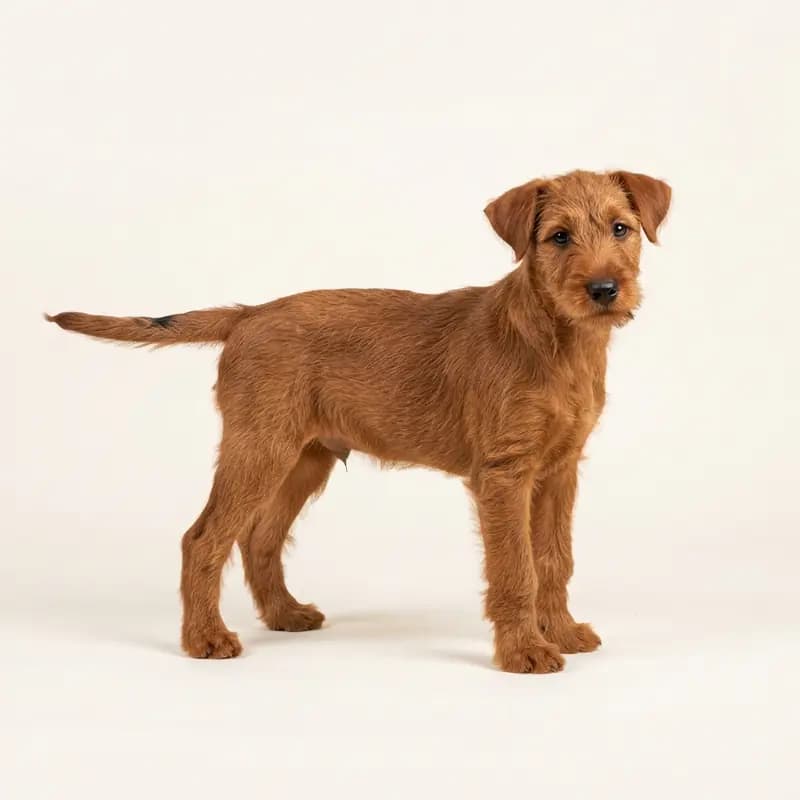
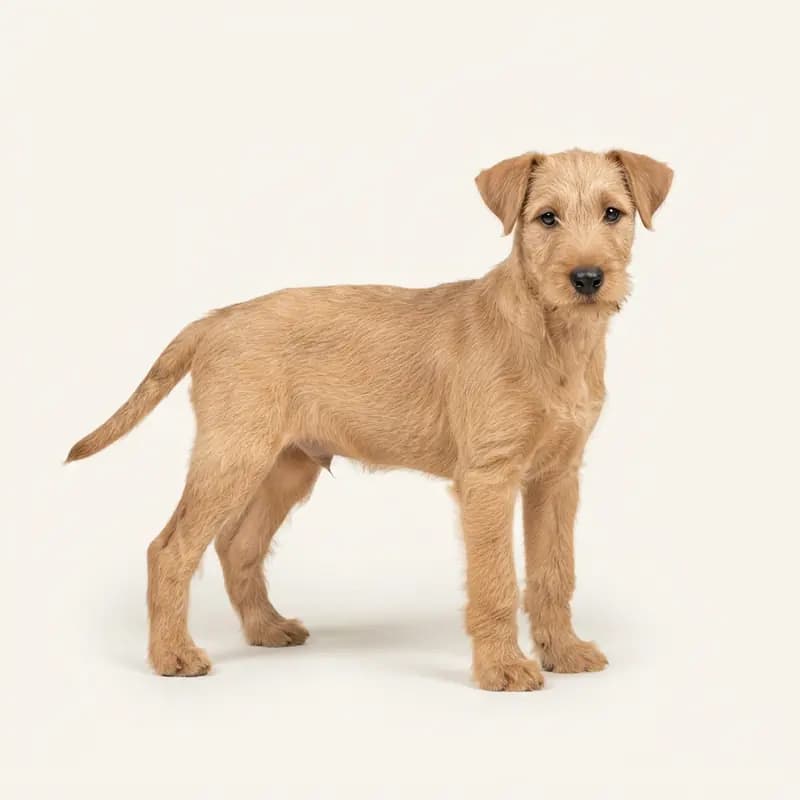
What colors does the Irish Terrier come in?
The coat colors you will see in Irish Terrier litters — including which ones fall outside the breed standard and which carry genetic risk.
Eye colors
 Brown
Brown
Coat type
 Wire
Wire Double coat
Is the Irish Terrier right for you?
The Irish Terrier is a fiery, fearless companion—a long-legged Erdhund (earth dog) historically bred as a versatile farm guardian and intrepid hunter. Their absolute loyalty to their family is paired with an uncompromising terrier stubbornness.
Perfect for you if:
- You are looking for an active, enduring companion for hiking, jogging, or dog sports
- You can lead with confidence and a good sense of humor rather than expecting blind, robotic obedience
- You enjoy working together on tasks—as a former farm all-rounder, this terrier needs mental stimulation to keep from getting into mischief
- You appreciate a courageous dog that will alert you to intruders if necessary, but isn't a constant barker
Less ideal if:
- You expect relaxed visits to the dog park—they were bred never to back down from a confrontation, which often leads to friction with other dogs
- You have small pets or cats in the household, which their genetics will inevitably classify as prey
- You have little patience for a dog that likes to question the purpose of a command before carrying it out
- You live in a building with thin walls and expect an invisible, silent roommate
The real vibes check
An Irish Terrier looks like an elegant red gentleman but has the heart of a fearless street fighter. They would literally walk through fire for their people, but in return, they expect to be treated as a true partner on equal footing. If you channel their fiery character with consistency and fairness, you won't get a servant, but an incorruptible shadow who will never let you down.
Self-check
Would the Irish Terrier really fit your life?
Answer 6 quick questions about your everyday life and see how well the Irish Terrier fits you — including an honest cost estimate per month, per year, and across the dog's lifetime.
Fit checkCost estimateRisk dice
Takes about 1 minute · free & anonymous
Breed Profile
The Irish Terrier is a medium-sized dog with a striking red coat color that can vary from light wheat to deep red. With his slim and muscular stature, he radiates strength and agility. Its head is elongated and adorned with glowing, dark eyes and V-shaped ears that fall forward. Its tail is usually docked, although this is now banned in some countries, including Germany. The Irish Terrier belongs to FCI Group 3: Terriers.
All measurements in detail
- Height
- 43 - 47 cm (Female), 43 - 47 cm (Male)
- Weight
- 11 - 13 kg (Female), 12 - 15 kg (Male)
- Life Expectancy
- 13 - 15 yrs
- Character
- Energetic, Loyal, Confident
- Coat
- Wiry, short, double undercoat
- Coat Color
- Red, red wheat, wheat
- Price
- 1500 - 2500 €
Character & Temperament
If you choose an Irish Terrier as your companion, you will be amazed by their energetic and cheerful temperament. This dog is full of joy for life and loves to be the center of attention. He is very people-oriented and loves spending time with his family. Although he is playful and lively, he can also enjoy quiet moments and loves being with his people. He is naturally very alert and will ensure that you are always aware of everything that is happening around you. His strong hunting instincts also mean that he is very interested in the outside world and enjoys going for walks and exploring. Since he is also a very independent breed, he can easily learn to stay alone as long as this is well trained. Although the Irish Terrier is an active and energetic dog, he also has his quiet moments. He can get along well with other pets as long as he is well socialized, although his hunting instincts can come out around small animals. His alertness and natural distrust of strangers can make him a good watchdog, although he should never be aggressive. The Irish Terrier's robust and independent nature means that he is not a lap dog, but rather an active and engaging companion. He is known for his fearlessness and courage and is always ready to defend his family. At the same time, he is an extremely loyal and loving dog who is deeply attached to his family.
| Trainability Willing to learn with clear rules and regular training. | Balanced |
| Watchfulness A natural watchdog with real protective instinct. | High |
| Openness to Strangers Neither pushily friendly nor suspicious. | Neutral |
| Hunting or Herding Drive Powerful instinct that can override recall when triggered. | Strong |
Fun Fact!
Did you know that the Irish Terrier is considered one of the oldest terrier breeds and was used as a messenger and guard dog during the First World War?
What Awaits You
Irish Terriers are very active and intelligent dogs. They need active, experienced dog owners and meaningful activity. If you don't have the latter, find something yourself. They are alert and ready to defend themselves.
Housing & Care
Because of their size and adaptability, Irish Terriers make good city dogs as long as they get enough exercise and mental stimulation. They are known for their friendliness towards children and can also get along well with other pets with proper socialization.
- Family Friendly
Loves family life and thrives in a group.
Family-oriented - Child Friendly
Takes boisterous and affectionate children in its stride.
Patient with children - Dog Friendly
Usually gets on fine with other dogs.
Generally tolerant - City Friendly
City-appropriate with enough exercise and stimulation.
Manageable in cities
Owning a dog is a privilege, but it's also a real responsibility. Before you bring one into your life, be honest with yourself about the commitment it takes.
Training & Education
Irish Terriers are intelligent, energetic, and eager to learn, making them great candidates for various types of training and dog sports. They are great for agility, obedience and even flyball. Despite their energy, Irish Terriers should not be kept overly busy. You also need enough rest and time to relax. This breed is at risk of becoming 'ball junkies'. It is therefore important to vary the type of activity and not to concentrate too much on the ball game. Frustration tolerance and impulse control are important aspects of raising an Irish Terrier. They are sometimes stubborn, which requires patient and consistent training. Early socialization and training to a variety of environments and situations are also important to ensure the dog is well-adjusted and happy.
Nutrition & Care
Irish Terriers require a balanced diet that meets their energy needs. Their food should be rich in proteins and healthy fats, with a balanced mix of carbohydrates, vitamins and minerals. Grooming an Irish Terrier is manageable, even though they have a thick undercoat. They do not shed heavily and only require regular grooming to keep their coat healthy and clean. They cope well with the German climate, but in the colder months you should make sure that they have enough protection from the cold.
| Care Level Regular brushing and occasional professional grooming. | Moderate |
| Exercise Needs Needs several hours of serious exercise every day. | Very active |
| Shedding Hair everywhere, always — no white clothing survives. | Very heavy |
| Trainability Willing to learn with clear rules and regular training. | Balanced |
Our experts are still reviewing this information. Spotted something wrong? Email us at info@honestdog.de.
Health & hereditary diseases
Health
C
Solid, watch carefully
Health grade
While the Irish Terrier is considered a robust breed, it carries an above-average list of hereditary conditions, which is why we have assigned it a grade of C. Eye conditions such as Progressive Retinal Atrophy (PRA) and cataracts are a particular focus, as they can lead to blindness if not monitored through breeding controls. Furthermore, the breed-specific Hereditary Footpad Hyperkeratosis (HFH) must be consistently ruled out via genetic testing to prevent painful cracking of the paw pads.
Grade is relative to other breeds — AI-assisted and editorially reviewed.
In daily life this can mean
With joint-friendly exercise during the first year, regular eye check-ups, and occasional inspections of their paw pads, your dog will usually stay fit well into old age.
The breeder's role
Reputable breeders have the knees and eyes of the parent dogs examined and use modern tests to specifically rule out hereditary conditions affecting the paws and kidneys.
Note: This health overview is AI-assisted and editorially reviewed. It is for orientation only and does not replace veterinary advice.
No Health Tests Available
No specific health tests are currently available for this breed.
Costs & where to find one
How much does a Irish Terrier cost?
A Irish Terrier costs around ~€170 per month (€90 – €310, depending on your setup). The first year adds up to roughly ~€4,840 including purchase, equipment and puppy school; across the dog's life (14 years) it comes to about ~€31,030.
With surgery cover, running costs come to about ~€160 per month — in return, your share of a major operation drops from several thousand euros to around 20 percent.
Per month
~€170
In the first year
~€4,840
Across the dog's life
~€31,030
Purchase from a breeder: €1,500 – €2,500
Estimate at a mid-range setup (suburban, dry food, 1–2 hours of daily exercise), average German prices, as of July 2026.
Calculate your personal costs1-minute self-check with your own answers
Looking for a Irish Terrier?
Appearance, variants & origin
History
The full history
As the name suggests, the Irish Terrier originally comes from Ireland. It is believed to be one of the oldest terrier breeds, although the exact origins of the breed remain unclear. Some believe it descends from the old Black-and-Tan Terriers and/or the red terriers that were common in Ireland in the 17th century. It was originally used as a working dog to protect the house and farm from rodents and other pests, but also as a hunting dog that helped flush out and hunt game. In the 19th century, the Irish Terrier gained popularity and was officially recognized as a breed by the Irish Kennel Club in 1875. During World War I, it served as a messenger and guard dog.
Original Use
Hunting vermin (rats, mice), guard dog, farm dog
Origin
Ireland
Date
19. Jahrhundert
Owner experiences
What owners say about the Irish Terrier
Sabine K., Halterin aus Bayern (Hündin, seit 2021)
Wer einen Hund sucht, der bedingungslos aufs erste Wort hört, wird mit einem Irish Terrier nicht glücklich werden. Im Haus sind sie zwar absolute Kuschelmonster, extrem menschenbezogen, verschmust und kinderlieb. Sie wollen einfach immer mitten in der Familie sein und sind uns gegenüber unheimlich loyal.
Sobald wir aber draußen sind, zeigt sich das typische Terrier-Temperament. Unser Irish ist extrem energetisch, sportlich und neugierig. Er reagiert draußen keineswegs auf den ersten Pfiff. Der Jagdtrieb ist zwar nicht ganz so extrem ausgeprägt wie bei manch rein jagdlich gezüchteten Rassen, aber er ist definitiv vorhanden. Im Garten fängt er leidenschaftlich gerne Mäuse.
Ein riesiger Vorteil für uns im Alltag ist das Trimmen. Wenn man das raue Fell regelmäßig fachgerecht trimmen lässt (oder es selbst lernt), verliert der Hund im Haus so gut wie überhaupt keine Haare. Das macht das Zusammenleben im Haus wirklich sehr sauber und angenehm.
Andreas C., Jäger und Halter aus Hessen (Rüde, seit 2009)
Ich führe meinen Irish Terrier jagdlich und kann die Vorurteile, er sei nicht führig, absolut nicht bestätigen. Im Vergleich zu anderen Jagdterriern erlebe ich ihn als erstaunlich leichtführig und extrem führerbezogen bei der Arbeit. Er zeigt eine tolle Wild- und Raubwildschärfe und bringt eine unvergleichliche Hartnäckigkeit mit, wenn er erst einmal eine Fährte aufgenommen hat.
Allerdings muss man ehrlich sein: Die Rasse bringt auch jagdliche Grenzen mit. Durch das Fehlen von Spurlaut oder Sichtlaut ist er für manche klassischen Jagdarten nur bedingt einsetzbar. Auch die Apportiergrenze ist bei einem schweren Fuchs meist erreicht, da fehlt ihm im Vergleich zu größeren Rassen einfach die Masse.
Wer einen Irish Terrier jagdlich ausbilden möchte, sollte das nur tun, wenn der Hund danach auch wirklich arbeiten darf. Wenn man diesen extremen Trieb erst einmal weckt und fördert, ohne ihm ein Ventil zu bieten, tut man weder sich noch dem Hund einen Gefallen.
Paraphrased from real owner reports
Loading owner stories
Community Posts
FAQ & more
Frequently asked questions about the Irish Terrier
Is a Irish Terrier the right dog for me?
The Irish Terrier is an active dog that needs plenty of exercise and mental stimulation. Research the temperament, grooming needs, and space requirements before deciding.
How long does a Irish Terrier live?
The average life expectancy of a Irish Terrier is 13-15 years. With proper care and regular vet visits, your dog can live a long, healthy life.
How much grooming does a Irish Terrier need?
Irish Terrier grooming requirements include regular brushing, nail trimming, and dental care. HonestDog provides detailed grooming tips for every breed.
Is a Irish Terrier good for families with children?
The Irish Terrier can be a great family dog. Proper training and socialization are key. HonestDog provides family suitability information for every breed.
What colors does the Irish Terrier come in?
The Irish Terrier comes in these colors: Red, Wheaten.
Loading related articles
Are you a Irish Terrier breeder?
Showcase your kennel on HonestDog and reach families searching for a responsibly bred Irish Terrier.
Why HonestDog?
What makes HonestDog different from other platforms
Full transparency
We lay out what we have: who the breeder is, how they work, and any health records they've uploaded. So you can judge for yourself.
Responsible breeding, assured
Every breeder on HonestDog has their identity and documents checked before their profile goes live. Health records they upload are shown on the profile, so you can see exactly what has been tested.
Trust and verification
We verify breeders and buyers alike, so every conversation happens on solid ground. It's a new standard of trust in dog breeding.
Less hassle, more time
We've already checked the breeders' documents and gathered the details, so you can skip the endless research and focus on finding the right puppy for your family.
Our Mission

We connect dog lovers with responsible breeders and shelters to ensure every dog finds the perfect home.
Founded by dog enthusiasts, our platform focuses on ethical dog breeding and adoption.
Why HonestDog?
We connect you with vetted breeders and shelters so you can find your — your new companion — with confidence.
Vetted Partners
Only verified breeders and shelters — for a safe start.
Highest Standards
Every animal's health and wellbeing is our top priority.
Guides & Resources
Guides, checklists, and breed profiles — so you can make a well-informed decision.