Loading breed
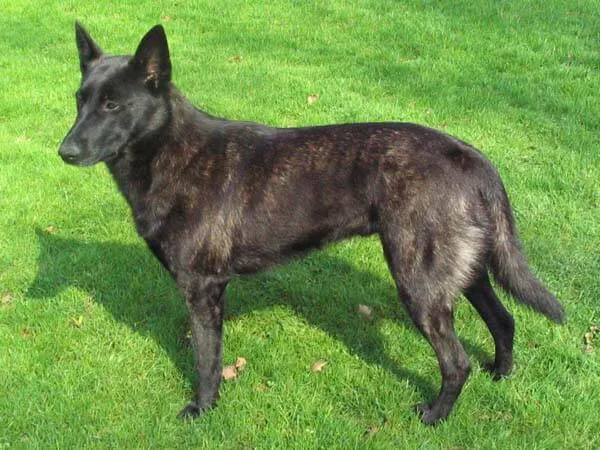
Dutch Shepherd (Shorthair)
Health grade CThe short-haired Dutch Shepherd is an uncompromising bundle of energy—a reactive Hütehund (herding dog) and working dog bred for stamina, toughness, and lightning-fast reactions that demands a real job.
- Height55–62 cm
- Weight20–35 kg
- Life expectancy12–15 yrs
- Puppy price1,500–2,500 €
- Energy4/5
The Essentials at a Glance
The short-haired Dutch Shepherd is an uncompromising bundle of energy—a reactive Hütehund (herding dog) and working dog bred for stamina, toughness, and lightning-fast reactions that demands a real job.
- Health grade C: The Dutch Shepherd (Short-haired) is an athletic working dog, but carries an above-average genetic burden with 10 registered mandatory health tests.
- You have experience with high-drive dogs and provide confident leadership without resorting to harshness.
- You are looking for a partner for ambitious dog sports (IGP, search and rescue)—simply going for walks will leave this working-hardware extremely frustrated.
- You expect a relaxed companion for café visits—he was bred to react immediately to environmental stimuli and intervene if necessary.
Is the Dutch Shepherd (Shorthair) right for you?
At a glance
Dutch Shepherd (Shorthair) overview
The essentials — key facts, traits, and health priorities — before you dive deeper.
Health grade
Relative to other breeds
S
A
B
C
D
E
Very healthyHigher risk
Average — several important tests are expected.
See full health info & tests →
Note: This health overview is AI-assisted and editorially reviewed. It is for orientation only and does not replace veterinary advice.
Lifespan
12–15 yrs
Height
55–62 cm
Weight
20–35 kg
Practical
- Puppy price: 1,500 – 2,500 €
- Coat: Short, smooth, dense undercoat
- Origin: Netherlands
Temperament
Energy
Trainability
Family fit
With kids
Daily life
Care effort
Shedding
Barking
City-friendly
Guard instinct
What matters most
Especially with a Dutch Shepherd (Shorthair), choosing the right breeder is the single most important decision you'll make. Serious breeders consistently test the parents for inherited conditions, prioritize healthy early socialization, and stay accountable long after handover. A cheap puppy without health screening tends to become the most expensive dog later on.
See HonestDog breeder standards →Colors & coat
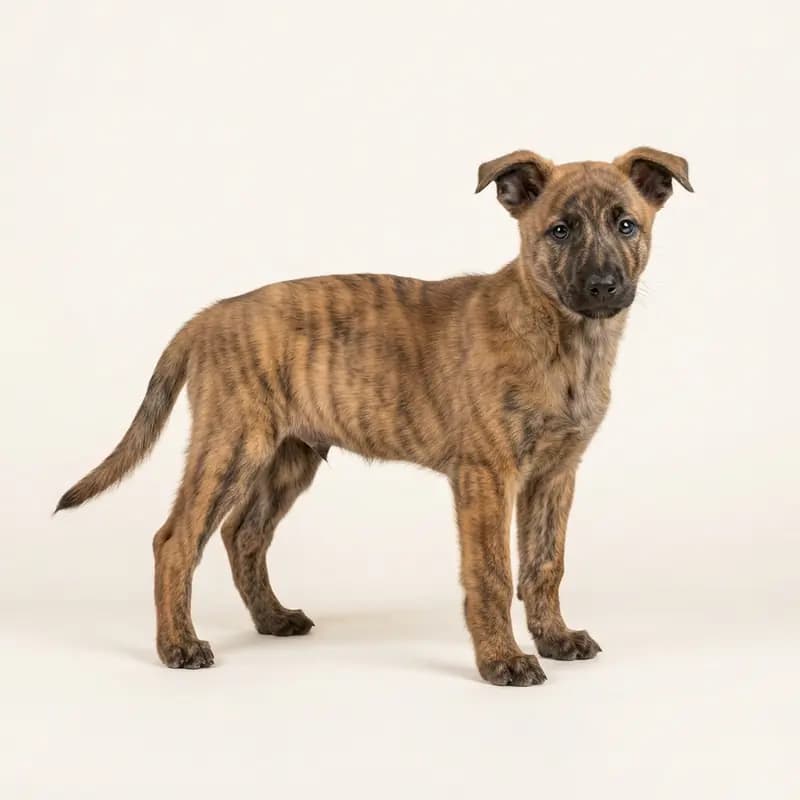
What colors does the Dutch Shepherd (Shorthair) come in?
The coat colors you will see in Dutch Shepherd (Shorthair) litters — including which ones fall outside the breed standard and which carry genetic risk.
Eye colors
 Brown
Brown
Coat type
 Short
Short Smooth
 Double coat
Is the Dutch Shepherd (Shorthair) right for you?
The short-haired Dutch Shepherd is an uncompromising bundle of energy—a reactive Hütehund (herding dog) and working dog bred for stamina, toughness, and lightning-fast reactions that demands a real job.
Perfect for you if:
- You have experience with high-drive dogs and provide confident leadership without resorting to harshness.
- You are looking for a partner for ambitious dog sports (IGP, search and rescue)—simply going for walks will leave this working-hardware extremely frustrated.
- You live in a rural area or can provide a secure environment to channel his lightning-fast reactivity in a controlled way.
- You appreciate a dog that forms an extremely close bond with you and remains vigilant toward strangers.
Less ideal if:
- You expect a relaxed companion for café visits—he was bred to react immediately to environmental stimuli and intervene if necessary.
- You live in a busy city apartment where his protective instinct and low threshold for stimulation will become a constant source of stress for both of you.
- You have small, running children in the household and cannot professionally manage his herding-related control behavior, which often includes nipping.
The real vibes check
A short-haired Dutch Shepherd is like a permanently coiled spring just waiting for you to let it go. You aren't getting a mere follower, but a highly focused colleague who scans every stimulus. If you channel this raw energy into real work, he will go through fire for you—if not, he will find his own project, which is guaranteed to be something you won't like.
Self-check
Would the Dutch Shepherd (Shorthair) really fit your life?
Answer 6 quick questions about your everyday life and see how well the Dutch Shepherd (Shorthair) fits you — including an honest cost estimate per month, per year, and across the dog's lifetime.
Fit checkCost estimateRisk dice
Takes about 1 minute · free & anonymous
Breed Profile
The Dutch Shepherd is a medium-sized dog with a strong, well-proportioned build. His physique is strong and muscular, but without signs of clumsiness or excessiveness. The head is powerful and wedge-shaped with dark, almond-shaped eyes that have a lively and intelligent appearance. The ears are medium-sized, set high and carried upright. In contrast to other German Shepherds, what is particularly noticeable about the Dutch Shepherd is its brindle coat. Its short, dense fur, which lies tightly to the body, is protected by a thick undercoat. The color spectrum ranges from silver to gold brindle. The Dutch Shepherd belongs to FCI Group 1, herding and driving dogs. In contrast to many other breeds, there is no strict separation between show and working lines with the Dutch Shepherd, as the focus of breeding is primarily on a balanced, versatile dog that can shine in both the show ring and the working area.
All measurements in detail
- Height
- 55 - 60 cm (Female), 57 - 62 cm (Male)
- Weight
- 20 - 30 kg (Female), 25 - 35 kg (Male)
- Life Expectancy
- 12 - 15 yrs
- Character
- Loyal, intelligent, eager to work
- Coat
- Short, smooth, dense undercoat
- Coat Color
- Various shades of silver and gold brindle
- Price
- 1500 - 2500 €
Character & Temperament
The Dutch Shepherd is an extremely active and intelligent dog. His personality is characterized by energy and enthusiasm for work. This breed is ideal for people who like to spend time with their dog in nature and want to give them something meaningful to do. The Dutch Shepherd is very people-oriented and has a strong bond with its owner. He is faithful, loyal and loving, both towards his family and other people he knows. The Dutch Shepherd is a playful dog that likes to be kept busy. He needs mental and physical challenges to express his intelligence and energy. This breed is ideal for dog sports such as agility, obedience and tracking. The Dutch Shepherd is able to learn complex tasks and is characterized by its high work ethic. In terms of temperament, the Dutch Shepherd can vary depending on the lineage. There are working dogs that are rather calm and balanced, as well as lines that are very active and spirited. It is important that potential owners consider the different lines and choose the dog that best suits their lifestyle. The Dutch Shepherd is a very alert dog that likes to defend its territory. It usually shows strong hunting and prey-catching behavior, which can be attributed to its original use as a herding dog. Consistent training and early socialization are therefore crucial to controlling this behavior and integrating the dog well into society. It should be noted that the Dutch Shepherd often does not do well when left alone. Because of his strong bond with his owner and his need for human interaction, he can suffer from separation anxiety when left alone for long periods of time. It is important to provide the dog with enough mental and physical activity and to slowly accustom him to being alone to minimize this problem.
| Trainability Picks up commands quickly and wants to please. | Eager to learn |
| Watchfulness A natural watchdog with real protective instinct. | High |
| Openness to Strangers Neither pushily friendly nor suspicious. | Neutral |
| Hunting or Herding Drive Noticeable drive — needs attention around small animals. | Moderate |
Fun Fact!
An interesting fun fact about the Dutch Shepherd (Shorthair) is that it also goes by the name "Hollandse Herdershond" is known as "Dutch herding dog" in Dutch. means. This highlights the breed's original use as a working dog in livestock breeding and herding.
What Awaits You
Dutch Shepherds are intelligent dogs with lots of energy. They must be exercised according to their type and are not beginner dogs.
Housing & Care
The Dutch Shepherd (Shorthair) can be kept both in the city and in the country. However, it is important that he receives sufficient exercise and mental stimulation. This breed is very active and requires long walks, games and mental challenges every day to keep them occupied. A well-fenced garden provides additional space for exercise and training. The Dutch Shepherd (Shorthair) can get along well with children, provided they have been used to each other from an early age and their interaction is always supervised. However, due to their energy and sometimes impulsive behavior, it may be best that they do not live in households with very young children to avoid accidental injury. Compatibility with other pets depends on the dog's socialization. With proper introduction and positive experiences, the Dutch Shepherd (Shorthair) can get along well with other pets, including cats. However, the interaction should always be supervised to avoid possible conflicts.
- Family Friendly
Loves family life and thrives in a group.
Family-oriented - Child Friendly
Takes boisterous and affectionate children in its stride.
Patient with children - Dog Friendly
Usually gets on fine with other dogs.
Generally tolerant - City Friendly
City-appropriate with enough exercise and stimulation.
Manageable in cities
Owning a dog is a privilege, but it's also a real responsibility. Before you bring one into your life, be honest with yourself about the commitment it takes.
Training & Education
The Dutch Shepherd (Shorthair) is an extremely intelligent and hard-working dog. He loves being challenged and learning new tasks. This breed is ideal for various dog sports such as agility, obedience and tracking. Training should be varied, consistent and positive in order to get the best out of the dog. It is important to note that the Dutch Shepherd (Shorthair) requires a certain level of activity and mental stimulation to be happy and well-adjusted. However, care should be taken to ensure that the dog is not over-employed and that it receives enough rest periods. A balanced mix of physical activity, mental stimulation and relaxation is the key to a happy dog-human team. The Dutch Shepherd (Shorthair) has a natural predisposition to work and protective behavior. Therefore, it is important that he learns frustration tolerance and impulse control. A well-structured and consistent parenting approach based on rewards and positive reinforcement is recommended. It is also advisable to accustom him to different environments, people and animals at an early stage in order to promote his social tolerance.
Nutrition & Care
The Dutch Shepherd (Shorthair)'s diet should be balanced and tailored to its individual needs. High-quality dog food that contains all the necessary nutrients is recommended. The amount of food depends on the dog's age, weight, activity level and health status. It is important to follow the manufacturer's feeding recommendations and adjust the amount of food accordingly. The Dutch Shepherd Dog (Shorthair) has short fur with a fine undercoat. This makes care relatively easy. Regular brushing, about once a week, will help remove loose fur and keep the coat healthy. The breed sheds moderately, but a little more fur may be lost during shedding. In addition to grooming, it is important to regularly brush their teeth, check their ears, and trim their claws. The Dutch Shepherd Dog (Shorthaired Pointer) is adapted to various climatic conditions and generally copes well with the German climate. The short coat offers some protection from excessive heat, but also from cold. However, in extreme weather conditions such as heat or cold, you should take appropriate precautions to protect your dog.
| Care Level Minimal effort — occasional brushing and bathing. | Low-maintenance |
| Exercise Needs Needs several hours of serious exercise every day. | Very active |
| Shedding Regular shedding — dog hair on clothes is now normal. | Moderate |
| Trainability Picks up commands quickly and wants to please. | Eager to learn |
Our experts are still reviewing this information. Spotted something wrong? Email us at info@honestdog.de.
Health & hereditary diseases
Health
C
Solid, watch carefully
Health grade
The Dutch Shepherd (Short-haired) is an athletic working dog, but carries an above-average genetic burden with 10 registered mandatory health tests. Serious conditions such as epilepsy and eye diseases like glaucoma and retinal degeneration require consistent selection in breeding. Prospective buyers should therefore insist on complete and certified test results for both parents.
Grade is relative to other breeds — AI-assisted and editorially reviewed.
In daily life this can mean
Without conscious management of physical exertion and good preventative care—such as regular check-ups—health problems and veterinary costs can rise significantly later on.
The breeder's role
Reputable breeders have the hips and eyes of the parent animals checked and use appropriate DNA tests to minimize known risks in the Herder as much as possible and keep the dogs resilient for a long time.
Note: This health overview is AI-assisted and editorially reviewed. It is for orientation only and does not replace veterinary advice.
No Health Tests Available
No specific health tests are currently available for this breed.
Costs & where to find one
How much does a Dutch Shepherd (Shorthair) cost?
A Dutch Shepherd (Shorthair) costs around ~€180 per month (€100 – €350, depending on your setup). The first year adds up to roughly ~€5,040 including purchase, equipment and puppy school; across the dog's life (13.5 years) it comes to about ~€32,630.
With surgery cover, running costs come to about ~€190 per month — in return, your share of a major operation drops from several thousand euros to around 20 percent.
Per month
~€180
In the first year
~€5,040
Across the dog's life
~€32,630
Purchase from a breeder: €1,500 – €2,500
Estimate at a mid-range setup (suburban, dry food, 1–2 hours of daily exercise), average German prices, as of July 2026.
Calculate your personal costs1-minute self-check with your own answers
Looking for a Dutch Shepherd (Shorthair)?
HonestDog Concierge
No verified Dutch Shepherd (Shorthair) breeders on HonestDog yet
We currently have no breeders for this breed who have passed our verification. Create your short buyer profile: we'll set up your search alert, review a possible source and email you within 28 days.
Appearance, variants & origin
History
The full history
The Dutch Shepherd, called the Hollandse Herdershond in its homeland, comes from the Netherlands, where it has been used as an all-round farm dog for centuries. His duties included herding and herding sheep and cows, guarding the farm, pulling milk wagons and even turning butter churners. His versatility, hard-working character and high learning ability made him an indispensable companion for Dutch farmers. During the 19th century, the Dutch Shepherd became increasingly valued as a police and service dog, leading to increased breeding and standardization of the breed. In 1898 the first breed standard was established and the Dutch Shepherd was recognized as a separate breed.
Original Use
The short-haired Dutch Shepherd was used as a versatile working dog for herding sheep and cattle, as well as a guard dog.
Origin
Netherlands
Date
1800
Owner experiences
What owners say about the Dutch Shepherd (Shorthair)
Sabrina M., Halterin aus Hessen (Hündin, seit 2021)
Ich habe mich damals ganz bewusst für eine kurzhaarige Herder-Hündin entschieden, weil ich einen sportlichen Partner für Obedience und Fährtenarbeit gesucht habe. Was man im Vorfeld überall liest, stimmt absolut: Diese Hunde sind unfassbar intelligent und lernen im Sekundenschnelle – leider auch den Blödsinn. Sie ist extrem menschenbezogen und will am liebsten in mich hineinkriechen. Diese Sensibilität ist wunderschön, bedeutet aber auch, dass sie jede meiner Stimmungen sofort spiegelt.
Die größte Herausforderung im ersten Jahr war definitiv nicht die Auslastung, sondern das Ruhetraining. Ein Herder läuft schnell Gefahr, völlig zu überdrehen, wenn man ihm ständig Action bietet. Wir mussten von Anfang an konsequent trainieren, dass drinnen Sendepause ist. Wer glaubt, die Rasse mit reinem Bällchenwerfen müde zu bekommen, zieht sich einen hyperaktiven Junkie heran. Sie braucht echte Kopfarbeit, um ausgeglichen zu sein.
Ein Thema, das man nicht verschweigen darf, ist die Reaktivität. Bei Unsicherheit oder Frust neigen diese Hunde dazu, nach vorne zu gehen. Sie ist kein Hund für die Hundewiese, auf der sie mit jedem spielt. Fremden gegenüber ist sie rassetypisch erst einmal misstrauisch und reserviert. Für mich ist sie der absolute Traumhund, aber man muss bereit sein, sehr viel Zeit in eine feinfühlige, aber absolut konsequente Erziehung zu stecken.
Christian S., Halter aus Bayern (Rüde, seit 2018)
Mein Rüde stammt aus einer sehr triebigen Linie und ich sage es ganz offen: Diese Hunde sind absolut nichts für schwache Nerven oder Anfänger. Schon als Welpe hatte er den Spitznamen 'Haifisch', weil er bei Aufregung und im Spiel extrem schnell mit den Zähnen gearbeitet und in Ärmel oder Hosenbeine gebissen hat. Seine Frustrationstoleranz war anfangs gleich null. Wenn ihm langweilig war oder wir beim Training nicht schnell genug vorankamen, hat er auch gerne mal in meinen Rucksack gebissen.
Hinzukommt ein sehr ausgeprägter Schutz- und Territorialtrieb. Bereits mit wenigen Monaten fing er an, am Zaun zu melden und mich gegenüber Fremden aktiv einzugrenzen. Man muss hier von Tag eins an eine sehr klare, souveräne Führung übernehmen. Wenn man dem Herder diese Führung nicht gibt, übernimmt er die Dinge selbst – und das kann bei einem 30-Kilo-Arbeitshund mit ordentlich Beutetrieb gefährlich werden.
Wir lasten ihn im Gebrauchshundesport (IGP) aus, was ihm unglaublich gut tut. Er arbeitet mit einer extremen Ernsthaftigkeit und Arbeitsmoral. Wenn er arbeitet, ist er voll in seinem Element. Wer einen reinen, unkomplizierten 'Mitläufer' für die Familie sucht, wird mit dieser Rasse unglücklich werden. Wer aber einen ernsthaften Arbeitspartner sucht und mit dem Trieb umgehen kann, findet hier einen loyalen Gefährten fürs Leben.
Tanja B., Halterin aus Niedersachsen (Rüde, seit 2020)
Unser kurzhaariger Herder-Rüde bereichert unser Leben ungemein, aber er hat uns auch vor einige unerwartete Hürden gestellt. Die größte Baustelle war von Anfang an das Alleinsein. Durch seine extrem starke Bindung an uns litt er unter massiver Trennungsangst. Er hat in unserer Abwesenheit an Türen gekratzt, gejault und aus purem Stress Dinge angeknabbert. Es hat fast ein Jahr tägliches, kleinschrittiges Training gekostet, bis er mal zwei Stunden entspannt alleine bleiben konnte.
Auf der anderen Seite ist er im Alltag ein genialer Allrounder. Wir machen viel Sucharbeit mit ihm und nehmen ihn zum Wandern mit. Er ist unglaublich ausdauernd und robust, Wind und Wetter machen ihm überhaupt nichts aus. Er will einfach immer dabei sein und gefallen.
Man muss sich jedoch bewusst sein, dass der Jagd- und Hütetrieb tief in ihnen steckt. Wenn im Wald ein Reh aufspringt, steht er sofort unter Strom. Da er extrem schnell reagiert, muss man als Halter vorausschauend spazieren gehen. Er ist ein wunderbarer, treuer Familienhund geworden, aber eben nur, weil wir die nötige Zeit für seine körperliche und geistige Auslastung sowie das intensive Alleinseintraining investiert haben.
Paraphrased from real owner reports
Loading owner stories
FAQ & more
Frequently asked questions about the Dutch Shepherd (Shorthair)
Is a Dutch Shepherd (Shorthair) the right dog for me?
The Dutch Shepherd (Shorthair) is an active dog that needs plenty of exercise and mental stimulation. Research the temperament, grooming needs, and space requirements before deciding.
How long does a Dutch Shepherd (Shorthair) live?
The average life expectancy of a Dutch Shepherd (Shorthair) is 12-15 years. With proper care and regular vet visits, your dog can live a long, healthy life.
How much grooming does a Dutch Shepherd (Shorthair) need?
Dutch Shepherd (Shorthair) grooming requirements include regular brushing, nail trimming, and dental care. HonestDog provides detailed grooming tips for every breed.
Is a Dutch Shepherd (Shorthair) good for families with children?
The Dutch Shepherd (Shorthair) can be a great family dog. Proper training and socialization are key. HonestDog provides family suitability information for every breed.
What colors does the Dutch Shepherd (Shorthair) come in?
The Dutch Shepherd (Shorthair) comes in these colors: Brindle.
Loading related articles
Are you a Dutch Shepherd (Shorthair) breeder?
Showcase your kennel on HonestDog and reach families searching for a responsibly bred Dutch Shepherd (Shorthair).
Why HonestDog?
What makes HonestDog different from other platforms
Full transparency
We lay out what we have: who the breeder is, how they work, and any health records they've uploaded. So you can judge for yourself.
Responsible breeding, assured
Every breeder on HonestDog has their identity and documents checked before their profile goes live. Health records they upload are shown on the profile, so you can see exactly what has been tested.
Trust and verification
We verify breeders and buyers alike, so every conversation happens on solid ground. It's a new standard of trust in dog breeding.
Less hassle, more time
We've already checked the breeders' documents and gathered the details, so you can skip the endless research and focus on finding the right puppy for your family.
Our Mission

We connect dog lovers with responsible breeders and shelters to ensure every dog finds the perfect home.
Founded by dog enthusiasts, our platform focuses on ethical dog breeding and adoption.
Why HonestDog?
We connect you with vetted breeders and shelters so you can find your — your new companion — with confidence.
Vetted Partners
Only verified breeders and shelters — for a safe start.
Highest Standards
Every animal's health and wellbeing is our top priority.
Guides & Resources
Guides, checklists, and breed profiles — so you can make a well-informed decision.