Loading breed

Harrier
Health grade BThe Harrier is a tireless, athletic pack hound—bred to spend hours tracking hare scents through rough terrain in a group. He combines the keen nose of a Beagle with the athleticism of a Foxhound, paired with an enormous need to run.
- Height48–55 cm
- Weight18–29 kg
- Life expectancy12–15 yrs
- Puppy price1,500–2,500 €
- Energy4/5
The Essentials at a Glance
The Harrier is a tireless, athletic pack hound—bred to spend hours tracking hare scents through rough terrain in a group. He combines the keen nose of a Beagle with the athleticism of a Foxhound, paired with an enormous need to run.
- Health grade B: As a functional scenthound, the Harrier is generally very robust and rarely exhibits breed-specific extreme traits.
- You are looking for an indefatigable companion for long jogging sessions, canicross, or scent work—this hound needs real mileage to settle down in the evening.
- Ideally, you already have a confident dog, as this true pack animal thrives in canine company and really dislikes being left alone.
- You expect a dog that will joyfully turn around at the first whistle in the woods—his genetics command him to follow a scent trail to the very end.
Is the Harrier right for you?
At a glance
Harrier overview
The essentials — key facts, traits, and health priorities — before you dive deeper.
Health grade
Relative to other breeds
S
A
B
C
D
E
Very healthyHigher risk
Solid — a handful of items a good breeder watches.
See full health info & tests →
Note: This health overview is AI-assisted and editorially reviewed. It is for orientation only and does not replace veterinary advice.
Lifespan
12–15 yrs
Height
48–55 cm
Weight
18–29 kg
Practical
- Puppy price: 1,500 – 2,500 €
- Coat: Short, dense, smooth; no undercoat
- Origin: England
Temperament
Energy
Trainability
Family fit
With kids
Daily life
Care effort
Shedding
Barking
City-friendly
Guard instinct
What matters most
Especially with a Harrier, choosing the right breeder is the single most important decision you'll make. Serious breeders consistently test the parents for inherited conditions, prioritize healthy early socialization, and stay accountable long after handover. A cheap puppy without health screening tends to become the most expensive dog later on.
See HonestDog breeder standards →Colors & coat
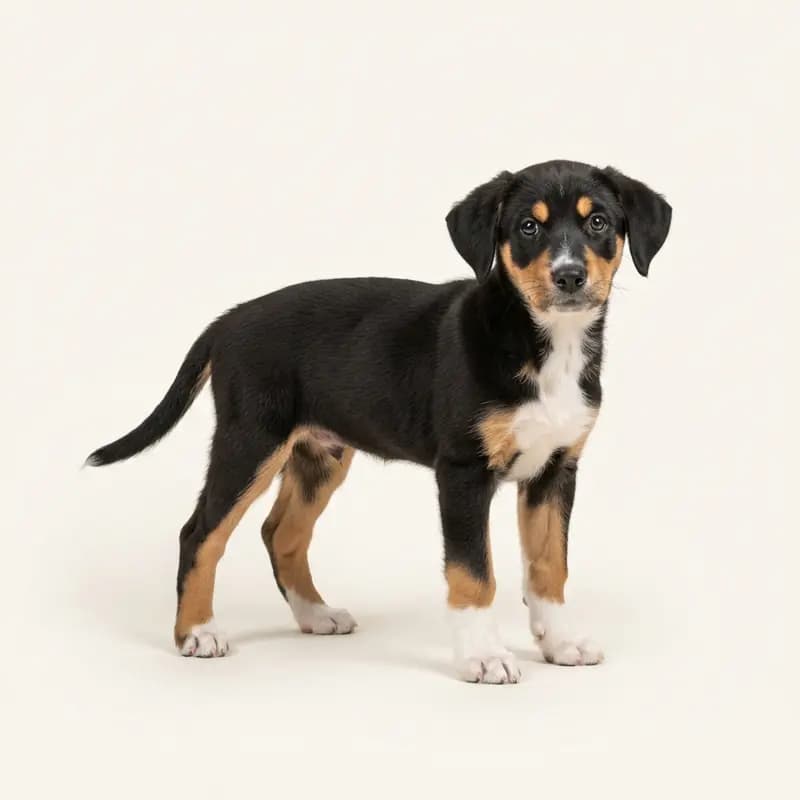
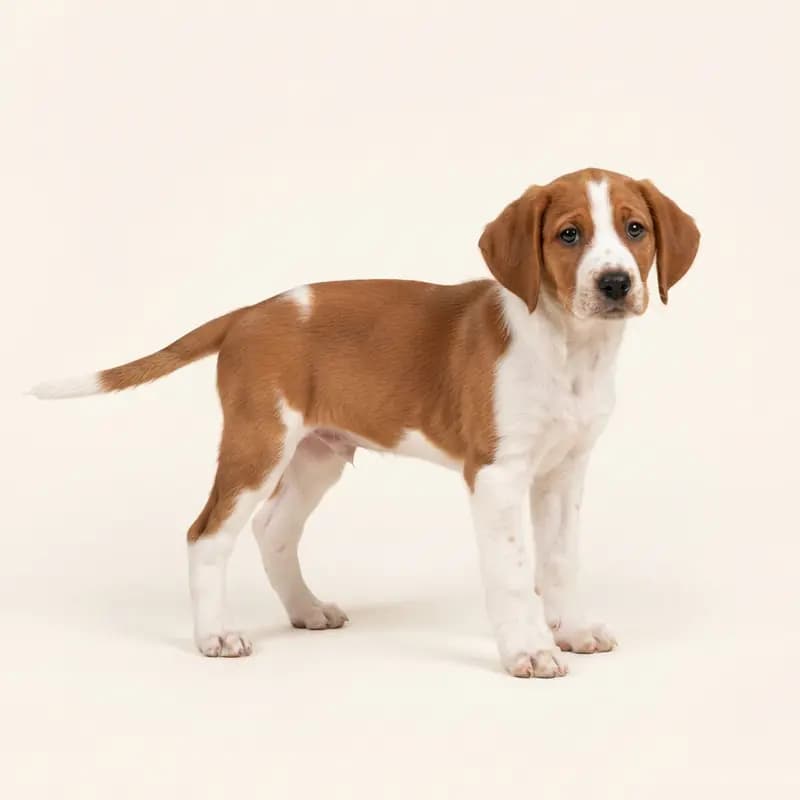
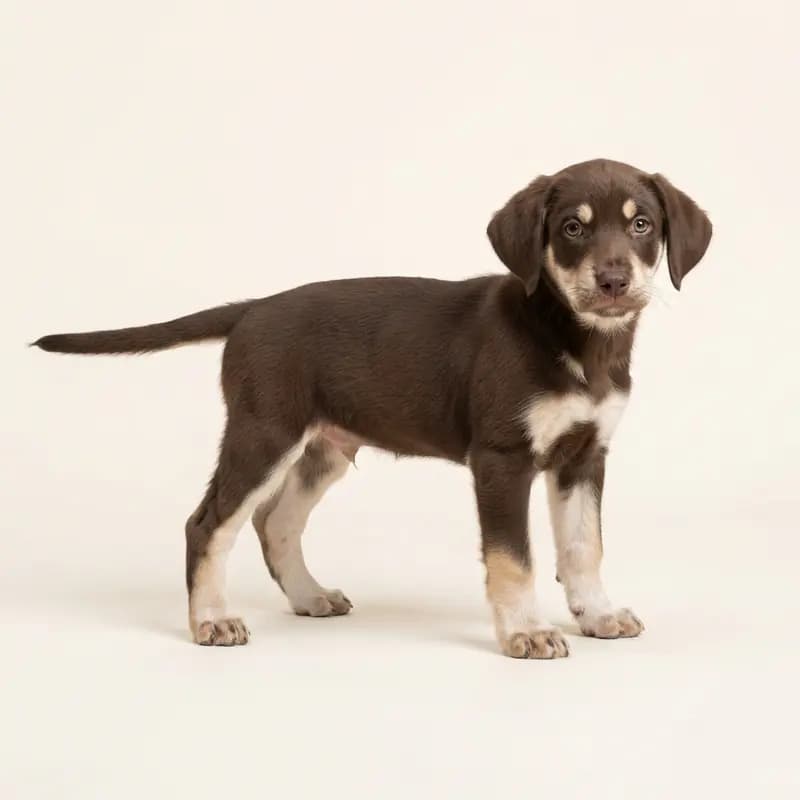
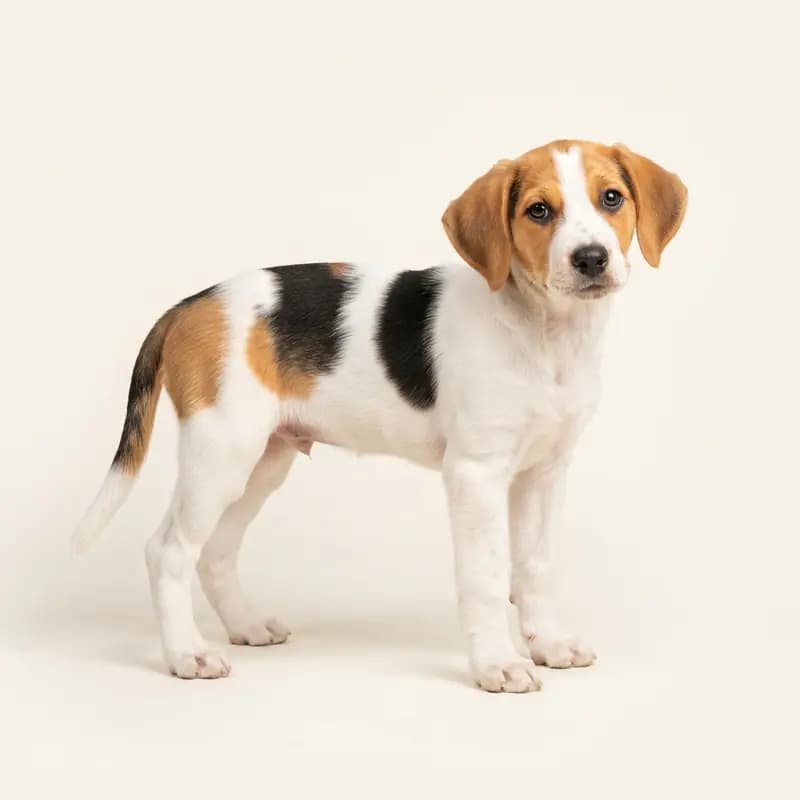
What colors does the Harrier come in?
The coat colors you will see in Harrier litters — including which ones fall outside the breed standard and which carry genetic risk.
Eye colors
 Brown
Brown Amber
Amber
Coat type
 Short
Short Smooth
Is the Harrier right for you?
The Harrier is a tireless, athletic pack hound—bred to spend hours tracking hare scents through rough terrain in a group. He combines the keen nose of a Beagle with the athleticism of a Foxhound, paired with an enormous need to run.
Perfect for you if:
- You are looking for an indefatigable companion for long jogging sessions, canicross, or scent work—this hound needs real mileage to settle down in the evening.
- Ideally, you already have a confident dog, as this true pack animal thrives in canine company and really dislikes being left alone.
- You live in a rural area with an escape-proof garden where he is allowed to sniff to his heart's content and occasionally raise his voice.
- You appreciate a dog with an independent character and can lovingly overlook a certain degree of hunting-related stubbornness.
Less ideal if:
- You expect a dog that will joyfully turn around at the first whistle in the woods—his genetics command him to follow a scent trail to the very end.
- You live in a thin-walled city apartment, as he tends to share his frustration or excitement with the typically piercing baying of a hunting dog.
- You have a demanding job and would have to leave him alone at home for several hours every day.
The real vibes check
Outdoors, a Harrier is a focused, high-performance athlete on four paws that perceives the world primarily through his nose. If you try to drill him into blind obedience like a German Shepherd, you will both be unhappy—but if you give him a real trail to follow and plenty of exercise, you will have the gentlest and most sociable companion you could imagine indoors.
Self-check
Would the Harrier really fit your life?
Answer 6 quick questions about your everyday life and see how well the Harrier fits you — including an honest cost estimate per month, per year, and across the dog's lifetime.
Fit checkCost estimateRisk dice
Takes about 1 minute · free & anonymous
Breed Profile
The Harrier is a medium-sized dog with a muscular and compact build. It is similar to the English Foxhound, but is slightly smaller and more agile. Its head is medium length with a flat skull, and its ears are medium sized, high set and drooping. The eyes are dark and have a gentle expression, giving his face a friendly look. The Harrier has a powerful neck and a straight back that flows into a moderately long tail that is carried high. The legs are straight and well muscled, giving this dog excellent agility and endurance. The Harrier belongs to FCI Group 6, the scenthounds and bloodhounds. There is no distinction between performance and show lines.
All measurements in detail
- Height
- 48 - 53 cm (Female), 48 - 55 cm (Male)
- Weight
- 18 - 27 kg (Female), 20 - 29 kg (Male)
- Life Expectancy
- 12 - 15 yrs
- Character
- Friendly, energetic, persistent
- Coat
- Short, dense, smooth; no undercoat
- Coat Color
- Tricolor, red and white, lemon and white
- Price
- 1500 - 2500 €
Character & Temperament
The Harrier is a dog with a very friendly and outgoing nature. His character is characterized by high energy, endurance and a love of movement. He was bred to hunt, and his natural instincts are still strong. He has an excellent nose and shows a keen interest in tracking scents. This makes him an excellent hunting dog, but it also means that he can tend to follow his nose in the wild, making him a less suitable companion for relaxed off-leash walks. The Harrier is very people-oriented and enjoys the company of his family. He is loving and affectionate and loves to be involved in daily activities. He is also very playful and gets along well with children, making him an excellent family dog. Although he is an active dog, the Harrier can learn to stay alone if he is well exercised and receives sufficient mental and physical stimulation. It's important to note that his high energy means he needs regular exercise and mental stimulation to stay happy and balanced. The Harrier is an alert dog and will alert his family when strangers approach, but he is generally not aggressive and will often respond friendly to visitors. Its hunting instincts are strong and it exhibits strong prey-catching behavior. This means he may not get along well with smaller pets and will need to be supervised during outdoor walks to ensure he doesn't run off to follow a scent. In summary, the Harrier is an energetic, friendly and loving dog that requires an active family willing to challenge him both mentally and physically. His hunting instincts require special attention, especially in game-rich areas, but with the right exercise and management he can be a wonderful companion and a loyal friend.
| Trainability Has its own ideas and will test limits. | Strong-willed |
| Watchfulness Occasionally alerts but is fundamentally open. | Low |
| Openness to Strangers Warms up quickly and is generally welcoming. | Friendly |
| Hunting or Herding Drive This drive runs deep — no amount of training eliminates it. | Very strong |
Fun Fact!
Considered a “miniature version” of English Foxhounds, Harriers are known for their excellent instincts and ability to hunt long distances.
What Awaits You
The Harrier is a fast, prey-oriented, medium-sized hunting dog originally bred for hare hunting in medieval England. The outgoing and friendly Harrier is much larger than the Beagle, but smaller than another close relative, the English Foxhound.
Housing & Care
Harriers are active dogs and need plenty of space to run around. They are therefore more suitable for living in the country or in a house with a large garden than for a city apartment. They tend to get along well with children and can be very patient, but it is always advisable to monitor interactions between dogs and small children. Harriers can also get along with other dogs, but their hunting instincts can pose a problem when living with smaller pets such as cats.
- Family Friendly
Loves family life and thrives in a group.
Family-oriented - Child Friendly
Takes boisterous and affectionate children in its stride.
Patient with children - Dog Friendly
Actively enjoys the company of other dogs.
Dog-friendly - City Friendly
City-appropriate with enough exercise and stimulation.
Manageable in cities
Owning a dog is a privilege, but it's also a real responsibility. Before you bring one into your life, be honest with yourself about the commitment it takes.
Training & Education
Harriers are intelligent dogs, but their independence can sometimes make training challenging. It's important to start training early and stay consistent. Positive reinforcement works best with this breed. Harriers have a lot of energy and can be well suited to dog sports such as agility or search games. Since they are originally hunting dogs, it is important to offer them alternatives such as sniffing games to keep their hunting instincts in check. It's also important to pay attention to impulse control and frustration tolerance in Harriers, as they can be a bit stubborn at times. There is also a risk of Harriers becoming “ball junkies,” so ball play should be done in moderation and supplemented with other activities.
Nutrition & Care
When it comes to nutrition, the Harrier needs a balanced diet with quality ingredients. Since they are active dogs, they should be fed a diet rich in proteins and fats to support their energy. You should also make sure to keep an eye on your Harrier's weight to make sure he doesn't become overweight, which can put strain on his joints. When it comes to grooming, the Harrier has short, dense fur with no undercoat. Its coat is easy to care for and only requires regular brushing to remove dead hair and keep the coat clean and shiny. Harriers shed moderately, but regular brushing can reduce shedding. The climate in Germany should not be a problem for Harriers as their fur protects them from the elements.
| Care Level Minimal effort — occasional brushing and bathing. | Low-maintenance |
| Exercise Needs Needs several hours of serious exercise every day. | Very active |
| Shedding No or minimal hair loss — suitable for allergy sufferers. | No shedding |
| Trainability Has its own ideas and will test limits. | Strong-willed |
Our experts are still reviewing this information. Spotted something wrong? Email us at info@honestdog.de.
Health & hereditary diseases
Health
B
Solid
Health grade
As a functional scenthound, the Harrier is generally very robust and rarely exhibits breed-specific extreme traits. Nevertheless, issues such as hip dysplasia (HD) and eye conditions like cataracts can occur. Since there are hardly any official mandatory health tests required for this rare breed, buyers must take an active role in verifying the HD status of the parent dogs.
Grade is relative to other breeds — AI-assisted and editorially reviewed.
In daily life this can mean
You should focus on joint-friendly development and maintaining a healthy weight, as well as having his eyes and thyroid checked regularly by a vet.
The breeder's role
Reputable breeders have the hips, elbows, eyes, and thyroids of the parent dogs tested and pay attention to epilepsy-free lines to reduce hereditary risks.
Note: This health overview is AI-assisted and editorially reviewed. It is for orientation only and does not replace veterinary advice.
No Health Tests Available
No specific health tests are currently available for this breed.
Costs & where to find one
How much does a Harrier cost?
A Harrier costs around ~€180 per month (€90 – €340, depending on your setup). The first year adds up to roughly ~€4,980 including purchase, equipment and puppy school; across the dog's life (13.5 years) it comes to about ~€31,920.
With surgery cover, running costs come to about ~€170 per month — in return, your share of a major operation drops from several thousand euros to around 20 percent.
Per month
~€180
In the first year
~€4,980
Across the dog's life
~€31,920
Purchase from a breeder: €1,500 – €2,500
Estimate at a mid-range setup (suburban, dry food, 1–2 hours of daily exercise), average German prices, as of July 2026.
Calculate your personal costs1-minute self-check with your own answers
Looking for a Harrier?
HonestDog Concierge
No verified Harrier breeders on HonestDog yet
We currently have no breeders for this breed who have passed our verification. Create your short buyer profile: we'll set up your search alert, review a possible source and email you within 28 days.
Appearance, variants & origin
History
The full history
The Harrier's exact origins are not clearly documented, but it is believed to have originated in Great Britain. There are various theories as to how the breed came to be. A popular theory is that the Harrier originated from a cross between the Bloodhound and the Talbot Hound in the Middle Ages. Another theory suggests that it arose from selective breeding of small English Foxhounds. The Harrier was originally bred for hare hunting and was very popular with the rural population in England. His skills as a scenthound made him a valuable companion for hunters who hunted on foot. It was used for hunting both individually and in packs. The breed was brought to the United States in the 19th century, where it was also used for hunting. However, in Britain the breed's popularity declined throughout the 20th century, partly due to the emergence of motor sports and the ban on fox hunting. The Harrier has been recognized as a separate breed by the F"d"ration Cynologique Internationale (FCI) since 1974.
Original Use
The Harrier was originally bred for hare hunting in Meuten and is known for its endurance and speed.
Origin
England
Date
Mittelalter
Owner experiences
What owners say about the Harrier
Sabrina M., Halterin aus Hessen (Hündin, seit 2013)
Wir haben unsere Hündin Luni damals aus dem Tierschutz übernommen. Sie ist ein Mix aus Beagle, Harrier und Foxhound, und man merkt ihr die Jagdhund-Gene in jeder Sekunde an. Zu Hause ist sie eine absolute Seele von Hund – unheimlich freundlich, verschmust und extrem menschenbezogen. Sie liebt es einfach, bei allem dabei zu sein.
Aber draußen zeigt sich ihr wahres Gesicht: Sie hat einen extremen Bewegungsdrang und eine unbändige Energie. Man kann diesen Hund eigentlich gar nicht müde laufen. Ihr Jagdtrieb ist so stark ausgeprägt, dass entspannte Spaziergänge ohne Leine im Wald undenkbar sind. Sobald sie eine Fährte in die Nase bekommt, schaltet ihr Gehirn komplett auf Durchzug. Wer sich einen Harrier oder einen entsprechenden Mix zulegen möchte, sollte sich darüber im Klaren sein, dass diese Hunde eine enorme körperliche und geistige Auslastung brauchen, sonst suchen sie sich selbst eine Beschäftigung.
Thomas K., Halter aus Niedersachsen (Rüde, seit 2018)
Ich habe mich damals ganz bewusst für einen Hund aus der Familie der englischen Meutehunde entschieden, da ich viel im Reitsport aktiv bin und einen ausdauernden Begleiter gesucht habe. Mein Rüde bringt genau diese unermüdliche Energie mit, die man von einem echten Laufhund erwartet. Er ist körperlich extrem robust und hat eine fantastische Kondition.
Was man allerdings wissen muss: Die Erziehung ist kein Selbstläufer. Harrier wurden dafür gezüchtet, eigenständig Entscheidungen auf der Fährte zu treffen. Diese Selbstständigkeit schlägt im Alltag oft in Sturheit um. Er hinterfragt Kommandos gerne mal, besonders wenn er eine interessante Spur in der Nase hat. Ohne Schleppleinentraining und eine sehr konsequente, aber liebevolle Hand kommt man hier nicht weit. Für Stubenhocker ist diese Rasse definitiv nichts.
Paraphrased from real owner reports
Loading owner stories
FAQ & more
Frequently asked questions about the Harrier
Is a Harrier the right dog for me?
The Harrier is an active dog that needs plenty of exercise and mental stimulation. Research the temperament, grooming needs, and space requirements before deciding.
How long does a Harrier live?
The average life expectancy of a Harrier is 12-15 years. With proper care and regular vet visits, your dog can live a long, healthy life.
How much grooming does a Harrier need?
Harrier grooming requirements include regular brushing, nail trimming, and dental care. HonestDog provides detailed grooming tips for every breed.
Is a Harrier good for families with children?
The Harrier can be a great family dog. Proper training and socialization are key. HonestDog provides family suitability information for every breed.
What colors does the Harrier come in?
The Harrier comes in these colors: Tricolor, Red and white, Bicolor, Piebald.
Loading related articles
Are you a Harrier breeder?
Showcase your kennel on HonestDog and reach families searching for a responsibly bred Harrier.
Why HonestDog?
What makes HonestDog different from other platforms
Full transparency
We lay out what we have: who the breeder is, how they work, and any health records they've uploaded. So you can judge for yourself.
Responsible breeding, assured
Every breeder on HonestDog has their identity and documents checked before their profile goes live. Health records they upload are shown on the profile, so you can see exactly what has been tested.
Trust and verification
We verify breeders and buyers alike, so every conversation happens on solid ground. It's a new standard of trust in dog breeding.
Less hassle, more time
We've already checked the breeders' documents and gathered the details, so you can skip the endless research and focus on finding the right puppy for your family.
Our Mission

We connect dog lovers with responsible breeders and shelters to ensure every dog finds the perfect home.
Founded by dog enthusiasts, our platform focuses on ethical dog breeding and adoption.
Why HonestDog?
We connect you with vetted breeders and shelters so you can find your — your new companion — with confidence.
Vetted Partners
Only verified breeders and shelters — for a safe start.
Highest Standards
Every animal's health and wellbeing is our top priority.
Guides & Resources
Guides, checklists, and breed profiles — so you can make a well-informed decision.