Loading breed

French Bulldog
Health grade EThe French Bulldog is a charming, extremely people-oriented companion dog—bred as a compact lapdog with no working requirements, whose only job is to be by your side.
- Height24–35 cm
- Weight8–14 kg
- Life expectancy10–12 yrs
- Puppy price2,000–3,500 €
- Energy3/5
Why this breed is missing
Why we don't currently place French Bulldog puppies
The breed-specific health risks for the French Bulldog are high—especially when it comes to breathing and stamina. In these cases, a lot depends on the breeder: on consistent screenings, transparent results, and breeding selection that prioritizes health over appearance. Assessing this breed is complex and not straightforward. We currently don't have a standard for this that we would rely on—which is why we aren't showing any breeders or puppies for this breed for the time being. As soon as we can change this, we'll include the breed again.
See dogs available for adoptionThe Essentials at a Glance
The French Bulldog is a charming, extremely people-oriented companion dog—bred as a compact lapdog with no working requirements, whose only job is to be by your side.
- Health grade E: The French Bulldog is extremely severely affected in terms of health, with a grade of E, as about half of all dogs show clinically relevant breathing problems due to brachycephalic obstructive airway syndrome (BOAS) and a very high proportion of litters are born by cesarean section because the breed often cannot give birth without veterinary assistance.
- You are looking for a dog for city or apartment living that is perfectly content with moderate walks
- You want a true shadow in your daily life—as a pure companion dog, they were specifically selected to always be in your immediate vicinity
- You are looking for an athletic partner for jogging or long summer hikes—their anatomy and selective breeding simply do not allow for this
Is the French Bulldog right for you?
At a glance
French Bulldog overview
The essentials — key facts, traits, and health priorities — before you dive deeper.
Health grade
Relative to other breeds
S
A
B
C
D
E
Very healthyHigher risk
High risk — only worth it from a thoroughly tested program.
See full health info & tests →
Note: This health overview is AI-assisted and editorially reviewed. It is for orientation only and does not replace veterinary advice.
Lifespan
10–12 yrs
Height
24–35 cm
Weight
8–14 kg
Practical
- Puppy price: 2,000 – 3,500 €
- Coat: Short, smooth, without undercoat
- Origin: France
Temperament
Energy
Trainability
Family fit
With kids
Daily life
Care effort
Shedding
Barking
City-friendly
Guard instinct
What matters most
Especially with a French Bulldog, choosing the right breeder is the single most important decision you'll make. Serious breeders consistently test the parents for inherited conditions, prioritize healthy early socialization, and stay accountable long after handover. A cheap puppy without health screening tends to become the most expensive dog later on.
See HonestDog breeder standards →Colors & coat
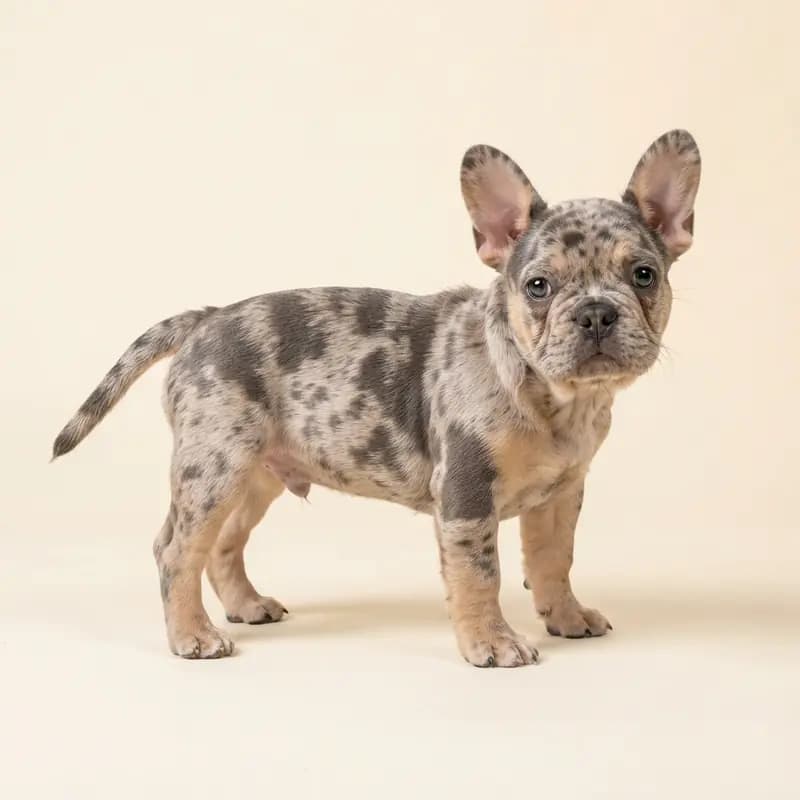
What colors does the French Bulldog come in?
The coat colors you will see in French Bulldog litters — including which ones fall outside the breed standard and which carry genetic risk.
- Fawn
- Brindle
- Piebald
- White
- Not standard
Black
- Not standard
Blue
- Not standard
Chocolate
- Isabella
- Black and tan
- Blue and tan
- Merle
- Cream
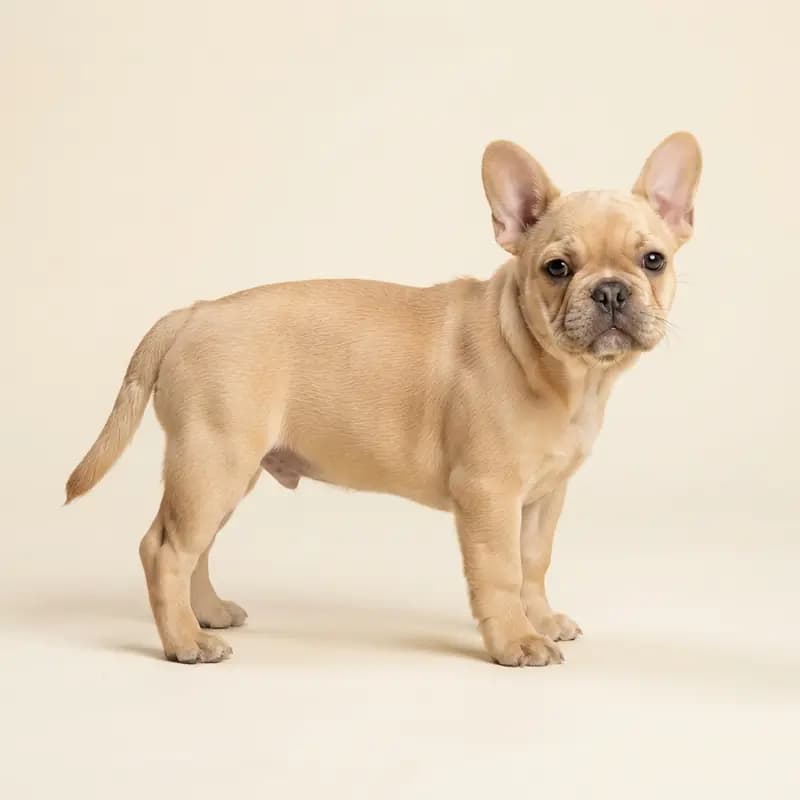
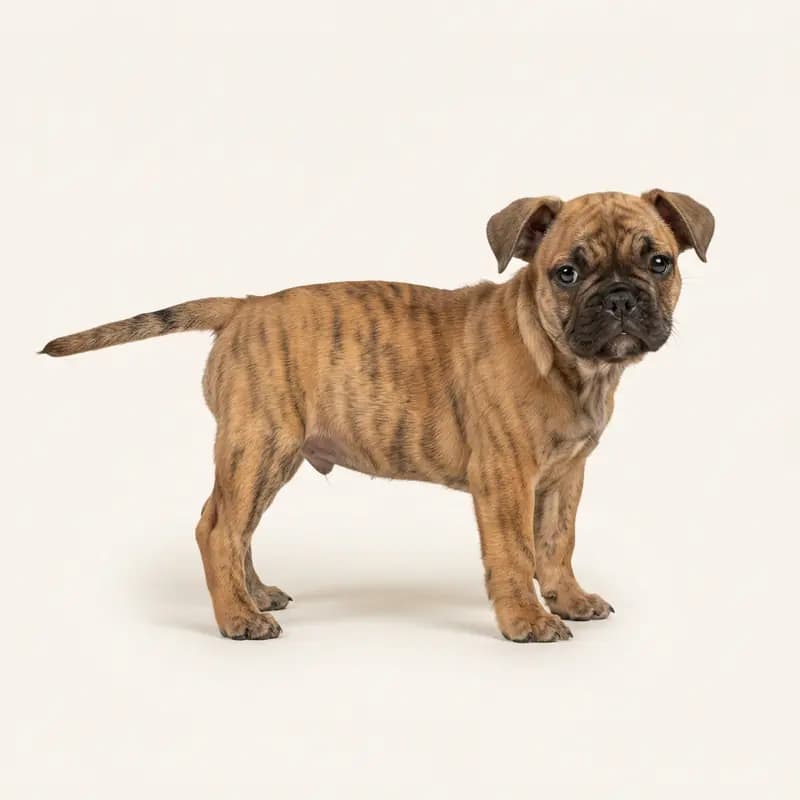


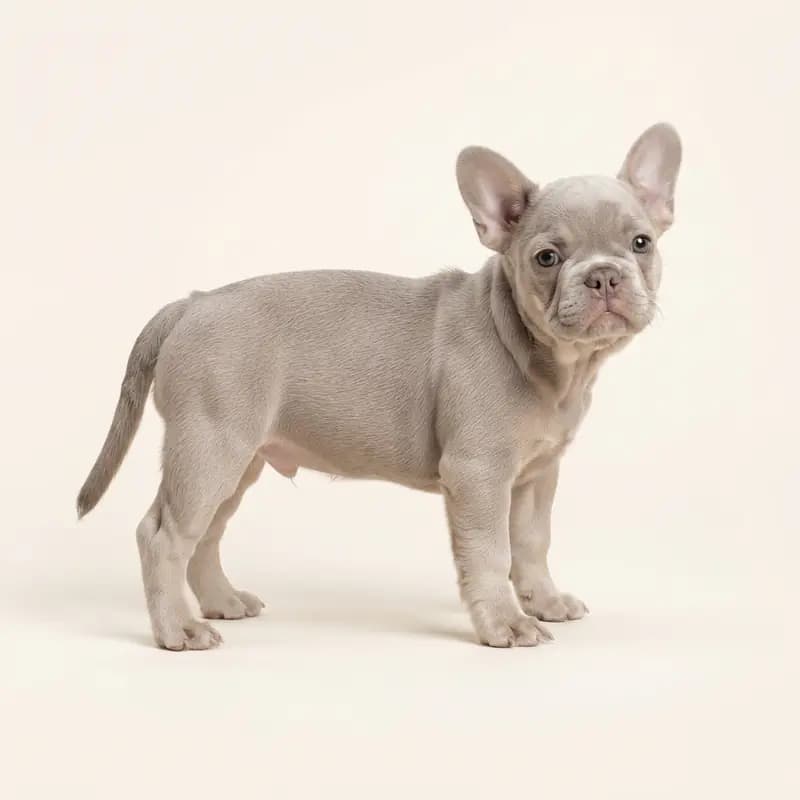

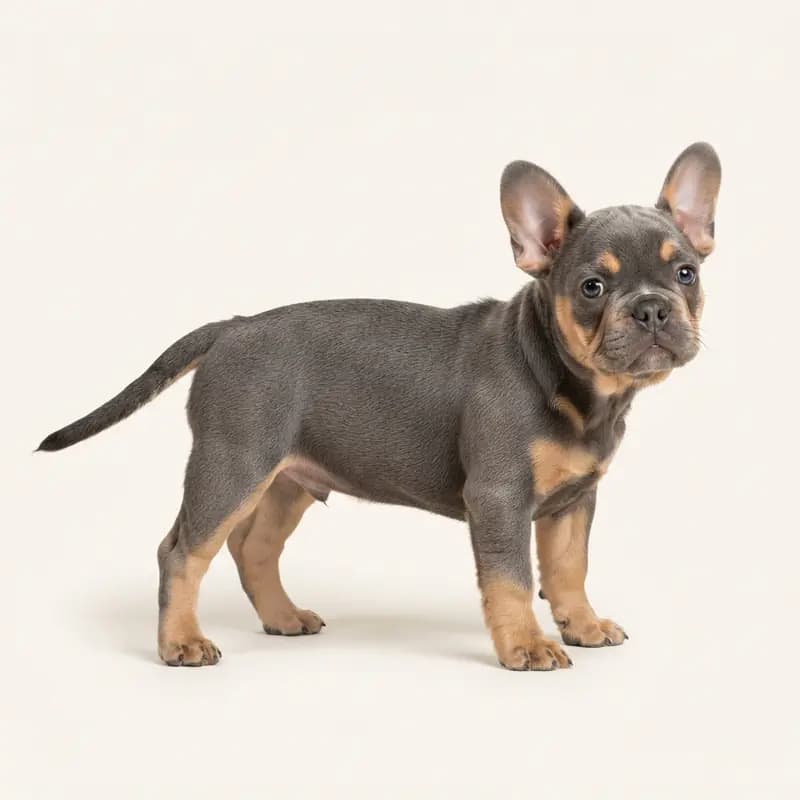

Eye colors
 Brown
Brown
Coat type
 Short
Short Smooth
Is the French Bulldog right for you?
The French Bulldog is a charming, extremely people-oriented companion dog—bred as a compact lapdog with no working requirements, whose only job is to be by your side.
Perfect for you if:
- You are looking for a dog for city or apartment living that is perfectly content with moderate walks
- You want a true shadow in your daily life—as a pure companion dog, they were specifically selected to always be in your immediate vicinity
- You have a sense of humor and the patience to lovingly guide their legendary, charming stubbornness
- You work from home a lot or can easily take your dog with you wherever you go
Less ideal if:
- You are looking for an athletic partner for jogging or long summer hikes—their anatomy and selective breeding simply do not allow for this
- You are away from home for long periods every day and expect your dog to stay alone for hours without complaint
- You are sensitive to noise and want absolute silence—snoring, grunting, and loud breathing are part of everyday life for many of them
The real vibes check
A French Bulldog is not a dog that sits silently in its place—it is a muscular little clown that wants to be the center of attention and follows you every step of the way. You aren't getting an athletic outdoorsy type, but a deeply loyal entertainer who would rather cuddle with you on the sofa than break records outside.
Self-check
Would the French Bulldog really fit your life?
Answer 6 quick questions about your everyday life and see how well the French Bulldog fits you — including an honest cost estimate per month, per year, and across the dog's lifetime.
Fit checkCost estimateRisk dice
Takes about 1 minute · free & anonymous
Breed Profile
The French Bulldog is a small but powerfully built breed of dog. With her large, expressive eyes, characteristic bat ears and short snout, she often conquers people's hearts in no time. Their stature is compact, with a muscular body and a straight back line. The French Bulldog belongs to FCI Group 9, a companion dog. There are no specific performance or show lines as this breed is primarily kept as a companion dog.
All measurements in detail
- Height
- 24 - 32 cm (Female), 27 - 35 cm (Male)
- Weight
- 8 - 13 kg (Female), 9 - 14 kg (Male)
- Life Expectancy
- 10 - 12 yrs
- Character
- Kind, attentive, playful
- Coat
- Short, smooth, without undercoat
- Coat Color
- Brindle, white, beige, black
- Price
- 2000 - 3500 €
Character & Temperament
The French Bulldog is known for its loving and attentive nature. They are extremely people-oriented and often form close bonds with their owners. Their playful side makes them an entertaining companion who enjoys being involved in family activities. As a companion dog, the French Bulldog does not require excessive exercise, but regular short walks and play time are important for their physical and mental health. It is also important to note that their short snouts can make them prone to breathing problems, especially in hot weather. Since they are very people-oriented, being alone can be difficult for them. It is therefore advisable to get them used to it slowly and to ensure that they are not left alone for long periods of time. French Bulldogs are not prone to hyperactivity, but they are lively and enjoy interactive play. They are often alert and can have good hearing, meaning they sometimes bark when they hear noises. However, it is important to control excessive barking to avoid problems.
| Trainability Has its own ideas and will test limits. | Strong-willed |
| Watchfulness Occasionally alerts but is fundamentally open. | Low |
| Openness to Strangers Warms up quickly and is generally welcoming. | Friendly |
| Hunting or Herding Drive Barely any prey drive — small animals trigger nothing. | Very low |
Fun Fact!
French Bulldogs are known for their "bat ears" which are large and erect, and this is actually a distinctive feature to set them apart from the traditional English Bulldogs.
What Awaits You
French bulldogs are considered a prime example of breeds with torturous breeding characteristics. Due to short-headedness, the so-called brachycephalic respiratory syndrome is very common and is associated, among other things, with impaired thermoregulation and breathing problems. Snoring, often referred to as “cute,” is a sign of suffering. Furthermore, skeletal deformities, allergies and some other hereditary problems are very common in this breed. For many dogs of this breed, a high level of care for humans and corresponding veterinary costs are almost guaranteed, not to mention the suffering of these dogs.
Housing & Care
French bulldogs make excellent city dogs. Their compact size and even-tempered temperament make them ideal companions for living in apartments or small houses. They are affectionate and generally get along well with children, but it is always advisable to supervise encounters between dogs and small children. In relation to other pets, French Bulldogs are generally tolerable, but as with any breed, this depends on the socialization and individual character of the dog. Early socialization is crucial to ensure your dog responds well to other animals.
- Family Friendly
Lives for its family — the born family companion.
Ideal family dog - Child Friendly
Takes boisterous and affectionate children in its stride.
Patient with children - Dog Friendly
Actively enjoys the company of other dogs.
Dog-friendly - City Friendly
Small space, noise, lots of people — no problem at all.
Ideal city dog
Owning a dog is a privilege, but it's also a real responsibility. Before you bring one into your life, be honest with yourself about the commitment it takes.
Training & Education
Raising a French Bulldog can be a joy, but also a challenge. Their intelligence and eagerness to please make them good students, but they can also be stubborn at times. The breed is known for being quite stubborn. Training requires patience and consistency. Positive reinforcement works best. One of the most important aspects of training is socialization. It's important that your French Bulldog gets to know a variety of people, animals and environments from a young age. Since they are intelligent, they need mental stimulation. Training games, obedience exercises, and puzzles can help keep their minds sharp. However, they don't tend to become hyperactive or ball junkies. However, it is important to provide a balanced level of mental and physical stimulation to avoid behavioral problems. When it comes to impulse control and frustration tolerance, it is important to set consistent boundaries and encourage positive behavior. French Bulldogs are known for their affectionate nature, and a gentle but consistent training method is most effective. Sports such as rally obedience or trick training can be both fun and contribute to the mental and physical fitness of the French Bulldog. However, it is important to keep an eye on physical exertion, especially in warm weather, to avoid breathing problems.
Nutrition & Care
Your French Bulldog's diet should be balanced and tailored to his specific needs. Due to their propensity for breathing problems and joint problems, it is important to avoid becoming overweight. A balanced diet with high-quality proteins, fats, vitamins and minerals is crucial. It may also be helpful to choose food specifically formulated for brachycephalic breeds. In terms of grooming, the French Bulldog has a short, smooth coat with no undercoat. It copes quite well with the climate in Germany, but because of its short snout you should be careful in extreme temperatures. The coat is not prone to shedding heavily, but regular brushing is recommended to remove loose hair and keep the skin healthy.
| Care Level Occasional brushing is all it takes. | Very low-maintenance |
| Exercise Needs Needs 1–2 hours of real exercise daily. | Active |
| Shedding Hair everywhere, always — no white clothing survives. | Very heavy |
| Trainability Has its own ideas and will test limits. | Strong-willed |
Our experts are still reviewing this information. Spotted something wrong? Email us at info@honestdog.de.
Health & hereditary diseases
Health
E
High risks
Health grade
The French Bulldog is extremely severely affected in terms of health, with a grade of E, as about half of all dogs show clinically relevant breathing problems due to brachycephalic obstructive airway syndrome (BOAS) and a very high proportion of litters are born by cesarean section because the breed often cannot give birth without veterinary assistance. In addition, serious conditions such as intervertebral disc disease (IVDD) and congenital vertebral malformations (CVM) place a significant burden on the breed. Responsible breeders actively counteract this through targeted selection and comprehensively screen their breeding animals. Before buying, you should definitely demand the official, clear results for brachycephalic obstructive airway syndrome (BOAS), cleft palate, ectropion / entropion, and histiocytic ulcerative colitis (HUC), as well as evaluations with a threshold of Grade A for congenital vertebral malformations (CVM) and intervertebral disc disease (IVDD).
Grade is relative to other breeds — AI-assisted and editorially reviewed.
In daily life this can mean
You should strictly limit heat exposure and overexertion, pay attention to healthy skin care, and budget for medical expenses from the very beginning.
The breeder's role
Responsible breeders have the airways and spines of the parent animals thoroughly checked and use DNA tests to consistently avoid extreme over-typing and its consequences.
Note: This health overview is AI-assisted and editorially reviewed. It is for orientation only and does not replace veterinary advice.
No Health Tests Available
No specific health tests are currently available for this breed.
Costs & where to find one
How much does a French Bulldog cost?
Keeping a French Bulldog costs around ~€150 per month (€80 – €280, depending on your setup) — about ~€21,270 across the dog's life (11 years). We deliberately don't quote a purchase price: we don't place puppies of this breed.
With surgery cover, running costs come to about ~€150 per month — in return, your share of a major operation drops from several thousand euros to around 20 percent.
Per month
~€150
In the first year
~€2,690
Across the dog's life
~€21,270
Estimate at a mid-range setup (suburban, dry food, 1–2 hours of daily exercise), average German prices, as of July 2026.
Calculate your personal costs1-minute self-check with your own answers
Looking for a French Bulldog?
Appearance, variants & origin
History
The full history
The history of the French Bulldog is closely linked to that of the English Bulldog. In the mid-19th century, small bulldogs were bred in England and were popular with lacemakers in Nottingham. When many of these workers moved to France during the Industrial Revolution, they took their little bulldogs with them. In France, these dogs were bred further and developed into the French Bulldog. The French Bulldog was first recognized as a separate breed in the late 19th century. It quickly became popular in French society and was considered a symbol of Parisian life. The breed was later adopted by American high society. The American Kennel Club (AKC) in the United States recognized the French Bulldog as a separate breed in 1898.
Original Use
The French Bulldog was bred as a companion dog, known for its charming and friendly personality.
Origin
France
Date
1800
Owner experiences
Loading owner stories
Community Posts
FAQ & more
Frequently asked questions about the French Bulldog
Is a Französische Bulldogge the right dog for me?
The Französische Bulldogge is an adaptable dog that adjusts well to various lifestyles. Research the temperament, grooming needs, and space requirements before deciding.
How long does a Französische Bulldogge live?
The average life expectancy of a Französische Bulldogge is 10-12 years. With proper care and regular vet visits, your dog can live a long, healthy life.
How much grooming does a Französische Bulldogge need?
Französische Bulldogge grooming requirements include regular brushing, nail trimming, and dental care. HonestDog provides detailed grooming tips for every breed.
Is a Französische Bulldogge good for families with children?
The Französische Bulldogge can be a great family dog. Proper training and socialization are key. HonestDog provides family suitability information for every breed.
What colors does the Französische Bulldogge come in?
The Französische Bulldogge comes in these colors: Fawn, Brindle, Piebald, White, Black, Blue, Chocolate, Isabella, Black and tan, Blue and tan, Merle, Cream. Colors that fall outside the breed standard are marked as such on the breed page.
Loading related articles
Are you a French Bulldog breeder?
Showcase your kennel on HonestDog and reach families searching for a responsibly bred French Bulldog.
Why HonestDog?
What makes HonestDog different from other platforms
Full transparency
We lay out what we have: who the breeder is, how they work, and any health records they've uploaded. So you can judge for yourself.
Responsible breeding, assured
Every breeder on HonestDog has their identity and documents checked before their profile goes live. Health records they upload are shown on the profile, so you can see exactly what has been tested.
Trust and verification
We verify breeders and buyers alike, so every conversation happens on solid ground. It's a new standard of trust in dog breeding.
Less hassle, more time
We've already checked the breeders' documents and gathered the details, so you can skip the endless research and focus on finding the right puppy for your family.
Our Mission

We connect dog lovers with responsible breeders and shelters to ensure every dog finds the perfect home.
Founded by dog enthusiasts, our platform focuses on ethical dog breeding and adoption.
Why HonestDog?
We connect you with vetted breeders and shelters so you can find your — your new companion — with confidence.
Vetted Partners
Only verified breeders and shelters — for a safe start.
Highest Standards
Every animal's health and wellbeing is our top priority.
Guides & Resources
Guides, checklists, and breed profiles — so you can make a well-informed decision.