Loading breed

Field Spaniel
Health grade BThe Field Spaniel is a sensitive, enduring Stöberhund (flushing dog) — bred to track game through the densest undergrowth and work tirelessly alongside its human. It is calmer than a Cocker, but demands a real task for its nose and mind just the same.
- Height43–47 cm
- Weight18–25 kg
- Life expectancy12–14 yrs
- Puppy price1,800–3,000 €
- Energy4/5
The Essentials at a Glance
The Field Spaniel is a sensitive, enduring Stöberhund (flushing dog) — bred to track game through the densest undergrowth and work tirelessly alongside its human. It is calmer than a Cocker, but demands a real task for its nose and mind just the same.
- Health grade B: The Field Spaniel has an average health rating, as the breed is affected by a manageable number of hereditary conditions.
- You want to incorporate daily dummy training or scent work — this dog was selected for persistent nose work and will wither away with just simple walks.
- You enjoy being outdoors for hours in any weather and are looking for a weather-resistant companion for long hikes.
- You expect it to walk past the undergrowth uninterestedly during a forest walk — it is a Stöberhund and will scan every interesting scent trail.
Is the Field Spaniel right for you?
At a glance
Field Spaniel overview
The essentials — key facts, traits, and health priorities — before you dive deeper.
Health grade
Relative to other breeds
S
A
B
C
D
E
Very healthyHigher risk
Solid — a handful of items a good breeder watches.
See full health info & tests →
Note: This health overview is AI-assisted and editorially reviewed. It is for orientation only and does not replace veterinary advice.
Lifespan
12–14 yrs
Height
43–47 cm
Weight
18–25 kg
Practical
- Puppy price: 1,800 – 3,000 €
- Coat: Medium length, dense, undercoat
- Origin: Great Britain
Temperament
Energy
Trainability
Family fit
With kids
Daily life
Care effort
Shedding
Barking
City-friendly
Guard instinct
What matters most
Especially with a Field Spaniel, choosing the right breeder is the single most important decision you'll make. Serious breeders consistently test the parents for inherited conditions, prioritize healthy early socialization, and stay accountable long after handover. A cheap puppy without health screening tends to become the most expensive dog later on.
See HonestDog breeder standards →Colors & coat
What colors does the Field Spaniel come in?
The coat colors you will see in Field Spaniel litters — including which ones fall outside the breed standard and which carry genetic risk.
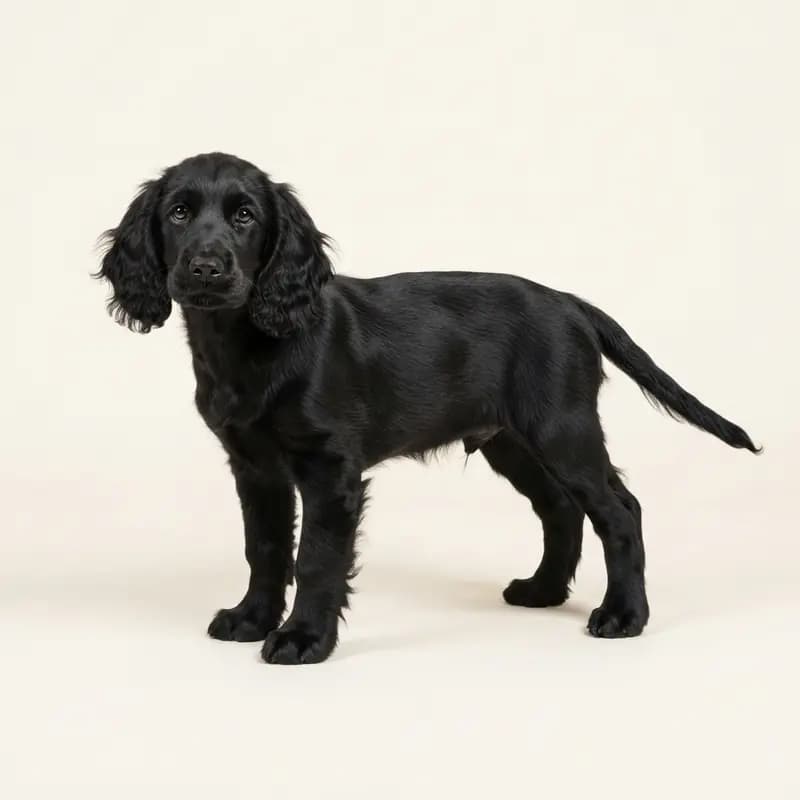
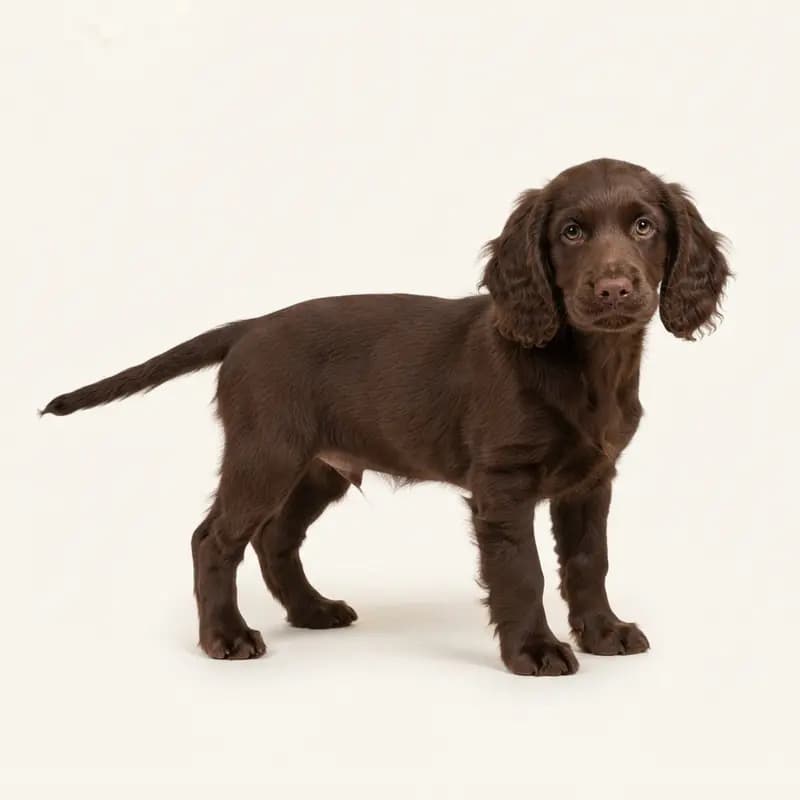

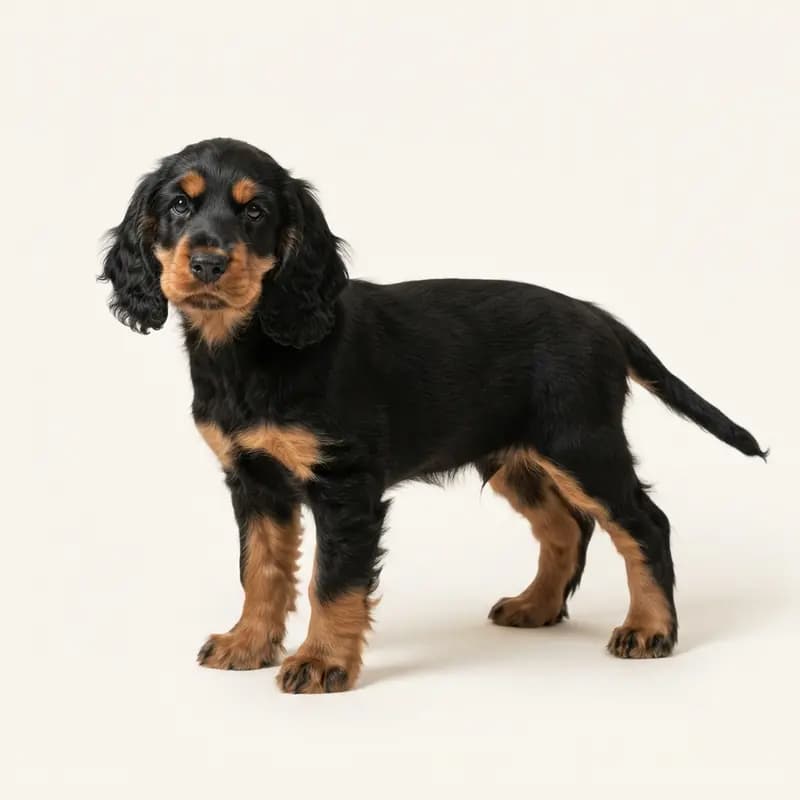
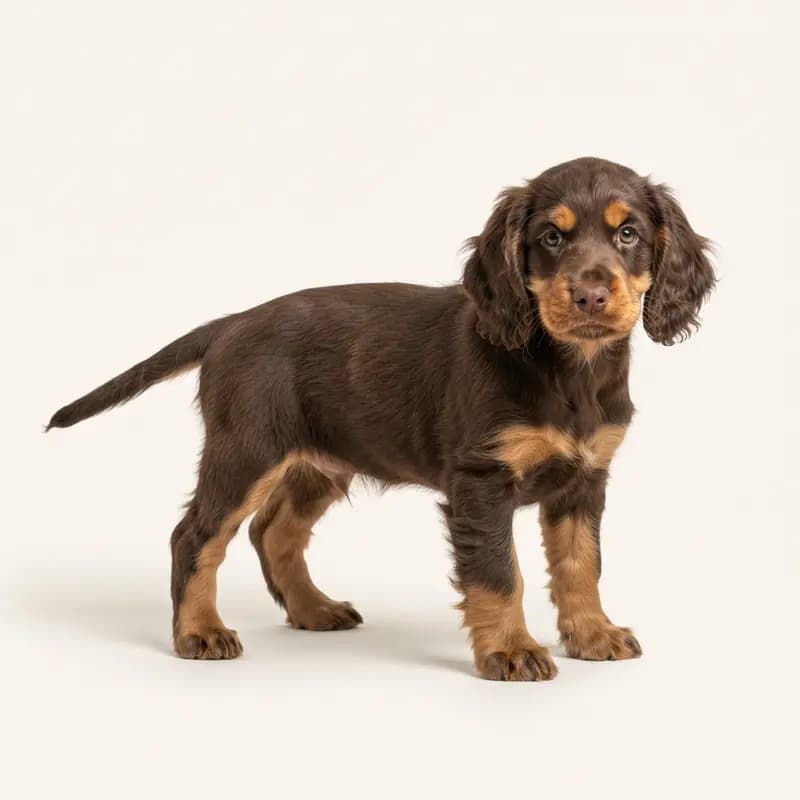
Eye colors
 Brown
Brown
Coat type
 Long
Long Silky
Silky
Is the Field Spaniel right for you?
The Field Spaniel is a sensitive, enduring Stöberhund (flushing dog) — bred to track game through the densest undergrowth and work tirelessly alongside its human. It is calmer than a Cocker, but demands a real task for its nose and mind just the same.
Perfect for you if:
- You want to incorporate daily dummy training or scent work — this dog was selected for persistent nose work and will wither away with just simple walks.
- You enjoy being outdoors for hours in any weather and are looking for a weather-resistant companion for long hikes.
- You lead with subtle communication and positive reinforcement, as this breed reacts extremely sensitively to pressure or harshness.
- You are looking for a very affectionate companion who prefers to be closely integrated into every aspect of your family life.
Less ideal if:
- You expect it to walk past the undergrowth uninterestedly during a forest walk — it is a Stöberhund and will scan every interesting scent trail.
- You have to leave it alone regularly for many hours on weekdays, as it forms an extremely strong bond with its primary caregiver.
- You are looking for a low-maintenance dog — its silky coat requires regular grooming, needs to be trimmed, and brings plenty of nature into the house after every forest walk.
The real vibes check
A Field Spaniel is not a decorative couch dog in a fancy coat — it is a tireless forest worker in a tailored suit. If you give it a task where it can use its excellent nose, you will get a gentle, deeply connected partner. If you ignore its joy of working, it will immediately find its own project in the nearest thicket.
Self-check
Would the Field Spaniel really fit your life?
Answer 6 quick questions about your everyday life and see how well the Field Spaniel fits you — including an honest cost estimate per month, per year, and across the dog's lifetime.
Fit checkCost estimateRisk dice
Takes about 1 minute · free & anonymous
Breed Profile
The Field Spaniel is an elegant, well-balanced medium-sized dog. It belongs to the Spaniel group and is classified in FCI Group 8, the group of retrieving, searching and water dogs. Its body is slightly longer than it is tall, giving it an elegant yet robust appearance. The Field Spaniel has a dark nose and beautiful, expressive eyes that have a warm, intelligent and gentle aura. Its ears are long and drooping, typical of the Spaniel breeds. The tail is often docked, but this varies from country to country and is no longer practiced in some countries, including Germany. The coat is medium length, dense, water-repellent and has a good undercoat, making it suitable for outdoor work in all weather conditions.
All measurements in detail
- Height
- 43 - 47 cm (Female), 43 - 47 cm (Male)
- Weight
- 18 - 23 kg (Female), 20 - 25 kg (Male)
- Life Expectancy
- 12 - 14 yrs
- Character
- Obedient, affectionate, energetic
- Coat
- Medium length, dense, undercoat
- Coat Color
- Black, Liver, Various Shades of Brown
- Price
- 1800 - 3000 €
Character & Temperament
The Field Spaniel is an excellent all-rounder that can be used as both a working dog and a family dog. His natural hunting instincts make him an excellent working dog in the field, but his loving and gentle nature also make him an excellent companion dog and family member. The Field Spaniel is a tender and loving dog that is very people-oriented. He loves spending time with his family and is often very affectionate. This dog is also very energetic and needs a lot of physical and mental stimulation. He loves being outside, playing and running. But he can also enjoy quiet times and is often content just being with his family. Like most hunting dogs, the Field Spaniel shows strong hunting and prey-catching behavior. He loves searching, browsing and retrieving. It is therefore important that he has enough opportunities to express his natural instincts, whether through games, training or work. The Field Spaniel can easily learn to stay alone as long as he gets enough exercise and mental stimulation. But he should not be left alone for long periods of time, otherwise he may become unhappy and restless. The Field Spaniel is an alert dog that often barks when it notices something unusual. But he is not an aggressive guard dog. He is more likely to bark to warn his family, and then he is likely to greet the visitor in a friendly manner. The Field Spaniel is an obedient dog that loves learning and discovering new things. He is intelligent and can quickly learn new commands. But he is also an independent thinker who sometimes has a mind of his own. Therefore, gentle but consistent education is important. It is also important to note that the Field Spaniel is a sensitive dog that does not respond well to harsh or aggressive training techniques. He responds best to positive reinforcement and friendly, patient guidance. In summary, the Field Spaniel is an energetic, loving and affectionate dog that makes an excellent family dog and working dog. He needs lots of exercise and mental stimulation and loves spending time with his family. With the right training and care, the Field Spaniel can be a wonderful companion and loyal friend.
| Trainability Bred to work closely alongside humans. | Highly trainable |
| Watchfulness Occasionally alerts but is fundamentally open. | Low |
| Openness to Strangers Warms up quickly and is generally welcoming. | Friendly |
| Hunting or Herding Drive This drive runs deep — no amount of training eliminates it. | Very strong |
Fun Fact!
Did you know that the Field Spaniel almost went extinct in the 19th century? He was rescued and is now a wonderful companion dog that is still relatively rare!
What Awaits You
Field Spaniels are retrieving and searching (hunting) dogs. They can be wary of strangers. They have a high hunting motivation and must be utilized accordingly.
Housing & Care
Field Spaniels tend to be versatile dogs that can thrive in both urban and rural environments. They need lots of exercise and mental stimulation, so a house with a garden is ideal, but they can also adapt to an apartment with enough walks and games. They generally get along well with children and are gentle and loving companions. They are also tolerant of other pets, including cats, as long as they are properly socialized.
- Family Friendly
Loves family life and thrives in a group.
Family-oriented - Child Friendly
Takes boisterous and affectionate children in its stride.
Patient with children - Dog Friendly
Usually gets on fine with other dogs.
Generally tolerant - City Friendly
City-appropriate with enough exercise and stimulation.
Manageable in cities
Owning a dog is a privilege, but it's also a real responsibility. Before you bring one into your life, be honest with yourself about the commitment it takes.
Training & Education
Field Spaniels are intelligent, alert and easy to train dogs. They respond well to positive reinforcement and gentle, consistent instruction. They are very active and enjoy sports activities such as agility, obedience, rally and flyball. Their natural prey-catching disposition can be put to use through games and activities that develop their ability to search and retrieve. It is important that the Field Spaniel is also mentally stimulated, otherwise he may be prone to behavioral problems. Frustration tolerance and impulse control are key aspects of training that help the dog lead a balanced and fulfilling life. Although the Field Spaniel has high energy, it is important to watch for signs of fatigue or stress to avoid overwork. This breed can be 'ball junkies'. if the ball game is emphasized too much. Therefore, it is important to offer a variety of activities to keep their minds and bodies healthy.
Nutrition & Care
Field Spaniels need a balanced diet tailored to their age, weight and activity level. The diet should be rich in protein to support muscle growth and maintenance, as well as containing balanced amounts of carbohydrates, fats, vitamins and minerals. It is important that the Field Spaniel is not overfed, as being overweight can seriously affect its health. Exact nutritional requirements may vary, so it is advisable to consult a veterinarian. In terms of grooming, the Field Spaniel has a dense, medium-length coat structure with an undercoat that requires regular grooming. Brushing at least once a week helps keep the coat clean and tangle-free and helps distribute the natural oil evenly throughout the coat. During the transition periods, the Field Spaniel sheds more hair and therefore needs more care. They can cope well with the German climate, but during the colder months it is advisable to keep them warm.
| Care Level Regular brushing and occasional professional grooming. | Moderate |
| Exercise Needs Needs several hours of serious exercise every day. | Very active |
| Shedding Hair everywhere, always — no white clothing survives. | Very heavy |
| Trainability Bred to work closely alongside humans. | Highly trainable |
Our experts are still reviewing this information. Spotted something wrong? Email us at info@honestdog.de.
Health & hereditary diseases
Health
B
Solid
Health grade
The Field Spaniel has an average health rating, as the breed is affected by a manageable number of hereditary conditions. Hip dysplasia (HD) and various eye issues are the most well-known risks, though established breeding tests exist for these. By consistently checking the test results of the parents when purchasing a puppy, you can effectively minimize the risk of these health issues.
Grade is relative to other breeds — AI-assisted and editorially reviewed.
In daily life this can mean
You should focus on maintaining a healthy weight, providing back- and joint-friendly exercise, and performing regular ear care to prevent infections and future problems.
The breeder's role
Reputable breeders have the hips, eyes, thyroid, and hearts of the parent animals tested and pay attention to a healthy anatomical balance to reduce spinal issues in the line.
Note: This health overview is AI-assisted and editorially reviewed. It is for orientation only and does not replace veterinary advice.
No Health Tests Available
No specific health tests are currently available for this breed.
Costs & where to find one
How much does a Field Spaniel cost?
A Field Spaniel costs around ~€180 per month (€100 – €340, depending on your setup). The first year adds up to roughly ~€5,430 including purchase, equipment and puppy school; across the dog's life (13 years) it comes to about ~€31,770.
With surgery cover, running costs come to about ~€180 per month — in return, your share of a major operation drops from several thousand euros to around 20 percent.
Per month
~€180
In the first year
~€5,430
Across the dog's life
~€31,770
Purchase from a breeder: €1,800 – €3,000
Estimate at a mid-range setup (suburban, dry food, 1–2 hours of daily exercise), average German prices, as of July 2026.
Calculate your personal costs1-minute self-check with your own answers
Looking for a Field Spaniel?
HonestDog Concierge
No verified Field Spaniel breeders on HonestDog yet
We currently have no breeders for this breed who have passed our verification. Create your short buyer profile: we'll set up your search alert, review a possible source and email you within 28 days.
Appearance, variants & origin
History
The full history
The history of the Field Spaniel is closely linked to that of the English Cocker Spaniel and the English Springer Spaniel, as all three breeds descend from the same dogs that were used for hunting in England. Originally, spaniels were classified based on how they worked, rather than their size or appearance. The term "Field" was used to describe dogs used for field work or hunting. In the 19th century, breeders in England began to breed a more uniform and standardized breed of spaniel. The Field Spaniel was born. The Field Spaniel was first recognized as a separate breed by the British Kennel Club in 1892. However, in the following years the breed was almost extinct as breeders tried to produce increasingly heavier and longer dogs, which led to health problems. In the 1940s, a group of dedicated breeders made an effort to save the breed, crossing English Springer Spaniels and English Cocker Spaniels to improve the breed's health and vitality.
Original Use
The Field Spaniel was bred as a hunting dog, specifically for hunting birds and retrieving game.
Origin
Great Britain
Date
1800
Owner experiences
What owners say about the Field Spaniel
Sabine M., Halterin aus Bayern (Rüde, seit 2021)
Unser Field Spaniel Rüde ist der absolute Liebling der Familie, aber er bringt auch ein paar sehr lustige und manchmal anstrengende Eigenheiten mit sich. Wenn er sich freut, wackelt sein ganzer Hintern so stark, dass wir es nur noch den 'Salsa-Tanz' nennen. Außerdem ist er ein unverbesserlicher Socken- und Kuscheltierdieb – er stibitzt sie ständig und läuft stolz damit herum, macht sie aber zum Glück nie kaputt, sondern trägt sie nur ganz sanft im Maul.
Eine echte Herausforderung im Alltag ist sein nasses Gesicht nach dem Trinken. Er tropft regelmäßig die ganze Küche voll, das wächst sich wohl auch nicht mehr aus! Da er extrem sensibel ist, reagiert er auf harte Worte überhaupt nicht gut. Dafür ist er extrem verfressen, was das Training mit positiver Verstärkung sehr leicht macht. Wir lasten ihn über Suchspiele und Fährtentraining aus, was er absolut liebt.
Dieter S., Halter aus Hessen (Rüde, 3. Hund der Rasse)
Ich halte mittlerweile meinen dritten Field Spaniel und bin nach wie vor begeistert von dieser seltenen Rasse. Für mich sind sie der perfekte Mittelweg: Sie sind im Alltag deutlich ruhiger als viele Cocker Spaniel und bei Weitem nicht so extrem energiegeladen wie manche Springer Spaniel. Allerdings sollte man sich darauf einstellen, dass vor allem die schwarzen Hunde extrem viel haaren.
Man muss beim Kauf wirklich gut auf die Zuchtlinie achten. In manchen Linien können Trennungsangst und schwere Allergien ein Thema sein – mein Rüde braucht leider tägliche Medikamente gegen seine Allergien und wir mussten das Alleinebleiben sehr kleinschrittig trainieren. Wenn man sich aber darauf einstellt und einen seriösen Züchter wählt, bekommt man einen unglaublich anhänglichen, treuen Begleiter, der einfach nur die Nähe seiner Menschen sucht.
Paraphrased from real owner reports
Loading owner stories
FAQ & more
Frequently asked questions about the Field Spaniel
Is a Field Spaniel the right dog for me?
The Field Spaniel is an active dog that needs plenty of exercise and mental stimulation. Research the temperament, grooming needs, and space requirements before deciding.
How long does a Field Spaniel live?
The average life expectancy of a Field Spaniel is 12-14 years. With proper care and regular vet visits, your dog can live a long, healthy life.
How much grooming does a Field Spaniel need?
Field Spaniel grooming requirements include regular brushing, nail trimming, and dental care. HonestDog provides detailed grooming tips for every breed.
Is a Field Spaniel good for families with children?
The Field Spaniel can be a great family dog. Proper training and socialization are key. HonestDog provides family suitability information for every breed.
What colors does the Field Spaniel come in?
The Field Spaniel comes in these colors: Black, Liver, Roan, Black and tan, Brown and tan.
Loading related articles
Are you a Field Spaniel breeder?
Showcase your kennel on HonestDog and reach families searching for a responsibly bred Field Spaniel.
Why HonestDog?
What makes HonestDog different from other platforms
Full transparency
We lay out what we have: who the breeder is, how they work, and any health records they've uploaded. So you can judge for yourself.
Responsible breeding, assured
Every breeder on HonestDog has their identity and documents checked before their profile goes live. Health records they upload are shown on the profile, so you can see exactly what has been tested.
Trust and verification
We verify breeders and buyers alike, so every conversation happens on solid ground. It's a new standard of trust in dog breeding.
Less hassle, more time
We've already checked the breeders' documents and gathered the details, so you can skip the endless research and focus on finding the right puppy for your family.
Our Mission

We connect dog lovers with responsible breeders and shelters to ensure every dog finds the perfect home.
Founded by dog enthusiasts, our platform focuses on ethical dog breeding and adoption.
Why HonestDog?
We connect you with vetted breeders and shelters so you can find your — your new companion — with confidence.
Vetted Partners
Only verified breeders and shelters — for a safe start.
Highest Standards
Every animal's health and wellbeing is our top priority.
Guides & Resources
Guides, checklists, and breed profiles — so you can make a well-informed decision.