Loading breed
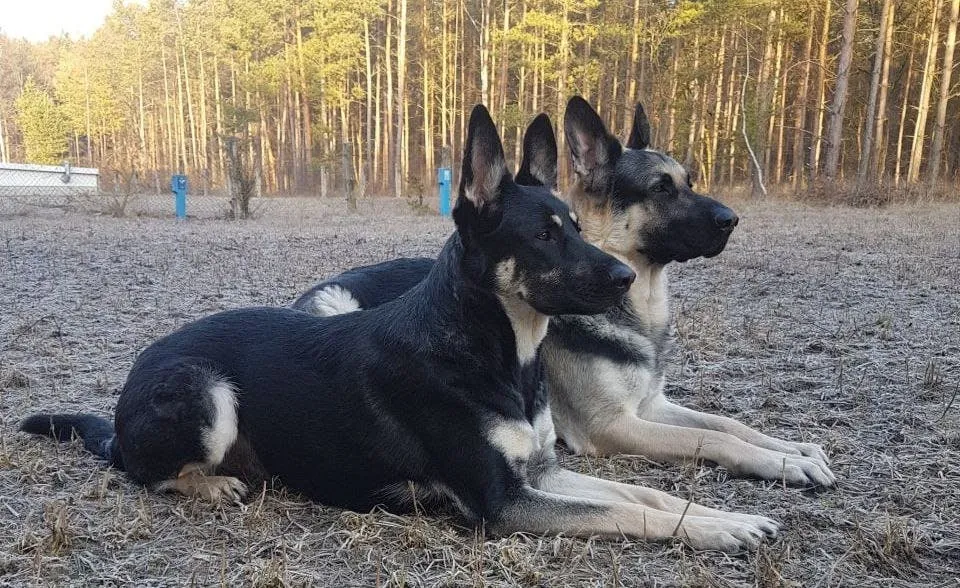
East European Shepherd
Health grade CThe Osteuropäischer Schäferhund is a steady-nerved, extremely loyal protector—bred as a robust service and guard dog for military operations under extreme climatic conditions. He is calm and self-assured, but if he detects a threat, he acts without compromise.
- Height62–76 cm
- Weight30–60 kg
- Life expectancy10–14 yrs
- Puppy price1,500–2,500 €
- Energy4/5
The Essentials at a Glance
The Osteuropäischer Schäferhund is a steady-nerved, extremely loyal protector—bred as a robust service and guard dog for military operations under extreme climatic conditions. He is calm and self-assured, but if he detects a threat, he acts without compromise.
- Health grade C: As a large working breed, the East European Shepherd is prone to typical joint and neurological conditions.
- You have sound experience in handling large, high-drive working dogs.
- You aren't looking for a casual companion, but want to engage in real teamwork every day through dog sports like tracking or obedience.
- You expect a dog that gets along with everyone at the dog park and greets visitors joyfully—his job is to keep strangers at a distance.
Is the East European Shepherd right for you?
At a glance
East European Shepherd overview
The essentials — key facts, traits, and health priorities — before you dive deeper.
Health grade
Relative to other breeds
S
A
B
C
D
E
Very healthyHigher risk
Average — several important tests are expected.
See full health info & tests →
Note: This health overview is AI-assisted and editorially reviewed. It is for orientation only and does not replace veterinary advice.
Lifespan
10–14 yrs
Height
62–76 cm
Weight
30–60 kg
Practical
- Puppy price: 1,500 – 2,500 €
- Coat: Dense, straight, medium length, with undercoat
- Origin: Russia
Temperament
Energy
Trainability
Family fit
With kids
Daily life
Care effort
Shedding
Barking
City-friendly
Guard instinct
What matters most
Especially with a East European Shepherd, choosing the right breeder is the single most important decision you'll make. Serious breeders consistently test the parents for inherited conditions, prioritize healthy early socialization, and stay accountable long after handover. A cheap puppy without health screening tends to become the most expensive dog later on.
See HonestDog breeder standards →Colors & coat
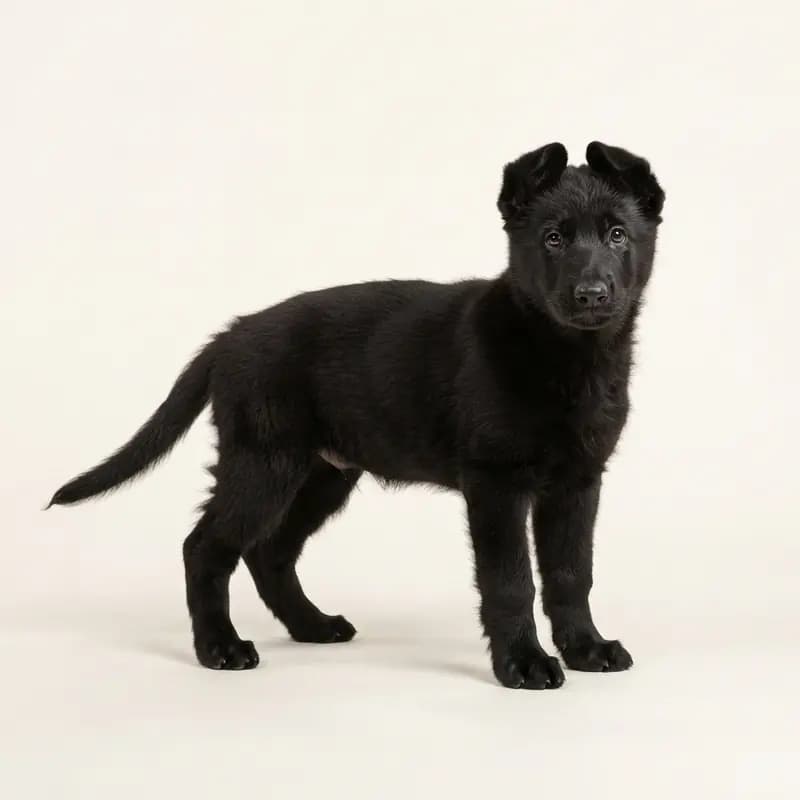
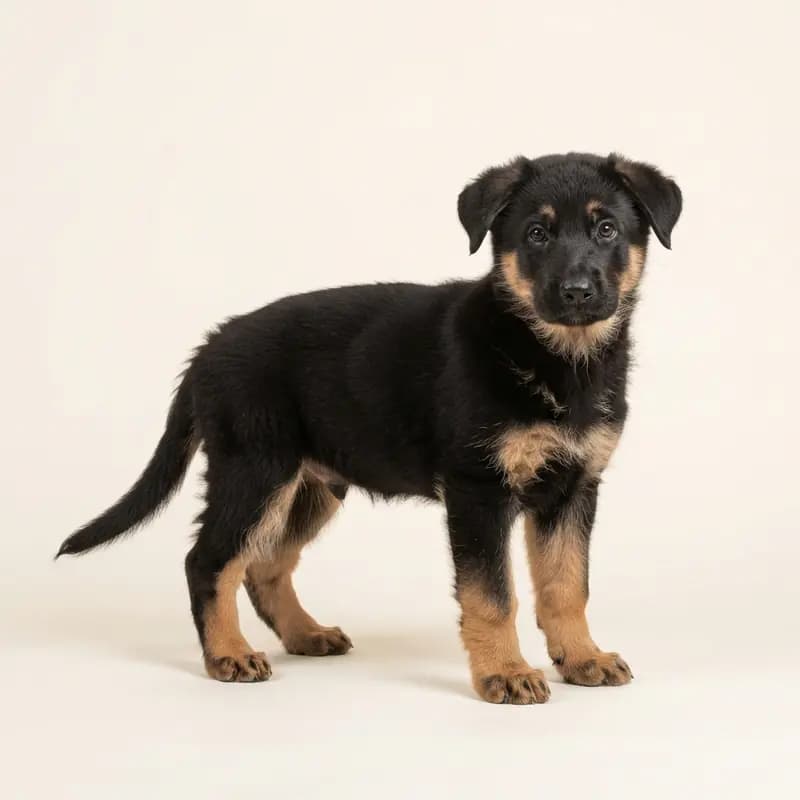
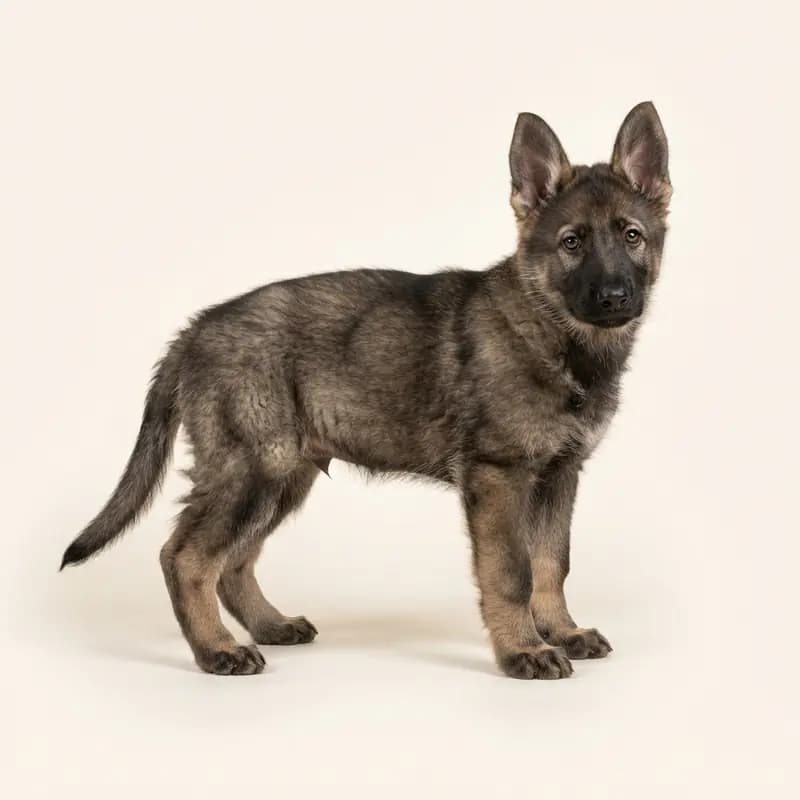
What colors does the East European Shepherd come in?
The coat colors you will see in East European Shepherd litters — including which ones fall outside the breed standard and which carry genetic risk.
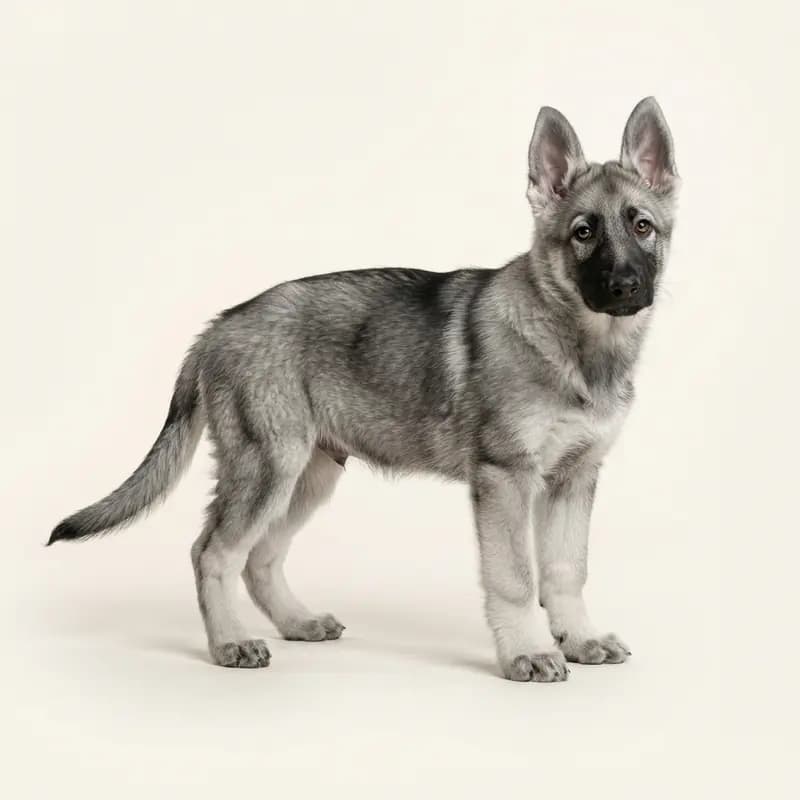
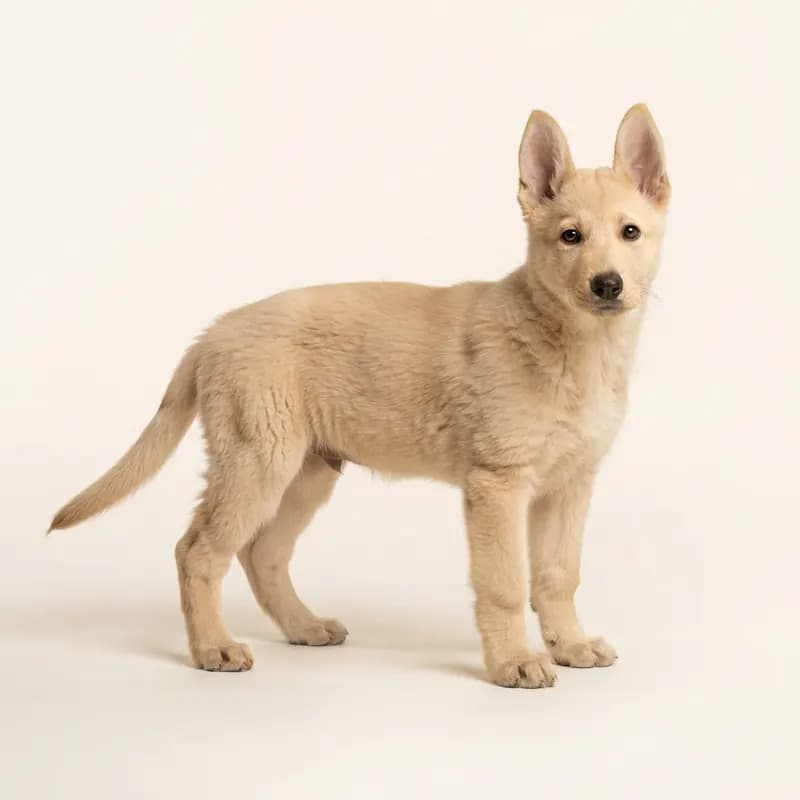
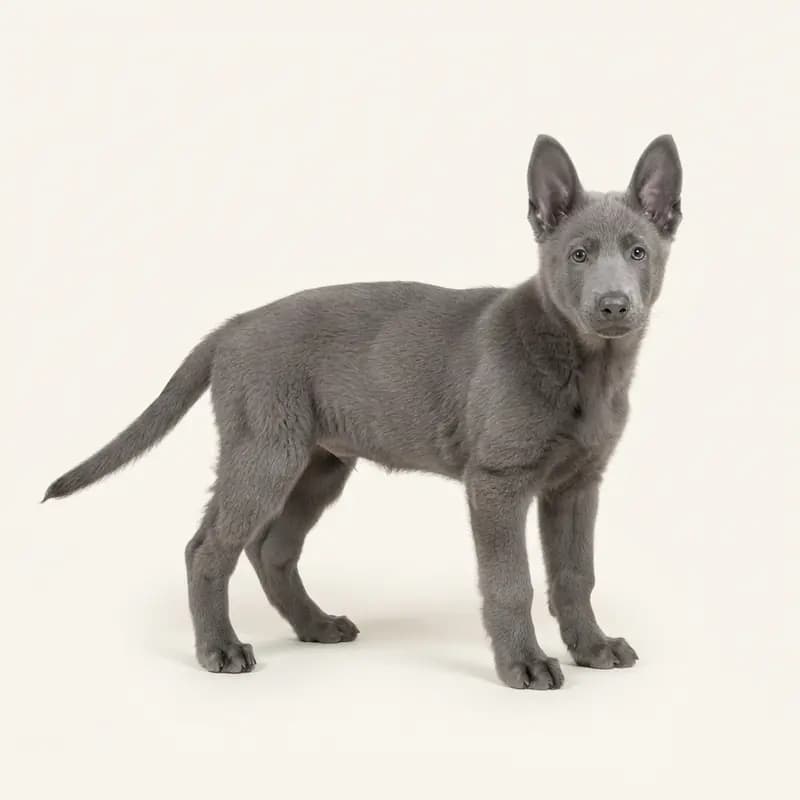
Eye colors
 Brown
Brown
Coat type
 Medium
 Double coat
Is the East European Shepherd right for you?
The Osteuropäischer Schäferhund is a steady-nerved, extremely loyal protector—bred as a robust service and guard dog for military operations under extreme climatic conditions. He is calm and self-assured, but if he detects a threat, he acts without compromise.
Perfect for you if:
- You have sound experience in handling large, high-drive working dogs.
- You aren't looking for a casual companion, but want to engage in real teamwork every day through dog sports like tracking or obedience.
- You live in a rural area with a securely fenced property where he can fulfill his genetic role as a guardian.
- You lead with confidence, fairness, and absolute consistency, as this dog senses insecurity immediately and will take control himself.
Less ideal if:
- You expect a dog that gets along with everyone at the dog park and greets visitors joyfully—his job is to keep strangers at a distance.
- You don't have the time for years of consistent training to safely channel his deeply ingrained protective instinct.
- You live in a busy city apartment with a lot of foot traffic in the stairwell, which would keep him in a constant, stressful state of high alert.
The real vibes check
An Osteuropäischer Schäferhund is like a highly qualified bodyguard: he appears calm and inconspicuous in everyday life, but is constantly scanning his surroundings. You aren't getting a playful clown, but a serious colleague who would walk through fire for you—provided you prove to him every day that you are the more capable team leader.
Self-check
Would the East European Shepherd really fit your life?
Answer 6 quick questions about your everyday life and see how well the East European Shepherd fits you — including an honest cost estimate per month, per year, and across the dog's lifetime.
Fit checkCost estimateRisk dice
Takes about 1 minute · free & anonymous
Breed Profile
The East European Shepherd is a large and muscular dog with an impressive presence. Its frame is longer than it is tall, giving it an elegant yet robust appearance. The breed belongs to FCI Group 1, which includes sheepdogs and herding dogs. A special feature of this breed is its immense strength and endurance, which make it an ideal working dog. Compared to other German Shepherds, the Eastern European Shepherd is slightly larger and heavier, which gives it an imposing appearance. Its expression is alert and intelligent, with dark, almond-shaped eyes and erect ears signaling its alertness and readiness. Its tail is long and is carried hanging when at rest, but can be raised when excited.
All measurements in detail
- Height
- 62 - 72 cm (Female), 66 - 76 cm (Male)
- Weight
- 30 - 50 kg (Female), 40 - 60 kg (Male)
- Life Expectancy
- 10 - 14 yrs
- Character
- Willing to work, loyal, alert
- Coat
- Dense, straight, medium length, with undercoat
- Coat Color
- Mostly black and tan, but also solid black or gray
- Price
- 1500 - 2500 €
Character & Temperament
The East European Shepherd is an excellent working dog known for its intelligence, loyalty and strong work ethic. His persistent and alert temperament makes him a reliable herding and protection dog. Despite his willingness to work, the East European Shepherd is also a very people-oriented dog that builds a close bond with his owner and his family. He is a loyal and vigilant companion who protects his family with great devotion. This dog loves to learn and is very easy to train thanks to its high level of comprehension. His curiosity and eagerness make him an excellent candidate for various types of work, including herding, protection work, search and rescue tasks, and even as a therapy dog. Like many herding dogs, the Eastern European Shepherd Dog also has a natural hunting instinct, which can, however, be controlled with good training. His intelligence and alertness make him an excellent watchdog. He is always alert and ready to protect his territory and family. However, despite his size and strength, he is not an aggressive dog and is not prone to biting or barking without reason. This dog should be taught to stay alone at an early age, as he may have problems with separation anxiety due to his strong bond with his family. However, it is important to do this in a slow and positive process to avoid stress and anxiety. Although the East European Shepherd is an active and willing to work dog, he is not hyperactive and can adapt well to life in a quieter environment as long as he receives enough physical and mental stimulation. He is also able to regulate his energy well and will not be overly active or destructive around the home. The East European Shepherd is a courageous and confident dog who also has a gentle and patient side. He gets along well with children and can be a great playmate and protector for them. He also generally gets along well with other dogs and pets, although early and positive socialization is important to ensure he can get along with different types of people and animals. All in all, the Eastern European Shepherd is a versatile and loyal dog that excels as both a working dog and a family dog. With his endurance, intelligence and loyalty, he is a formidable companion who forms a strong bond with his family and is willing to do anything for them.
| Trainability Bred to work closely alongside humans. | Highly trainable |
| Watchfulness Strong territorial instinct — may actively confront intruders. | Very high |
| Openness to Strangers Careful around unfamiliar people — thaws slowly. | Cautious |
| Hunting or Herding Drive Powerful instinct that can override recall when triggered. | Strong |
Fun Fact!
Despite their size and strength, Eastern European Shepherds are known for being as quiet on their paws as a cat - a skill they greatly valued in their original role as herding dogs.
What Awaits You
The East European Shepherd is a robust and hardworking dog, especially bred for protection and guard duties. It is characterized by its high resilience and pronounced protective instinct. These dogs require consistent training and sufficient activity to fully realize their potential. Despite their strong protective instinct, they are loyal and can also be kept as family dogs with proper guidance.
Housing & Care
Eastern European Shepherd Dogs are also suitable as city dogs, as long as they get enough exercise and activity. They are patient with children and can be easily integrated into an active family. Cats and other pets are generally well accepted as long as positive socialization occurs early on.
- Family Friendly
Gets on well with different people and varying routines.
Family-friendly - Child Friendly
Fine with calm, respectful children — not small tornadoes.
Better with older children - Dog Friendly
Usually gets on fine with other dogs.
Generally tolerant - City Friendly
Can manage in the city, but only with very active owners.
Difficult in cities
Owning a dog is a privilege, but it's also a real responsibility. Before you bring one into your life, be honest with yourself about the commitment it takes.
Training & Education
Raising an Eastern European Shepherd Dog is usually a pleasure due to its high intelligence and willingness to learn. However, one should not forget that this breed was originally bred for work and therefore requires a clear structure and a lot of mental and physical exercise. Activities such as mantrailing, agility or obedience can provide an excellent opportunity to develop the natural talents of this breed of dog. It can be important that your dog also learns frustration tolerance and impulse control in order to find his way around the respective disciplines. However, excessive demands or constant pushing should be avoided in order to avoid developing a ball junkie or general hyperactivity. However, the nice thing about the Eastern European Shepherd Dog is that it is also able to enjoy times of rest and does not need to be constantly in action.
Nutrition & Care
An Eastern European Shepherd is uncomplicated in many ways, which is also reflected in his diet. A balanced, high-quality diet is of course essential. This breed is not prone to allergies or food intolerances, but you should pay attention to a balanced diet that is not too high in protein to prevent joint problems. When it comes to grooming, the Eastern European Shepherd Dog copes well with the German climate with its thick undercoat and hard top coat. However, he sheds quite heavily, especially during the coat change in spring and autumn. Regular brushing is therefore essential to keep the coat healthy and shiny and to keep the hair in your home in check.
| Care Level Regular brushing and occasional professional grooming. | Moderate |
| Exercise Needs Needs several hours of serious exercise every day. | Very active |
| Shedding Hair everywhere, always — no white clothing survives. | Very heavy |
| Trainability Bred to work closely alongside humans. | Highly trainable |
Our experts are still reviewing this information. Spotted something wrong? Email us at info@honestdog.de.
Health & hereditary diseases
Health
C
Solid, watch carefully
Health grade
As a large working breed, the East European Shepherd is prone to typical joint and neurological conditions. Since strict, comprehensive mandatory health tests are often not established for this breed, there is an increased risk of hip dysplasia (HD) and elbow dysplasia (ED). Furthermore, attention should be paid to degenerative myelopathy (DM) to prevent the onset of paralysis later in life.
Grade is relative to other breeds — AI-assisted and editorially reviewed.
In daily life this can mean
Without conscious weight management and good preventative care—such as regular check-ups—health issues and veterinary costs can increase significantly later on.
The breeder's role
Reputable breeders have hips, elbows, and backs examined and use appropriate DNA tests to minimize known risks as much as possible and keep the dogs resilient for a long time.
Note: This health overview is AI-assisted and editorially reviewed. It is for orientation only and does not replace veterinary advice.
No Health Tests Available
No specific health tests are currently available for this breed.
Costs & where to find one
How much does a East European Shepherd cost?
A East European Shepherd costs around ~€220 per month (€110 – €420, depending on your setup). The first year adds up to roughly ~€5,450 including purchase, equipment and puppy school; across the dog's life (12 years) it comes to about ~€34,280.
With surgery cover, running costs come to about ~€230 per month — in return, your share of a major operation drops from several thousand euros to around 20 percent.
Per month
~€220
In the first year
~€5,450
Across the dog's life
~€34,280
Purchase from a breeder: €1,500 – €2,500
Estimate at a mid-range setup (suburban, dry food, 1–2 hours of daily exercise), average German prices, as of July 2026.
Calculate your personal costs1-minute self-check with your own answers
Looking for a East European Shepherd?
Appearance, variants & origin
History
The full history
The history of the Eastern European Shepherd Dog is closely linked to that of the German Shepherd Dog. They were originally bred from German Shepherds in Russia and other Eastern European countries to create a hardy working dog adapted to harsher climates. This new breed was then used primarily by the army, police and as search and rescue dogs. Breeding of the Eastern European Shepherd Dog began in the 1920s and aimed to create a dog capable of performing heavy work and withstanding the extreme weather conditions of Eastern Europe. Over the years, the breed has been constantly developed and improved, with particular emphasis on health, working ability and a balanced character. The breed was recognized by the Russian Cynological Organization in 2014 and is also recognized by some other international dog associations, although it has not yet been officially recognized by the FCI.
Original Use
The East European Shepherd was bred as a service dog for military and police duties as well as a guard dog.
Origin
Russia
Date
1900
Owner experiences
What owners say about the East European Shepherd
Tay S., Halterin aus Hessen (Hündin, seit 2022)
Ich hätte früher nie gedacht, dass ich mal einen Schäferhund besitzen würde, da mir die typischen Rassen eigentlich nie so richtig zugesagt haben. Doch mit meiner einjährigen VEO-Hündin Arwa hat sich das komplett geändert. Ich habe sie mit etwa einem halben Jahr bekommen und bin absolut begeistert von ihrem Wesen.
Sie hat zwar riesige Stehohren, in die sie bis heute noch nicht ganz hineingewachsen ist, aber charakterlich ist sie ein Traum. Arwa ist ein extrem ruhiger Hund und im Alltag eigentlich immer ansprechbar. Sie dreht im Haus nie unkontrolliert auf, es sei denn, sie ist unzufrieden oder fühlt sich nicht verstanden. Sie kommuniziert unglaublich klar mit uns und zeigt genau, was sie braucht.
Jonas D., Halter aus Bayern (Rüde, seit 2019)
Als wir unseren Rüden im Alter von zwei Jahren übernahmen, hatte er bereits eine schwere Vergangenheit mit Misshandlungen hinter sich. Ihn am ersten Tag nach Hause zu bringen, fühlte sich aufgrund seiner enormen Statur und seiner Vorgeschichte fast so an, als würde man sich einen Wolf ins Haus holen. Er ist mittlerweile neun Jahre alt, wiegt stolze 59 kg (130 Pfund) und hat eine Schulterhöhe von fast 74 cm.
Mit viel Liebe, Geduld und konsequentem Training hat er sich jedoch zum klügsten Hund entwickelt, den ich je hatte. Er ist ein hervorragender, wachsamer Beschützer für die Familie. Was ich besonders schätze, ist seine Fähigkeit, sich unserem Energieniveau anzupassen: Da ich im Homeoffice arbeite, verschläft er friedlich den Großteil des Tages neben meinem Schreibtisch, ist im Ernstfall aber sofort hellwach und einsatzbereit.
Lisa M., Halterin aus Niedersachsen (zwei Hündinnen, seit 2020)
Für mich vereint der Osteuropäische Schäferhund die besten Eigenschaften eines Herdenschutzhundes und eines klassischen Schäferhundes. Meine beiden Hündinnen haben einen sehr ausgeprägten Schutz- und Wehrtrieb, bleiben dabei aber stets klar im Kopf. Sie sind bei weitem nicht so hyperaktiv oder extrem arbeitsintensiv wie ein Malinois oder ein Deutscher Schäferhund aus der Leistungszucht, sondern können nach getaner Arbeit wunderbar schnell wieder herunterfahren.
Man darf diese Rasse aber keinesfalls unterschätzen: Die Junghundejahre sind extrem anstrengend und fordernd. Ein VEO ist erst mit etwa drei Jahren wirklich mental erwachsen. Wenn man sie nicht absolut konsequent und souverän führt, besteht die Gefahr, dass sie Fremden gegenüber unkontrolliertes Misstrauen, Bellen oder sogar Aggressionen zeigen.
Aufgrund ihres massiven, schweren Körperbaus sind sie für gelenksbelastende Sportarten wie Agility absolut nicht geeignet. Dafür blühen sie bei der Nasenarbeit wie Mantrailing, Fährtenarbeit oder beim Dummy-Training richtig auf. Man braucht Zeit, Geduld und eine liebevolle, aber sehr konsequente Hand, um diesen Hunden gerecht zu werden.
Paraphrased from real owner reports
Loading owner stories
Community Posts
FAQ & more
Frequently asked questions about the East European Shepherd
Is a East European Shepherd the right dog for me?
The East European Shepherd is an active dog that needs plenty of exercise and mental stimulation. Research the temperament, grooming needs, and space requirements before deciding.
How long does a East European Shepherd live?
The average life expectancy of a East European Shepherd is 10-14 years. With proper care and regular vet visits, your dog can live a long, healthy life.
How much grooming does a East European Shepherd need?
East European Shepherd grooming requirements include regular brushing, nail trimming, and dental care. HonestDog provides detailed grooming tips for every breed.
Is a East European Shepherd good for families with children?
The East European Shepherd can be a great family dog. Proper training and socialization are key. HonestDog provides family suitability information for every breed.
What colors does the East European Shepherd come in?
The East European Shepherd comes in these colors: Black, Black and tan, Agouti, Grey, Fawn, Blue. Colors that fall outside the breed standard are marked as such on the breed page.
Loading related articles
Are you a East European Shepherd breeder?
Showcase your kennel on HonestDog and reach families searching for a responsibly bred East European Shepherd.
Why HonestDog?
What makes HonestDog different from other platforms
Full transparency
We lay out what we have: who the breeder is, how they work, and any health records they've uploaded. So you can judge for yourself.
Responsible breeding, assured
Every breeder on HonestDog has their identity and documents checked before their profile goes live. Health records they upload are shown on the profile, so you can see exactly what has been tested.
Trust and verification
We verify breeders and buyers alike, so every conversation happens on solid ground. It's a new standard of trust in dog breeding.
Less hassle, more time
We've already checked the breeders' documents and gathered the details, so you can skip the endless research and focus on finding the right puppy for your family.
Our Mission

We connect dog lovers with responsible breeders and shelters to ensure every dog finds the perfect home.
Founded by dog enthusiasts, our platform focuses on ethical dog breeding and adoption.
Why HonestDog?
We connect you with vetted breeders and shelters so you can find your — your new companion — with confidence.
Vetted Partners
Only verified breeders and shelters — for a safe start.
Highest Standards
Every animal's health and wellbeing is our top priority.
Guides & Resources
Guides, checklists, and breed profiles — so you can make a well-informed decision.