Loading breed
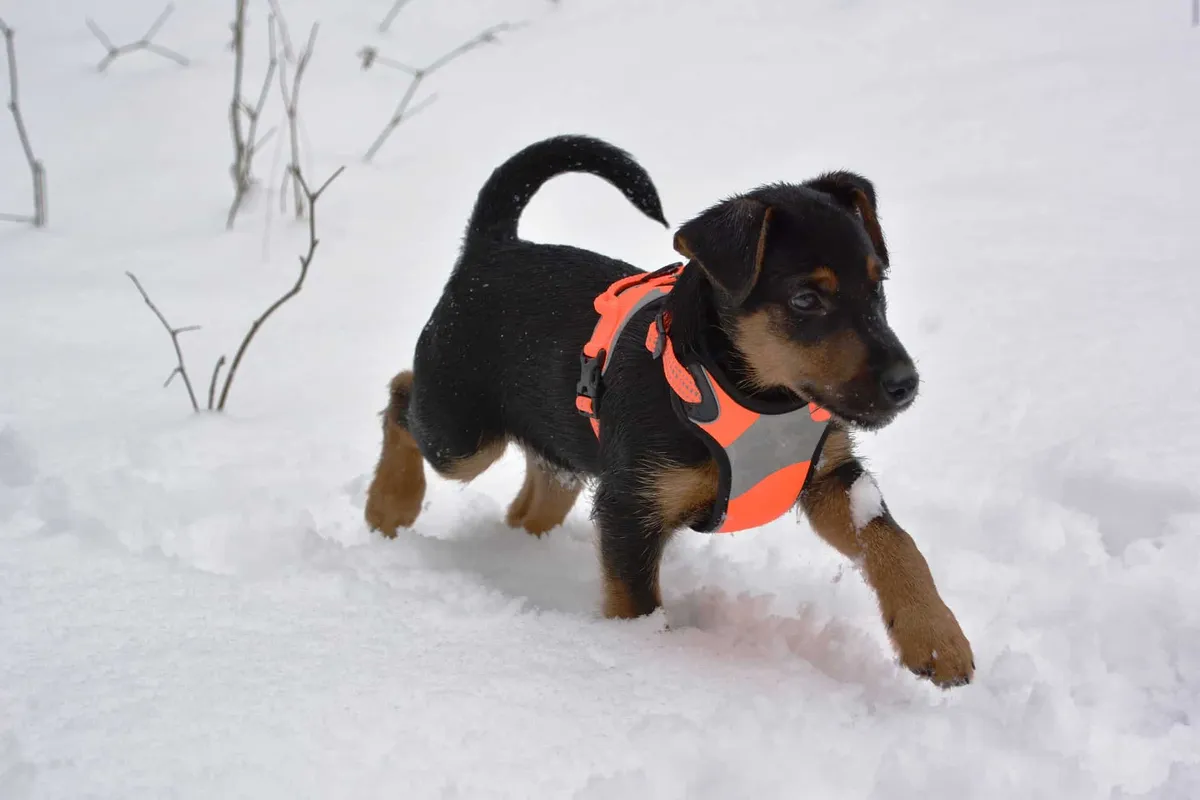
Jagdterrier
Health grade CThe Deutscher Jagdterrier is an incredibly driven, fearless worker—an uncompromising Erdhund (earth dog) bred for the rigors of hunting both above and below ground, for whom giving up is simply not in his biology.
- Height33–40 cm
- Weight8–10 kg
- Life expectancy13–15 yrs
- Puppy price1,000–2,500 €
- Energy5/5
The Essentials at a Glance
The Deutscher Jagdterrier is an incredibly driven, fearless worker—an uncompromising Erdhund (earth dog) bred for the rigors of hunting both above and below ground, for whom giving up is simply not in his biology.
- Health grade C: While the Deutscher Jagdterrier is considered a robust working dog, it requires an above-average number of mandatory health tests.
- Ideally, you are an active hunter looking for a passionate, enduring companion for flushing, water, or den hunting.
- You possess absolute confidence and extensive dog-handling experience to channel this concentrated energy into productive paths.
- You are looking for an adaptable companion dog—he was selected for uncompromising prey drive, not for cozy evenings on the sofa.
Is the Jagdterrier right for you?
At a glance
Jagdterrier overview
The essentials — key facts, traits, and health priorities — before you dive deeper.
Health grade
Relative to other breeds
S
A
B
C
D
E
Very healthyHigher risk
Average — several important tests are expected.
See full health info & tests →
Note: This health overview is AI-assisted and editorially reviewed. It is for orientation only and does not replace veterinary advice.
Lifespan
13–15 yrs
Height
33–40 cm
Weight
8–10 kg
Practical
- Puppy price: 1,000 – 2,500 €
- Coat: Dense, rough or smooth, with an undercoat
- Origin: Germany
Temperament
Energy
Trainability
Family fit
With kids
Daily life
Care effort
Shedding
Barking
City-friendly
Guard instinct
What matters most
Especially with a Jagdterrier, choosing the right breeder is the single most important decision you'll make. Serious breeders consistently test the parents for inherited conditions, prioritize healthy early socialization, and stay accountable long after handover. A cheap puppy without health screening tends to become the most expensive dog later on.
See HonestDog breeder standards →Colors & coat
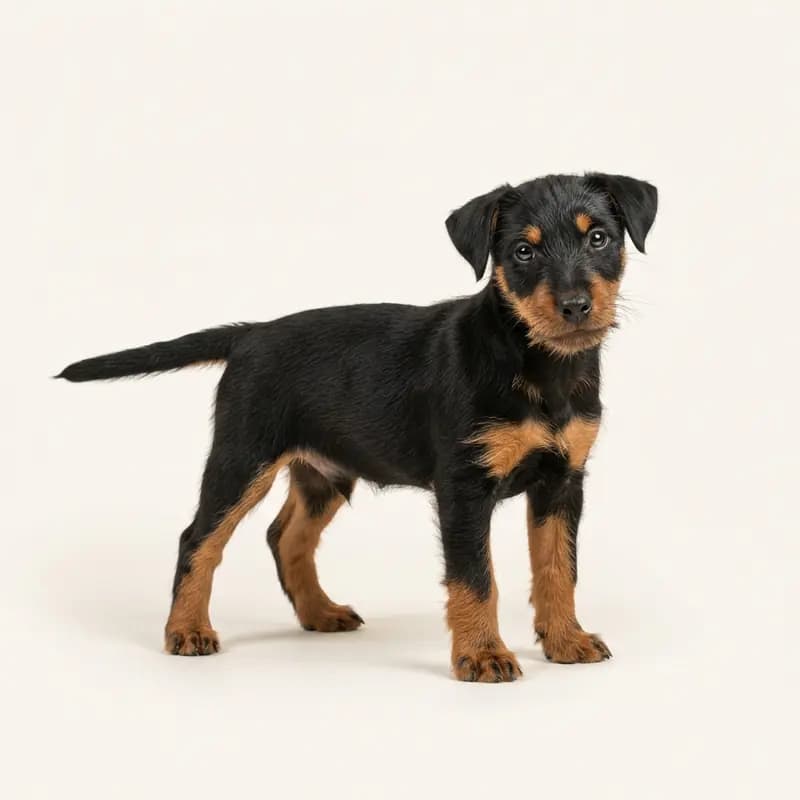
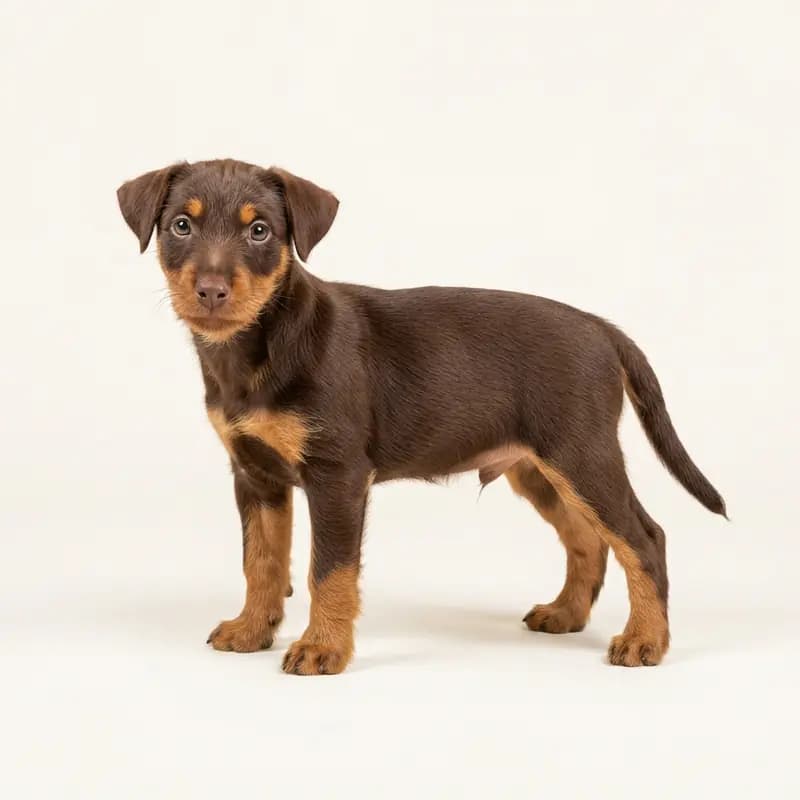
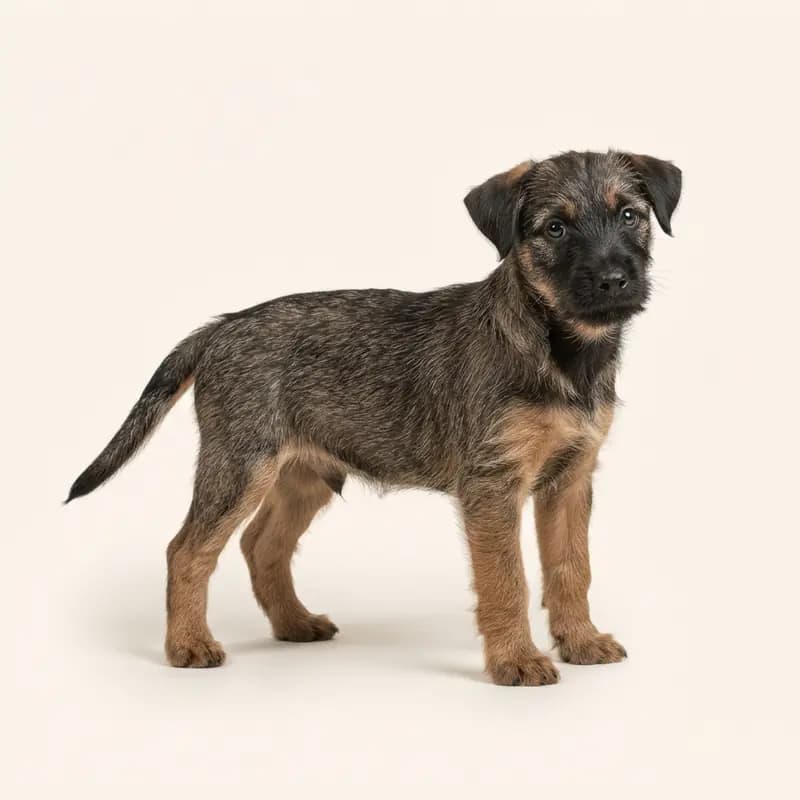
What colors does the Jagdterrier come in?
The coat colors you will see in Jagdterrier litters — including which ones fall outside the breed standard and which carry genetic risk.
Eye colors
 Brown
Brown
Coat type
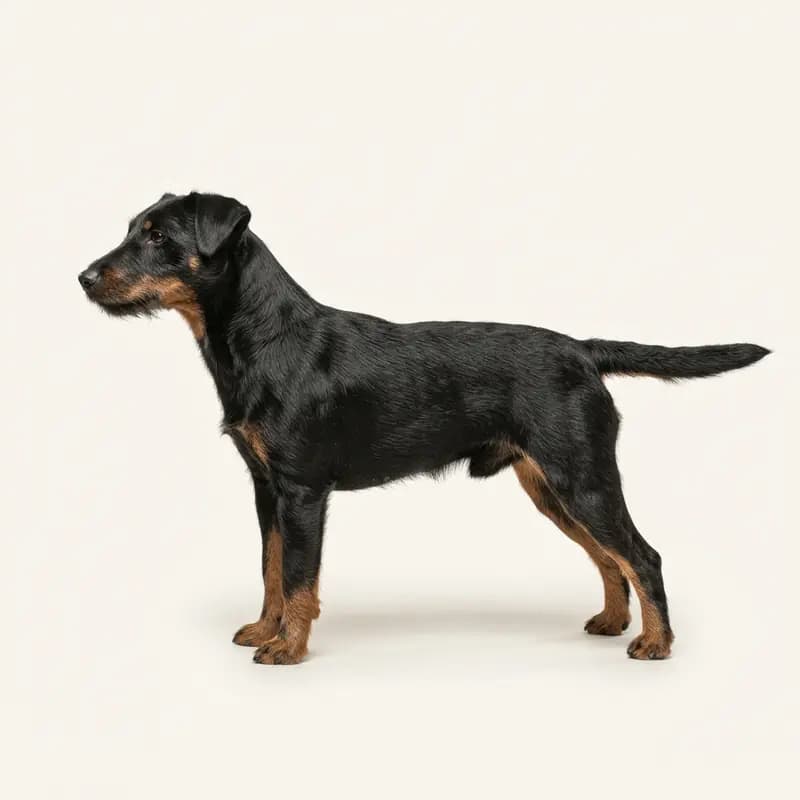 Illustrative image
Short
 Smooth
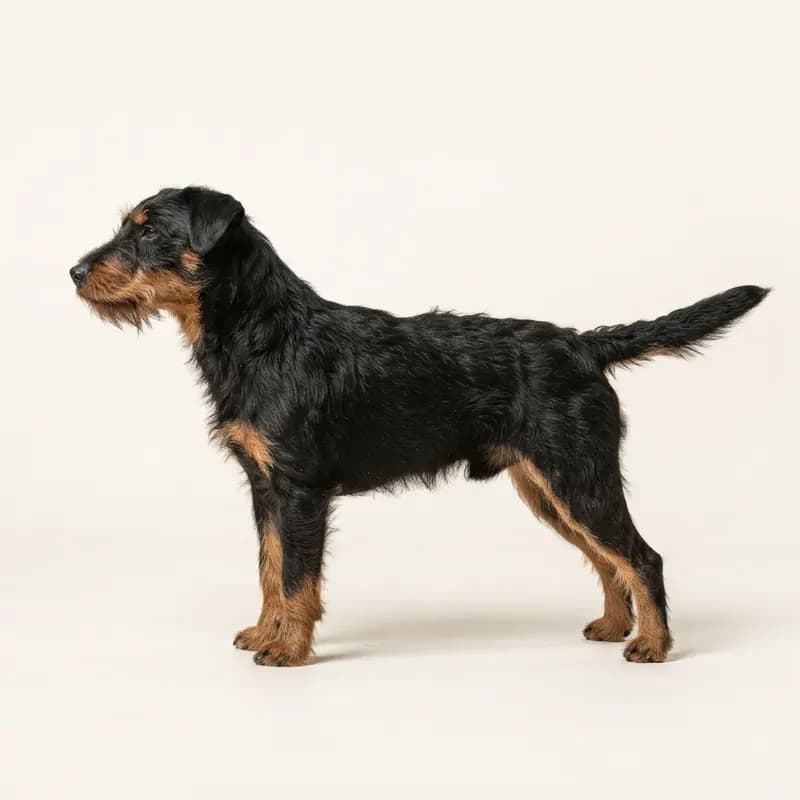 Illustrative image
Wire
 Double coat
Is the Jagdterrier right for you?
The Deutscher Jagdterrier is an incredibly driven, fearless worker—an uncompromising Erdhund (earth dog) bred for the rigors of hunting both above and below ground, for whom giving up is simply not in his biology.
Perfect for you if:
- Ideally, you are an active hunter looking for a passionate, enduring companion for flushing, water, or den hunting.
- You possess absolute confidence and extensive dog-handling experience to channel this concentrated energy into productive paths.
- You have a securely fenced property and live in a rural area where his vigilant, territorial behavior won't be an issue.
- You are prepared to work consistently every day on his frustration tolerance and impulse control.
Less ideal if:
- You are looking for an adaptable companion dog—he was selected for uncompromising prey drive, not for cozy evenings on the sofa.
- You have cats or small animals in the household, which his genetics will simply classify as prey.
- You live in a city apartment and expect relaxed, loose-leash walks through the park.
- You prefer to avoid conflict rather than setting clear, unmistakable boundaries for a dog.
The real vibes check
A Deutscher Jagdterrier is like a high-revving engine with no off switch—built to take on a defensive fox in a dark den if necessary. If you try to force this prey-driven hardware into a suburban life as a simple family pet, the system will inevitably crash. But if you give him the real, demanding work he craves, you will have the most loyal and courageous partner by your side.
Self-check
Would the Jagdterrier really fit your life?
Answer 6 quick questions about your everyday life and see how well the Jagdterrier fits you — including an honest cost estimate per month, per year, and across the dog's lifetime.
Fit checkCost estimateRisk dice
Takes about 1 minute · free & anonymous
Breed Profile
The German Hunting Terrier, often referred to as the German Hunting Terrier, is a small, strong dog with a courageous and energetic character. He belongs to FCI Group 3, which includes terriers, and is known for his high energy and tireless willingness to work. This dog has a compact and well-proportioned build. The head is elongated with a pronounced stop and the ears are V-shaped and drooping. The eyes are dark and oval, giving the Jagdterrier a lively and intelligent expression. The back is straight and firm, the chest deep and broad. The tail is often docked, but this is now banned in many countries, including Germany.
All measurements in detail
- Height
- 33 - 40 cm (Female), 33 - 40 cm (Male)
- Weight
- 8 - 9 kg (Female), 9 - 10 kg (Male)
- Life Expectancy
- 13 - 15 yrs
- Character
- Energetic, Loyal, Intelligent
- Coat
- Dense, rough or smooth, with an undercoat
- Coat Color
- Black and tan, dark tan, black
- Price
- 1000 - 2500 €
Character & Temperament
The German Hunting Terrier is an energetic and committed dog that is characterized by its enthusiasm for work and its strong will. His nature is characterized by his hunting instincts, which make him an active, tireless and goal-oriented dog. As a hunting dog, the German Hunting Terrier is known for its toughness and courage. Not only is he able to track and capture game, but he can also work in construction and water. His endurance and intrepid nature make him an indispensable companion when hunting. Although the German Hunting Terrier is a working dog, he also has a loving side. He is very loyal and affectionate towards his family. He is people-oriented and can form a strong bond with its owner, especially if well socialized from an early age. The German Hunting Terrier is a very playful dog that is always ready to romp and play. His intelligence and willingness to learn make him a good companion for active people who enjoy working and playing with their dog. But despite his playful nature, the German Hunting Terrier is no couch potato. He needs a lot of physical and mental stimulation to be happy and balanced. An underemployed Hunting Terrier may develop problematic behavior, such as excessive barking, digging, or chewing. It is important to note that the German Hunting Terrier has a strong hunting instinct. It tends to prey on small animals and could be a problem for households with other small animals such as cats or rabbits. It is therefore important that he is well socialized from an early age and prepared for these situations. In terms of alertness, the German Hunting Terrier is a good watchman. He is alert and attentive and will not hesitate to protect his family if he thinks they are threatened. All in all, the German Hunting Terrier is an energetic, courageous and loyal dog that needs strong leadership and plenty of activity. With proper socialization and training, he can be a great companion for active people who are willing to give him the time and attention he needs.
| Trainability Bred to work closely alongside humans. | Highly trainable |
| Watchfulness A natural watchdog with real protective instinct. | High |
| Openness to Strangers Neither pushily friendly nor suspicious. | Neutral |
| Hunting or Herding Drive This drive runs deep — no amount of training eliminates it. | Very strong |
Fun Fact!
Although the German Hunting Terrier is a relatively young breed, it has quickly managed to establish itself as one of the most versatile hunting dogs in Germany and beyond.
What Awaits You
The German Hunting Terrier is a passionate hunter and should be guided hunting. He is not a beginner dog.
Housing & Care
Despite its small size, the German Hunting Terrier is not necessarily suited to city life. His high energy and strong hunting instinct make him more suitable for a life on the Countryside or in a house with a large, securely fenced garden. Small children and other pets could pose a challenge for the Jagdterrier. His energy and playfulness can be overwhelming for small children. Additionally, his hunting instinct could lead him to chase after other small pets such as cats or rabbits. However, with proper socialization and supervision, these problems can be minimized.
- Family Friendly
Gets on well with different people and varying routines.
Family-friendly - Child Friendly
Gets on well with children — with adult supervision.
With supervision - Dog Friendly
Can get on with dogs it knows — strangers are a different story.
With familiar dogs - City Friendly
Can manage in the city, but only with very active owners.
Difficult in cities
Owning a dog is a privilege, but it's also a real responsibility. Before you bring one into your life, be honest with yourself about the commitment it takes.
Training & Education
The German Hunting Terrier is an intelligent and eager-to-learn dog, but also requires strong leadership and consistent training. Because of his strong hunting instincts and high energy, it is important that he learns to develop frustration tolerance and impulse control. Training based on positive reinforcement is particularly effective with this breed. The Jagdterrier needs a lot of mental and physical activity. You should make sure that the dog is not “over-busy”. as this can lead to stress and undesirable behavior. Suitable activities for the hunting terrier include agility, nose work or hunting training. In addition, it is important to offer the dog alternatives if he cannot live out his hunting instincts. This can be done through search games or other forms of nose work.
Nutrition & Care
The German Hunting Terrier's diet should be high quality and balanced to support its high energy and health. A diet rich in proteins and healthy fats is often recommended. Fresh water should always be available. When it comes to grooming, the German Hunting Terrier is relatively easy to care for. Its dense fur with an undercoat is weatherproof and should be brushed regularly, but not too often. In spring and autumn, during the shedding periods, the Jagdterrier sheds more and then requires more intensive fur care. Its coat is well suited to cope with the German climate, both in the cold winter months and in the summer.
| Care Level Minimal effort — occasional brushing and bathing. | Low-maintenance |
| Exercise Needs Working-dog energy that needs burning off every single day. | High-drive |
| Shedding Hair everywhere, always — no white clothing survives. | Very heavy |
| Trainability Bred to work closely alongside humans. | Highly trainable |
Our experts are still reviewing this information. Spotted something wrong? Email us at info@honestdog.de.
Health & hereditary diseases
Health
C
Solid, watch carefully
Health grade
While the Deutscher Jagdterrier is considered a robust working dog, it requires an above-average number of mandatory health tests. Genetic risks such as Primary Lens Luxation (PLL), hip dysplasia (HD), and eyelid defects like entropion must be managed through rigorous selective breeding. Prospective buyers should be meticulous in checking the test results of the parent dogs, as the breed carries a known genetic predisposition.
Grade is relative to other breeds — AI-assisted and editorially reviewed.
In daily life this can mean
You should focus on joint-friendly rearing and keep a regular eye on his eyes and musculoskeletal system to ensure your dog remains capable and active well into old age.
The breeder's role
Reputable breeders have the parents' eyes, knees, and hearing checked and use genetic testing for muscle diseases to minimize risks within the line.
Note: This health overview is AI-assisted and editorially reviewed. It is for orientation only and does not replace veterinary advice.
No Health Tests Available
No specific health tests are currently available for this breed.
Costs & where to find one
How much does a Jagdterrier cost?
A Jagdterrier costs around ~€160 per month (€80 – €290, depending on your setup). The first year adds up to roughly ~€4,480 including purchase, equipment and puppy school; across the dog's life (14 years) it comes to about ~€29,170.
With surgery cover, running costs come to about ~€150 per month — in return, your share of a major operation drops from several thousand euros to around 20 percent.
Per month
~€160
In the first year
~€4,480
Across the dog's life
~€29,170
Purchase from a breeder: €1,000 – €2,500
Estimate at a mid-range setup (suburban, dry food, 1–2 hours of daily exercise), average German prices, as of July 2026.
Calculate your personal costs1-minute self-check with your own answers
Looking for a Jagdterrier?
Appearance, variants & origin
History
The full history
The German Hunting Terrier was bred specifically for hunting in Germany at the beginning of the 20th century. Four men, including Walter Zangenberg, Carl Erick Grünert and Rudolph Frieß, wanted to create a robust, courageous and reliable hunting dog. They crossed Fox Terriers with other unknown breeds and the result was the German Jagdterrier. The breed was first introduced to the public in 1926 and quickly became popular, particularly among hunters. The German Hunting Terrier has been recognized by the FCI since 1954. Today it is very popular in Germany and is mainly used for hunting small game and as a tracking dog. However, it is less well known in other countries.
Original Use
The German Hunting Terrier was developed specifically for hunting underground and tracking predatory game.
Origin
Germany
Date
1920
Owner experiences
What owners say about the Jagdterrier
Johannes B., Jäger aus der Eifel (Hündin, seit 2018)
Ich führe meine DJT-Hündin jetzt seit mehreren Jahren aktiv bei der Jagd, vor allem bei der Nachsuche auf Schwarzwild und beim Stöbern. In ihrem Element ist sie absolut unschlagbar: Sie zeigt eine enorme Härte, unerschrockenen Mut und ein extrem herabgesetztes Schmerzempfinden. Selbst wenn sie sich im Unterholz verletzt, jagt sie einfach unbeeindruckt weiter, was manchmal fast schon beängstigend ist.
Zuhause zeigt sie sich dagegen von einer ganz anderen Seite. Wenn sie jagdlich ausgelastet ist, ist sie im Haus das anhänglichste, treueste und liebste Wesen, das man sich vorstellen kann. Sie passt draußen auf wie ein Luchs, ist aber drinnen extrem auf mich fixiert und sucht ständig meine Nähe.
Man darf diesen Hund jedoch niemals unterschätzen. Draußen erfordert sie eine sehr feste Hand, viel Umsicht und absolute Konsequenz. Ihr Weltbild ist recht einfach gestrickt: Sie unterscheidet kaum zwischen gefährlich und ungefährlich – im Zweifel ist für sie erst einmal alles jagdbar. Ohne eine erfahrene Führung kann das im Alltag extrem stressig werden.
Dirk S., Halter aus Hessen (Rüde, 3 Jahre)
Man hört ja oft die wildesten Geschichten über den Deutschen Jagdterrier, und nach einigen Jahren mit meinem Rüden kann ich sagen: Ein einfacher Familienhund ist das definitiv nicht! Der DJT ist extrem eigensinnig und hat eine ganz eigene Vorstellung von Hierarchie. Für ihn gibt es im Grunde nur eine sehr einfache Befehlskette: der Chef, er selbst, und dann kommt erst mal lange nichts. Auf andere Familienmitglieder hört er quasi überhaupt nicht; da erntet man meist nur einen geringschätzigen Blick nach dem Motto 'Wer bist du denn?'.
Sein Jagdtrieb ist absolut kompromisslos und unbändig. Alles, was mehr als zwei Beine hat, wird von ihm als potenzielle Beute eingestuft. Dazu kommt ein fast schon selbstverachtender Mut, mit dem er sich ohne zu zögern in jede Situation stürzt.
Wer sich so einen Hund anschafft, muss genau wissen, worauf er sich einlässt. Ohne konsequente Führung, extrem starke Nerven und die Bereitschaft, mit diesem Dickkopf zu arbeiten, ist man völlig überfordert. Er ist ein charakterstarker, faszinierender Hund – aber eben nur für erfahrene Halter, die ihm gewachsen sind.
Steffi M., Halterin aus Niedersachsen (Rüde, seit 2017)
Mein Jagdterrier ist ein absoluter Hochleistungshund, der permanente Beschäftigung und eine klare Aufgabe braucht. Zwingerhaltung ist für diese Rasse eine absolute Qual, denn nichts macht sie glücklicher, als ganz nah bei ihrer Bezugsperson zu sein. Er ist ein klassischer 'Ein-Mann-Hund', der extrem eng an mir hängt und mich am liebsten überallhin begleiten möchte.
Die größte Herausforderung im Alltag ist seine unbändige, oft ungebremste Energie. Im Spiel mit Kindern ist er in der Regel viel zu grob und ungestüm. Auch bei Begegnungen mit anderen Hunden muss man extrem verantwortungsvoll agieren. Er neigt dazu, andere Hunde schnell anzuzicken oder im Freilauf Konflikte zu suchen, wenn man nicht sofort regulierend eingreift.
Man braucht für diese Rasse ein extrem dickes Fell und darf den enormen Arbeitswillen nicht unterschätzen. Ein normaler Spaziergänger oder jemand, der den Hund nicht auslasten kann, wird mit einem DJT nicht glücklich werden. Wer die nötige Konsequenz, Zeit und die Nerven nicht mitbringt, sollte unbedingt die Finger von dieser Rasse lassen.
Paraphrased from real owner reports
Loading owner stories
Community Posts
FAQ & more
Frequently asked questions about the Jagdterrier
Is a Jagdterrier the right dog for me?
The Jagdterrier is an active dog that needs plenty of exercise and mental stimulation. Research the temperament, grooming needs, and space requirements before deciding.
How long does a Jagdterrier live?
The average life expectancy of a Jagdterrier is 13-15 years. With proper care and regular vet visits, your dog can live a long, healthy life.
How much grooming does a Jagdterrier need?
Jagdterrier grooming requirements include regular brushing, nail trimming, and dental care. HonestDog provides detailed grooming tips for every breed.
Is a Jagdterrier good for families with children?
The Jagdterrier can be a great family dog. Proper training and socialization are key. HonestDog provides family suitability information for every breed.
What colors does the Jagdterrier come in?
The Jagdterrier comes in these colors: Black and tan, Brown and tan, Wild boar.
Loading related articles
Are you a Jagdterrier breeder?
Showcase your kennel on HonestDog and reach families searching for a responsibly bred Jagdterrier.
Why HonestDog?
What makes HonestDog different from other platforms
Full transparency
We lay out what we have: who the breeder is, how they work, and any health records they've uploaded. So you can judge for yourself.
Responsible breeding, assured
Every breeder on HonestDog has their identity and documents checked before their profile goes live. Health records they upload are shown on the profile, so you can see exactly what has been tested.
Trust and verification
We verify breeders and buyers alike, so every conversation happens on solid ground. It's a new standard of trust in dog breeding.
Less hassle, more time
We've already checked the breeders' documents and gathered the details, so you can skip the endless research and focus on finding the right puppy for your family.
Our Mission

We connect dog lovers with responsible breeders and shelters to ensure every dog finds the perfect home.
Founded by dog enthusiasts, our platform focuses on ethical dog breeding and adoption.
Why HonestDog?
We connect you with vetted breeders and shelters so you can find your — your new companion — with confidence.
Vetted Partners
Only verified breeders and shelters — for a safe start.
Highest Standards
Every animal's health and wellbeing is our top priority.
Guides & Resources
Guides, checklists, and breed profiles — so you can make a well-informed decision.