Loading breed
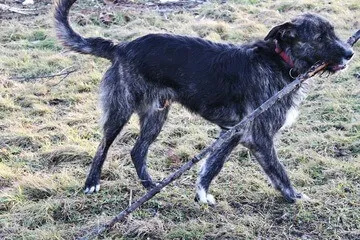
Deerhound
Health grade CThe Scottish Deerhound is a gentle, aristocratic giant—a wire-haired sight hound bred to chase and corner Scottish deer over long distances. Barely noticeable indoors, he unleashes explosive, instinct-driven power once he is outside.
- Height71–81 cm
- Weight34–50 kg
- Life expectancy8–11 yrs
- Puppy price1,800–3,500 €
- Energy4/5
The Essentials at a Glance
The Scottish Deerhound is a gentle, aristocratic giant—a wire-haired sight hound bred to chase and corner Scottish deer over long distances. Barely noticeable indoors, he unleashes explosive, instinct-driven power once he is outside.
- Health grade C: The Deerhound receives a grade of C because, as a giant breed, it is prone to specific, sometimes life-shortening health issues.
- You have a large, securely fenced property where he can safely sprint at full speed several times a week.
- You appreciate an extremely calm, almost invisible couch potato indoors who loves close physical contact.
- You are looking for a dog that stops immediately on command—a sight hound in hunting mode switches off his ears; that is his genetics.
Is the Deerhound right for you?
At a glance
Deerhound overview
The essentials — key facts, traits, and health priorities — before you dive deeper.
Health grade
Relative to other breeds
S
A
B
C
D
E
Very healthyHigher risk
Average — several important tests are expected.
See full health info & tests →
Note: This health overview is AI-assisted and editorially reviewed. It is for orientation only and does not replace veterinary advice.
Lifespan
8–11 yrs
Height
71–81 cm
Weight
34–50 kg
Practical
- Puppy price: 1,800 – 3,500 €
- Coat: Rough, wiry, slightly wavy, with undercoat
- Origin: Scotland
Temperament
Energy
Trainability
Family fit
With kids
Daily life
Care effort
Shedding
Barking
City-friendly
Guard instinct
What matters most
Especially with a Deerhound, choosing the right breeder is the single most important decision you'll make. Serious breeders consistently test the parents for inherited conditions, prioritize healthy early socialization, and stay accountable long after handover. A cheap puppy without health screening tends to become the most expensive dog later on.
See HonestDog breeder standards →Colors & coat
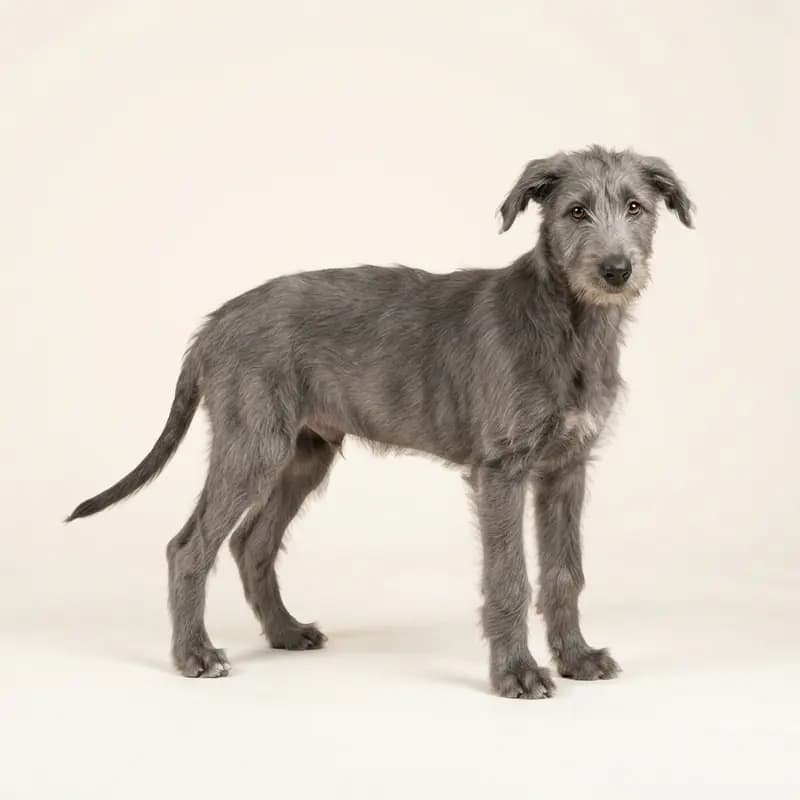
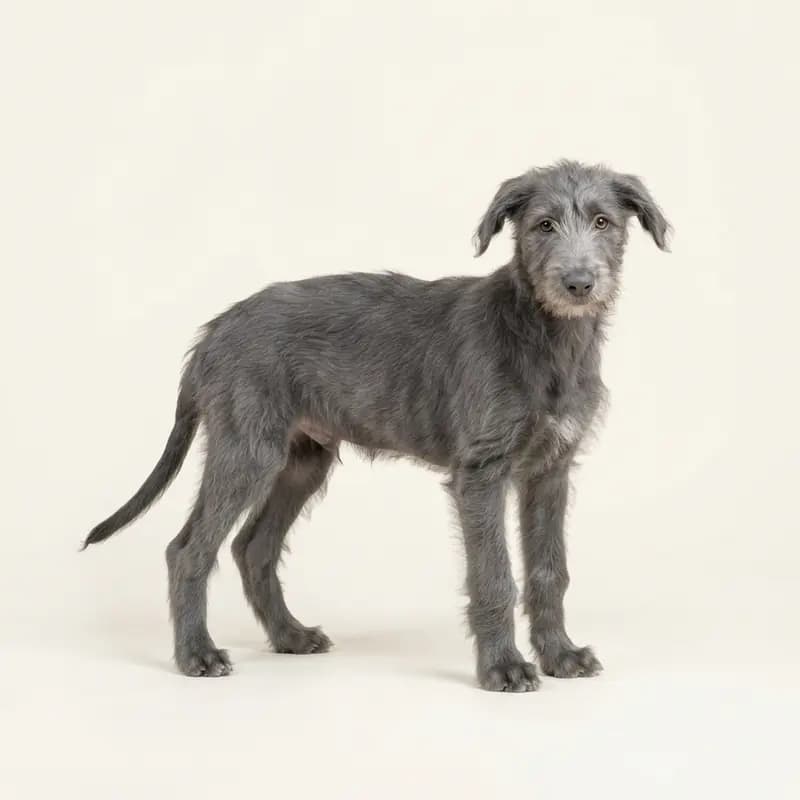
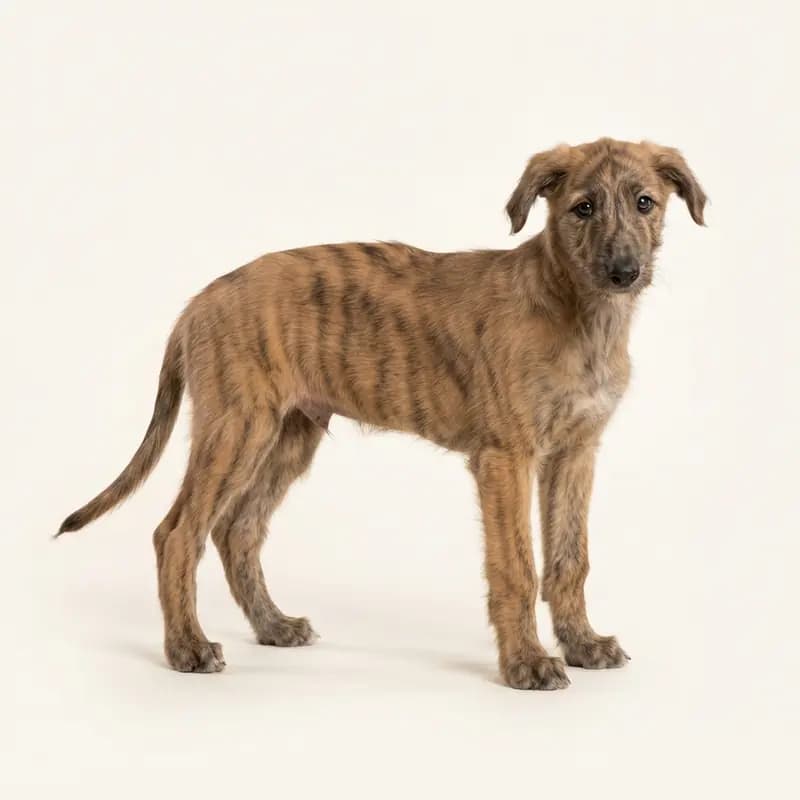
What colors does the Deerhound come in?
The coat colors you will see in Deerhound litters — including which ones fall outside the breed standard and which carry genetic risk.
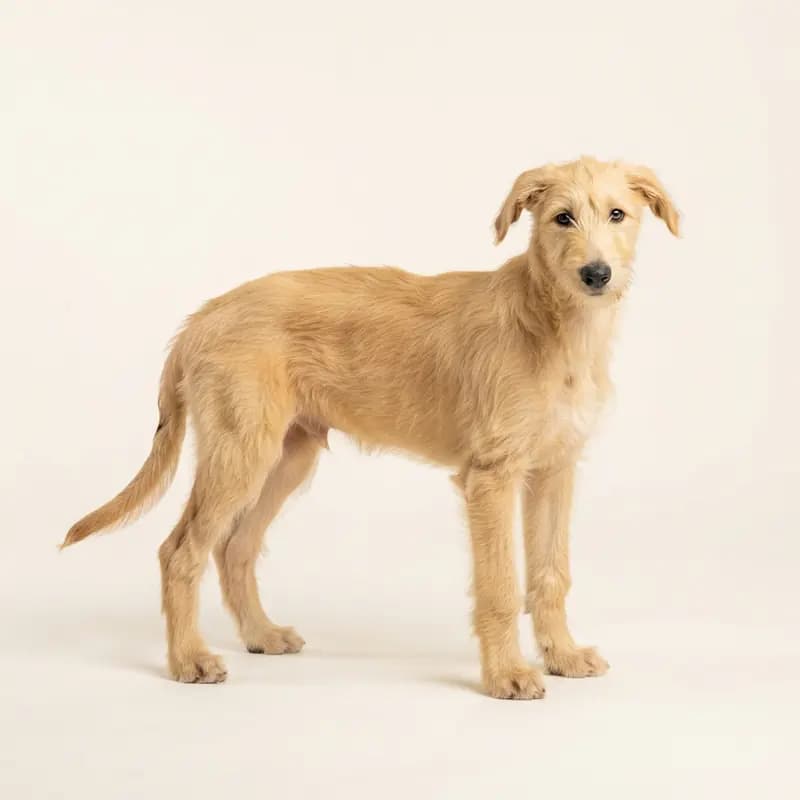
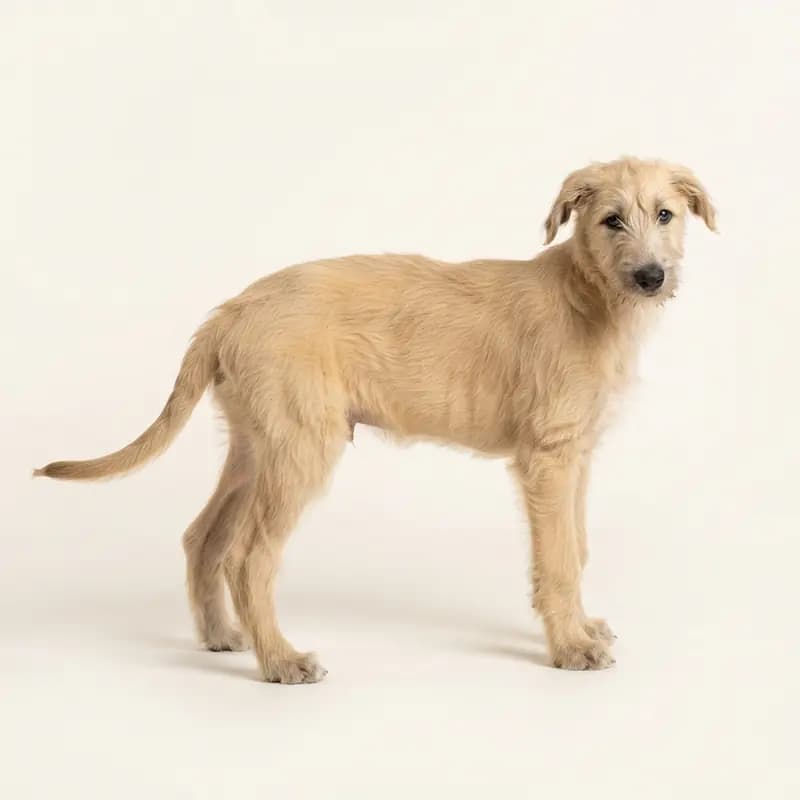
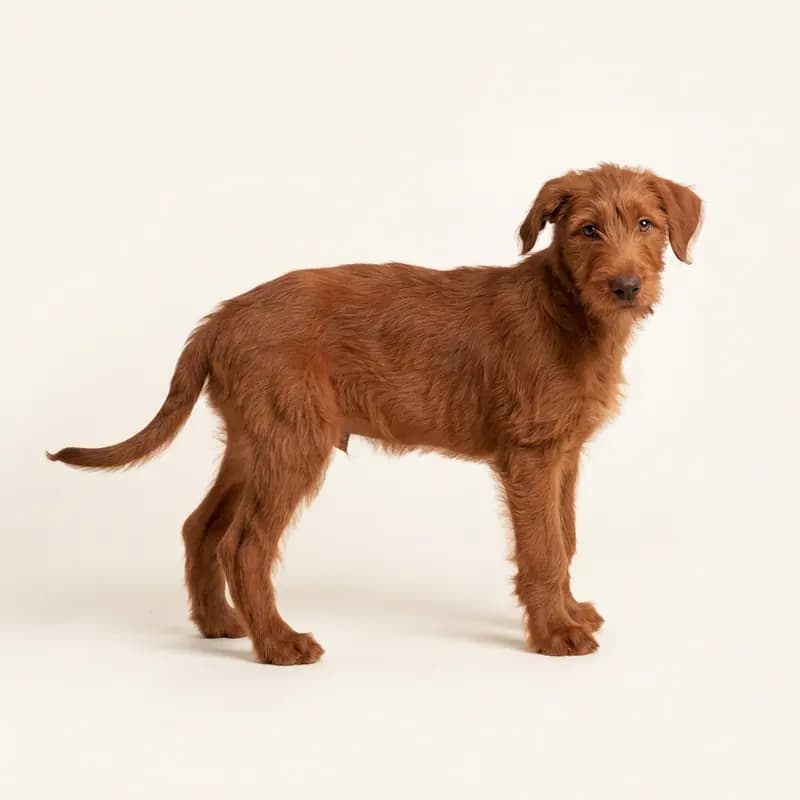
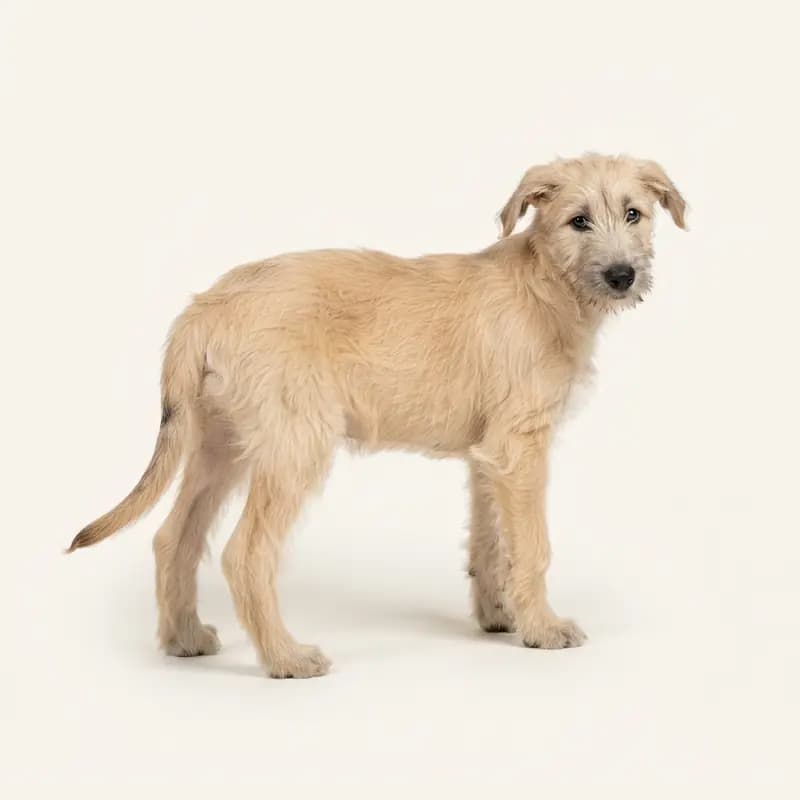
Eye colors
 Brown
Brown
Coat type
 Wire
Wire
Is the Deerhound right for you?
The Scottish Deerhound is a gentle, aristocratic giant—a wire-haired sight hound bred to chase and corner Scottish deer over long distances. Barely noticeable indoors, he unleashes explosive, instinct-driven power once he is outside.
Perfect for you if:
- You have a large, securely fenced property where he can safely sprint at full speed several times a week.
- You appreciate an extremely calm, almost invisible couch potato indoors who loves close physical contact.
- You can handle the sensitive soul of a sight hound, where harshness or loud pressure are completely out of place.
- You enjoy providing him with a species-appropriate outlet for his passion for running through lure coursing or specialized sight hound sports.
Less ideal if:
- You are looking for a dog that stops immediately on command—a sight hound in hunting mode switches off his ears; that is his genetics.
- You live in a densely populated city center where his sheer size and sensitivity to overstimulation can quickly become a problem.
- You dream of relaxed, off-leash walks in forests rich with game—his prey drive makes this impossible in most cases.
The real vibes check
A Deerhound is like a sleeping volcano on your living room rug—gentle, silent, and affectionate for hours until a movement stimulus outside flips the switch. You are not buying a classically obedient companion dog, but a highly specialized athlete whose ancient hunting heritage awakens in milliseconds. If you can safely manage this contrast between extreme gentleness and unbridled hunting passion, you will have his whole heart.
Self-check
Would the Deerhound really fit your life?
Answer 6 quick questions about your everyday life and see how well the Deerhound fits you — including an honest cost estimate per month, per year, and across the dog's lifetime.
Fit checkCost estimateRisk dice
Takes about 1 minute · free & anonymous
Breed Profile
The Deerhound, often called the Scottish Deerhound, is an elegant and imposing sighthound. His physique is strong and muscular, but not clumsy, but with a certain elegance. It gives the impression of speed and endurance. The coat is rough and wiry and usually slightly wavy. The Deerhound belongs to FCI Group 10, which includes greyhounds. When it comes to Deerhounds, there is usually no distinction between performance and show lines, but there are variations in conformation depending on the breeding line.
All measurements in detail
- Height
- 71 - 76 cm (Female), 76 - 81 cm (Male)
- Weight
- 34 - 43 kg (Female), 39 - 50 kg (Male)
- Life Expectancy
- 8 - 11 yrs
- Character
- Gentle, independent, friendly
- Coat
- Rough, wiry, slightly wavy, with undercoat
- Coat Color
- Blue gray, dark gray, light sand color, red fox
- Price
- 1800 - 3500 €
Character & Temperament
The Deerhound is a fascinating dog that brings a mix of gentleness and independence. His character is lovable and friendly. In its native Scotland it was used for deer hunting for centuries. Through this use, the Deerhound's instincts are deeply rooted and it shows strong hunting behavior, especially towards wild animals. It is fast and persistent, with a strong prey drive. Despite his hunting instinct, he has an incredibly gentle nature when dealing with people. He is affectionate and tends to seek close contact with his family. The Deerhound is not suitable as a guard dog because it is reserved towards strangers but not aggressive. When it comes to activity, it may come as a surprise that, despite its history as a working dog, the Deerhound is actually quite calm and collected. He enjoys long walks and needs regular exercise, but is by no means hyperactive. His calm nature also makes him a pleasant companion in the house. However, you should be aware that he may not be happy in a small townhouse or apartment due to his size and need for exercise. A special feature of the Deerhound is its independence. He is intelligent and can stay alone well, but this should not be overused. He needs human contact and becomes unhappy if isolated for long periods of time. As part of its hunting instinct, the Deerhound has a strong prey drive and is alert. He will patrol the grounds where he lives and is always looking for something interesting. As for training, it should be remembered that the Deerhound has a gentle nature and does not respond well to harsh training methods. He learns best through positive reinforcement and should be treated with respect and patience. When dealing with children, the Deerhound is usually very gentle and patient. He also gets along well with other dogs, especially if he has been socialized from an early age. However, you should be careful when keeping him around smaller pets, as his hunting instinct can come through.
| Trainability Has its own ideas and will test limits. | Strong-willed |
| Watchfulness Occasionally alerts but is fundamentally open. | Low |
| Openness to Strangers Warms up quickly and is generally welcoming. | Friendly |
| Hunting or Herding Drive This drive runs deep — no amount of training eliminates it. | Very strong |
Fun Fact!
Did you know that the Deerhound is often referred to as the "Gentle Giant" because, despite its impressive size, it has an incredibly gentle and friendly nature?
What Awaits You
Deerhounds are sensitive dogs that enjoy traveling with their humans. They can be ambitious when it comes to hunting and are often rather distant towards strangers.
Housing & Care
Due to their size and their need for exercise, Deerhounds are not particularly suitable for keeping in a city apartment. A house with a large, fenced yard would be ideal. They are friendly and patient with children, but due to their size and strength they should always be supervised, especially with smaller children. Regarding other pets, it should be noted that the Deerhound has a strong hunting instinct and therefore may not get along well with smaller pets such as cats.
- Family Friendly
Loves family life and thrives in a group.
Family-oriented - Child Friendly
Takes boisterous and affectionate children in its stride.
Patient with children - Dog Friendly
Actively enjoys the company of other dogs.
Dog-friendly - City Friendly
Can manage in the city, but only with very active owners.
Difficult in cities
Owning a dog is a privilege, but it's also a real responsibility. Before you bring one into your life, be honest with yourself about the commitment it takes.
Training & Education
Deerhounds are intelligent and trainable, but they can also be independent and stubborn. Early socialization and positive reinforcement are crucial to successful parenting. In terms of sporting activities, Deerhounds are excellent for coursing and greyhound racing. However, it is important to ensure a balanced mix of physical activity and mental stimulation. This breed is not prone to becoming a ball junkie, but they do need meaningful activity. It is particularly important to train frustration tolerance and impulse control in Deerhounds to counteract their hunting instincts and make them relaxed and sociable companions.
Nutrition & Care
When feeding your Deerhound, it is important to choose a balanced, high-quality diet. Since they are large and have a muscular build, they need a diet that is rich in proteins and adequate in fat content. In terms of grooming, the Deerhound has a rough, wiry coat structure with an undercoat. The coat should be brushed regularly to prevent matting. It should be noted that Deerhounds usually shed heavily twice a year. Deerhounds come from the cool climate of Scotland and therefore cope well with the temperate climate in Germany. Nevertheless, they should be protected from extreme cold periods in winter.
| Care Level Minimal effort — occasional brushing and bathing. | Low-maintenance |
| Exercise Needs Needs several hours of serious exercise every day. | Very active |
| Shedding Hair everywhere, always — no white clothing survives. | Very heavy |
| Trainability Has its own ideas and will test limits. | Strong-willed |
Our experts are still reviewing this information. Spotted something wrong? Email us at info@honestdog.de.
Health & hereditary diseases
Health
C
Solid, watch carefully
Health grade
The Deerhound receives a grade of C because, as a giant breed, it is prone to specific, sometimes life-shortening health issues. Dilated cardiomyopathy (DCM) and osteosarcoma (bone cancer) are particularly serious risks for this breed, for which there are no simple genetic tests available. Furthermore, as with many large, deep-chested dogs, there is an increased risk of life-threatening GDV (gastric dilatation-volvulus).
Grade is relative to other breeds — AI-assisted and editorially reviewed.
In daily life this can mean
Because of their rapid growth during the first year, you should ensure joint-friendly rearing and appropriate nutrition, as well as schedule regular veterinary heart check-ups.
The breeder's role
Reputable breeders have the parents' hearts checked, test for blood clotting disorders, and prioritize long-lived lines to reduce the risk of cancer.
Note: This health overview is AI-assisted and editorially reviewed. It is for orientation only and does not replace veterinary advice.
No Health Tests Available
No specific health tests are currently available for this breed.
Costs & where to find one
How much does a Deerhound cost?
A Deerhound costs around ~€210 per month (€110 – €400, depending on your setup). The first year adds up to roughly ~€5,950 including purchase, equipment and puppy school; across the dog's life (9.5 years) it comes to about ~€26,910.
With surgery cover, running costs come to about ~€210 per month — in return, your share of a major operation drops from several thousand euros to around 20 percent.
Per month
~€210
In the first year
~€5,950
Across the dog's life
~€26,910
Purchase from a breeder: €1,800 – €3,500
Estimate at a mid-range setup (suburban, dry food, 1–2 hours of daily exercise), average German prices, as of July 2026.
Calculate your personal costs1-minute self-check with your own answers
Looking for a Deerhound?
HonestDog Concierge
No verified Deerhound breeders on HonestDog yet
We currently have no breeders for this breed who have passed our verification. Create your short buyer profile: we'll set up your search alert, review a possible source and email you within 28 days.
Appearance, variants & origin
History
The full history
The history of the Deerhound goes back a long way. It is believed that large greyhound-like dogs existed in Scotland as early as pre-Roman times and were used to hunt deer. However, the exact origin of the Deerhound is unclear. The Deerhound as we know it today was bred in Scotland and was considered the dog of nobles and kings. It was used specifically for deer hunting and was known for its ability to hunt and kill large deer. In the 18th and 19th centuries, the population of deerhounds declined sharply, reflecting a decrease in deer hunting and the lack of targeted breeding. Fortunately, there were breeders dedicated to saving the breed. The Deerhound was recognized as a separate breed by the Kennel Club in Great Britain at the end of the 19th century.
Original Use
The Deerhound was bred to hunt deer and is known for its speed and endurance.
Origin
Scotland
Date
1500
Owner experiences
What owners say about the Deerhound
Christiane M., Halterin aus Norddeutschland (Hündin, seit 2011)
Viele beschreiben den Deerhound als stur, aber das stimmt so nicht ganz. Sie haben einfach sehr feste Vorstellungen davon, was eine angemessene Beschäftigung für einen Windhund ist. Einen Ball mehrfach zu apportieren? Völlig sinnlos in ihren Augen. Aber mit einem Spielzeug oder einem alten Joghurtbecher im Maul wilde Kreise im Garten zu drehen und dabei Luftsprünge zu machen – das ist für sie das Größte!
Als Halter muss man sich außerdem darauf einstellen, dass ein Deerhound kein Hund für den nackten Fußboden ist. Sie brauchen es unglaublich bequem. Wenn man nicht aufpasst, besetzen sie im Handumdrehen das gesamte Dreiersofa. Sie können sich zwar theoretisch winzig klein zusammenrollen, tun das aber nur, wenn sie absolut müssen. Meistens machen sie sich so lang wie möglich.
Eine weitere Herausforderung ist das Fressen. Sie sind zwar keine riesigen Fresser für ihre Größe, können aber extrem wählerisch sein. Man wird schnell zum Sklaven ihrer kulinarischen Launen. Da wird die liebevoll zubereitete Schüssel mit frischem Fleisch am einen Tag angewidert ignoriert, nur um eine halbe Stunde später draußen heimlich eine fettige Meisenknödel-Kugel aus dem Garten zu stibitzen und genüsslich zu verschlingen.
Thomas B., Halter aus Bayern (Rüde, seit 2021)
Wer sich einen Deerhound anschafft, muss sich bewusst sein, dass man sich einen echten Sichtjäger ins Haus holt. Als Welpen und Junghunde sind sie oft wie "Idioten aus Federn" – sie wachsen rasant, sind unkoordiniert und verletzen sich manchmal auf die dümmste Art und Weise beim Toben. Wenn sie erst einmal ausgewachsen sind, gibt es eigentlich nur zwei Zustände: Entweder sie jagen mit gefühlten 300 km/h hinter einem Kaninchen her, oder sie liegen völlig tiefenentspannt und wie bewusstlos in den unmöglichsten Verrenkungen auf dem Bett.
Wegen dieser extremen Unabhängigkeit und des tief verwurzelten Jagdtriebs sind sie auch absolut nicht als leichtführige "Will-to-Please"-Hunde zu sehen. Sie wollen ihrem Besitzer nicht einfach nur gefallen und lassen sich kaum über Futter bestechen. Man muss viel Geduld und Humor mitbringen.
Ein Thema, das mir als Halter natürlich auch immer im Hinterkopf herumschwebt, ist die Gesundheit. Bei so einer riesigen Rasse hat man leider immer das Risiko von Magendrehungen, Herzerkrankungen oder Knochenkrebs vor Augen. Unser Rüde ist zum Glück fit, aber man muss beim Wachstum extrem aufpassen, ihn nicht sportlich zu überlasten, und hochwertig füttern, damit Knochen und Herz stabil bleiben.
Paraphrased from real owner reports
Loading owner stories
FAQ & more
Frequently asked questions about the Deerhound
Is a Deerhound the right dog for me?
The Deerhound is an active dog that needs plenty of exercise and mental stimulation. Research the temperament, grooming needs, and space requirements before deciding.
How long does a Deerhound live?
The average life expectancy of a Deerhound is 8-11 years. With proper care and regular vet visits, your dog can live a long, healthy life.
How much grooming does a Deerhound need?
Deerhound grooming requirements include regular brushing, nail trimming, and dental care. HonestDog provides detailed grooming tips for every breed.
Is a Deerhound good for families with children?
The Deerhound can be a great family dog. Proper training and socialization are key. HonestDog provides family suitability information for every breed.
What colors does the Deerhound come in?
The Deerhound comes in these colors: Grey, Blue, Brindle, Yellow, Fawn, Red, Wheaten.
Loading related articles
Are you a Deerhound breeder?
Showcase your kennel on HonestDog and reach families searching for a responsibly bred Deerhound.
Why HonestDog?
What makes HonestDog different from other platforms
Full transparency
We lay out what we have: who the breeder is, how they work, and any health records they've uploaded. So you can judge for yourself.
Responsible breeding, assured
Every breeder on HonestDog has their identity and documents checked before their profile goes live. Health records they upload are shown on the profile, so you can see exactly what has been tested.
Trust and verification
We verify breeders and buyers alike, so every conversation happens on solid ground. It's a new standard of trust in dog breeding.
Less hassle, more time
We've already checked the breeders' documents and gathered the details, so you can skip the endless research and focus on finding the right puppy for your family.
Our Mission

We connect dog lovers with responsible breeders and shelters to ensure every dog finds the perfect home.
Founded by dog enthusiasts, our platform focuses on ethical dog breeding and adoption.
Why HonestDog?
We connect you with vetted breeders and shelters so you can find your — your new companion — with confidence.
Vetted Partners
Only verified breeders and shelters — for a safe start.
Highest Standards
Every animal's health and wellbeing is our top priority.
Guides & Resources
Guides, checklists, and breed profiles — so you can make a well-informed decision.