Loading breed
Dandie Dinmont Terrier
Health grade CThe Dandie Dinmont Terrier is a distinctive, independent-minded Erdhund (earth dog)—bred to corner badgers and otters in narrow burrows, which makes him courageous, tenacious, and surprisingly dignified to this day.
- Height20–28 cm
- Weight8–11 kg
- Life expectancy12–15 yrs
- Puppy price2,000–3,500 €
- Energy3/5
The Essentials at a Glance
The Dandie Dinmont Terrier is a distinctive, independent-minded Erdhund (earth dog)—bred to corner badgers and otters in narrow burrows, which makes him courageous, tenacious, and surprisingly dignified to this day.
- Health grade C: The Dandie Dinmont Terrier receives a C grade because the breed is prone to an above-average number of health issues.
- You appreciate a dog with a mind of its own and prefer to lead with calm persuasion rather than strict drills.
- You provide him with daily sniffing or scent-work tasks—as a former Baujäger (earth-hunting dog), he needs mental stimulation, even if he isn't running marathons.
- You expect unconditional obedience at the push of a button—he was bred to make decisions alone underground and will simply ignore pointless commands.
Is the Dandie Dinmont Terrier right for you?
At a glance
Dandie Dinmont Terrier overview
The essentials — key facts, traits, and health priorities — before you dive deeper.
Health grade
Relative to other breeds
S
A
B
C
D
E
Very healthyHigher risk
Average — several important tests are expected.
See full health info & tests →
Note: This health overview is AI-assisted and editorially reviewed. It is for orientation only and does not replace veterinary advice.
Lifespan
12–15 yrs
Height
20–28 cm
Weight
8–11 kg
Practical
- Puppy price: 2,000 – 3,500 €
- Coat: Soft, curly, with an undercoat
- Origin: Scotland
Temperament
Energy
Trainability
Family fit
With kids
Daily life
Care effort
Shedding
Barking
City-friendly
Guard instinct
What matters most
Especially with a Dandie Dinmont Terrier, choosing the right breeder is the single most important decision you'll make. Serious breeders consistently test the parents for inherited conditions, prioritize healthy early socialization, and stay accountable long after handover. A cheap puppy without health screening tends to become the most expensive dog later on.
See HonestDog breeder standards →Colors & coat
What colors does the Dandie Dinmont Terrier come in?
The coat colors you will see in Dandie Dinmont Terrier litters — including which ones fall outside the breed standard and which carry genetic risk.
Eye colors
 Brown
Brown
Coat type
 Double coat
Is the Dandie Dinmont Terrier right for you?
The Dandie Dinmont Terrier is a distinctive, independent-minded Erdhund (earth dog)—bred to corner badgers and otters in narrow burrows, which makes him courageous, tenacious, and surprisingly dignified to this day.
Perfect for you if:
- You appreciate a dog with a mind of its own and prefer to lead with calm persuasion rather than strict drills.
- You provide him with daily sniffing or scent-work tasks—as a former Baujäger (earth-hunting dog), he needs mental stimulation, even if he isn't running marathons.
- You are looking for an adaptable companion who is surprisingly relaxed and quiet indoors, as long as his needs are met outside.
- You have the time to patiently socialize him with other dogs and people from a young age to avoid typical terrier skepticism.
Less ideal if:
- You expect unconditional obedience at the push of a button—he was bred to make decisions alone underground and will simply ignore pointless commands.
- You are looking for an endurance companion for jogging or cycling—his anatomy is built for short, powerful bursts of work in a burrow, not for distance.
- You have very small, boisterous children and are looking for an endlessly tolerant stuffed animal—despite his hairstyle, he is a true terrier who clearly communicates his boundaries.
The real vibes check
Don't let the silky topknot and melancholic eyes fool you—under that dapper exterior beats the heart of a tough-as-nails badger hunter. A Dandie Dinmont doesn't argue loudly; he simply decides quietly for himself whether your suggestion makes sense at the moment. You aren't getting a command-follower, but a dignified, almost philosophical character who respects you as an equal partner—provided you earn it.
Self-check
Would the Dandie Dinmont Terrier really fit your life?
Answer 6 quick questions about your everyday life and see how well the Dandie Dinmont Terrier fits you — including an honest cost estimate per month, per year, and across the dog's lifetime.
Fit checkCost estimateRisk dice
Takes about 1 minute · free & anonymous
Breed Profile
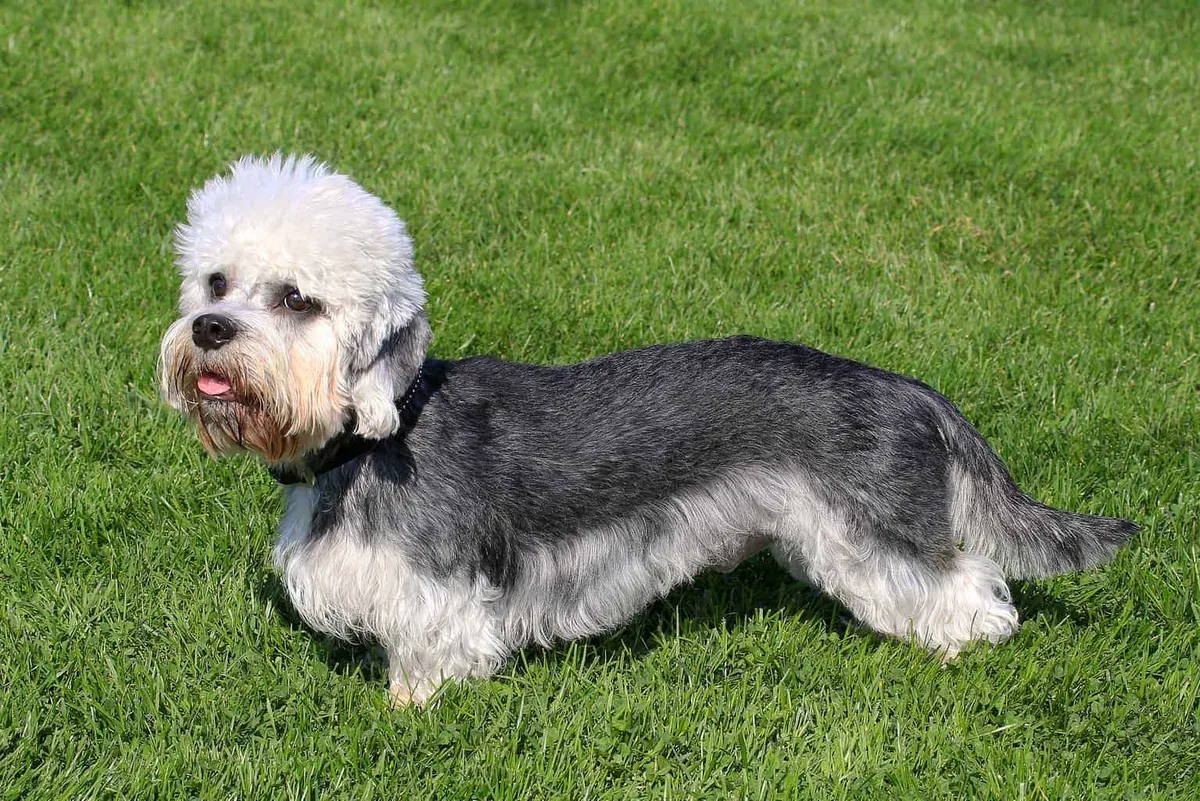
The Dandie Dinmont Terrier is a small but very robust dog. Its striking appearance is characterized by its long, lithe body and short legs, while its head is particularly eye-catching with a distinctive hood of soft, silky hair and large, expressive eyes. Its hanging ears are set low and close to its head. The tail is rather short and is carried cheerfully, but not over the back. The Dandie Dinmont belongs to FCI Group 3, Terriers, and there to Section 2, Low-legged Terriers. There is no distinction between performance and show lines in this breed.
All measurements in detail
- Height
- 20 - 28 cm (Female), 20 - 28 cm (Male)
- Weight
- 8 - 11 kg (Female), 8 - 11 kg (Male)
- Life Expectancy
- 12 - 15 yrs
- Character
- Affectionate, intelligent, confident
- Coat
- Soft, curly, with an undercoat
- Coat Color
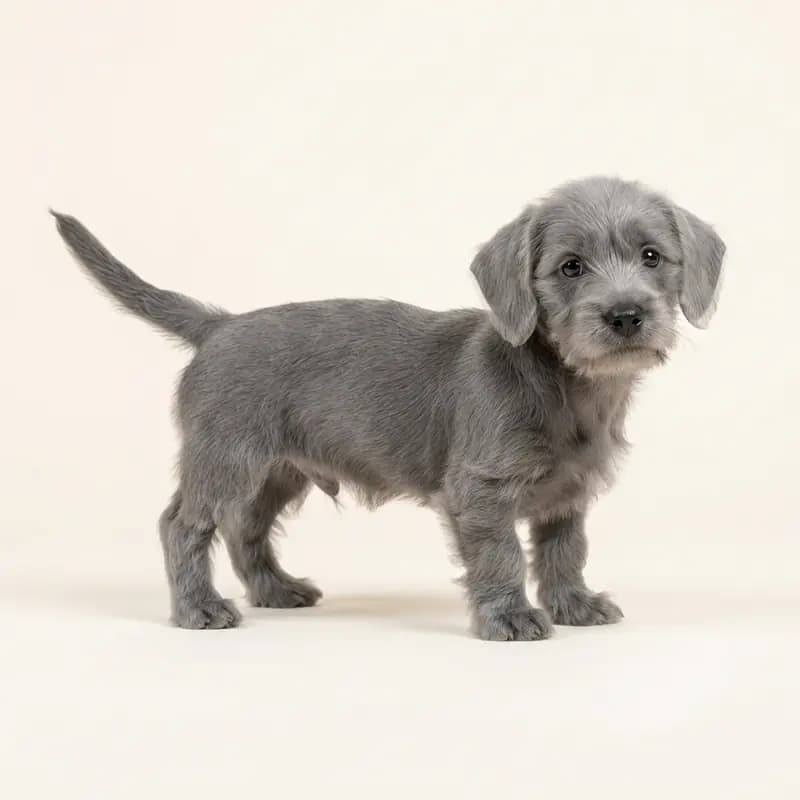
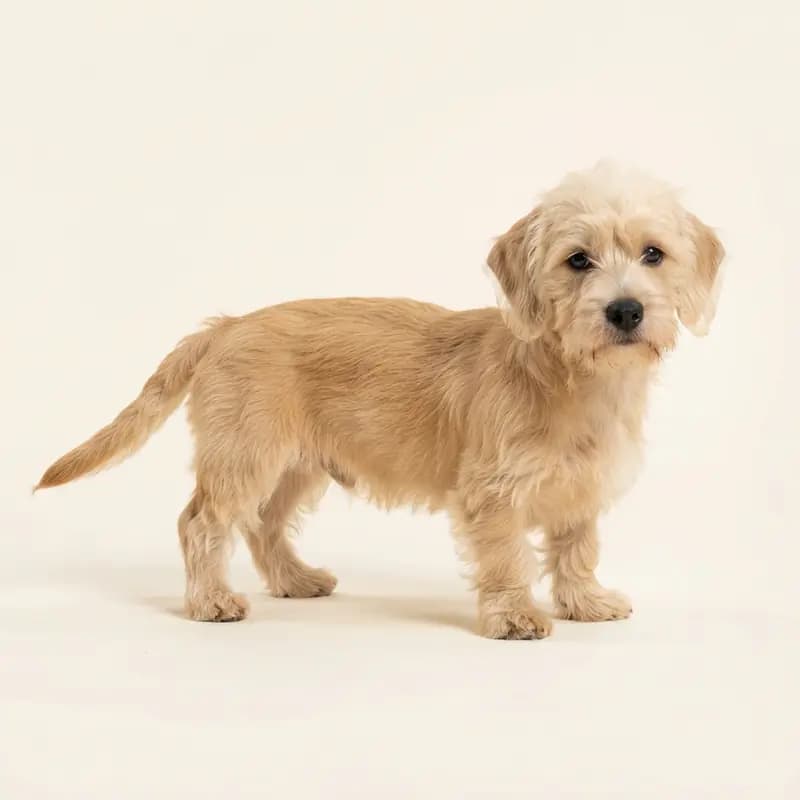
- Pepper (silver gray to dark gray) or mustard (reddish brown to pale fawn)
- Price
- 2000 - 3500 €
Character & Temperament
The Dandie Dinmont Terrier is truly unique among terriers. Although he is small, he has a big personality. His character is a fascinating mix of affection, intelligence and self-confidence. This little dog knows what he wants and is not easily impressed. He is courageous but without excessive aggressiveness and has a friendly and loving nature, especially towards his family. In terms of temperament, the Dandie Dinmont is rather calm and calm, which makes him a pleasant companion in everyday life. But he is by no means lazy and enjoys moderate activities and mental challenges. You will notice that he is quite intelligent and sometimes even a little stubborn. This little guy loves being the center of attention and is often a real clown, making his family laugh. He is a very people-oriented dog and loves being with his family. He enjoys being part of family life and feels most comfortable when involved in daily activities. Although he doesn't need long hikes, he appreciates regular walks and play sessions. The Dandie Dinmont Terrier can learn to stay alone, but it is important to practice this gradually and with positive reinforcement. He can be a little clingy at first, and a cautious approach will help ensure he feels comfortable being alone. Originally a hunting dog, the Dandie Dinmont Terrier has some hunting instincts, but it is not as strong as some other terriers. He is curious and attentive, but with proper socialization he does not tend to chase after every animal. This doesn't mean you should leave him unsupervised, but it is easier to work on controlled hunting behavior with him than with some other hunting dog breeds. He is also an alert dog and will let you know when someone is at the door. He doesn't bark excessively, but shows a balanced behavior. If you are looking for a small but warm companion who will be a loyal friend and at the same time always put you in a good mood with his charming nature, the Dandie Dinmont Terrier could be exactly the right dog for you.
| Trainability Has its own ideas and will test limits. | Strong-willed |
| Watchfulness Occasionally alerts but is fundamentally open. | Low |
| Openness to Strangers Warms up quickly and is generally welcoming. | Friendly |
| Hunting or Herding Drive Noticeable drive — needs attention around small animals. | Moderate |
Fun Fact!
The Dandie Dinmont Terrier is the only dog breed named after a literary character - Dandie Dinmont, a character in Sir Walter Scott's novel "Guy Mannering".
What Awaits You
Developed from various crosses with "hounds", this low-legged fox and otter hunter was kept by traveling musicians and tinkers as early as the 18th century. Because of his excellent construction dog qualities, farmers and landowners soon took a liking to him. The Dandie, philosopher among terriers, is a thinker who seems to think several times before acting. With his dark, round eyes he looks at his counterpart as if to say: "I have already forgotten more than you will ever know." He does rather poorly in the subject "Obedience" because he initially seems to wonder whether it is worth obeying. However, he is affectionate, gentle, cuddly and calm. Despite his clairaudience and alertness, he rarely barks for no reason.
Housing & Care
The Dandie Dinmont Terrier is an adaptable dog and is well suited to city life as long as it receives regular walks and activity. He is generally friendly and gets along with children, but as with all dogs, it is important to monitor interactions, especially with young children. The Dandie Dinmont Terrier can also get along with cats and other pets if socialized from an early age.
- Family Friendly
Loves family life and thrives in a group.
Family-oriented - Child Friendly
Gets on well with children — with adult supervision.
With supervision - Dog Friendly
Usually gets on fine with other dogs.
Generally tolerant - City Friendly
Adapts well to city living and urban environments.
Well-suited to city life
Owning a dog is a privilege, but it's also a real responsibility. Before you bring one into your life, be honest with yourself about the commitment it takes.
Training & Education
Dandie Dinmont Terriers are intelligent dogs, but they can also be a little stubborn. It's important to start training early and stay consistent. Positive reinforcement works best with this breed. You should know that they can be a bit sensitive at times, so it is important to be patient and gentle in your handling. The breed is not known for being a ball junkie, but they enjoy various activities and can do well in dog sports such as agility and obedience. It is important to teach frustration tolerance and impulse control as the Dandie Dinmont Terrier can be impatient at times. When it comes to employment, they require a moderate amount of mental and physical stimulation. However, too much busyness can lead to stress. It's important to find a balance and also give your dog time to relax.
Nutrition & Care
Your Dandie Dinmont Terrier's diet should be balanced to keep him healthy and active. High-quality food suitable for small breeds can be a good choice. Some Dandie Dinmont Terriers tend to be overweight, so it is important to monitor the amount of food they eat and ensure regular exercise. When it comes to grooming, the Dandie Dinmont Terrier has a curly coat with a thick undercoat. This means regular brushing is required to prevent tangles and remove loose hair. The breed sheds moderately, and may shed more heavily in the spring and fall. The climate in Germany is suitable for the Dandie Dinmont Terrier, but in the cold season he may appreciate a warm coat during walks.
| Care Level Regular brushing and occasional professional grooming. | Moderate |
| Exercise Needs Needs 1–2 hours of real exercise daily. | Active |
| Shedding No or minimal hair loss — suitable for allergy sufferers. | No shedding |
| Trainability Has its own ideas and will test limits. | Strong-willed |
Our experts are still reviewing this information. Spotted something wrong? Email us at info@honestdog.de.
Health & hereditary diseases
Health
C
Solid, watch carefully
Health grade
The Dandie Dinmont Terrier receives a C grade because the breed is prone to an above-average number of health issues. There is a particular focus on eye conditions such as glaucoma and Progressive Retinal Atrophy (PRA), which pose a significant threat to vision. Anatomical risks like the molera (soft spot) also require very careful breeder selection and appropriate mandatory health tests.
Grade is relative to other breeds — AI-assisted and editorially reviewed.
In daily life this can mean
To protect his back in daily life, you should avoid frequent stair climbing and jumping, keep his weight low, and schedule regular eye check-ups.
The breeder's role
Reputable breeders have the parents' spines, eyes, knees, and thyroids tested to reduce breed-typical risks in the lineage.
Note: This health overview is AI-assisted and editorially reviewed. It is for orientation only and does not replace veterinary advice.
No Health Tests Available
No specific health tests are currently available for this breed.
Costs & where to find one
How much does a Dandie Dinmont Terrier cost?
A Dandie Dinmont Terrier costs around ~€170 per month (€90 – €310, depending on your setup). The first year adds up to roughly ~€5,610 including purchase, equipment and puppy school; across the dog's life (13.5 years) it comes to about ~€31,010.
With surgery cover, running costs come to about ~€160 per month — in return, your share of a major operation drops from several thousand euros to around 20 percent.
Per month
~€170
In the first year
~€5,610
Across the dog's life
~€31,010
Purchase from a breeder: €2,000 – €3,500
Estimate at a mid-range setup (suburban, dry food, 1–2 hours of daily exercise), average German prices, as of July 2026.
Calculate your personal costs1-minute self-check with your own answers
Looking for a Dandie Dinmont Terrier?
Appearance, variants & origin
History
The full history
The history of the Dandie Dinmont Terrier dates back to the 18th century. It comes from the border regions between England and Scotland and was originally bred to hunt otters and badgers. Its name comes from a fictional character in Sir Walter Scott's 1814 book "Guy Mannering," in which a farmer named Dandie Dinmont owns six of these terriers. The breed club was founded in 1875, and the Dandie Dinmont Terrier was recognized as a separate breed by the British Kennel Club in 1880.
Original Use
Originally bred to hunt otters and badgers, the Dandie Dinmont Terrier is known for its unique appearance with an arched back and bushy mop of hair.
Origin
Scotland
Date
1700
Owner experiences
What owners say about the Dandie Dinmont Terrier
Carla B., Halterin aus Rheinland-Pfalz (Hündin, 14 Jahre)
Ich habe eine 14-jährige Dandie-Dinmont-Hündin und wir haben gesundheitlich leider einen recht langen Leidensweg hinter uns. Bei ihr wurde Diabetes insipidus diagnostiziert, eine Hormonstörung, durch die sie extrem viel trinken und anfangs alle paar Minuten urinieren musste.
Es hat lange gedauert, bis wir mit unserem Tierarzt die richtige Hormon-Einstellung und die passenden Medikamente gefunden haben. Die Beschaffung und richtige Dosierung der Tabletten war zeitweise eine echte Geduldsprobe und finanziell durch die dauerhaften Kosten auch nicht ganz ohne.
Aber trotz dieser gesundheitlichen Hürde würde ich meine Hündin niemals hergeben. Sie ist so unglaublich tapfer, anhänglich und hat einen ganz feinen, treuen Charakter. Man muss sich bei dieser seltenen Rasse einfach bewusst sein, dass auch mal spezielle gesundheitliche Probleme auftreten können, aber die Bindung ist unbezahlbar.
Thomas S., Halter aus Bayern (mehrere Dandies, seit 2018)
Wer sich einen Dandie ins Haus holt, braucht vor allem zwei Dinge: Konsequenz und eine gehörige Portion Humor. Da die Welpen mit ihren riesigen Kulleraugen und dem Plüschschopf unverschämt niedlich sind, neigt man schnell dazu, ihnen alles durchgehen zu lassen. Das rächt sich aber, denn im Herzen sind es eben doch waschechte Terrier mit eigenem Kopf.
Wir halten mehrere Hunde und mussten von Anfang an sehr klare Grenzen setzen, da es sonst untereinander – besonders bei den Rüden – schnell mal zu kleinen Reibereien kommen kann. Wenn man ihnen aber konsequent zeigt, wer die Regeln macht, klappt das Zusammenleben wunderbar.
Auch die Fellpflege darf man nicht unterschätzen. Das dichte, krause Fell muss regelmäßig gebürstet und mehrmals im Jahr fachgerecht getrimmt werden, damit es nicht verfilzt. Wer diese Arbeit nicht scheut und über die sture Art lachen kann, bekommt einen unfassbar charmanten Partner.
Paraphrased from real owner reports
Loading owner stories
Community Posts
FAQ & more
Frequently asked questions about the Dandie Dinmont Terrier
Is a Dandie Dinmont Terrier the right dog for me?
The Dandie Dinmont Terrier is an adaptable dog that adjusts well to various lifestyles. Research the temperament, grooming needs, and space requirements before deciding.
How long does a Dandie Dinmont Terrier live?
The average life expectancy of a Dandie Dinmont Terrier is 12-15 years. With proper care and regular vet visits, your dog can live a long, healthy life.
How much grooming does a Dandie Dinmont Terrier need?
Dandie Dinmont Terrier grooming requirements include regular brushing, nail trimming, and dental care. HonestDog provides detailed grooming tips for every breed.
Is a Dandie Dinmont Terrier good for families with children?
The Dandie Dinmont Terrier can be a great family dog. Proper training and socialization are key. HonestDog provides family suitability information for every breed.
What colors does the Dandie Dinmont Terrier come in?
The Dandie Dinmont Terrier comes in these colors: Grey, Fawn.
Loading related articles
Are you a Dandie Dinmont Terrier breeder?
Showcase your kennel on HonestDog and reach families searching for a responsibly bred Dandie Dinmont Terrier.
Why HonestDog?
What makes HonestDog different from other platforms
Full transparency
We lay out what we have: who the breeder is, how they work, and any health records they've uploaded. So you can judge for yourself.
Responsible breeding, assured
Every breeder on HonestDog has their identity and documents checked before their profile goes live. Health records they upload are shown on the profile, so you can see exactly what has been tested.
Trust and verification
We verify breeders and buyers alike, so every conversation happens on solid ground. It's a new standard of trust in dog breeding.
Less hassle, more time
We've already checked the breeders' documents and gathered the details, so you can skip the endless research and focus on finding the right puppy for your family.
Our Mission

We connect dog lovers with responsible breeders and shelters to ensure every dog finds the perfect home.
Founded by dog enthusiasts, our platform focuses on ethical dog breeding and adoption.
Why HonestDog?
We connect you with vetted breeders and shelters so you can find your — your new companion — with confidence.
Vetted Partners
Only verified breeders and shelters — for a safe start.
Highest Standards
Every animal's health and wellbeing is our top priority.
Guides & Resources
Guides, checklists, and breed profiles — so you can make a well-informed decision.