Loading breed
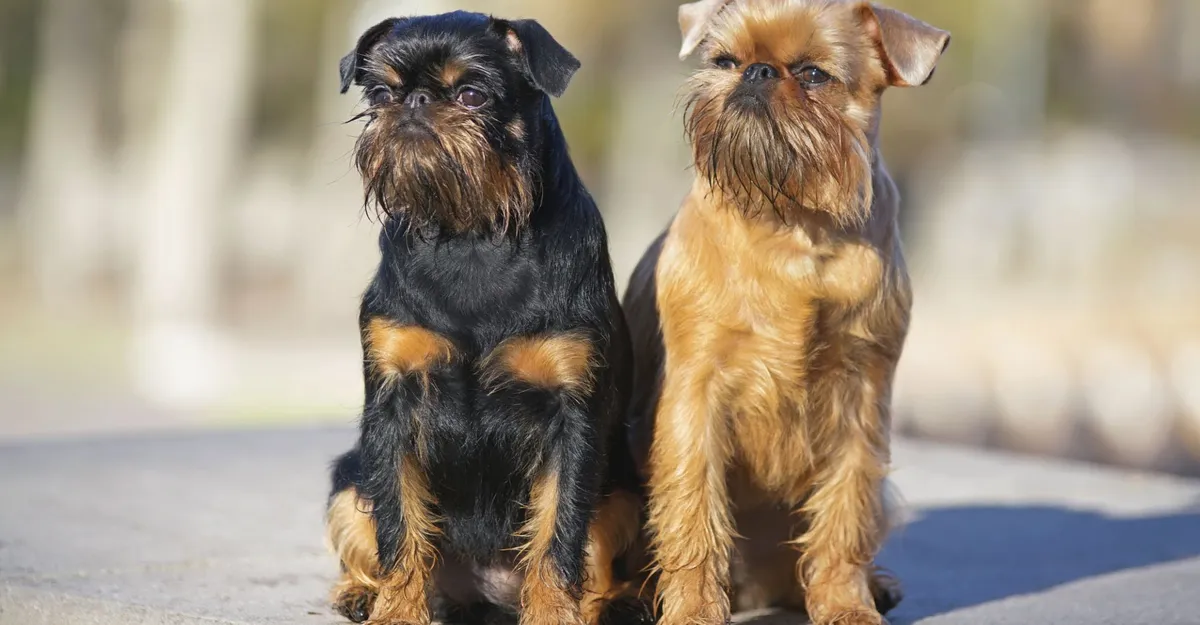
Brussels Griffon
Health grade DThe Brüsseler Griffon is a vigilant, extremely people-oriented companion dog—bred from robust Belgian stable dogs used for rat hunting, which is why it still carries the heart of a terrier in the body of a toy dog today.
- Height24–28 cm
- Weight3–5 kg
- Life expectancy12–15 yrs
- Puppy price1,500–2,500 €
- Energy3/5
The Essentials at a Glance
The Brüsseler Griffon is a vigilant, extremely people-oriented companion dog—bred from robust Belgian stable dogs used for rat hunting, which is why it still carries the heart of a terrier in the body of a toy dog today.
- Health grade D: Due to its build and genetic predispositions, the Brussels Griffon carries a significant health risk, particularly for the neurological condition Chiari-like malformation (CM) and syringomyelia (SM), as well as eye diseases such as cataract and progressive retinal atrophy, generic.
- You are looking for a dog that will literally become your shadow—bred as a pure companion dog, it finds physical distance from its human very difficult to bear.
- You live in the city and are looking for a compact companion for moderate but exciting walks.
- You have to leave it alone for hours every day—its past as a vigilant stable dog makes it prone to becoming a noisy barker when lonely.
Is the Brussels Griffon right for you?
At a glance
Brussels Griffon overview
The essentials — key facts, traits, and health priorities — before you dive deeper.
Health grade
Relative to other breeds
S
A
B
C
D
E
Very healthyHigher risk
Elevated risk — responsible breeding really matters.
See full health info & tests →
Note: This health overview is AI-assisted and editorially reviewed. It is for orientation only and does not replace veterinary advice.
Lifespan
12–15 yrs
Height
24–28 cm
Weight
3–5 kg
Practical
- Puppy price: 1,500 – 2,500 €
- Coat: Smooth or rough, medium length, no undercoat
- Origin: Belgium
Temperament
Energy
Trainability
Family fit
With kids
Daily life
Care effort
Shedding
Barking
City-friendly
Guard instinct
What matters most
Especially with a Brussels Griffon, choosing the right breeder is the single most important decision you'll make. Serious breeders consistently test the parents for inherited conditions, prioritize healthy early socialization, and stay accountable long after handover. A cheap puppy without health screening tends to become the most expensive dog later on.
See HonestDog breeder standards →Colors & coat
What colors does the Brussels Griffon come in?
The coat colors you will see in Brussels Griffon litters — including which ones fall outside the breed standard and which carry genetic risk.
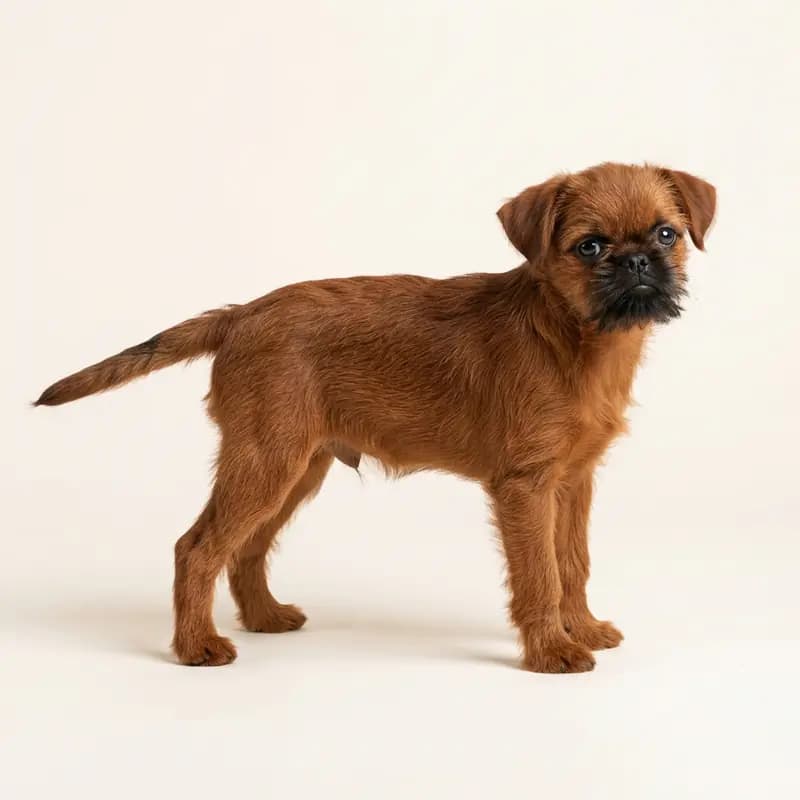
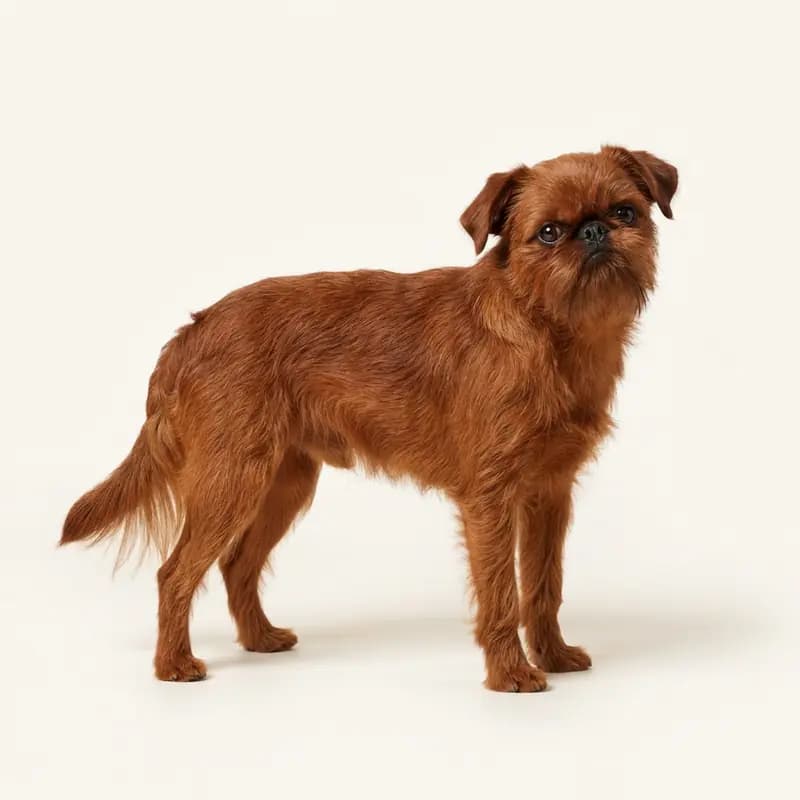
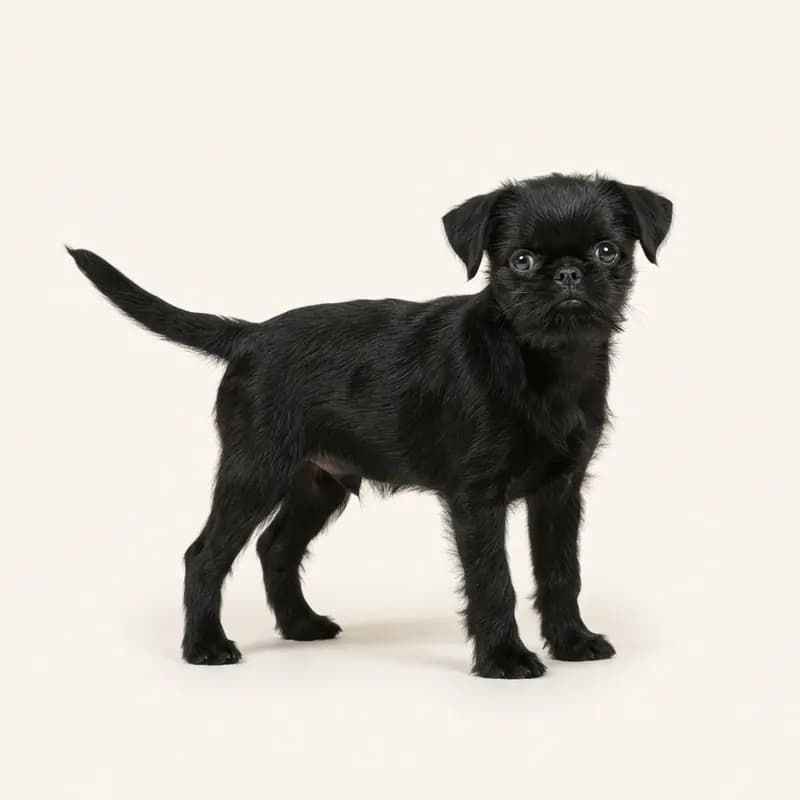
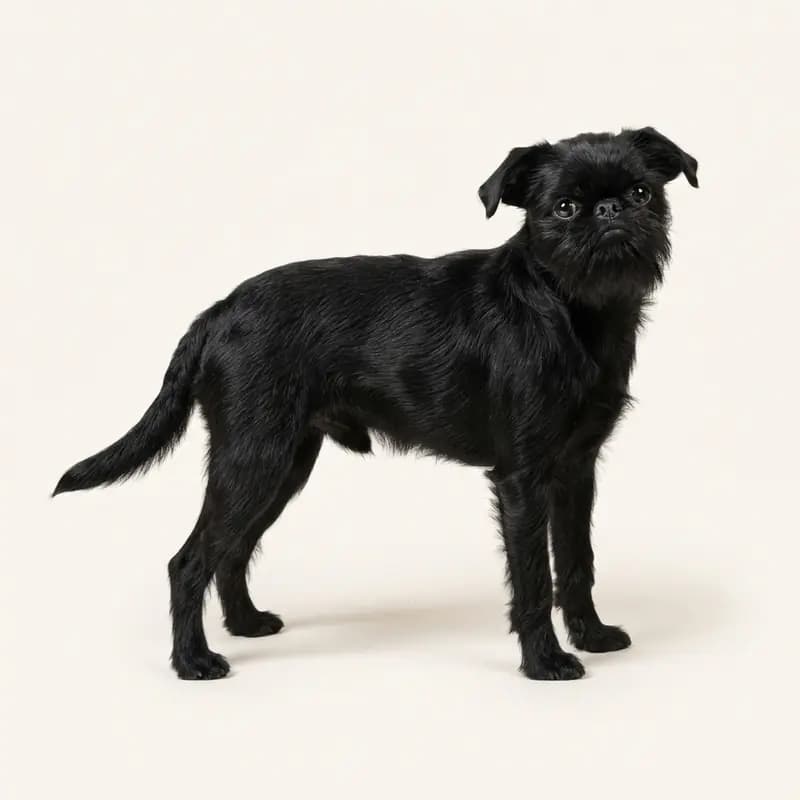
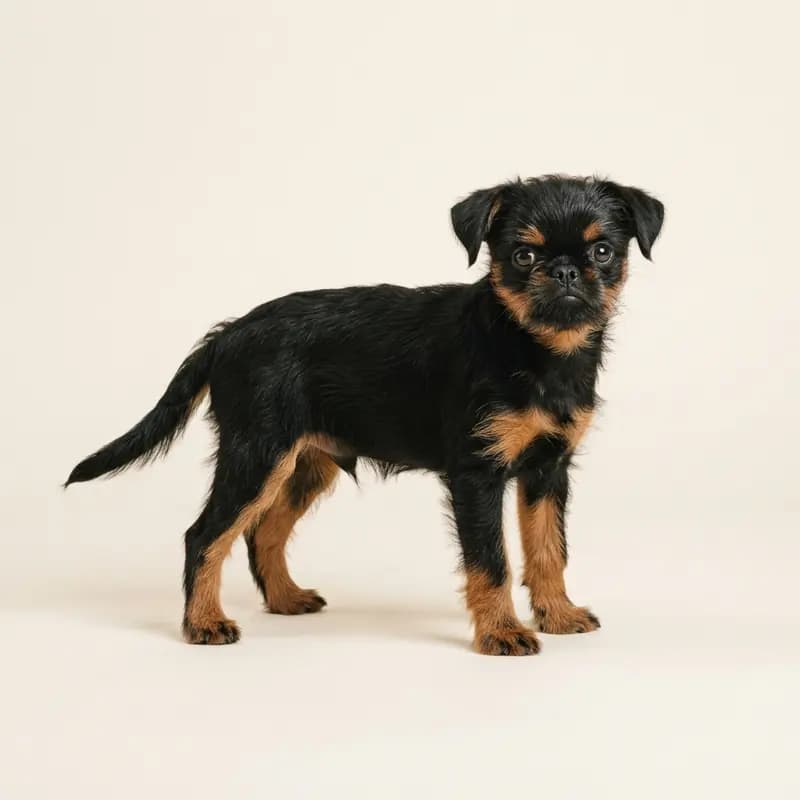
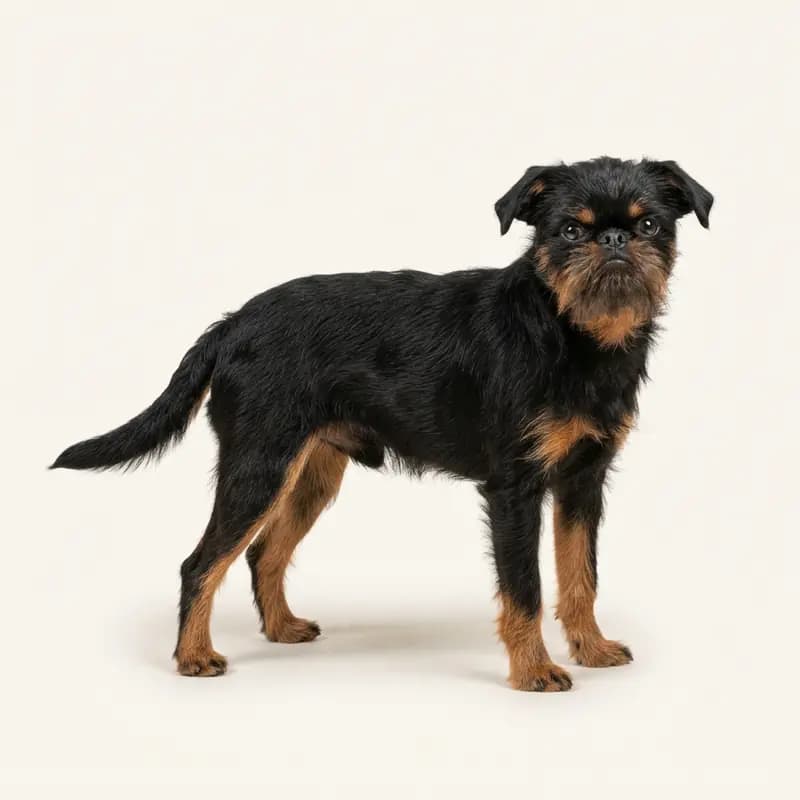
Eye colors
 Brown
Brown
Coat type
 Wire
Wire Double coat
Is the Brussels Griffon right for you?
The Brüsseler Griffon is a vigilant, extremely people-oriented companion dog—bred from robust Belgian stable dogs used for rat hunting, which is why it still carries the heart of a terrier in the body of a toy dog today.
Perfect for you if:
- You are looking for a dog that will literally become your shadow—bred as a pure companion dog, it finds physical distance from its human very difficult to bear.
- You live in the city and are looking for a compact companion for moderate but exciting walks.
- You have a sense of humor and appreciate the stubborn character of this little clown more than unconditional obedience on the training field.
- You have the time to have its wiry coat professionally hand-stripped several times a year.
Less ideal if:
- You have to leave it alone for hours every day—its past as a vigilant stable dog makes it prone to becoming a noisy barker when lonely.
- You have small, boisterous children in the household—it may be tiny, but it has the ego of a terrier and will not tolerate rough handling.
- You want a dog that will happily rush outside in rain and cold—many Griffons are self-confessed fair-weather dogs.
The real vibes check
A Brüsseler Griffon looks like a wise little forest spirit and acts like a miniature guard dog that would prefer to live in your jacket pocket twenty-four hours a day. You aren't getting an inconspicuous follower, but a huge, often uncompromising personality that will completely take over your life—and that is exactly what you need to want.
Self-check
Would the Brussels Griffon really fit your life?
Answer 6 quick questions about your everyday life and see how well the Brussels Griffon fits you — including an honest cost estimate per month, per year, and across the dog's lifetime.
Fit checkCost estimateRisk dice
Takes about 1 minute · free & anonymous
Breed Profile
With their lively and intelligent expression, the Brussels Griffons are real eye-catchers. The compact, small dogs are characterized by their square silhouette and prominent facial features, such as their large, round eyes and their "doll face." They have a distinctive black and brown mask that further enhances their facial expressions. Their high-set ears can be either erect or semi-drooping, depending on how they have been cropped. They fall into FCI Group 9 of companion and companion dogs. The Brussels Griffon comes in two varieties: smooth-haired or rough-haired. Both have a neat, not too short, dense coat, although the rough-haired version also has a soft undercoat. The most common colors are black and red, sometimes black with red or light brown burn.
All measurements in detail
- Height
- 24 - 28 cm (Female), 24 - 28 cm (Male)
- Weight
- 3 - 5 kg (Female), 3 - 5 kg (Male)
- Life Expectancy
- 12 - 15 yrs
- Character
- Intelligent, affectionate, fearless
- Coat
- Smooth or rough, medium length, no undercoat
- Coat Color
- Red, black or black and tan
- Price
- 1500 - 2500 €
Character & Temperament
Despite their small size, Brussels Griffons are extremely fearless and confident dogs. They are known for their intelligence and their exceptional ability to communicate with humans. Despite their small size, they are lively and playful, they love spending time with their family and being the center of attention. Brussels Griffons tend to develop a particularly strong bond with one person in their household. They are extremely affectionate and enjoy being as close as possible to their favorite person - whether on their lap, on the pillow or next to you on the sofa. But despite their clinginess and need for human companionship, they can also learn to remain alone for short periods of time. Due to their origins as rat hunters, they may display a certain amount of prey drive. However, this instinct is no longer strong in most Brussels Griffons. They are generally more interested in playing and hanging out with you than scanning their surroundings for potential prey. One of the characteristic features of Brussels Griffons is their alertness. They are very attentive and won't let strangers into the house unnoticed. They may be small, but they are brave and will not hesitate to defend their family if they feel it is being threatened. Therefore they are also good guard dogs. The Brussels Griffons are an excellent choice for you if you are looking for a small, intelligent, affectionate and fearless companion. Their size and adaptability make them perfect for city life, but they equally enjoy living in the country where they can indulge their natural hunting instincts. They need regular mental and physical activity to be happy and balanced, but they are also content just spending time with you. All they really want is to be loved and considered part of the family.
| Trainability Willing to learn with clear rules and regular training. | Balanced |
| Watchfulness Occasionally alerts but is fundamentally open. | Low |
| Openness to Strangers Neither pushily friendly nor suspicious. | Neutral |
| Hunting or Herding Drive Barely any prey drive — small animals trigger nothing. | Very low |
Fun Fact!
Did you know that the Brussels Griffon was a dog breed particularly prized by Queen Mary of Great Britain? She had a large collection of paintings and photographs of her beloved Brussels Griffons!
What Awaits You
The dogs are alert, tend to be reserved towards strangers and like to accompany their people everywhere. Brussels Griffons are often long-lived. It is important to practice patience and frustration tolerance with them right from the start and to keep them mentally occupied later.
Housing & Care
Brussels Griffons make excellent city dogs. They cope well with living in an apartment, provided they get enough exercise and activity. They are friendly and social, both with people and other dogs, and they can get along well with children, provided the children are old enough to understand how to treat a dog with respect. They can also live well with cats and other pets as long as they are used to them from an early age.
- Family Friendly
Loves family life and thrives in a group.
Family-oriented - Child Friendly
Gets on well with children — with adult supervision.
With supervision - Dog Friendly
Usually gets on fine with other dogs.
Generally tolerant - City Friendly
Small space, noise, lots of people — no problem at all.
Ideal city dog
Owning a dog is a privilege, but it's also a real responsibility. Before you bring one into your life, be honest with yourself about the commitment it takes.
Training & Education
Brussels Griffons are intelligent and eager to learn, which makes training easier. However, they can also be a bit stubborn, which is why a consistent and positive parenting method works best. They respond well to rewards and praise, and they enjoy mental challenges, making them suitable for agility and other dog sports. It is important for a Brussels Griffon to learn to develop frustration tolerance and impulse control. They are often very lively and curious, and if they do not learn to control their impulses, they can easily become overstimulated and restless. It can also be helpful to teach them to accept periods of rest to avoid becoming overly busy.
Nutrition & Care
Brussels Griffons are small dogs with relatively low energy requirements. Their diet should be balanced and of high quality, with enough protein and fat to maintain their energy, as well as an appropriate amount of carbohydrates for healthy digestion. Because they can be prone to obesity, it is important to monitor their food intake and ensure they get enough exercise. When it comes to grooming, the effort depends heavily on the coat type. The rough-haired version requires regular brushing to avoid tangles, while the straight-haired version requires less care. Both versions shed minimally, making them a good choice for allergy sufferers. It is important to note that Brussels Griffons do not have an undercoat, so they are less suited to extremely cold climates.
| Care Level Regular brushing and occasional professional grooming. | Moderate |
| Exercise Needs Needs 1–2 hours of real exercise daily. | Active |
| Shedding Regular shedding — dog hair on clothes is now normal. | Moderate |
| Trainability Willing to learn with clear rules and regular training. | Balanced |
Our experts are still reviewing this information. Spotted something wrong? Email us at info@honestdog.de.
Health & hereditary diseases
Health
D
Elevated risks
Health grade
Due to its build and genetic predispositions, the Brussels Griffon carries a significant health risk, particularly for the neurological condition Chiari-like malformation (CM) and syringomyelia (SM), as well as eye diseases such as cataract and progressive retinal atrophy, generic. Additionally, there is a risk of patellar luxation (PL), in which the kneecap painfully luxates. A responsible breeder minimizes these risks through targeted selection and has their breeding animals comprehensively tested before use. Therefore, before buying, demand the written results of the parent animals: for patellar luxation (PL), the result must strictly be Grade 0; for Chiari-like malformation (CM) and syringomyelia (SM), the limit value A is required; for cataracts, the dogs must be free; and for progressive retinal atrophy, generic, the status free or carrier is permissible, provided the other partner is proven to be free.
Grade is relative to other breeds — AI-assisted and editorially reviewed.
In daily life this can mean
You should strictly limit heat and exertion, check its eyes regularly, and honestly budget for a higher veterinary bill for potential treatments.
The breeder's role
Responsible breeders have the parents' knees, eyes, and nervous system tested and pay attention to clear airways—but even then, the fundamental risks of this breed cannot be completely eliminated.
Note: This health overview is AI-assisted and editorially reviewed. It is for orientation only and does not replace veterinary advice.
No Health Tests Available
No specific health tests are currently available for this breed.
Costs & where to find one
How much does a Brussels Griffon cost?
A Brussels Griffon costs around ~€170 per month (€90 – €300, depending on your setup). The first year adds up to roughly ~€4,810 including purchase, equipment and puppy school; across the dog's life (13.5 years) it comes to about ~€29,600.
With surgery cover, running costs come to about ~€160 per month — in return, your share of a major operation drops from several thousand euros to around 20 percent.
Per month
~€170
In the first year
~€4,810
Across the dog's life
~€29,600
Purchase from a breeder: €1,500 – €2,500
Estimate at a mid-range setup (suburban, dry food, 1–2 hours of daily exercise), average German prices, as of July 2026.
Calculate your personal costs1-minute self-check with your own answers
Looking for a Brussels Griffon?
Appearance, variants & origin
History
The full history
The Brussels Griffon is a Belgian breed that originated in the 1800s. Originally, these small dogs were used to hunt rats in stables and warehouses. With their size, they could easily penetrate into the smallest corners and holes to hunt their prey. Over time, they gained the attention and affection of coach drivers in Brussels, who kept them as companion dogs. Their popularity grew quickly and they were soon adopted as pets by the upper class. Their affection, intelligence and keen vigilance made them valuable members of the household. The Brussels Griffons received their official recognition as a breed in 1883 by the Belgian Royal Dog Club. Today they are known and loved in many countries, although they are not as widespread as other small dog breeds.
Original Use
The Brussels Griffon was originally bred to hunt rats, but is now a popular companion dog with a lively nature.
Origin
Belgium
Date
1800
Owner experiences
What owners say about the Brussels Griffon
Ilona S., Halterin aus Hessen (Rüde, seit 2015)
Mein kleiner Lui ist jetzt fast ein Jahr alt und bereichert unser Leben ungemein. Ich wollte unbedingt einen agilen, sportlichen Hund, der aber handlich genug ist, um ihn auch mal im Flugzeug in der Kabine mitzunehmen. Der Griffon ist für mich ein absoluter Traum: Er wiegt knapp über 5 Kilo, ist extrem temperamentvoll und aufgeweckt, aber dabei niemals nervös oder hyperaktiv. Er will einfach immer dabei sein und ist ein echter Charmebolzen.
Allerdings muss man ehrlich sagen, dass man die Erziehung nicht unterschätzen darf. Lui ist unheimlich clever und lernt schnell, hat aber auch seinen eigenen Kopf. Und man muss sich darauf einstellen, dass diese Rasse sehr wachsam ist. Er meldet jeden Besucher sofort an – das ist kein Kläffen aus Angst, sondern sein natürlicher Wachinstinkt, den man von Anfang an in geordnete Bahnen lenken sollte.
Sabine T., Hundeerfahrene aus Niedersachsen (Beobachterin, 2015)
Ich kenne die Zwerggriffons (sowohl die Brüsseler als auch die Brabanter Variante) aus dem Bekanntenkreis und bin immer wieder fasziniert, wie robust und sportlich diese kleinen Kerle im Vergleich zu Möpsen sind. Sie sind extrem menschenbezogen, anhänglich und für jeden Spaß zu haben. Bei Aktivitäten zeigen sie sich sehr agil und haben eine tolle Ausdauer, ohne dass sie röcheln oder Atemprobleme zeigen.
Man muss beim Kauf allerdings extrem aufpassen und sich nur an seriöse Züchter wenden. Da es sich um eine brachyzephale Rasse handelt, gibt es leider auch Linien mit gesundheitlichen Problemen wie verengten Atemwegen, Patellaluxation oder im schlimmsten Fall neurologischen Erkrankungen wie der Chiari-Malformation. Auch Schnarchen kommt bei manchen Vertretern durchaus vor. Wer sich einen Griffon holt, sollte die Elterntiere genau unter die Lupe nehmen.
Melanie B., Halterin aus dem Raum Stuttgart (Rüde, seit 2024)
Unser kleiner Griffon fordert uns im Alltag ganz schön heraus. Er ist extrem anhänglich und am liebsten rund um die Uhr in unserer Nähe, was wunderschön ist, aber auch eine Kehrseite hat: Das Alleinbleiben war von Anfang an ein riesiges Thema. Er neigt stark zu Trennungsangst und wir mussten das Alleinsein in winzigen Schritten über Monate hinweg trainieren, um überhaupt Fortschritte zu machen.
Zudem zeigt er sich im Alltag recht sensibel und reagiert in manchen Situationen oder bei fremden Menschen an der Leine etwas unsicher und reaktiv. Man darf nicht vergessen, dass diese Hunde trotz ihrer geringen Größe sehr wachsam sind und Fremden gegenüber erst einmal misstrauisch sein können. Mit viel Geduld, positivem Training und einer klaren Führung wird es aber stetig besser.
Paraphrased from real owner reports
Loading owner stories
Community Posts
FAQ & more
Frequently asked questions about the Brussels Griffon
Is a Brussels Griffon the right dog for me?
The Brussels Griffon is an adaptable dog that adjusts well to various lifestyles. Research the temperament, grooming needs, and space requirements before deciding.
How long does a Brussels Griffon live?
The average life expectancy of a Brussels Griffon is 12-15 years. With proper care and regular vet visits, your dog can live a long, healthy life.
How much grooming does a Brussels Griffon need?
Brussels Griffon grooming requirements include regular brushing, nail trimming, and dental care. HonestDog provides detailed grooming tips for every breed.
Is a Brussels Griffon good for families with children?
The Brussels Griffon can be a great family dog. Proper training and socialization are key. HonestDog provides family suitability information for every breed.
What colors does the Brussels Griffon come in?
The Brussels Griffon comes in these colors: Red, Black, Black and tan. Colors that fall outside the breed standard are marked as such on the breed page.
Loading related articles
Are you a Brussels Griffon breeder?
Showcase your kennel on HonestDog and reach families searching for a responsibly bred Brussels Griffon.
Why HonestDog?
What makes HonestDog different from other platforms
Full transparency
We lay out what we have: who the breeder is, how they work, and any health records they've uploaded. So you can judge for yourself.
Responsible breeding, assured
Every breeder on HonestDog has their identity and documents checked before their profile goes live. Health records they upload are shown on the profile, so you can see exactly what has been tested.
Trust and verification
We verify breeders and buyers alike, so every conversation happens on solid ground. It's a new standard of trust in dog breeding.
Less hassle, more time
We've already checked the breeders' documents and gathered the details, so you can skip the endless research and focus on finding the right puppy for your family.
Our Mission

We connect dog lovers with responsible breeders and shelters to ensure every dog finds the perfect home.
Founded by dog enthusiasts, our platform focuses on ethical dog breeding and adoption.
Why HonestDog?
We connect you with vetted breeders and shelters so you can find your — your new companion — with confidence.
Vetted Partners
Only verified breeders and shelters — for a safe start.
Highest Standards
Every animal's health and wellbeing is our top priority.
Guides & Resources
Guides, checklists, and breed profiles — so you can make a well-informed decision.