Loading breed

Border Terrier
Health grade CThe Border Terrier is a hardy, robust Erdhund (earth dog) — bred to follow riders alongside packs of hounds and flush foxes from their dens. Beneath that comical otter-like face lies a tough, tireless worker.
- Height28–36 cm
- Weight5–7 kg
- Life expectancy12–15 yrs
- Puppy price1,200–2,500 €
- Energy4/5
The Essentials at a Glance
The Border Terrier is a hardy, robust Erdhund (earth dog) — bred to follow riders alongside packs of hounds and flush foxes from their dens. Beneath that comical otter-like face lies a tough, tireless worker.
- Health grade C: While the Border Terrier is considered a robust working terrier, it carries an above-average genetic risk for several hereditary conditions.
- You are looking for a compact companion that can effortlessly keep up with a horse, a bicycle, or long hikes — its anatomy was specifically selected for this level of endurance.
- You appreciate the typical terrier character (independent, brave, stubborn) but are looking for a variety that is often more pack-friendly in everyday life than other terriers.
- You keep cats or rabbits free-roaming in the house — for a true Baujäger (den hunter), these are not family members but prey, which leads to enormous stress.
Is the Border Terrier right for you?
At a glance
Border Terrier overview
The essentials — key facts, traits, and health priorities — before you dive deeper.
Health grade
Relative to other breeds
S
A
B
C
D
E
Very healthyHigher risk
Average — several important tests are expected.
See full health info & tests →
Note: This health overview is AI-assisted and editorially reviewed. It is for orientation only and does not replace veterinary advice.
Lifespan
12–15 yrs
Height
28–36 cm
Weight
5–7 kg
Practical
- Puppy price: 1,200 – 2,500 €
- Coat: Thick, wiry hair, short length, with an undercoat
- Origin: Great Britain
Temperament
Energy
Trainability
Family fit
With kids
Daily life
Care effort
Shedding
Barking
City-friendly
Guard instinct
What matters most
Especially with a Border Terrier, choosing the right breeder is the single most important decision you'll make. Serious breeders consistently test the parents for inherited conditions, prioritize healthy early socialization, and stay accountable long after handover. A cheap puppy without health screening tends to become the most expensive dog later on.
See HonestDog breeder standards →Colors & coat
What colors does the Border Terrier come in?
The coat colors you will see in Border Terrier litters — including which ones fall outside the breed standard and which carry genetic risk.
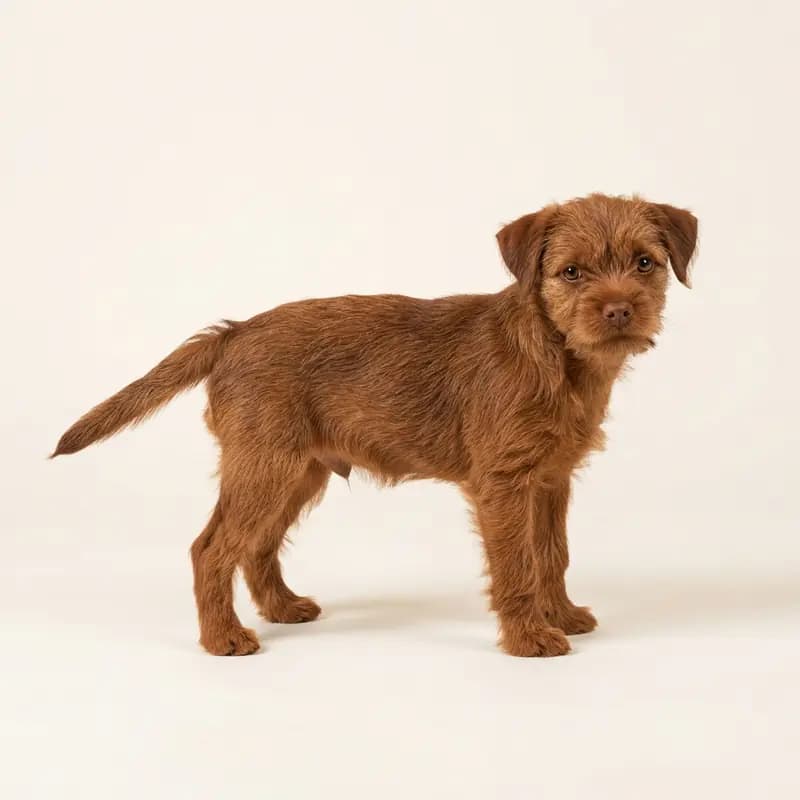
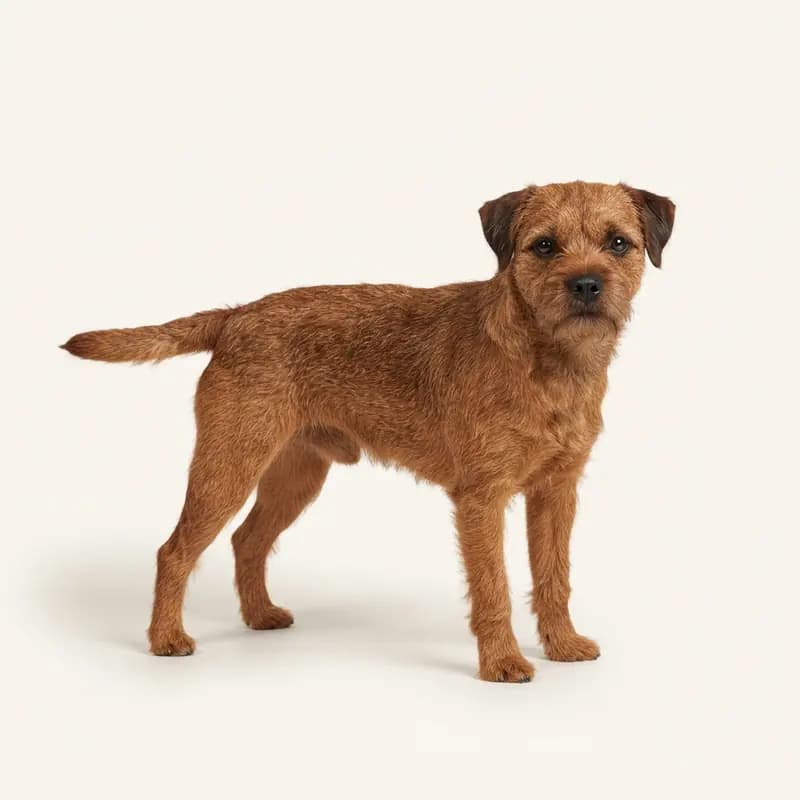
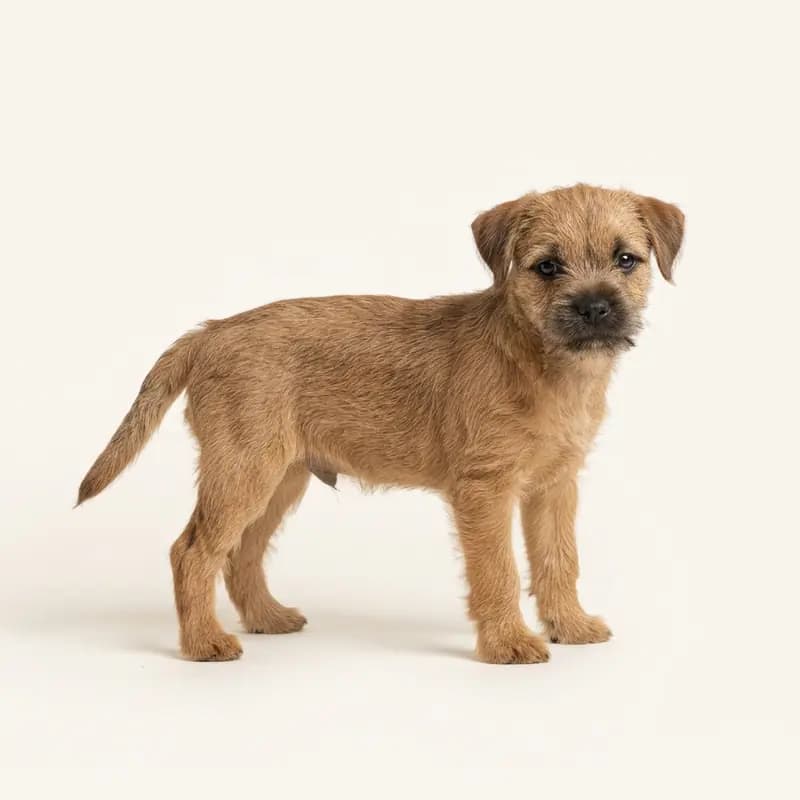
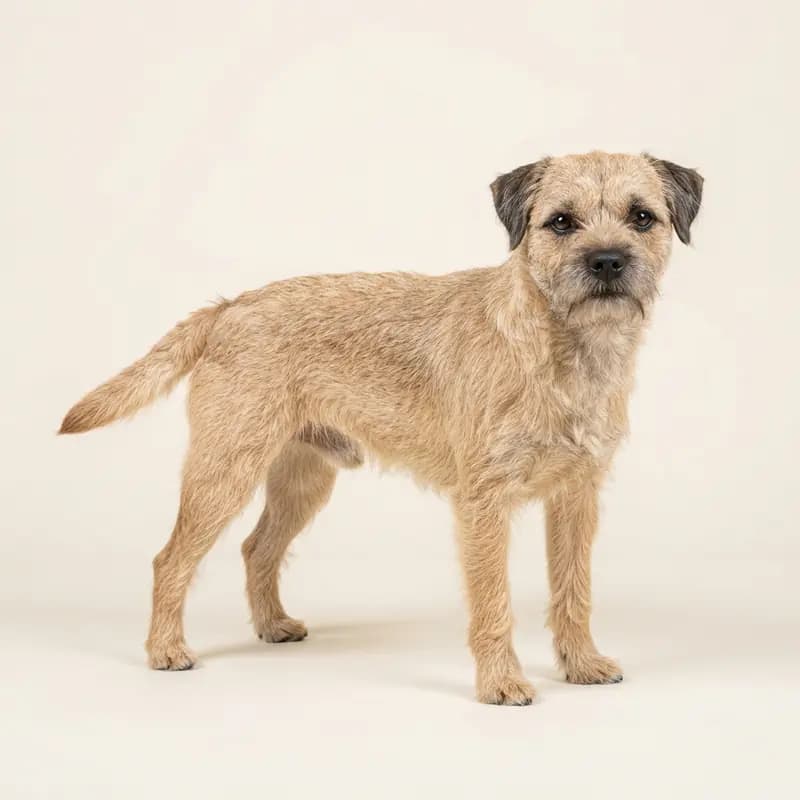
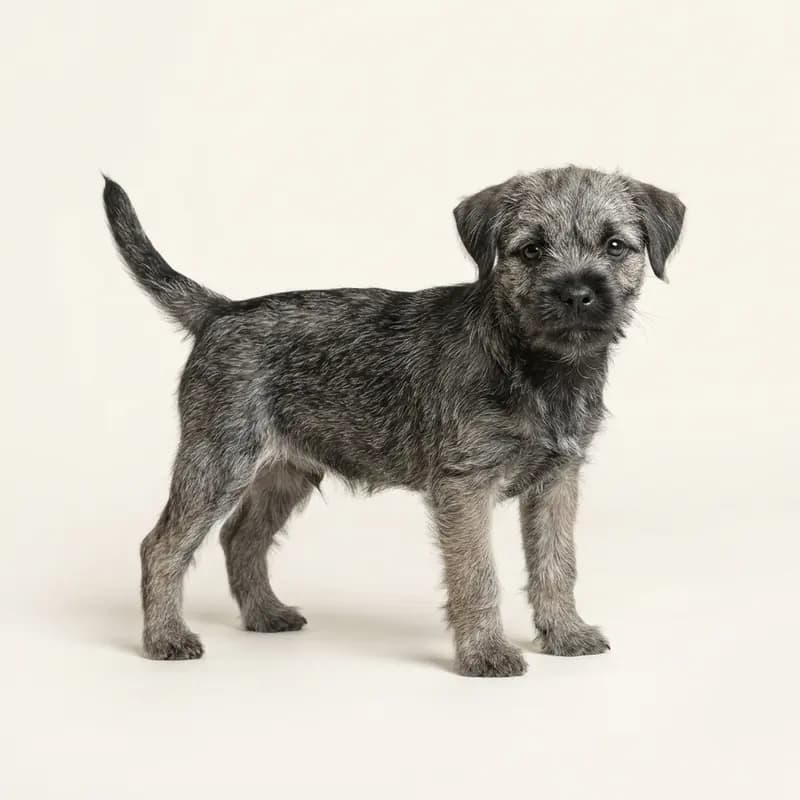
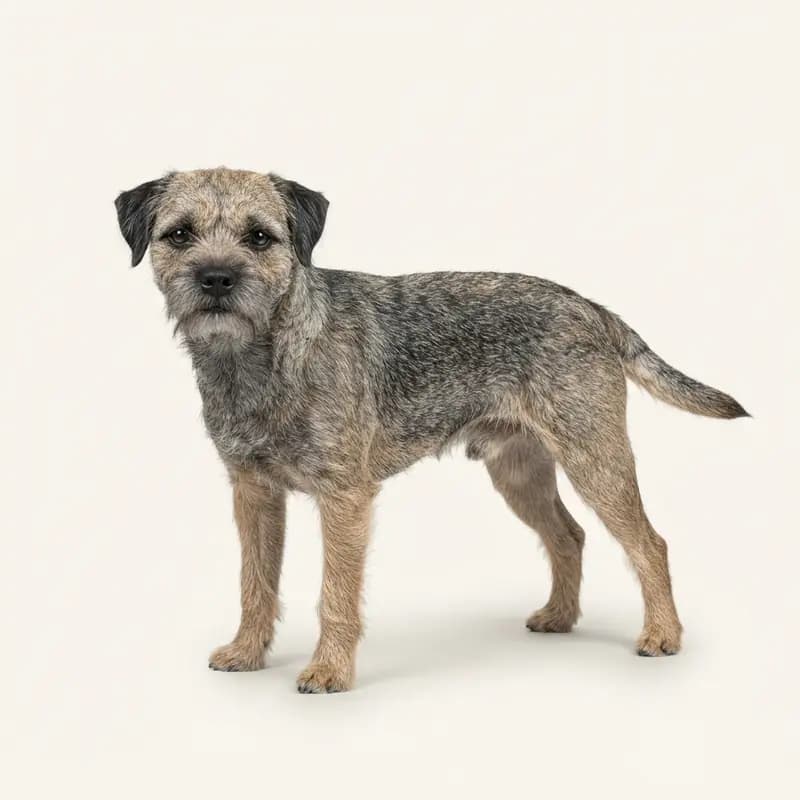
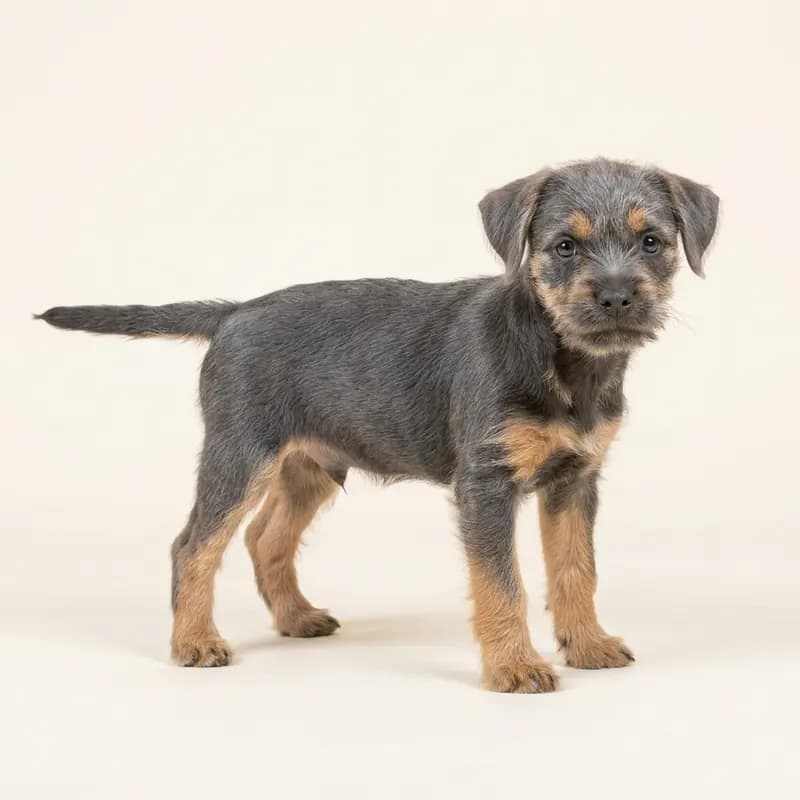
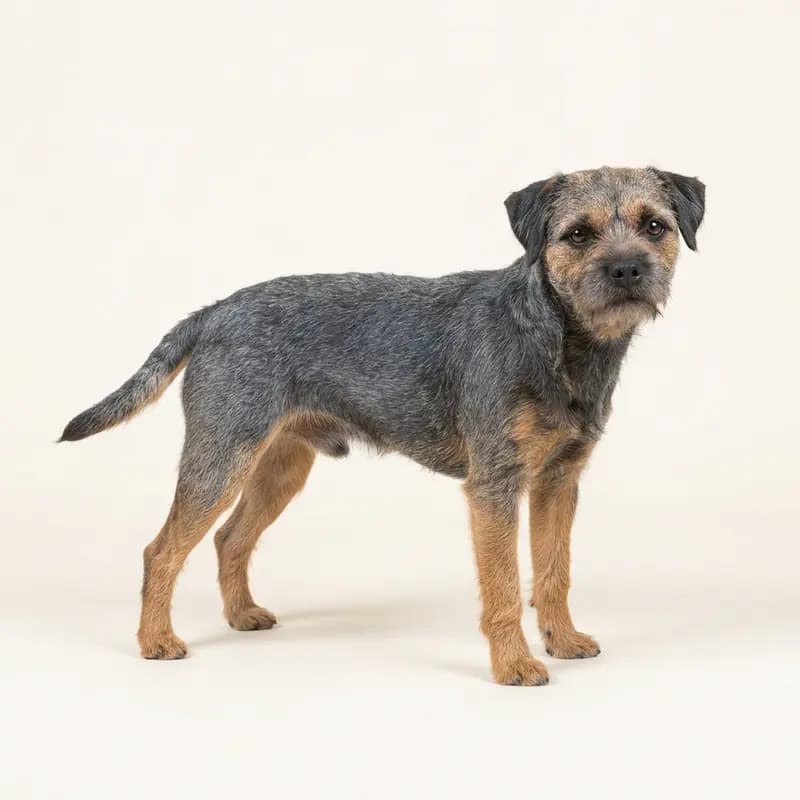
Eye colors
 Brown
Brown
Coat type
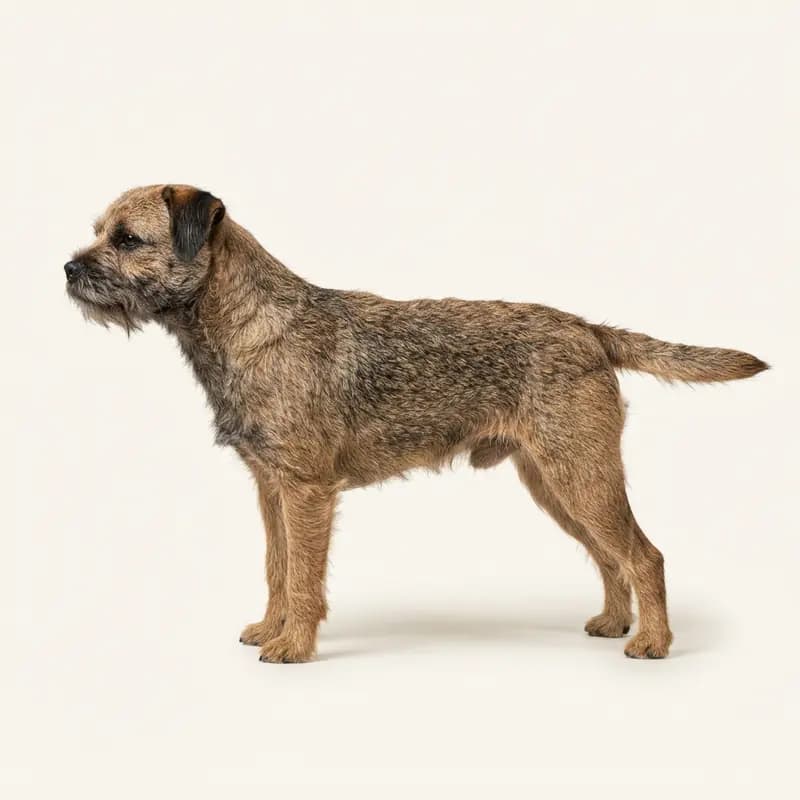 Illustrative image
Wire
 Double coat
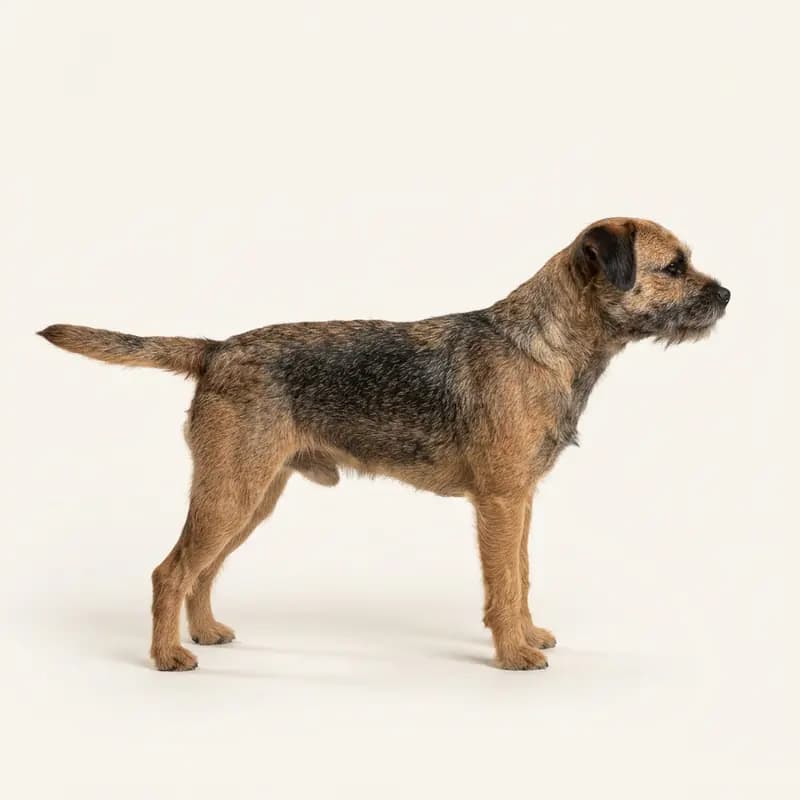 Illustrative image
Short
Is the Border Terrier right for you?
The Border Terrier is a hardy, robust Erdhund (earth dog) — bred to follow riders alongside packs of hounds and flush foxes from their dens. Beneath that comical otter-like face lies a tough, tireless worker.
Perfect for you if:
- You are looking for a compact companion that can effortlessly keep up with a horse, a bicycle, or long hikes — its anatomy was specifically selected for this level of endurance.
- You appreciate the typical terrier character (independent, brave, stubborn) but are looking for a variety that is often more pack-friendly in everyday life than other terriers.
- You are prepared to regularly challenge its clever mind with scent work or agility to prevent it from becoming frustrated.
- You can provide an escape-proof garden and are willing to work proactively with a long leash in the woods in case its hunting instinct kicks in.
Less ideal if:
- You keep cats or rabbits free-roaming in the house — for a true Baujäger (den hunter), these are not family members but prey, which leads to enormous stress.
- You expect unconditional obedience and a constant 'will-to-please' — a terrier will always evaluate every command for its usefulness first.
- You live in a building with thin walls where quick, loud reactions to noises in the hallway could lead to neighborhood disputes.
The real vibes check
Don't let that cute otter face fool you — the Border Terrier is no soft cuddly toy, but a spirited, rugged character in a practical size. If you treat it like a full-fledged, athletic working dog, you will have the funniest buddy; if you underestimate it, it will ruthlessly take charge.
Self-check
Would the Border Terrier really fit your life?
Answer 6 quick questions about your everyday life and see how well the Border Terrier fits you — including an honest cost estimate per month, per year, and across the dog's lifetime.
Fit checkCost estimateRisk dice
Takes about 1 minute · free & anonymous
Breed Profile
The Border Terrier is a small, energetic dog listed in FCI Group 3, Section 1, under standard number 10. It belongs to the terrier family and is known for its wiry coat and the characteristic "otter head", which gives it a distinctive appearance. Its body is compact but very mobile and maneuverable. When it comes to Border Terriers, there is no distinction between performance and show lines. He is a working terrier through and through and has retained his natural instincts and characteristics.
All measurements in detail
- Height
- 28 - 34 cm (Female), 30 - 36 cm (Male)
- Weight
- 5 - 6 kg (Female), 6 - 7 kg (Male)
- Life Expectancy
- 12 - 15 yrs
- Character
- Intelligent, loving, energetic
- Coat
- Thick, wiry hair, short length, with an undercoat
- Coat Color
- Red, Grizzle and Tan, Blue and Tan, Wheat
- Price
- 1200 - 2500 €
Character & Temperament
As a true terrier, the Border Terrier brings a lot of energy and enthusiasm. His intelligence, coupled with a loving and affectionate character, makes him a wonderful companion dog. If you are looking for a loyal friend who will make you laugh and keep you moving, then the Border Terrier could be the one for you! In terms of usage based on its nature, the Border Terrier is still an accomplished hunter, but it is also commonly kept as a family dog. He is known to get along well with children and thrive in a busy household. The Border Terrier has an active temperament and loves to keep busy. He needs regular exercise and mental stimulation to be happy. It is important to point out that when he is bored or under-stimulated, he may have a tendency to get into mischief. He is very people-oriented and develops a strong bond with his family. The Border Terrier is playful and enjoys spending time with his people, but he is also capable of keeping himself busy. He can learn to be alone, but he should not spend excessively long periods without company. Like many terriers, the Border Terrier also has a strong hunting instinct. He may have a tendency to prey on birds, squirrels, or other small animals. It's important to get him used to the leash early and have solid recall training if you want him to be able to walk off-leash. The Border Terrier is an alert dog. He will alert you if someone is at the door or if something unusual is happening around him. However, he does not typically bark excessively unless encouraged or bored.
| Trainability Willing to learn with clear rules and regular training. | Balanced |
| Watchfulness Occasionally alerts but is fundamentally open. | Low |
| Openness to Strangers Warms up quickly and is generally welcoming. | Friendly |
| Hunting or Herding Drive Powerful instinct that can override recall when triggered. | Strong |
Fun Fact!
The Border Terrier is a master of escape and can squeeze through the tightest of openings, which is why he is sometimes referred to as the "Houdini of dogs"!
What Awaits You
Boder Terriers are also very motivated to hunt. With enough activity and exercise, these lively dogs can be versatile companions.
Housing & Care
The Border Terrier is an adaptable dog and can be kept well in both the city and the country. It is important that he gets enough exercise and mental stimulation. He usually gets along well with children and can be a great family dog. However, it is advisable to teach children to treat the dog with respect. The Border Terrier can also get along with cats and other pets, especially if raised with them from an early age.
- Family Friendly
Loves family life and thrives in a group.
Family-oriented - Child Friendly
Takes boisterous and affectionate children in its stride.
Patient with children - Dog Friendly
Usually gets on fine with other dogs.
Generally tolerant - City Friendly
Adapts well to city living and urban environments.
Well-suited to city life
Owning a dog is a privilege, but it's also a real responsibility. Before you bring one into your life, be honest with yourself about the commitment it takes.
Training & Education
Border Terriers are intelligent, but they also have an independent spirit that can make training challenging. It is important to start training early using positive reinforcement. They are active dogs and love to have chores. Sports like agility or obedience can be a great way to meet their energy needs and challenge them mentally. The Border Terrier tends to be very ball-obsessed, so it's important to make sure he doesn't become a ball junkie. It is also advisable to teach the dog frustration tolerance and impulse control. This can be achieved through various exercises, such as practicing rest periods and setting boundaries.
Nutrition & Care
The Border Terrier is an active dog and needs a balanced diet that meets its energy needs. It is advisable to choose high-quality food rich in proteins and healthy fats. Some Border Terriers can be sensitive to certain ingredients, so keep an eye out for signs of allergies or intolerances. When it comes to grooming, the Border Terrier is relatively easy to care for. It has a dense, rough upper coat construction and a soft undercoat. The coat sheds little and should be brushed occasionally to remove dead hair. The coat should be trimmed once or twice a year. The Border Terrier copes well with the climate in Germany because its fur protects it from both cold and wet conditions.
| Care Level Minimal effort — occasional brushing and bathing. | Low-maintenance |
| Exercise Needs Needs several hours of serious exercise every day. | Very active |
| Shedding No or minimal hair loss — suitable for allergy sufferers. | No shedding |
| Trainability Willing to learn with clear rules and regular training. | Balanced |
Our experts are still reviewing this information. Spotted something wrong? Email us at info@honestdog.de.
Health & hereditary diseases
Health
C
Solid, watch carefully
Health grade
While the Border Terrier is considered a robust working terrier, it carries an above-average genetic risk for several hereditary conditions. You should pay particular attention to eye diseases such as glaucoma and Progressive Retinal Atrophy (PRA), which can lead to blindness if not screened for. Additionally, the breed-specific Spongiform Leukoencephalomyelopathy (SLEM, also known as 'Shaking Puppy Syndrome') is a serious concern, though it can be effectively avoided through modern genetic testing of the parent dogs.
Grade is relative to other breeds — AI-assisted and editorially reviewed.
In daily life this can mean
With regular eye and knee check-ups as well as a healthy weight, your terrier will stay fit for a long time, and professional hand-stripping of the coat prevents skin problems.
The breeder's role
Reputable breeders have the knees, eyes, and hearts of the parent animals checked and use targeted genetic testing to rule out serious neurological diseases in the bloodline.
Note: This health overview is AI-assisted and editorially reviewed. It is for orientation only and does not replace veterinary advice.
No Health Tests Available
No specific health tests are currently available for this breed.
Costs & where to find one
How much does a Border Terrier cost?
A Border Terrier costs around ~€150 per month (€80 – €280, depending on your setup). The first year adds up to roughly ~€4,500 including purchase, equipment and puppy school; across the dog's life (13.5 years) it comes to about ~€27,260.
With surgery cover, running costs come to about ~€140 per month — in return, your share of a major operation drops from several thousand euros to around 20 percent.
Per month
~€150
In the first year
~€4,500
Across the dog's life
~€27,260
Purchase from a breeder: €1,200 – €2,500
Estimate at a mid-range setup (suburban, dry food, 1–2 hours of daily exercise), average German prices, as of July 2026.
Calculate your personal costs1-minute self-check with your own answers
Looking for a Border Terrier?
HonestDog Concierge
No verified Border Terrier breeders on HonestDog yet
We currently have no breeders for this breed who have passed our verification. Create your short buyer profile: we'll set up your search alert, review a possible source and email you within 28 days.
Appearance, variants & origin
History
The full history
The Border Terrier comes from the border region between England and Scotland, hence the name "Border". It was originally used to hunt foxes and pests. Farmers in the Cheviot Hills bred this small, tough dog that was both fast enough to keep up with foxhounds and small and agile enough to crawl into fox burrows. The Border Terrier was first shown at dog shows in the 1870s and quickly established itself as a breed in its own right. It was recognized as a separate breed by the Kennel Club in Great Britain in 1920 and by the American Kennel Club in 1930.
Original Use
The Border Terrier was originally bred for fox hunting and is known for its wiry coat and endurance.
Origin
Great Britain
Date
1800
Owner experiences
What owners say about the Border Terrier
Familie M., Halter aus dem Norden (Rüde, seit 2013)
Als wir uns damals für einen Hund entschieden haben, wollten wir eigentlich einen Labrador. Durch Zufall lernten wir beim Campingurlaub in Italien zwei Border Terrier kennen und waren sofort von diesem markanten „Fischotter-Gesicht“ und der kompakten Größe begeistert. Heute lebt unser Rüde bei uns und wir haben die Entscheidung keine Sekunde bereut. Er ist ein fantastischer Familienhund, ein echter Clown und Seelentröster, der unglaublich robust ist.
Allerdings darf man diese Rasse nicht unterschätzen. Der Jagdtrieb ist genetisch tief verankert – schließlich wurden sie dafür gezüchtet, am Pferd mitzulaufen und eigenständig Füchse zu jagen. Unser Kleiner ist extrem ausdauernd und braucht täglich ordentlich Bewegung und Beschäftigung. Man muss bei der Erziehung von Anfang an extrem konsequent bleiben, denn blinden Gehorsam darf man von einem selbstständigen Terrier nicht erwarten.
Tamy P., Halterin (Rüde, seit 2021)
Mein Border Terrier ist jetzt etwas über ein Jahr alt und ich liebe seinen Charakter. Er ist extrem schlau, lernt schnell und will einem eigentlich gefallen. Zu Hause ist er ein absoluter Traum, kuschelt gern und ist extrem wachsam, ohne dabei ein nervöser Kläffer zu sein. Er versteht sich auch super mit anderen Hunden und ist sehr sozial.
Die größte Herausforderung ist und bleibt bei uns der Jagdtrieb. Wenn er im Wald erst einmal durchstartet, weil er ein Kaninchen oder eine Spur in der Nase hat, ist er komplett weg und reagiert auf keinen Rückruf mehr. Ich musste schmerzhaft lernen, dass man im Freilauf höllisch aufpassen muss. Er hat eben diesen typischen, sturen Terrier-Kopf. Wer sich einen Border Terrier anschafft, sollte sich auf intensives Schleppleinentraining und konsequente Erziehung einstellen.
Paraphrased from real owner reports
Loading owner stories
FAQ & more
Frequently asked questions about the Border Terrier
Is a Border Terrier the right dog for me?
The Border Terrier is an active dog that needs plenty of exercise and mental stimulation. Research the temperament, grooming needs, and space requirements before deciding.
How long does a Border Terrier live?
The average life expectancy of a Border Terrier is 12-15 years. With proper care and regular vet visits, your dog can live a long, healthy life.
How much grooming does a Border Terrier need?
Border Terrier grooming requirements include regular brushing, nail trimming, and dental care. HonestDog provides detailed grooming tips for every breed.
Is a Border Terrier good for families with children?
The Border Terrier can be a great family dog. Proper training and socialization are key. HonestDog provides family suitability information for every breed.
What colors does the Border Terrier come in?
The Border Terrier comes in these colors: Red, Wheaten, Grizzle, Blue and tan.
Loading related articles
Are you a Border Terrier breeder?
Showcase your kennel on HonestDog and reach families searching for a responsibly bred Border Terrier.
Why HonestDog?
What makes HonestDog different from other platforms
Full transparency
We lay out what we have: who the breeder is, how they work, and any health records they've uploaded. So you can judge for yourself.
Responsible breeding, assured
Every breeder on HonestDog has their identity and documents checked before their profile goes live. Health records they upload are shown on the profile, so you can see exactly what has been tested.
Trust and verification
We verify breeders and buyers alike, so every conversation happens on solid ground. It's a new standard of trust in dog breeding.
Less hassle, more time
We've already checked the breeders' documents and gathered the details, so you can skip the endless research and focus on finding the right puppy for your family.
Our Mission

We connect dog lovers with responsible breeders and shelters to ensure every dog finds the perfect home.
Founded by dog enthusiasts, our platform focuses on ethical dog breeding and adoption.
Why HonestDog?
We connect you with vetted breeders and shelters so you can find your — your new companion — with confidence.
Vetted Partners
Only verified breeders and shelters — for a safe start.
Highest Standards
Every animal's health and wellbeing is our top priority.
Guides & Resources
Guides, checklists, and breed profiles — so you can make a well-informed decision.