Loading breed

Biewer Terrier
Health grade DThe Biewer Terrier is a cheerful, extremely affectionate toy terrier—bred as a pure companion dog, yet beneath its silky coat, it still carries the brave, responsive heart of its ratter ancestors.
- Height21–26 cm
- Weight2–3 kg
- Life expectancy12–15 yrs
- Puppy price1,500–2,500 €
- Energy3/5
The Essentials at a Glance
The Biewer Terrier is a cheerful, extremely affectionate toy terrier—bred as a pure companion dog, yet beneath its silky coat, it still carries the brave, responsive heart of its ratter ancestors.
- Health grade D: The Biewer Terrier is rated D for health, as significant breed-specific problems such as Brachycephalic Obstructive Airway Syndrome (BOAS), Chiari-like Malformation (CM) and Syringomyelia (SM), as well as eye diseases like Progressive Retinal Atrophy, can occur generically in the breed.
- You are looking for a compact dog for apartment living that feels perfectly at home even in the hustle and bustle of city life.
- You want a constant companion who prefers to be everywhere with you and forms a very close bond with its owner.
- You live in an apartment with very thin walls and want absolute silence—it often announces visitors and unusual noises with the typical, vocal intensity of a terrier.
Is the Biewer Terrier right for you?
At a glance
Biewer Terrier overview
The essentials — key facts, traits, and health priorities — before you dive deeper.
Health grade
Relative to other breeds
S
A
B
C
D
E
Very healthyHigher risk
Elevated risk — responsible breeding really matters.
See full health info & tests →
Note: This health overview is AI-assisted and editorially reviewed. It is for orientation only and does not replace veterinary advice.
Lifespan
12–15 yrs
Height
21–26 cm
Weight
2–3 kg
Practical
- Puppy price: 1,500 – 2,500 €
- Coat: Fine, smooth, silky, without undercoat
- Origin: Germany
Temperament
Energy
Trainability
Family fit
With kids
Daily life
Care effort
Shedding
Barking
City-friendly
Guard instinct
What matters most
Especially with a Biewer Terrier, choosing the right breeder is the single most important decision you'll make. Serious breeders consistently test the parents for inherited conditions, prioritize healthy early socialization, and stay accountable long after handover. A cheap puppy without health screening tends to become the most expensive dog later on.
See HonestDog breeder standards →Colors & coat
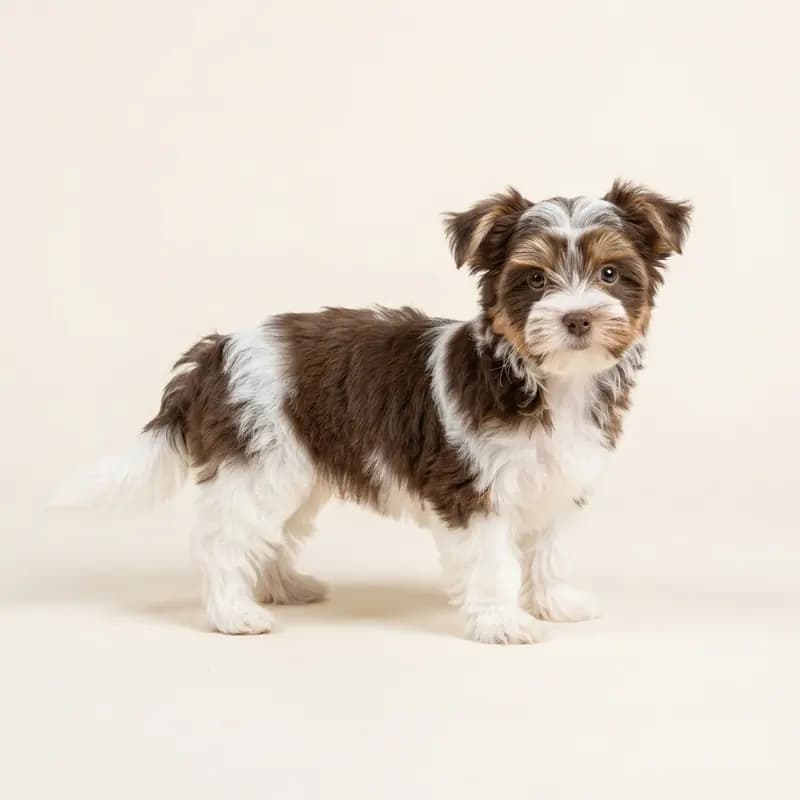
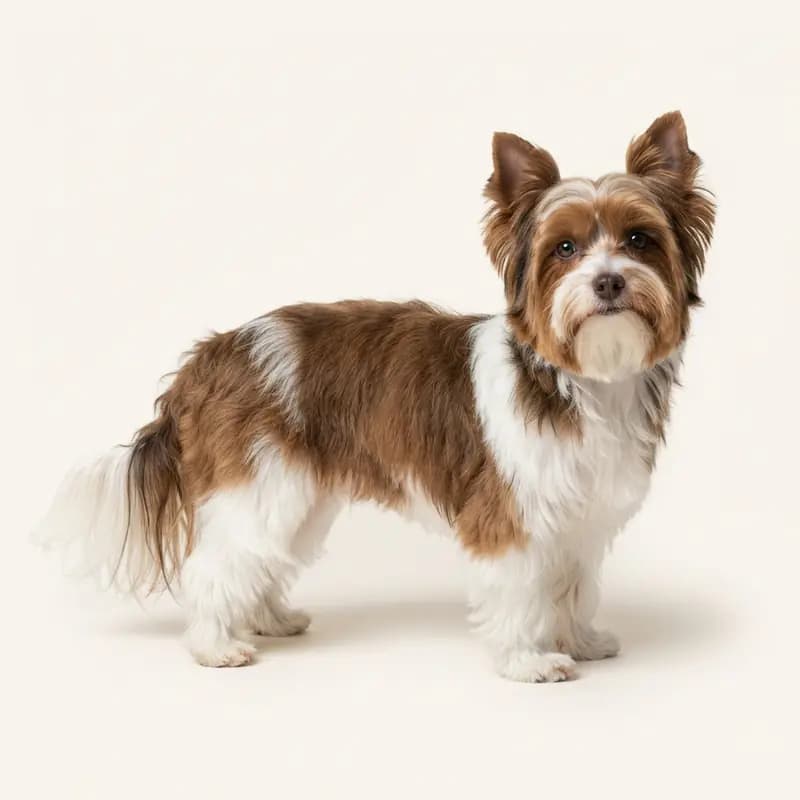
What colors does the Biewer Terrier come in?
The coat colors you will see in Biewer Terrier litters — including which ones fall outside the breed standard and which carry genetic risk.
- Tricolor
- Piebald
- Not standard
Chocolate
- Brown and white
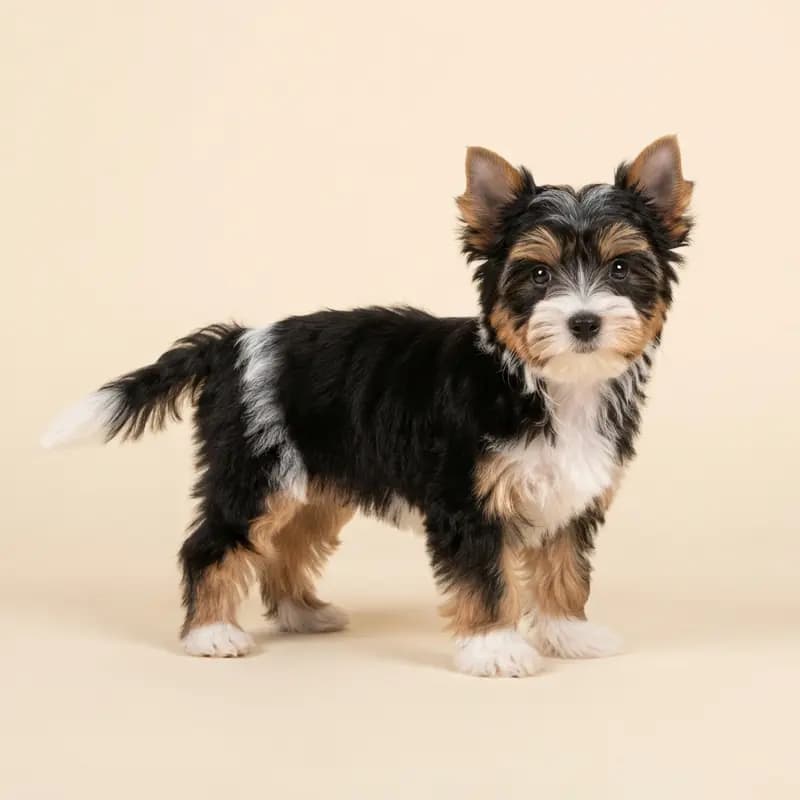
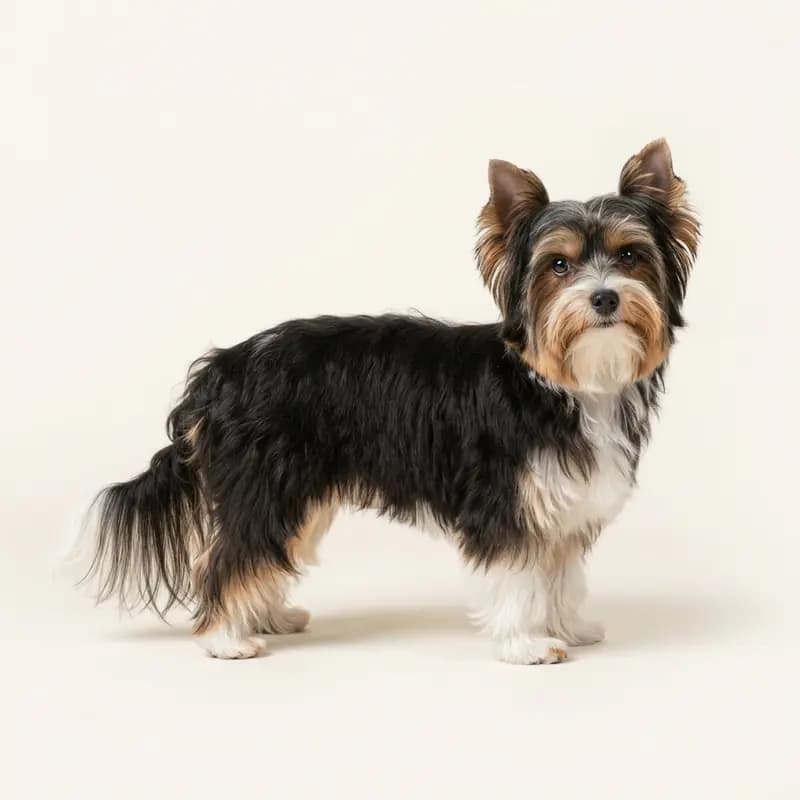
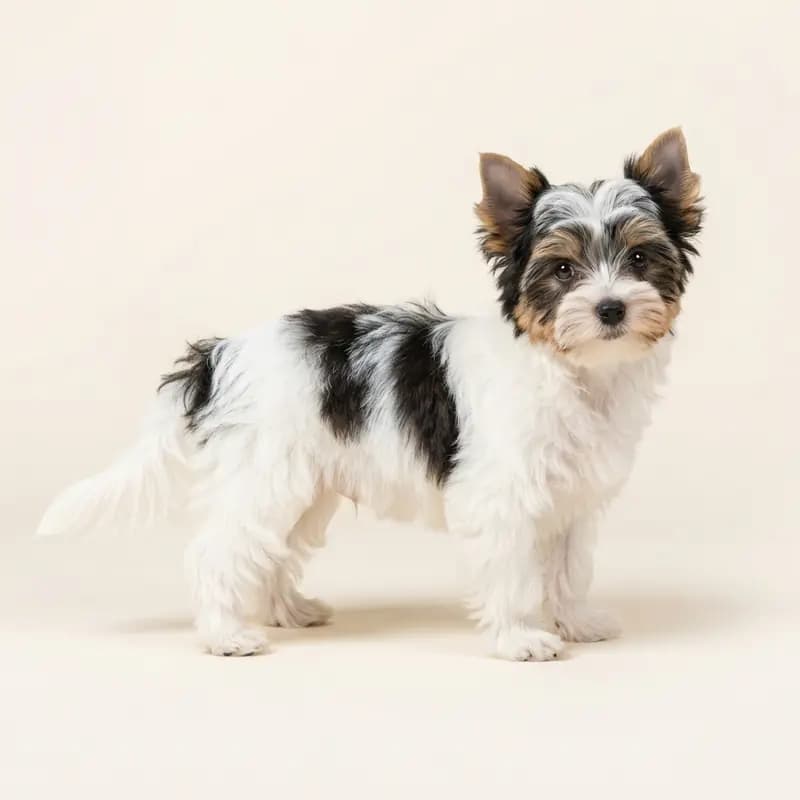
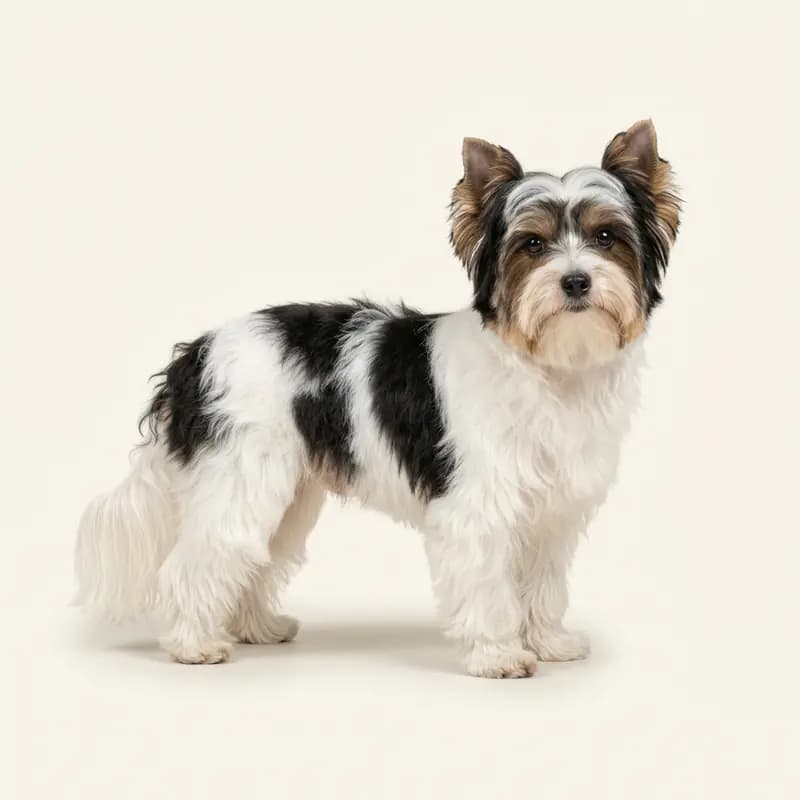
Eye colors
 Brown
Brown
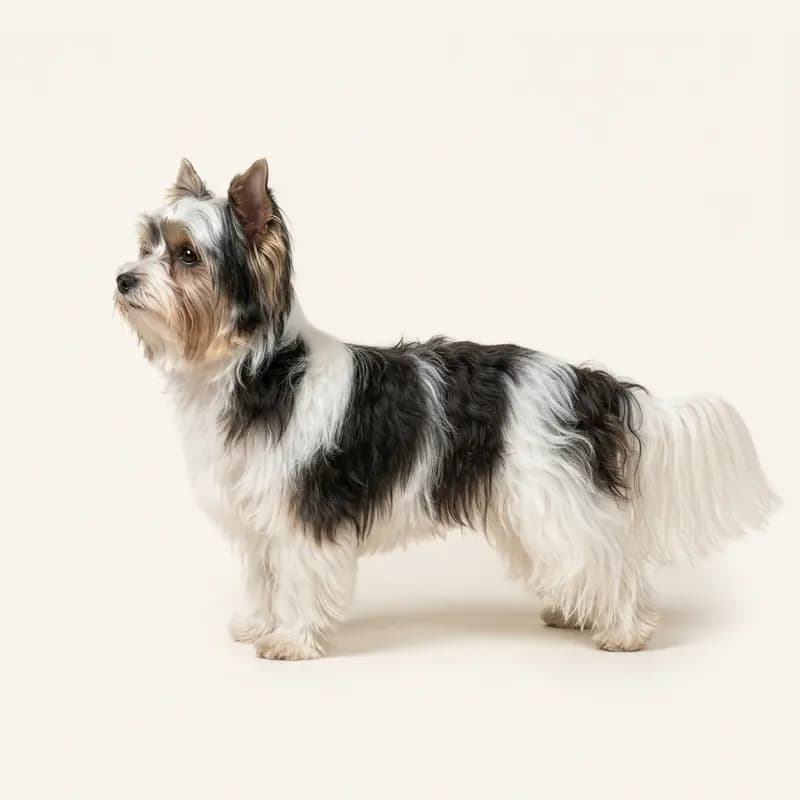
Coat type
 Illustrative image
Long
 Silky
Silky Smooth
Is the Biewer Terrier right for you?
The Biewer Terrier is a cheerful, extremely affectionate toy terrier—bred as a pure companion dog, yet beneath its silky coat, it still carries the brave, responsive heart of its ratter ancestors.
Perfect for you if:
- You are looking for a compact dog for apartment living that feels perfectly at home even in the hustle and bustle of city life.
- You want a constant companion who prefers to be everywhere with you and forms a very close bond with its owner.
- You enjoy daily grooming as a shared ritual or are prepared to have its long hair professionally maintained on a regular basis.
- You treat it like a full-fledged dog despite its tiny size and provide it with real walks instead of just short potty breaks.
Less ideal if:
- You live in an apartment with very thin walls and want absolute silence—it often announces visitors and unusual noises with the typical, vocal intensity of a terrier.
- You have very small, boisterous children in the household—its delicate bones will not forgive rough handling, and it will defend itself if cornered.
- You are out of the house for eight hours a day—as a human-focused companion dog, it suffers immensely from isolation and loneliness.
- You tend to skip training for tiny dogs out of pity—if you do, this clever little dog will quickly take command of your household.
The real vibes check
A Biewer Terrier is not a fashionable stuffed animal for a handbag, but a real character on short legs. If you take its terrier spirit seriously and set clear boundaries, you will get an intrepid, charming shadow. However, if you coddle it, it will mutate into a tiny, yapping household tyrant who tries to boss your visitors around.
Self-check
Would the Biewer Terrier really fit your life?
Answer 6 quick questions about your everyday life and see how well the Biewer Terrier fits you — including an honest cost estimate per month, per year, and across the dog's lifetime.
Fit checkCost estimateRisk dice
Takes about 1 minute · free & anonymous
Breed Profile
The Biewer Terrier is a small but elegant dog that takes hearts by storm with its fine, silky coat and lively nature. He is a variant of the Yorkshire Terrier and is listed by the F"d"ration Cynologique Internationale (FCI) in Group 9 of companion and companion dogs. The Biewer Terrier is not a working dog, but a pure companion dog. He has a well-proportioned body, with his legs being slightly longer compared to his body. His fur is long and hangs straight down both sides of his body, and he often wears it in a cute topknot on his head. It should be noted that the Biewer Terrier has no undercoat and is therefore less prone to shedding.
All measurements in detail
- Height
- 21 - 26 cm (Female), 21 - 26 cm (Male)
- Weight
- 2 - 3 kg (Female), 2 - 3 kg (Male)
- Life Expectancy
- 12 - 15 yrs
- Character
- Affectionate, playful, intelligent
- Coat
- Fine, smooth, silky, without undercoat
- Coat Color
- Blue-white-gold or black-white-gold
- Price
- 1500 - 2500 €
Character & Temperament
The Biewer Terrier is a true gem when it comes to his personality. His charming and affectionate nature makes him an ideal companion, especially if you are looking for someone who always wants to be by your side. He is also incredibly playful and will fill your days with joy and laughter. His intelligence means he learns quickly, but he also has an independent side and can be a little stubborn at times. Since the Biewer Terrier was originally bred as a companion dog, it is very people-oriented and loves to be the center of attention. He enjoys being part of the family and takes an active part in family life. This also means that he doesn't like to be left alone. It is important to teach him to stay alone, but you should be careful not to do this for long periods of time. His terrier heritage means he also has some degree of prey drive, but this is generally not as strong as other terrier breeds. He is curious and attentive, which also makes him a good watchdog. He will probably let you know when someone is at the door, but his small size means he is not suitable as a protection dog. In terms of temperament, the Biewer Terrier is generally happy and energetic, but not hyperactive. He enjoys playtime and walks, but he's also content to just sit on your lap and be petted. It should be noted that the Biewer Terrier can sometimes be reserved around strangers and it is important to socialize him well from puppyhood so that he grows into a balanced and confident dog.
| Trainability Bred to work closely alongside humans. | Highly trainable |
| Watchfulness Occasionally alerts but is fundamentally open. | Low |
| Openness to Strangers Warms up quickly and is generally welcoming. | Friendly |
| Hunting or Herding Drive Barely any prey drive — small animals trigger nothing. | Very low |
Fun Fact!
Did you know that the Biewer Terrier was named after its breeders? Mr. and Mrs. Biewer from Germany began developing this adorable breed in the 1980s!
What Awaits You
Biewer Terriers are active and intelligent dogs. They like to be with their people, but also want to be kept busy and busy.
Housing & Care
Biewer Terriers are ideal as city dogs because they do not require a lot of space and also feel comfortable in an apartment. They are very social and love being in company. It is important to note that they may not be the best choice for families with very young children as their small size makes them prone to injury. However, they can get along well with other pets, including cats, if properly socialized.
- Family Friendly
Loves family life and thrives in a group.
Family-oriented - Child Friendly
Gets on well with children — with adult supervision.
With supervision - Dog Friendly
Usually gets on fine with other dogs.
Generally tolerant - City Friendly
Small space, noise, lots of people — no problem at all.
Ideal city dog
Owning a dog is a privilege, but it's also a real responsibility. Before you bring one into your life, be honest with yourself about the commitment it takes.
Training & Education
The Biewer Terrier is intelligent and learns quickly, but he can also be a little stubborn. It is important to start training early and be consistent but gentle. Positive reinforcement works best with this breed. Biewer Terriers have a lot of energy and love to play. They are well suited to dog sports such as agility or obedience. It is important to be careful not to overwhelm them, especially when they are young. Ball games are great, but you have to be careful that the Biewer Terrier doesn't become a "ball junkie." It's also important to teach them frustration tolerance and impulse control so they can better deal with situations where they don't get what they want. Since the Biewer Terrier is originally a companion dog, its focus is on social interaction. He would like to be part of the family and take part in everyday life. Training that challenges him mentally and physically without overwhelming him is ideal.
Nutrition & Care
Your Biewer Terrier's diet should be balanced and high quality. Small breeds like these often have faster metabolisms, so it is important that they are fed food that is rich in nutrients. Fresh water should always be available. When it comes to grooming, the Biewer Terrier needs a little more attention. His long, silky coat is prone to tangling and should be brushed daily. He has no underfur, which means he sheds less but is also more sensitive to cold. In Germany he might need a dog coat in winter.
| Care Level Regular brushing and occasional professional grooming. | Moderate |
| Exercise Needs Needs 1–2 hours of real exercise daily. | Active |
| Shedding Hair everywhere, always — no white clothing survives. | Very heavy |
| Trainability Bred to work closely alongside humans. | Highly trainable |
Our experts are still reviewing this information. Spotted something wrong? Email us at info@honestdog.de.
Health & hereditary diseases
Health
D
Elevated risks
Health grade
The Biewer Terrier is rated D for health, as significant breed-specific problems such as Brachycephalic Obstructive Airway Syndrome (BOAS), Chiari-like Malformation (CM) and Syringomyelia (SM), as well as eye diseases like Progressive Retinal Atrophy, can occur generically in the breed. A responsible breeder counteracts these risks through targeted selective breeding and comprehensive health screenings. Before buying a puppy, you should therefore definitely ask to see the official test results of the parent animals: these include a finding on Patellar Luxation (PL) with a limit of 0, proof of freedom from Primary Lens Luxation (PLL) (limit: clear or carrier, whereby carriers may only be mated with clear partners), as well as findings on Progressive Retinal Atrophy 1 (Golden Retriever) and cataracts.
Grade is relative to other breeds — AI-assisted and editorially reviewed.
In daily life this can mean
You should focus on consistent dental care, keep its weight down to protect its knees, and consult a vet early if you notice any issues with its eyes or breathing.
The breeder's role
Reputable breeders have the parents' knees and eyes examined, pay attention to correct dentition and clear airways, and screen their lines to exclude known liver diseases.
Note: This health overview is AI-assisted and editorially reviewed. It is for orientation only and does not replace veterinary advice.
No Health Tests Available
No specific health tests are currently available for this breed.
Costs & where to find one
How much does a Biewer Terrier cost?
A Biewer Terrier costs around ~€160 per month (€90 – €290, depending on your setup). The first year adds up to roughly ~€4,760 including purchase, equipment and puppy school; across the dog's life (13.5 years) it comes to about ~€28,950.
With surgery cover, running costs come to about ~€150 per month — in return, your share of a major operation drops from several thousand euros to around 20 percent.
Per month
~€160
In the first year
~€4,760
Across the dog's life
~€28,950
Purchase from a breeder: €1,500 – €2,500
Estimate at a mid-range setup (suburban, dry food, 1–2 hours of daily exercise), average German prices, as of July 2026.
Calculate your personal costs1-minute self-check with your own answers
Looking for a Biewer Terrier?
Appearance, variants & origin
History
The full history
The Biewer Terrier originally comes from Germany and was bred from the Yorkshire Terrier through a chance mutation in the 1980s. Breeders Werner and Gertrud Biewer had a Yorkshire Terrier puppy with a striking white and blue coloring that differed from the traditional colors of the Yorkshire Terrier. They began breeding with this dog, creating the Biewer Terrier. Originally the breed was called "Biewer Yorkshire "la Pom Pon", but later the name was shortened to Biewer Terrier. The breed quickly became popular, particularly in Europe and the United States. The Biewer Terrier was recognized as a separate breed by the American Kennel Club (AKC) in January 2021.
Original Use
The Biewer Terrier originated as a variation of the Yorkshire Terrier and was bred as a companion dog.
Origin
Germany
Date
1980
Owner experiences
What owners say about the Biewer Terrier
Ramona S., Halterin aus Sachsen (Rüde, seit 2014)
Als ich meinen Biewer-Yorkshire-Rüden Nils mit gut einem Jahr aus dem Tierheim adoptiert habe, hieß es, er sei im Grunde wie ein normaler Yorkie – nur eben dreifarbig. Ich hatte mich auf ein echtes, quirliges Energiebündel eingestellt, doch Nils hat mich völlig überrascht: Im Alltag ist er unglaublich ausgeglichen und tiefenentspannt. Als ich einmal fast zehn Tage lang krank war, lag er einfach nur zufrieden mit mir auf dem Sofa und hat mir Gesellschaft geleistet, ohne unruhig zu werden.
Trotzdem darf man nicht vergessen, dass er Beschäftigung braucht. Nils bekommt täglich mindestens zwei Stunden Auslauf und reichlich Kopfarbeit. Draußen läuft er super ohne Leine und ist überall dabei. Richtig aufdrehen und wild toben tut er aber eigentlich nur, wenn man ihn aktiv dazu auffordert – zum Beispiel bei Zerrspielen oder beim Jagen mit anderen Hunden. Für mich ist er der perfekte, anpassungsfähige Begleiter.
Valerie M., Halterin aus Bayern (Rüde, seit 2024)
Mein junger Biewer-Rüde bringt mich aktuell in der Erziehung ganz schön an meine Grenzen. Er ist extrem sozial und absolut unerschrocken – er rennt ohne jede Scheu mitten in Gruppen von 30-Kilo-Hunden hinein, um mitzuspielen. Das Problem ist jedoch seine extreme Sturheit. Er hört im Alltag eigentlich nur dann, wenn er gerade Lust dazu hat.
Sobald er draußen einen anderen Hund sieht, blendet er mich komplett aus und läuft im schlimmsten Fall kilometerweit hinterher. Sogar in unserem eigenen Garten kann ich ihn nicht mehr ohne Leine laufen lassen, weil er sofort ausbüxt, wenn er jemanden hinter dem Zaun entdeckt. Zudem hat er, obwohl er eigentlich schon stubenrein war, vor Kurzem angefangen, drinnen zu markieren. Trotz täglicher Spielstunden und viel Auslauf auf der Hundewiese fordert mich seine Erziehung gerade extrem.
Paraphrased from real owner reports
Loading owner stories
Community Posts
FAQ & more
Frequently asked questions about the Biewer Terrier
Is a Biewer Terrier the right dog for me?
The Biewer Terrier is an adaptable dog that adjusts well to various lifestyles. Research the temperament, grooming needs, and space requirements before deciding.
How long does a Biewer Terrier live?
The average life expectancy of a Biewer Terrier is 12-15 years. With proper care and regular vet visits, your dog can live a long, healthy life.
How much grooming does a Biewer Terrier need?
Biewer Terrier grooming requirements include regular brushing, nail trimming, and dental care. HonestDog provides detailed grooming tips for every breed.
Is a Biewer Terrier good for families with children?
The Biewer Terrier can be a great family dog. Proper training and socialization are key. HonestDog provides family suitability information for every breed.
What colors does the Biewer Terrier come in?
The Biewer Terrier comes in these colors: Tricolor, Piebald, Chocolate, Brown and white. Colors that fall outside the breed standard are marked as such on the breed page.
Loading related articles
Are you a Biewer Terrier breeder?
Showcase your kennel on HonestDog and reach families searching for a responsibly bred Biewer Terrier.
Why HonestDog?
What makes HonestDog different from other platforms
Full transparency
We lay out what we have: who the breeder is, how they work, and any health records they've uploaded. So you can judge for yourself.
Responsible breeding, assured
Every breeder on HonestDog has their identity and documents checked before their profile goes live. Health records they upload are shown on the profile, so you can see exactly what has been tested.
Trust and verification
We verify breeders and buyers alike, so every conversation happens on solid ground. It's a new standard of trust in dog breeding.
Less hassle, more time
We've already checked the breeders' documents and gathered the details, so you can skip the endless research and focus on finding the right puppy for your family.
Our Mission

We connect dog lovers with responsible breeders and shelters to ensure every dog finds the perfect home.
Founded by dog enthusiasts, our platform focuses on ethical dog breeding and adoption.
Why HonestDog?
We connect you with vetted breeders and shelters so you can find your — your new companion — with confidence.
Vetted Partners
Only verified breeders and shelters — for a safe start.
Highest Standards
Every animal's health and wellbeing is our top priority.
Guides & Resources
Guides, checklists, and breed profiles — so you can make a well-informed decision.