Loading breed
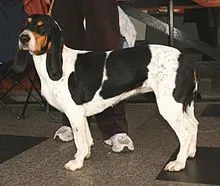
Bernese Hound
Health grade BThe Berner Laufhund is a gentle, incredibly resilient pack hound—bred for independent hunting in alpine terrain, where it tracks game while barking, letting its nose and legs take the lead.
- Height47–59 cm
- Weight12–20 kg
- Life expectancy10–12 yrs
- Puppy price1,500–2,500 €
- Energy4/5
The Essentials at a Glance
The Berner Laufhund is a gentle, incredibly resilient pack hound—bred for independent hunting in alpine terrain, where it tracks game while barking, letting its nose and legs take the lead.
- Health grade B: The Berner Laufhund is a very robust working breed with no known breed-specific hereditary diseases that are a primary focus of breeding programs.
- You enjoy challenging scent work like mantrailing or tracking—simple walks are not enough to tire out this highly specialized searcher.
- You are looking for a very sociable, gentle second dog that appreciates living in a canine group.
- You expect a dog that will turn around immediately when called if it catches a scent—it has been bred for centuries to follow that trail persistently and vocally.
Is the Bernese Hound right for you?
At a glance
Bernese Hound overview
The essentials — key facts, traits, and health priorities — before you dive deeper.
Health grade
Relative to other breeds
S
A
B
C
D
E
Very healthyHigher risk
Solid — a handful of items a good breeder watches.
See full health info & tests →
Note: This health overview is AI-assisted and editorially reviewed. It is for orientation only and does not replace veterinary advice.
Lifespan
10–12 yrs
Height
47–59 cm
Weight
12–20 kg
Practical
- Puppy price: 1,500 – 2,500 €
- Coat: Short, dense, shiny
- Origin: Switzerland
Temperament
Energy
Trainability
Family fit
With kids
Daily life
Care effort
Shedding
Barking
City-friendly
Guard instinct
What matters most
Especially with a Bernese Hound, choosing the right breeder is the single most important decision you'll make. Serious breeders consistently test the parents for inherited conditions, prioritize healthy early socialization, and stay accountable long after handover. A cheap puppy without health screening tends to become the most expensive dog later on.
See HonestDog breeder standards →Colors & coat
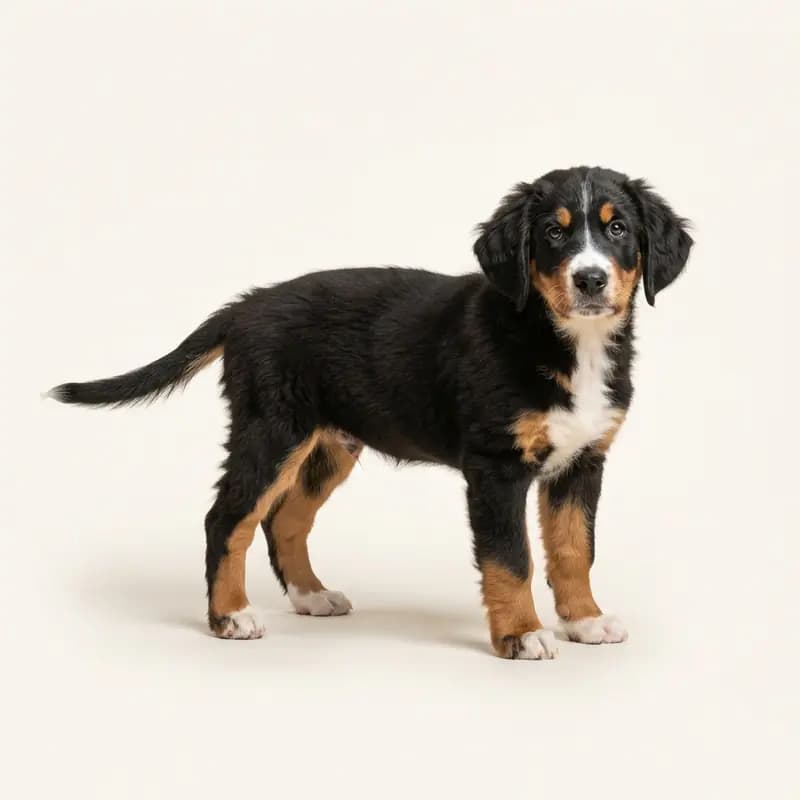
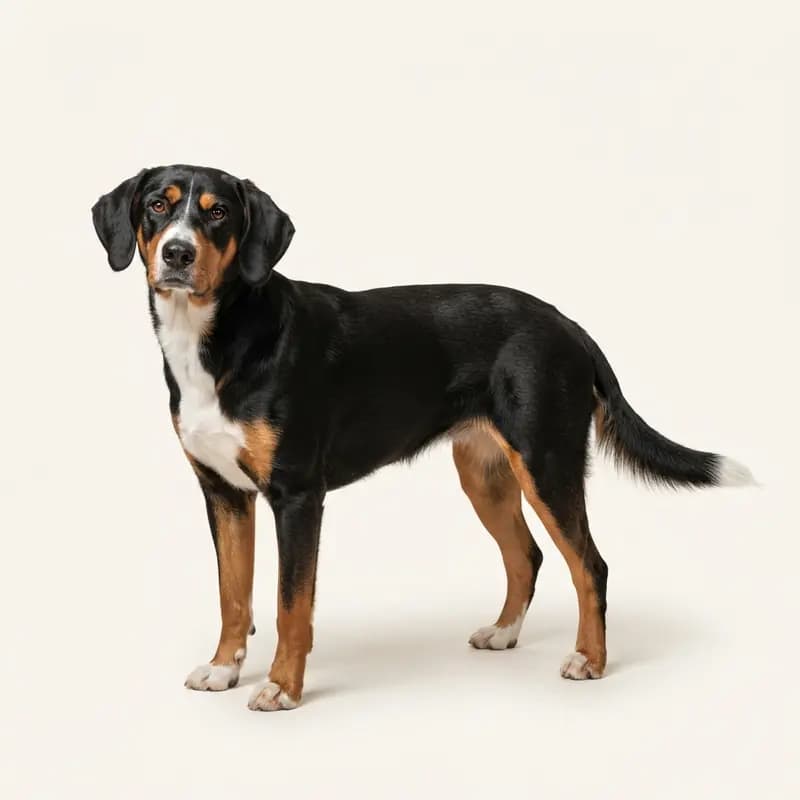
What colors does the Bernese Hound come in?
The coat colors you will see in Bernese Hound litters — including which ones fall outside the breed standard and which carry genetic risk.
Eye colors
 Brown
Brown
Coat type
 Short
Short Smooth
Is the Bernese Hound right for you?
The Berner Laufhund is a gentle, incredibly resilient pack hound—bred for independent hunting in alpine terrain, where it tracks game while barking, letting its nose and legs take the lead.
Perfect for you if:
- You enjoy challenging scent work like mantrailing or tracking—simple walks are not enough to tire out this highly specialized searcher.
- You are looking for a very sociable, gentle second dog that appreciates living in a canine group.
- You live in a rural area and are committed to a strict long-line routine in the woods, as carefree off-leash freedom is often just a pipe dream with this breed.
- You lead with patience and positive reinforcement, as he is an extremely sensitive companion at home who completely shuts down under pressure.
Less ideal if:
- You expect a dog that will turn around immediately when called if it catches a scent—it has been bred for centuries to follow that trail persistently and vocally.
- You live in a thin-walled city apartment, as this breed loves to share its hunting excitement vocally.
- You have to leave him alone for long periods, which is pure stress for a pack hound programmed for constant company.
- You expect blind obedience and quick submission on the training field.
The real vibes check
At home, the Berner Laufhund is as gentle and unobtrusive as a shadow—but as soon as it catches a fresh scent in the woods, it flips a switch and becomes a passionate hunter. You aren't getting a dog that watches your every move, but an independent specialist who gives you its affection while keeping its soul in the forest.
Self-check
Would the Bernese Hound really fit your life?
Answer 6 quick questions about your everyday life and see how well the Bernese Hound fits you — including an honest cost estimate per month, per year, and across the dog's lifetime.
Fit checkCost estimateRisk dice
Takes about 1 minute · free & anonymous
Breed Profile
The Bernese Hound is a medium-sized dog breed that is characterized by its slim yet strong build. Its head is relatively long with drooping ears and expressive eyes, reflecting a friendly and intelligent personality. The Bernese Hound has a strong, straight back and well-developed muscles that emphasize its agility and endurance. These dogs belong to FCI Group 6, which includes scent hounds, bloodhounds and related breeds. There are no specific lines focused on show or performance, meaning all Bernese Hounds are bred for both working and show purposes. They have an even body shape that is neither exaggerated nor understated, reflecting their abilities as working dogs.
All measurements in detail
- Height
- 47 - 57 cm (Female), 49 - 59 cm (Male)
- Weight
- 12 - 18 kg (Female), 14 - 20 kg (Male)
- Life Expectancy
- 10 - 12 yrs
- Character
- Energetic, friendly, intelligent
- Coat
- Short, dense, shiny
- Coat Color
- White with black and red markings
- Price
- 1500 - 2500 €
Character & Temperament
Bernese Hounds are naturally active and lively dogs with a friendly and outgoing nature. They are known for their endurance and desire to run and explore, making them excellent companions for active people. They love being part of the family and are known for their affection and people-oriented nature. Their temperament is active rather than calm, meaning they need regular exercise and mental stimulation to stay happy and healthy. They are intelligent and willing to learn, which increases their trainability and makes them a good choice for dog sports such as agility or obedience. Bernese Hounds can stay alone well if they are properly prepared and trained. However, they tend to develop separation anxiety when left alone for long periods of time. It is therefore important that they spend enough time with their family and are not left alone for long periods of time. Despite their friendly and outgoing nature, Bernese Hounds can display strong hunting behavior. They were bred to hunt and therefore have a strong prey drive. This means that they should always be supervised when going on walks or playing outside to ensure that they do not run off to pursue an interesting smell or movement. Bernese Hounds are also known as vigilant dogs that protect their family and home. They are not aggressive, but can be wary of strangers until they are sure they do not pose a threat. This makes them good watchdogs, alerting their family to possible threats. Overall, Bernese Hounds are lively and active dogs that need a loving and active family. They are intelligent and willing to learn, making them well suited to a variety of activities and sports. Their friendly and open-minded nature makes them wonderful companions who fit well into a family and can lead a fulfilling and happy life.
| Trainability Has its own ideas and will test limits. | Strong-willed |
| Watchfulness Reports unusual activity but stays controlled. | Moderate |
| Openness to Strangers Warms up quickly and is generally welcoming. | Friendly |
| Hunting or Herding Drive This drive runs deep — no amount of training eliminates it. | Very strong |
Fun Fact!
Did you know that the Bernese Hound is one of the four Swiss Hound breeds, all of which have different colors and patterns but are otherwise very similar? The Bernese Hound is the only one with a black and white coat, which makes him unique among his Swiss counterparts!
What Awaits You
The Bernese Hound is a friendly and enduring hunting dog, valued for its good nose and balanced character. It requires regular exercise and mental stimulation to remain balanced. Bernese Hounds are family-friendly and usually patient when dealing with children. Due to their hunting background, they are active and need consistent but loving training.
Housing & Care
The Bernese Hound's active lifestyle and hunting instinct make it more suitable for rural areas or houses with large gardens than for city life. He needs a lot of exercise and activity and enjoys long walks or runs in nature. Although Bernese Hounds generally get along well with children and other pets, they should always be kept in mind due to their hunting instincts. They are naturally friendly and tolerable, but as with all dog breeds, any interaction between dogs and children should always be supervised.
- Family Friendly
Lives for its family — the born family companion.
Ideal family dog - Child Friendly
Extraordinarily patient and loving — a true family dog.
Excellent with children - Dog Friendly
Actively enjoys the company of other dogs.
Dog-friendly - City Friendly
Can manage in the city, but only with very active owners.
Difficult in cities
Owning a dog is a privilege, but it's also a real responsibility. Before you bring one into your life, be honest with yourself about the commitment it takes.
Training & Education
Because of their intelligence and active temperament, Bernese Hounds are suited to a variety of activities and sports. They are willing to learn and enjoy mental and physical activity, which is why they are well suited to dog sports such as agility or obedience. Despite their willingness to learn new things, there is a possibility that they will become "ball junkies." if they are overly occupied with ball games. It is therefore important to offer them a variety of activities and help them learn frustration tolerance and impulse control.
Nutrition & Care
The Bernese Hound's diet should be high quality and balanced to support his active lifestyle. A mix of high-quality dry and wet food enriched with fresh meat, fruit and vegetables can support a healthy diet. It's important to adjust the amount of food according to your dog's activity level and size to ensure a healthy weight. In terms of care, the Bernese Hound is quite easy to care for. He has a short, dense coat with no undercoat that requires minimal grooming. A weekly brushing is usually enough to remove dead hair and keep the coat clean and shiny. Despite the lack of undercoat, the Bernese Hound copes well with the German climate. However, since it originally comes from the temperate zones of Switzerland, you should take additional precautions in extreme heat or cold.
| Care Level Minimal effort — occasional brushing and bathing. | Low-maintenance |
| Exercise Needs Needs several hours of serious exercise every day. | Very active |
| Shedding Regular shedding — dog hair on clothes is now normal. | Moderate |
| Trainability Has its own ideas and will test limits. | Strong-willed |
Our experts are still reviewing this information. Spotted something wrong? Email us at info@honestdog.de.
Health & hereditary diseases
Health
B
Solid
Health grade
The Berner Laufhund is a very robust working breed with no known breed-specific hereditary diseases that are a primary focus of breeding programs. Nevertheless, buyers should check for hip dysplasia (HD) and elbow dysplasia (ED) in the parent dogs, as these conditions can occur in larger scent hounds. Additionally, due to the breed's long, floppy ears, they are prone to painful ear infections (otitis externa).
Grade is relative to other breeds — AI-assisted and editorially reviewed.
In daily life this can mean
You should regularly check and clean their long, hanging ears and ensure they are raised in a way that is gentle on their joints to prevent inflammation and orthopedic issues.
The breeder's role
Reputable breeders have the parents' hips, elbows, and eyes tested and prioritize healthy, resilient ears to minimize health risks in the bloodline.
Note: This health overview is AI-assisted and editorially reviewed. It is for orientation only and does not replace veterinary advice.
No Health Tests Available
No specific health tests are currently available for this breed.
Costs & where to find one
How much does a Bernese Hound cost?
A Bernese Hound costs around ~€170 per month (€90 – €310, depending on your setup). The first year adds up to roughly ~€4,830 including purchase, equipment and puppy school; across the dog's life (11 years) it comes to about ~€24,840.
With surgery cover, running costs come to about ~€160 per month — in return, your share of a major operation drops from several thousand euros to around 20 percent.
Per month
~€170
In the first year
~€4,830
Across the dog's life
~€24,840
Purchase from a breeder: €1,500 – €2,500
Estimate at a mid-range setup (suburban, dry food, 1–2 hours of daily exercise), average German prices, as of July 2026.
Calculate your personal costs1-minute self-check with your own answers
Looking for a Bernese Hound?
HonestDog Concierge
No verified Bernese Hound breeders on HonestDog yet
We currently have no breeders for this breed who have passed our verification. Create your short buyer profile: we'll set up your search alert, review a possible source and email you within 28 days.
Appearance, variants & origin
History
The full history
The Bernese Hound's origins lie in Switzerland, where it has been valued as a working dog for centuries. He is known for his abilities as a scent hound, and his history is closely linked to hunting and use in difficult terrain. The breed is named after the canton of Bern, where it is believed to have originated. Bernese Hounds were originally used to track down game and are still known today for their remarkable noses. They were used for hunting small game as well as tracking larger animals such as wild boar and deer. The Bernese Hounds were mentioned in Swiss documents as early as the 15th century and have been bred continuously since then. They were officially recognized as an independent breed by the FCI in 1933. Despite their long history and contribution to the working and hunting dog scene, Bernese Hounds are relatively unknown outside of Switzerland. However, they are highly valued in their homeland and are still widespread there.
Original Use
The Bernese Hound was bred to hunt rabbits and other game in the Bernese Alps and is known for its endurance.
Origin
Switzerland
Date
1900
Owner experiences
What owners say about the Bernese Hound
Thomas M., Jäger aus Graubünden (Rüde, seit 2021)
Ich führe meinen Berner Laufhund-Rüden jetzt seit einigen Jahren aktiv im Jagdbetrieb. Draußen im Revier ist er eine absolute Naturgewalt. Sobald er eine Fährte in der Nase hat, schaltet er komplett auf stur und jagt mit tiefem Fang und einem unüberhörbaren, wunderschönen Geläut. In diesen Momenten blendet er alles andere um sich herum aus – das muss man als Hundeführer händeln können, denn er jagt sehr weiträumig und ausdauernd.
Umso erstaunlicher ist der Kontrast, wenn wir wieder zu Hause sind. Drinnen ist er die Ruhe selbst, extrem anhänglich und sucht ständig den Kontakt zu meiner Familie. Er ist absolut kinderlieb und sensibel. Man darf bei der Erziehung niemals mit Härte arbeiten, das würde diese feinfühlige Rasse völlig verstören. Für mich der perfekte Jagd- und Familienbegleiter.
Sabine W., Halterin aus Oberbayern (Hündin, seit 2020)
Als Nicht-Jägerin habe ich mich damals unsterblich in das elegante Aussehen und das freundliche Wesen des Berner Laufhundes verliebt. Uns wurde vom Züchter gesagt, dass man sie mit gutem Ersatzprogramm auch ohne Jagdschein halten kann. Das stimmt zwar, ist aber ein echtes Stück Arbeit! Ohne Leine laufen lassen im Wald ist bei uns unmöglich. Sobald meine Hündin Wild riecht, ist sie weg und schaltet auf Durchzug – typisch Bracke eben, stur und extrem fokussiert auf die Nase.
Unsere Rettung war das Mantrailing. Hier kann sie ihre unglaubliche Passion und feine Nase ausleben, danach ist sie im Haus tiefenentspannt, sanftmütig und kuschelt unglaublich gerne. Wer sich so einen Hund holt, muss wissen, dass man das jagdliche Erbe nicht einfach wegerziehen kann. Man muss damit arbeiten.
Dieter S., Halter aus Thüringen (Rüde, seit 2022)
Wir haben unseren Berner Laufhund aus dem Tierschutz übernommen und mussten anfangs einiges dazulernen. Diese Hunde sind extrem bewegungsfreudig und brauchen neben dem täglichen Auslauf unbedingt geistige Beschäftigung für den Kopf. Wenn er unterfordert ist, merkt man das sofort: Er neigt dann schnell dazu, unruhig zu werden, und wir mussten das Alleinebleiben ganz kleinschrittig aufbauen, da er anfangs starke Trennungsangst zeigte und lautstark angeschlagen hat.
Mit viel Geduld, positiver Verstärkung und regelmäßigen Suchspielen haben wir es aber super hingetrimmt. Er ist ein unglaublich treuer, sensibler Kerl, der sehr wachsam ist und uns sofort Bescheid gibt, wenn sich jemand dem Grundstück nähert. Gegenüber Fremden ist er anfangs zwar etwas misstrauisch, aber niemals aggressiv. Ein toller Hund, der aber eine konsequente, liebevolle Hand braucht.
Paraphrased from real owner reports
Loading owner stories
FAQ & more
Frequently asked questions about the Bernese Hound
Is a Bernese Hound the right dog for me?
The Bernese Hound is an active dog that needs plenty of exercise and mental stimulation. Research the temperament, grooming needs, and space requirements before deciding.
How long does a Bernese Hound live?
The average life expectancy of a Bernese Hound is 10-12 years. With proper care and regular vet visits, your dog can live a long, healthy life.
How much grooming does a Bernese Hound need?
Bernese Hound grooming requirements include regular brushing, nail trimming, and dental care. HonestDog provides detailed grooming tips for every breed.
Is a Bernese Hound good for families with children?
The Bernese Hound can be a great family dog. Proper training and socialization are key. HonestDog provides family suitability information for every breed.
What colors does the Bernese Hound come in?
The Bernese Hound comes in these colors: Tricolor.
Loading related articles
Are you a Bernese Hound breeder?
Showcase your kennel on HonestDog and reach families searching for a responsibly bred Bernese Hound.
Why HonestDog?
What makes HonestDog different from other platforms
Full transparency
We lay out what we have: who the breeder is, how they work, and any health records they've uploaded. So you can judge for yourself.
Responsible breeding, assured
Every breeder on HonestDog has their identity and documents checked before their profile goes live. Health records they upload are shown on the profile, so you can see exactly what has been tested.
Trust and verification
We verify breeders and buyers alike, so every conversation happens on solid ground. It's a new standard of trust in dog breeding.
Less hassle, more time
We've already checked the breeders' documents and gathered the details, so you can skip the endless research and focus on finding the right puppy for your family.
Our Mission

We connect dog lovers with responsible breeders and shelters to ensure every dog finds the perfect home.
Founded by dog enthusiasts, our platform focuses on ethical dog breeding and adoption.
Why HonestDog?
We connect you with vetted breeders and shelters so you can find your — your new companion — with confidence.
Vetted Partners
Only verified breeders and shelters — for a safe start.
Highest Standards
Every animal's health and wellbeing is our top priority.
Guides & Resources
Guides, checklists, and breed profiles — so you can make a well-informed decision.