Loading breed
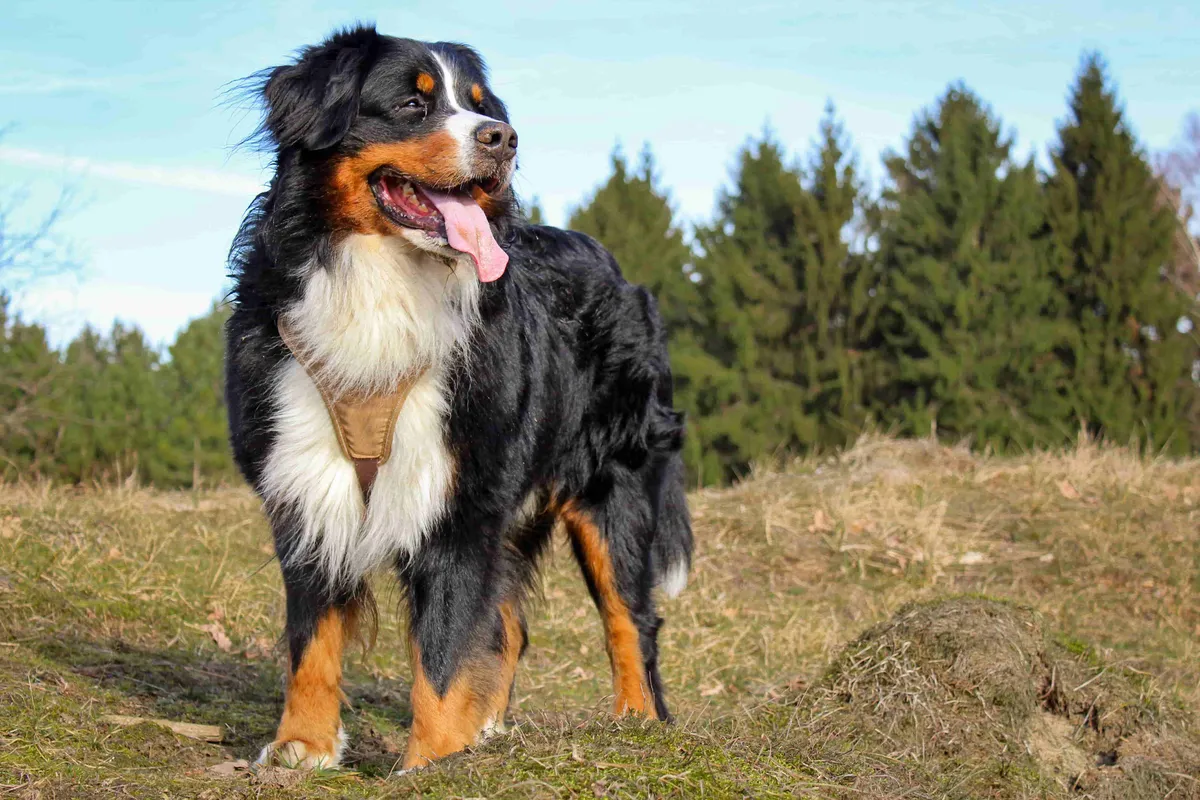
Bernese Mountain Dog
Health grade DThe Berner Sennenhund is a massive, extremely people-oriented farm and draft dog—bred to pull heavy carts in the harsh Swiss climate and guard the property without ever being aggressive.
- Height58–70 cm
- Weight36–50 kg
- Life expectancy6–8 yrs
- Puppy price1,800–3,000 €
- Energy4/5
The Essentials at a Glance
The Berner Sennenhund is a massive, extremely people-oriented farm and draft dog—bred to pull heavy carts in the harsh Swiss climate and guard the property without ever being aggressive.
- Health grade D: The Bernese Mountain Dog reaches an average age of only about seven and a half to eight and a half years, with cancers being responsible for over half of all deaths, and histiocytic sarcoma (a form of histiocytosis) alone accounting for about one-seventh.
- You own a house with a garden or yard where he can lie outside and keep watch in any weather
- You prefer walks at a moderate pace and might even enjoy harnessing him to a cart as a draft dog
- You are looking for an athletic companion for jogging or cycling in the summer—heat and endurance sports are torture for his build
Is the Bernese Mountain Dog right for you?
At a glance
Bernese Mountain Dog overview
The essentials — key facts, traits, and health priorities — before you dive deeper.
Health grade
Relative to other breeds
S
A
B
C
D
E
Very healthyHigher risk
Elevated risk — responsible breeding really matters.
See full health info & tests →
Note: This health overview is AI-assisted and editorially reviewed. It is for orientation only and does not replace veterinary advice.
Lifespan
6–8 yrs
Height
58–70 cm
Weight
36–50 kg
Practical
- Puppy price: 1,800 – 3,000 €
- Coat: Long, silky, undercoat present
- Origin: Switzerland
Temperament
Energy
Trainability
Family fit
With kids
Daily life
Care effort
Shedding
Barking
City-friendly
Guard instinct
What matters most
Especially with a Bernese Mountain Dog, choosing the right breeder is the single most important decision you'll make. Serious breeders consistently test the parents for inherited conditions, prioritize healthy early socialization, and stay accountable long after handover. A cheap puppy without health screening tends to become the most expensive dog later on.
See HonestDog breeder standards →Colors & coat
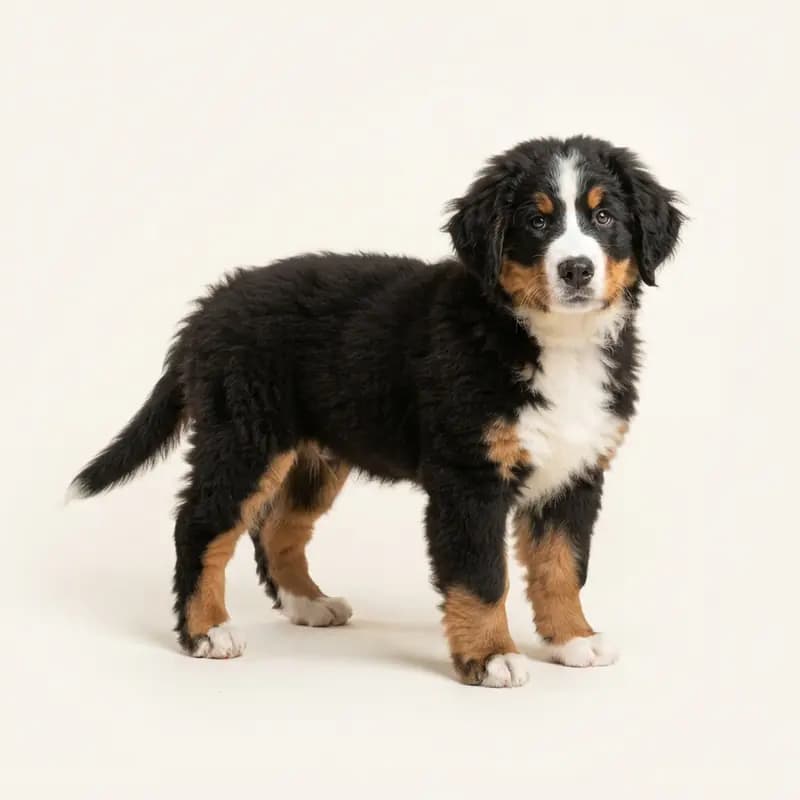
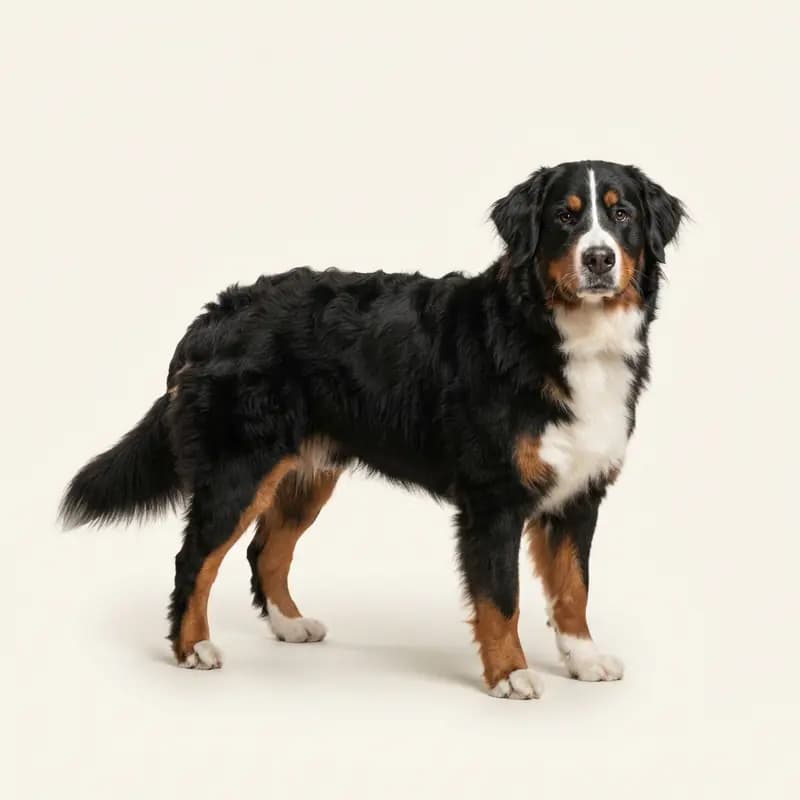
What colors does the Bernese Mountain Dog come in?
The coat colors you will see in Bernese Mountain Dog litters — including which ones fall outside the breed standard and which carry genetic risk.
Eye colors
 Brown
Brown
Coat type
 Long
Long Double coat
Is the Bernese Mountain Dog right for you?
The Berner Sennenhund is a massive, extremely people-oriented farm and draft dog—bred to pull heavy carts in the harsh Swiss climate and guard the property without ever being aggressive.
Perfect for you if:
- You own a house with a garden or yard where he can lie outside and keep watch in any weather
- You prefer walks at a moderate pace and might even enjoy harnessing him to a cart as a draft dog
- You are looking for a good-natured, steady-nerved family dog who takes the hustle and bustle of the house with stoic calm
- You can handle a healthy dose of stubbornness—he likes working with you, but always at his own leisurely pace
Less ideal if:
- You are looking for an athletic companion for jogging or cycling in the summer—heat and endurance sports are torture for his build
- You have to leave him alone for hours every day, as this dog will emotionally wither without close contact with his humans
- You place great value on a spotless house—long fur, thick undercoat, and plenty of dirt are standard equipment for him
The real vibes check
A Berner Sennenhund is always lying exactly where you want to walk—and that is no coincidence, but his deeply ingrained job as an observer of the family pack. He is not a dog for blind obedience or high athletic performance, but a stoic rock in the surf. If you appreciate his deliberate nature, you get a loyal shadow in bear format who would go through fire for you, as long as he doesn't have to run to do it.
Self-check
Would the Bernese Mountain Dog really fit your life?
Answer 6 quick questions about your everyday life and see how well the Bernese Mountain Dog fits you — including an honest cost estimate per month, per year, and across the dog's lifetime.
Fit checkCost estimateRisk dice
Takes about 1 minute · free & anonymous
Breed Profile
The Bernese Mountain Dog is an impressive presence. He belongs to FCI Group 2, Section 3, which includes the Swiss Mountain Dogs. Its majestic, long and silky coat, strong stature and distinctive tricolor pattern make it unmistakable. The fur is black with rusty red and white markings. Bernese Mountain Dogs have a strong and harmonious body structure. They are strong and agile, reflecting their original use as farm working dogs. This breed does not differentiate between performance and show lines. It is important to note that the Bernese Mountain Dog's coat requires regular care to prevent matting and tangles.
All measurements in detail
- Height
- 58 - 66 cm (Female), 64 - 70 cm (Male)
- Weight
- 36 - 48 kg (Female), 39 - 50 kg (Male)
- Life Expectancy
- 6 - 8 yrs
- Character
- Meek, loyal, kind
- Coat
- Long, silky, undercoat present
- Coat Color
- Tricolor (black, white, rust red)
- Price
- 1800 - 3000 €
Character & Temperament
The Bernese Mountain Dog is an exceptionally gentle and friendly dog, often referred to as a "gentle giant". His loving nature makes him a wonderful family dog. He is very people-oriented and builds a strong bond with his family. This also makes him a good companion for children, although of course it is always important to supervise interactions between dogs and children. The Bernese Mountain Dog has a rather calm temperament, but is still playful and enjoys family activities. His alertness and protective instinct are still present, which is why he is also a good watchdog without being aggressive. However, this should not be confused with an overprotective instinct, as they are usually well socialized and friendly towards strangers. Because the Bernese Mountain Dog was originally used as a working dog, it has a certain level of energy that should be expended through regular exercise and mental stimulation. At the same time, you should be careful not to overwhelm him, especially at a young age, as this can put strain on his joints. The Bernese Mountain Dog does not particularly exhibit hunting or prey-catching behavior, but as with all dogs, this can vary from person to person. It is important to socialize him well from an early age and give him a clear structure, otherwise he can tend to be a bit stubborn. As for being alone, the Bernese Mountain Dog can learn to stay alone for short periods of time, but due to his close bond with his family, this should not be overused. Long periods of alone time are not suitable for him. Overall, the Bernese Mountain Dog is a loving, loyal and gentle breed that fits wonderfully into family life and is a reliable companion. For people who are willing to dedicate themselves to grooming and exercise needs and want to build a close bond with their dog, the Bernese Mountain Dog is a wonderful choice.
| Trainability Willing to learn with clear rules and regular training. | Balanced |
| Watchfulness Reports unusual activity but stays controlled. | Moderate |
| Openness to Strangers Neither pushily friendly nor suspicious. | Neutral |
| Hunting or Herding Drive Mild interest in movement and small animals — easily managed. | Low |
Fun Fact!
Bernese Mountain Dogs were known in Switzerland as draft animals that transported milk cans to dairies.
What Awaits You
Bernese Mountain Dogs are considered sociable, calm dogs. They can also be territorial and wary, as well as unfriendly towards strangers. As with many large breeds, life expectancy is rather short. Common problems include musculoskeletal disorders and cancer.
Housing & Care
Due to their size and need for exercise, Bernese Mountain Dogs are not necessarily suited to city life in a small apartment. They thrive in environments with plenty of space to move and play. They are very family oriented and tend to get along well with children, although it is important to monitor the interaction. They can also get along with cats and other pets, especially if they are raised together from an early age.
- Family Friendly
Lives for its family — the born family companion.
Ideal family dog - Child Friendly
Extraordinarily patient and loving — a true family dog.
Excellent with children - Dog Friendly
Actively enjoys the company of other dogs.
Dog-friendly - City Friendly
Can manage in the city, but only with very active owners.
Difficult in cities
Owning a dog is a privilege, but it's also a real responsibility. Before you bring one into your life, be honest with yourself about the commitment it takes.
Training & Education
Bernese Mountain Dogs are intelligent and trainable dogs, but training them requires patience and consistency. It's important to teach them frustration tolerance and impulse control early on so that they grow into well-behaved adults. Because of their work history, they enjoy activities that challenge both their bodies and their minds. Suitable activities can include pulling dogs or agility. Although they enjoy a good level of activity, it is important to be careful not to "over-occupy" the dog as this can lead to stress and joint problems. Ball games should be enjoyed with caution as Bernese Mountain Dogs tend to become ball junkies.
Nutrition & Care
Bernese Mountain Dogs benefit from a balanced diet tailored to their specific needs. Because of their size and activity, they require a diet rich in proteins and healthy fats. Make sure you choose food that is suitable for large breeds and does not contain unnecessary fillers. Regarding coat care: Bernese Mountain Dogs have long, silky fur with a dense undercoat. They tend to shed, especially during shedding periods. Regular brushing (several times a week) is necessary to prevent mats and keep the skin healthy. Their undercoat insulates them well, so they can cope with the German climate.
| Care Level Needs regular professional grooming — time-consuming and costly. | High-maintenance |
| Exercise Needs Needs several hours of serious exercise every day. | Very active |
| Shedding Hair everywhere, always — no white clothing survives. | Very heavy |
| Trainability Willing to learn with clear rules and regular training. | Balanced |
Our experts are still reviewing this information. Spotted something wrong? Email us at info@honestdog.de.
Health & hereditary diseases
Health
D
Elevated risks
Health grade
The Bernese Mountain Dog reaches an average age of only about seven and a half to eight and a half years, with cancers being responsible for over half of all deaths, and histiocytic sarcoma (a form of histiocytosis) alone accounting for about one-seventh. In addition to this cancer predisposition, the breed frequently suffers from severe joint problems such as hip dysplasia (HD) and elbow dysplasia (ED), as well as the degenerative spinal cord disease Degenerative Myelopathy. A health-oriented breeder actively counteracts this by having their breeding animals comprehensively tested and only mating dogs that achieve a limit of grade C or better for HD and ED-1 or better for ED. When buying a puppy, make sure you are shown the complete official findings of the parent animals for HD, ED, Osteochondritis dissecans (OCD), Ectopic Ureter (EU), as well as the DNA test results for Degenerative Myelopathy (limit: clear or carrier, whereby carriers may only be mated with clear partners).
Grade is relative to other breeds — AI-assisted and editorially reviewed.
In daily life this can mean
You should focus on joint-friendly rearing, a healthy body weight, and regular checks for lumps—for example through preventative screenings—to maintain his vitality for as long as possible.
The breeder's role
Reputable breeders have hips and elbows checked and use genomic tests as well as the life data of ancestors to consistently reduce the risk of cancer and neurological diseases in the bloodline.
Note: This health overview is AI-assisted and editorially reviewed. It is for orientation only and does not replace veterinary advice.
No Health Tests Available
No specific health tests are currently available for this breed.
Costs & where to find one
How much does a Bernese Mountain Dog cost?
A Bernese Mountain Dog costs around ~€220 per month (€110 – €420, depending on your setup). The first year adds up to roughly ~€5,840 including purchase, equipment and puppy school; across the dog's life (7 years) it comes to about ~€21,510.
With surgery cover, running costs come to about ~€220 per month — in return, your share of a major operation drops from several thousand euros to around 20 percent.
Per month
~€220
In the first year
~€5,840
Across the dog's life
~€21,510
Purchase from a breeder: €1,800 – €3,000
Estimate at a mid-range setup (suburban, dry food, 1–2 hours of daily exercise), average German prices, as of July 2026.
Calculate your personal costs1-minute self-check with your own answers
Looking for a Bernese Mountain Dog?
Appearance, variants & origin
History
The full history
The Bernese Mountain Dog originally comes from Switzerland and is one of the four mountain dog breeds, also known as Swiss Mountain Dogs. The Bernese Mountain Dog takes its name from the Bern region where it was primarily used. The breed is believed to have descended from the Molossians, which were brought by the Romans as they crossed the Alps in ancient times. Bernese Mountain Dogs were used as working dogs on farms. Their duties included herding and guarding livestock, pulling milk can carts and protecting the house and farm. The breed was also known for its ability to form strong bonds with its family and act as both a working dog and a loving companion. The breed was recognized as a separate breed in 1907 and its popularity has steadily increased since then. Today, Bernese Mountain Dogs are best known as family dogs and valued for their gentle nature and loyalty.
Original Use
The Bernese Mountain Dog was used as a versatile farm dog for herding livestock, pulling carts and as a guard dog.
Origin
Switzerland
Date
1900
Owner experiences
What owners say about the Bernese Mountain Dog
Jörg S., Halter aus Essen (Rüde, 2002–2009)
Unser Fero war die Gutmütigkeit in Person. Er war unglaublich lieb, ein absolut sanfter Riese und der beste Kumpel, den man sich für die Familie und Kinder nur wünschen konnte. Er war sehr menschenbezogen und wollte am liebsten immer mitten im Geschehen sein. Aggressivität war für ihn ein Fremdwort, er war einfach ein großer, kuscheliger Bär.
Das größte und traurigste Problem dieser wunderbaren Rasse ist jedoch die Gesundheit. Fero ist leider mit nicht einmal 7 Jahren an Leukämie verstorben. Wenn man sich in Foren umhört, merkt man schnell, wie extrem hoch das Krebsrisiko (wie zum Beispiel die Maligne Histiozytose) beim Berner Sennenhund ist. Viele Hunde sterben viel zu jung, oft schon mit 5 oder 6 Jahren. Das bricht einem einfach das Herz und man muss sich dieses gesundheitlichen Risikos vor dem Kauf absolut bewusst sein.
Sabine M., Halterin aus Bayern (Rüde, seit 2018)
Für uns ist unser Rüde ein absoluter Traumhund. Er ist wachsam, passt gut auf unser Grundstück auf, ist dabei aber nie unbegründet aggressiv. Am liebsten liegt er stundenlang draußen im Garten und beobachtet alles. Er ist extrem schmusig und anhänglich, ein echter 'Klette-Hund', der am liebsten überall dabei wäre.
Man darf aber die rassetypische Sturheit nicht unterschätzen. Wenn ein Berner mal keine Lust hat, stellt er komplett auf stur – und bei fast 50 kg Lebendgewicht bewegt man den Hund dann nicht mehr so leicht. Da braucht es von Anfang an eine sehr konsequente, aber liebevolle Erziehung. Zudem ist der Pflegeaufwand enorm. Das lange Fell schleppt unheimlich viel Dreck ins Haus und nach einem Regenschauer riecht er auch mal recht intensiv nach Hund.
Christiane K., Halterin aus Niedersachsen (Rüde, seit 2021)
Viele Leute denken ja, der Berner Sennenhund sei von Natur aus eine träge Schlaftablette, die einfach so nebenherläuft. Unser Apollo hat uns in seiner Pubertät eines Besseren belehrt! Mit anderthalb Jahren war er agil wie ein Flummi und extrem gelenkig. Er brauchte in dieser Flegelphase eine sehr klare Struktur und viel Beschäftigung, um seine Energie sinnvoll zu kanalisieren.
Man muss im ersten Lebensjahr extrem aufpassen, den Hund körperlich nicht zu überfordern, da die schweren Knochen und Gelenke im Wachstum sehr anfällig sind. Treppensteigen war bei uns tabu. Außerdem ist er so extrem auf uns fixiert, dass ihm das Alleinsein sichtlich schwerfällt. Wir haben es langsam trainiert, aber länger als zwei, drei Stunden lassen wir ihn nie allein, weil er einfach seine Menschen braucht.
Paraphrased from real owner reports
Loading owner stories
Community Posts
FAQ & more
Frequently asked questions about the Bernese Mountain Dog
Is a Berner Sennenhund the right dog for me?
The Berner Sennenhund is an active dog that needs plenty of exercise and mental stimulation. Research the temperament, grooming needs, and space requirements before deciding.
How long does a Berner Sennenhund live?
The average life expectancy of a Berner Sennenhund is 6-8 years. With proper care and regular vet visits, your dog can live a long, healthy life.
How much grooming does a Berner Sennenhund need?
Berner Sennenhund grooming requirements include regular brushing, nail trimming, and dental care. HonestDog provides detailed grooming tips for every breed.
Is a Berner Sennenhund good for families with children?
The Berner Sennenhund can be a great family dog. Proper training and socialization are key. HonestDog provides family suitability information for every breed.
What colors does the Berner Sennenhund come in?
The Berner Sennenhund comes in these colors: Tricolor.
Loading related articles
Are you a Bernese Mountain Dog breeder?
Showcase your kennel on HonestDog and reach families searching for a responsibly bred Bernese Mountain Dog.
Why HonestDog?
What makes HonestDog different from other platforms
Full transparency
We lay out what we have: who the breeder is, how they work, and any health records they've uploaded. So you can judge for yourself.
Responsible breeding, assured
Every breeder on HonestDog has their identity and documents checked before their profile goes live. Health records they upload are shown on the profile, so you can see exactly what has been tested.
Trust and verification
We verify breeders and buyers alike, so every conversation happens on solid ground. It's a new standard of trust in dog breeding.
Less hassle, more time
We've already checked the breeders' documents and gathered the details, so you can skip the endless research and focus on finding the right puppy for your family.
Our Mission

We connect dog lovers with responsible breeders and shelters to ensure every dog finds the perfect home.
Founded by dog enthusiasts, our platform focuses on ethical dog breeding and adoption.
Why HonestDog?
We connect you with vetted breeders and shelters so you can find your — your new companion — with confidence.
Vetted Partners
Only verified breeders and shelters — for a safe start.
Highest Standards
Every animal's health and wellbeing is our top priority.
Guides & Resources
Guides, checklists, and breed profiles — so you can make a well-informed decision.