Loading breed
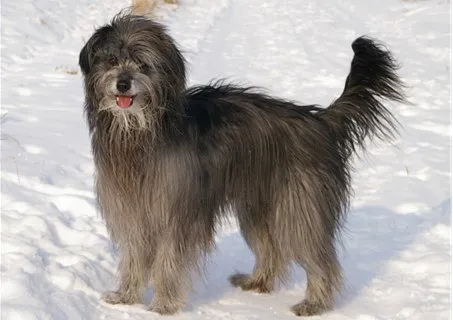
Pyrenean Shepherd
Health grade AThe Berger des Pyrénées is a highly sensitive, lightning-fast Hütehund (herding dog)—bred to guide flocks autonomously in the rugged mountains, often responding to nothing more than a whistle. This constant state of alert makes him a brilliant, yet demanding companion.
- Height40–48 cm
- Weight8–15 kg
- Life expectancy12–15 yrs
- Puppy price1,000–2,500 €
- Energy4/5
The Essentials at a Glance
The Berger des Pyrénées is a highly sensitive, lightning-fast Hütehund (herding dog)—bred to guide flocks autonomously in the rugged mountains, often responding to nothing more than a whistle. This constant state of alert makes him a brilliant, yet demanding companion.
- Health grade A: The Berger des Pyrénées is considered a robust working breed with an average health profile.
- You are looking for a true working partner for agility, Hoopers, or complex trick training—simple walks are not enough to tire out this agile bundle of energy.
- You lead with calm confidence and subtle communication, as he reacts to harshness or inconsistency with immediate stress.
- You live in an apartment with thin walls—he was bred to report every deviation in his environment immediately and vocally.
Is the Pyrenean Shepherd right for you?
At a glance
Pyrenean Shepherd overview
The essentials — key facts, traits, and health priorities — before you dive deeper.
Health grade
Relative to other breeds
S
A
B
C
D
E
Very healthyHigher risk
Very healthy — limited common concerns.
See full health info & tests →
Note: This health overview is AI-assisted and editorially reviewed. It is for orientation only and does not replace veterinary advice.
Lifespan
12–15 yrs
Height
40–48 cm
Weight
8–15 kg
Practical
- Puppy price: 1,000 – 2,500 €
- Coat: Longhair with a dense undercoat or shorthair with a fine undercoat
- Origin: France
Temperament
Energy
Trainability
Family fit
With kids
Daily life
Care effort
Shedding
Barking
City-friendly
Guard instinct
What matters most
Especially with a Pyrenean Shepherd, choosing the right breeder is the single most important decision you'll make. Serious breeders consistently test the parents for inherited conditions, prioritize healthy early socialization, and stay accountable long after handover. A cheap puppy without health screening tends to become the most expensive dog later on.
See HonestDog breeder standards →Colors & coat
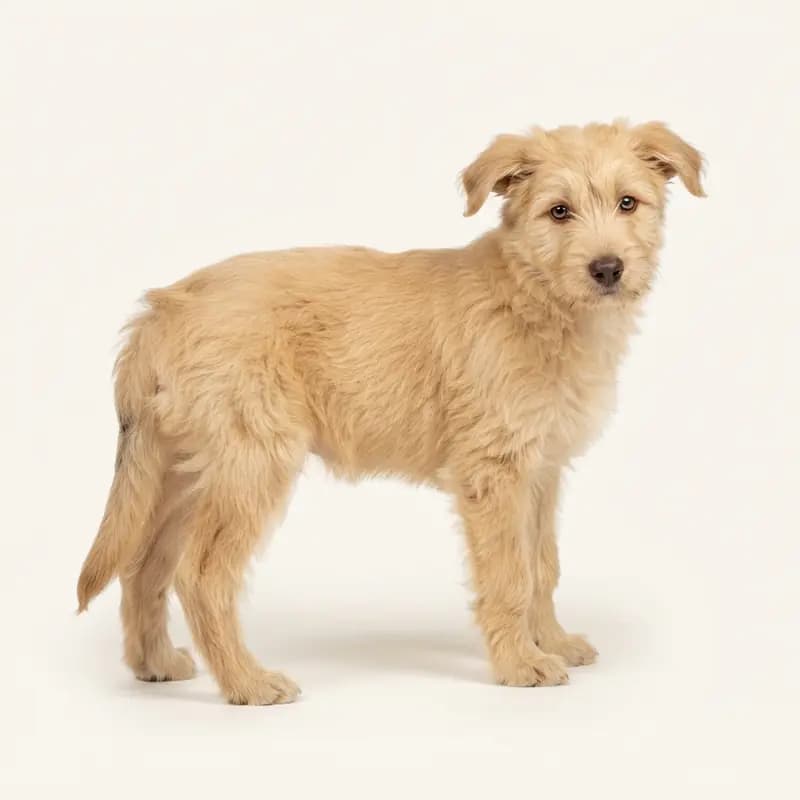
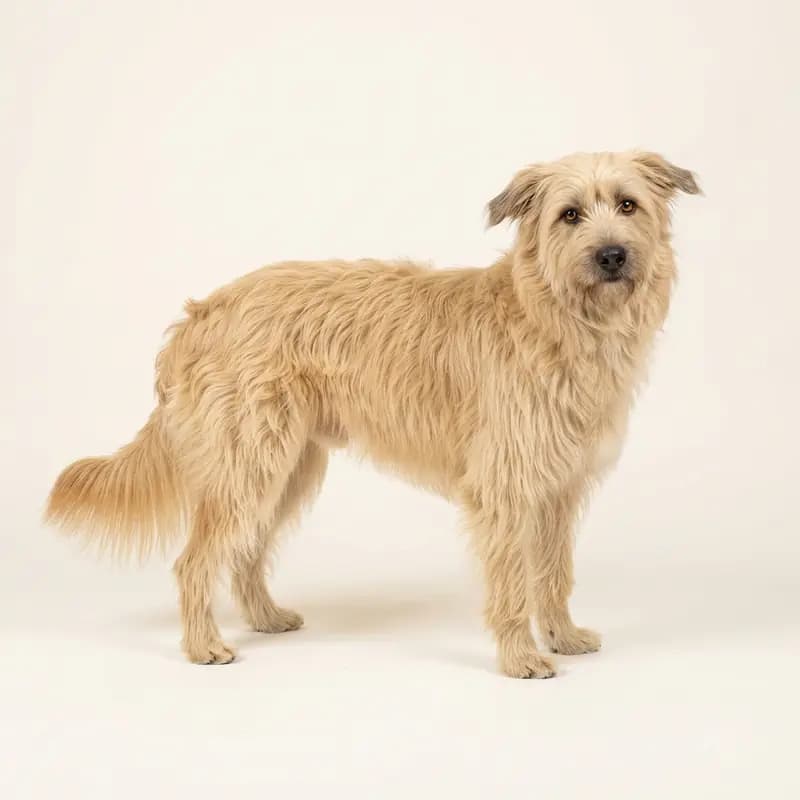
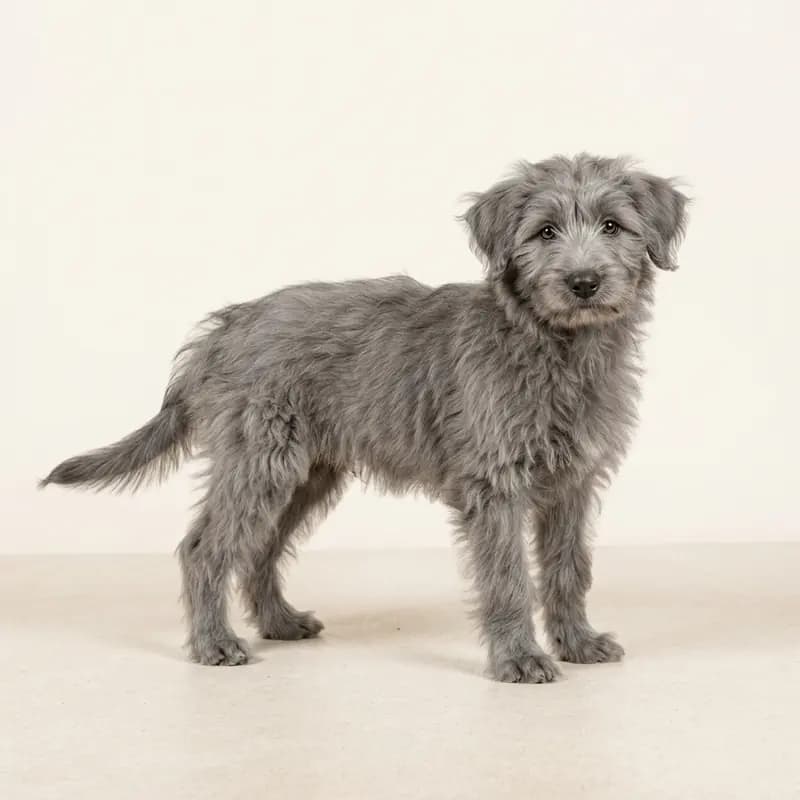
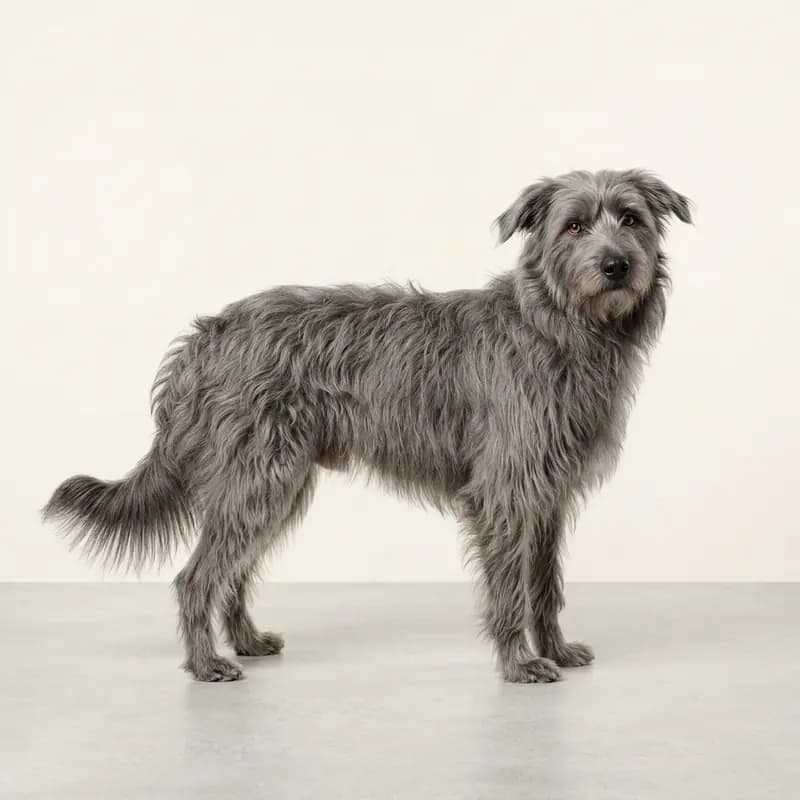
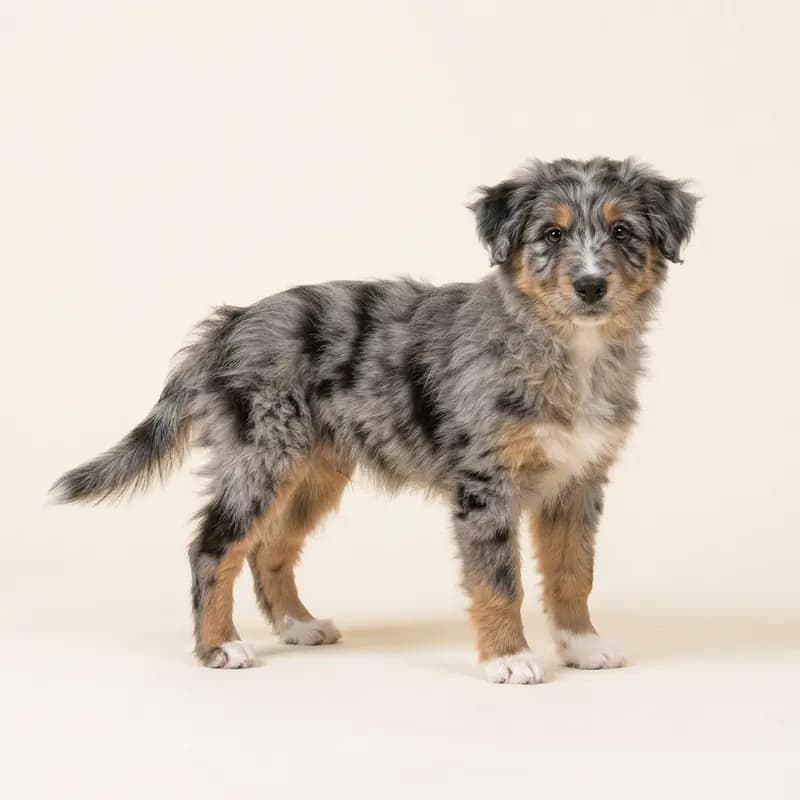
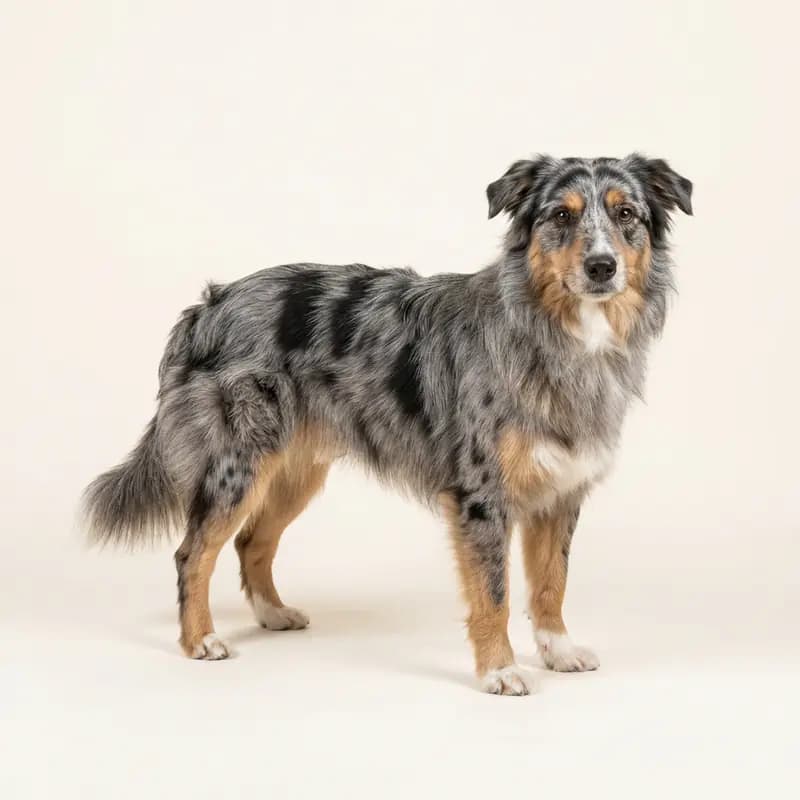
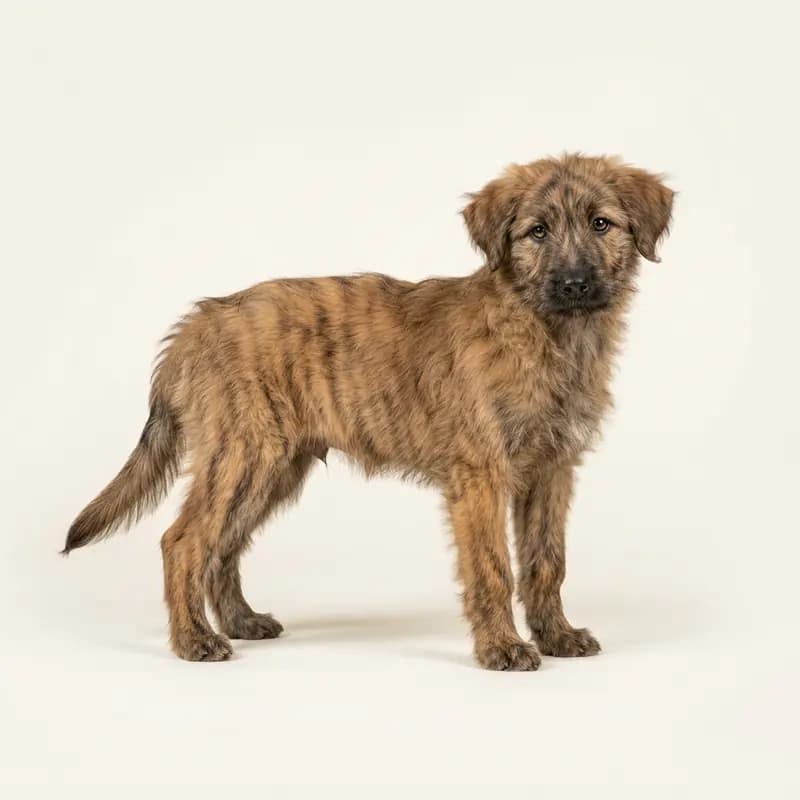
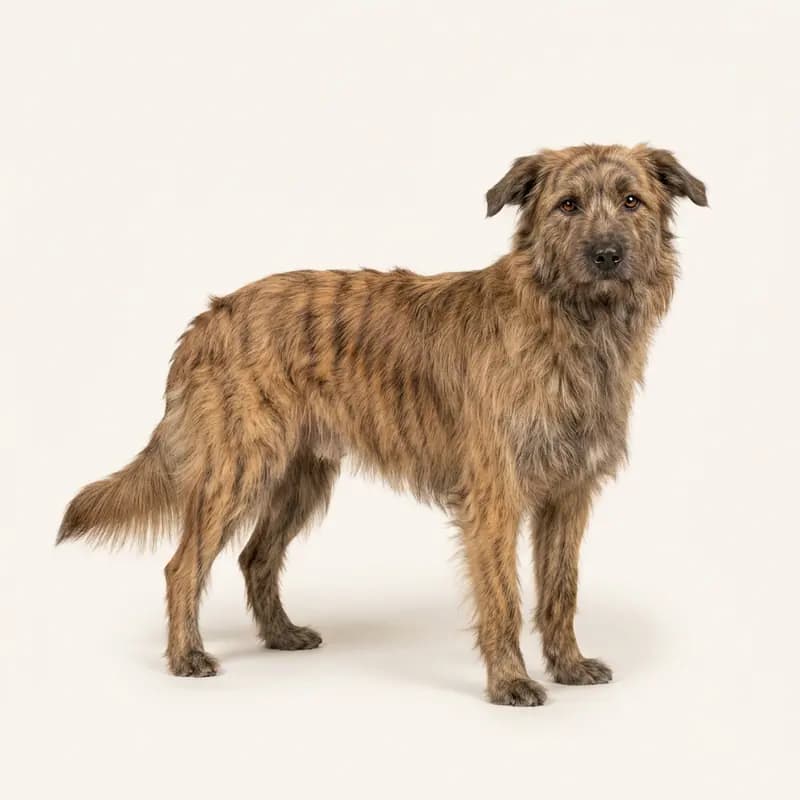
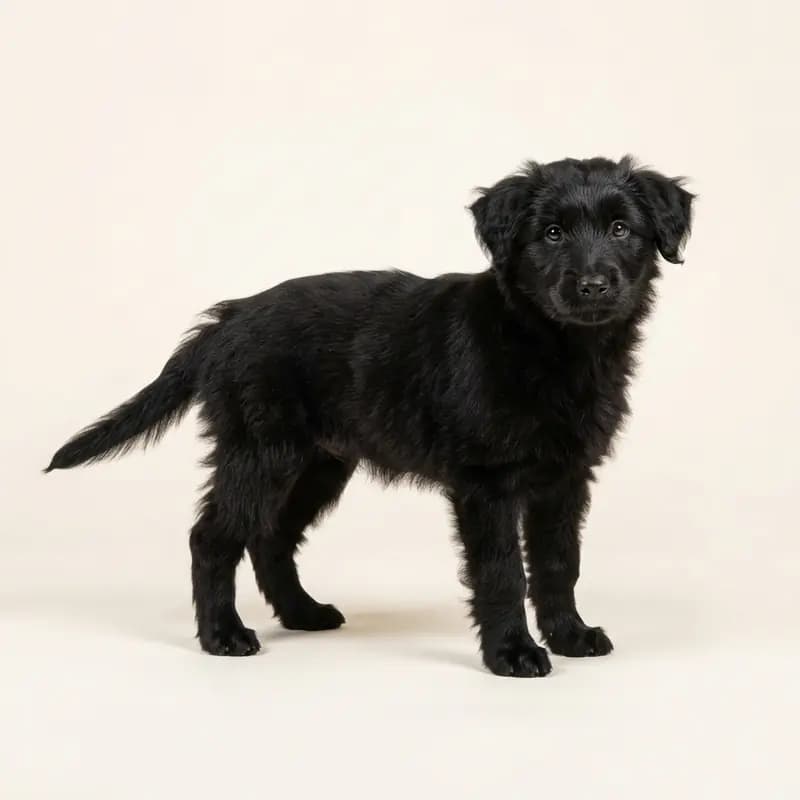
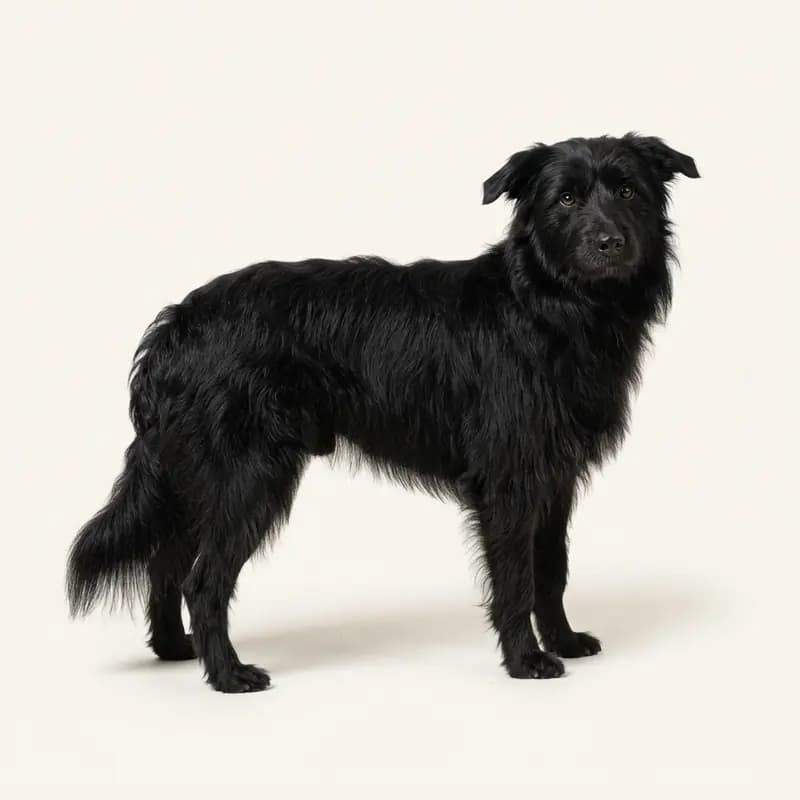
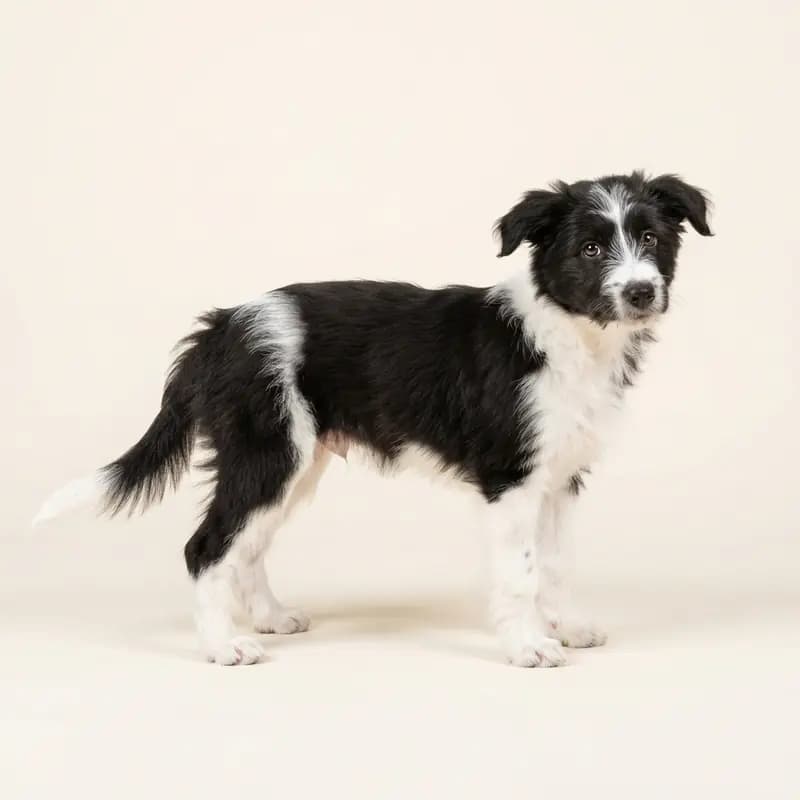
What colors does the Pyrenean Shepherd come in?
The coat colors you will see in Pyrenean Shepherd litters — including which ones fall outside the breed standard and which carry genetic risk.
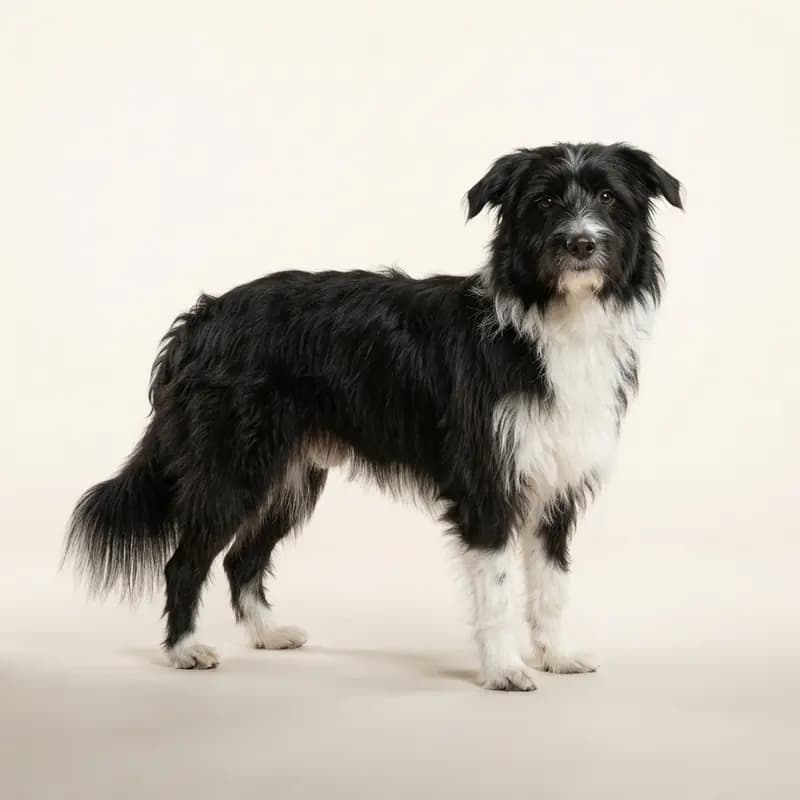
Eye colors
 Brown
Brown Blue
Blue Odd-eyed
 Partial (split eye)
Coat type
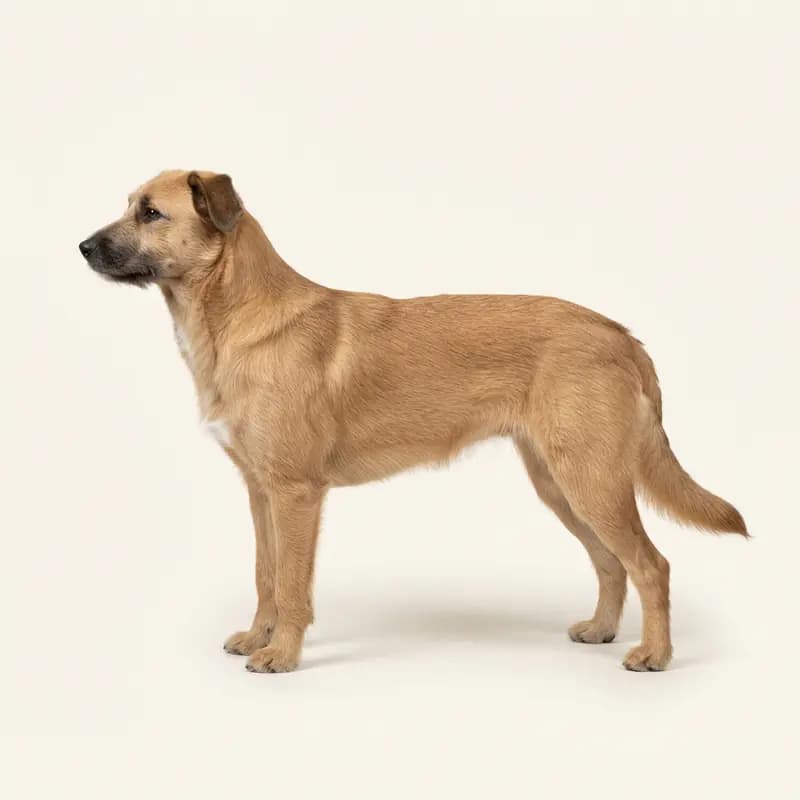 Illustrative image
Short
 Medium
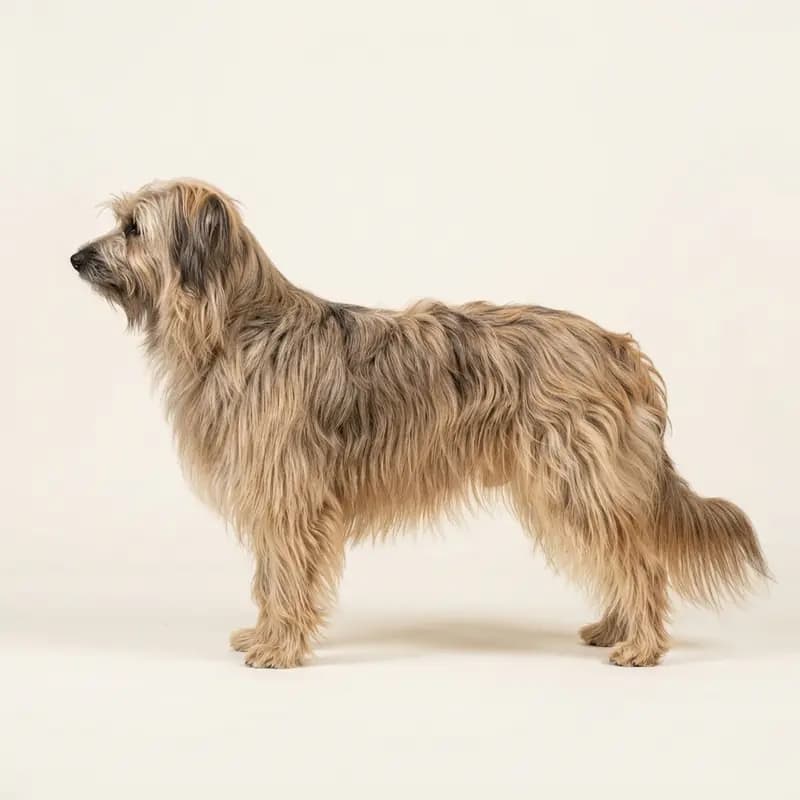 Illustrative image
Long
 Double coat
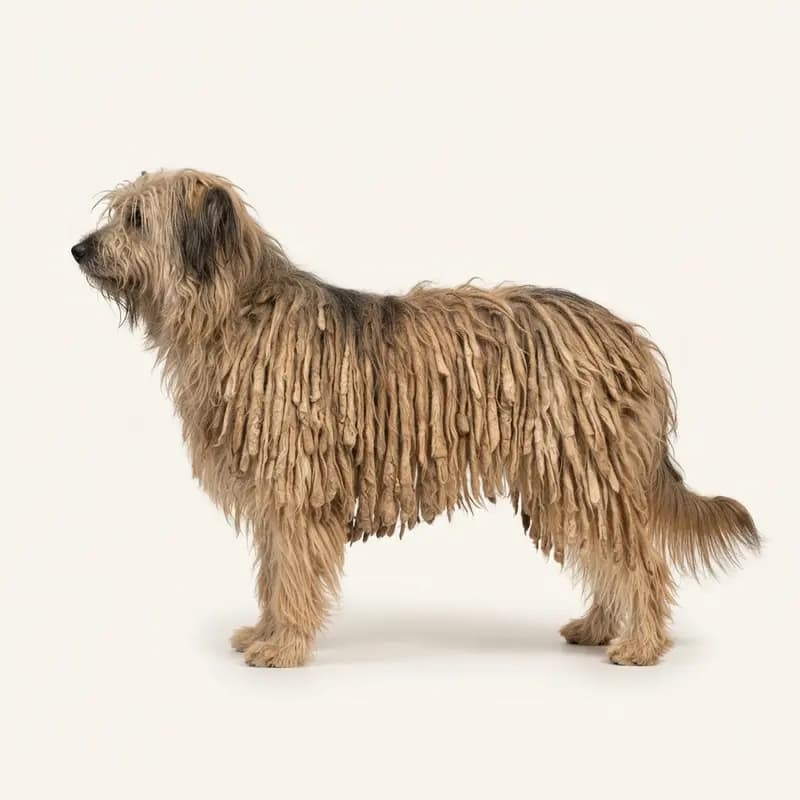 Illustrative image
Corded
Is the Pyrenean Shepherd right for you?
The Berger des Pyrénées is a highly sensitive, lightning-fast Hütehund (herding dog)—bred to guide flocks autonomously in the rugged mountains, often responding to nothing more than a whistle. This constant state of alert makes him a brilliant, yet demanding companion.
Perfect for you if:
- You are looking for a true working partner for agility, Hoopers, or complex trick training—simple walks are not enough to tire out this agile bundle of energy.
- You lead with calm confidence and subtle communication, as he reacts to harshness or inconsistency with immediate stress.
- You appreciate a dog that forms an extremely close bond with its owner and is perfectly happy to do without the attention of strangers.
- You live in a more rural area or can provide an environment where his sensitive antennas aren't constantly overwhelmed by urban stimuli.
Less ideal if:
- You live in an apartment with thin walls—he was bred to report every deviation in his environment immediately and vocally.
- You are looking for a relaxed companion for a busy household with many visiting children, as uncontrolled movements can quickly trigger his herding instincts.
- You expect a dog that easily forgives training mistakes—his rapid ability to learn means he picks up unwanted behaviors just as quickly as tricks.
The real vibes check
A Berger des Pyrénées is like a highly sensitive radar antenna on four legs—he reads your mood before you even notice it yourself. You aren't getting a dog that just tags along; you're getting a vigilant shadow that asks every second if there is something to do. If you can channel this enormous intensity, you will have an inseparable partner; if not, he will nervously take control.
Self-check
Would the Pyrenean Shepherd really fit your life?
Answer 6 quick questions about your everyday life and see how well the Pyrenean Shepherd fits you — including an honest cost estimate per month, per year, and across the dog's lifetime.
Fit checkCost estimateRisk dice
Takes about 1 minute · free & anonymous
Breed Profile
The Berger des Pyrenees, also known as the Pyrenean Shepherd, is a small to medium-sized herding dog native to the Pyrenees between France and Spain. He belongs to FCI Group 1, Section 1 (Herding Dogs). It has a striking, lively appearance with a slightly wavy or straight, long hair variety that has a dense undercoat, or a short hair variety with a fine undercoat. Its ears are semi-erect or drooping, and its bushy tail is often curled over its back. The Berger des Pyrenees does not differentiate between performance and show lines.
All measurements in detail
- Height
- 40 - 46 cm (Female), 42 - 48 cm (Male)
- Weight
- 8 - 15 kg (Female), 9 - 15 kg (Male)
- Life Expectancy
- 12 - 15 yrs
- Character
- Intelligent, agile, loyal
- Coat
- Longhair with a dense undercoat or shorthair with a fine undercoat
- Coat Color
- Different shades from fawn to gray
- Price
- 1000 - 2500 €
Character & Temperament
The Berger des Pyrenees is a herding dog through and through. Its primary instinct is to herd and guard flocks, and it is known to be used in this capacity even today. Since he was originally bred to herd sheep in the mountains, he is a very agile and active dog. He is not only physically but also mentally very active and therefore needs sufficient activity and challenges. He is an extremely intelligent dog and learns very quickly. You could even say that he's sometimes too smart for his own good! You will find that he has a curiosity and insight that can sometimes get him into trouble. The Berger des Pyrenees is exceptionally loyal and will form a very close bond with his family. He is often a bit reserved around strangers, but with his family he is extremely loving and affectionate. This herding dog is very alert and has a strong protective instinct, making him a good guard dog. Although he is very affectionate, he is also a fairly independent dog. He is used to making decisions when tending herds, and he often carries this independence into the home environment. It is important to know that he may not always be as obedient as you would like. The Berger des Pyrenees has high energy and is always ready to play and work. It's important that you're willing to give him plenty of exercise and mental stimulation. He loves to run, play and explore and will be happy when he has a task to do. In terms of hunting behavior, the Pyrenees Berger can sometimes show a strong prey drive. It is important to teach him how to behave around small animals. As for staying alone, the Pyrenees Berger can learn to stay alone, but he should not be left without activity or company for long periods of time. As a highly intelligent dog, he can become bored easily, and boredom can lead to undesirable behavior.
| Trainability Picks up commands quickly and wants to please. | Eager to learn |
| Watchfulness Strong territorial instinct — may actively confront intruders. | Very high |
| Openness to Strangers Neither pushily friendly nor suspicious. | Neutral |
| Hunting or Herding Drive This drive runs deep — no amount of training eliminates it. | Very strong |
Fun Fact!
Did you know that the Berger des Pyrenees is such a good climber that he is sometimes referred to as an "acrobatic herding dog"? is referred to? He can perform amazing jumps and climbs to protect and control his herd.
What Awaits You
Pyr Sheps see the world through dark, almond-shaped eyes that convey an alert and shrewd expression. The Pyrenean Shepherd is a tireless herding dog descended from the ancient Pyrenean Shepherds, enthusiastic, mischievous and intelligent. The tough and sinewy Pyr Sheps are available in “rough-faced” and “smooth-faced” coat variants.
Housing & Care
The Berger des Pyrenees is an active dog and is best suited to a home with a garden or in rural areas. He can be kept in the city if he gets enough exercise, but he is not a typical city dog. He is good with children, but it is important to note that as a herding dog, he may sometimes try to herd them. He can also get along with cats and other pets as long as he is properly socialized.
- Family Friendly
Lives for its family — the born family companion.
Ideal family dog - Child Friendly
Takes boisterous and affectionate children in its stride.
Patient with children - Dog Friendly
Usually gets on fine with other dogs.
Generally tolerant - City Friendly
Can manage in the city, but only with very active owners.
Difficult in cities
Owning a dog is a privilege, but it's also a real responsibility. Before you bring one into your life, be honest with yourself about the commitment it takes.
Training & Education
The Berger des Pyrenees is an intelligent dog that loves to learn. He is good at dog sports such as agility, obedience and herding. It is important to note that this breed can have a tendency to become a ball junkie, so it is important to dose play with the ball. Since he is an active dog, he needs a lot of activity, but you should be careful not to overwhelm him. He should also learn to develop frustration tolerance and impulse control. Since the Berger des Pyrenees is a herding dog, it is important to take his natural instincts into account. He may be tempted to guard things, so it's important to offer him alternatives and keep him occupied in a way that meets both his physical and mental needs.
Nutrition & Care
A balanced diet is crucial for the health and well-being of your Berger des Pyrenees. He needs a diet rich in high-quality proteins and fats, as well as the right amount of vitamins and minerals. Since this breed is active, the diet should also support their energy needs. When it comes to grooming, the Berger des Pyrenees has an undercoat that keeps him warm in the cooler months. In Germany he gets along well with the climate. The coat should be brushed regularly to prevent matting and to remove loose hair. It sheds moderately all year round, but more intensely during the transition period.
| Care Level Regular brushing and occasional professional grooming. | Moderate |
| Exercise Needs Needs several hours of serious exercise every day. | Very active |
| Shedding Hair everywhere, always — no white clothing survives. | Very heavy |
| Trainability Picks up commands quickly and wants to please. | Eager to learn |
Our experts are still reviewing this information. Spotted something wrong? Email us at info@honestdog.de.
Health & hereditary diseases
Health
A
Robust
Health grade
The Berger des Pyrénées is considered a robust working breed with an average health profile. Key mandatory health tests primarily focus on hip dysplasia (HD) as well as tail deformities to prevent skeletal and spinal issues. Since these risks are well-managed through targeted breeding tests, the breed is overall in a solid state of health.
Grade is relative to other breeds — AI-assisted and editorially reviewed.
In daily life this can mean
You should ensure a healthy weight and joint-friendly exercise, as well as schedule regular eye check-ups to keep your dog active for a long time.
The breeder's role
Reputable breeders have the hips, knees, and eyes of the parent animals checked by a vet and pay attention to transparent bloodlines regarding epilepsy to minimize risks.
Note: This health overview is AI-assisted and editorially reviewed. It is for orientation only and does not replace veterinary advice.
No Health Tests Available
No specific health tests are currently available for this breed.
Costs & where to find one
How much does a Pyrenean Shepherd cost?
A Pyrenean Shepherd costs around ~€170 per month (€90 – €320, depending on your setup). The first year adds up to roughly ~€4,660 including purchase, equipment and puppy school; across the dog's life (13.5 years) it comes to about ~€30,660.
With surgery cover, running costs come to about ~€160 per month — in return, your share of a major operation drops from several thousand euros to around 20 percent.
Per month
~€170
In the first year
~€4,660
Across the dog's life
~€30,660
Purchase from a breeder: €1,000 – €2,500
Estimate at a mid-range setup (suburban, dry food, 1–2 hours of daily exercise), average German prices, as of July 2026.
Calculate your personal costs1-minute self-check with your own answers
Looking for a Pyrenean Shepherd?
Appearance, variants & origin
History
The full history
The Berger des Pyrenees comes from the Pyrenees, a mountain range that forms the border between France and Spain. This breed of dog is one of the oldest French breeds and has been used by shepherds for centuries to guard and herd their flocks of sheep. The breed has evolved over time due to natural selection and the demands of shepherds. Their agility, intelligence and endurance made them excellent herding dogs in the often difficult terrain of the Pyrenees. The Berger des Pyrenees was recognized as an independent breed in 1926. During the First World War the breed was also used as a reporting dog. Although the breed is not very common outside of its native range, it has gained international popularity in recent decades.
Original Use
The Berger des Pyrénées was used as a herding dog in the Pyrenees and is known for its agility and intelligence.
Origin
France
Date
1800
Owner experiences
What owners say about the Pyrenean Shepherd
Zusammengefasst aus öffentlich geteilten Halter-Erfahrungen
Viele Halter beschreiben den Berger des Pyrénées als einen sensiblen „Emotions-Seismographen“, der jede Stimmung in seiner Familie sofort aufnimmt. Er ist extrem anhänglich, sucht engen Körperkontakt und möchte am liebsten überall dabei sein. Ein artgerecht ausgelasteter Berger verhält sich im Haus meist angenehm ruhig und unauffällig. Bleibt er jedoch zu oft sich selbst überlassen, neigt er schnell zu Frust und unerwünschten Verhaltensweisen wie anhaltendem Bellen.
Fremden gegenüber zeigen viele Vertreter der Rasse eine rassetypische, starke Reserviertheit bis hin zu Misstrauen. Halter berichten, dass diese Skepsis ohne klare Führung leicht in ein defensives Abwehrverhalten umschlagen kann. Der ausgeprägte Schutz- und Wachtrieb erfordert daher von Anfang an ein umsichtiges Management im Alltag, damit der Hund Besuchern gegenüber entspannt bleibt.
Im Zusammenleben mit Kindern zeigt sich der Hund oft verspielt, allerdings weisen erfahrene Besitzer darauf hin, dass seine enorme Schnelligkeit und Reaktionsgabe für sehr kleine Kinder überfordernd sein können. Ältere Kinder, die die Grenzen des Hundes respektieren, kommen meist hervorragend mit ihm zurecht.
Zusammengefasst aus öffentlich geteilten Halter-Erfahrungen
Das Motto „Minimum an Größe, Maximum an Energie“ beschreibt den Erziehungs- und Beschäftigungsalltag laut vielen Besitzern perfekt. Der Berger des Pyrénées ist ein hochintelligenter Arbeitshund, der eine echte Aufgabe braucht – sei es im Agility, bei der Sucharbeit oder beim Hüten. Er lernt extrem schnell, hinterfragt aufgrund seiner ursprünglichen Eigenständigkeit jedoch auch gern den Sinn von Kommandos und trifft im Zweifel eigene Entscheidungen.
In der Erziehung ist eine harte Hand absolut fehl am Platz. Halter betonen immer wieder, dass die Rasse sehr feinfühlig auf Druck reagiert und bei grober Behandlung nervös, ängstlich oder gar schnappig werden kann. Der Schlüssel zum Erfolg liegt in einer liebevollen, aber absolut konsequenten Führung und positiver Verstärkung.
Eine sehr frühe und gründliche Sozialisierung ist für Welpen dieser Rasse unerlässlich. Nur so lernen die jungen Hunde, Umweltreize gelassen zu verarbeiten und ihre natürliche Reizempfindlichkeit sowie den Hüteinstinkt in geordnete Bahnen zu lenken.
Zusammengefasst aus öffentlich geteilten Halter-Erfahrungen
In gesundheitlicher Hinsicht gilt der Berger des Pyrénées unter Haltern als sehr robuste, rustikale und langlebige Rasse. Lebenserwartungen von 13 bis 15 Jahren oder mehr sind keine Seltenheit. Dennoch empfehlen erfahrene Besitzer, beim Welpenkauf auf Untersuchungen der Elterntiere bezüglich Hüftdysplasie (HD), Patellaluxation (PL) sowie erblicher Augenerkrankungen (wie Katarakte) zu achten.
Der Pflegeaufwand unterscheidet sich je nach Rassevariante. Während die kurzhaarige Variante (Face Rase) als pflegeleicht gilt, erfordert der langhaarige Typ (Poil Long) regelmäßiges Bürsten. Besonders das feine Fell hinter den Ohren und an den Ellenbogen neigt schnell zum Verfilzen.
Ein humorvolles, aber reales Alltagsproblem, das viele Besitzer von langhaarigen Bergers teilen: Der Hund sammelt beim Spaziergang im Unterholz leidenschaftlich Kletten und kleine Zweige auf. Diese verfangen sich hartnäckig im zottigen Fell und müssen mühsam von Hand entfernt werden, da sie den Hund beim Laufen stören.
Paraphrased from real owner reports
Loading owner stories
Community Posts
FAQ & more
Frequently asked questions about the Pyrenean Shepherd
Is a Pyrenean Shepherd the right dog for me?
The Pyrenean Shepherd is an active dog that needs plenty of exercise and mental stimulation. Research the temperament, grooming needs, and space requirements before deciding.
How long does a Pyrenean Shepherd live?
The average life expectancy of a Pyrenean Shepherd is 12-15 years. With proper care and regular vet visits, your dog can live a long, healthy life.
How much grooming does a Pyrenean Shepherd need?
Pyrenean Shepherd grooming requirements include regular brushing, nail trimming, and dental care. HonestDog provides detailed grooming tips for every breed.
Is a Pyrenean Shepherd good for families with children?
The Pyrenean Shepherd can be a great family dog. Proper training and socialization are key. HonestDog provides family suitability information for every breed.
What colors does the Pyrenean Shepherd come in?
The Pyrenean Shepherd comes in these colors: Fawn, Grey, Blue merle, Brindle, Black, Black and white.
Loading related articles
Are you a Pyrenean Shepherd breeder?
Showcase your kennel on HonestDog and reach families searching for a responsibly bred Pyrenean Shepherd.
Why HonestDog?
What makes HonestDog different from other platforms
Full transparency
We lay out what we have: who the breeder is, how they work, and any health records they've uploaded. So you can judge for yourself.
Responsible breeding, assured
Every breeder on HonestDog has their identity and documents checked before their profile goes live. Health records they upload are shown on the profile, so you can see exactly what has been tested.
Trust and verification
We verify breeders and buyers alike, so every conversation happens on solid ground. It's a new standard of trust in dog breeding.
Less hassle, more time
We've already checked the breeders' documents and gathered the details, so you can skip the endless research and focus on finding the right puppy for your family.
Our Mission

We connect dog lovers with responsible breeders and shelters to ensure every dog finds the perfect home.
Founded by dog enthusiasts, our platform focuses on ethical dog breeding and adoption.
Why HonestDog?
We connect you with vetted breeders and shelters so you can find your — your new companion — with confidence.
Vetted Partners
Only verified breeders and shelters — for a safe start.
Highest Standards
Every animal's health and wellbeing is our top priority.
Guides & Resources
Guides, checklists, and breed profiles — so you can make a well-informed decision.