Loading breed
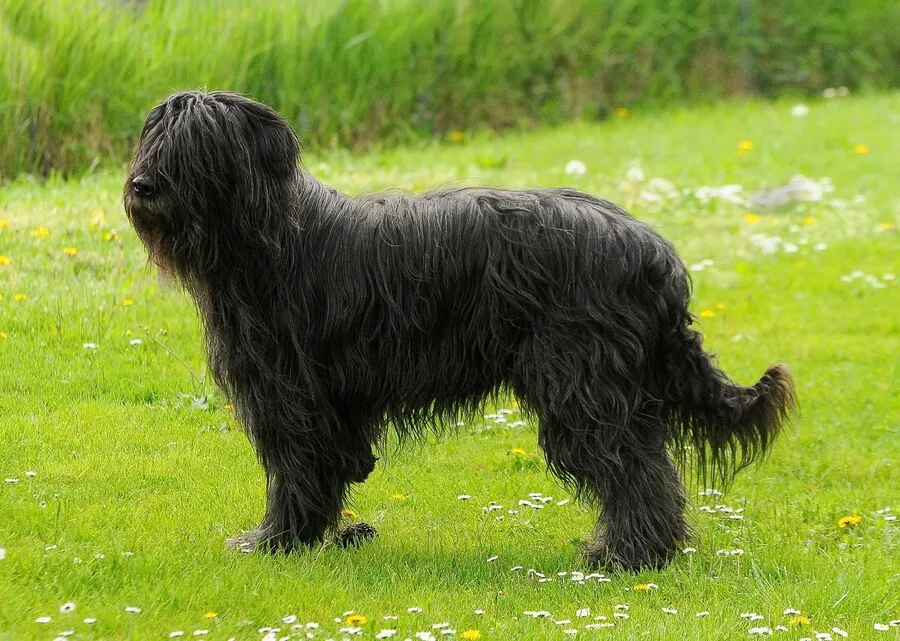
Briard
Health grade CThe Berger de Brie (Briard) is a spirited, deeply devoted Hütehund (herding dog) — bred not only to guide flocks of sheep but also to defend them independently, which makes him a highly intelligent dog with a mind of his own.
- Height56–68 cm
- Weight25–40 kg
- Life expectancy10–12 yrs
- Puppy price1,500–2,800 €
- Energy4/5
The Essentials at a Glance
The Berger de Brie (Briard) is a spirited, deeply devoted Hütehund (herding dog) — bred not only to guide flocks of sheep but also to defend them independently, which makes him a highly intelligent dog with a mind of his own.
- Health grade C: With 12 mandatory health tests, the Briard faces an above-average number of health concerns compared to other breeds.
- You are willing to invest in daily mental and physical work — as a true Hütehund, he will wither away if he only gets walks without a real job to do.
- You lead with confidence, fairness, and without a heavy hand — this dog does not forgive injustice and will immediately question any inconsistency.
- You expect a dog that greets every visitor with joy — due to his genetics, he is reserved and controlling toward strangers.
Is the Briard right for you?
At a glance
Briard overview
The essentials — key facts, traits, and health priorities — before you dive deeper.
Health grade
Relative to other breeds
S
A
B
C
D
E
Very healthyHigher risk
Average — several important tests are expected.
See full health info & tests →
Note: This health overview is AI-assisted and editorially reviewed. It is for orientation only and does not replace veterinary advice.
Lifespan
10–12 yrs
Height
56–68 cm
Weight
25–40 kg
Practical
- Puppy price: 1,500 – 2,800 €
- Coat: Long, dense, wavy, with an undercoat
- Origin: France
Temperament
Energy
Trainability
Family fit
With kids
Daily life
Care effort
Shedding
Barking
City-friendly
Guard instinct
What matters most
Especially with a Briard, choosing the right breeder is the single most important decision you'll make. Serious breeders consistently test the parents for inherited conditions, prioritize healthy early socialization, and stay accountable long after handover. A cheap puppy without health screening tends to become the most expensive dog later on.
See HonestDog breeder standards →Colors & coat
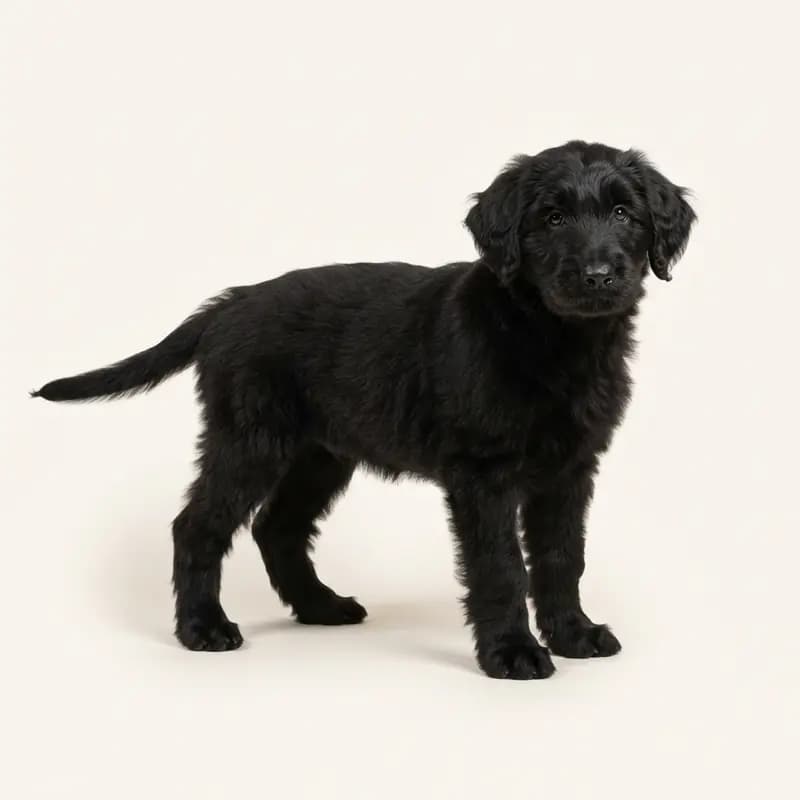
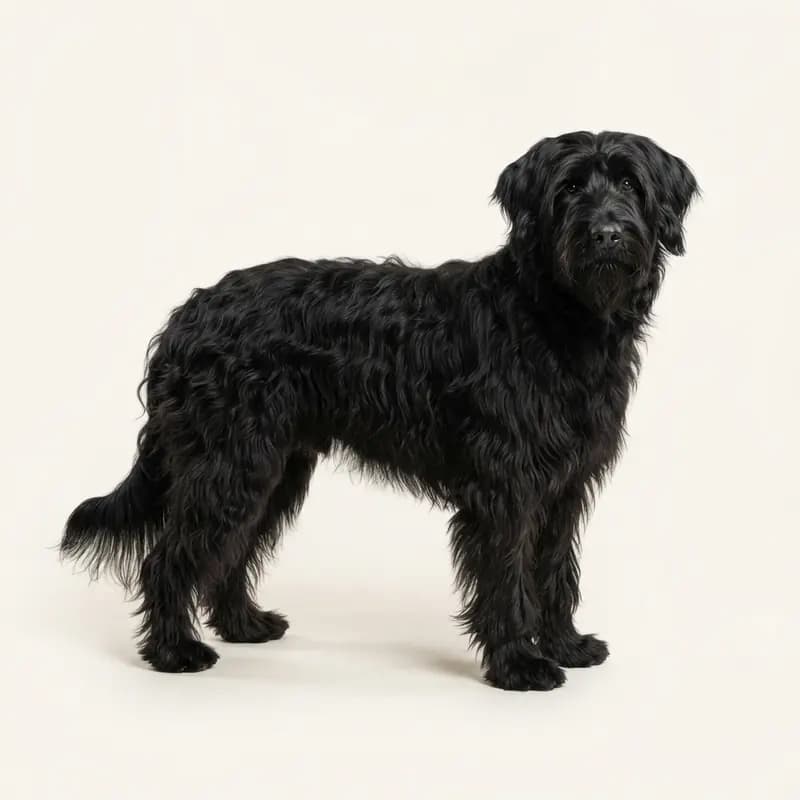
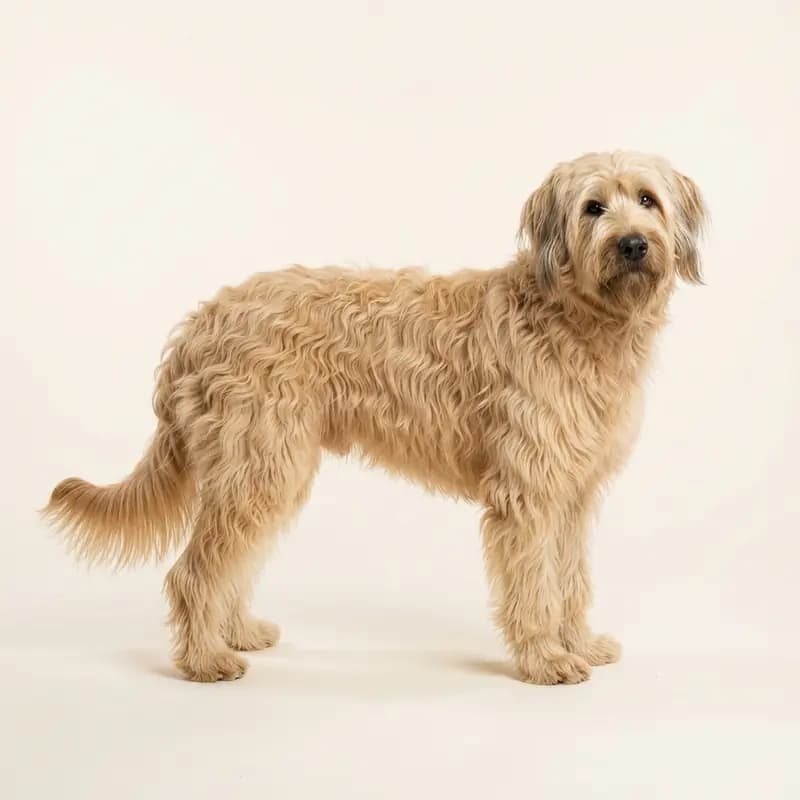
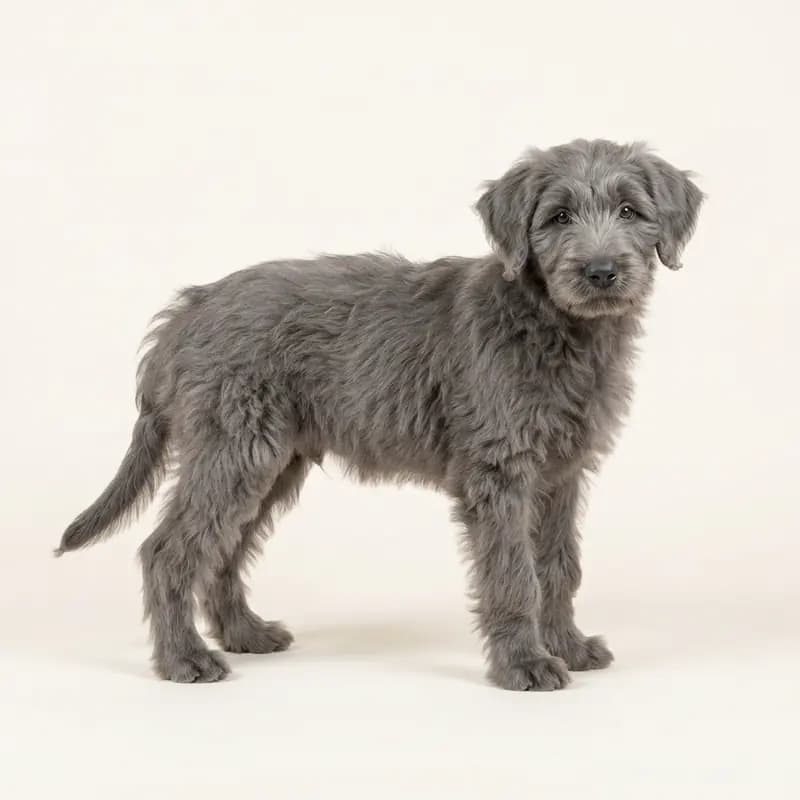
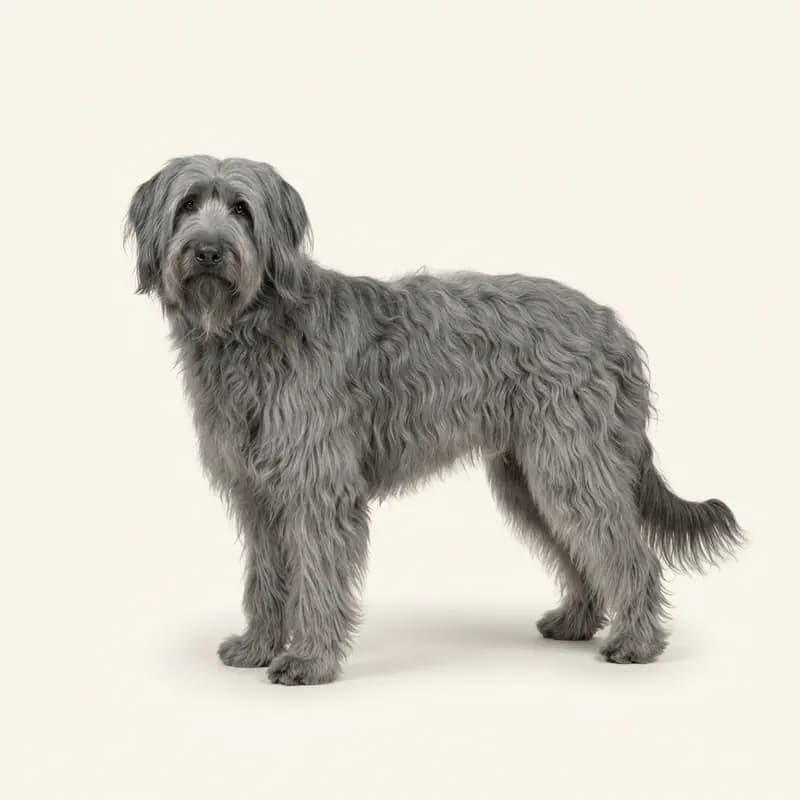
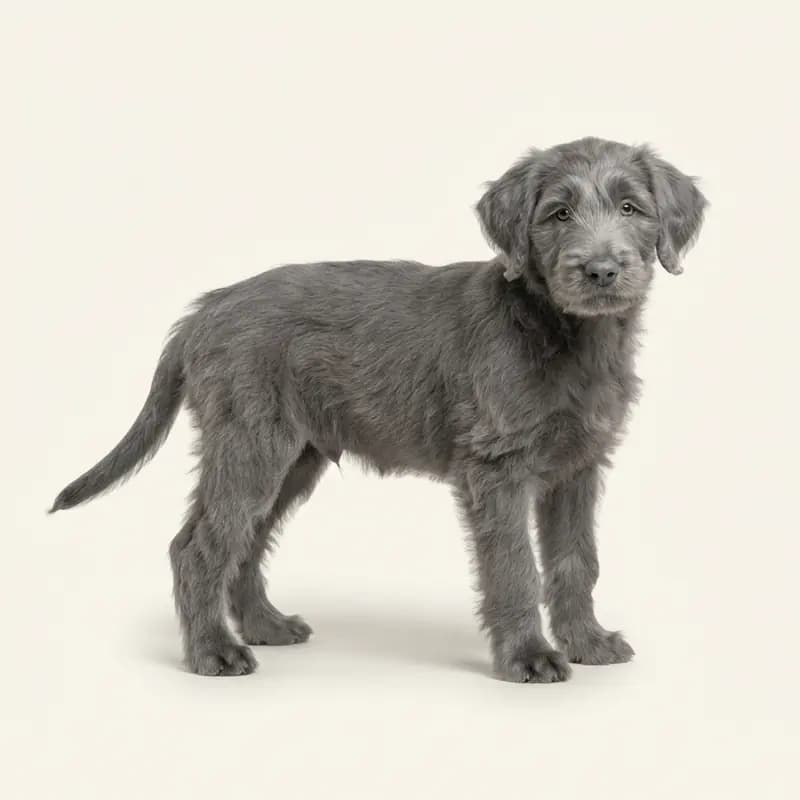
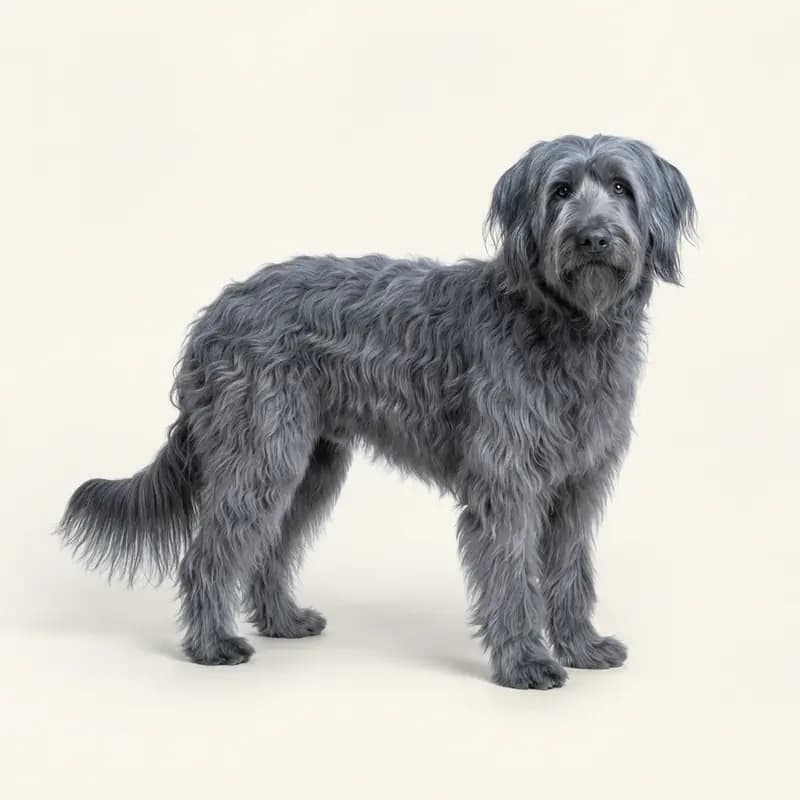
What colors does the Briard come in?
The coat colors you will see in Briard litters — including which ones fall outside the breed standard and which carry genetic risk.

Eye colors
 Brown
Brown Amber
Amber
Coat type
 Long
Long Double coat
Is the Briard right for you?
The Berger de Brie (Briard) is a spirited, deeply devoted Hütehund (herding dog) — bred not only to guide flocks of sheep but also to defend them independently, which makes him a highly intelligent dog with a mind of his own.
Perfect for you if:
- You are willing to invest in daily mental and physical work — as a true Hütehund, he will wither away if he only gets walks without a real job to do.
- You lead with confidence, fairness, and without a heavy hand — this dog does not forgive injustice and will immediately question any inconsistency.
- You have the time and stamina for intensive weekly grooming to keep his lush, goat-like coat from matting.
- You live in a rural area with a house and garden where he can channel his natural guarding instinct in a structured way.
Less ideal if:
- You expect a dog that greets every visitor with joy — due to his genetics, he is reserved and controlling toward strangers.
- You are looking for your first dog and hope that he will simply be an uncomplicated companion in the bustle of family life.
- You live in the middle of the city in an apartment, where his protective instinct and sensitivity to stimuli will quickly lead to constant stress.
The real vibes check
A Briard is not a dog that sleeps relaxed in the next room — he is your watchful shadow, constantly scanning to see if you have the situation under control or if he needs to take over the job. If you credibly take this responsibility off his shoulders, you will gain an unwavering, deeply devoted partner. However, if you leave the helm to him out of uncertainty, he will become the strict, disciplinary manager of your everyday life.
Self-check
Would the Briard really fit your life?
Answer 6 quick questions about your everyday life and see how well the Briard fits you — including an honest cost estimate per month, per year, and across the dog's lifetime.
Fit checkCost estimateRisk dice
Takes about 1 minute · free & anonymous
Breed Profile
The Berger de Brie, more commonly known as the Briard, is a medium to large dog breed. As a member of FCI Group 1, they are classic herding dogs, characterized by an extraordinary willingness to work and strong territorial behavior. Their bodies are strong and well proportioned, with long, muscular legs and broad, deep chests. A distinctive feature of the Briard is its long, wavy coat that covers the entire body. The eyes are often covered by the hair, which gives the dog a particularly charming look. Despite the long coat, the Briard's physique is clearly visible: strong and athletic. Briards do not differentiate between performance and show lines. Most breeders attach great importance to ensuring that the breed meets both the physical and mental requirements of a herding dog.
All measurements in detail
- Height
- 56 - 64 cm (Female), 62 - 68 cm (Male)
- Weight
- 25 - 35 kg (Female), 30 - 40 kg (Male)
- Life Expectancy
- 10 - 12 yrs
- Character
- Intelligent, confident, loyal
- Coat
- Long, dense, wavy, with an undercoat
- Coat Color
- Black, Gray, Fauve (varying shades from cream to red)
- Price
- 1500 - 2800 €
Character & Temperament
Briards are intelligent, confident and loyal dogs with strong protective and herding instincts. They have a natural inclination to guard their family and territory, making them good guard dogs. Despite their size and strength, they are very gentle and kind, especially towards her family. Due to their heritage as herding dogs, Briards are very active and require both physical and mental exercise. They love having tasks to do and feel happiest when they can work or play. Long walks, hikes, dog sports such as agility or obedience are ideal for this breed. Briards are known for their intelligence and ability to learn. They are very attentive and can quickly learn new commands and tricks. Their independence can sometimes be interpreted as stubbornness, but with patience and positive reinforcement they can be trained very well. These dogs tend to be very people-oriented and enjoy being part of family activities. They are friendly and get along well with children. They also tend to be friendly with other dogs and pets, especially if they are used to it from a young age. Although Briards form strong bonds with their family, they can learn to remain alone as long as they are well trained and their needs are met. It is important to note that as herding dogs, they can have strong hunting and prey catching behavior. Therefore, it is important to socialize them well from the start and teach them how to control their instincts. The Briard's temperament can vary from calm to active, depending on the dog's individual personality and training level. A well-trained and exercised Briard is usually a calm and balanced dog who enjoys active moments as well as being able to lie relaxed at the side of his family.
| Trainability Bred to work closely alongside humans. | Highly trainable |
| Watchfulness A natural watchdog with real protective instinct. | High |
| Openness to Strangers Neither pushily friendly nor suspicious. | Neutral |
| Hunting or Herding Drive Noticeable drive — needs attention around small animals. | Moderate |
Fun Fact!
Did you know that the Briard was used as a medical dog during World War I to search for and rescue wounded on the battlefield? These brave dogs have saved many lives!
What Awaits You
Briards are alert, territorial, but also hunting-motivated dogs. They also have a lot to do. They are often described as independent with a tendency to be aggressive. They are versatile and should be trained consistently.
Housing & Care
The Briard is an active and intelligent dog that needs a lot of activity and exercise. Therefore, he is not necessarily suitable as a pure city dog unless he receives enough exercise and mental stimulation. Briards are very child-friendly and can be easily kept in families with children as long as the children respect the dog and treat it properly. As for other pets, Briards that are socialized early tend to live well with cats and other animals. However, it is always important to begin any new animal relationship with supervision and to ensure that all parties are comfortable.
- Family Friendly
Lives for its family — the born family companion.
Ideal family dog - Child Friendly
Extraordinarily patient and loving — a true family dog.
Excellent with children - Dog Friendly
Actively enjoys the company of other dogs.
Dog-friendly - City Friendly
City-appropriate with enough exercise and stimulation.
Manageable in cities
Owning a dog is a privilege, but it's also a real responsibility. Before you bring one into your life, be honest with yourself about the commitment it takes.
Training & Education
Briards are intelligent dogs that enjoy working and learning new things. Therefore, training is usually a joy. They love tasks and are naturally good at retrieving and searching for objects. Their herding dog heritage also makes them well-suited to canine sports such as agility, obedience and flyball. It is important to be consistent from the start and to give your Briard clear rules. He should learn that he is not the boss in the house. A loving but firm hand is the key to success. Because Briards are very intelligent, they may try to outsmart their owners. Patience and consistency are required here. Briards are very active dogs that require a lot of mental and physical exercise. However, they are also very affectionate and people-oriented, so you should be careful not to overwhelm them or keep them constantly in action. They also need their downtime where they can just relax and "be a dog." can. Good frustration tolerance and impulse control are important traits for a Briard to learn. These skills can help prevent problem behaviors such as excessive barking, destroying objects, or uncontrolled chasing. It is also helpful to offer the Briard alternatives to express his energy and work ethic in a positive way.
Nutrition & Care
Briards have an active lifestyle and therefore require a balanced and nutritious diet. High-quality dry or wet food that is rich in proteins and healthy fats can support your Briard's health and vitality. It is important to adjust feeding amounts based on your dog's age, size, weight and activity level. In terms of grooming, the Briard's long, thick coat requires a certain amount of effort. It should be brushed thoroughly at least once a week to avoid mats and skin problems. The Briard has a thick undercoat that protects it from both cold and heat. So he copes very well with the German climate. Despite their thick undercoat, Briards shed only moderately, especially during the spring and fall seasons.
| Care Level Regular brushing and occasional professional grooming. | Moderate |
| Exercise Needs Needs several hours of serious exercise every day. | Very active |
| Shedding No or minimal hair loss — suitable for allergy sufferers. | No shedding |
| Trainability Bred to work closely alongside humans. | Highly trainable |
Our experts are still reviewing this information. Spotted something wrong? Email us at info@honestdog.de.
Health & hereditary diseases
Health
C
Solid, watch carefully
Health grade
With 12 mandatory health tests, the Briard faces an above-average number of health concerns compared to other breeds. Breeders must strictly screen for hip dysplasia (HD) and progressive retinal atrophy (PRA) to prevent lameness and blindness. Additionally, epilepsy occurs occasionally within the breed, which is why buyers should only purchase from certified breeders who actively work to minimize these risks.
Grade is relative to other breeds — AI-assisted and editorially reviewed.
In daily life this can mean
You should ensure that he is raised in a way that is easy on his joints, maintain a healthy weight, and schedule regular eye exams to detect potential issues early on.
The breeder's role
Reputable breeders have the parents' hips, eyes, and urinary tracts checked and specifically monitor for hereditary night blindness to reduce avoidable risks.
Note: This health overview is AI-assisted and editorially reviewed. It is for orientation only and does not replace veterinary advice.
No Health Tests Available
No specific health tests are currently available for this breed.
Costs & where to find one
How much does a Briard cost?
A Briard costs around ~€200 per month (€100 – €380, depending on your setup). The first year adds up to roughly ~€5,340 including purchase, equipment and puppy school; across the dog's life (11 years) it comes to about ~€28,980.
With surgery cover, running costs come to about ~€200 per month — in return, your share of a major operation drops from several thousand euros to around 20 percent.
Per month
~€200
In the first year
~€5,340
Across the dog's life
~€28,980
Purchase from a breeder: €1,500 – €2,800
Estimate at a mid-range setup (suburban, dry food, 1–2 hours of daily exercise), average German prices, as of July 2026.
Calculate your personal costs1-minute self-check with your own answers
Looking for a Briard?
Appearance, variants & origin
History
The full history
The Berger de Brie breed has its origins in France, more precisely in the Brie region - hence the name. Its history goes back a long way and it is one of the oldest French dog breeds. It is believed to have existed as early as the 8th century, but written records only date from the 14th century. Briards were originally used to herd and guard flocks of sheep. It was not until the 19th century that the Briard was officially recognized as a breed. By this time they already had an established place in French culture and were highly valued by farmers and shepherds. They were also used in the two world wars as couriers, to locate the wounded and to pull supply wagons. Today, Briards are known and loved as loving family dogs in many countries around the world.
Original Use
The Briard was bred as a herding and guard dog for sheep flocks and is known for its long, wavy coat.
Origin
France
Date
1800
Owner experiences
What owners say about the Briard
Zusammengefasst aus öffentlich geteilten Halter-Erfahrungen
In Erziehungsfragen gilt der Briard unter Haltern als hochintelligent, aber auch als äußerst eigenständig und charakterstark. Er lernt extrem schnell, hinterfragt Befehle jedoch gerne, wenn er keinen Sinn darin sieht oder die Konsequenz des Halters fehlt. Stumpfe Wiederholungen langweilen ihn rasch. Eine liebevolle, aber absolut konsequente Führung ist daher unerlässlich, weshalb die Rasse in Foren selten für reine Anfänger empfohlen wird.
Als Hütehund bringt der Briard zudem einen ernstzunehmenden Jagd- und Hetztrieb mit. Viele Besitzer berichten, dass sie von klein auf intensiv an der Impulskontrolle und dem Rückruf arbeiten müssen, da die Hunde sonst gerne Rehen, Hasen oder sogar Vögeln hinterherjagen. Wird der Briard körperlich und geistig nicht ausgelastet – etwa durch Hundesport wie Agility, Fährtensuche oder Rettungshundearbeit –, neigt er dazu, sich selbst Aufgaben zu suchen, was sich in unerwünschtem Verhalten oder Zerstörungswut äußern kann.
Zusammengefasst aus öffentlich geteilten Halter-Erfahrungen
Die Pflege des üppigen, langen „Ziegenhaars“ ist eines der am häufigsten diskutierten Themen unter Briard-Besitzern. Viele Halter berichten, dass sie den Pflegeaufwand vor dem Kauf unterschätzt haben. Besonders der Übergang vom weichen Welpen- zum Erwachsenenfell (meist im Alter von etwa einem bis zwei Jahren) gilt als extreme Geduldsprobe, da das Fell in dieser Phase extrem schnell verfilzt. Regelmäßiges, gründliches Bürsten bis auf die Haut – oft mehrmals pro Woche und über eine Stunde lang – ist Pflicht, um schmerzhafte Verfilzungen an empfindlichen Stellen wie hinter den Ohren, unter den Achseln und zwischen den Zehen zu vermeiden.
Gesundheitlich gilt der Briard als robuster Naturbursche, dennoch weisen Halter und Zuchtberichte auf rassetypische Schwachstellen hin. Dazu gehören die Hüftdysplasie (HD) sowie erbliche Augenerkrankungen wie die Nachtblindheit (CSNB). Ein besonderes Augenmerk im Alltag erfordern zudem die für die Rasse typischen doppelten Afterkrallen an den Hinterläufen, die regelmäßig kontrolliert werden müssen, um Verletzungen beim Toben oder Hängenbleiben vorzubeugen.
Paraphrased from real owner reports
Loading owner stories
Community Posts
FAQ & more
Frequently asked questions about the Briard
Is a Briard the right dog for me?
The Briard is an active dog that needs plenty of exercise and mental stimulation. Research the temperament, grooming needs, and space requirements before deciding.
How long does a Briard live?
The average life expectancy of a Briard is 10-12 years. With proper care and regular vet visits, your dog can live a long, healthy life.
How much grooming does a Briard need?
Briard grooming requirements include regular brushing, nail trimming, and dental care. HonestDog provides detailed grooming tips for every breed.
Is a Briard good for families with children?
The Briard can be a great family dog. Proper training and socialization are key. HonestDog provides family suitability information for every breed.
What colors does the Briard come in?
The Briard comes in these colors: Black, Fawn, Grey, Blue.
Loading related articles
Are you a Briard breeder?
Showcase your kennel on HonestDog and reach families searching for a responsibly bred Briard.
Why HonestDog?
What makes HonestDog different from other platforms
Full transparency
We lay out what we have: who the breeder is, how they work, and any health records they've uploaded. So you can judge for yourself.
Responsible breeding, assured
Every breeder on HonestDog has their identity and documents checked before their profile goes live. Health records they upload are shown on the profile, so you can see exactly what has been tested.
Trust and verification
We verify breeders and buyers alike, so every conversation happens on solid ground. It's a new standard of trust in dog breeding.
Less hassle, more time
We've already checked the breeders' documents and gathered the details, so you can skip the endless research and focus on finding the right puppy for your family.
Our Mission

We connect dog lovers with responsible breeders and shelters to ensure every dog finds the perfect home.
Founded by dog enthusiasts, our platform focuses on ethical dog breeding and adoption.
Why HonestDog?
We connect you with vetted breeders and shelters so you can find your — your new companion — with confidence.
Vetted Partners
Only verified breeders and shelters — for a safe start.
Highest Standards
Every animal's health and wellbeing is our top priority.
Guides & Resources
Guides, checklists, and breed profiles — so you can make a well-informed decision.