Loading breed
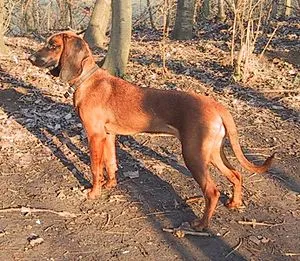
Bavarian Mountain Hound
Health grade AThe Bayerischer Gebirgsschweißhund (Bavarian Mountain Scent Hound) is a calm, extremely enduring, and highly specialized tracker—bred to follow the cold scent of injured game with intense focus in rugged terrain.
- Height44–52 cm
- Weight17–25 kg
- Life expectancy12–14 yrs
- Puppy price1,000–2,500 €
- Energy5/5
The Essentials at a Glance
The Bayerischer Gebirgsschweißhund (Bavarian Mountain Scent Hound) is a calm, extremely enduring, and highly specialized tracker—bred to follow the cold scent of injured game with intense focus in rugged terrain.
- Health grade A: As a specialized hunting dog, the Bayerischer Gebirgsschweißhund benefits from strict selection for fitness, which is why the breed is considered very healthy.
- You are a hunter, a professional tracker, or can offer him high-level, demanding scent work—this specialist needs a real, fulfilling job.
- You live in a rural area, ideally right by the woods and nature, where he can satisfy his enormous need for movement far away from urban overstimulation.
- You are looking for a pure family or companion dog who is satisfied with normal walks and playing fetch—without demanding nose work, he will wither away mentally.
Is the Bavarian Mountain Hound right for you?
At a glance
Bavarian Mountain Hound overview
The essentials — key facts, traits, and health priorities — before you dive deeper.
Health grade
Relative to other breeds
S
A
B
C
D
E
Very healthyHigher risk
Very healthy — limited common concerns.
See full health info & tests →
Note: This health overview is AI-assisted and editorially reviewed. It is for orientation only and does not replace veterinary advice.
Lifespan
12–14 yrs
Height
44–52 cm
Weight
17–25 kg
Practical
- Puppy price: 1,000 – 2,500 €
- Coat: Dense, smooth, short to medium long with an undercoat
- Origin: Germany
Temperament
Energy
Trainability
Family fit
With kids
Daily life
Care effort
Shedding
Barking
City-friendly
Guard instinct
What matters most
Especially with a Bavarian Mountain Hound, choosing the right breeder is the single most important decision you'll make. Serious breeders consistently test the parents for inherited conditions, prioritize healthy early socialization, and stay accountable long after handover. A cheap puppy without health screening tends to become the most expensive dog later on.
See HonestDog breeder standards →Colors & coat
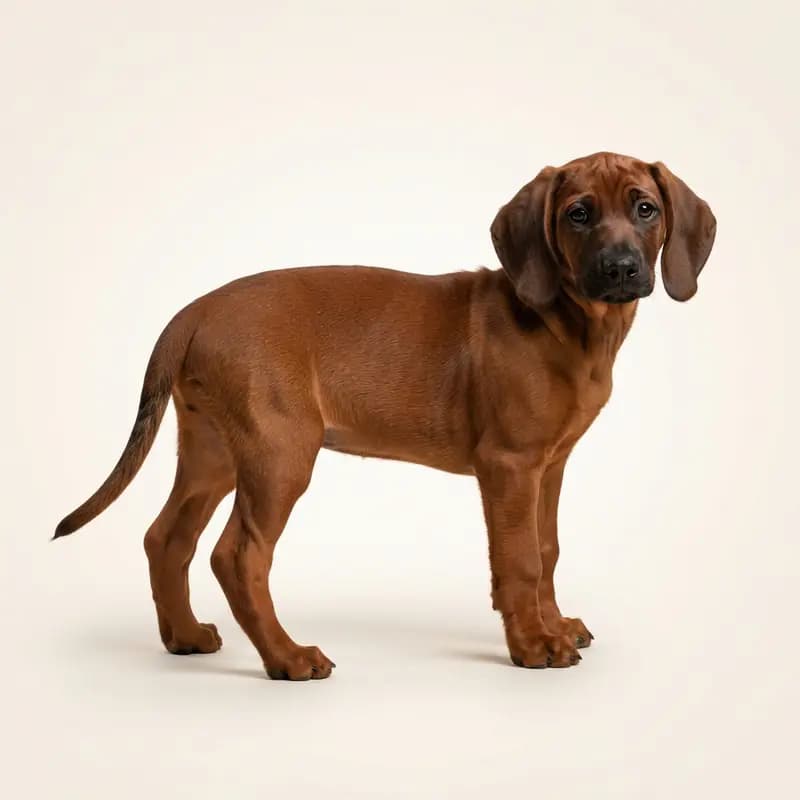
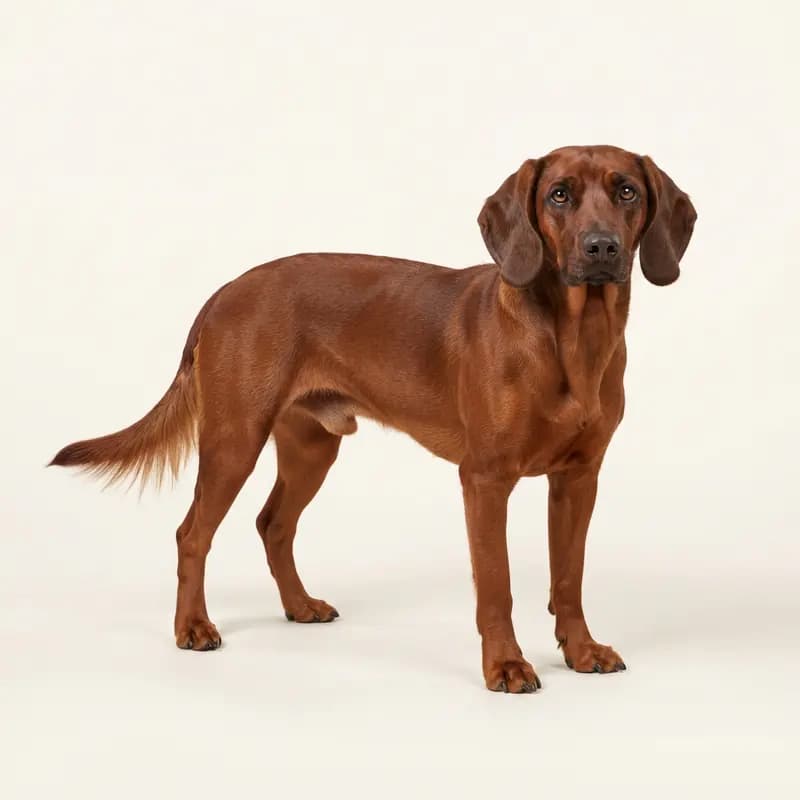
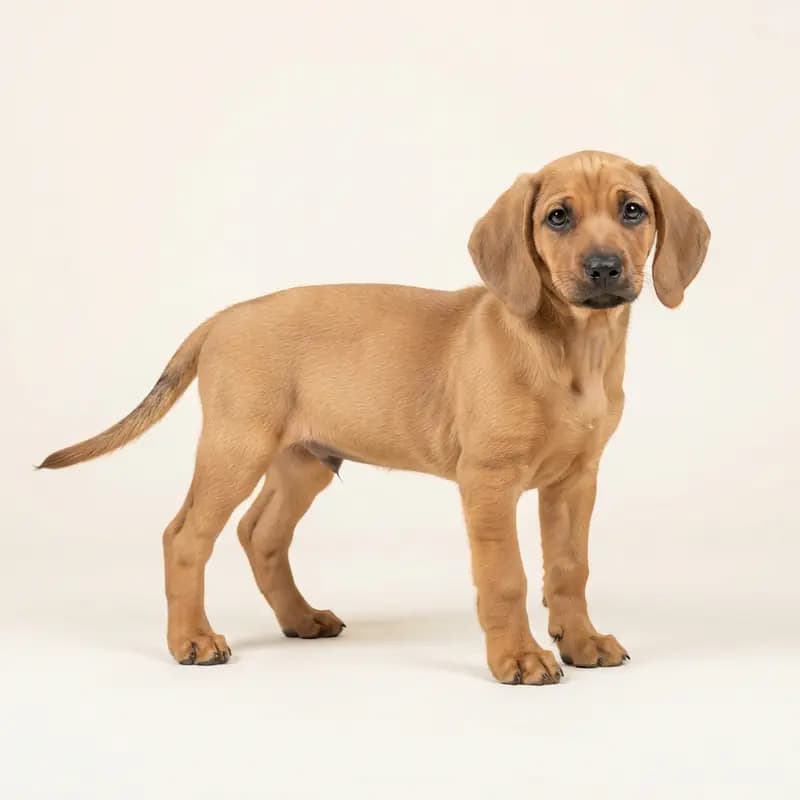
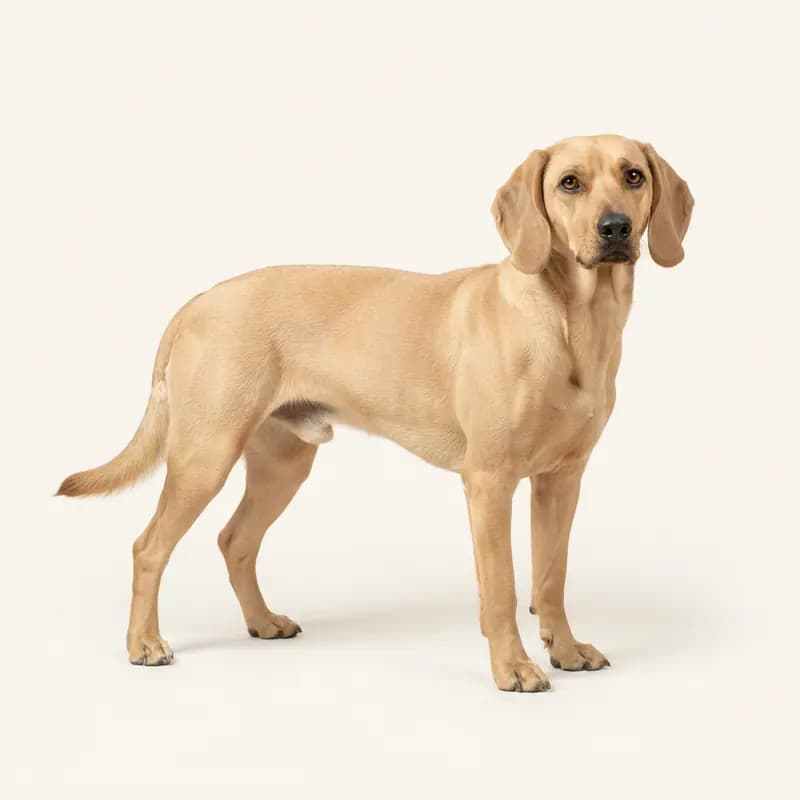
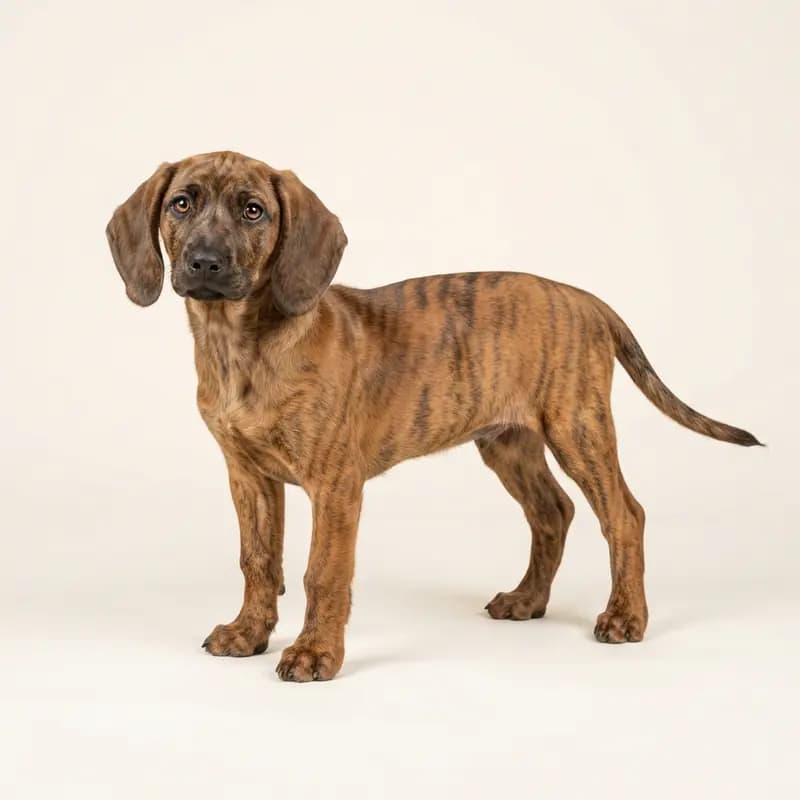
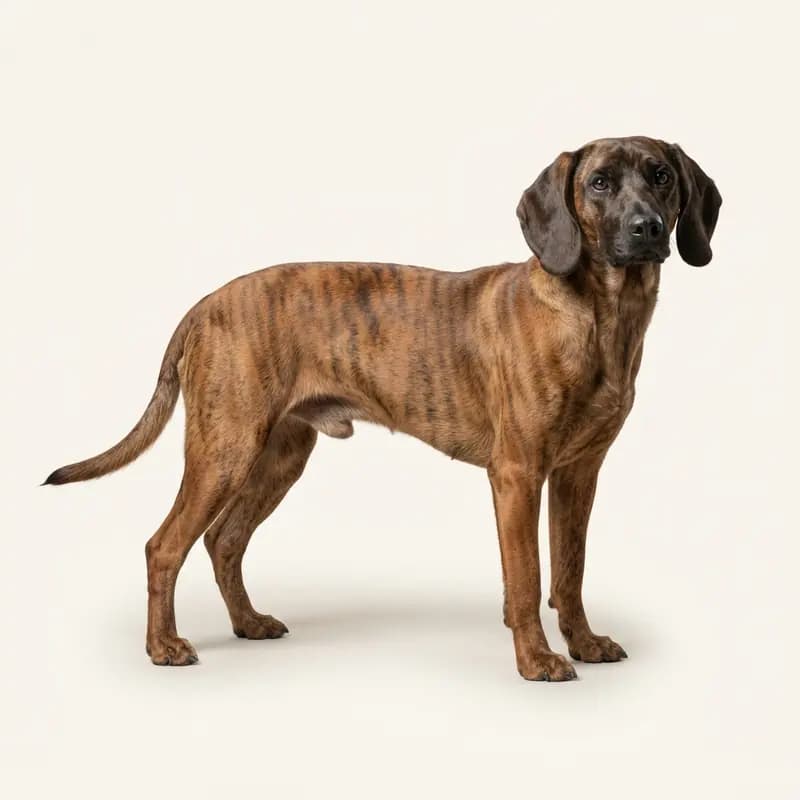
What colors does the Bavarian Mountain Hound come in?
The coat colors you will see in Bavarian Mountain Hound litters — including which ones fall outside the breed standard and which carry genetic risk.
Eye colors
 Brown
Brown Amber
Amber
Coat type
 Short
Short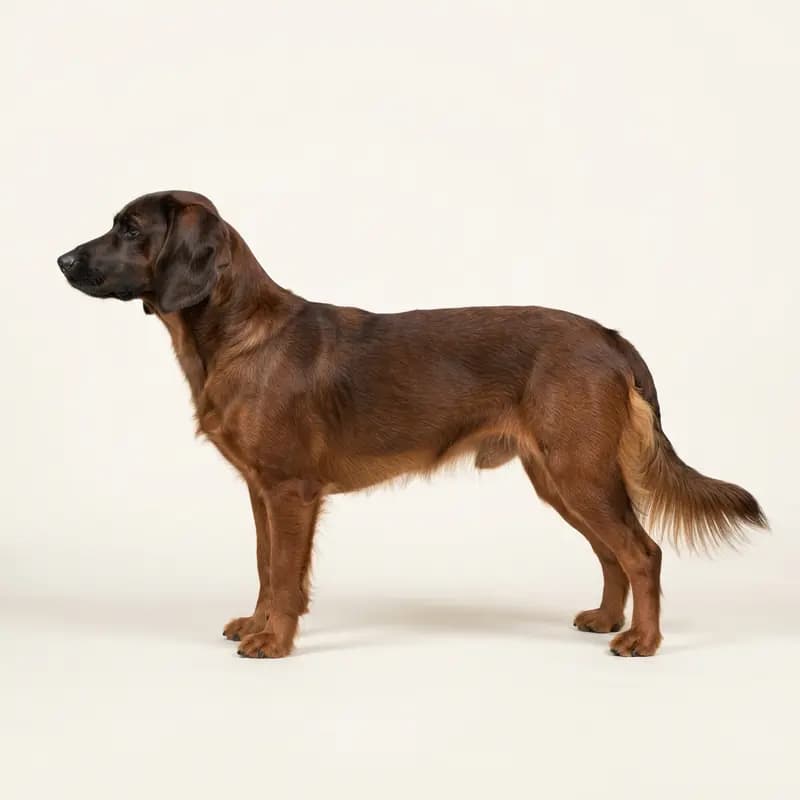 Illustrative image
Medium
 Smooth
 Double coat
Is the Bavarian Mountain Hound right for you?
The Bayerischer Gebirgsschweißhund (Bavarian Mountain Scent Hound) is a calm, extremely enduring, and highly specialized tracker—bred to follow the cold scent of injured game with intense focus in rugged terrain.
Perfect for you if:
- You are a hunter, a professional tracker, or can offer him high-level, demanding scent work—this specialist needs a real, fulfilling job.
- You live in a rural area, ideally right by the woods and nature, where he can satisfy his enormous need for movement far away from urban overstimulation.
- You lead calmly, quietly, and with extreme consistency, as this sensitive dog will immediately shut down if treated harshly and relies on a confident partnership.
- You have plenty of time for a close bond in everyday life, as he attaches himself unconditionally to his handler and, when it counts, works only for them.
Less ideal if:
- You are looking for a pure family or companion dog who is satisfied with normal walks and playing fetch—without demanding nose work, he will wither away mentally.
- You live in a busy city or a thin-walled apartment without direct access to nature.
- You expect a dog that greets every visitor or strange dog with joy—he is naturally reserved and distant toward strangers.
- You want to leave him alone for hours at a time, which completely contradicts his extremely strong attachment to his handler.
The real vibes check
A Bayerischer Gebirgsschweißhund is not a classic pet, but a highly qualified working colleague with a built-in nose for the invisible. If you don't give him a real job at the end of the tracking leash, he will make his own, often undesirable decisions. However, if you earn his respect, you will gain an unshakeably loyal shadow who will go through any thicket with you.
Self-check
Would the Bavarian Mountain Hound really fit your life?
Answer 6 quick questions about your everyday life and see how well the Bavarian Mountain Hound fits you — including an honest cost estimate per month, per year, and across the dog's lifetime.
Fit checkCost estimateRisk dice
Takes about 1 minute · free & anonymous
Breed Profile
The Bavarian Mountain Hound is a medium-sized dog with a strong and well-proportioned build. His musculature is remarkably developed, giving him agility and endurance in demanding terrain. The lop-eared ears are moderately long and have a rounded tip. The tail is usually straight and reaches down to the hocks. It belongs to FCI Group 6, Section 2, which includes scent hounds, bloodhounds and related breeds. This dog was specifically bred to work in the mountains and is therefore particularly resistant to harsh weather conditions. His fur is not only visually appealing, but also offers him protection from cold and wet conditions. There is no distinction between performance and show lines in the Bavarian Mountain Hound, as the breed was and is bred primarily as a working dog.
All measurements in detail
- Height
- 44 - 48 cm (Female), 47 - 52 cm (Male)
- Weight
- 17 - 22 kg (Female), 20 - 25 kg (Male)
- Life Expectancy
- 12 - 14 yrs
- Character
- Intelligent, persistent, affectionate
- Coat
- Dense, smooth, short to medium long with an undercoat
- Coat Color
- Deer red or reddish brown, occasionally with smaller white markings
- Price
- 1000 - 2500 €
Character & Temperament
If you are looking for a loyal companion with high intelligence and a real passion for work, the Bavarian Mountain Hound could be just the thing for you. This breed is known for its tireless endurance, ingenuity, and ability to track intricate scent trails. Their amazing skill makes them one of the most sought-after breeds for working as bloodhounds, especially in mountainous regions. In addition to their work ethic, they are also extremely affectionate and people-oriented. They form a strong bond with their owners and are often very sensitive. This dog needs a loving environment where he can feel part of the family. When it comes to their energy levels, they are not hyperactive but are still quite energetic, especially when it comes to their work. They enjoy being outside and engaging in physical activity, but also find satisfaction in finding relaxation after a long day. An interesting characteristic of the Bavarian Mountain Hound is its strong hunting instinct. He specializes in tracking injured game, which means he can also tend to follow scents and explore on his own in everyday life. That's why it's important that you live in a safe area or keep him on a leash if you don't want him to run away. In terms of alertness, they are quite alert and are likely to bark if they notice anything unusual. However, they are not guard dogs in the classic sense. As for the ability to stay alone, it should be noted that the Bavarian Mountain Hound is a very social breed. He can learn to stay alone for short periods of time, but he should not be left alone for long periods on a regular basis as this can cause separation anxiety. In conclusion, the Bavarian Mountain Hound is an amazing companion for someone who wants to build a deep relationship with their dog, especially if you lead an active life or are interested in hunting activities. This breed is definitely one that needs both physical and mental stimulation, and in return you will have a loyal and intelligent friend by your side.
| Trainability Willing to learn with clear rules and regular training. | Balanced |
| Watchfulness A natural watchdog with real protective instinct. | High |
| Openness to Strangers Neither pushily friendly nor suspicious. | Neutral |
| Hunting or Herding Drive This drive runs deep — no amount of training eliminates it. | Very strong |
Fun Fact!
A little fun fact at the end: The Bavarian Mountain Hound has an amazing ability to track smells over extremely long distances - sometimes several kilometers!
What Awaits You
The Bavarian Mountain Sniffer Dog is calm and balanced, loyal to its owner and reserved towards strangers. He is a healthy, confident, fearless, sociable dog, neither shy nor aggressive.
Housing & Care
This dog is less suitable for city life. He needs a lot of space and exercise and feels most comfortable in rural areas. Young children are usually not a problem, but careful introduction and supervision are important. The breed generally gets along well with other dogs, but their strong hunting instincts can be problematic when living with smaller pets.
- Family Friendly
Loves family life and thrives in a group.
Family-oriented - Child Friendly
Takes boisterous and affectionate children in its stride.
Patient with children - Dog Friendly
Usually gets on fine with other dogs.
Generally tolerant - City Friendly
Can manage in the city, but only with very active owners.
Difficult in cities
Owning a dog is a privilege, but it's also a real responsibility. Before you bring one into your life, be honest with yourself about the commitment it takes.
Training & Education
The Bavarian Mountain Hound is naturally highly motivated to work. You can promote this through nose work, mantrailing or tracking work. It is important to note that she is not "overly busy" because that can lead to stress. Ball games should be used with caution as they can become ball junkies. It is important that this dog learns frustration tolerance and impulse control. Their tendency to hunt should not be suppressed, but it should be guided in an orderly manner. It is important to offer alternatives so that the dog can participate happily in social life and is compatible with it.
Nutrition & Care
When it comes to nutrition, it is important to choose high-quality food that meets the dog's energy and nutrient needs. The protein and fat content should take into account the active lifestyle of this dog. Bavarian Mountain Hounds have a dense, smooth coat with an undercoat. The fur protects them from cold and wet, which means they can adapt well to the German climate. However, they shed quite heavily, especially during shedding. Regular grooming is therefore advisable.
| Care Level Minimal effort — occasional brushing and bathing. | Low-maintenance |
| Exercise Needs Working-dog energy that needs burning off every single day. | High-drive |
| Shedding Hair everywhere, always — no white clothing survives. | Very heavy |
| Trainability Willing to learn with clear rules and regular training. | Balanced |
Our experts are still reviewing this information. Spotted something wrong? Email us at info@honestdog.de.
Health & hereditary diseases
Health
A
Robust
Health grade
As a specialized hunting dog, the Bayerischer Gebirgsschweißhund benefits from strict selection for fitness, which is why the breed is considered very healthy. Nevertheless, buyers should pay attention to hip dysplasia (HD) and elbow dysplasia (ED), both of which are strictly monitored by the responsible breed club. Eye conditions such as progressive retinal atrophy (PRA) are also monitored in breeding programs to ensure the breed remains robust.
Grade is relative to other breeds — AI-assisted and editorially reviewed.
In daily life this can mean
You should ensure joint-friendly rearing and a healthy weight, as well as schedule regular eye check-ups so that your dog stays fit for a long time.
The breeder's role
Reputable breeders have the hips, elbows, and eyes of the parent animals tested to specifically reduce the risk of joint wear and eye diseases in the lineage.
Note: This health overview is AI-assisted and editorially reviewed. It is for orientation only and does not replace veterinary advice.
No Health Tests Available
No specific health tests are currently available for this breed.
Costs & where to find one
How much does a Bavarian Mountain Hound cost?
A Bavarian Mountain Hound costs around ~€180 per month (€90 – €330, depending on your setup). The first year adds up to roughly ~€4,690 including purchase, equipment and puppy school; across the dog's life (13 years) it comes to about ~€29,950.
With surgery cover, running costs come to about ~€170 per month — in return, your share of a major operation drops from several thousand euros to around 20 percent.
Per month
~€180
In the first year
~€4,690
Across the dog's life
~€29,950
Purchase from a breeder: €1,000 – €2,500
Estimate at a mid-range setup (suburban, dry food, 1–2 hours of daily exercise), average German prices, as of July 2026.
Calculate your personal costs1-minute self-check with your own answers
Looking for a Bavarian Mountain Hound?
HonestDog Concierge
No verified Bavarian Mountain Hound breeders on HonestDog yet
We currently have no breeders for this breed who have passed our verification. Create your short buyer profile: we'll set up your search alert, review a possible source and email you within 28 days.
Appearance, variants & origin
History
The full history
The Bavarian Mountain Hound has its origins in Germany and is one of the oldest hunting dog breeds that was bred specifically for tracking (pursuing injured game). The roots of the breed go back to the late 19th century. The Bavarian Mountain Hound is believed to have originated from a cross between the Red Hound and the Hanoverian Hound to create a more agile and lighter dog for the difficult mountain terrain. In the 1870s, Baron Karg-Bebenburg began breeding this breed in Bavaria. His goal was to develop a dog capable of working over long distances in difficult terrain while tracking down injured game. The breed was recognized by the German Kennel Club (VDH) in 1912 and has been known as an independent breed ever since.
Original Use
The Bavarian Mountain Hound was bred to search for injured game in mountainous terrain and is known for its excellent nose and endurance.
Origin
Germany
Date
1870
Owner experiences
What owners say about the Bavarian Mountain Hound
Zusammengefasst aus öffentlich geteilten Halter-Erfahrungen
In Berichten von Haltern wird der Bayerische Gebirgsschweißhund (BGS) im häuslichen Umfeld als extrem anhänglicher, loyaler und sensibler Begleiter beschrieben. Viele Besitzer betonen, dass diese Hunde eine außergewöhnlich enge Bindung zu ihren Bezugspersonen aufbauen und am liebsten überall dabei sein möchten. Sie gelten im Haus als ruhig, sanftmütig und sehr verschmust, sofern sie geistig und körperlich ausgelastet sind.
Allerdings weisen erfahrene Halter auch darauf hin, dass diese Rasse eine enorme Sensibilität besitzt und auf Härte oder Druck sehr negativ reagiert. Zudem wird oft berichtet, dass BGS-Hunde Fremden gegenüber eher zurückhaltend oder misstrauisch sind. Ein großes Thema in Familien ist zudem die Trennungsangst: Viele Halter berichten, dass die Hunde ungern alleine bleiben und bei Unterforderung oder Einsamkeit schnell zu nervösem Verhalten oder Zerstörungswut neigen.
Zusammengefasst aus öffentlich geteilten Halter-Erfahrungen
Die Erziehung des Bayerischen Gebirgsschweißhundes gilt unter Haltern als anspruchsvolle Aufgabe, die viel Geduld und Konsequenz erfordert. Obwohl die Hunde als sehr intelligent und lernwillig beschrieben werden, besitzen sie einen ausgeprägten Eigensinn. Sie hinterfragen Kommandos gerne und müssen ohne Härte, aber mit klarer Führung angeleitet werden.
Die größte Herausforderung im Alltag ist laut übereinstimmenden Halterberichten der extreme Jagdtrieb. Sobald der Hund eine Fährte in die Nase bekommt, schaltet er oft komplett auf Durchzug und ist kaum noch abrufbar. Viele Besitzer berichten daher, dass ein Freilauf im Wald oder in wildreichen Gebieten ohne Leine so gut wie unmöglich ist. Eine frühzeitige Sozialisierung und gezieltes Antijagdtraining bzw. kontrollierte Sucharbeit sind für die Erziehung unerlässlich.
Zusammengefasst aus öffentlich geteilten Halter-Erfahrungen
In Bezug auf die Gesundheit gilt der Bayerische Gebirgsschweißhund dank strenger, leistungsorientierter Zuchtselektion als sehr robuste und wetterfeste Rasse. Dennoch weisen Halter und Rasseexperten darauf hin, dass die Hüftgelenksdysplasie (HD) ein bekanntes Risiko darstellt, weshalb beim Welpenkauf unbedingt auf die Untersuchungsergebnisse der Elterntiere geachtet werden sollte. Zudem wird gewarnt, dass bei unkontrollierten Zuchten ohne Papiere vermehrt Erbkrankheiten wie Epilepsie auftreten können.
Ein praktisches Detail, das in Foren oft diskutiert wird, ist die Fellpflege: Das kurze, dichte Stichelhaar des Hundes haart das ganze Jahr über. Die kurzen Haare bohren sich hartnäckig in Polster, Teppiche und Kleidung und lassen sich nur schwer wieder entfernen. Zudem betonen Halter unmissverständlich, dass einfache Spaziergänge zur Auslastung nicht reichen – der Hund benötigt anspruchsvolle Nasenarbeit wie Mantrailing oder Fährtenarbeit, um gesund und ausgeglichen zu bleiben.
Paraphrased from real owner reports
Loading owner stories
FAQ & more
Frequently asked questions about the Bavarian Mountain Hound
Is a Bavarian Mountain Hound the right dog for me?
The Bavarian Mountain Hound is an active dog that needs plenty of exercise and mental stimulation. Research the temperament, grooming needs, and space requirements before deciding.
How long does a Bavarian Mountain Hound live?
The average life expectancy of a Bavarian Mountain Hound is 12-14 years. With proper care and regular vet visits, your dog can live a long, healthy life.
How much grooming does a Bavarian Mountain Hound need?
Bavarian Mountain Hound grooming requirements include regular brushing, nail trimming, and dental care. HonestDog provides detailed grooming tips for every breed.
Is a Bavarian Mountain Hound good for families with children?
The Bavarian Mountain Hound can be a great family dog. Proper training and socialization are key. HonestDog provides family suitability information for every breed.
What colors does the Bavarian Mountain Hound come in?
The Bavarian Mountain Hound comes in these colors: Red, Fawn, Brindle.
Loading related articles
Are you a Bavarian Mountain Hound breeder?
Showcase your kennel on HonestDog and reach families searching for a responsibly bred Bavarian Mountain Hound.
Why HonestDog?
What makes HonestDog different from other platforms
Full transparency
We lay out what we have: who the breeder is, how they work, and any health records they've uploaded. So you can judge for yourself.
Responsible breeding, assured
Every breeder on HonestDog has their identity and documents checked before their profile goes live. Health records they upload are shown on the profile, so you can see exactly what has been tested.
Trust and verification
We verify breeders and buyers alike, so every conversation happens on solid ground. It's a new standard of trust in dog breeding.
Less hassle, more time
We've already checked the breeders' documents and gathered the details, so you can skip the endless research and focus on finding the right puppy for your family.
Our Mission

We connect dog lovers with responsible breeders and shelters to ensure every dog finds the perfect home.
Founded by dog enthusiasts, our platform focuses on ethical dog breeding and adoption.
Why HonestDog?
We connect you with vetted breeders and shelters so you can find your — your new companion — with confidence.
Vetted Partners
Only verified breeders and shelters — for a safe start.
Highest Standards
Every animal's health and wellbeing is our top priority.
Guides & Resources
Guides, checklists, and breed profiles — so you can make a well-informed decision.