Loading breed
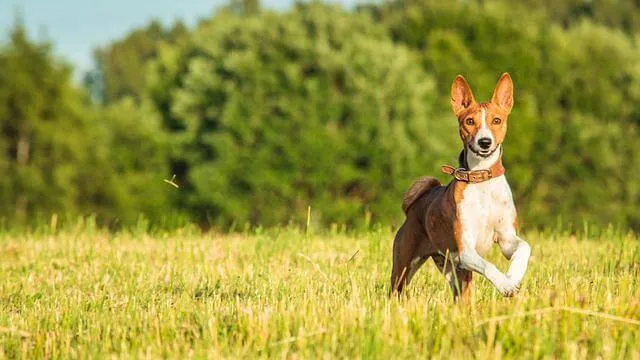
Basenji
Health grade BThe Basenji is a clean, cat-like, and self-sufficient primitive hunter—bred in Central Africa to drive game into nets independently and silently. While it doesn't bark, it possesses a brilliant mind that almost always prioritizes its own decisions over your commands.
- Height38–45 cm
- Weight9–12 kg
- Life expectancy13–14 yrs
- Puppy price1,500–2,500 €
- Energy4/5
The Essentials at a Glance
The Basenji is a clean, cat-like, and self-sufficient primitive hunter—bred in Central Africa to drive game into nets independently and silently. While it doesn't bark, it possesses a brilliant mind that almost always prioritizes its own decisions over your commands.
- Health grade B: The Basenji is a primitive breed that requires an above-average number of mandatory health tests, which is why we have assigned it a grade of C.
- You appreciate a dog with cat-like independence and don't expect an unconditional 'will-to-please'.
- You are looking for an extremely clean roommate who physically cannot perform classic barking, but communicates through yodeling and cooing.
- You expect it to remain reliably recallable off-leash in the woods—it was selected to hunt prey completely autonomously.
Is the Basenji right for you?
At a glance
Basenji overview
The essentials — key facts, traits, and health priorities — before you dive deeper.
Health grade
Relative to other breeds
S
A
B
C
D
E
Very healthyHigher risk
Solid — a handful of items a good breeder watches.
See full health info & tests →
Note: This health overview is AI-assisted and editorially reviewed. It is for orientation only and does not replace veterinary advice.
Lifespan
13–14 yrs
Height
38–45 cm
Weight
9–12 kg
Practical
- Puppy price: 1,500 – 2,500 €
- Coat: Short, fine, dense
- Origin: Central Africa
Temperament
Energy
Trainability
Family fit
With kids
Daily life
Care effort
Shedding
Barking
City-friendly
Guard instinct
What matters most
Especially with a Basenji, choosing the right breeder is the single most important decision you'll make. Serious breeders consistently test the parents for inherited conditions, prioritize healthy early socialization, and stay accountable long after handover. A cheap puppy without health screening tends to become the most expensive dog later on.
See HonestDog breeder standards →Colors & coat
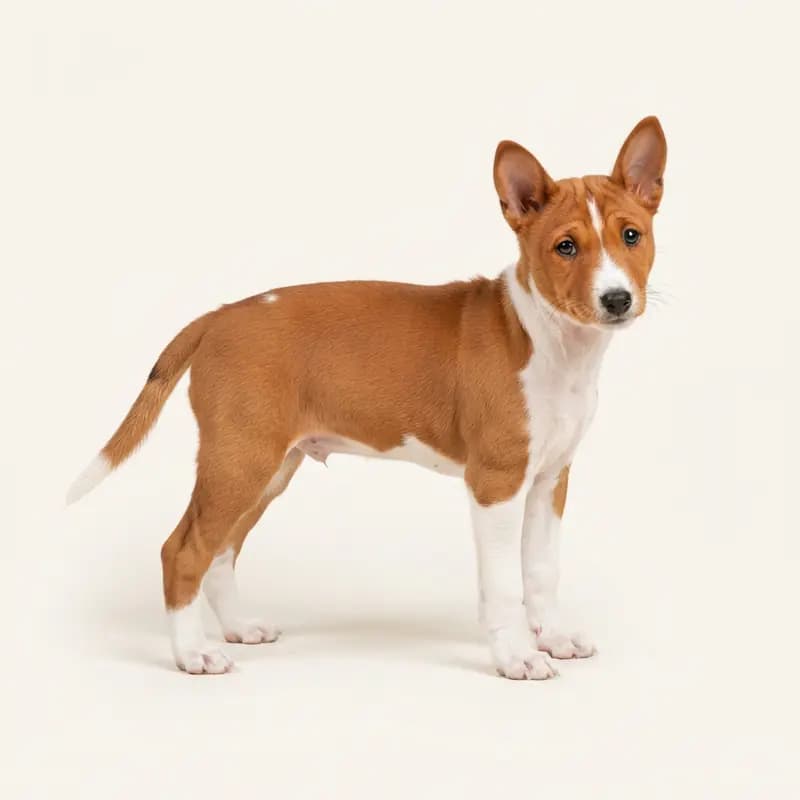
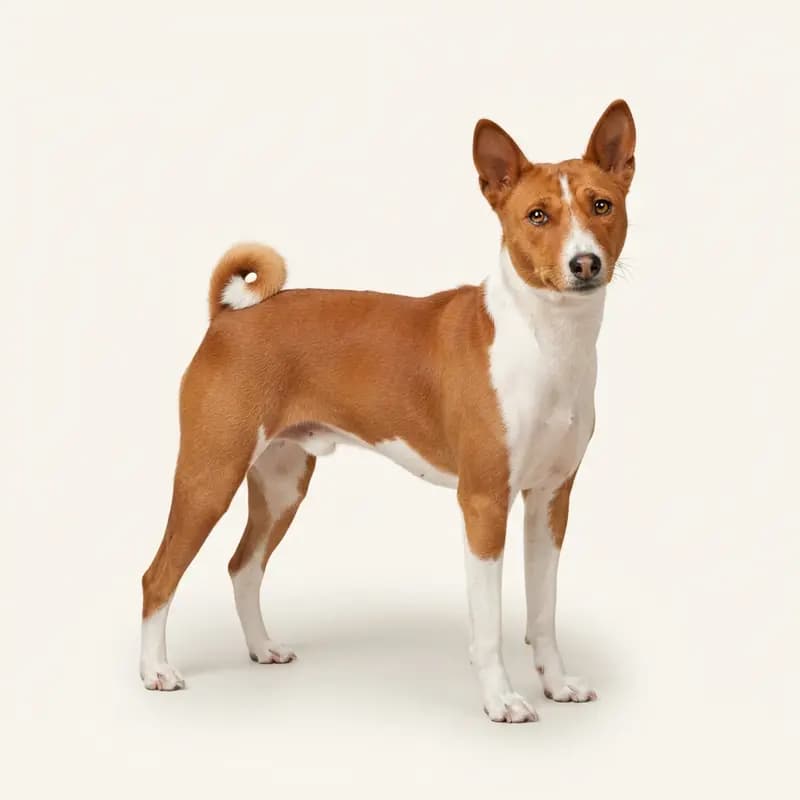
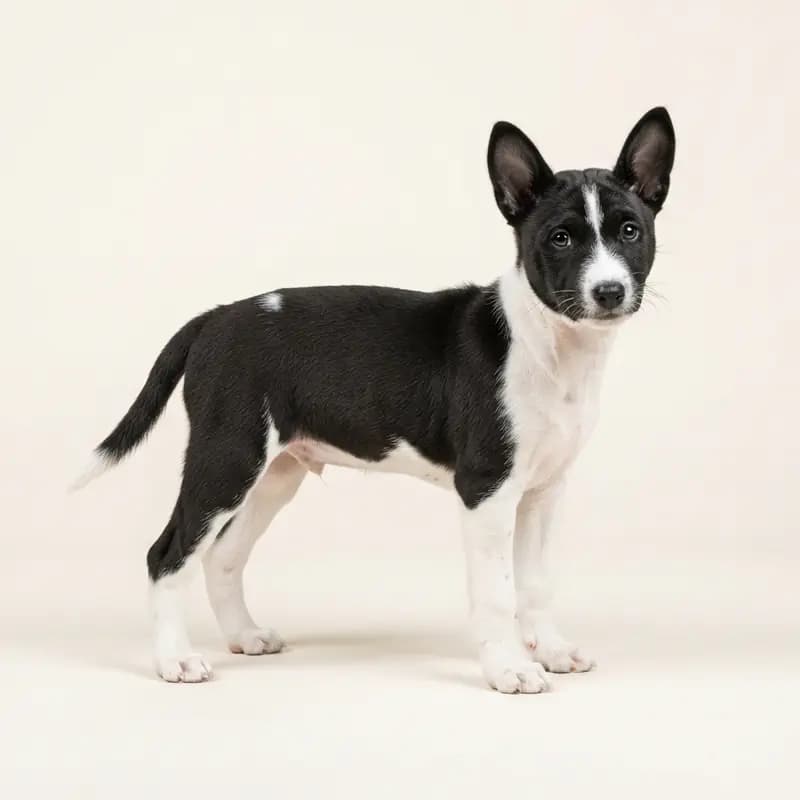
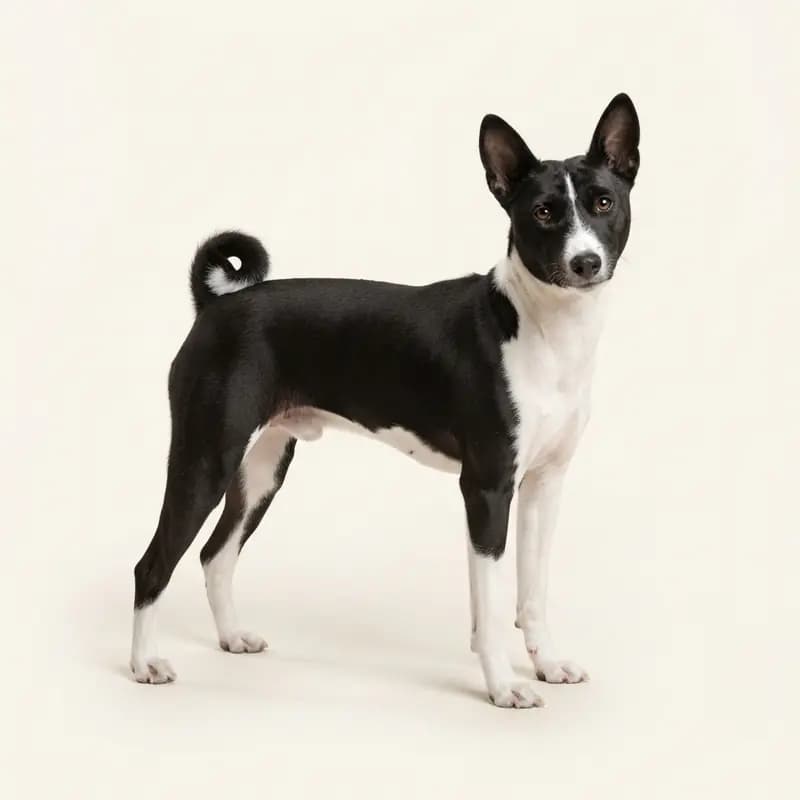
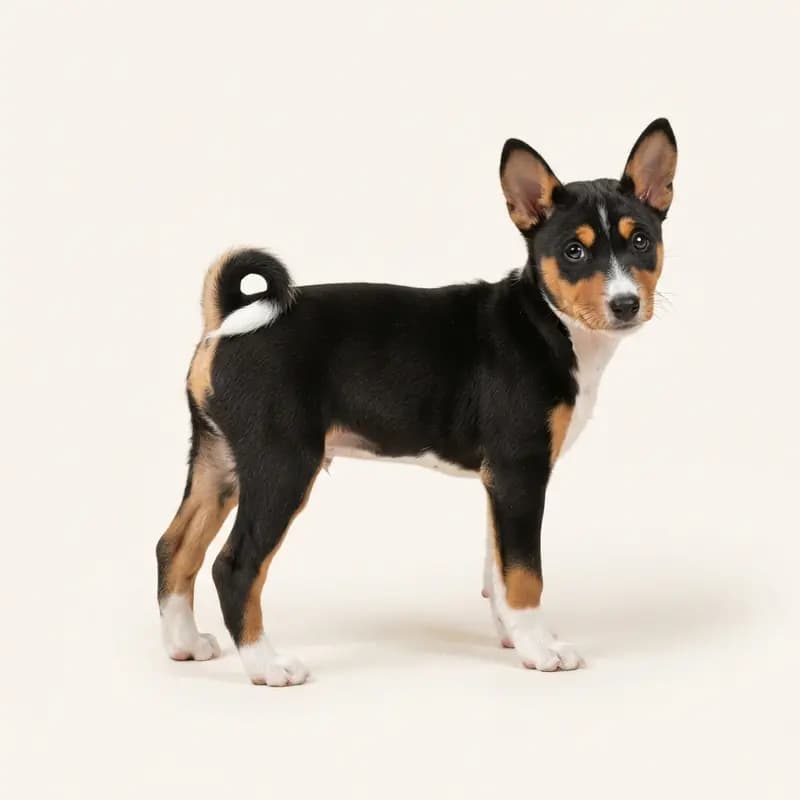
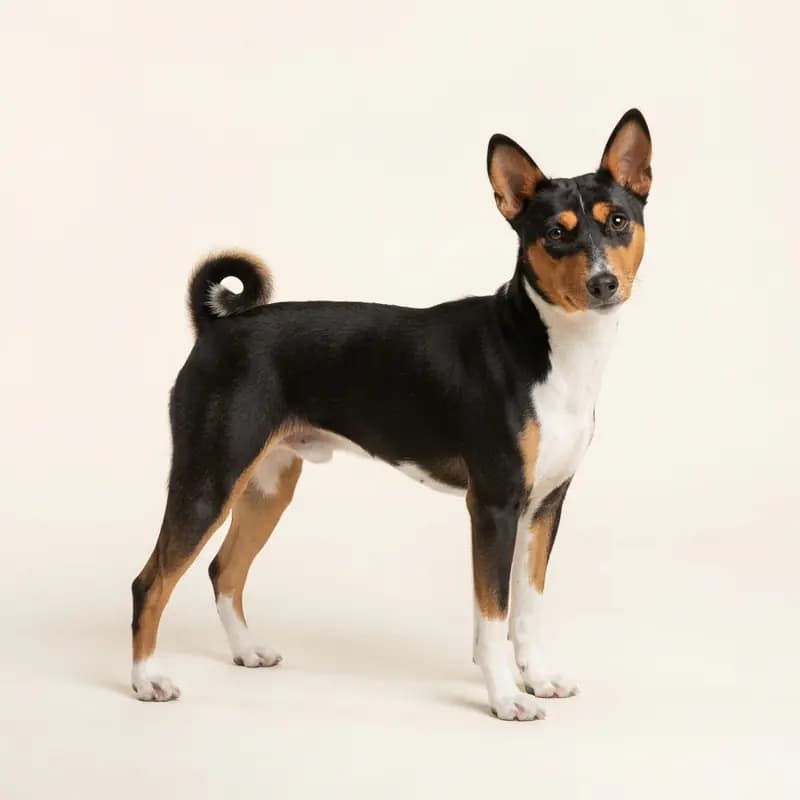
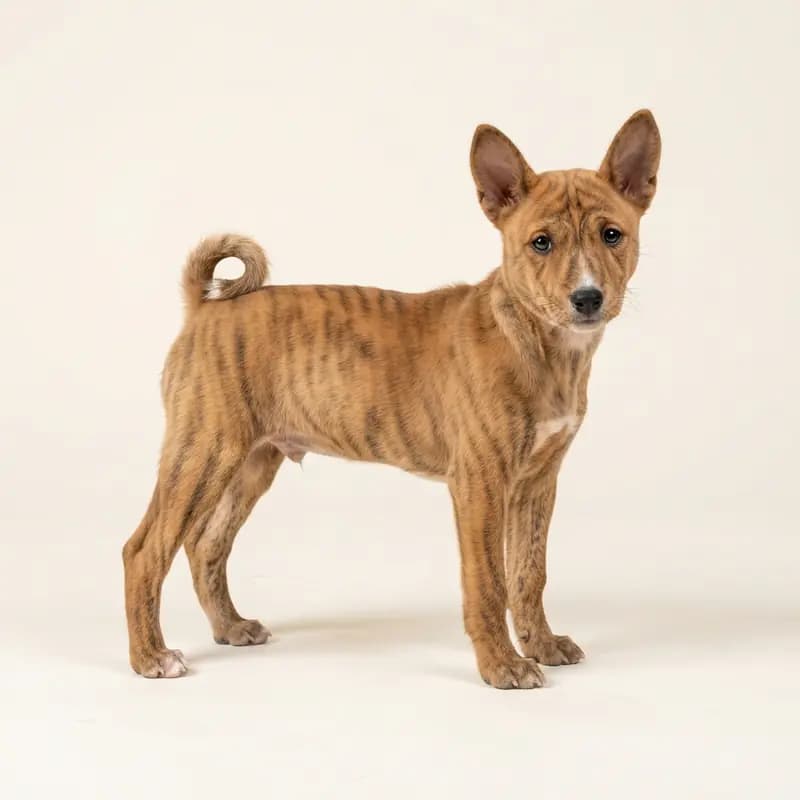
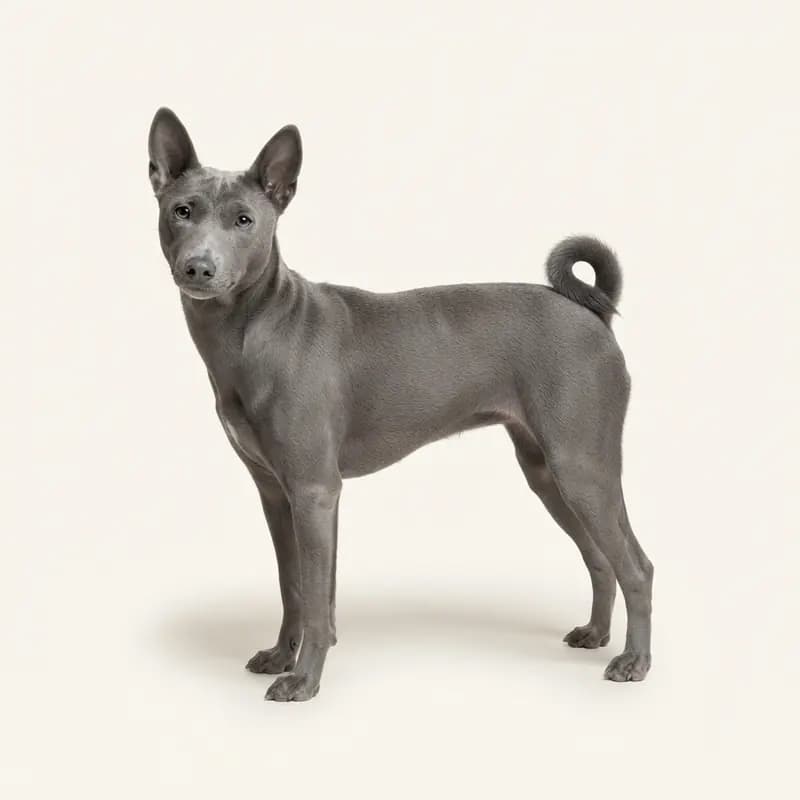
What colors does the Basenji come in?
The coat colors you will see in Basenji litters — including which ones fall outside the breed standard and which carry genetic risk.
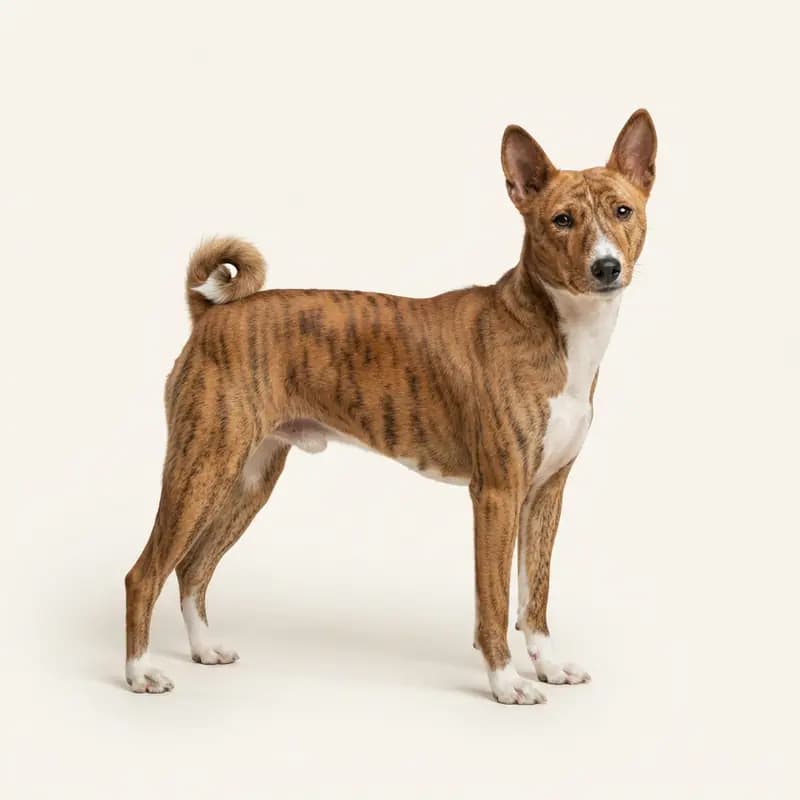
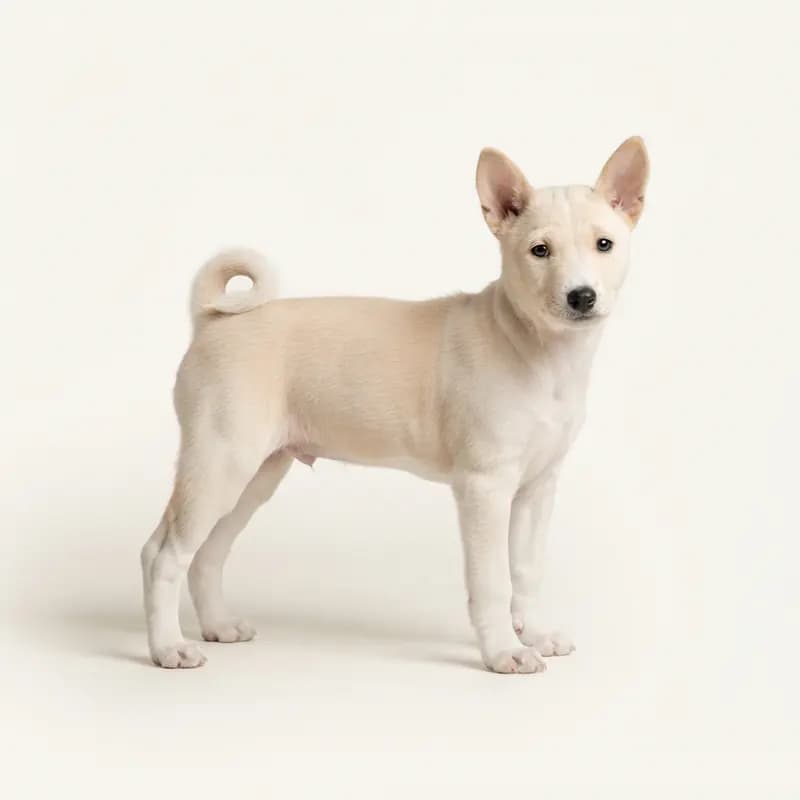
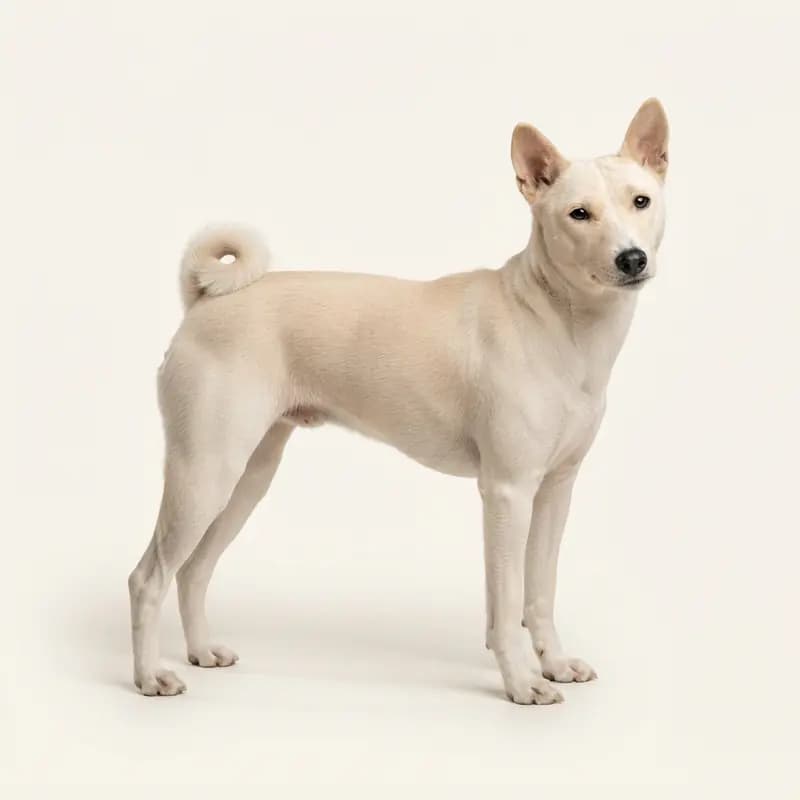
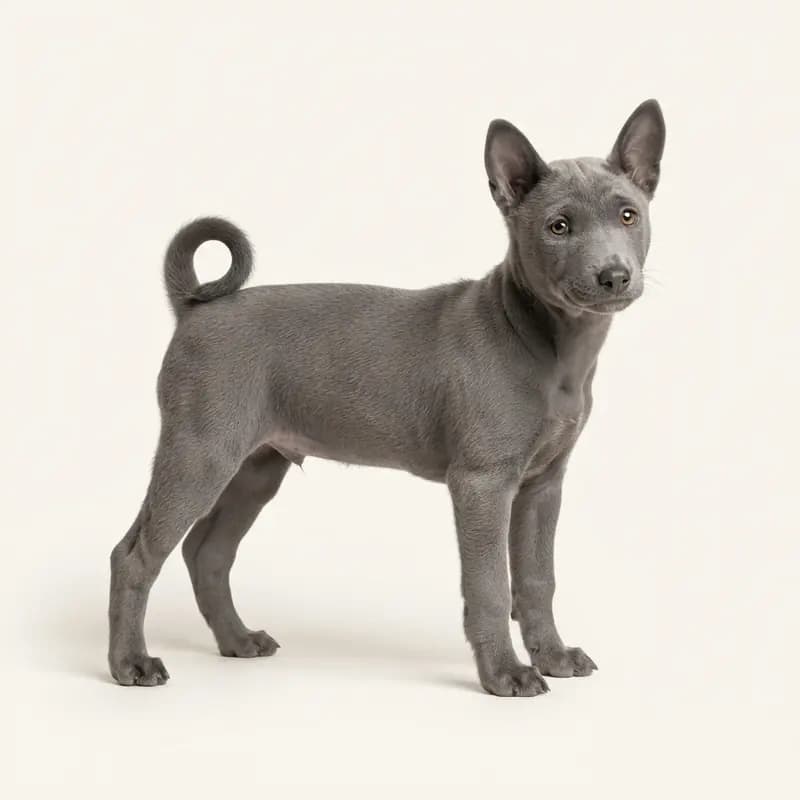
Eye colors
 Brown
Brown
Coat type
 Short
Short Smooth
Is the Basenji right for you?
The Basenji is a clean, cat-like, and self-sufficient primitive hunter—bred in Central Africa to drive game into nets independently and silently. While it doesn't bark, it possesses a brilliant mind that almost always prioritizes its own decisions over your commands.
Perfect for you if:
- You appreciate a dog with cat-like independence and don't expect an unconditional 'will-to-please'.
- You are looking for an extremely clean roommate who physically cannot perform classic barking, but communicates through yodeling and cooing.
- You can provide an absolutely escape-proof, high-fenced property—its jumping ability and urge for freedom are legendary.
- You enjoy keeping its brilliant hunting mind occupied through scent work or lure coursing, rather than just walking dull laps.
Less ideal if:
- You expect it to remain reliably recallable off-leash in the woods—it was selected to hunt prey completely autonomously.
- You want a dog that adapts closely to your mood and constantly seeks physical contact.
- You have small pets at home or want relaxed dog encounters at the dog park—it is often very selective and reactive.
- You are looking for an outdoor buddy for all weather—this African hunter finds rain and cold absolutely unbearable.
The real vibes check
A Basenji is basically a highly intelligent cat in an athlete's body that grooms itself like a fox and assesses situations on its own. It will love you dearly, but will never blindly obey if it doesn't see the point of your command. You aren't buying a subordinate, but a fascinating, strong-willed partner on equal footing.
Self-check
Would the Basenji really fit your life?
Answer 6 quick questions about your everyday life and see how well the Basenji fits you — including an honest cost estimate per month, per year, and across the dog's lifetime.
Fit checkCost estimateRisk dice
Takes about 1 minute · free & anonymous
Breed Profile
The Basenji is a small, elegant breed of dog often referred to as the "Barkless Dog" because it does not bark but instead makes a series of unique vocalizations known as "Barroo." He is a member of FCI Group 5: Spitz and Urtyp dogs, Section 6: Urtyp - primitive types. He has a fine, short and dense coat that requires very little grooming and a distinctive tail that is carried in a tight loop over his back. His erect ears and his intelligent, penetrating gaze give him an attentive and curious expression.
All measurements in detail
- Height
- 38 - 42 cm (Female), 41 - 45 cm (Male)
- Weight
- 9 - 11 kg (Female), 10 - 12 kg (Male)
- Life Expectancy
- 13 - 14 yrs
- Character
- Intelligent, independent, affectionate
- Coat
- Short, fine, dense
- Coat Color
- Red, Black, Tricolor, Brindle, all with white markings
- Price
- 1500 - 2500 €
Character & Temperament
The Basenji is a very intelligent and independent dog. He is often reserved towards strangers, but very affectionate and loyal to his family. If you're looking for a dog that's always at your feet, the Basenji might not be the right choice because it has a mind of its own. But that doesn't mean he isn't loving; he often shows his affection in more subtle ways. One of the most interesting features of the Basenji is its "silent" bark. Instead of barking, he makes a yodeling or "barroo" sound, which sounds very melodic. This can be a huge advantage for people who live in urban areas or simply don't want a noise-prone dog. Because of its hunting history, the Basenji has a strong hunting instinct. This means he tends to hunt anything that moves, including squirrels, birds and even insects. So you should be careful when letting him off the leash in an unfenced area. It's also important to know that he likes to dig, which can be a problem if you have a well-maintained garden. Another notable feature of the Basenji is its cat-likeness when it comes to cleanliness. He spends a lot of time grooming himself and is generally a very clean dog. This often makes it a good choice for people who are allergic to dogs or for those who simply don't want a dog that sheds a lot. The Basenji is an active dog and requires daily exercise to be happy. He loves to run and play and will enjoy mental stimulation through games and training. It is important to begin training from puppyhood, using patience and consistency. Because of his independence, the Basenji can sometimes be difficult to train, but with the right approach he can learn to be an obedient companion. One point to keep in mind is that the Basenji may not like being left alone. He may develop separation anxiety, which can lead to destructive behavior. It's important that you invest time in getting your Basenji used to being alone and provide him with mental stimulation and toys to avoid boredom.
| Trainability Has its own ideas and will test limits. | Strong-willed |
| Watchfulness Occasionally alerts but is fundamentally open. | Low |
| Openness to Strangers Warms up quickly and is generally welcoming. | Friendly |
| Hunting or Herding Drive Powerful instinct that can override recall when triggered. | Strong |
Fun Fact!
Basenjis are considered the "bark-free" dog breed because instead of barking, they produce a unique, yodel-like sound called a "barroo." is known. You have to hear this! ??
What Awaits You
Basenjis are considered to be rather original dogs. They have a very high motivation to hunt and solve problems independently. They need employment that suits their independent nature and very experienced, active dog owners.
Housing & Care
The Basenji's size and adaptability make it suitable for both city and country life. He is intelligent and curious, but also needs space to burn off energy. He usually gets along well with children, but like everyone Dog encounters should be supervised. The Basenji has a strong hunting instinct, which is why it doesn't always get along well with cats or other small pets.
- Family Friendly
Loves family life and thrives in a group.
Family-oriented - Child Friendly
Gets on well with children — with adult supervision.
With supervision - Dog Friendly
Usually gets on fine with other dogs.
Generally tolerant - City Friendly
Adapts well to city living and urban environments.
Well-suited to city life
Owning a dog is a privilege, but it's also a real responsibility. Before you bring one into your life, be honest with yourself about the commitment it takes.
Training & Education
Basenjis are intelligent but also independent and proud, which can make training challenging. They need clear, consistent parenting based on positive reinforcement. Since they are hunters by nature, they must learn to control this instinct, especially around small animals. Activities like agility, lure coursing, or mantrailing can help them utilize their natural abilities and stay happy.
Nutrition & Care
A Basenji's diet should be balanced and nutritious. As with other breeds, protein, fat and carbohydrates should be in the right proportion. It is advisable to pay attention to high-quality food. When it comes to grooming, Basenjis are quite easy to care for. They have short, fine fur without an undercoat and hardly shed. Regular brushing is enough to keep the coat in good condition. The climate in Germany is pleasant for Basenjis in summer, but in winter they should have protection against the cold as they originally come from warmer areas.
| Care Level Minimal effort — occasional brushing and bathing. | Low-maintenance |
| Exercise Needs Needs several hours of serious exercise every day. | Very active |
| Shedding No or minimal hair loss — suitable for allergy sufferers. | No shedding |
| Trainability Has its own ideas and will test limits. | Strong-willed |
Our experts are still reviewing this information. Spotted something wrong? Email us at info@honestdog.de.
Health & hereditary diseases
Health
B
Solid
Health grade
The Basenji is a primitive breed that requires an above-average number of mandatory health tests, which is why we have assigned it a grade of C. In particular, the treacherous Fanconi syndrome (a severe kidney disease) and Progressive Retinal Atrophy (PRA), which can lead to blindness, must be ruled out through consistent genetic testing of the parent dogs. In addition, hip dysplasia (HD) should be clarified via X-ray results before purchase to avoid future joint problems.
Grade is relative to other breeds — AI-assisted and editorially reviewed.
In daily life this can mean
With consistent preventative care, joint-friendly exercise, and regular eye and kidney check-ups, most dogs remain active well into old age.
The breeder's role
Reputable breeders have the parents' kidneys, eyes, and hips tested to specifically reduce avoidable risks in the bloodline.
Note: This health overview is AI-assisted and editorially reviewed. It is for orientation only and does not replace veterinary advice.
No Health Tests Available
No specific health tests are currently available for this breed.
Costs & where to find one
How much does a Basenji cost?
A Basenji costs around ~€160 per month (€90 – €300, depending on your setup). The first year adds up to roughly ~€4,770 including purchase, equipment and puppy school; across the dog's life (13.5 years) it comes to about ~€28,970.
With surgery cover, running costs come to about ~€150 per month — in return, your share of a major operation drops from several thousand euros to around 20 percent.
Per month
~€160
In the first year
~€4,770
Across the dog's life
~€28,970
Purchase from a breeder: €1,500 – €2,500
Estimate at a mid-range setup (suburban, dry food, 1–2 hours of daily exercise), average German prices, as of July 2026.
Calculate your personal costs1-minute self-check with your own answers
Looking for a Basenji?
HonestDog Concierge
No verified Basenji breeders on HonestDog yet
We currently have no breeders for this breed who have passed our verification. Create your short buyer profile: we'll set up your search alert, review a possible source and email you within 28 days.
Appearance, variants & origin
History
The full history
The Basenji is one of the oldest dog breeds in the world and comes from Central Africa. There is evidence that he existed as early as ancient Egypt, as depictions that resemble him have been found in tombs and artifacts from that period. The modern Basenji as we know it comes from the Congo, where it was traditionally used by tribes for hunting. He was prized for his ability to hunt silently and was often equipped with bells around his neck so hunters could track his movements. The Basenji was brought to Europe and eventually America in the 1930s. It was recognized as a separate breed by the American Kennel Club in 1943.
Original Use
The Basenji was used as a hunting dog in the forests of Central Africa and is known for its lack of barking and cleanliness.
Origin
Central Africa
Date
Antike
Owner experiences
What owners say about the Basenji
Maike S., Halterin aus Hamburg (Rüde, seit 2021)
Johnny ist mein allererster Hund und ich muss sagen: Er ist absolut wunderbar, aber man braucht eine gehörige Portion Geduld. In der Wohnung ist er die Ruhe selbst. Am liebsten sucht er sich sonnige Plätzchen, liegt stundenlang auf der Fensterbank und schaut entspannt nach draußen. Zudem ist er extrem sauber und reinlich.
Draußen zeigt sich dann aber sein wahrer Charakter und sein typischer Basenji-Dickkopf: Wenn er nicht will, dann will er einfach nicht. Sein Jagdtrieb ist wirklich extrem – von Mäusen, Eichhörnchen und Enten bis hin zu vorbeifahrenden Autos oder sogar automatischen Schiebetüren triggert ihn fast alles, was sich bewegt. An der Leine pöbelt er auch gerne mal andere Hunde an, um seinen Standpunkt klarzumachen, obwohl er im Freilauf eigentlich sehr verträglich ist.
Christian M., Halter aus Köln (Rüde, seit 2023)
Mein Rüde ist jetzt knapp 16 Monate alt und das Thema Freilauf bringt mich regelmäßig an meine Grenzen. Wir hatten gehofft, ihn an übersichtlichen Stellen ableinen zu können, aber nach einer heftigen Begegnung mit einem Kaninchen und einem Reh, bei der er uns fast abgehauen wäre, bleibt die Leine jetzt erst einmal dauerhaft dran.
Das größte Problem beim Training ist seine Motivation: Er ist absolut nicht verfressen und lässt sich kaum mit Leckerlis bestechen. Er begreift neue Kommandos zwar unglaublich schnell, langweilt sich dann aber sofort wieder und macht sein eigenes Ding. Wir besuchen jetzt einen speziellen Rückruf-Kurs, weil ich ihm so gerne ein Stück Freiheit schenken möchte, aber es ist ein verdammt harter Weg.
Paraphrased from real owner reports
Loading owner stories
FAQ & more
Frequently asked questions about the Basenji
Is a Basenji the right dog for me?
The Basenji is an active dog that needs plenty of exercise and mental stimulation. Research the temperament, grooming needs, and space requirements before deciding.
How long does a Basenji live?
The average life expectancy of a Basenji is 13-14 years. With proper care and regular vet visits, your dog can live a long, healthy life.
How much grooming does a Basenji need?
Basenji grooming requirements include regular brushing, nail trimming, and dental care. HonestDog provides detailed grooming tips for every breed.
Is a Basenji good for families with children?
The Basenji can be a great family dog. Proper training and socialization are key. HonestDog provides family suitability information for every breed.
What colors does the Basenji come in?
The Basenji comes in these colors: Red and white, Black and white, Tricolor, Brindle, Cream, Blue. Colors that fall outside the breed standard are marked as such on the breed page.
Loading related articles
Are you a Basenji breeder?
Showcase your kennel on HonestDog and reach families searching for a responsibly bred Basenji.
Why HonestDog?
What makes HonestDog different from other platforms
Full transparency
We lay out what we have: who the breeder is, how they work, and any health records they've uploaded. So you can judge for yourself.
Responsible breeding, assured
Every breeder on HonestDog has their identity and documents checked before their profile goes live. Health records they upload are shown on the profile, so you can see exactly what has been tested.
Trust and verification
We verify breeders and buyers alike, so every conversation happens on solid ground. It's a new standard of trust in dog breeding.
Less hassle, more time
We've already checked the breeders' documents and gathered the details, so you can skip the endless research and focus on finding the right puppy for your family.
Our Mission

We connect dog lovers with responsible breeders and shelters to ensure every dog finds the perfect home.
Founded by dog enthusiasts, our platform focuses on ethical dog breeding and adoption.
Why HonestDog?
We connect you with vetted breeders and shelters so you can find your — your new companion — with confidence.
Vetted Partners
Only verified breeders and shelters — for a safe start.
Highest Standards
Every animal's health and wellbeing is our top priority.
Guides & Resources
Guides, checklists, and breed profiles — so you can make a well-informed decision.