Loading breed
Australian Labradoodle
Health grade BThe Australian Labradoodle is a people-oriented, highly intelligent companion dog mix—a deliberate cross of Apportierhunde (retrievers) and water dogs that combines the Labrador's will-to-please with the clever energy of the Poodle and Spaniel.
- Height35–63 cm
- Weight7–30 kg
- Life expectancy12–15 yrs
- Puppy price2,000–3,500 €
- Energy3/5
The Essentials at a Glance
The Australian Labradoodle is a people-oriented, highly intelligent companion dog mix—a deliberate cross of Apportierhunde (retrievers) and water dogs that combines the Labrador's will-to-please with the clever energy of the Poodle and Spaniel.
- Health grade B: Since the Australian Labradoodle is not an officially recognized breed with a central kennel club, there are no mandatory minimum health tests for breeders.
- You are looking for an active partner for retrieving or scent games—the retriever and spaniel genes demand more than just simple walks.
- You want a highly people-oriented dog that bonds closely with its family, greets visitors in a friendly manner, and prefers to be everywhere with you in daily life.
- You expect guarantees regarding character and appearance—with a mix, you are genetically always buying a surprise package of very different operating systems.
Is the Australian Labradoodle right for you?
At a glance
Australian Labradoodle overview
The essentials — key facts, traits, and health priorities — before you dive deeper.
Health grade
Relative to other breeds
S
A
B
C
D
E
Very healthyHigher risk
Solid — a handful of items a good breeder watches.
See full health info & tests →
Note: This health overview is AI-assisted and editorially reviewed. It is for orientation only and does not replace veterinary advice.
Lifespan
12–15 yrs
Height
35–63 cm
Weight
7–30 kg
Practical
- Puppy price: 2,000 – 3,500 €
- Coat: Wavy to curly, medium length, undercoat
- Origin: Australia
Temperament
Energy
Trainability
Family fit
With kids
Daily life
Care effort
Shedding
Barking
City-friendly
Guard instinct
What matters most
Especially with a Australian Labradoodle, choosing the right breeder is the single most important decision you'll make. Serious breeders consistently test the parents for inherited conditions, prioritize healthy early socialization, and stay accountable long after handover. A cheap puppy without health screening tends to become the most expensive dog later on.
See HonestDog breeder standards →Colors & coat
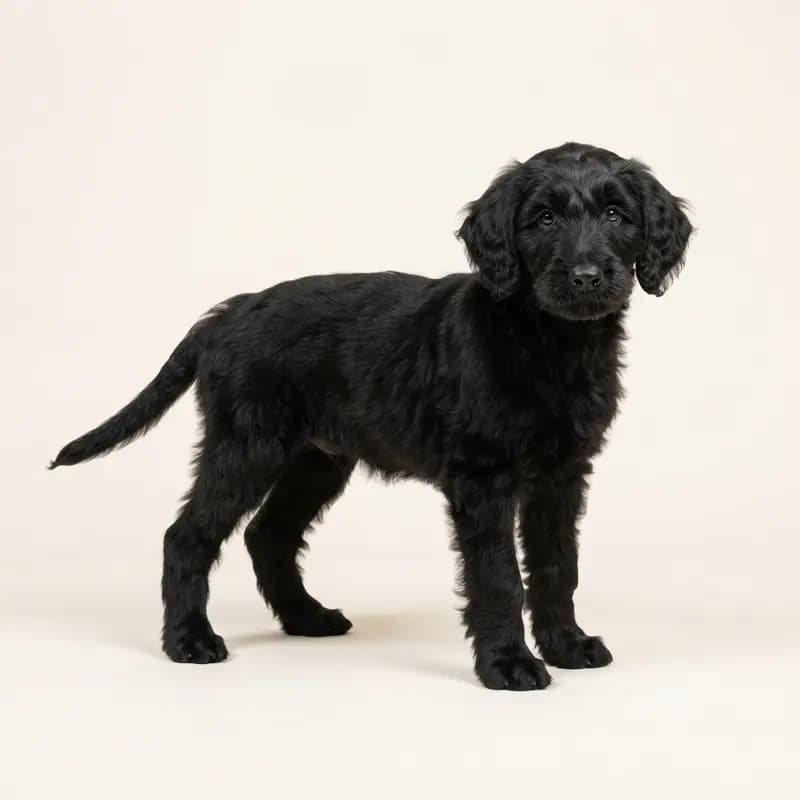
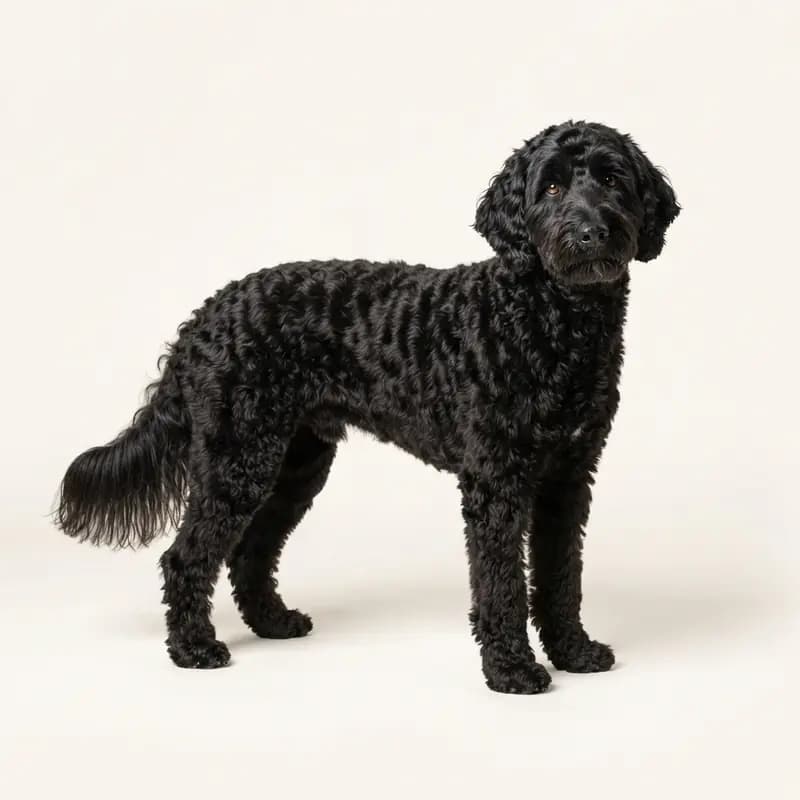
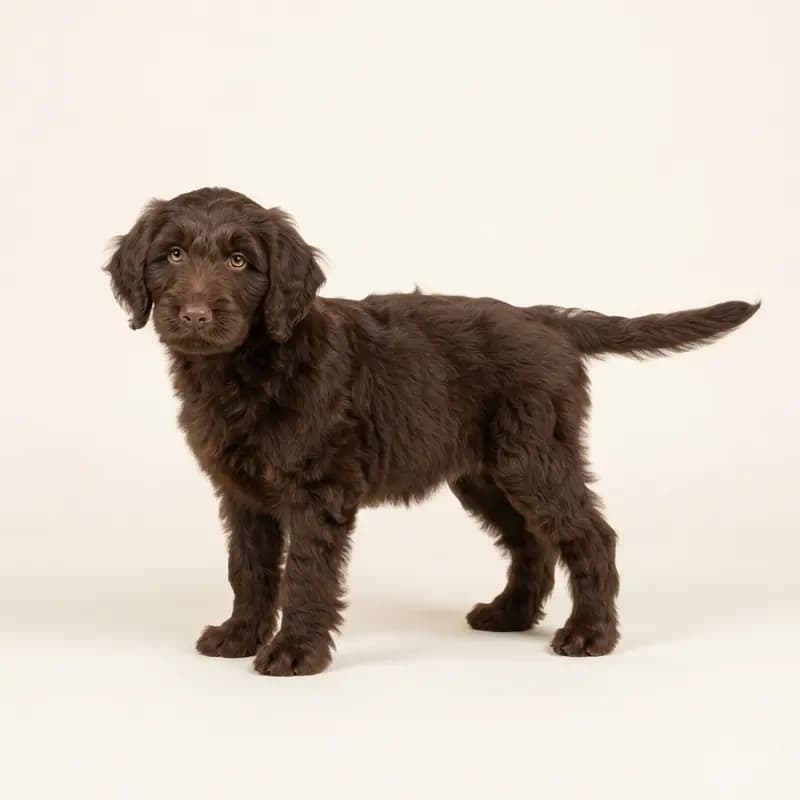
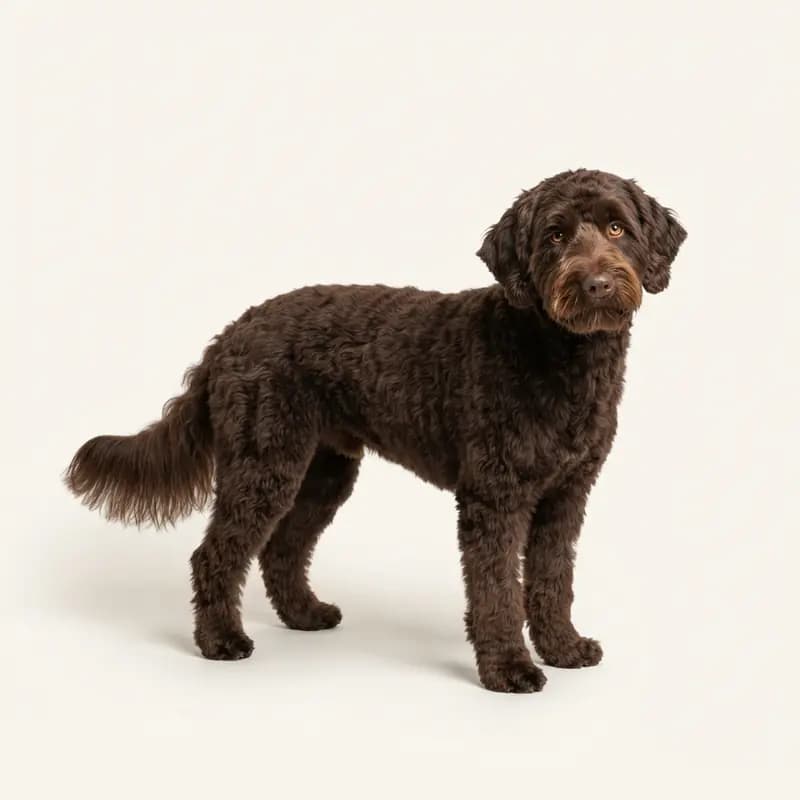
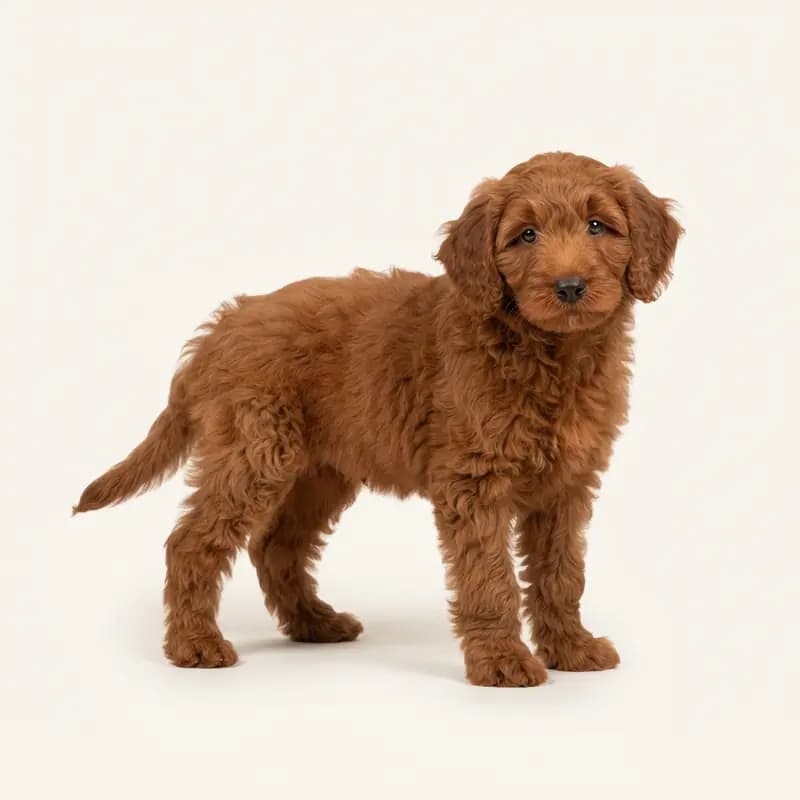
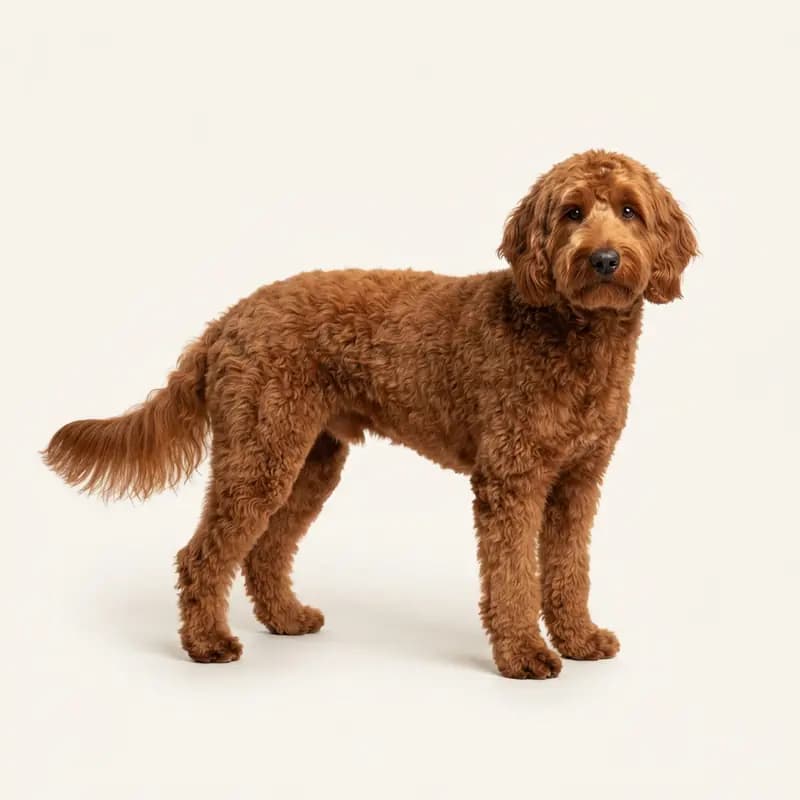
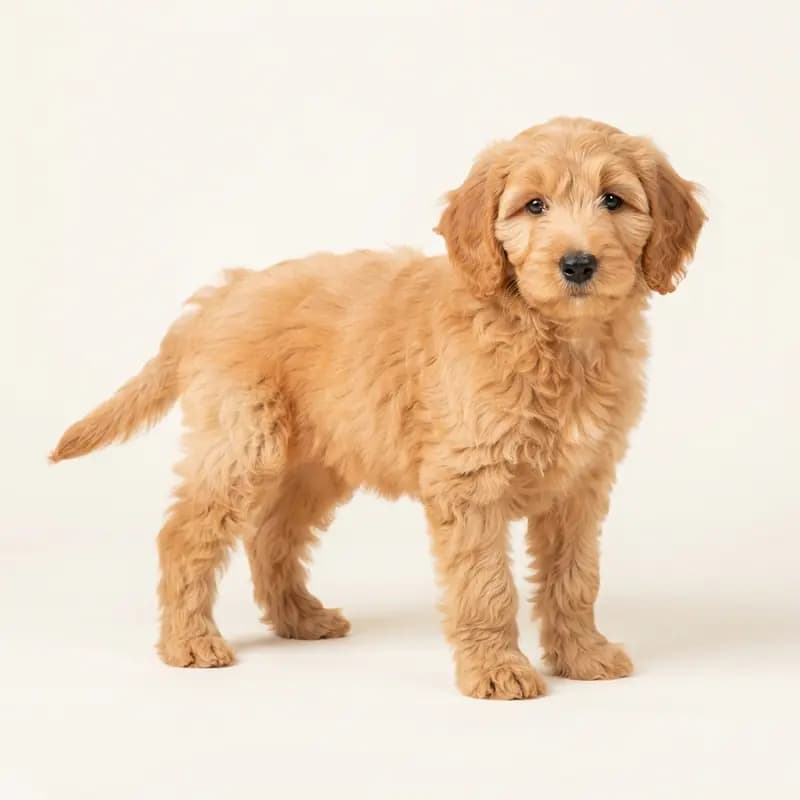
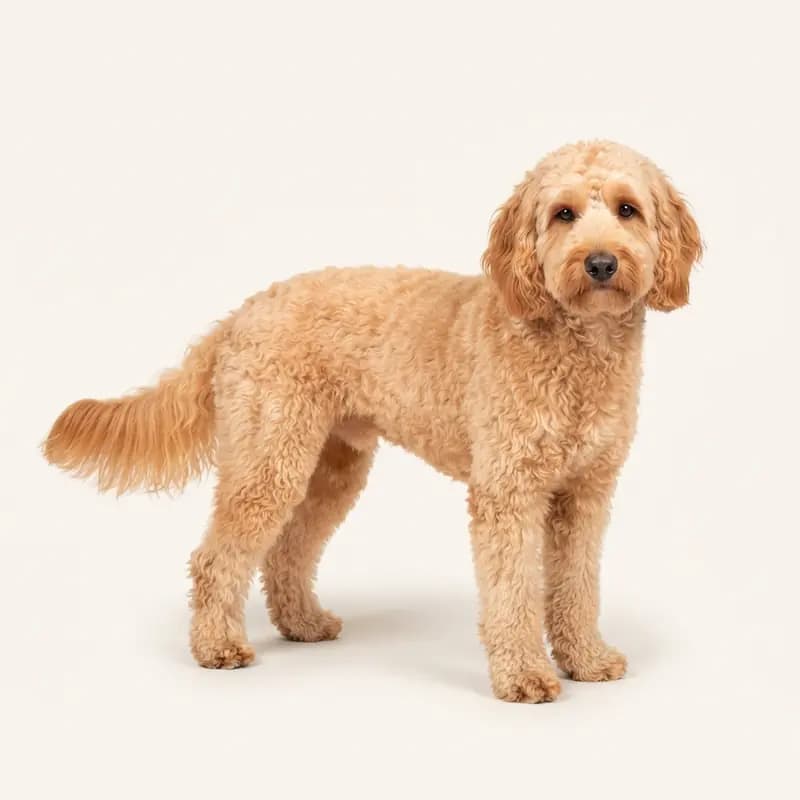
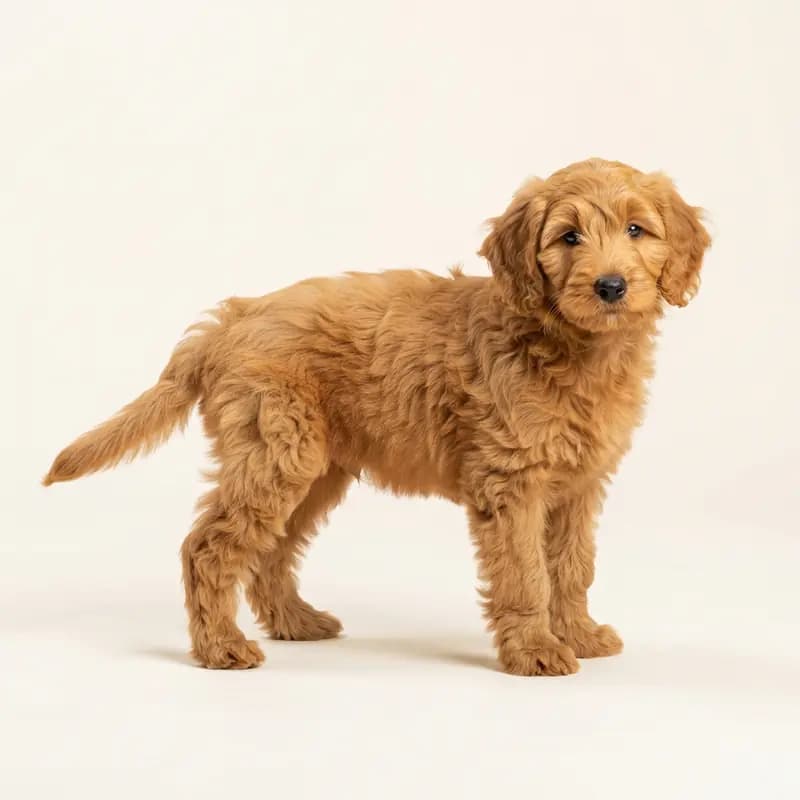
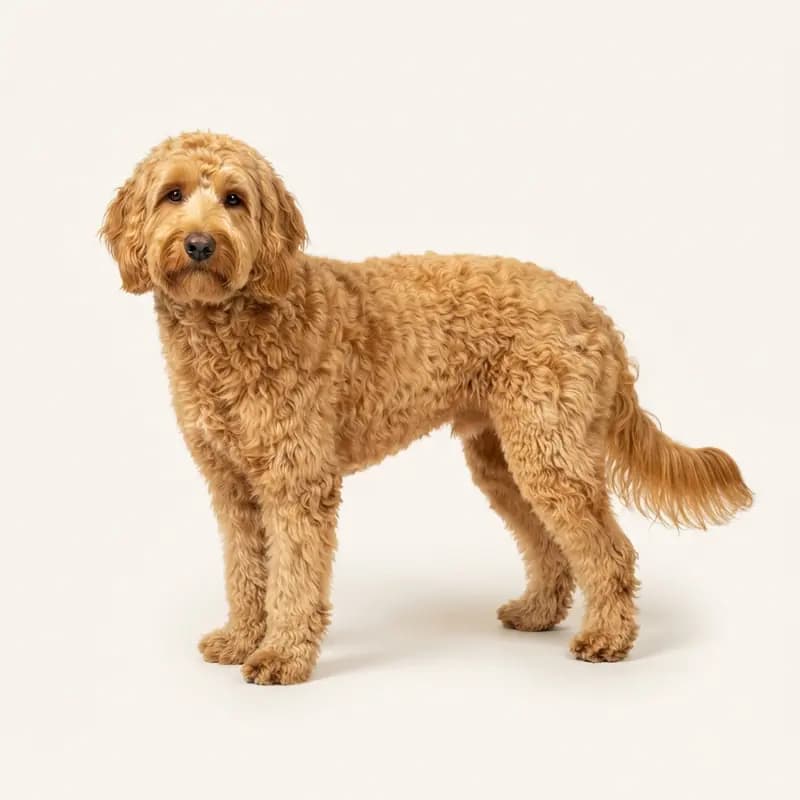
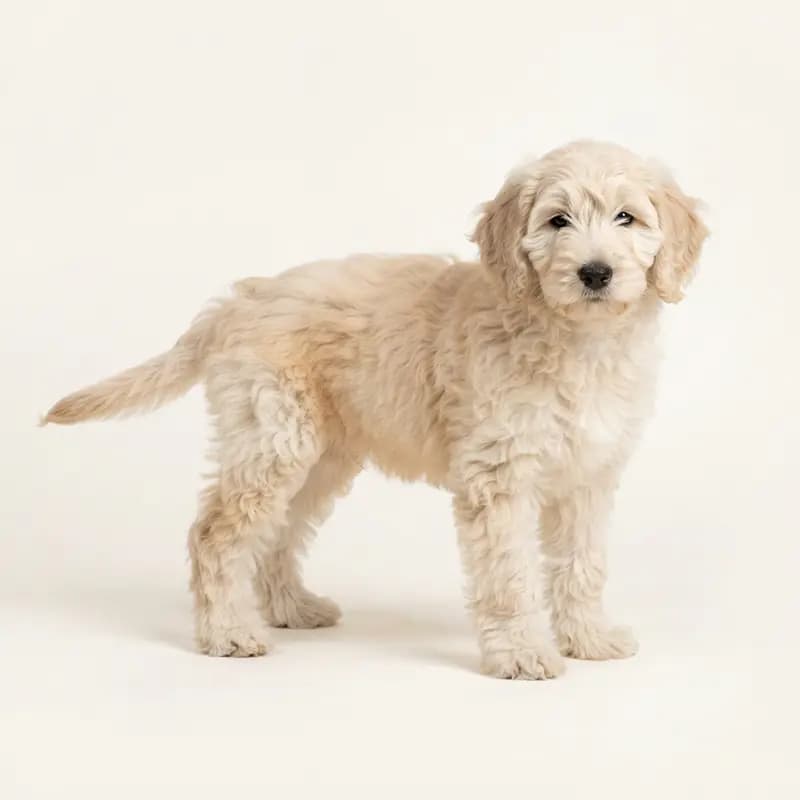
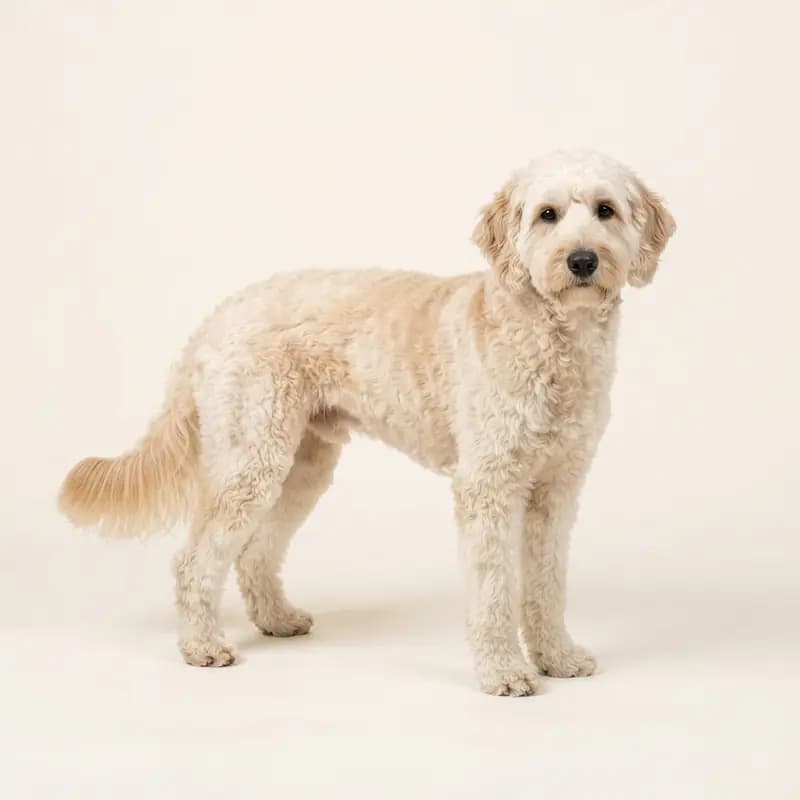
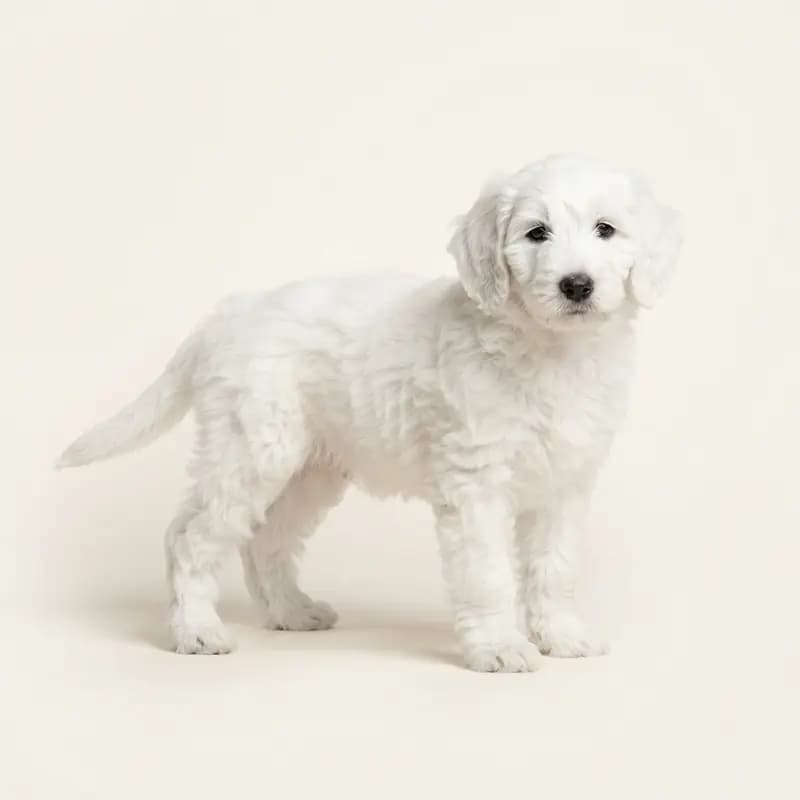
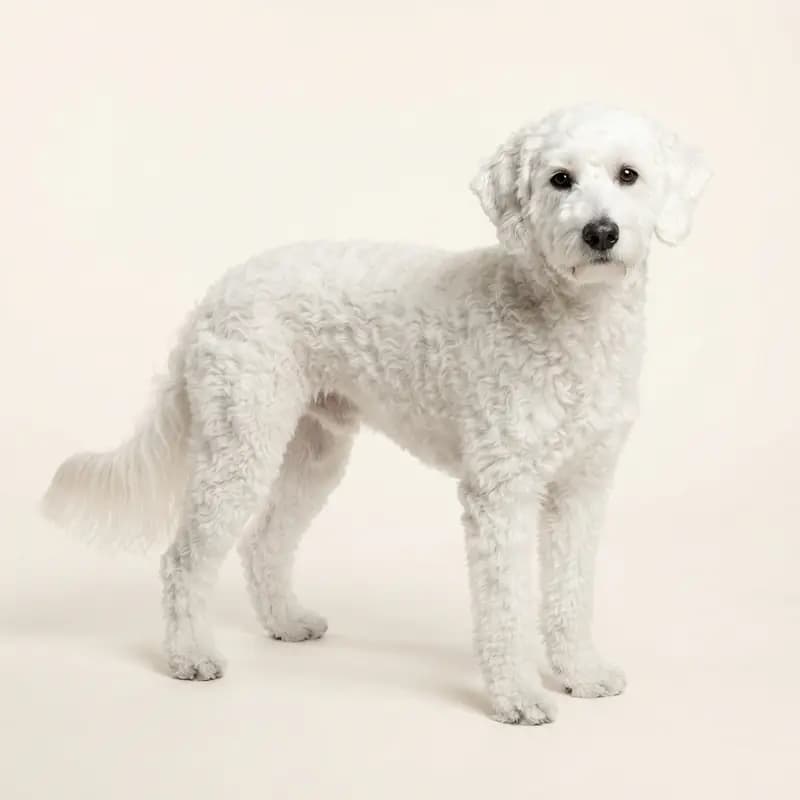
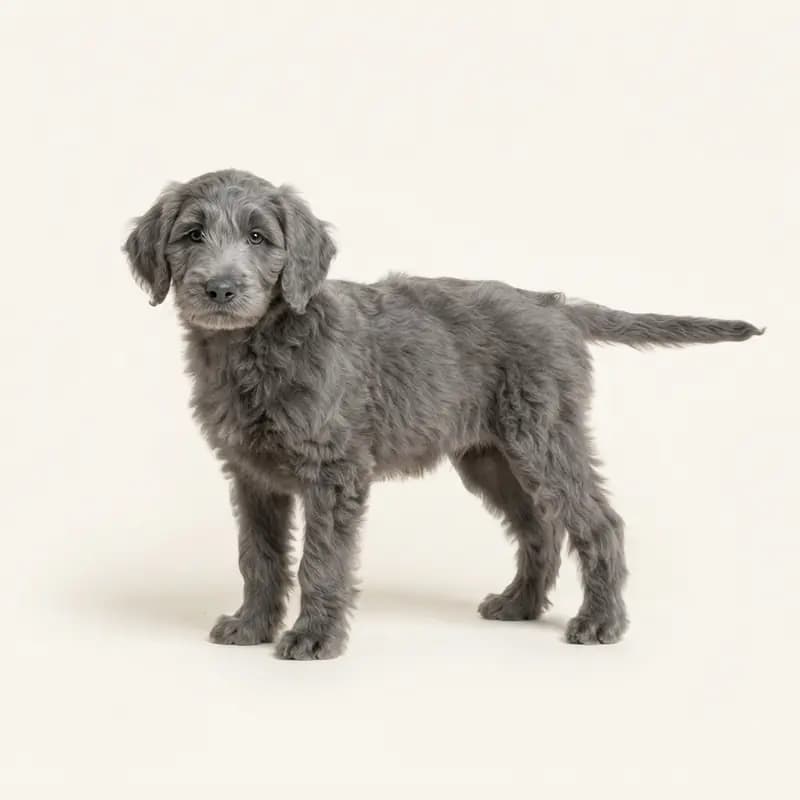
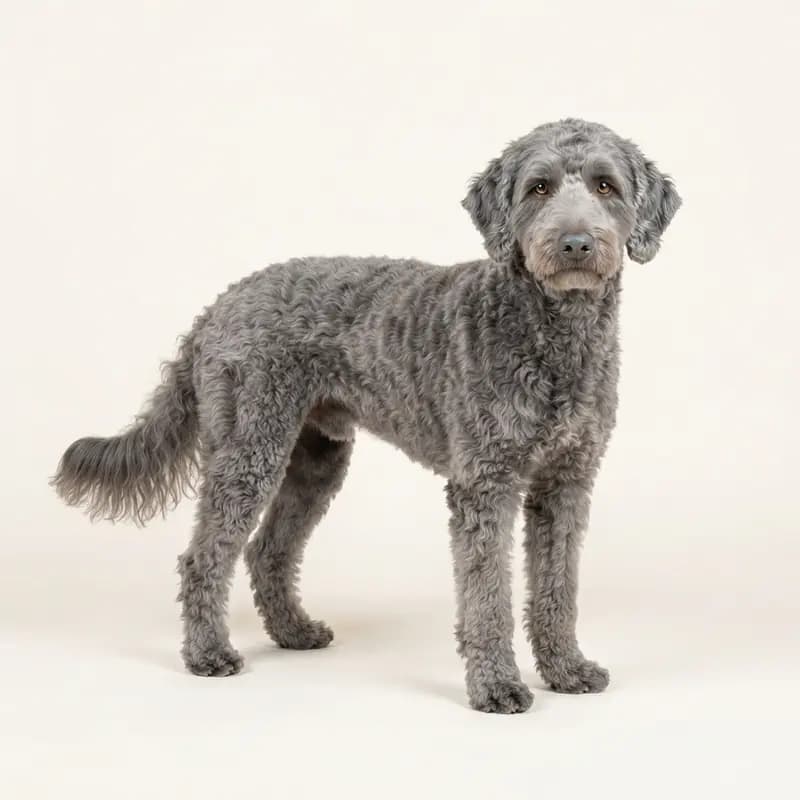
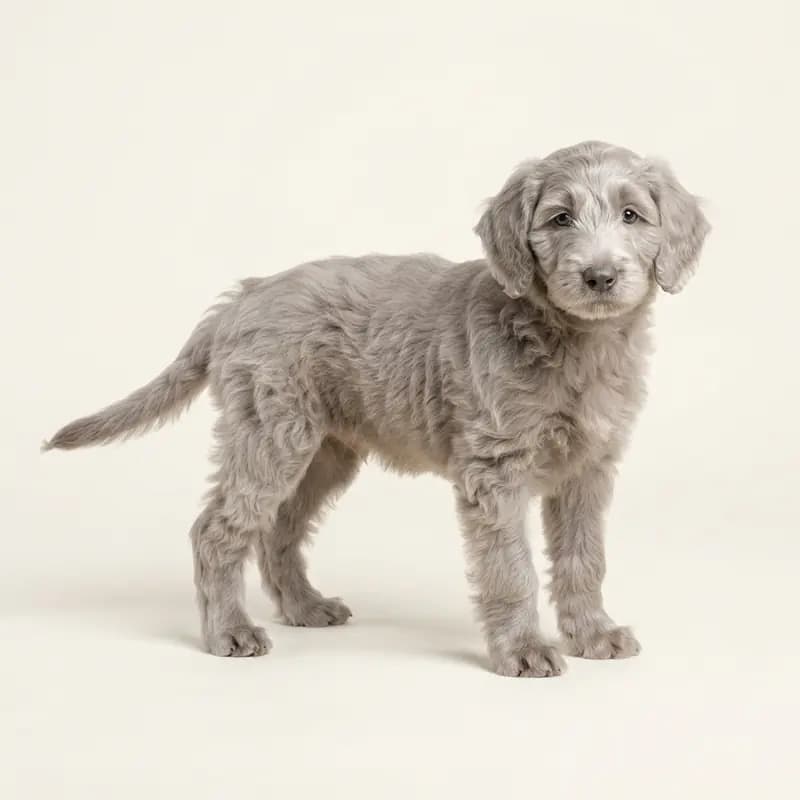
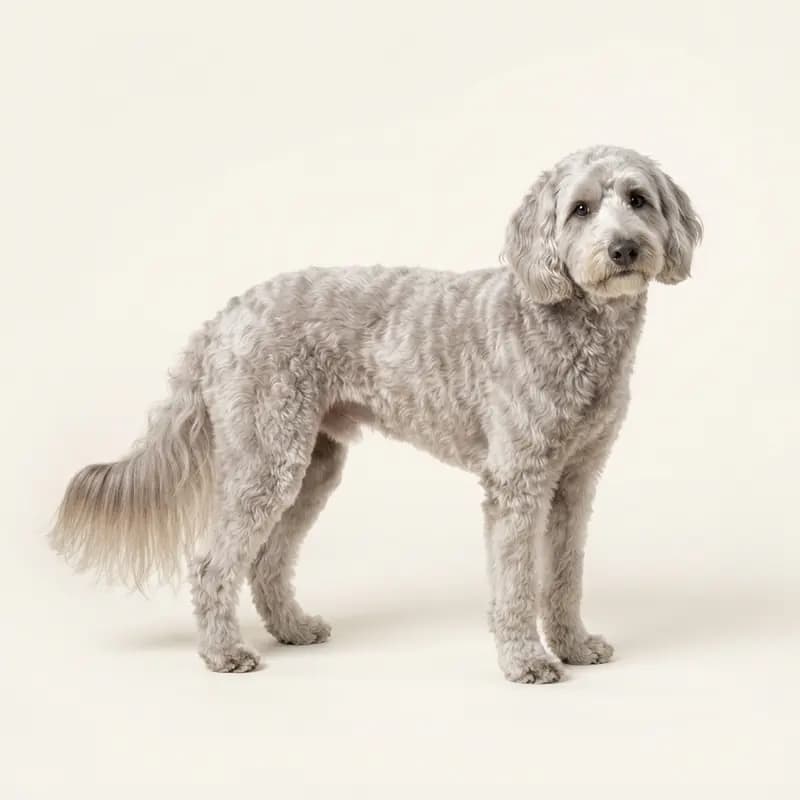
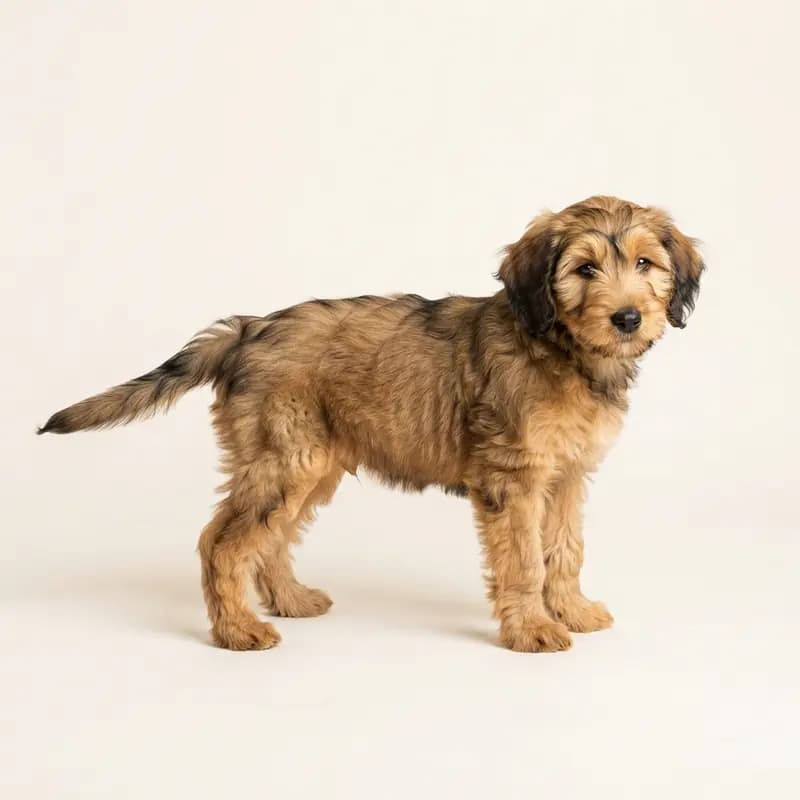
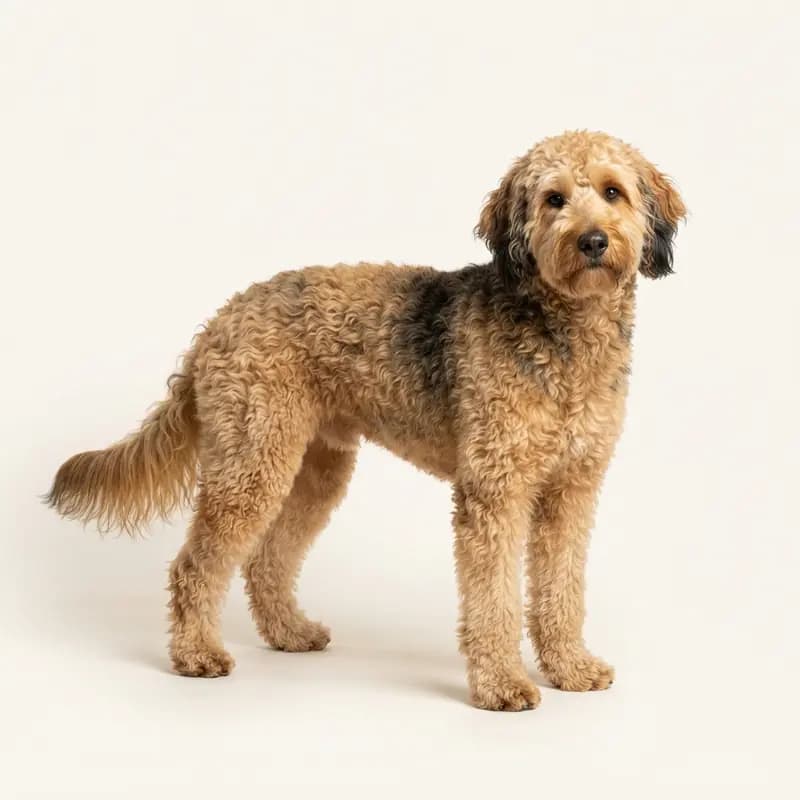
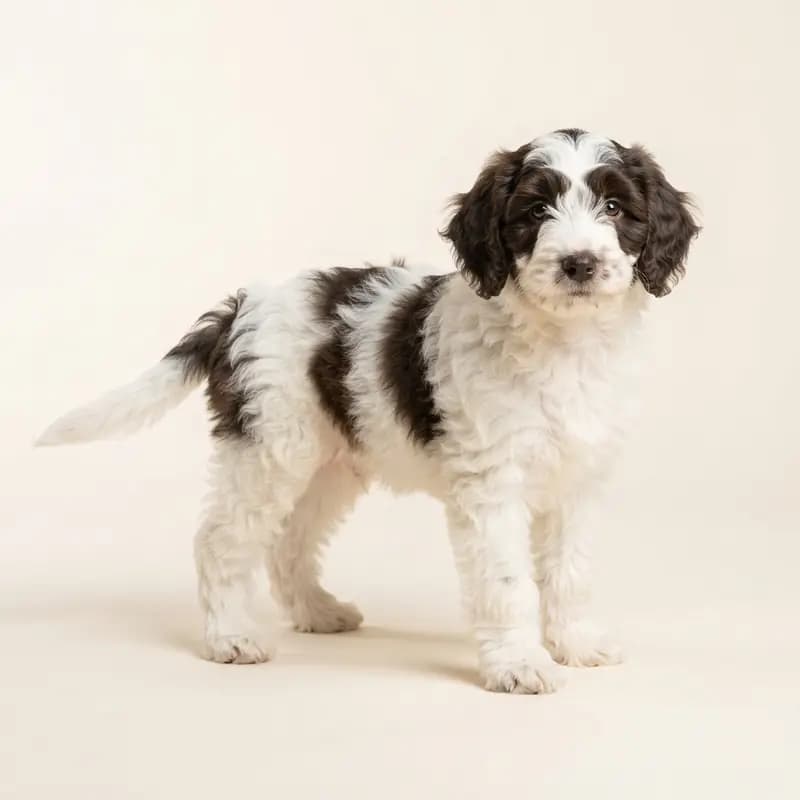
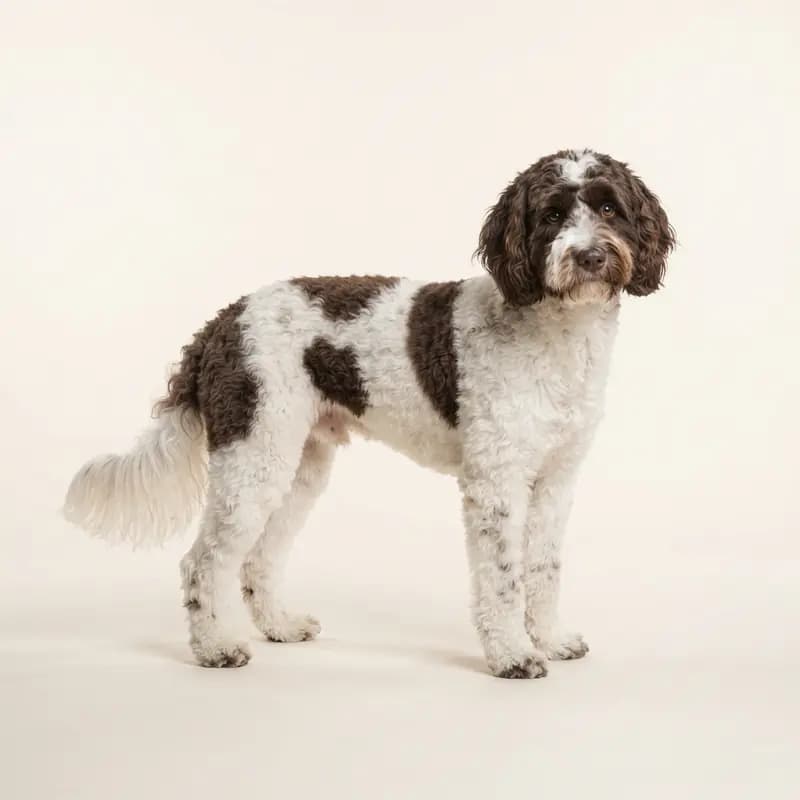
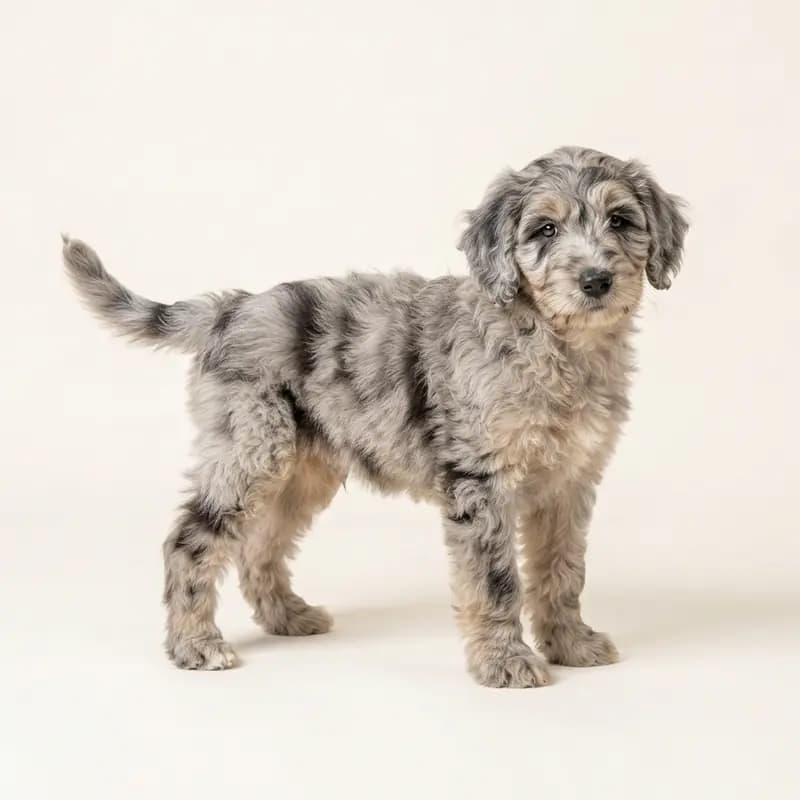
What colors does the Australian Labradoodle come in?
The coat colors you will see in Australian Labradoodle litters — including which ones fall outside the breed standard and which carry genetic risk.
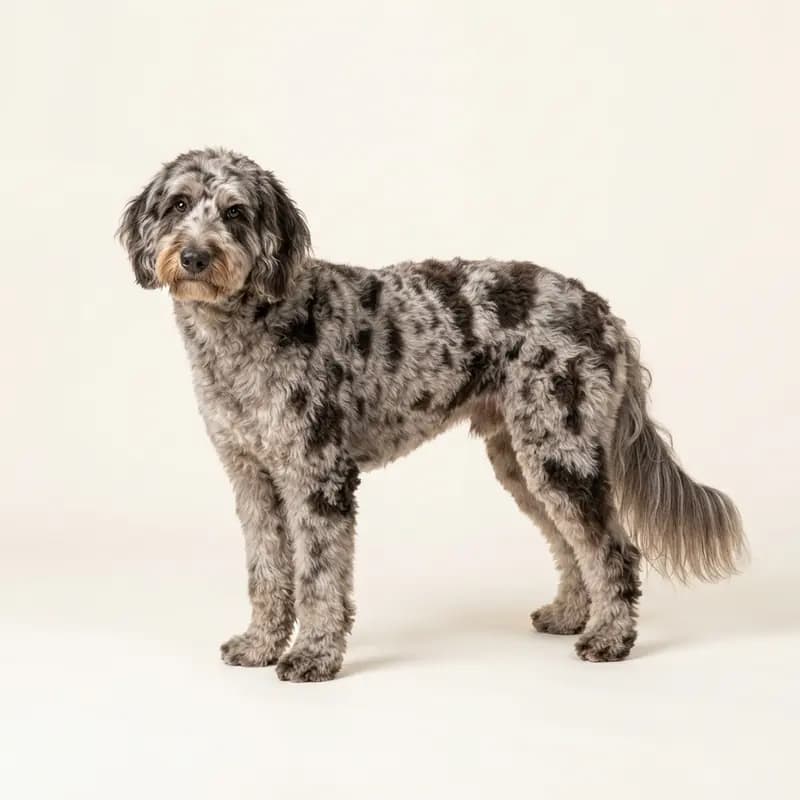
Eye colors
 Brown
Brown Amber
Amber Green
Green
Coat type
 Medium
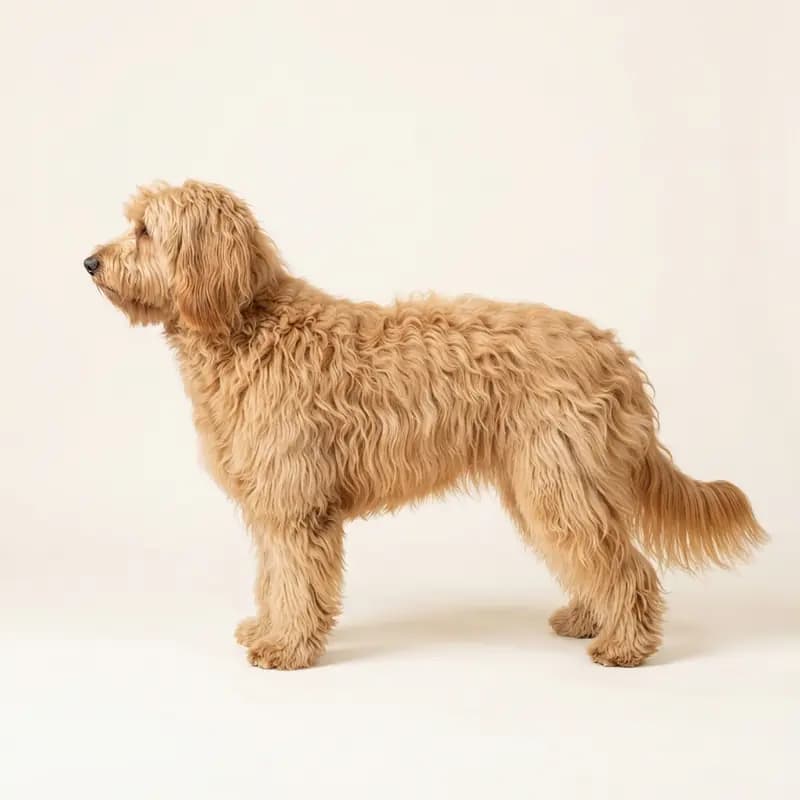 Illustrative image
Long
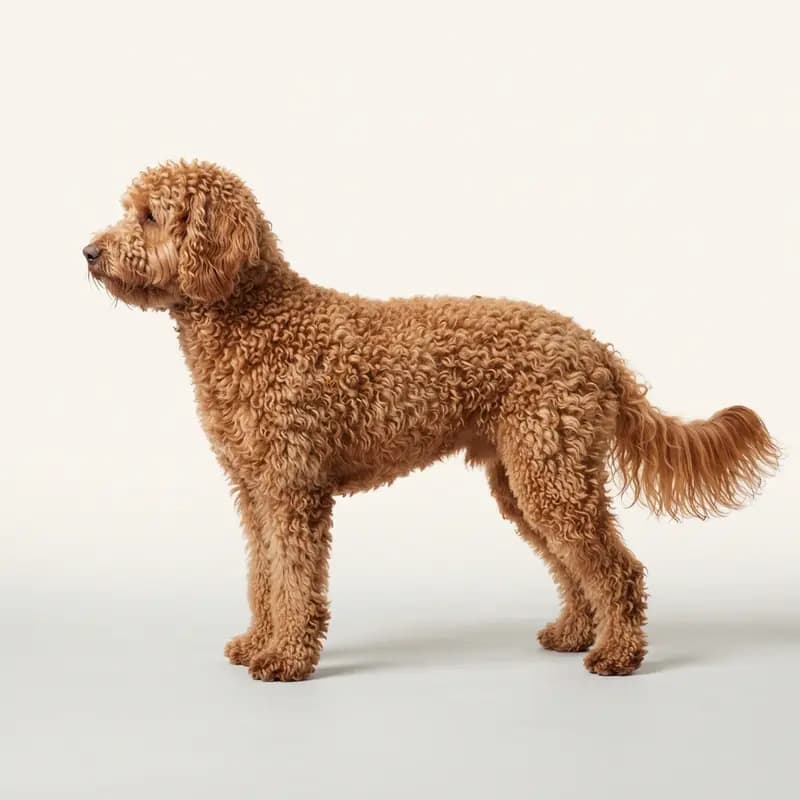 Illustrative image
Curly
Is the Australian Labradoodle right for you?
The Australian Labradoodle is a people-oriented, highly intelligent companion dog mix—a deliberate cross of Apportierhunde (retrievers) and water dogs that combines the Labrador's will-to-please with the clever energy of the Poodle and Spaniel.
Perfect for you if:
- You are looking for an active partner for retrieving or scent games—the retriever and spaniel genes demand more than just simple walks.
- You want a highly people-oriented dog that bonds closely with its family, greets visitors in a friendly manner, and prefers to be everywhere with you in daily life.
- You are prepared to invest significant time and money in professional grooming, as the often non-shedding coat will otherwise mat mercilessly.
- You enjoy training, as the high intelligence of this mix means they learn desired behaviors just as quickly as unwanted ones.
Less ideal if:
- You expect guarantees regarding character and appearance—with a mix, you are genetically always buying a surprise package of very different operating systems.
- You have to leave the dog alone for long periods, as these extremely social dogs are prone to frustration and separation anxiety when isolated.
- You believe the marketing that a Doodle is an undemanding 'sidekick' dog that is content with short walks around the block and practically trains itself.
- You need a completely quiet environment, as the hunting genes from the spaniel and poodle can certainly lead to a tendency to bark at external stimuli.
The real vibes check
An Australian Labradoodle is like a high-performance sports car in a plush toy disguise—it looks like a teddy bear but has the alert engine of a real working dog under the hood. If you channel and satisfy this clever energy, you will get the perfect, humorous everyday companion. However, if you rely solely on their cute appearance, this highly intelligent mix will quickly run circles around you.
Self-check
Would the Australian Labradoodle really fit your life?
Answer 6 quick questions about your everyday life and see how well the Australian Labradoodle fits you — including an honest cost estimate per month, per year, and across the dog's lifetime.
Fit checkCost estimateRisk dice
Takes about 1 minute · free & anonymous
Breed Profile
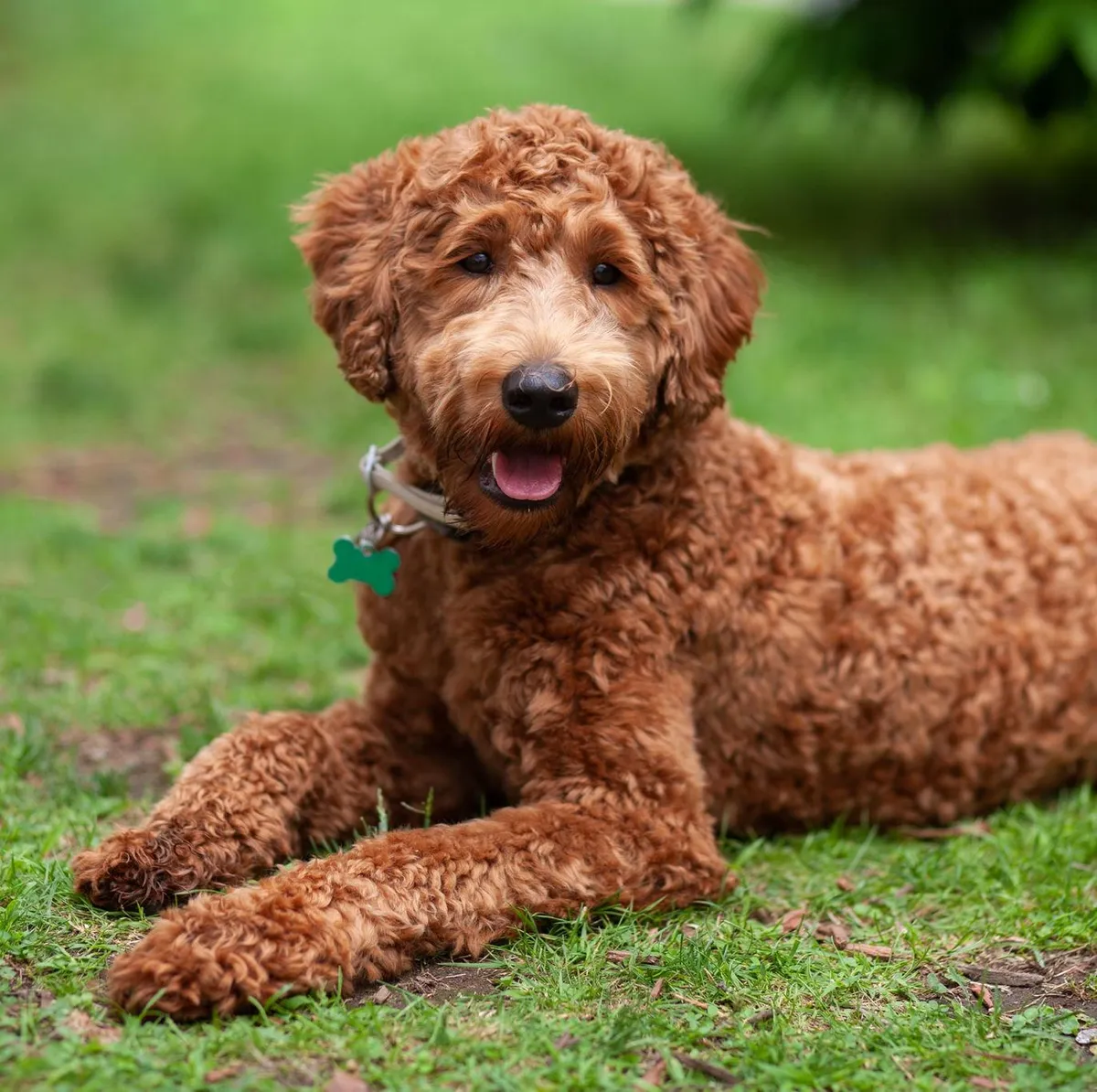
The Australian Labradoodle is a medium-sized dog with a well-balanced body. It does not belong to the FCI group as it is not yet recognized as a separate breed by the F"d"ration Cynologique Internationale (FCI), but is often treated as such due to its popularity and characteristic features. It comes from a cross between Labrador Retriever, Poodle and some other breeds such as the Irish Water Spaniel and the English or American Cocker Spaniel. Its head is broad and slightly longer than the distance from the withers to the ground, with medium-sized eyes that often have a warm, friendly aura. The ears are medium sized and hang close to the head. The nose is large and varies in color depending on the dog's coat color. The legs are straight and strong, and the tail is of medium length, well haired, and carried cheerfully but not curled over the back. Its fur is its most distinctive feature, which comes in a variety of colors and patterns. It is typically wavy to curly, medium length, and soft and fluffy to the touch. There is no distinction between show and performance lines in this breed.
All measurements in detail
- Height
- 35 - 63 cm (Female), 35 - 63 cm (Male)
- Weight
- 7 - 30 kg (Female), 7 - 30 kg (Male)
- Life Expectancy
- 12 - 15 yrs
- Character
- Intelligent, friendly, playful
- Coat
- Wavy to curly, medium length, undercoat
- Coat Color
- Varies including cream, gold, red, black, blue, silver, chocolate and more
- Price
- 2000 - 3500 €
Character & Temperament
The Australian Labradoodle is an extremely people-oriented dog. He is known for his intelligence, friendliness and playful nature. This makes him a great family dog and a great companion for children. He also shows a high level of empathy, which makes him an excellent therapy or assistance dog. Despite its original breeding as a guide dog, the Australian Labradoodle is also a very active and energetic dog that requires a lot of mental and physical stimulation. He loves playing and practicing various activities and dog sports such as: E.g. retrieving, agility, nose work and much more. This dog is also known for being very good at learning to stay alone. With appropriate training and enough activities, he can easily spend several hours alone without showing signs of separation anxiety or destructive behavior. When it comes to hunting or catching prey, the Australian Labradoodle does show a certain hunting instinct, but this is rather low compared to many other breeds. Therefore, it is entirely possible to control this instinct with appropriate training. In terms of alertness, the Australian Labradoodle is a good watchdog. Although he is not aggressive, he is very alert and will alert his family if he notices anything unusual. But it is important to note that he is not a typical guard or protection dog as he tends to be friendly and open towards strangers. Overall, the Australian Labradoodle is a versatile and adaptable dog that can be a wonderful companion in the right hands. He needs people who are willing to listen to his needs and who can give him the time, attention and love he needs. Then he is the perfect dog for anyone looking for an intelligent, active and friendly dog to accompany them in their daily life.
| Trainability Picks up commands quickly and wants to please. | Eager to learn |
| Watchfulness Occasionally alerts but is fundamentally open. | Low |
| Openness to Strangers Warms up quickly and is generally welcoming. | Friendly |
| Hunting or Herding Drive Mild interest in movement and small animals — easily managed. | Low |
Fun Fact!
Although the name might suggest it, the Australian Labradoodle is not actually from Australia, but was originally bred in the USA!
What Awaits You
The Australian Labradoodle is a friendly and intelligent dog that is well suited as a family companion. It combines the characteristics of the Labrador and the Poodle, is easy to train, and allergy-friendly. These dogs are active and require regular activity, but are also suitable as therapy or assistance dogs. Their friendly nature makes them popular pets.
Housing & Care
Australian Labradoodles generally do well as city dogs, provided they get enough exercise and mental stimulation. They can adapt well to different living situations, regardless of whether you live in an apartment or a house with a garden. They are friendly towards people and other animals, including children and cats. However, it is always important to monitor interactions between dogs and young children to ensure that both the child and dog are interacting safely and respectfully with one another.
- Family Friendly
Lives for its family — the born family companion.
Ideal family dog - Child Friendly
Takes boisterous and affectionate children in its stride.
Patient with children - Dog Friendly
Actively enjoys the company of other dogs.
Dog-friendly - City Friendly
Adapts well to city living and urban environments.
Well-suited to city life
Owning a dog is a privilege, but it's also a real responsibility. Before you bring one into your life, be honest with yourself about the commitment it takes.
Training & Education
Australian Labradoodles are intelligent and docile dogs who enjoy learning new things. They respond well to positive reinforcement and reward-based training. Since they are social and active dogs by nature, they can perform well in various dog sports such as agility, obedience and rally obedience. Since they also have high energy levels and a strong desire to play, there is a risk that they may become "ball junkies." if they are not managed properly. It's important to find a good balance and make sure your dog gets enough rest and learns to relax and calm down too. It is equally important to teach impulse control and ensure that your Australian Labradoodle is able to respond appropriately to environmental stimuli. As a breed that was originally bred as a companion and assistance dog, it is important that you as the owner recognize your dog's natural instincts and abilities and encourage them accordingly. This means giving him plenty of opportunities for mental stimulation and finding tasks where he can use his natural skills and instincts.
Nutrition & Care
The Australian Labradoodle has a medium-length, curly or wavy coat with a dense undercoat. This means he needs regular grooming to keep his coat in good condition and avoid matting. This dog's coat is not prone to shedding, making him a good choice for people with allergies. When it comes to the climate in Germany, the Australian Labradoodle is highly adaptable and can cope well in both cold and warm conditions. In terms of nutrition, the Australian Labradoodle requires a balanced, nutrient-dense diet. Although they have no specific dietary requirements as a breed, they do well on a diet based on high-quality animal protein, with a balanced mix of carbohydrates, fats, vitamins and minerals. As with any dog, it is important to monitor food and treat amounts to avoid obesity.
| Care Level Regular brushing and occasional professional grooming. | Moderate |
| Exercise Needs Needs 1–2 hours of real exercise daily. | Active |
| Shedding Regular shedding — dog hair on clothes is now normal. | Moderate |
| Trainability Picks up commands quickly and wants to please. | Eager to learn |
Our experts are still reviewing this information. Spotted something wrong? Email us at info@honestdog.de.
Health & hereditary diseases
Health
B
Solid
Health grade
Since the Australian Labradoodle is not an officially recognized breed with a central kennel club, there are no mandatory minimum health tests for breeders. Prospective buyers must therefore be extremely diligent in verifying whether the parent dogs have been screened for hip dysplasia (HD), elbow dysplasia (ED), and progressive retinal atrophy (prcd-PRA). Without these voluntary health records, you are unfortunately often buying a pig in a poke.
Grade is relative to other breeds — AI-assisted and editorially reviewed.
In daily life this can mean
You should focus on joint-friendly development and a healthy weight, and discuss the topic of blood clotting with your vet before any potential surgeries.
The breeder's role
Reputable breeders have the hips, elbows, knees, and eyes of the parent dogs examined and pay attention to genetic tests for blood clotting and overall resilience to reduce risks within the line.
Note: This health overview is AI-assisted and editorially reviewed. It is for orientation only and does not replace veterinary advice.
No Health Tests Available
No specific health tests are currently available for this breed.
Costs & where to find one
How much does a Australian Labradoodle cost?
A Australian Labradoodle costs around ~€180 per month (€90 – €330, depending on your setup). The first year adds up to roughly ~€5,710 including purchase, equipment and puppy school; across the dog's life (13.5 years) it comes to about ~€32,390.
With surgery cover, running costs come to about ~€170 per month — in return, your share of a major operation drops from several thousand euros to around 20 percent.
Per month
~€180
In the first year
~€5,710
Across the dog's life
~€32,390
Purchase from a breeder: €2,000 – €3,500
Estimate at a mid-range setup (suburban, dry food, 1–2 hours of daily exercise), average German prices, as of July 2026.
Calculate your personal costs1-minute self-check with your own answers
Looking for a Australian Labradoodle?
Appearance, variants & origin
History
The full history
The story of the Australian Labradoodle begins in Australia in the 1980s. It was originally bred to create an allergy-friendly guide dog that had both the pleasant temperament of the Labrador Retriever and the hypoallergenic coat of the Poodle. The first breeding attempts were made by crossing a Labrador Retriever with a Standard Poodle, but the resulting puppies did not show the expected consistency in coat and temperament. Therefore, other breeds such as the Irish Water Spaniel and the English or American Cocker Spaniel were introduced into the breeding line to develop the desired allergy-friendly dog with a pleasant temperament. This is how the Australian Labradoodle as we know it today came into being. The Australian Labradoodle has been recognized as a separate breed by the Australian Labradoodle Association of America (ALAA) and the International Australian Labradoodle Association (IALA) since 2004.
Original Use
The Australian Labradoodle was bred as a hypoallergenic companion dog, originally as a guide dog for allergy sufferers.
Origin
Australia
Date
1980
Owner experiences
What owners say about the Australian Labradoodle
Zusammengefasst aus öffentlich geteilten Halter-Erfahrungen
Viele Halter schätzen den Australian Labradoodle im Alltag als überaus anhänglichen, fröhlichen und empathischen Familienhund, der eine tiefe Bindung zu seinen Menschen aufbaut. In Erfahrungsberichten wird immer wieder betont, wie anpassungsfähig und kinderlieb diese Hunde sind, was sie zu idealen Begleitern für aktive Familien macht. Ihre sensible Art sorgt zudem dafür, dass sie oft eine beruhigende Wirkung auf ihre Besitzer haben.
Allerdings weisen erfahrene Halter auch darauf hin, dass diese Rasse kein reiner Couchhund ist. Sie fordern täglich aktive Beschäftigung ein – sowohl körperlich durch lange Spaziergänge als auch geistig durch Apportierspiele oder Nasenarbeit. Wird dieser Bewegungsdrang vernachlässigt, neigen vor allem junge Hunde dazu, übermütig zu werden und im Haus durchzudrehen (die sogenannten „Zoomies“).
Ein wesentlicher Aspekt im Alltag, der von fast allen Besitzern als größte Herausforderung genannt wird, ist der immense Pflegeaufwand des Fells. Entgegen der Erwartung vieler Anfänger neigt das dichte, lockige oder wellige Haar schnell zum Verfilzen. Halter berichten, dass mehrmaliges gründliches Bürsten pro Woche und professionelle Grooming-Termine alle sechs bis acht Wochen absolute Pflicht sind, um schmerzhafte Filzplatten auf der Haut zu vermeiden. Die damit verbundenen laufenden Kosten werden von Neueinsteigern oft unterschätzt.
Zusammengefasst aus öffentlich geteilten Halter-Erfahrungen
In Erziehungsfragen beschreiben Halter den Australian Labradoodle als extrem intelligent, lernwillig und bestrebt, seinen Menschen zu gefallen („will to please“). Durch das Erbe von Pudel und Labrador begreifen sie neue Kommandos und Tricks oft in Rekordzeit. Viele Besitzer nutzen diese Eigenschaft erfolgreich für Hundesportarten, Agility oder anspruchsvolle Suchspiele.
Diese hohe Intelligenz hat jedoch eine Kehrseite, die in Foren regelmäßig diskutiert wird: Die Hunde lernen unerwünschtes Verhalten genauso schnell wie die gewünschten Kommandos. Unterforderte Labradoodles neigen dazu, eigene, oft kreative Beschäftigungen zu finden, die sich in Zerstörungswut von Gegenständen oder unruhigem Verhalten äußern können. Eine konsequente, aber liebevolle und belohnungsbasierte Führung von Welpenbeinen an ist daher unerlässlich.
Zudem berichten manche Besitzer, dass die Rasse phasenweise eine gewisse Sturheit an den Tag legen kann, insbesondere wenn die Motivation fehlt oder die Reize in der Umwelt zu spannend sind. Auch wenn der Jagdtrieb im Vergleich zu reinen Jagdhunden meist moderat ausfällt, erfordert die jagdliche Motivation, die durch die eingekreuzten Spaniels und Retriever vorhanden ist, von Anfang an ein gezieltes Rückruftraining.
Zusammengefasst aus öffentlich geteilten Halter-Erfahrungen
Beim Thema Gesundheit und Zucht herrscht unter Haltern eine rege Diskussion. Da der Australian Labradoodle ein komplexer Mix aus mehreren Rassen (u. a. Labrador, Pudel und Cocker Spaniel) ist, betonen erfahrene Besitzer die Wichtigkeit, ausschließlich bei zertifizierten Züchtern zu kaufen. Seriöse Züchter führen umfangreiche, kostspielige Gesundheitstests auf Hüft- und Ellbogendysplasie (HD/ED), Augenerkrankungen sowie Erbkrankheiten wie Von-Willebrand-Erkrankung durch.
Trotz der theoretischen „Hybrid-Vigor“ (Mischlingsvitalität) berichten Halter in Foren immer wieder von rassetypischen gesundheitlichen Problemen. Besonders häufig werden Futtermittelunverträglichkeiten, sensible Mägen und hartnäckige Hautallergien genannt. Auch Ohrenentzündungen sind aufgrund der Schlappohren und des darin wachsenden Haares ein wiederkehrendes Thema, das regelmäßige Kontrollen erfordert.
Ein weiterer kritischer Punkt, der in Communitys diskutiert wird, ist das Thema Allergiker-Freundlichkeit. Obwohl die Hunde oft als „hypoallergen“ vermarktet werden, gibt es unter Haltern Berichte, wonach empfindliche Personen dennoch auf den Speichel oder die Hautschuppen der Hunde reagieren. Eine Garantie für Allergiker gibt es somit nicht, weshalb vor dem Kauf unbedingt ein individueller Test mit Haaren des Elterntiers empfohlen wird.
Paraphrased from real owner reports
Loading owner stories
Community Posts
FAQ & more
Frequently asked questions about the Australian Labradoodle
Is a Australian Labradoodle the right dog for me?
The Australian Labradoodle is an adaptable dog that adjusts well to various lifestyles. Research the temperament, grooming needs, and space requirements before deciding.
How long does a Australian Labradoodle live?
The average life expectancy of a Australian Labradoodle is 12-15 years. With proper care and regular vet visits, your dog can live a long, healthy life.
How much grooming does a Australian Labradoodle need?
Australian Labradoodle grooming requirements include regular brushing, nail trimming, and dental care. HonestDog provides detailed grooming tips for every breed.
Is a Australian Labradoodle good for families with children?
The Australian Labradoodle can be a great family dog. Proper training and socialization are key. HonestDog provides family suitability information for every breed.
What colors does the Australian Labradoodle come in?
The Australian Labradoodle comes in these colors: Black, Chocolate, Red, Apricot, Gold, Cream, White, Blue, Silver, Sable, Piebald, Merle. Colors that fall outside the breed standard are marked as such on the breed page.
Loading related articles
Are you a Australian Labradoodle breeder?
Showcase your kennel on HonestDog and reach families searching for a responsibly bred Australian Labradoodle.
Why HonestDog?
What makes HonestDog different from other platforms
Full transparency
We lay out what we have: who the breeder is, how they work, and any health records they've uploaded. So you can judge for yourself.
Responsible breeding, assured
Every breeder on HonestDog has their identity and documents checked before their profile goes live. Health records they upload are shown on the profile, so you can see exactly what has been tested.
Trust and verification
We verify breeders and buyers alike, so every conversation happens on solid ground. It's a new standard of trust in dog breeding.
Less hassle, more time
We've already checked the breeders' documents and gathered the details, so you can skip the endless research and focus on finding the right puppy for your family.
Our Mission

We connect dog lovers with responsible breeders and shelters to ensure every dog finds the perfect home.
Founded by dog enthusiasts, our platform focuses on ethical dog breeding and adoption.
Why HonestDog?
We connect you with vetted breeders and shelters so you can find your — your new companion — with confidence.
Vetted Partners
Only verified breeders and shelters — for a safe start.
Highest Standards
Every animal's health and wellbeing is our top priority.
Guides & Resources
Guides, checklists, and breed profiles — so you can make a well-informed decision.